Enhancing Circularity, Sustainability, and Innovation
Stick Furniture
Stick Furniture
Stick Furniture looks into how furniture can be produced locally out of standardised aluminium extrusion, assembled and maintained by the people who use it. The project focuses on democratising manufacturing, easy repair and recycling.
Finland
Local
Helsinki, Barcelona
Mainly urban
It involves a physical transformation of the built environment (hard investment)
Prototype level
No
No
Yes
Individual
Stick Furniture focuses on how furniture can be made by and for everyone, by taking into account its whole lifespan. Starting from assembly, use, repair and recycling. It proposes an alternative to how furniture is currently both produced and consumed, raising questions on who makes the things we use, where, and how could we have stewardship over the objects in our daily lives.
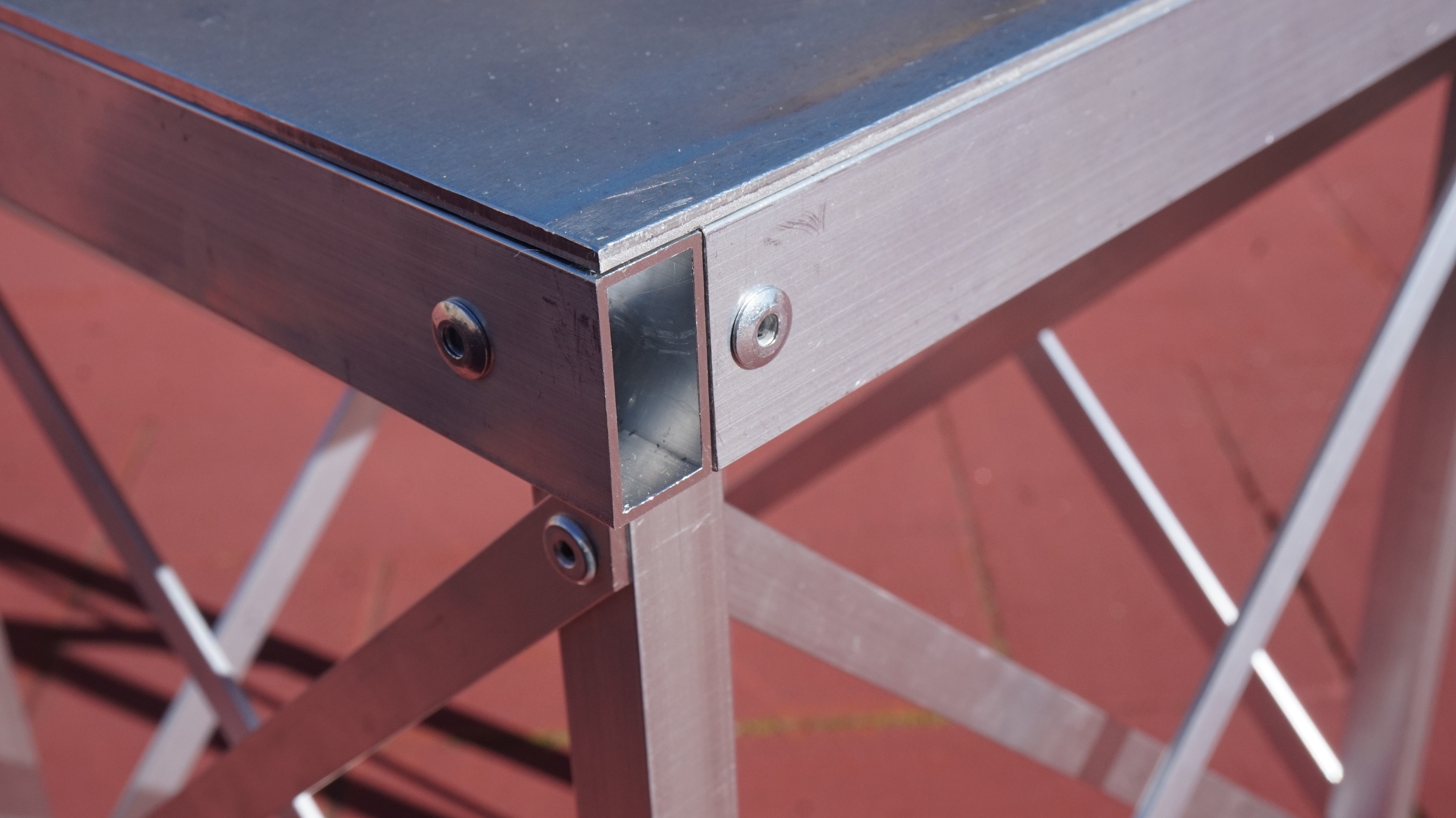
The project proposes furniture made out of readily available aluminium extrusion and sheet stock, assembled with blind rivets. These materials are widely available both for consumers and industry. The material can be processed with rudimentary tools, either by hand or more efficiently in any metal workshop, making it possible to produce locally. The components pack flat for efficient storage and shipment and can be assembled by anyone using only a hand riveter.
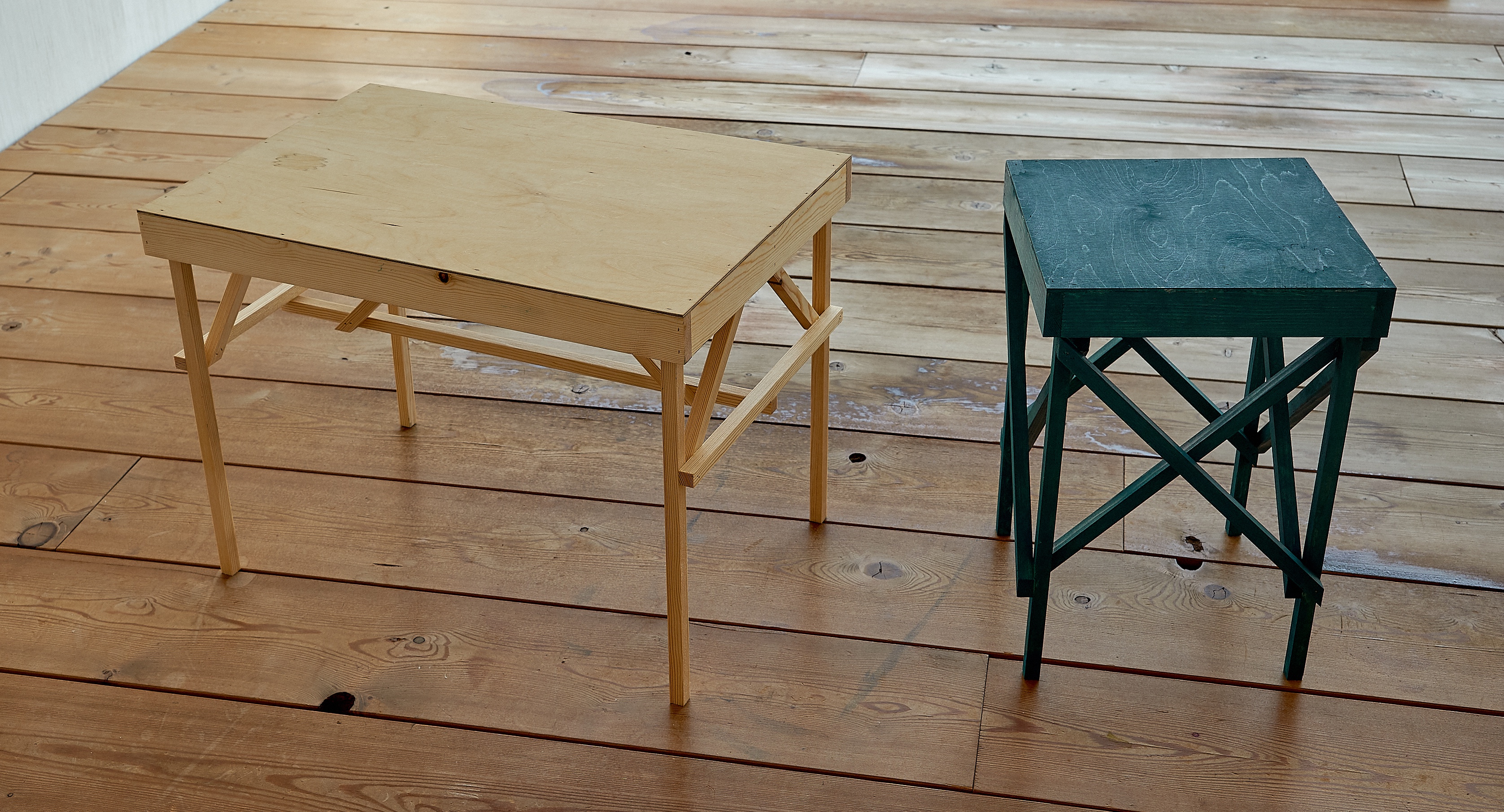
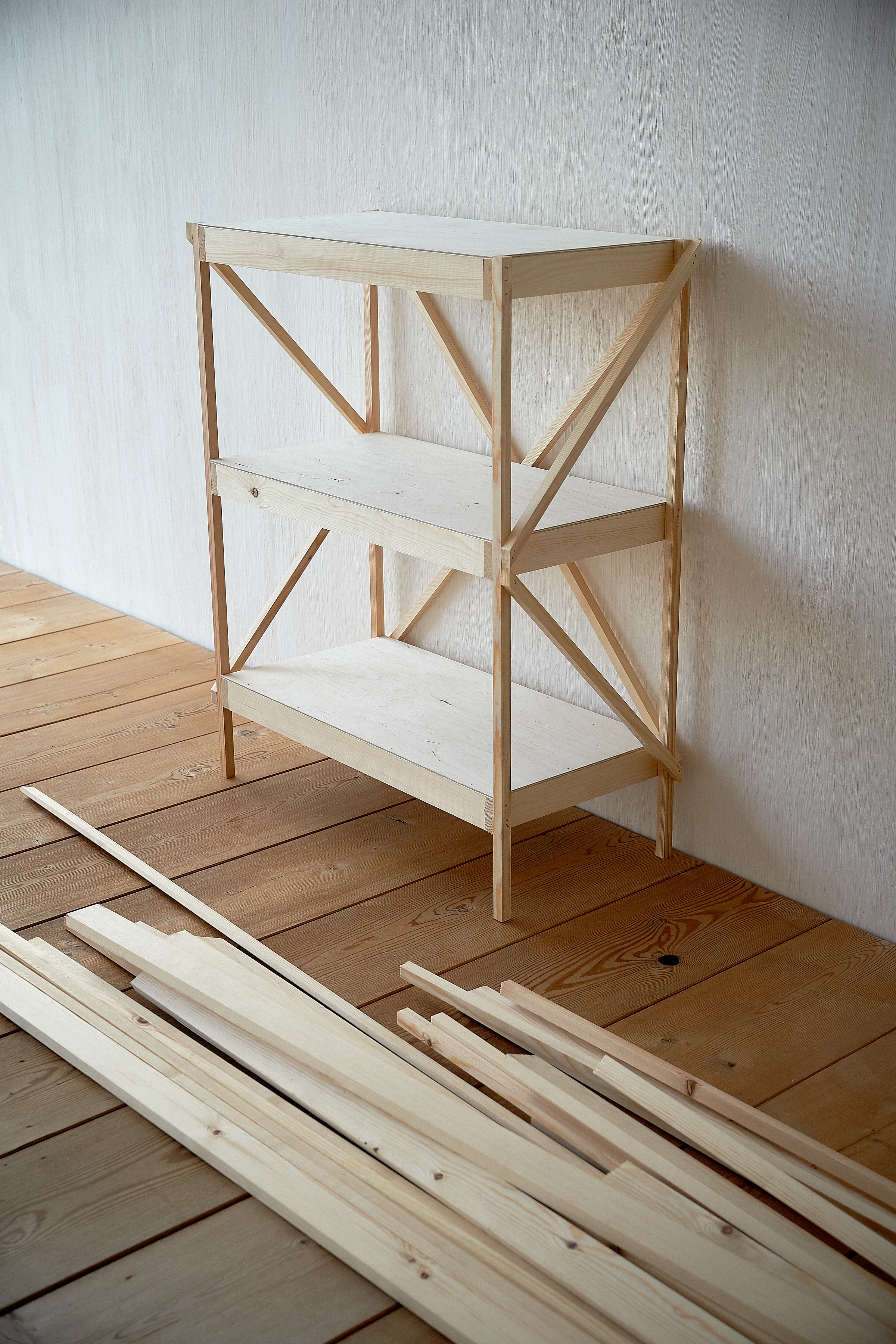
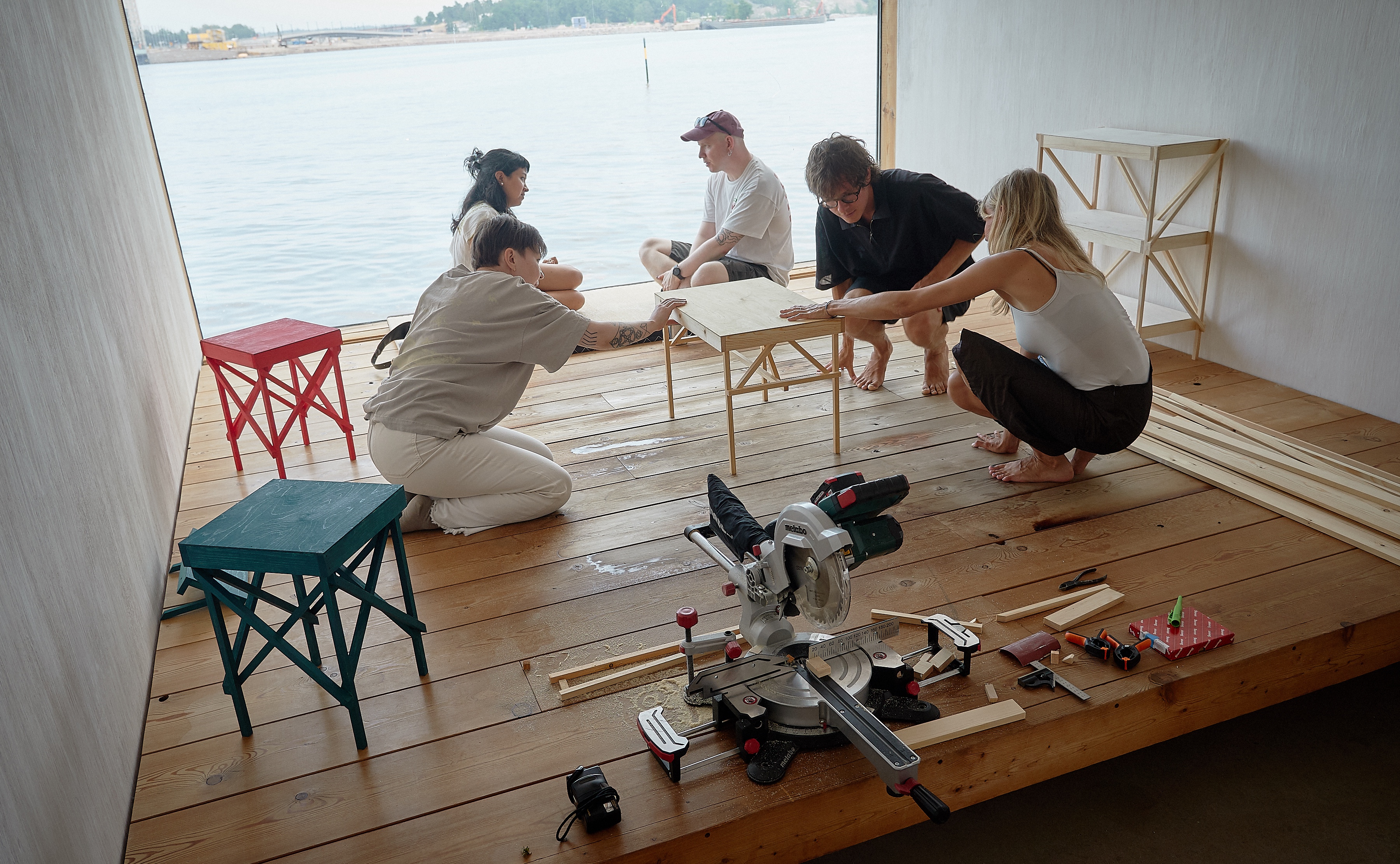
The project is currently at prototype stage, there is one chair prototype made in aluminium and other furniture following the same method, made out of wood. The wooden furniture was presented in August 2025 in Helsinki, as a performance, which received a lot of positive feedback.
The target groups of the project are consumers and communities, for which Stick Furniture propose a new alternative.
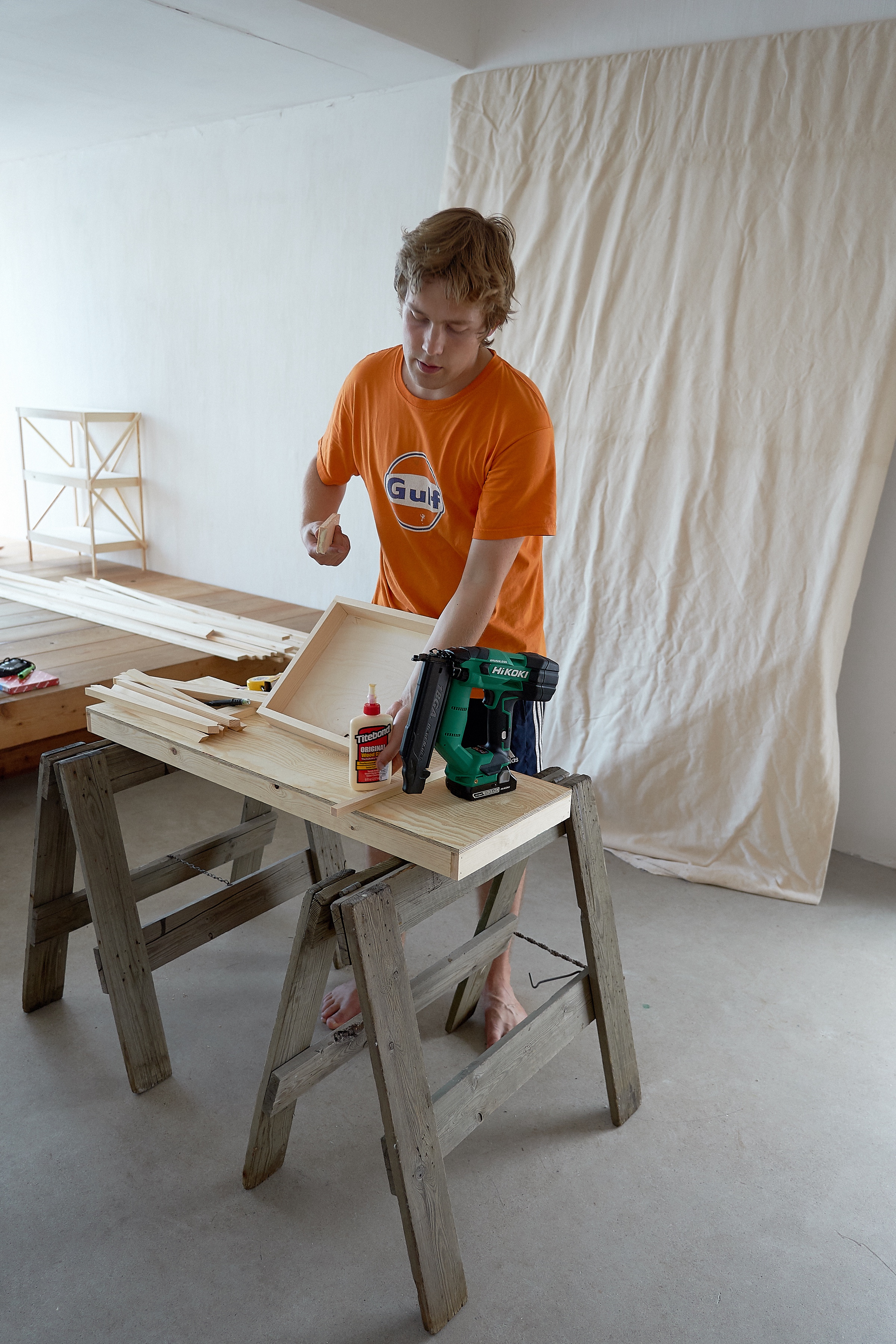
The idea behind Stick Furniture took shape when I moved to Barcelona in 2024. I moved lightly into an empty apartment. With access to only the few tools I had with me and no workshop, I started to plan furniture that I could make within these limitations. I chose to work with thin standardised wooden beam available in the local hardware store, as it was affordable, easy to carry and cut by hand. This changed how I thought about furniture in general, which led me to design a series of furniture, that I presented in a public event in Helsinki during summer 2025. I produced stools, coffee tables and shelves on order for the visitors. The visitors were interested in following how the furniture was produced, which had me thinking how the project could be turned into something that could be more involving, such as a workshop.
The current construction method using nails and glue was finicky, requiring precision and care. I started to research into other standardised material, that the method could be applied to, such as aluminium extrusion. If the stock was cut and drilled in advance, the assembly process would need little to no guidance and only a handheld riveter for assembly. This has led me thinking for other applications that these furniture could be used for, where they could be produced, assembled and repaired by the communities that use them. I think they could also be applied to disaster areas or remote communities, or anyone who could benefit from the features of these furniture.
The current construction method using nails and glue was finicky, requiring precision and care. I started to research into other standardised material, that the method could be applied to, such as aluminium extrusion. If the stock was cut and drilled in advance, the assembly process would need little to no guidance and only a handheld riveter for assembly. This has led me thinking for other applications that these furniture could be used for, where they could be produced, assembled and repaired by the communities that use them. I think they could also be applied to disaster areas or remote communities, or anyone who could benefit from the features of these furniture.
Right to repair
Decentralised production
Stewardship
Democratic design
Inclusive furniture
Stick Furniuture takes into account the whole lifespan of the product starting from manufacturing, assembly, use, repair and recycling. The material and construction method makes it possible to manufacture and assemble the products as close to the site as possible.
During the lifespan of the furniture it is straight forward to replace any part of the product by replacing only the needed parts and rivets. Once the furniture has reached it lifespan it can be recycled easily and efficiently since all the parts used is out of aluminium, which can be recycled almost infinitely. This way the emissions during the lifespan of the product are minimised, and is only caused by the smelting of the material and the transport, similarly to aluminium cans used for beverages.
During the lifespan of the furniture it is straight forward to replace any part of the product by replacing only the needed parts and rivets. Once the furniture has reached it lifespan it can be recycled easily and efficiently since all the parts used is out of aluminium, which can be recycled almost infinitely. This way the emissions during the lifespan of the product are minimised, and is only caused by the smelting of the material and the transport, similarly to aluminium cans used for beverages.
Stick Furniture has a functional form of beauty and is inspired by truss structures, which can be seen in bridges and large scale construction. The aesthetic is the result of efficient material use that I think is both needed in product design and also a visually appealing feature. The structural aesthetic is honest, representing the function, production process and qualities of the materials used. The direct aesthetic qualities of the furniture can be seen as simple, however, for me, their role is to be in a supportive role for every day life, which they achieve well.
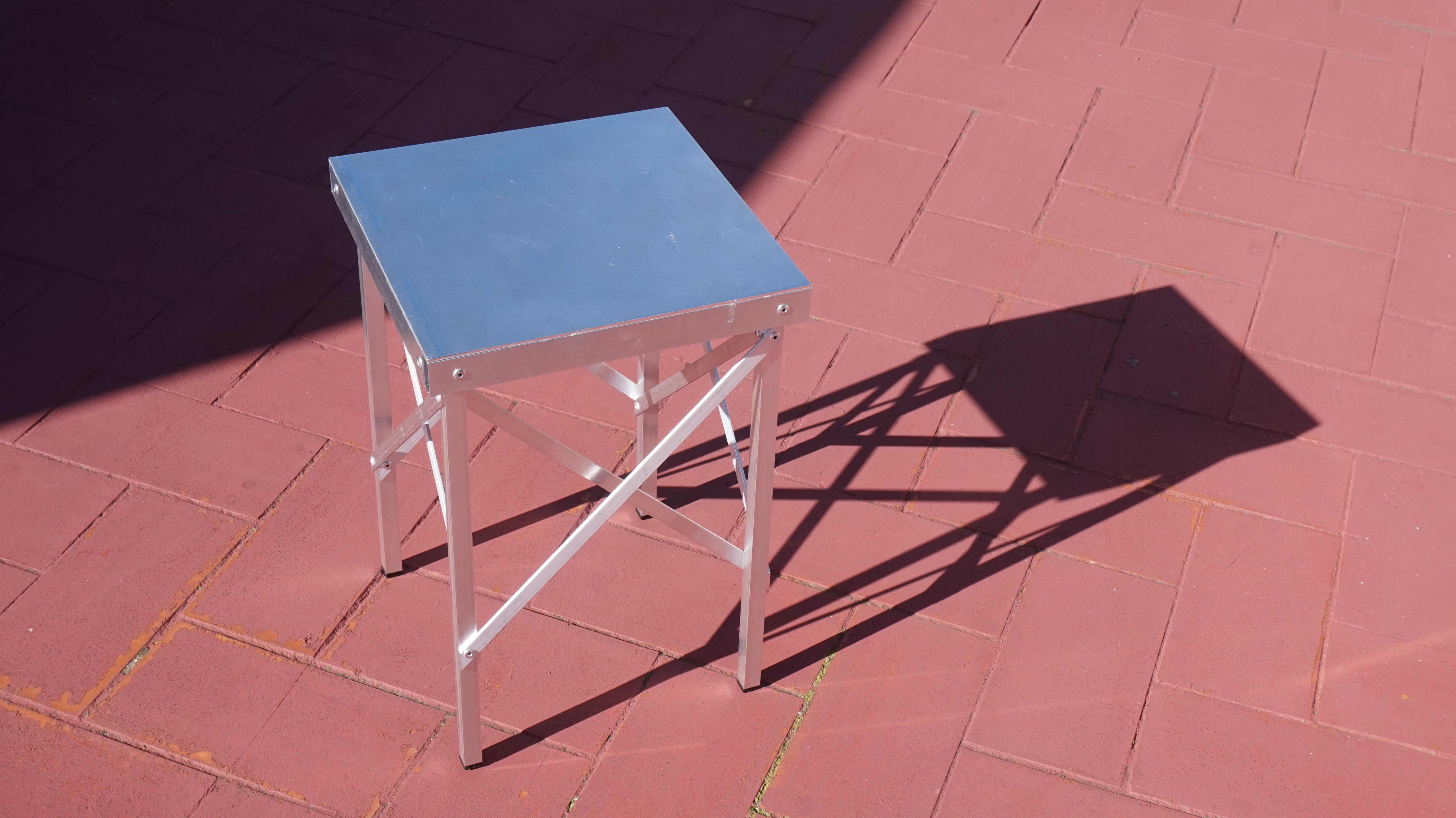
Using aluminium for the furniture, brings also a specific aesthetic, which has in recent years been popular within the design scene. For me the beauty of the material comes also from efficient use, how to make the most out of its specific features. This is something I think is achieved in the stool prototype.
As the proposed furniture can be maintained and adapted by the users, it has a beauty in form of stewardship of the furniture and the raw material itself. As the stool gets weathered in use, repaired, painted, given, sold, it tells a story. Many current products does not last long enough to gain character through use, they break and gets replaced. There is often guilt involved, since we know that the replaced object will often end in a landfill.
Starting from the material and production, Stick Furniture is designed to be available for as many as possible. The material is affordable, it can be processed with little experience and assembled with little to none. The project proposes a way to take stewardship of the objects we live among. The project will be presented through participatory workshops to lower the threshold for taking on the construction.
During and after the event in summer 2025, I gathered feedback from the visitors. By both listening to their thoughts and seeing which furniture they ended buying I got feedback on the objects. The performance proved to be a excellent way to exchange thoughts. Following the event it was interesting to hear for what the stools and shelves had been used for. Their input framed the stool as the most practical object for prototyping as its uses are flexible, acting as a seat but also as a small stand or table. This helped me to take the following steps developing the aluminium version of the stool. As stools are often used as a seat outside, it puts the material qualities of aluminium to good use.
The following steps are to organise workshops and to partner with a organisation or community, so that the stool can be tested in public use, by assembly, use and repair.
The following steps are to organise workshops and to partner with a organisation or community, so that the stool can be tested in public use, by assembly, use and repair.
Stick Funiture has until now existed on a local level. The project is currently preparing to have participatory workshops. The feedback gained will be used to prepare the product for the pilot done in collaboration with an organisation or community.
The core concept of the project is decentralised production which makes it possible to pursue Stick Furniture both on small local scale but also using large production lines when collaborating with humanitarian organisations, communities or other larger institutions where capacity is needed.
The core concept of the project is decentralised production which makes it possible to pursue Stick Furniture both on small local scale but also using large production lines when collaborating with humanitarian organisations, communities or other larger institutions where capacity is needed.
Stick Furniture exists in the intersection of design and engineering. Social science related questions such as who uses the furniture, under what condition and how, are the next to be answered.
The construction method borrows from structural engineering, the diagonal structures are a common sight in bridges and industrial framework. The project is inspired by the approach in open source software, where the product can be picked a part, understood and adapted.
The construction method borrows from structural engineering, the diagonal structures are a common sight in bridges and industrial framework. The project is inspired by the approach in open source software, where the product can be picked a part, understood and adapted.
Stick Furniture exists currently as a design project, available to the public through events and exhibitions. Revenue will be generated through workshops, which makes it possible to further develop the concept. An other source of income is private customers, such as companies in the hospitality industry, such as restaurants, cafes and bars.
The longterm goal is to apply the project to societal use through partnership with organisations in the field, through which the project will be founded.
The longterm goal is to apply the project to societal use through partnership with organisations in the field, through which the project will be founded.
Since the materials used are widely available, Stick Furniture can be applied in many different contexts and locations. It is also possible to scale the production by using automated production lines, which are situated at the same facility where the aluminium is extruded. This makes the production, storing and shipping easy.
During the following year I will be developing furniture models, including the designs themselves but also the production on different levels, developing workshops and instructions but also how the object components are produced in a production line in larger quantities. Besides the development I will be looking for a partnering organisation with whom I will be conducting a pilot project. I am planning to get a EN 581-1 and -2 certifications for the stool, which will be needed for the pilot.