Arts, Culture, and Heritage as Drivers of Change
La Forêt Électrique
La Forêt Électrique - Transforming a Carpentry Workshop into a Cinema Commons
La Forêt Électrique in Toulouse transforms cinema into a community-driven cultural lab. Since 2021, this former carpentry workshop hosts film screenings, creative workshops, and artist residencies. By combining watching and making films, it fosters collaboration, learning, and local talent, turning cinema into a participatory space that empowers the community and strengthens cultural bonds.
France
Local
Toulouse, Bonnefoy neighbourhood
Mainly urban
It involves a physical transformation of the built environment (hard investment)
Yes
2025-12-31
No
No
No
Organisation
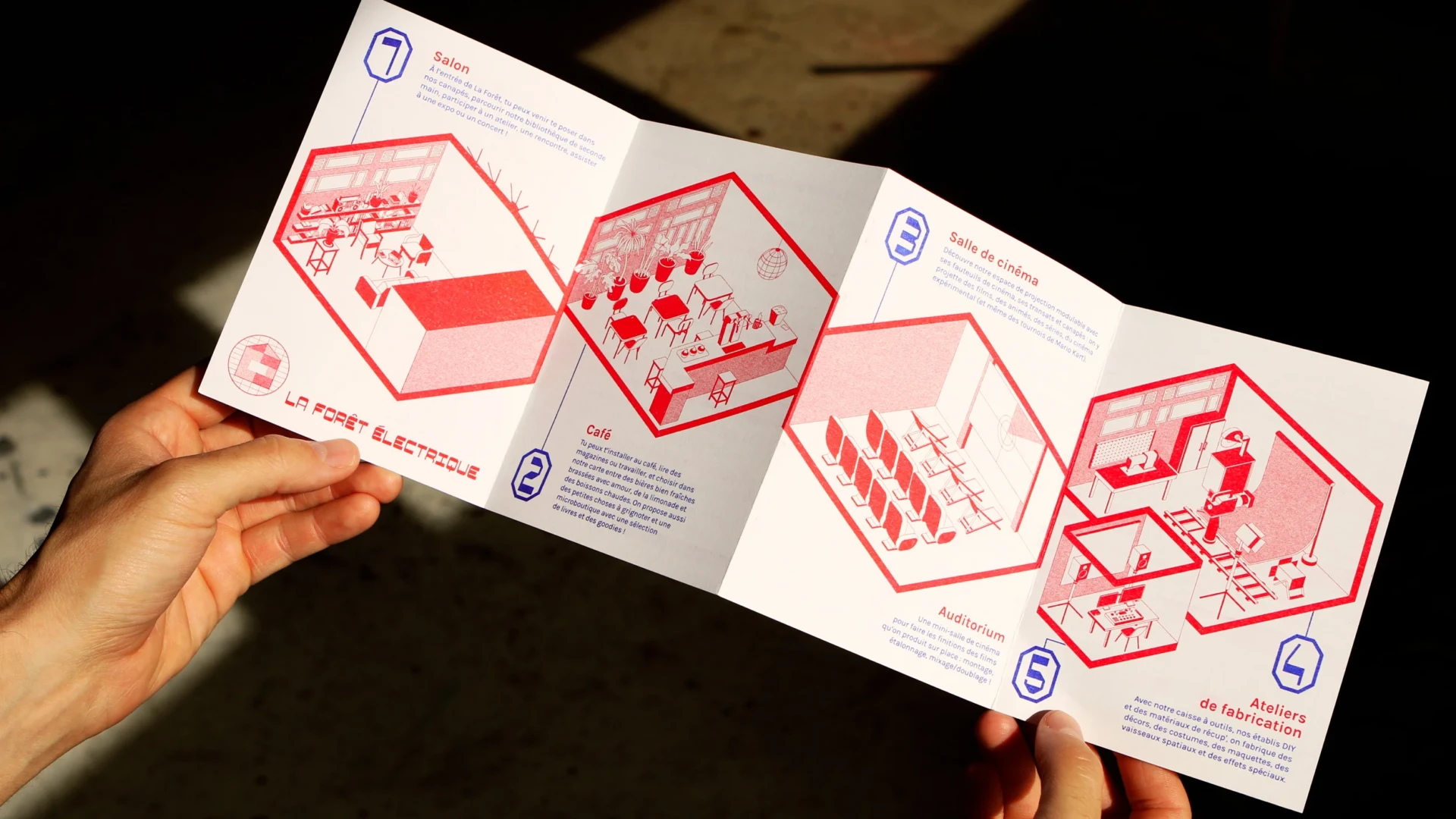
La Forêt Électrique is a citizen-led cinema in Toulouse (France), reimagining cultural spaces as inclusive, participatory and sustainable commons. Born from a city call to reactivate unused urban spaces, the project transformed an abandoned municipal carpentry workshop into a vibrant cultural hub combining film screenings, workshops, residencies, exhibitions, concerts and a café-restaurant.
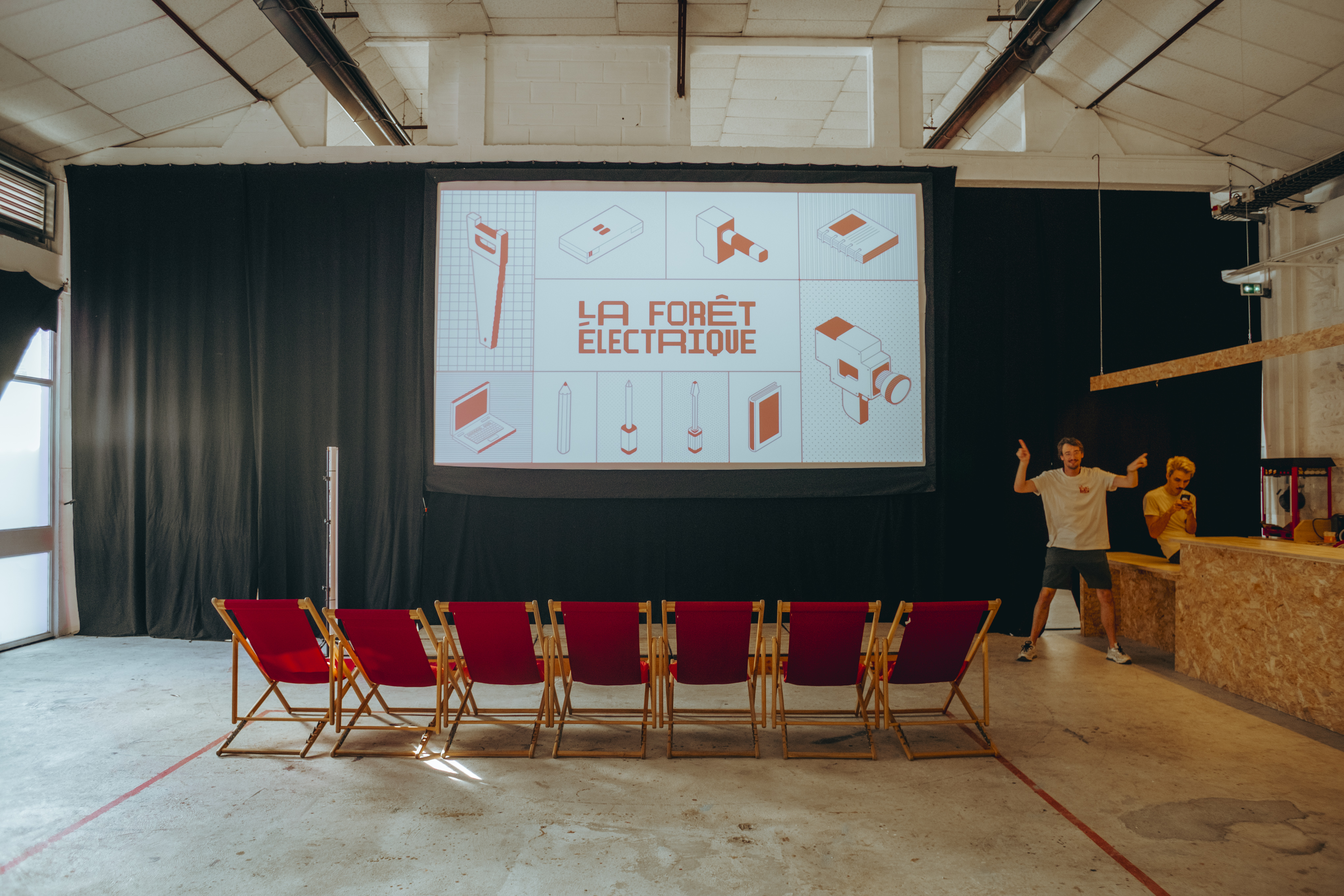
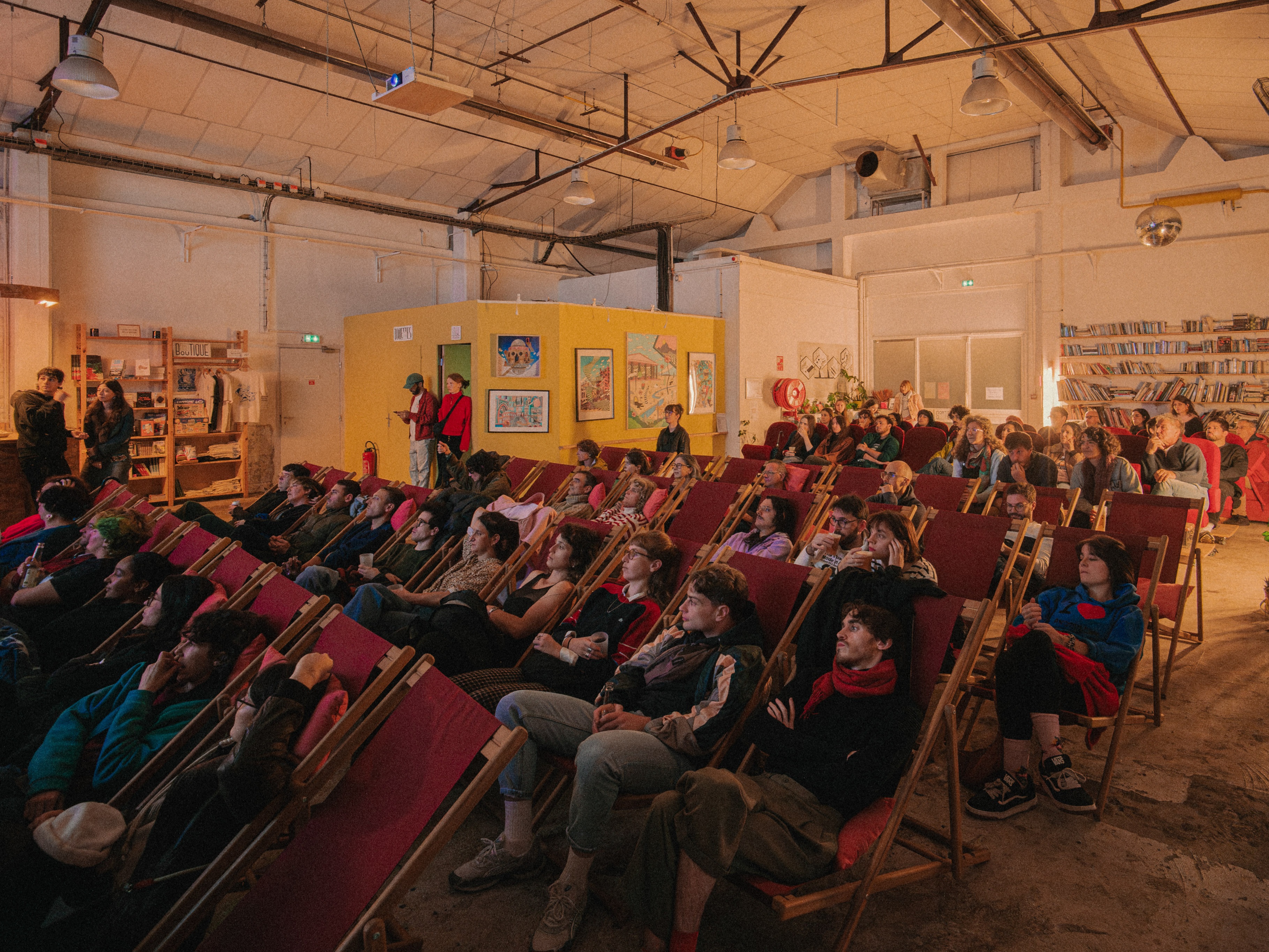
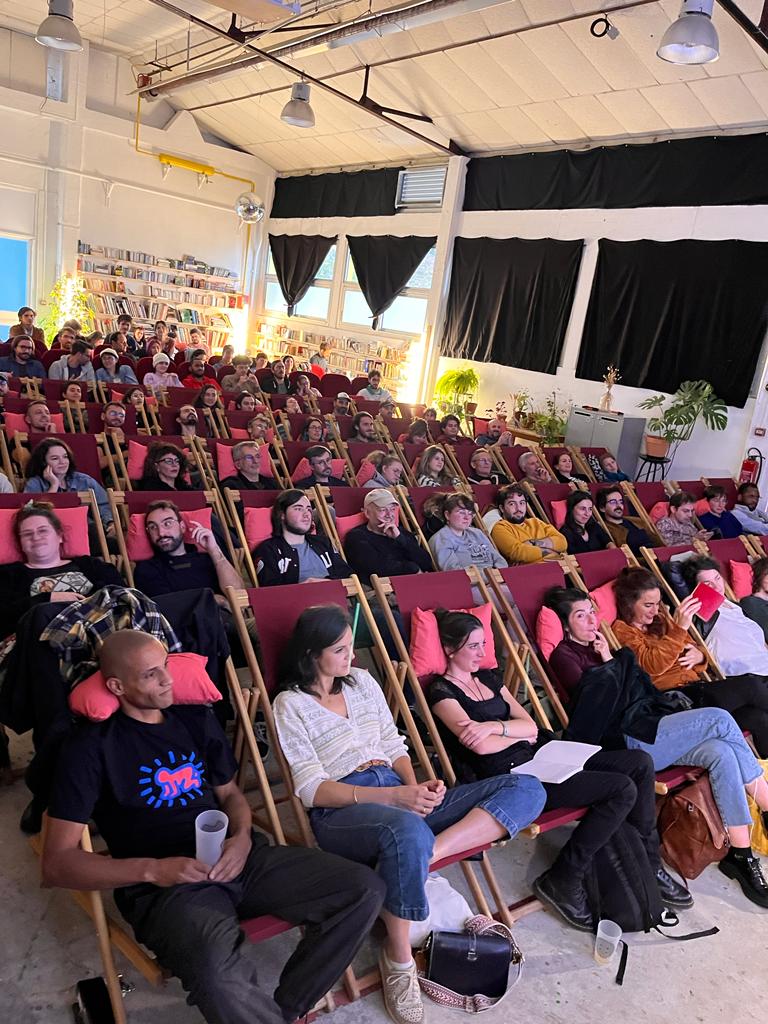
Rather than waiting for a full renovation, the founders embraced the raw space as an opportunity to experiment. Alongside Hors-Pistes Architecture, whose office was embedded within the cinema itself, making them day-to-day participants rather than external consultants, the community co-built the venue through eco-construction workshops, reused materials, and collective design. Seats were recovered from a multiplex, furniture built from salvaged resources, and a public library assembled from donated books.
Achieved results are concrete and durable: securing a long-term lease until 2055, establishing a twelve-member gender-balanced board drawn entirely from the community, building a volunteer network of over a hundred contributors, and delivering accessible cultural programming (6€ flat ticket price, free events, Kids Club and dog-friendly screenings) to underserved audiences.
The long-term impact operates on multiple levels. Socially, the project has created durable community infrastructure and genuine shared ownership of a cultural space. Environmentally, it demonstrates low-impact urban regeneration through material reuse and local sourcing. Culturally, it expands cinema beyond spectatorship into creation, education, and experimentation. Economically, its hybrid model combining earned income, public support, and volunteer engagement ensures resilience and affordability.
La Forêt Électrique proves that beauty, inclusion, and sustainability can be achieved with limited means, by valuing what already exists and trusting communities to shape what comes next.
Before launching La Forêt Électrique, Agnès Salson and Mikael Arnal embarked in 2017 on a European tour visiting over a hundred independent cinemas, seeking to understand how these venues reinvent themselves. They witnessed a movement rethinking how cinemas are created, governed, and sustained and documented it in the book Cinema Makers (2019).
In 2021, they secured an abandoned city-owned carpentry workshop in a rapidly changing Toulouse neighbourhood. Rather than waiting years for surrounding construction to finish, they embraced the raw space as an opportunity to experiment, building a cinema that would embody their research: a space co-built with a newly formed team and the local community, affordable, fostering collaboration, cultural participation and collective ownership.
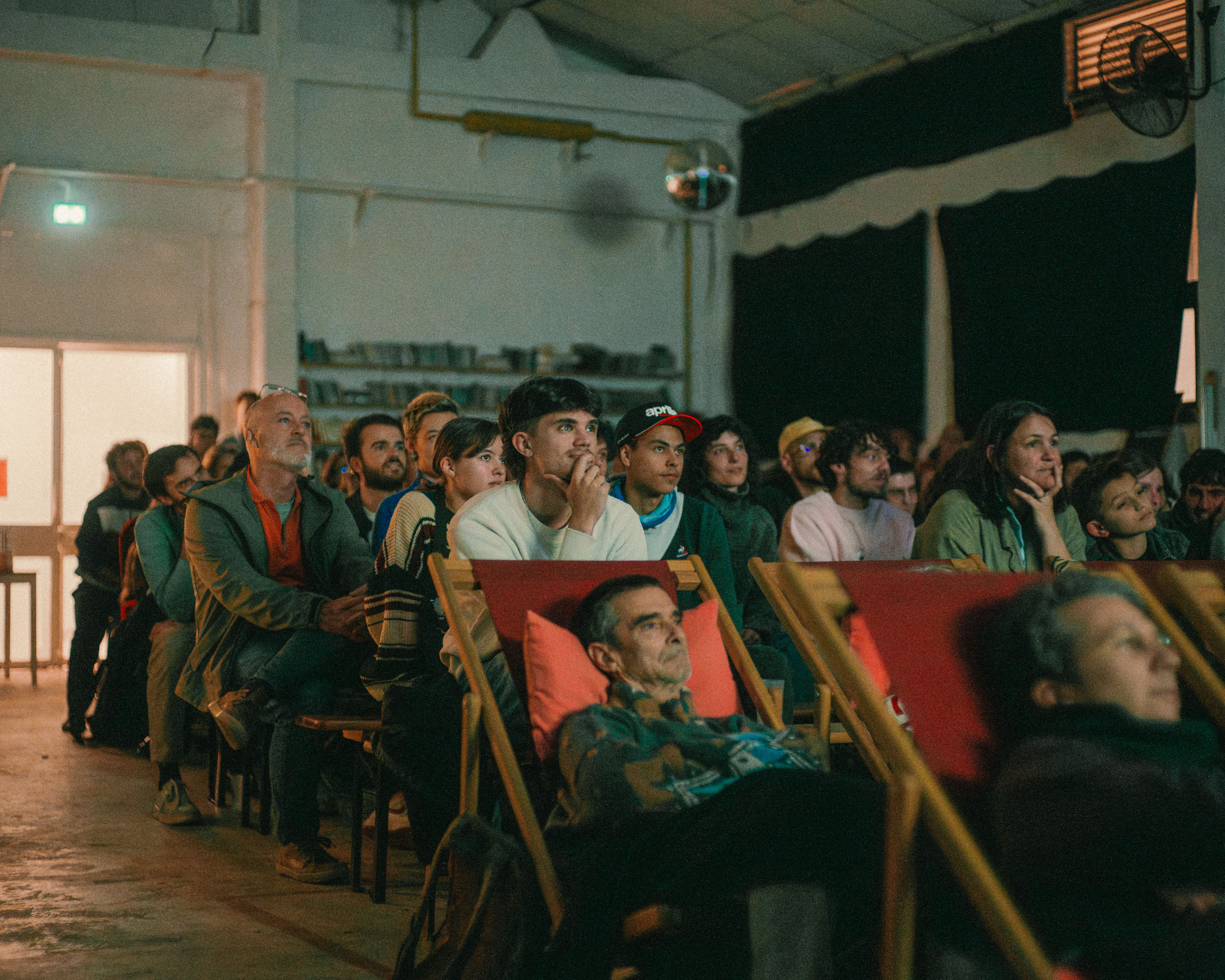
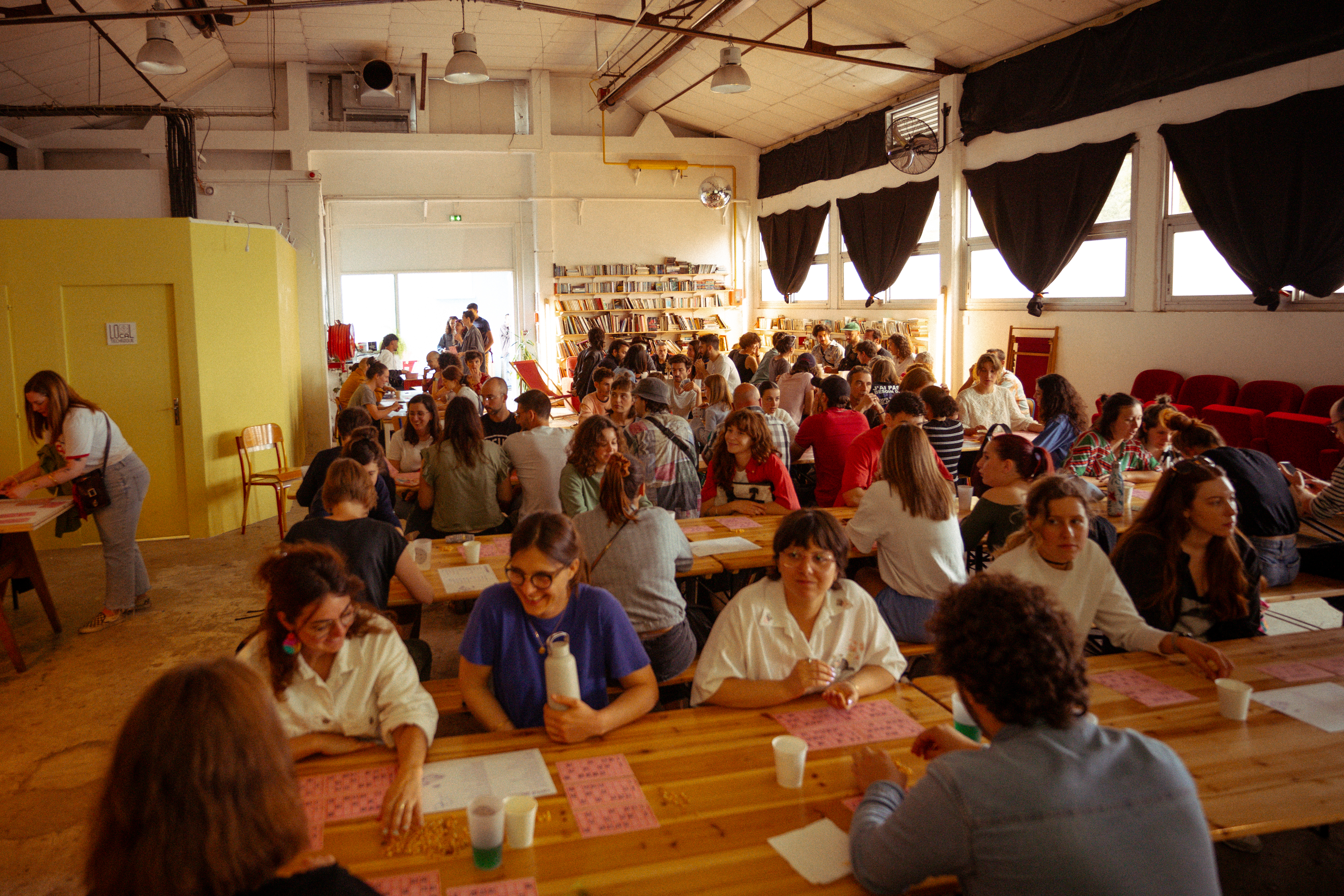
From the start, the cinema opened seasonally, in spring and autumn, turning each reopening into a collective event. Between seasons, construction workshops and volunteer-led sessions gradually shaped the space. Inside, life was immediate: screenings, film workshops, contests, a café-restaurant and artist residencies brought together a growing community of people passionate about both watching and making cinema.
In 2025, a twelve-member, gender-balanced board was established, composed entirely of people encountered during the cinema's prefiguration: artists, young residents, filmmakers, cultural professionals. Decision-making had moved beyond the founders. The cinema now, as a commons for screening, making, and living together, belongs to its community.
Citizen-led co-creation
Building reuse
Cultural inclusion
Collective governance
Hybrid cultural economy
We addressed sustainability through environmental reuse, social participation, cultural resilience, and a hybrid local economy. Rather than constructing a new building, the project repurposed an abandoned municipal building, significantly reducing the environmental impact while preserving the neighbourhood's heritage. The rehabilitation relied extensively on reused materials including furniture or construction elements. Taken together, these dimensions make La Forêt Électrique an exemplary model: proving that sustainability can be achieved with limited means, by valuing what already exists and trusting communities to shape what comes next.
1. Environmental awareness also extends to everyday operations: the café and restaurant prioritize local sourcing from nearby producers, reducing transport impacts. Public events regularly engage with ecological themes, connecting cultural programming with environmental reflection and education.
2. Social sustainability is central to the project's model. Through participatory construction, workshops and programming committees, residents and volunteers acquired practical skills and actively shaped the space in a way an individual approach would not have. This process strengthens the community's sense of belonging and transforms the venue into long-term cultural infrastructure.
3. Culturally, the project supports independent cinema and emerging local creators by providing affordable access to screening, training and experimentation. By combining film screenings with workshops, exhibitions, and collaborative production, it fosters cultural diversity and encourages amateurs to engage with cinema not only as spectators but also as creators.
4. Economically, the project operates through a hybrid model combining cinema activities, a café-restaurant, public support, and volunteer engagement. This diversification makes it possible to keep ticket prices affordable as the project’s financial balance does not depend on ticket sales.
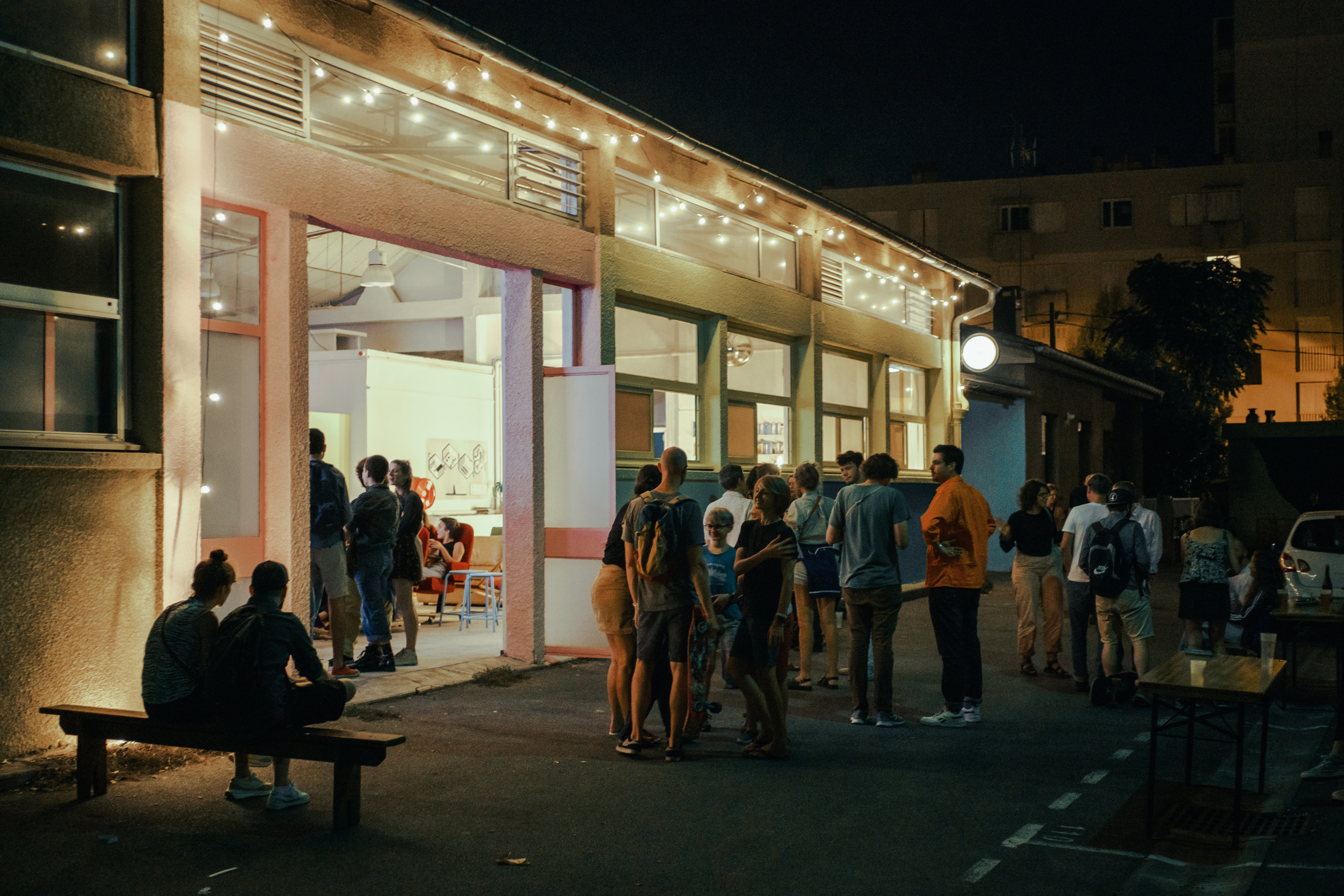
We transformed an abandoned industrial carpentry workshop into a warm cultural space embedded in its neighbourhood. From the outset, we worked with Hors-Pistes Architecture, whose office was housed within the cinema itself, a unique arrangement that made the architect a genuine participant in the project's daily life rather than an external consultant. This proximity shaped everything: design decisions emerged from continuous dialogue between the architectural team, the founders, volunteers, and the community.
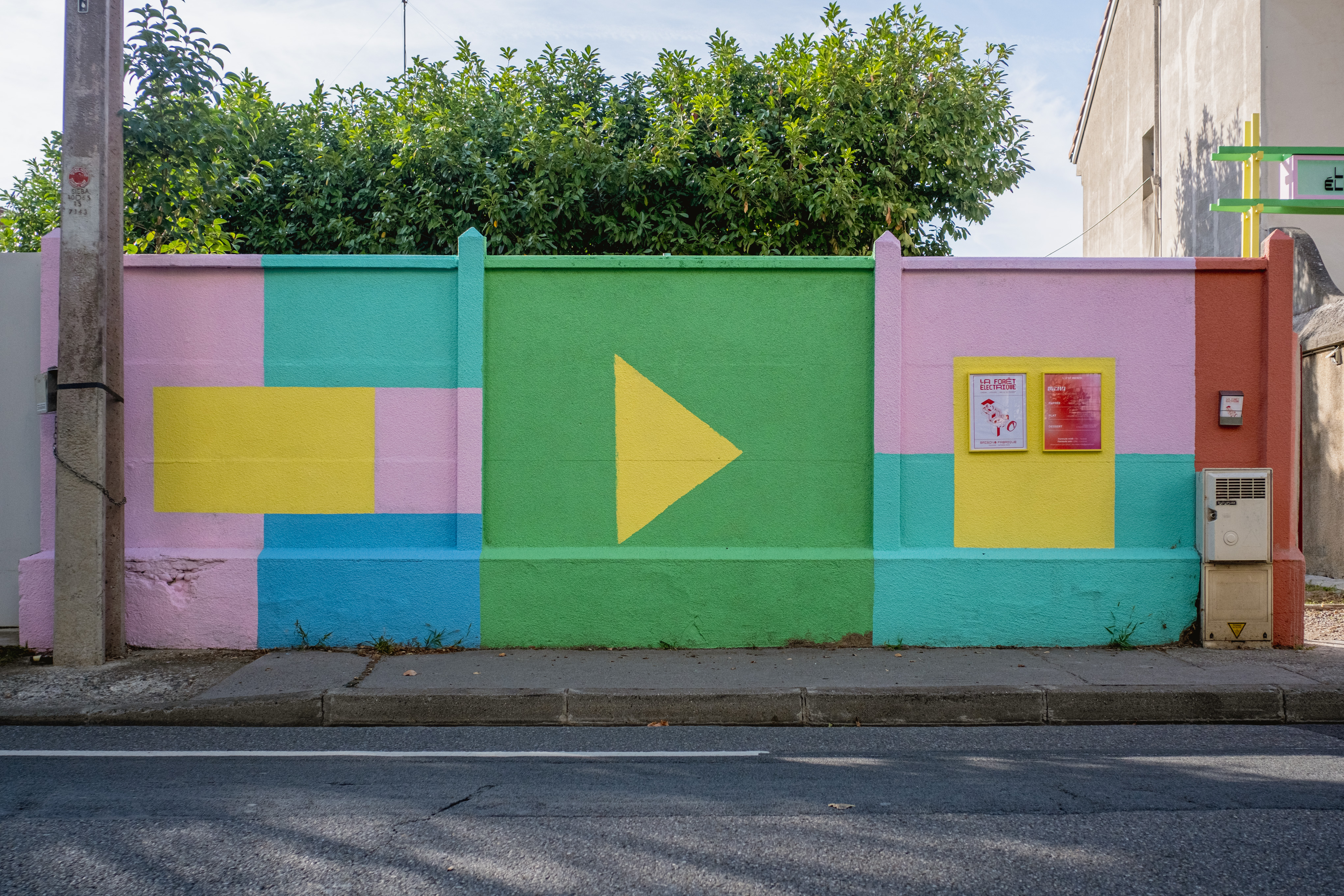
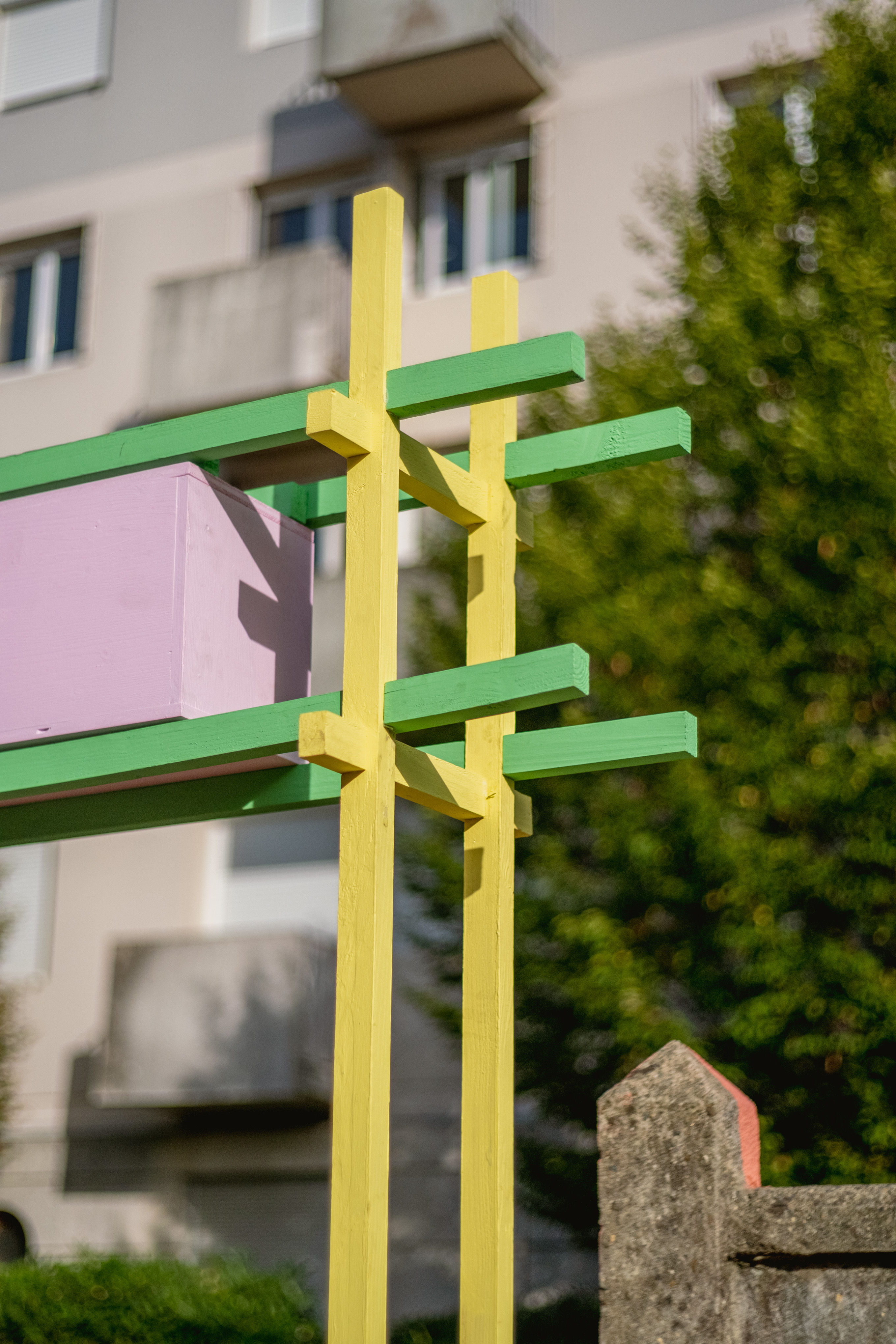
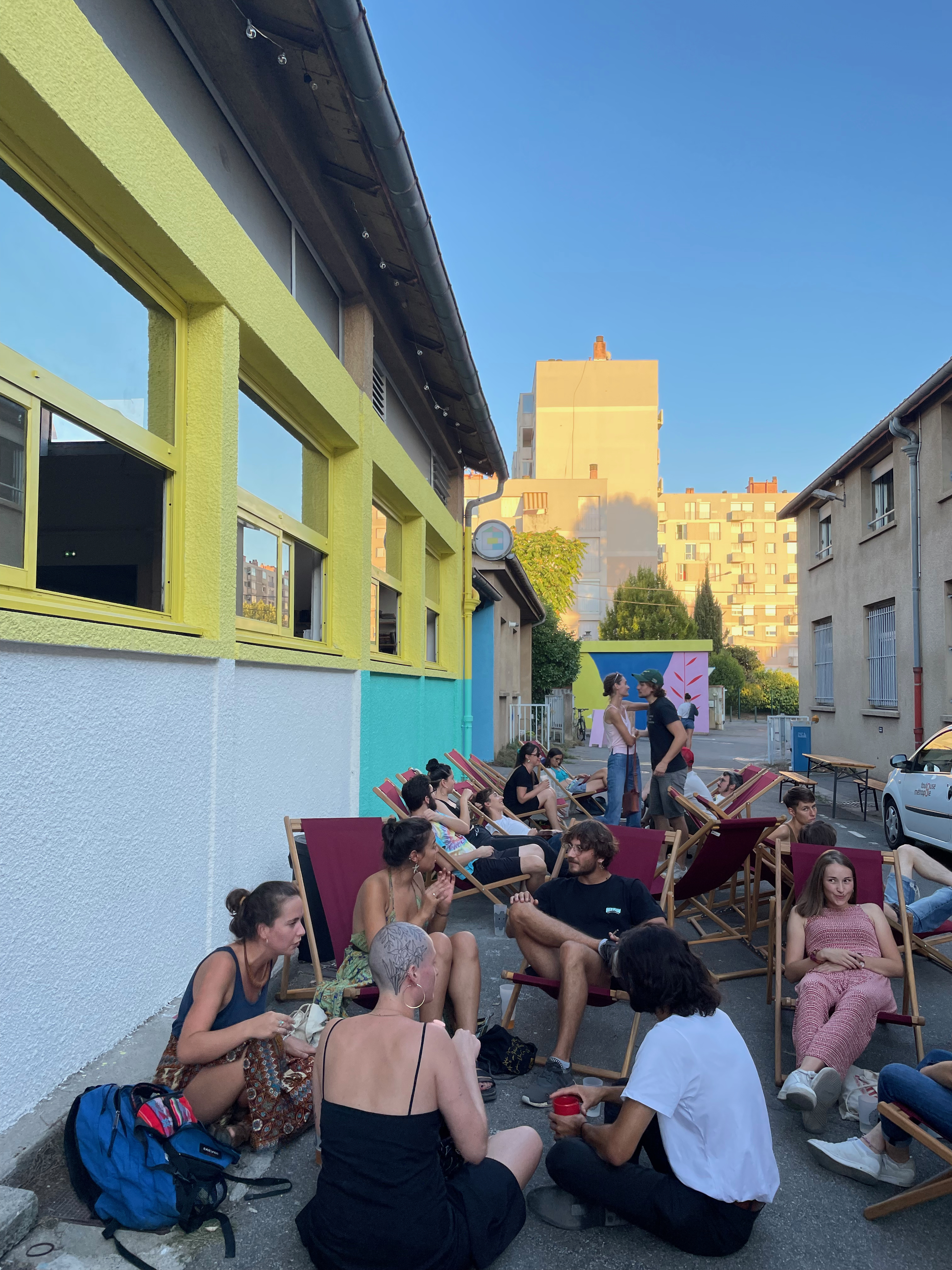
Rather than erasing the site's past, the project preserves its raw industrial character, exposed brick, original structures, while enhancing it through light interventions: lime-coated walls, large color surfaces on the façade, and integrated vegetation. This creates a distinctive aesthetic combining industrial, DIY, and artisanal atmospheres.
The design developed progressively through a collective process using mostly reclaimed materials. Furniture, library elements, and spatial arrangements were built from reused resources, giving the space authenticity and low environmental impact. The modular cinema setup allows continuous transformation to host screenings, concerts, exhibitions, and gatherings, reinforcing a living aesthetic rather than a fixed one.
What was previously an inaccessible site has become a place where people express surprise and attachment. Light, materials, and openness create a welcoming environment that encourages people to stay, meet, and return. The visible and colorful façade improves the streetscape and signals cultural activity.
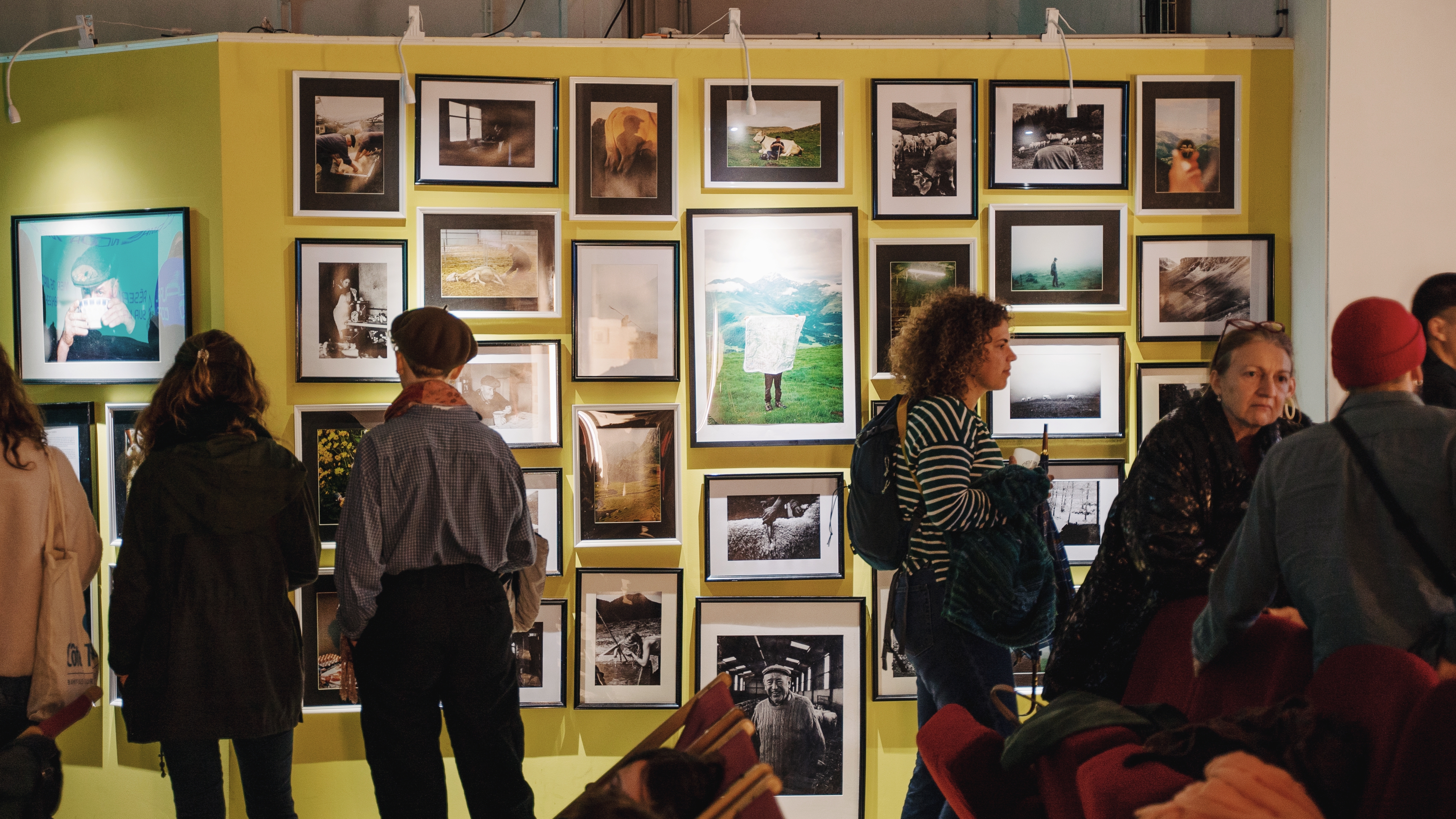
Aesthetics are reinforced through programming: cinema, visual arts, photography, and scenography regularly reshape the space and connect artistic practices with the physical environment. Beauty here is not a finishing touch: it emerges from collective use, reclaimed materials, and the freedom to transform a space that people appropriate and sustain over time.
La Forêt Électrique addresses inclusion through a combination of physical accessibility, affordability, participatory governance and programming designed for diverse audiences.
The building is fully accessible to people with reduced mobility, adaptable seating in the cinema, and lowered service points at the bar. Financial accessibility is ensured through a uniform 6€ ticket price for all screenings, numerous free events, and low-cost workshops, supported by public funding and local sourcing to keep prices low while maintaining sustainability.
Inclusive governance is embedded : community members, volunteers, and young people participate in weekly programming committees, workshops and events. The association’s current twelve-member, gender-balanced board reflects diverse perspectives, moving decision-making beyond the project’s initial founders and fostering shared responsibility.
The project specifically targets audiences who are underrepresented in cultural participation, including young people, families and socially marginalized groups. Programming choices, such as the Dog-Friendly screenings, Kids Club events, and low-cost or free workshops, create opportunities for intercultural and intergenerational encounters. Spaces like the café and restaurant further encourage dialogue between different social groups, while inclusive approaches in workshops and co-construction activities allow residents to appropriate skills and knowledge previously perceived as inaccessible.
This model demonstrates that accessibility and inclusion are not limited to one aspect of a cultural project: they encompass physical spaces, financial models, participatory governance, and socially responsive programming.
Since its beginning in 2021, La Forêt Électrique has actively involved local citizens, artists, and cultural actors in shaping the cinema. Starting with a small circle of nearby residents and artists, the project quickly engaged over a hundred volunteers, including young people, filmmakers, and multidisciplinary artists from diverse social and cultural backgrounds. They co-designed the cinema space, organized workshops, contributed to eco-construction, and helped shape programming through weekly committees and open “creative clubs.” Engagement ranged from continuous involvement for core members to occasional participation as newcomers explored the evolving site.
Concrete initiatives included collectively recovering cinema seats from a multiplex, building a public library from donated books, and co-organizing neighborhood events such as dog-friendly screenings that fostered new connections. Community members also co-curated film programs and contributed to contests and workshops, offering real access to cinema and cultural production to audiences who might otherwise not engage with independent venues.
Participation has generated significant impacts: stronger community ownership of the space, diverse programming reflecting multiple tastes and generations, new ideas for workshops and events, and a vibrant, socially inclusive environment. In 2025, a gender-balanced twelve-member board - composed entirely of people encountered during the prefiguration phase, including local artists, young residents, and cultural professionals - now governs the project, ensuring continuity and collective decision-making. By embedding citizens in every stage of development, La Forêt Électrique demonstrates that cinema can be a participatory cultural hub, co-created by and for the community it serves.
At the local level, the project began when Toulouse Métropole launched the “Dessine-moi Toulouse” call for projects to reactivate unused urban spaces. Through this program, the City of Toulouse granted the association temporary access (2020-2025) to an abandoned municipal carpentry workshop. Local cultural and urban planning departments supported the experimentation, which took place within the broader urban transformation of the Grand Matabiau district. At the regional and departmental levels, public authorities supported the rehabilitation of the space through financial contributions.
The project received notable recognition, including the IFCIC Entreprendre dans la Culture award presented by the French Ministry of Culture, underscoring its role as an innovative cultural and social space. At the national level, the project also benefited from financial support from the CNC (Centre National du Cinéma et de l'Image Animée), whose policies aim at reconnecting young audiences with cinemas.
At the European level, the project connects to the network emerging from the book Cinema Makers, which documents innovative independent cinemas across Europe. La Forêt Électrique has actively engaged with this community participating in the Cinema of Commoning gatherings at Sinema Transtopia and organizing the Cinema Makers festival in Strasbourg, a new European gathering of commons-based independent cinemas.
This multilevel governance created strong added value : it secured access to cultural infrastructure, legitimized a grassroots initiative within public cultural policies, and enabled experimentation with a hybrid model between civic initiative and public commons. The result is a sustainable and innovative cinema project, rooted locally as demonstrated by the recent signing of a 30-year lease, securing La Forêt Électrique as a lasting cultural venue.
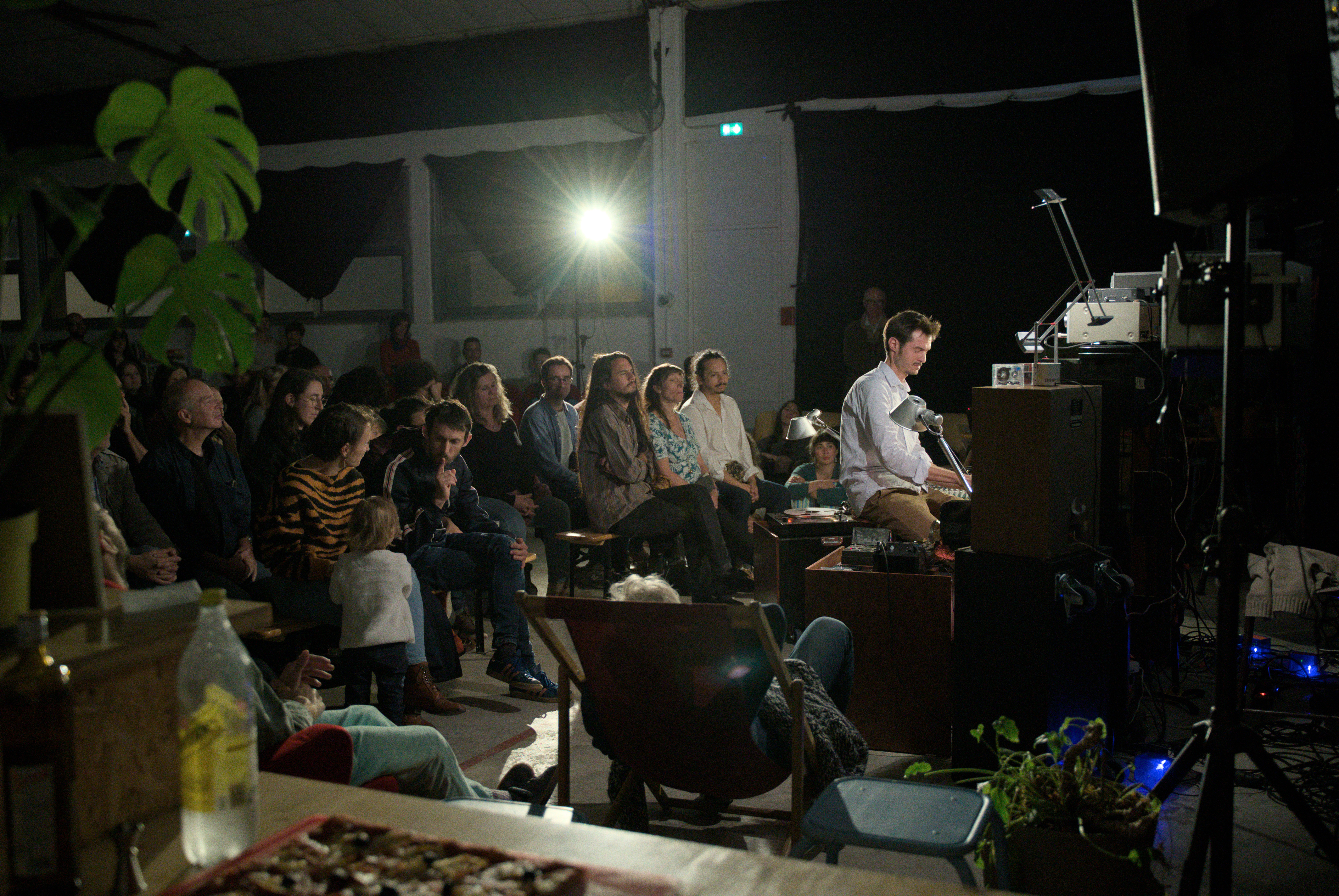
As a cinema, La Forêt Électrique primarily engages the arts (film, theatre, music, visual arts, photography, and design) while also hosting exhibitions, creative markets, and concerts that extend its cultural reach. Architectural and design expertise was mobilized in the rehabilitation of the municipal carpentry workshop, including eco-construction practices and sustainable material reuse.
Digital technologies play a central role, particularly in film creation and workshops, through open-source software, 3D printing, laser cutting, and digital special effects. Scientific knowledge and environmental sciences have been integrated through collaborations with local researchers and the Muséum d’Histoire Naturelle de Toulouse, linking ecological awareness to practical workshops. Educational and pedagogical approaches are embedded throughout, with workshops, training sessions, and mediation activities open to young people, local residents, and aspiring filmmakers. Partnerships with local cinema schools, universities, and scientific associations further reinforce this approach, enabling residents of all ages to contribute to projects that combine artistic creation, technological innovation, and environmental awareness.
Transdisciplinary collaboration is constant, as illustrated by a range of signature events: an evening exploring video games and archaeology brought together the team behind Assassin's Creed and a historian specializing in 9th-century Baghdad; the Figuré.e graphic arts festival combined a creative market and a special screening evening dedicated to film title sequences; an evening celebrating the Occitan language featured auteur filmmaker Alain Guiraudie discussing his relationship to the language, followed by a 1940s film shot in Occitan and a vinyl DJ set of Occitan music, etc. This blending of arts, science, technology and social participation fosters inclusion, knowledge appropriation, and experimentation, breaking down barriers between disciplines.
La Forêt Électrique operates through a hybrid and diversified business model combining earned income, public support, and non-monetary contributions.
Revenues are generated through multiple complementary activities: cinema screenings (low-cost ticketing), a café-restaurant, bar sales, workshops, training sessions, and occasional events or space uses. This diversification reduces dependence on a single income stream. More fundamentally, these activities reinforce one another: the project functions as a warm, convivial place where people come not only to watch films, but to spend time, meet others, eat and drink, and discover local filmmakers. This creates a positive dynamic in which uses are interdependent and mutually sustaining, rather than isolated revenue streams.
Public funding plays a key role in the model, supporting both the initial rehabilitation of the space and parts of the cultural programme. This includes local and regional subsidies, financial support from the CNC, as well as recognition through cultural innovation awards, which contribute both financially and in terms of legitimacy. The recent signing of a 30-year lease with the municipality marks a decisive step toward long-term structural stability, consolidating the project's economic foundation and securing its future as a permanent cultural venue. The project also relies on strong volunteer engagement and in-kind contributions, which reduce operating costs and reinforce community ownership. Certain activities, such as workshops or events, are designed to balance financial sustainability with accessibility, sometimes generating limited or no profit but contributing to the overall ecosystem of the venue.
This hybrid model creates long-term resilience by combining market-based revenues, public investment, and civic participation. It allows the project to remain affordable, adaptable, and locally embedded, while progressively structuring a more stable economic foundation for the future.
Several components of La Forêt Électrique are designed to be transferable across contexts.
First, the contractual model with a public authority is highly replicable: by securing a 30-year lease on an underused public asset, the project demonstrates how a civic initiative can transform public land into a cultural commons while preserving full associative independence. A transferable template for grassroots projects seeking long-term stability.
Second, the participatory rehabilitation methodology is easily replicable. Involving people from the very first construction stages is a way for a cultural venue to go beyond co-programming and build a project genuinely connected to its neighbourhood and socially rooted. Working with the existing fabric of a place, its materials, its history, its traces, also makes the process more ecological, grounding the project in what already exists rather than starting from scratch.
Third, the governance model is transferable: a gradual shift from a founder-led initiative to a collective structure whose team and board directly reflect the diversity of its users. Faced with managing a commons, this ensures decision-making remains grounded in actual use and lived experience.
Fourth, the transdisciplinary programming framework moves beyond the traditional "black box" cinema model, demonstrating how a popular cultural form can become a genuine community hub combining creation and screenings, local dynamics and European networks, informal education and artistic residencies. This expanded definition of cinema is itself a transferable idea, applicable to any cultural venue seeking to bridge accessibility, innovation, and community life.
Finally, the hybrid economic model underpins the whole: combining cultural activities with complementary revenue streams (café, workshops, events) enables cross-subsidisation, reduces reliance on ticketing and shapes the venue as a warm, multipurpose space rather than a single-purpose facility.