Spycimierz Living Heritage Hub
UNESCO Flower Carpets, Co-Creation in a Small Municipality
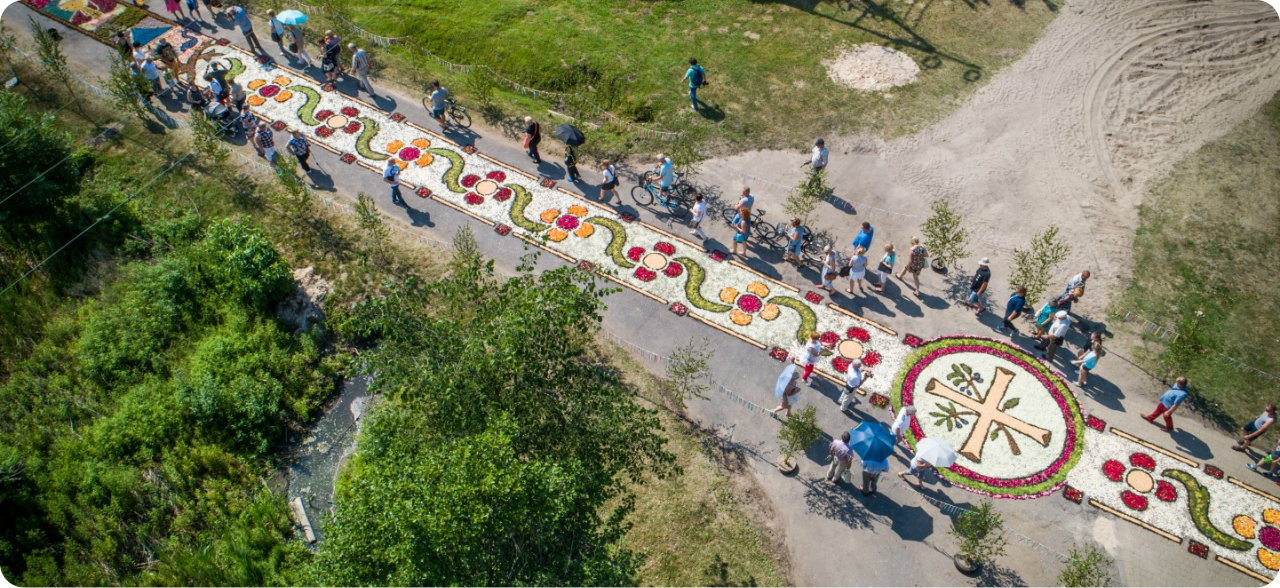
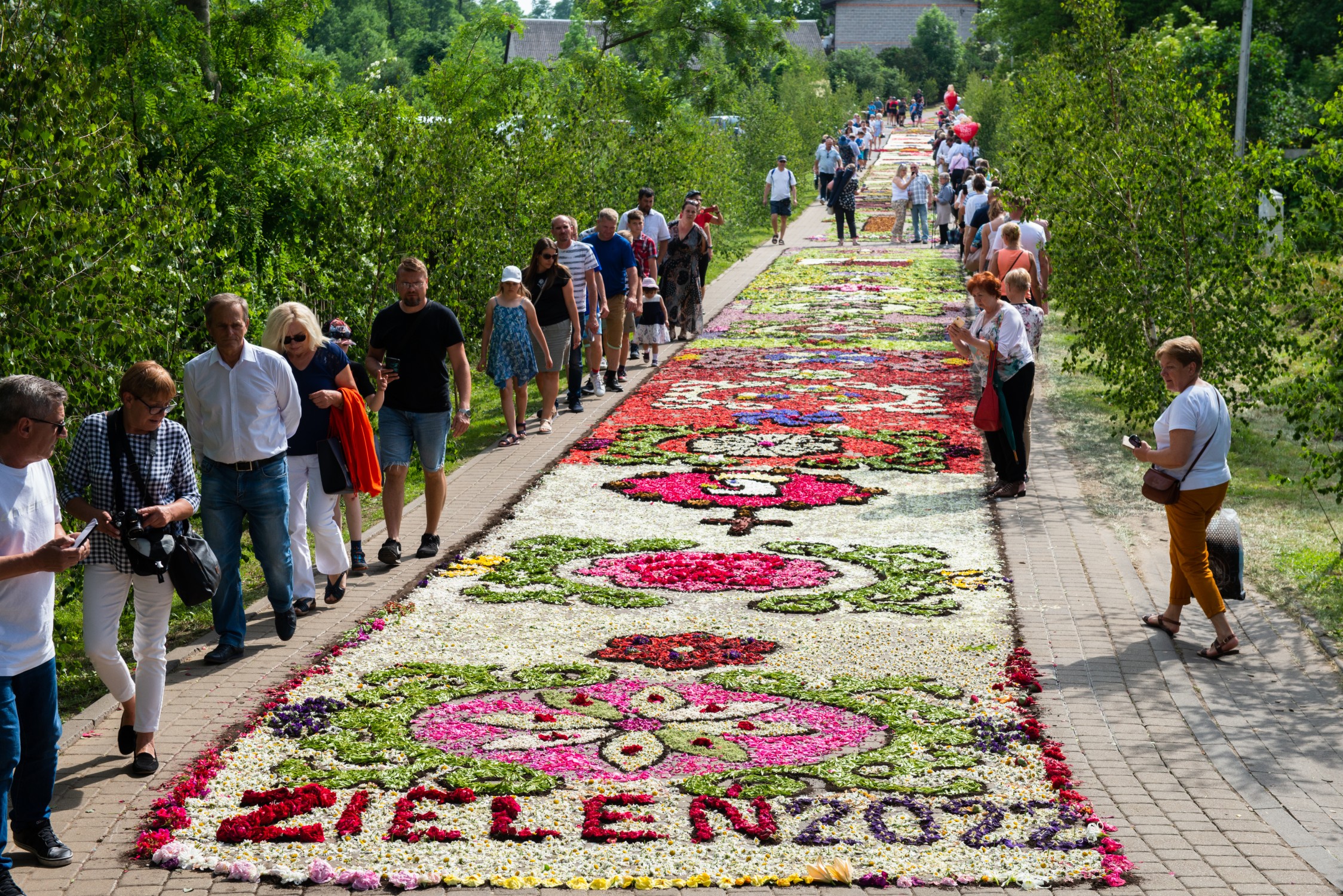
In the village of Spycimierz, in central Poland, living heritage becomes a shared future. Built around the UNESCO-recognised tradition of Corpus Christi flower carpets, the initiative brings together residents, experts and local authorities to co-create the Corpus Christi Centre - an open, beautiful and inclusive place for culture, education and community life. Rooted in local identity and care for biodiversity, it turns tradition into a sustainable model of development for a small municipality.
Poland
{Empty}
Prototype level
Yes
Yes
Yes
Yes
ERDF : European Regional Development Fund
{Empty}
No
1005101181104: Uniejów (PL)
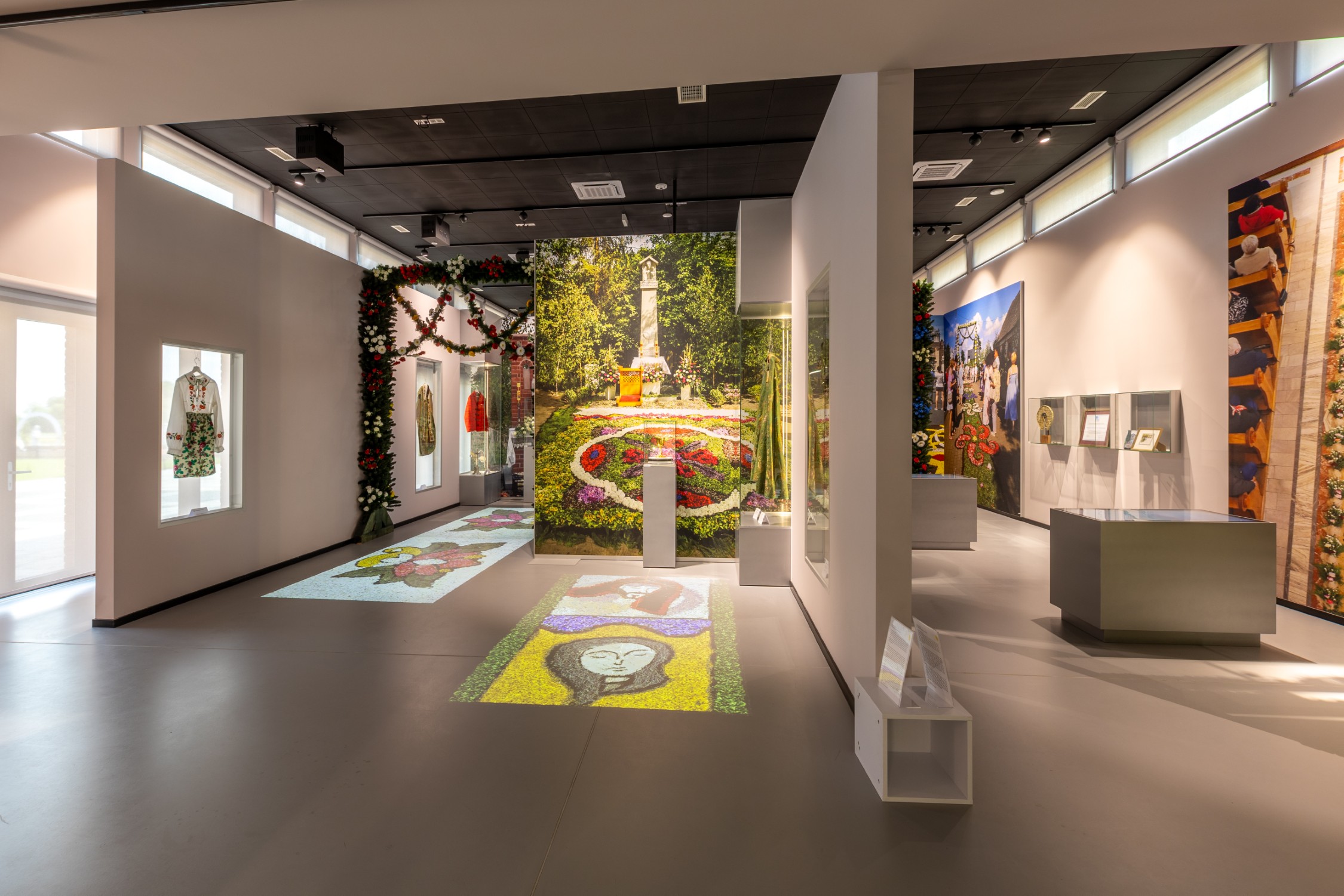
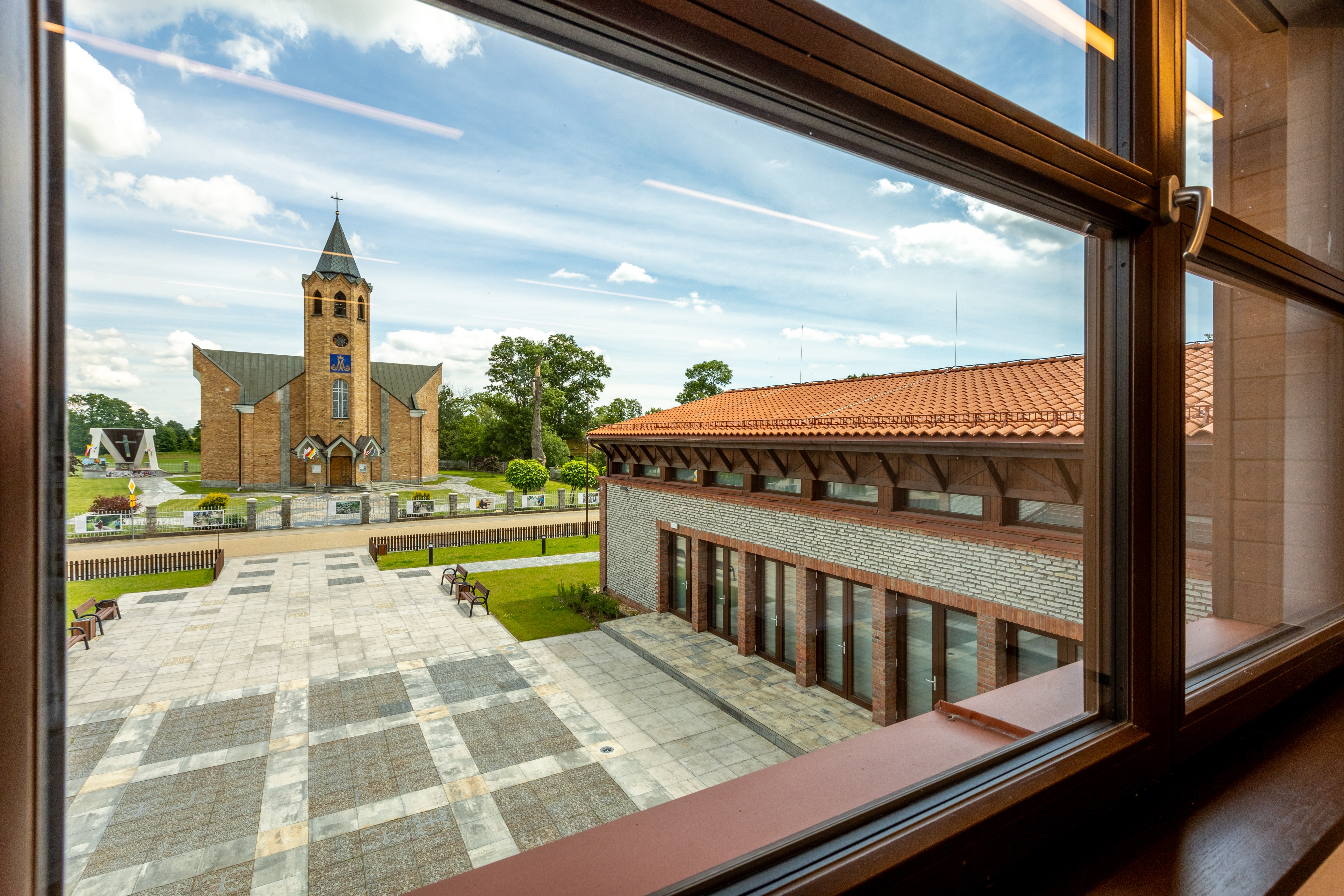
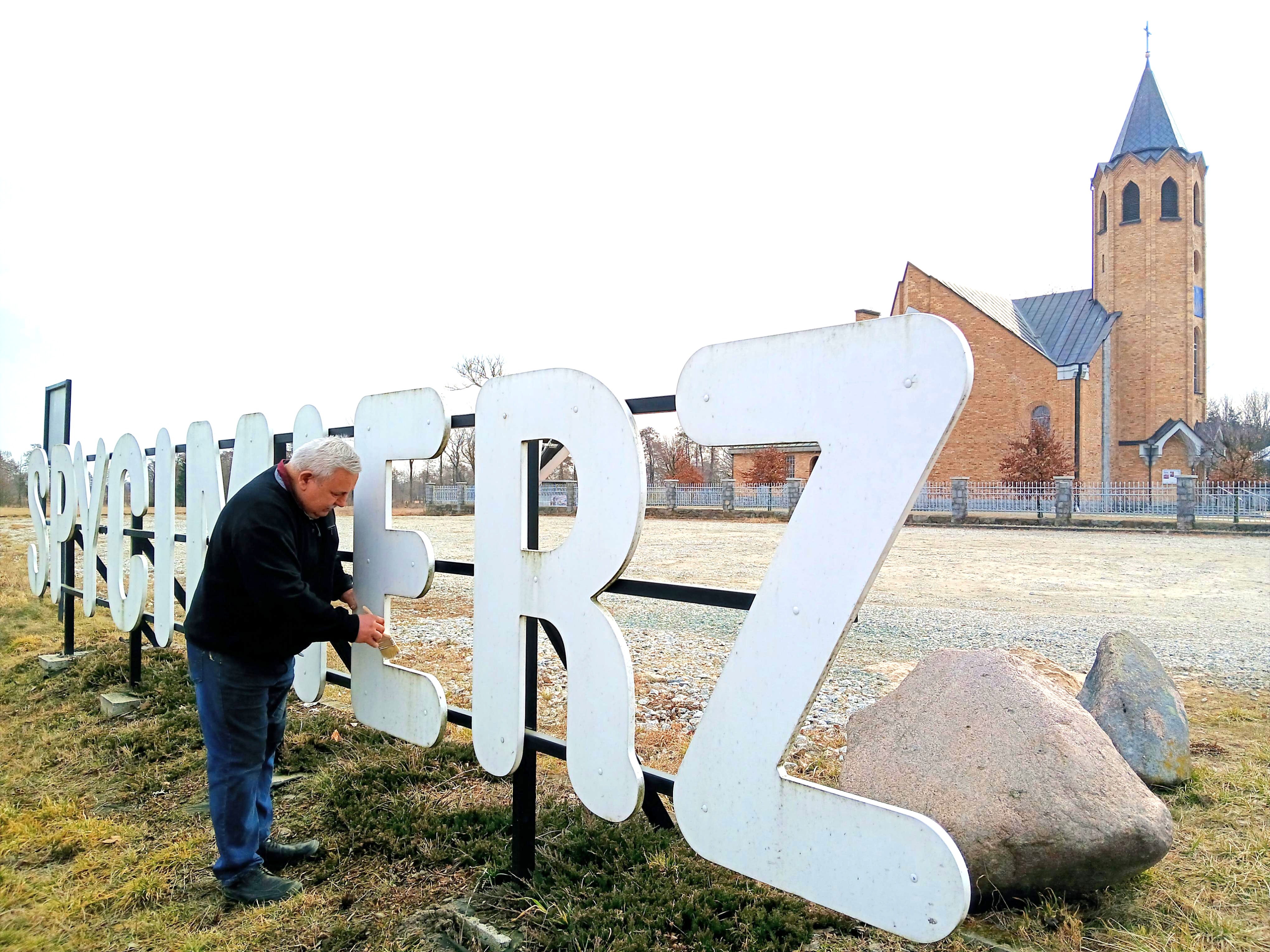
Spycimierz Corpus Christi Centre functions as a living heritage hub where the tradition of creating flower carpets for the Corpus Christi procession – inscribed in 2021 on the UNESCO Representative List of the Intangible Cultural Heritage of Humanity – is safeguarded, transmitted by its heritage bearers. The Centre, designed as a continuation of the village’s historic layout, uses local materials (limestone, brick and wood) and creates a shared public space. The identity of the place is strengthened by community-driven symbols such as the wooden “Spycimierz” sign and the cultural route “Spycimierz Trail”, linking tradition with the village landscape.
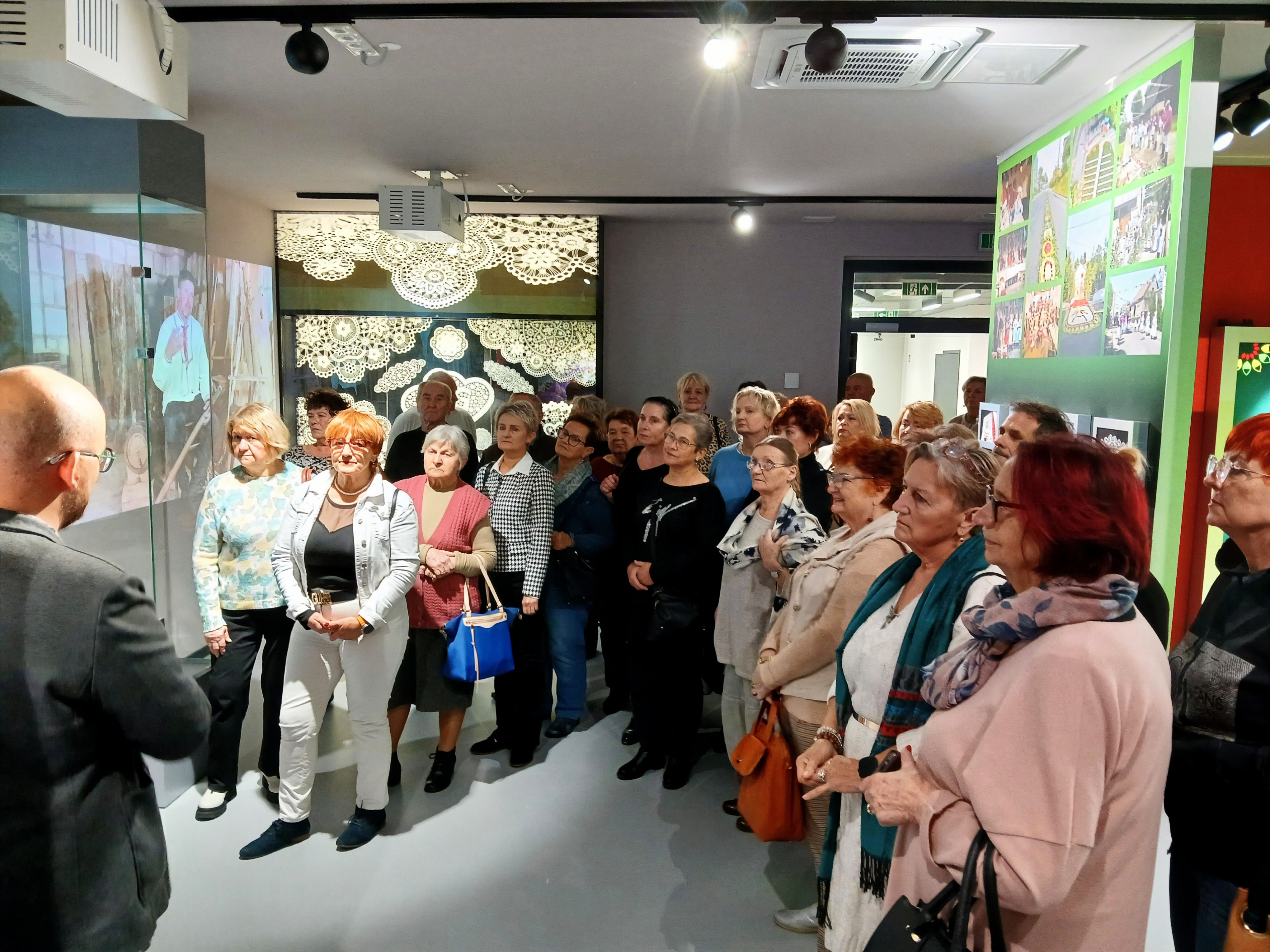
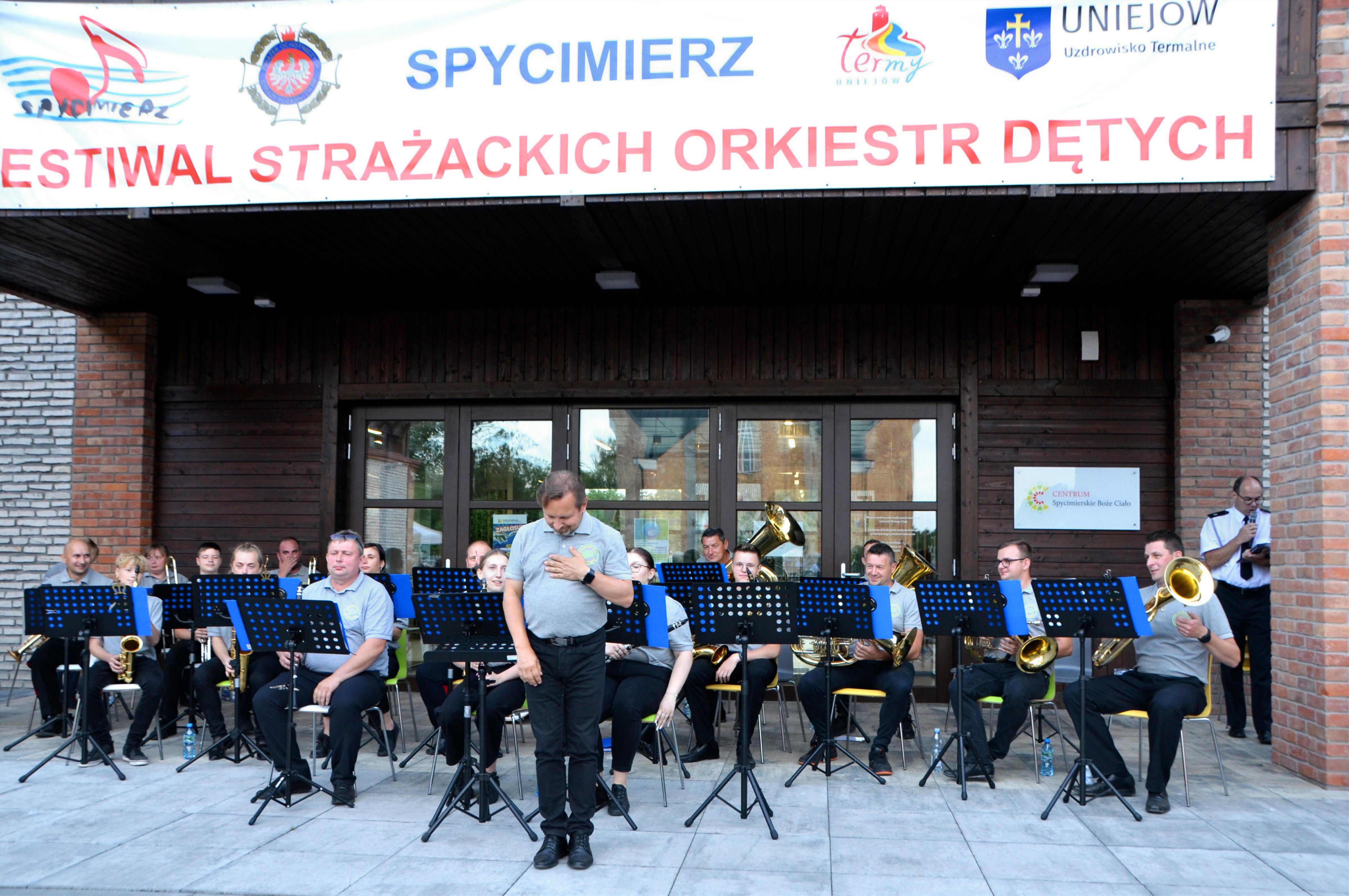
The overall aim is to strengthen identity and support development based on living tradition. The main target groups are heritage bearers, schools, local organisations, the parish and visitors. The Centre operates year-round, with residents guiding visitors through the exhibition and sharing the story of the village and its UNESCO tradition. An important element of the Centre’s year-round life is the regular performances of the Spycimierz Volunteer Fire Brigade Brass Band in the courtyard of the facility.
Key objectives include: (1) intergenerational education through workshops, meetings and archival activities; (2) co-governance and co-creation, with residents actively shaping the programme and organisation of the Corpus Christi celebration; and (3) promoting biodiversity and flower cultivation. The initiative is developed through the Spycimierz Co-Creation Model: the Spycimierz Seminars, joint preparations for the Corpus Christi celebration, and annual evaluation and improvement. The Centre operates as an energy-efficient building with smart management, while residents care for gardens and plantings along the procession route.
Expected outcomes include stronger community cohesion, enhanced skills and knowledge among residents and a replicable development model embodying the values of the New European Bauhaus.
The overall aim is to strengthen identity and support development based on living tradition. The main target groups are heritage bearers, schools, local organisations, the parish and visitors. The Centre operates year-round, with residents guiding visitors through the exhibition and sharing the story of the village and its UNESCO tradition. An important element of the Centre’s year-round life is the regular performances of the Spycimierz Volunteer Fire Brigade Brass Band in the courtyard of the facility.
Key objectives include: (1) intergenerational education through workshops, meetings and archival activities; (2) co-governance and co-creation, with residents actively shaping the programme and organisation of the Corpus Christi celebration; and (3) promoting biodiversity and flower cultivation. The initiative is developed through the Spycimierz Co-Creation Model: the Spycimierz Seminars, joint preparations for the Corpus Christi celebration, and annual evaluation and improvement. The Centre operates as an energy-efficient building with smart management, while residents care for gardens and plantings along the procession route.
Expected outcomes include stronger community cohesion, enhanced skills and knowledge among residents and a replicable development model embodying the values of the New European Bauhaus.
UNESCO heritage
Co-creation
Living heritage
Biodiversity
Intergenerational learning
Sustainability in the Spycimierz Corpus Christi Centre initiative has two complementary dimensions: (1) reducing the environmental footprint through responsible management of the building and (2) strengthening biodiversity of the village landscape connected with the living UNESCO tradition.
1. Reducing environmental impact.
The Centre operates as an energy-efficient building with smart management elements that monitor and optimise energy use. Local materials typical for the region (limestone, brick and wood) were used in construction, shortening supply chains and ensuring long-term durability of the building. Residents also co-create elements of the exhibition and equipment of the Centre, using local resources and knowledge instead of externally sourced solutions, which reduces unnecessary consumption.
2. “Green dimension of tradition”: biodiversity as a daily community practice.
Residents maintain home gardens that from spring to autumn decorate the village and provide flowers for the traditional carpets. They also care for plantings in public spaces along the procession route. This strengthens biodiversity and improves the quality of the landscape not only during the celebration but throughout the year. For meetings and workshops, residents prepare natural floral decorations, reducing waste while enhancing the quality of the place.
3. Education and dissemination of sustainable practices.
The Centre organises workshops (floral, craft and intergenerational), where tradition becomes a tool for learning responsible use of resources and care for the environment and landscape.
The initiative is exemplary because it demonstrates how intangible heritage can support sustainable development in a small municipality by combining efficient building management with everyday community practices such as gardens, greenery and biodiversity, while educating future generations. The approach is transferable and is developed through the Spycimierz Co-Creation Model.
1. Reducing environmental impact.
The Centre operates as an energy-efficient building with smart management elements that monitor and optimise energy use. Local materials typical for the region (limestone, brick and wood) were used in construction, shortening supply chains and ensuring long-term durability of the building. Residents also co-create elements of the exhibition and equipment of the Centre, using local resources and knowledge instead of externally sourced solutions, which reduces unnecessary consumption.
2. “Green dimension of tradition”: biodiversity as a daily community practice.
Residents maintain home gardens that from spring to autumn decorate the village and provide flowers for the traditional carpets. They also care for plantings in public spaces along the procession route. This strengthens biodiversity and improves the quality of the landscape not only during the celebration but throughout the year. For meetings and workshops, residents prepare natural floral decorations, reducing waste while enhancing the quality of the place.
3. Education and dissemination of sustainable practices.
The Centre organises workshops (floral, craft and intergenerational), where tradition becomes a tool for learning responsible use of resources and care for the environment and landscape.
The initiative is exemplary because it demonstrates how intangible heritage can support sustainable development in a small municipality by combining efficient building management with everyday community practices such as gardens, greenery and biodiversity, while educating future generations. The approach is transferable and is developed through the Spycimierz Co-Creation Model.
The key objective in terms of aesthetics is to create a high-quality experience of place that integrates architecture, landscape and living tradition into a coherent whole. Beauty is not limited to the building itself: equally important is the village “immersed in flowers”, where natural aesthetics are embedded in everyday life.
Objective 1: place-based architecture. The Spycimierz Corpus Christi Centre was designed as a continuation of the village’s historic spatial layout and building traditions, using regional materials such as limestone, brick and wood. Its courtyard, open towards the church, creates a welcoming threshold for the community – a shared space for events and everyday social interactions.
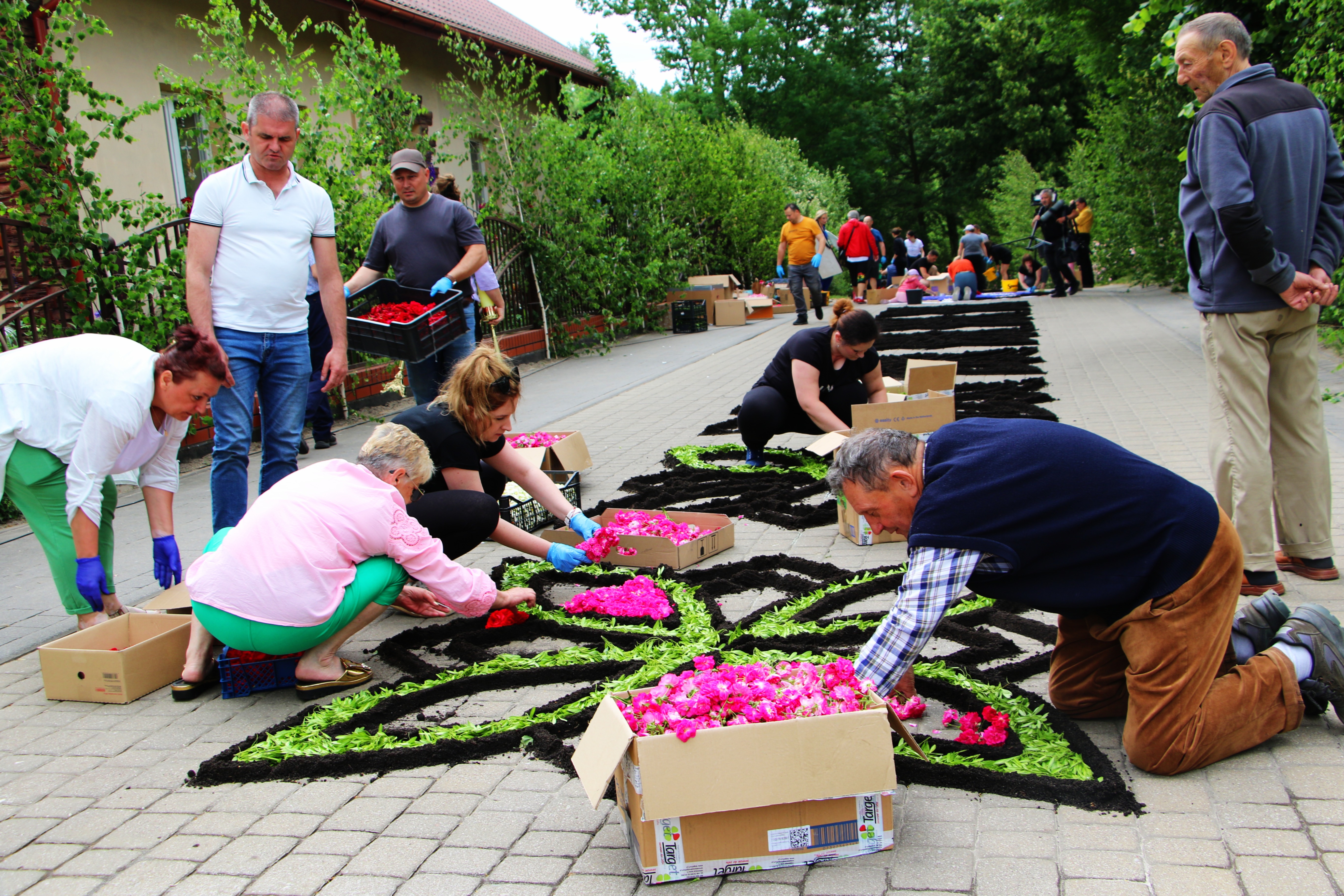
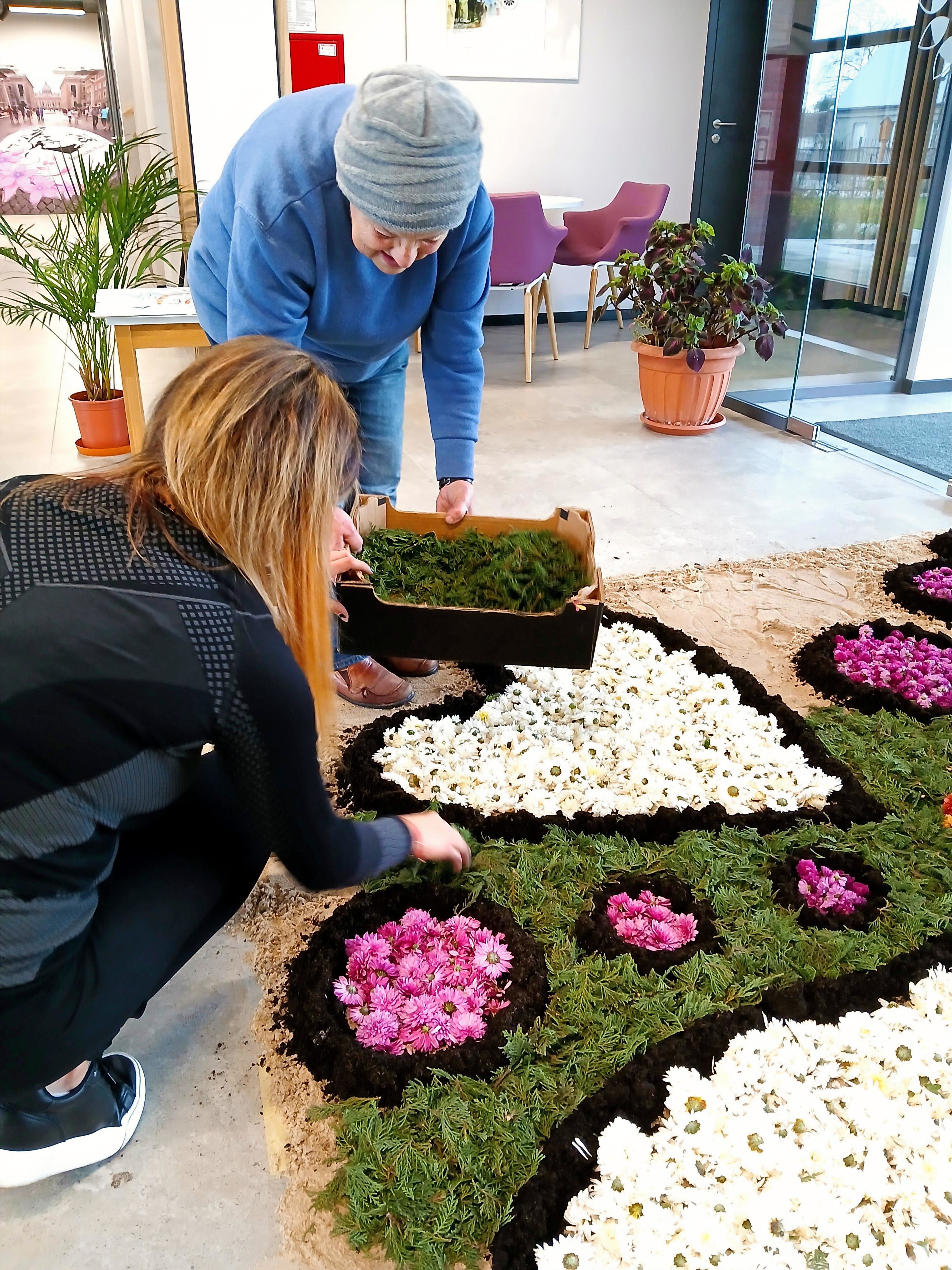
Objective 2: aesthetics as a collective and multi-sensory experience. The tradition of flower carpets introduces colour, scent and the rhythm of manual work into the public space. Its year-round continuation is visible in residents’ gardens and in plantings. Inside the Centre, residents prepare floral compositions for events, while the exhibition itself has been developed through a co-creation process.
Objective 3: cultural and educational benefits. The Centre operates year-round as a place for workshops, intergenerational learning about the village and its tradition. Visitors and residents can not only experience the beauty of Spycimierz but also learn how it is created and maintained. The directions of the Centre’s programme and development are discussed within the Spycimierz Co-Creation Model, including the Spycimierz Seminars and the “Day of Residents”.
The initiative is exemplary because it demonstrates that beauty, in the spirit of the New European Bauhaus, can emerge from living tradition and community co-authorship rather than costly aesthetic interventions. It presents a model in which the natural beauty of landscape, architecture and collective practices strengthens social cohesion, fosters a sense of belonging and builds lasting identity of place.
Objective 1: place-based architecture. The Spycimierz Corpus Christi Centre was designed as a continuation of the village’s historic spatial layout and building traditions, using regional materials such as limestone, brick and wood. Its courtyard, open towards the church, creates a welcoming threshold for the community – a shared space for events and everyday social interactions.
Objective 2: aesthetics as a collective and multi-sensory experience. The tradition of flower carpets introduces colour, scent and the rhythm of manual work into the public space. Its year-round continuation is visible in residents’ gardens and in plantings. Inside the Centre, residents prepare floral compositions for events, while the exhibition itself has been developed through a co-creation process.
Objective 3: cultural and educational benefits. The Centre operates year-round as a place for workshops, intergenerational learning about the village and its tradition. Visitors and residents can not only experience the beauty of Spycimierz but also learn how it is created and maintained. The directions of the Centre’s programme and development are discussed within the Spycimierz Co-Creation Model, including the Spycimierz Seminars and the “Day of Residents”.
The initiative is exemplary because it demonstrates that beauty, in the spirit of the New European Bauhaus, can emerge from living tradition and community co-authorship rather than costly aesthetic interventions. It presents a model in which the natural beauty of landscape, architecture and collective practices strengthens social cohesion, fosters a sense of belonging and builds lasting identity of place.
The key objective in the area of inclusion is to create a place and an operating model in which residents are co-authors. The Municipality’s priority is to strengthen pride in the UNESCO heritage and to ensure that the benefits of the investment are felt throughout the year, not only on the day of the celebration.
Goal 1: inclusive co-governance and co-authorship of the tradition bearers. Residents co-create the Centre’s programme and exhibition and co-decide on key organisational solutions. This is supported by the Spycimierz Co-Creation Model: the Spycimierz Seminars as well as the annual arrangements for the organisation of Corpus Christi.
Goal 2: accessibility and year-round use (design for all). The Centre is a space for everyday use, a branch library, and a venue for meetings, workshops and events. Accessibility is ensured by a lift, wide corridors and no barriers. It also includes access to content in different languages and multimedia materials.
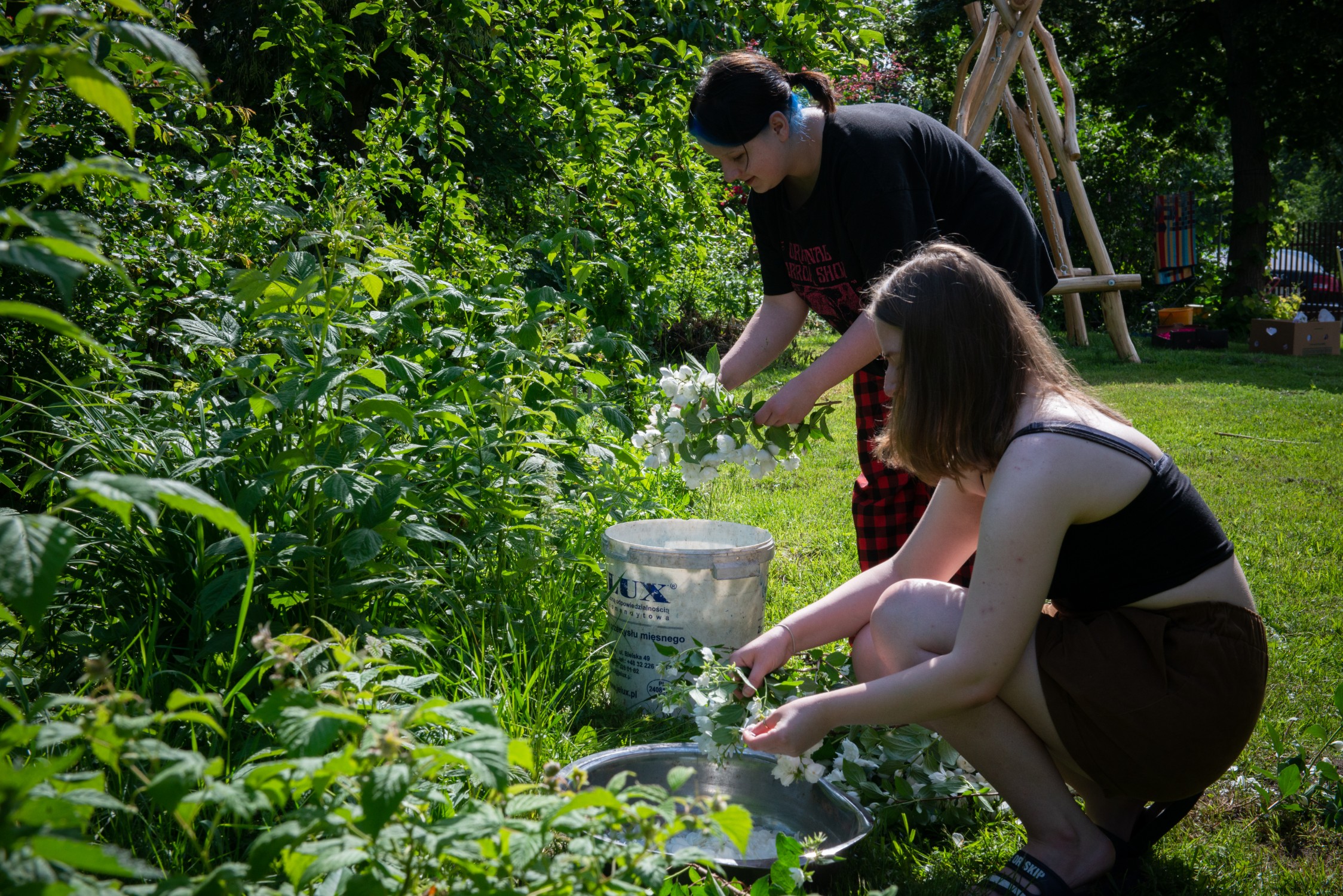
Goal 3: inclusion through practice and the local economy. The courtyard and the Centre’s spaces serve integration. This strengthens social ties, residents’ sense of agency, and local entrepreneurship. Inclusion also has a solidarity-based and intergenerational dimension: before Corpus Christi, pupils from the Municipality’s primary schools collect flowers, supporting tradition bearers who are not always able to gather a sufficient amount themselves. The Spycimierz Volunteer Fire Brigade Brass Band, which performs regularly in the Centre’s courtyard, also strengthens intergenerational ties thanks to music lessons funded by the Municipality. The project also includes the development of the “Spycimierz Route”, a historical and cultural trail, chapels, and road infrastructure.
Why the initiative is exemplary: it combines intangible heritage with a lasting participatory model and the principles of “design for all”, enabling the community to co-decide, co-create and benefit from the outcomes throughout the year
Goal 1: inclusive co-governance and co-authorship of the tradition bearers. Residents co-create the Centre’s programme and exhibition and co-decide on key organisational solutions. This is supported by the Spycimierz Co-Creation Model: the Spycimierz Seminars as well as the annual arrangements for the organisation of Corpus Christi.
Goal 2: accessibility and year-round use (design for all). The Centre is a space for everyday use, a branch library, and a venue for meetings, workshops and events. Accessibility is ensured by a lift, wide corridors and no barriers. It also includes access to content in different languages and multimedia materials.
Goal 3: inclusion through practice and the local economy. The courtyard and the Centre’s spaces serve integration. This strengthens social ties, residents’ sense of agency, and local entrepreneurship. Inclusion also has a solidarity-based and intergenerational dimension: before Corpus Christi, pupils from the Municipality’s primary schools collect flowers, supporting tradition bearers who are not always able to gather a sufficient amount themselves. The Spycimierz Volunteer Fire Brigade Brass Band, which performs regularly in the Centre’s courtyard, also strengthens intergenerational ties thanks to music lessons funded by the Municipality. The project also includes the development of the “Spycimierz Route”, a historical and cultural trail, chapels, and road infrastructure.
Why the initiative is exemplary: it combines intangible heritage with a lasting participatory model and the principles of “design for all”, enabling the community to co-decide, co-create and benefit from the outcomes throughout the year
The residents of Spycimierz and local civil society organisations are co-creators and co-hosts of the initiative. Their involvement takes the form of the Spycimierz Co-Creation Model: the Spycimierz Seminars, preparations for Corpus Christi, year-round activities at the Centre, as well as evaluation and improvements.
Role and level of involvement:
1. Co-decision-making: during the development of the Centre, consultations and joint work were carried out through the Seminars. This influenced the functional concept of the building as an open, multifunctional space serving the community.
2. Co-creation of content: residents co-create the exhibition and its narrative by contributing materials, memorabilia and documents. They also bring aesthetic elements, such as natural floral arrangements.
3. Co-implementation: residents care for gardens and plantings along the Corpus Christi route, co-lead educational activities and workshops, and pass on skills to younger generations. These activities also involve children from across the Municipality, who collect flowers, thereby supporting heritage bearers in preparing the carpets. An important element is also the activity of the Spycimierz Volunteer Fire Brigade Brass Band, which performs regularly in the courtyard of the Centre, takes part in the Corpus Christi procession, and, thanks to music education financed by the Municipality, also engages younger residents.
4. Co-governance: each year, the Municipality and residents agree on the organisation of the Corpus Christi in order to ensure safety and accessibility for participants. The parish, as well as local creative and craft communities, are also involved in the initiative.
Impact of this involvement on the initiative: it increases the relevance of the activities, strengthens the sense of shared ownership and pride in the UNESCO heritage, builds the sustainability of the institution, enhances the quality of visitors’ experience through authentic interpreta
Role and level of involvement:
1. Co-decision-making: during the development of the Centre, consultations and joint work were carried out through the Seminars. This influenced the functional concept of the building as an open, multifunctional space serving the community.
2. Co-creation of content: residents co-create the exhibition and its narrative by contributing materials, memorabilia and documents. They also bring aesthetic elements, such as natural floral arrangements.
3. Co-implementation: residents care for gardens and plantings along the Corpus Christi route, co-lead educational activities and workshops, and pass on skills to younger generations. These activities also involve children from across the Municipality, who collect flowers, thereby supporting heritage bearers in preparing the carpets. An important element is also the activity of the Spycimierz Volunteer Fire Brigade Brass Band, which performs regularly in the courtyard of the Centre, takes part in the Corpus Christi procession, and, thanks to music education financed by the Municipality, also engages younger residents.
4. Co-governance: each year, the Municipality and residents agree on the organisation of the Corpus Christi in order to ensure safety and accessibility for participants. The parish, as well as local creative and craft communities, are also involved in the initiative.
Impact of this involvement on the initiative: it increases the relevance of the activities, strengthens the sense of shared ownership and pride in the UNESCO heritage, builds the sustainability of the institution, enhances the quality of visitors’ experience through authentic interpreta
The initiative is implemented through a multi-level stakeholder engagement model.
Local level:
• Residents – co-create the programme and content (exhibition and floral decorations), take part in preparations and joint decision-making (added value: authenticity and shared ownership).
• Municipality – institutional framework and funding (including the Corpus Christi Route, the cultural trail, and accessibility and safety solutions) (added value: continuity and scalability).
• Parish – supports the organisation of the celebration, contributes artefacts, and co-creates the narrative (added value: continuity and rootedness).
• Public Library– operates a branch within the Centre and supports the year-round educational offer (added value: permanent access to knowledge).
• Primary schools – participate in educational activities and the intergenerational transmission; pupils collect flowers for the carpets, which strengthens social solidarity (added value: continuity of the tradition, learning by doing, shared responsibility for heritage).
• Volunteer Fire Brigade brass band – co-creates cultural life through regular concerts; thanks to music education funded by the Municipality, it also engages younger residents (added value: social integration, education, youth engagement).
Regional level:
• Marshal’s Office – provides institutional and promotional support (added value: visibility and synergy with regional activities).
National level:
• Polish Intangible Cultural Heritage Route – co-organises conferences and events, and enables the exchange of good practices (added value: knowledge transfer and replicability).
Academic / expert level:
• Universities – research and educational support, improving the quality of heritage interpretation (added value: methodological quality, evaluation, capacity building).
European level:
• UNESCO status and Infioritalia – exchange of experience and the dissemination of good practices (added value: European dimension and net
Local level:
• Residents – co-create the programme and content (exhibition and floral decorations), take part in preparations and joint decision-making (added value: authenticity and shared ownership).
• Municipality – institutional framework and funding (including the Corpus Christi Route, the cultural trail, and accessibility and safety solutions) (added value: continuity and scalability).
• Parish – supports the organisation of the celebration, contributes artefacts, and co-creates the narrative (added value: continuity and rootedness).
• Public Library– operates a branch within the Centre and supports the year-round educational offer (added value: permanent access to knowledge).
• Primary schools – participate in educational activities and the intergenerational transmission; pupils collect flowers for the carpets, which strengthens social solidarity (added value: continuity of the tradition, learning by doing, shared responsibility for heritage).
• Volunteer Fire Brigade brass band – co-creates cultural life through regular concerts; thanks to music education funded by the Municipality, it also engages younger residents (added value: social integration, education, youth engagement).
Regional level:
• Marshal’s Office – provides institutional and promotional support (added value: visibility and synergy with regional activities).
National level:
• Polish Intangible Cultural Heritage Route – co-organises conferences and events, and enables the exchange of good practices (added value: knowledge transfer and replicability).
Academic / expert level:
• Universities – research and educational support, improving the quality of heritage interpretation (added value: methodological quality, evaluation, capacity building).
European level:
• UNESCO status and Infioritalia – exchange of experience and the dissemination of good practices (added value: European dimension and net
The Spycimierz Corpus Christi Centre functions as a living heritage hub – a place for year-round education, co-creation and shared governance of the UNESCO tradition. It brings together several disciplines and knowledge fields that jointly shape a coherent development model based on living heritage.
The initiative integrates architecture and spatial planning (embedding the building in the historic village layout); heritage protection and interpretation (exhibition, archive and narrative about the tradition); anthropology and cultural studies (the role of heritage bearers and community practices, supported by cooperation with the universities); education and cultural animation (intergenerational workshops and programmes developed with the cultural centre and local schools); librarianship and knowledge management (a branch of the library located in the Centre); floristry, gardening and biodiversity (flowers, gardens and natural compositions); event management and safety ( the Corpus Christi celebration); and energy management and technology (energy-efficient design and smart building management).
Representatives of these fields interact through the Spycimierz Co-Creation Model. Heritage bearers and residents contribute practical knowledge and content. Cultural and educational institutions translate this knowledge into year-round programmes, while the municipality provides organisational frameworks and infrastructure. The parish contributes historical context and resources, and academic and network partners, strengthen interpretation and knowledge exchange.
Key interactions take place during the Spycimierz Seminars and the “Day of Residents”, where the Centre’s programme and organisational solutions are discussed, refined and improved. This interdisciplinary cooperation results in solutions better adapted to community needs, authentic heritage interpretation, improved management of events and a model that can be shared with other small municipalities.
The initiative integrates architecture and spatial planning (embedding the building in the historic village layout); heritage protection and interpretation (exhibition, archive and narrative about the tradition); anthropology and cultural studies (the role of heritage bearers and community practices, supported by cooperation with the universities); education and cultural animation (intergenerational workshops and programmes developed with the cultural centre and local schools); librarianship and knowledge management (a branch of the library located in the Centre); floristry, gardening and biodiversity (flowers, gardens and natural compositions); event management and safety ( the Corpus Christi celebration); and energy management and technology (energy-efficient design and smart building management).
Representatives of these fields interact through the Spycimierz Co-Creation Model. Heritage bearers and residents contribute practical knowledge and content. Cultural and educational institutions translate this knowledge into year-round programmes, while the municipality provides organisational frameworks and infrastructure. The parish contributes historical context and resources, and academic and network partners, strengthen interpretation and knowledge exchange.
Key interactions take place during the Spycimierz Seminars and the “Day of Residents”, where the Centre’s programme and organisational solutions are discussed, refined and improved. This interdisciplinary cooperation results in solutions better adapted to community needs, authentic heritage interpretation, improved management of events and a model that can be shared with other small municipalities.
In mainstream heritage practices two dominant models usually appear: either a single annual event or a museum-like institution. Here initiative introduces a different logic, aligned with the New European Bauhaus, where UNESCO heritage becomes a tool for spatial design, shared governance local development.
Innovation 1: distributed living heritage infrastructure. The initiative is not limited to a single building but functions as a network of interconnected places across the village, including the Centre, the Route, roadside chapels, the cultural trail and supporting infrastructure such as access roads, cycling paths and parking areas. Heritage is therefore embedded in everyday space rather than limited to a single event.
Innovation 2: participatory governance of a large cultural event. Each year the municipality and residents jointly plan the organisation of the Corpus Christi celebration, attended by around 25,000 visitors. This transforms tradition into a modern model of managing a shared cultural resource.
Innovation 3: the Spycimierz Co-Creation Model. The Spycimierz Seminars, including the “Day of Residents”, together with preparations, evaluation and continuous improvement, create a permanent mechanism for learning and collective decision-making.
Innovation 4: linking aesthetics with ecology as a social practice. Residents’ gardens and plantings are maintained as both a source of flowers and a permanent element of the village landscape. In the Centre, residents prepare floral compositions for events.
Innovation 5: living interpretation. The story of the tradition is told by heritage bearers themselves through co-created exhibitions and guided visits, rather than exclusively by institutions.
The initiative demonstrates a replicable model showing how UNESCO intangible heritage can support sustainable, inclusive and beautiful development of small municipalities through space, community governance and a year-round programme.
Innovation 1: distributed living heritage infrastructure. The initiative is not limited to a single building but functions as a network of interconnected places across the village, including the Centre, the Route, roadside chapels, the cultural trail and supporting infrastructure such as access roads, cycling paths and parking areas. Heritage is therefore embedded in everyday space rather than limited to a single event.
Innovation 2: participatory governance of a large cultural event. Each year the municipality and residents jointly plan the organisation of the Corpus Christi celebration, attended by around 25,000 visitors. This transforms tradition into a modern model of managing a shared cultural resource.
Innovation 3: the Spycimierz Co-Creation Model. The Spycimierz Seminars, including the “Day of Residents”, together with preparations, evaluation and continuous improvement, create a permanent mechanism for learning and collective decision-making.
Innovation 4: linking aesthetics with ecology as a social practice. Residents’ gardens and plantings are maintained as both a source of flowers and a permanent element of the village landscape. In the Centre, residents prepare floral compositions for events.
Innovation 5: living interpretation. The story of the tradition is told by heritage bearers themselves through co-created exhibitions and guided visits, rather than exclusively by institutions.
The initiative demonstrates a replicable model showing how UNESCO intangible heritage can support sustainable, inclusive and beautiful development of small municipalities through space, community governance and a year-round programme.
The methodology of the initiative is based on the Spycimierz Co-Creation Model – a participatory approach in which heritage bearers, the municipality and partners jointly design, implement and improve the activities of the Spycimierz Corpus Christi Centre. The model is carried out through four interconnected stages: (1) the Spycimierz Seminars, focused on dialogue, consultation and learning from other traditions; (2) preparations and shared coordination of the Corpus Christi celebration, including event organisation and infrastructure; (3) the Centre’s year-round programme, including workshops, meetings, archive-based activities and education; and (4) evaluation and improvements. The programme also includes the activities related to gardens, flower cultivation and biodiversity in the village landscape.
The Centre is the place where this model is implemented in practice: agreements and ideas developed through the process are translated into actions strengthening the tradition.
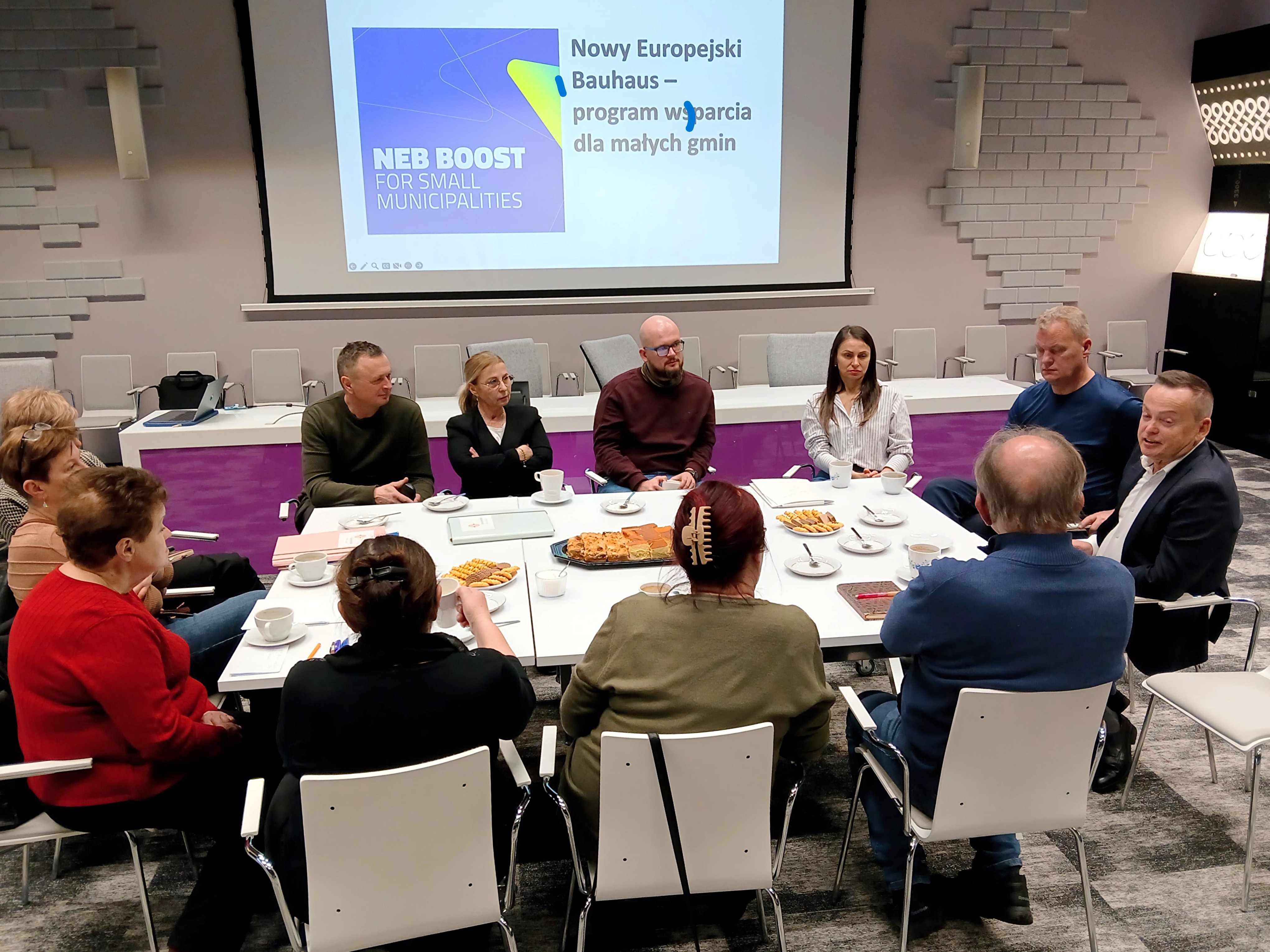
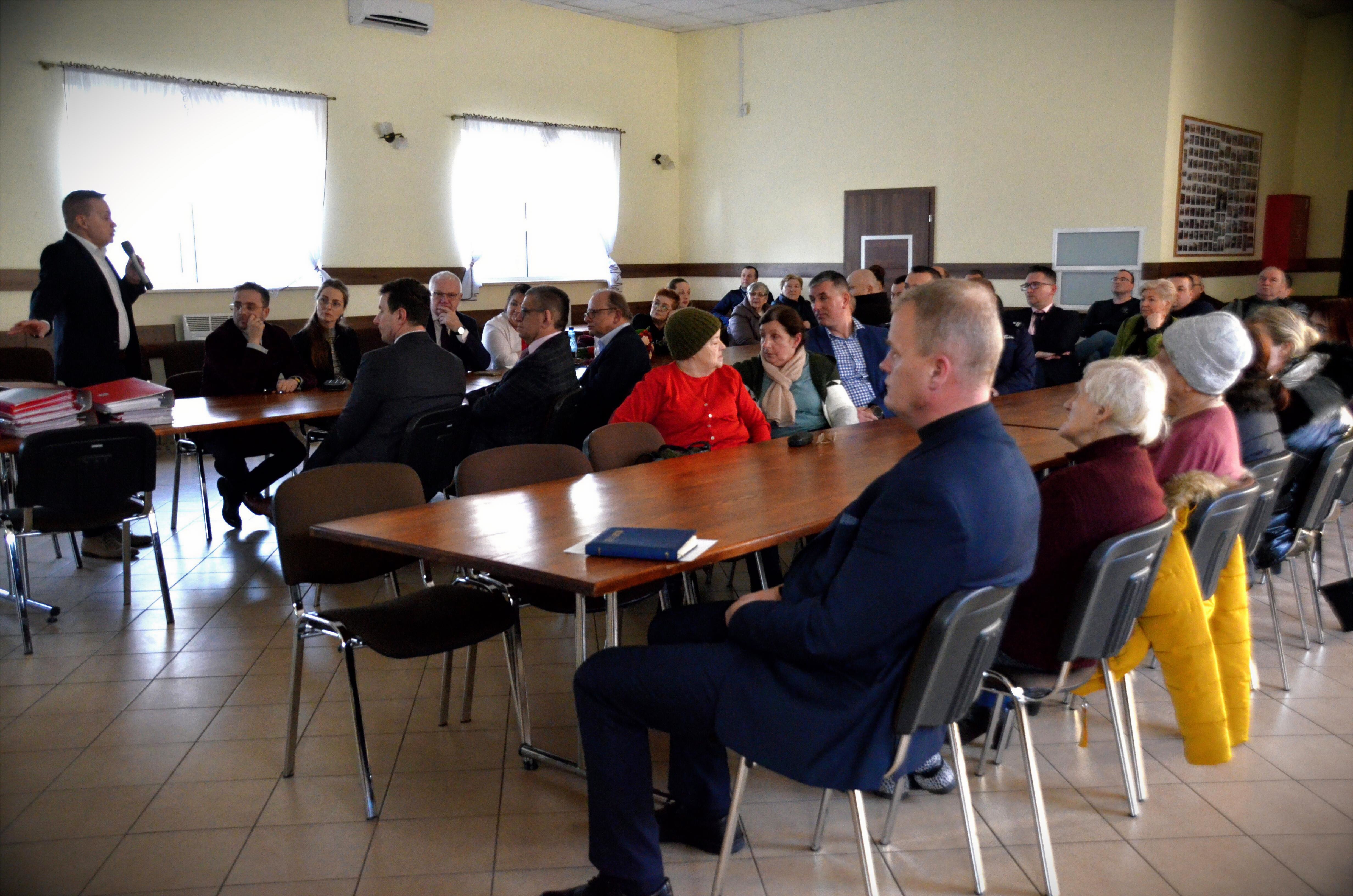
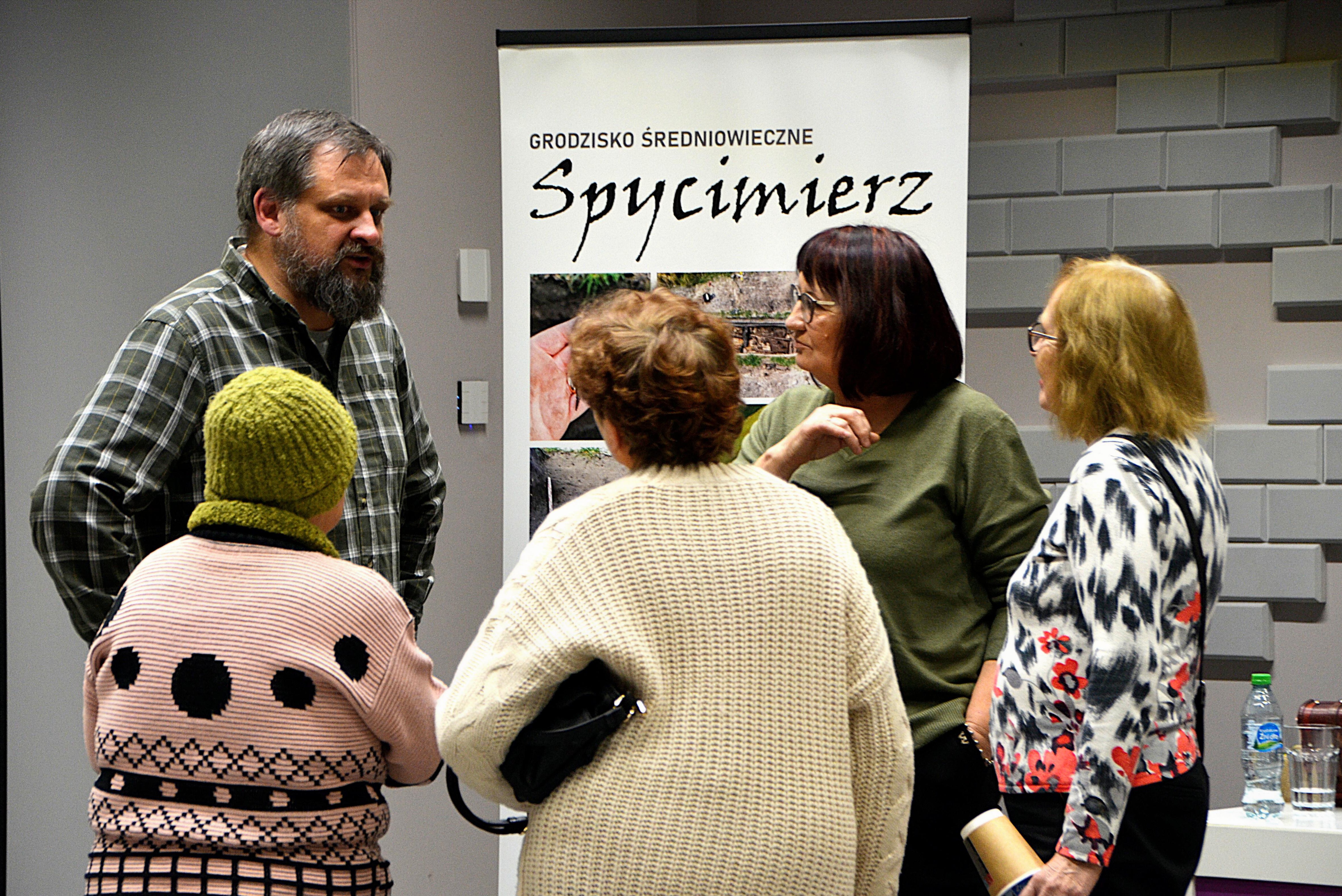
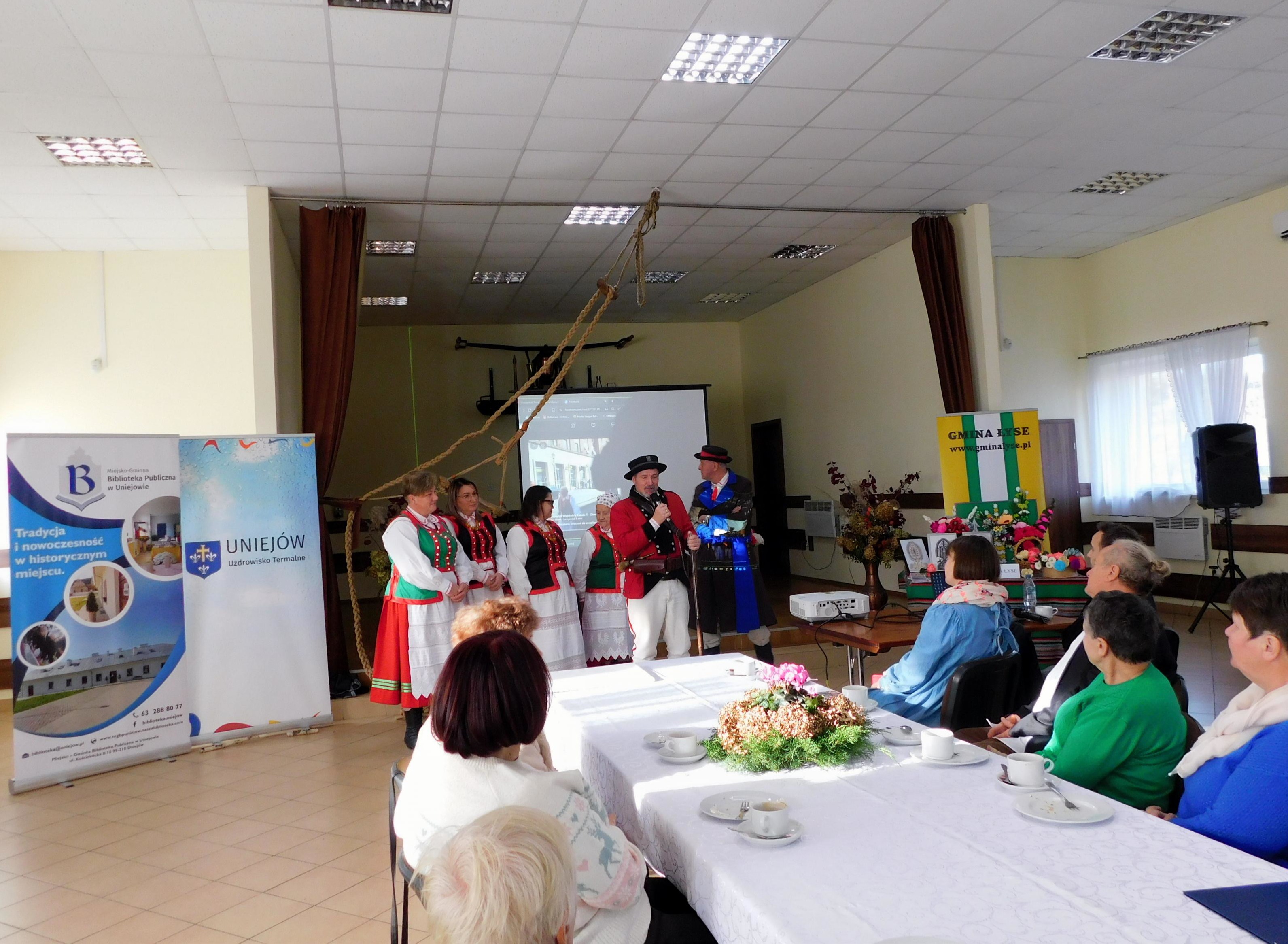
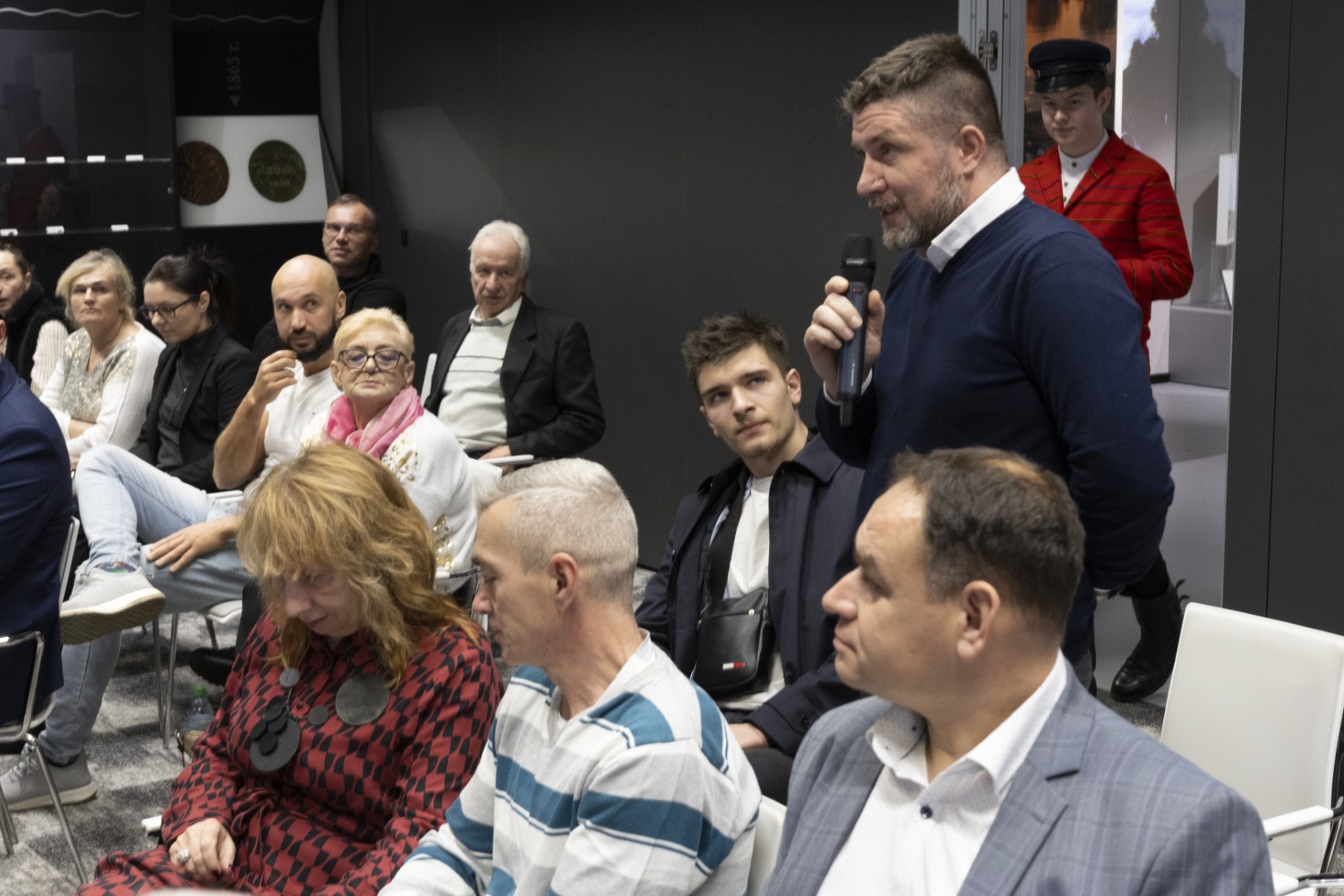
At the core of the methodology are the Spycimierz Seminars, one of the most important recurring meetings in Poland devoted to intangible heritage. They combine panel discussions, presentations of good practices and workshop-based work. Their final day, the “Day of Residents”, serves as a platform for public consultation. Each year another Polish tradition is invited, which strengthens knowledge transfer and the replicability of the model.
A second pillar consists of organisational meetings before Corpus Christi, as well as ad hoc meetings throughout the year, where solutions improving accessibility and safety are agreed. The methodology also includes evaluation: in June 2025, the University of Łódź conducted a visitor survey at the Centre, which now informs further improvement of the offer.
The added value of this approach lies in sustained community involvement, continuous learning and the transferability of the model to other small municipalities built around living traditions.
The Centre is the place where this model is implemented in practice: agreements and ideas developed through the process are translated into actions strengthening the tradition.
At the core of the methodology are the Spycimierz Seminars, one of the most important recurring meetings in Poland devoted to intangible heritage. They combine panel discussions, presentations of good practices and workshop-based work. Their final day, the “Day of Residents”, serves as a platform for public consultation. Each year another Polish tradition is invited, which strengthens knowledge transfer and the replicability of the model.
A second pillar consists of organisational meetings before Corpus Christi, as well as ad hoc meetings throughout the year, where solutions improving accessibility and safety are agreed. The methodology also includes evaluation: in June 2025, the University of Łódź conducted a visitor survey at the Centre, which now informs further improvement of the offer.
The added value of this approach lies in sustained community involvement, continuous learning and the transferability of the model to other small municipalities built around living traditions.
The initiative has a high potential for transfer and replication because it is not a one-off place-based project, but an implementable model for managing living heritage in a small municipality. Its core is the Spycimierz Co-Creation Model, implemented through a cycle consisting of: the Spycimierz Seminars (consultations and learning from other traditions), preparations and joint coordination of a large event, the year-round programme of the Spycimierz Corpus Christi Centre, and evaluation with improvements introduced in the following cycle. This cycle transforms tradition into a permanent mechanism of shared decision-making, education and improvement.
The model can be transferred because it is based on resources available in many municipalities: an active community of heritage bearers, public space, cultural and educational institutions, and network partners. It can be applied both in municipalities with significant traditions that wish to strengthen their sustainability, social inclusion and development impact.
The biodiversity dimension is also transferable: the model links heritage with gardening practices and care for public greenery, which can enhance landscape quality and quality of life in other small municipalities.
Transfer is further supported through networking and exchange of experience. Cooperation with the Polish Intangible Cultural Heritage Route, the University of Łódź, University of Lublin and European partners (including the Italian association Infioritalia) enables the sharing of working methods, participatory standards and tools.
As part of the initiative, we will prepare the “Spycimierz Model” – a set of good practices describing the Model, including consultation tools, a template for a year-round programme, and standards for shared governance and communication with visitors. This will allow other municipalities to adapt the approach to their own context rather than replicate ready-made solutions.
The model can be transferred because it is based on resources available in many municipalities: an active community of heritage bearers, public space, cultural and educational institutions, and network partners. It can be applied both in municipalities with significant traditions that wish to strengthen their sustainability, social inclusion and development impact.
The biodiversity dimension is also transferable: the model links heritage with gardening practices and care for public greenery, which can enhance landscape quality and quality of life in other small municipalities.
Transfer is further supported through networking and exchange of experience. Cooperation with the Polish Intangible Cultural Heritage Route, the University of Łódź, University of Lublin and European partners (including the Italian association Infioritalia) enables the sharing of working methods, participatory standards and tools.
As part of the initiative, we will prepare the “Spycimierz Model” – a set of good practices describing the Model, including consultation tools, a template for a year-round programme, and standards for shared governance and communication with visitors. This will allow other municipalities to adapt the approach to their own context rather than replicate ready-made solutions.
Commitment to implementing the initiative is confirmed both by the existing infrastructure and by the cooperation model already in operation. The Spycimierz Corpus Christi Centre already functions as a year-round space, while residents co-create the exhibition, narrative and aesthetics of the place by contributing materials to the exhibition and preparing natural floral decorations. Another proof of the “green dimension ” is the year-round care for home gardens and plantings in public space. The Centre’s social and culture-forming role is also reflected in the regular performances of the Spycimierz Volunteer Fire Brigade Brass Band in the courtyard, as well as concerts by Volunteer Fire Brigade bands from across the Municipality.
A strong proof of practical implementation is the annual co-organisation of the Corpus Christi celebration, attended by around 25,000 guests: the Municipality and residents jointly agree on organisational solutions, and the experience gained is analysed and translated into improvements for the following year. This mechanism, together with the Spycimierz Seminars and the “Day of Residents”, constitutes the Spycimierz Co-Creation Model, thanks to which the initiative is continuously developed.
An important part of further implementation will also be the construction of a modern, wooden and ecological playground next to the Centre, on the site of a former playground identified by residents as an important local space. Built by a local company using natural materials and enriched with motifs referring to the tradition of flower carpets.
Commitment is further reinforced by stable partnerships: the Library and primary schools, the parish, the Marshal’s Office, universities, as well as the Polish Intangible Cultural Heritage Route and Infioritalia. An additional sign of maturity is the evaluation carried out by researchers from the University of Łódź among Centre visitors, which provides a basis for further improvement of the programme.
A strong proof of practical implementation is the annual co-organisation of the Corpus Christi celebration, attended by around 25,000 guests: the Municipality and residents jointly agree on organisational solutions, and the experience gained is analysed and translated into improvements for the following year. This mechanism, together with the Spycimierz Seminars and the “Day of Residents”, constitutes the Spycimierz Co-Creation Model, thanks to which the initiative is continuously developed.
An important part of further implementation will also be the construction of a modern, wooden and ecological playground next to the Centre, on the site of a former playground identified by residents as an important local space. Built by a local company using natural materials and enriched with motifs referring to the tradition of flower carpets.
Commitment is further reinforced by stable partnerships: the Library and primary schools, the parish, the Marshal’s Office, universities, as well as the Polish Intangible Cultural Heritage Route and Infioritalia. An additional sign of maturity is the evaluation carried out by researchers from the University of Łódź among Centre visitors, which provides a basis for further improvement of the programme.