Enhancing Circularity, Sustainability, and Innovation
Pit-to-Table
Pit-Board
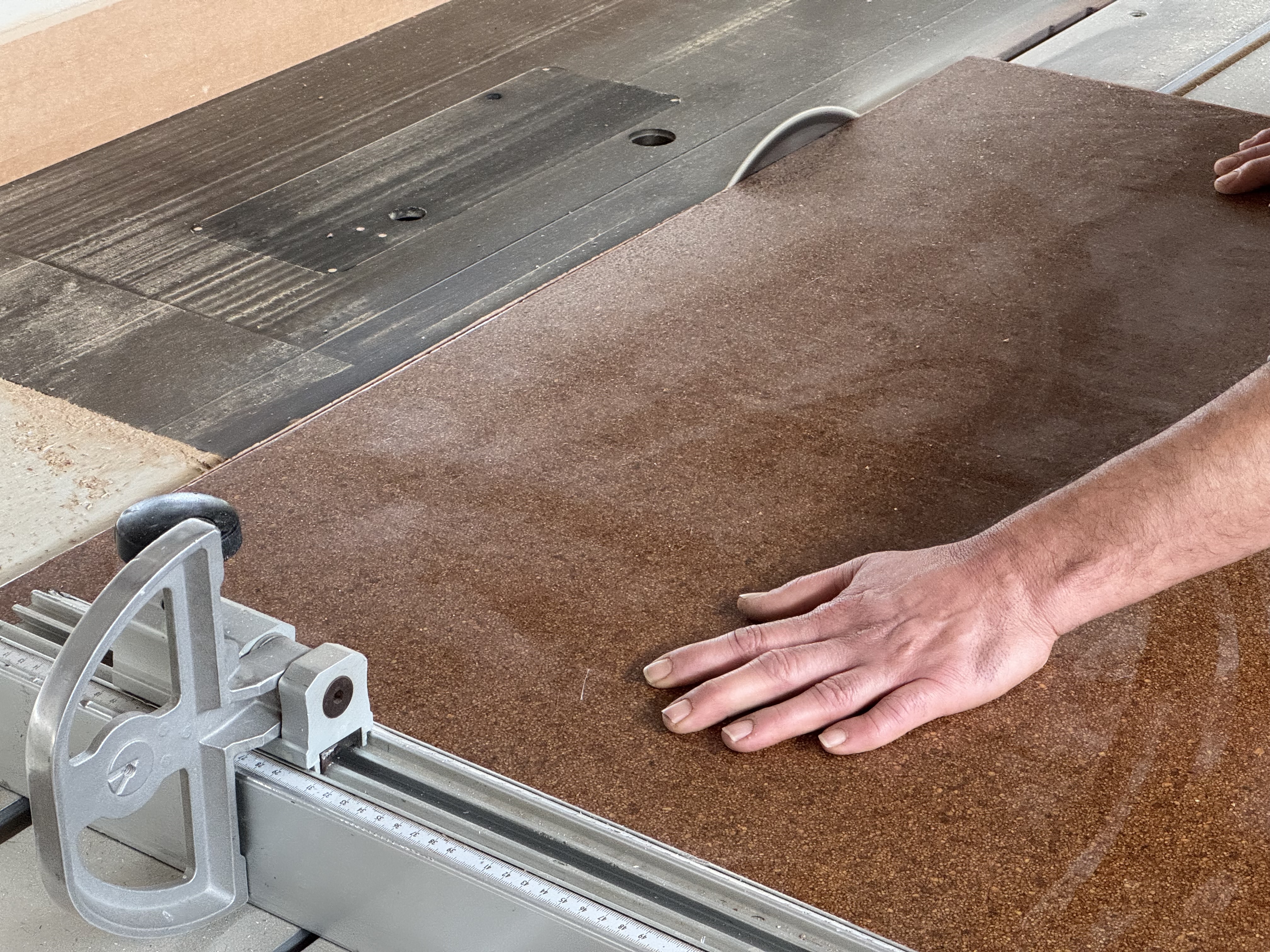
Based in Cyprus, Pit-to-Table produces Pit-Board, an innovative bio-composite panel made from discarded olive pits, a by-product of olive oil production collected from both Turkish and Greek Cypriot communities across the island. By upcycling this abundant agricultural waste into durable, design-led boards, the company offers a circular alternative to conventional wood-based and petrochemical panels, showing that climate-conscious materials can be beautiful, scalable and commercially viable.
Cyprus
National
It addresses urban-rural linkages
It involves a physical transformation of the built environment (hard investment)
Yes
2025-08-12
No
No
No
Organisation
Pit-to-Table is a climate tech start-up transforming agricultural waste into high-performance design materials. Its flagship product, Pit-Board, is a bio-composite panel made from discarded olive pits, a by-product of olive oil production sourced from Turkish and Greek Cypriot farming communities. By embedding around 14 kg of agricultural waste per m², the material diverts residues typically burned or discarded while offering a circular alternative to carbon-intensive panels such as MDF and particleboard. By linking agriculture, design and manufacturing, Pit-to-Table demonstrates how regional waste streams can become the foundation for new sustainable industries.
Since launching, the project has progressed from concept to commercial reality. Pit-Board has reached TRL 7, secured €80,000 in equity-free funding, generated early revenues and established partnerships with manufacturers and distributors across Europe. The material is already specified in workplace and hospitality projects, including installations for a global furniture brand.
Pit-to-Table has gained international visibility through trade shows, design publications and award nominations. Sustainability communicators and environmental media, including Sam Bentley, have highlighted the project online, introducing Pit-Board to a wide audience of architects, designers and sustainability advocates.
To date the project has repurposed around 6 tonnes of olive pomace that would otherwise be treated as waste, avoiding an estimated 12 tonnes of CO₂ emissions. By 2030 Pit-to-Table aims to produce 15,000 m² of Pit-Board annually, utilising over 212 tonnes of olive-derived by-products and potentially preventing more than 424 tonnes of CO₂ emissions. These figures are internal estimates; a Life Cycle Assessment and Environmental Product Declaration are underway.
Beyond environmental impact, the project creates new value streams for farmers and strengthens rural resilience.
Pit-to-Table began with a memory. Mus, one of our co-founders and an award-winning interior designer, grew up in Cyprus where olive oil production shaped everyday life. As children, we saw mountains of discarded olive pits outside local mills during harvest season, treated as waste and often burned.
Years later, while designing workplaces in London, Mus was increasingly asked to specify sustainable materials. Yet many options were expensive, only partially circular, or lacked the natural, tactile quality designers sought.
There was a clear gap between environmental ambition and material reality. That was when it clicked for Mus: what if the waste we had grown up around could become a material for the spaces he was now designing?
Before developing the product, we validated the concept with leading London design practices. Their feedback was clear. They wanted materials that were genuinely low-carbon, aesthetically strong, competitively priced and easy to integrate into existing processes. That confirmation gave us the confidence to move forward.
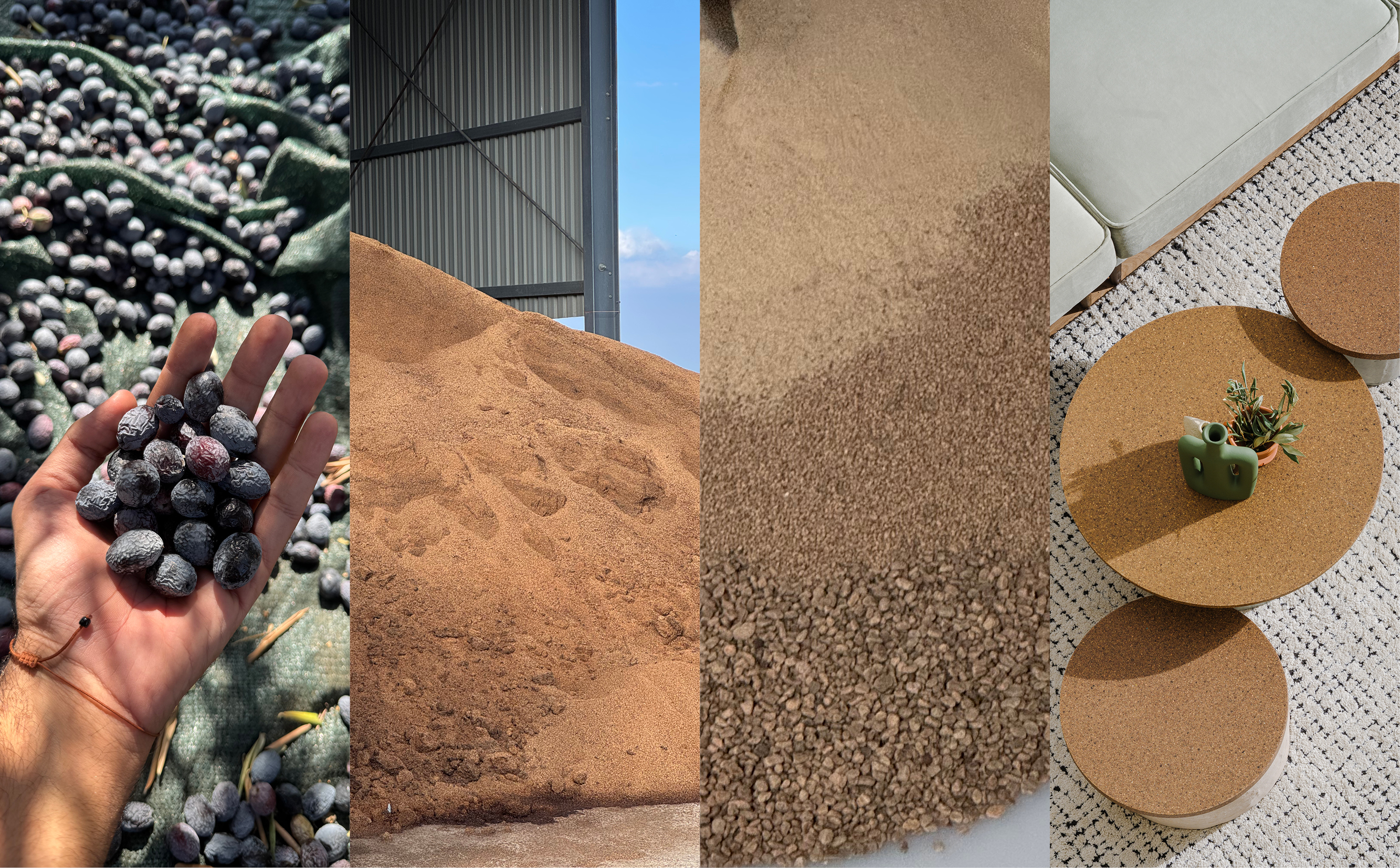
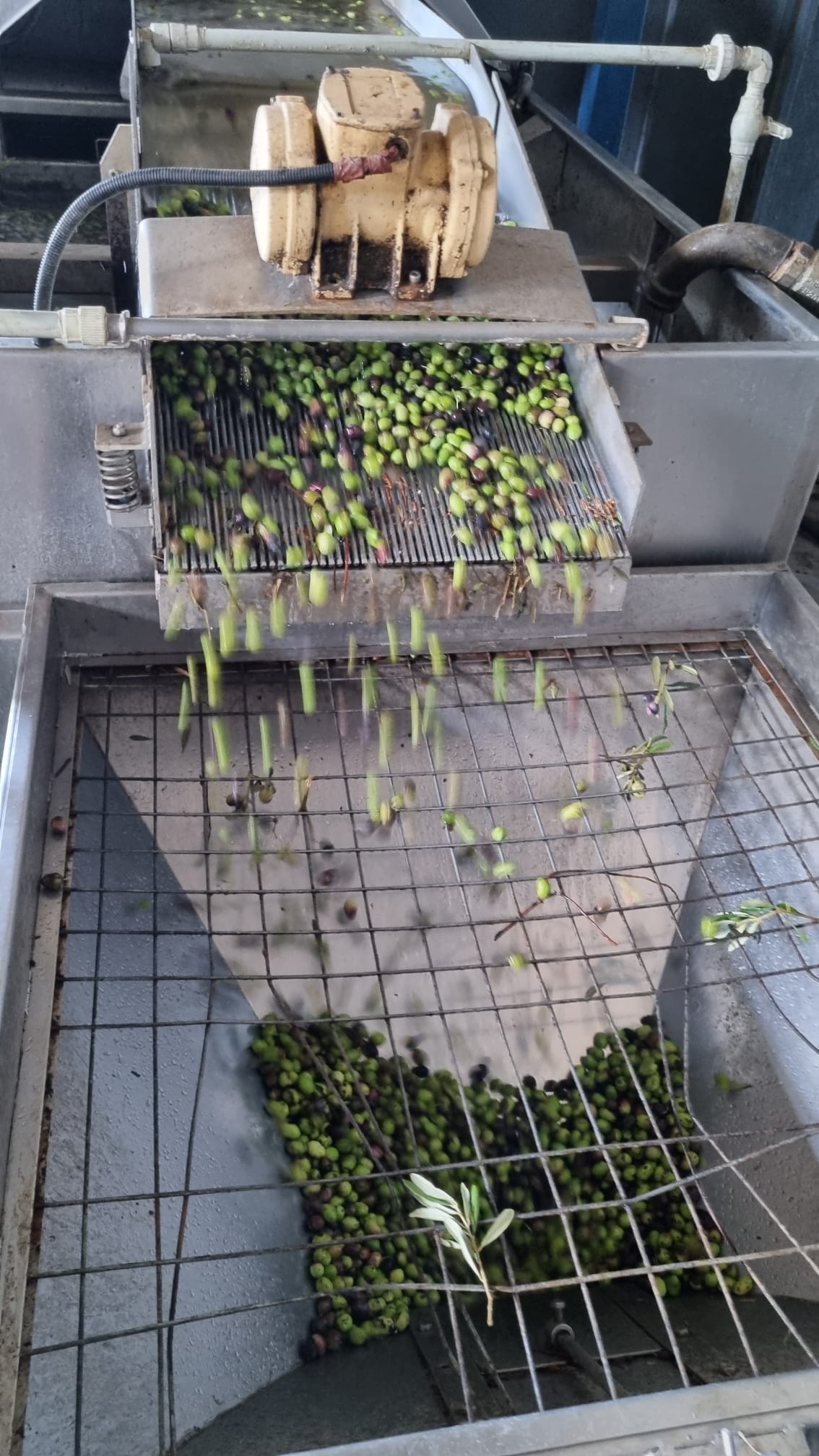
Implementation began locally in Cyprus. We partnered with olive mills and farmers from both Turkish and Greek speaking communities to collect discarded pits. The pits are cleaned, crushed and combined with a bio-based binder, then pressed into boards locally. Early prototypes were developed with furniture makers and installed in a working office to gather real-world feedback, while samples underwent mechanical testing to confirm strength and durability.
What began as a childhood observation has evolved into a circular value chain connecting agriculture, design, engineering and manufacturing across a divided island.
Circular economy
Bio-based materials
Built environment decarbonisation
Cross-community collaboration
Waste-to-value innovation
Pit-to-Table addresses environmental challenges by transforming olive processing residues into durable bio-composite materials and demonstrating how circular agriculture can connect farming with sustainable manufacturing.
Agricultural residues such as olive pomace are commonly burned or discarded, generating CO₂ emissions and local pollution. Pit-Board converts these underutilised by-products into long-life panels that replace conventional wood-based panels such as MDF and particleboard. Each square metre incorporates approximately 14 kg of olive-derived material, reducing demand for virgin timber and carbon-intensive manufacturing processes.
The project is also developing practical protocols that enable olive mills and farmers to separate olive pits directly during processing, transforming what was previously treated as waste into a consistent raw material for circular manufacturing systems.
The material is designed for durability and mechanical recyclability, extending the useful life of agricultural biomass within interior applications. Because Pit-Board can be processed using existing fabrication equipment, manufacturers can adopt circular materials without requiring new industrial infrastructure.
To date the project has repurposed approximately 6 tonnes of olive pomace, avoiding an estimated 12 tonnes of CO₂ emissions. By 2030 projected production of 15,000 square metres of Pit-Board annually would utilise more than 212 tonnes of olive-derived by-products. Based on current internal estimates this could prevent over 424 tonnes of CO₂ emissions.
By transforming agricultural residues into durable materials for the built environment, Pit-to-Table demonstrates how circular design can reduce waste streams while lowering the environmental footprint of interior construction.
Pit-to-Table contributes to beauty by transforming overlooked agricultural residue into a tactile, design-led material that reconnects people to landscape, origin and story.
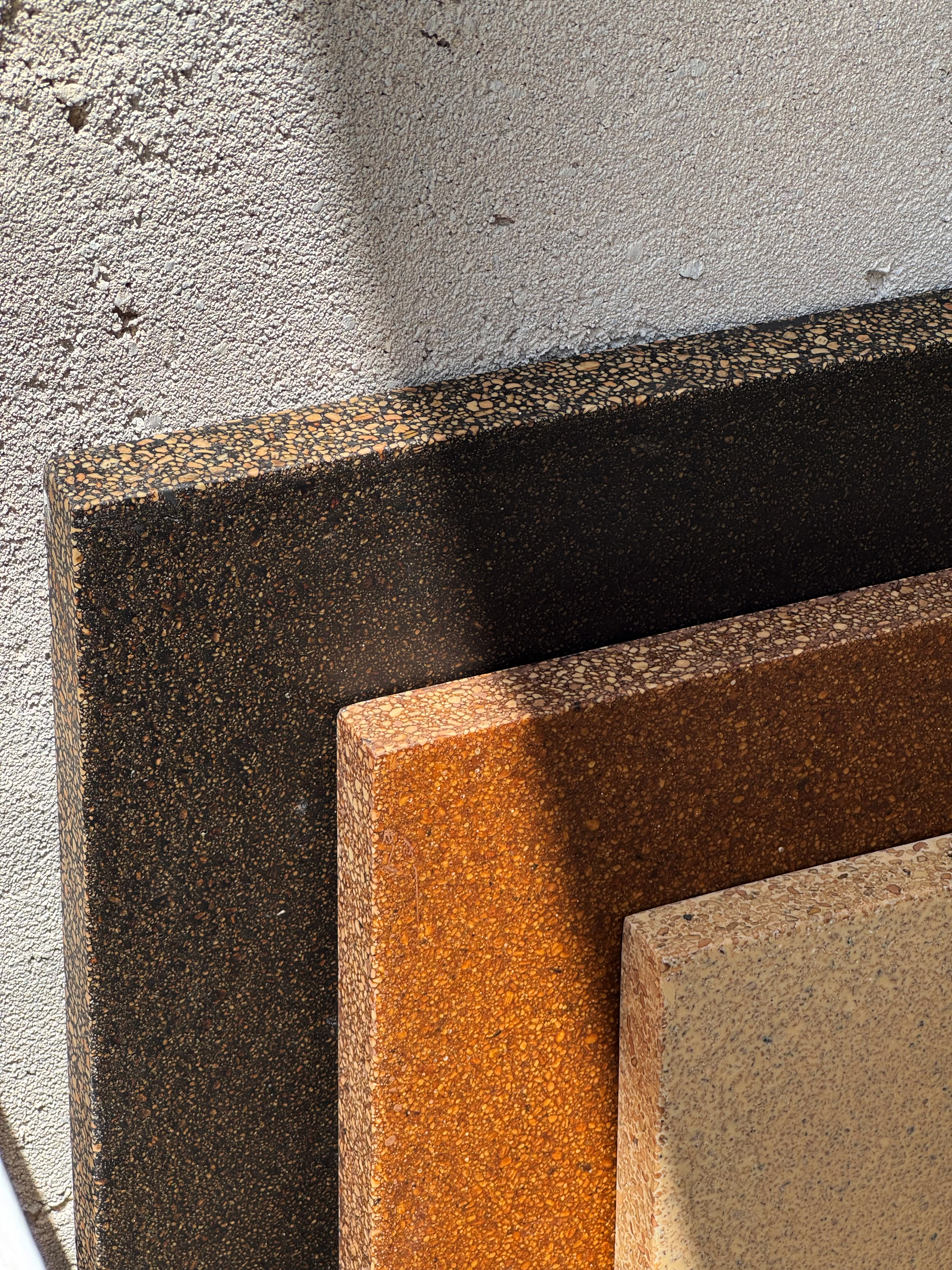
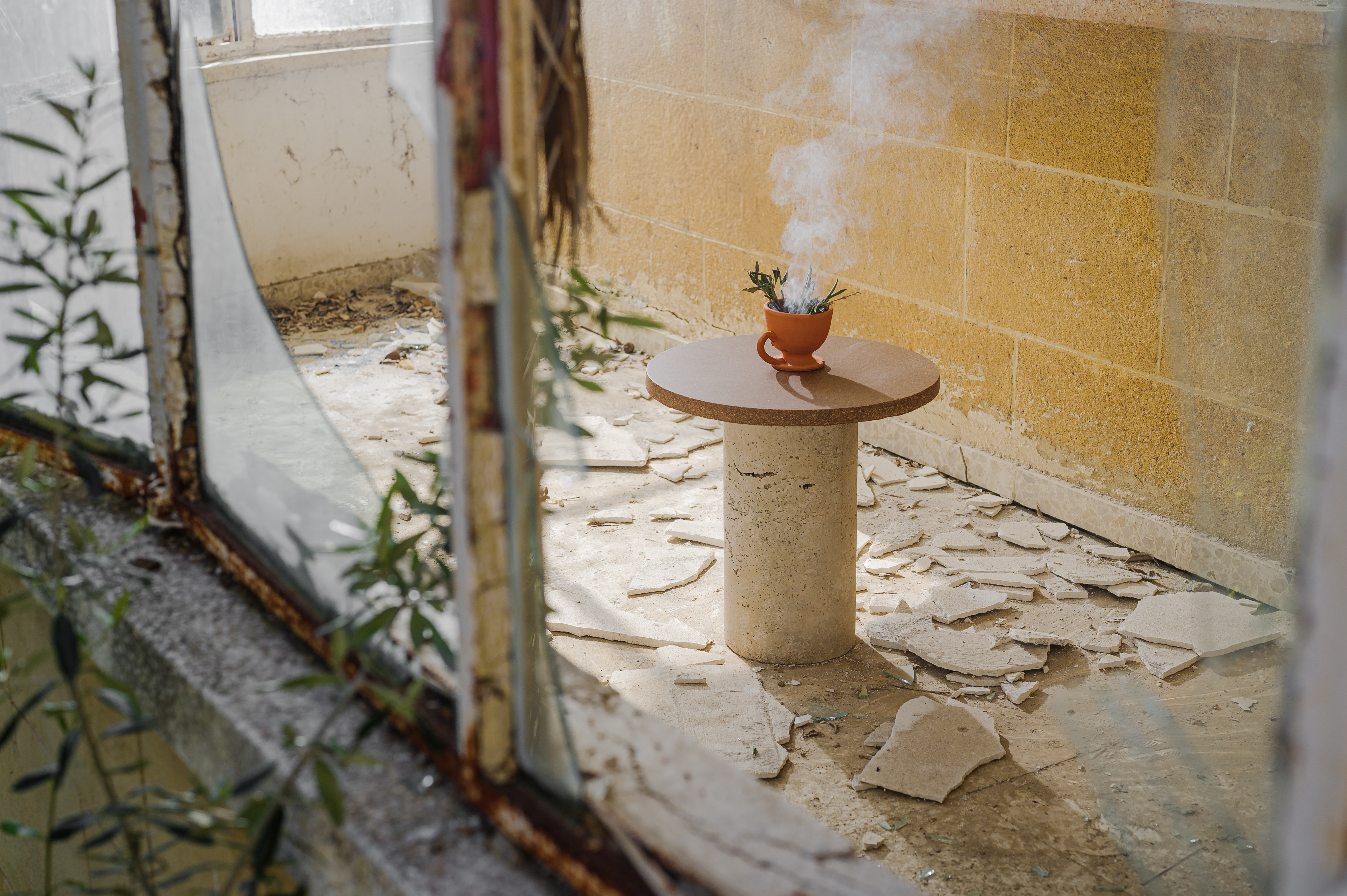
Pit-Board carries the natural texture and warmth of olive pits, creating a distinctive surface language rooted in Mediterranean culture. Rather than imitating conventional wood panels, it celebrates its material identity. This authenticity encourages sensory engagement through touch, grain, colour and depth, enriching spatial experiences in furniture, interiors and architectural applications.
The material embeds regional heritage within contemporary design. Olive cultivation has shaped landscapes and cultural memory across Southern Europe for centuries. By integrating this material into everyday environments, Pit-Board creates a tangible connection between rural production and urban life.
The aesthetic impact is visible in real workplaces. A bespoke coffee table made from Pit-Board installed at Turkcell demonstrates how circular materials can shape everyday environments. One employee described it as:
“The bespoke coffee table, crafted from discarded olive pits, is more than furniture. It is a striking fusion of creativity and environmental consciousness. This thoughtful piece has become both a talking point and a source of daily inspiration in our workplace.”
Through this combination of material identity, cultural narrative and contemporary design, Pit-to-Table demonstrates that sustainability and beauty can coexist within the same material system.
Pit-to-Table promotes inclusion by creating shared economic value across its supply chain while making circular materials accessible to a wider market.
The project generates new income streams for olive-farming communities by monetising agricultural by-products that previously held little value. By sourcing materials from both Turkish and Greek speaking communities on the island, the project contributes to economic cooperation within a politically divided island.
The project also works directly with farmers and processors to develop practical methods for recovering olive pits and sharing knowledge about circular resource management within the olive sector.
Pit-Board is designed to integrate into existing manufacturing systems, avoiding costly new infrastructure. This ensures competitive pricing compared with conventional panels and enables circular materials to reach a broader market rather than remaining limited to niche sustainable products.
The material’s adaptability allows it to be used across multiple applications including furniture, hospitality interiors and workplace environments. This expands access to sustainable materials across diverse social and economic contexts.
The project also collaborates with Greek Cypriot research partners, reinforcing cross-community cooperation in the development of circular materials and demonstrating how environmental innovation can bridge communities on the island.
By linking agricultural production, design and manufacturing within a shared circular system, Pit-to-Table demonstrates how sustainability transitions can create economic opportunity while strengthening regional cooperation.
Pit-to-Table was developed through collaboration with the communities directly connected to its material source and application.
Olive processors and farmers were involved from the earliest stages, contributing practical knowledge about seasonality, biomass behaviour and logistics. Their expertise shaped both sourcing strategies and material formulation.
Manufacturers and fabricators were involved in iterative prototyping to ensure compatibility with existing machinery and production processes. Their feedback informed panel dimensions, density and finishing techniques, enabling the material to integrate smoothly into established fabrication workflows.
Designers and architects have tested Pit-Board through pilot applications, exhibitions and product development. These collaborations helped refine both the aesthetic identity and practical performance of the material.
Interest from academic institutions has also emerged, with students and researchers requesting samples for thesis projects, material libraries and design experimentation, helping disseminate knowledge about circular material innovation to the next generation of designers and engineers.
Through this participatory process the project has developed as a collaborative innovation process connecting agriculture, manufacturing and design communities rather than as a purely technical product.
Pit-to-Table operates across local, regional and European governance contexts, aligning agricultural innovation with circular economy policy and trade frameworks.
At the local level we collaborate directly with olive processors and farming communities to secure agricultural by-products and generate new economic value. Local authorities have also been involved in enabling the regulatory classification and commercialisation of the material.
As a novel bio-composite derived from agricultural residues, Pit-Board did not initially fit existing customs classifications. We worked with trade and customs authorities to establish appropriate tariff codes and ensure regulatory compliance.
This process was particularly important under the Green Line Regulation, which governs cross-border trade between North and South Cyprus. By working closely with authorities we enabled lawful export procedures for a new material category while facilitating economic exchange across a complex political context.
At the European level participation in EIT-supported programmes has connected the project to innovation networks and policy dialogue aligned with EU circular economy objectives.
Pit-to-Table integrates knowledge from multiple disciplines to develop a regenerative material system.
Design and architecture initiated the project by framing olive pit waste not only as a technical challenge but also as a cultural and aesthetic opportunity. Industrial design shaped the material’s identity and application within interior environments.
Material science and engineering contributed to the development of the composite formulation and testing of structural performance, durability and moisture resistance.
Environmental science and circular economy principles informed lifecycle thinking and resource efficiency strategies. Business and supply chain expertise enabled the formation of partnerships with olive processors and manufacturers.
Equally important was the practical knowledge of olive farmers and mill operators, whose understanding of biomass behaviour informed the handling and preparation of the raw material.
Through the combination of these knowledge systems the project demonstrates how innovation can emerge from collaboration between design, science, industry and agriculture.
Pit-to-Table operates a specification-led B2B and B2B2B business model within the architecture and interior design sector.
Architects and designers specify Pit-Board into projects, while manufacturers and distributors integrate the material into finished furniture, interior systems and built environments. Revenue is generated primarily through direct sales of Pit-Board panels to manufacturers and distributors.
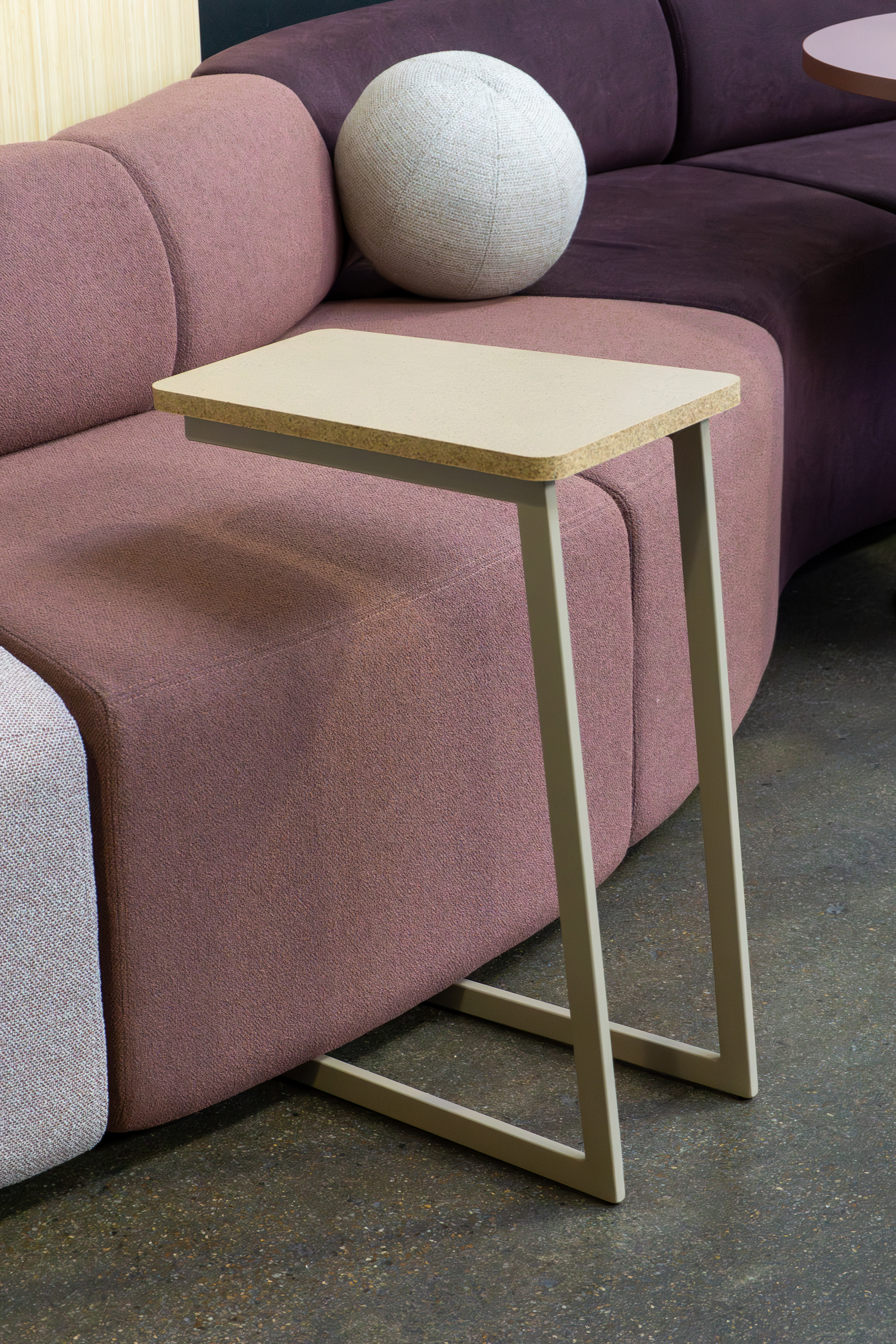
Strategic partnerships extend the reach of the material through existing product lines. For example UK furniture manufacturer Sixteen3 integrates Pit-Board as a standard material within selected collections.
The company is actively expanding its international distribution network, including a recently signed partnership in Finland. This model allows the material to scale globally while maintaining a focused production structure.
Pit-to-Table has been designed as a transferable circular manufacturing model rather than a centralised production system, enabling agricultural waste to be converted into design materials directly within producing regions.
The production process converts olive pits into high-performance bio-composite panels. This approach can be replicated in other olive-producing regions where similar agricultural by-products are available.
Future scaling will occur through regional licensing and technology transfer. Instead of concentrating production in a single location, the model enables local partners to convert regional agricultural residues into high-value materials. Because olive cultivation spans the Mediterranean basin, the model has strong potential to support circular bio-material production in many regions facing similar agricultural waste challenges.
Parallel research supported by Innovate UK is exploring a next-generation biodegradable and recyclable bio-based binder to further strengthen the environmental profile of the material.
Beyond interior panels the technology can also support additional product categories, including consumer goods and architectural components.
Through decentralised production and adaptable material inputs, Pit-to-Table offers a replicable model for transforming agricultural waste streams into scalable circular materials across multiple regions and sectors.