Enhancing Circularity, Sustainability, and Innovation
Kreisler
Kreisler – Neighbourhood Repair & Sharing Hubs for a Circular City
What if repairing was as easy as going to the supermarket? Kreisler turns vacant retail spaces into neighbourhood repair and sharing hubs where people can either fix their broken items themselves or have them repaired by our experienced repair crew. Alongside repair, residents can borrow tools and everyday objects instead of buying new ones. By making repairs and sharing simple, visible, and part of daily life, Kreisler reduces waste, lowers costs, and strengthens community ties.
Germany
Local
Berlin
Mainly urban
It involves other types of transformations (soft investment)
Yes
2025-12-31
No
No
No
Organisation
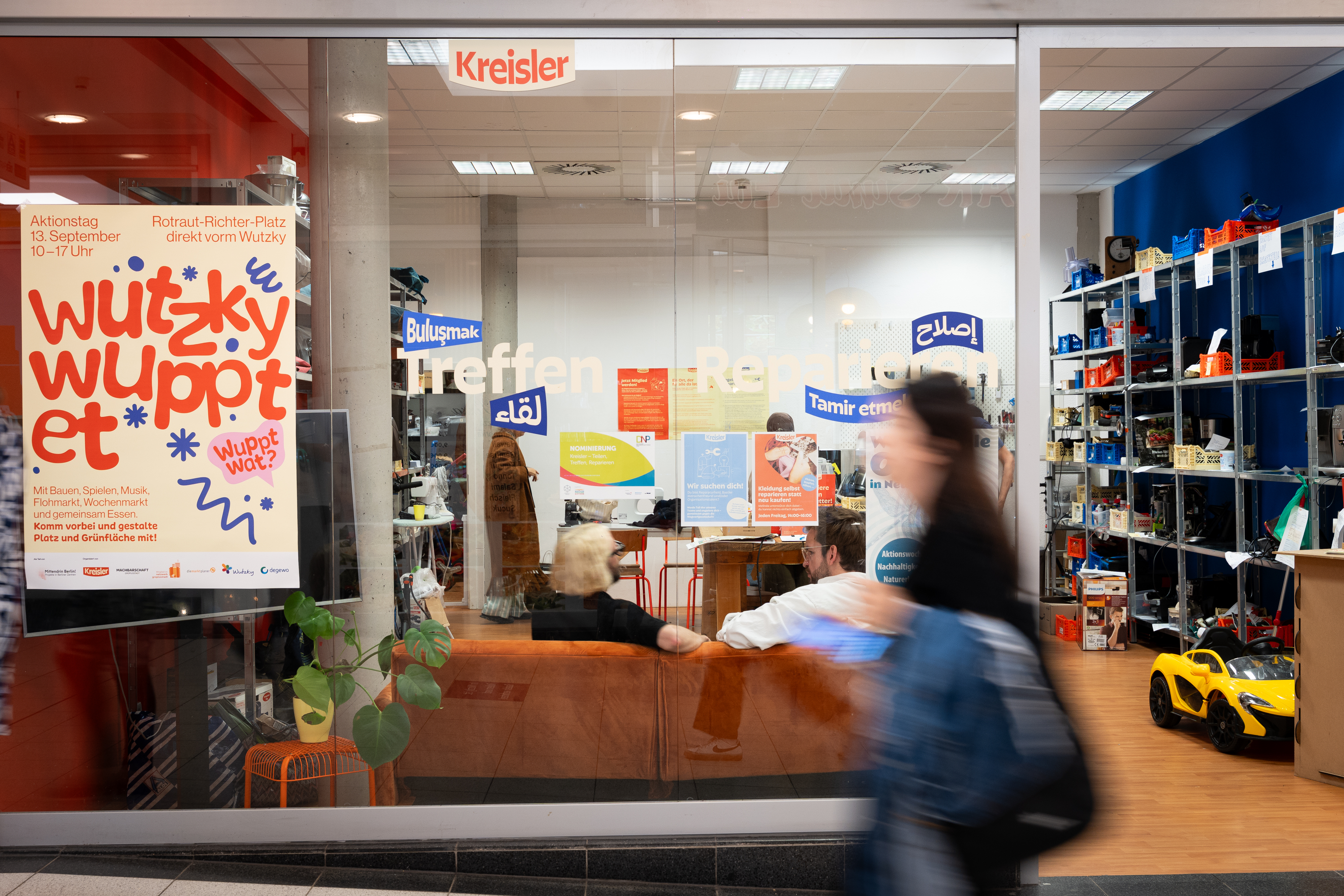
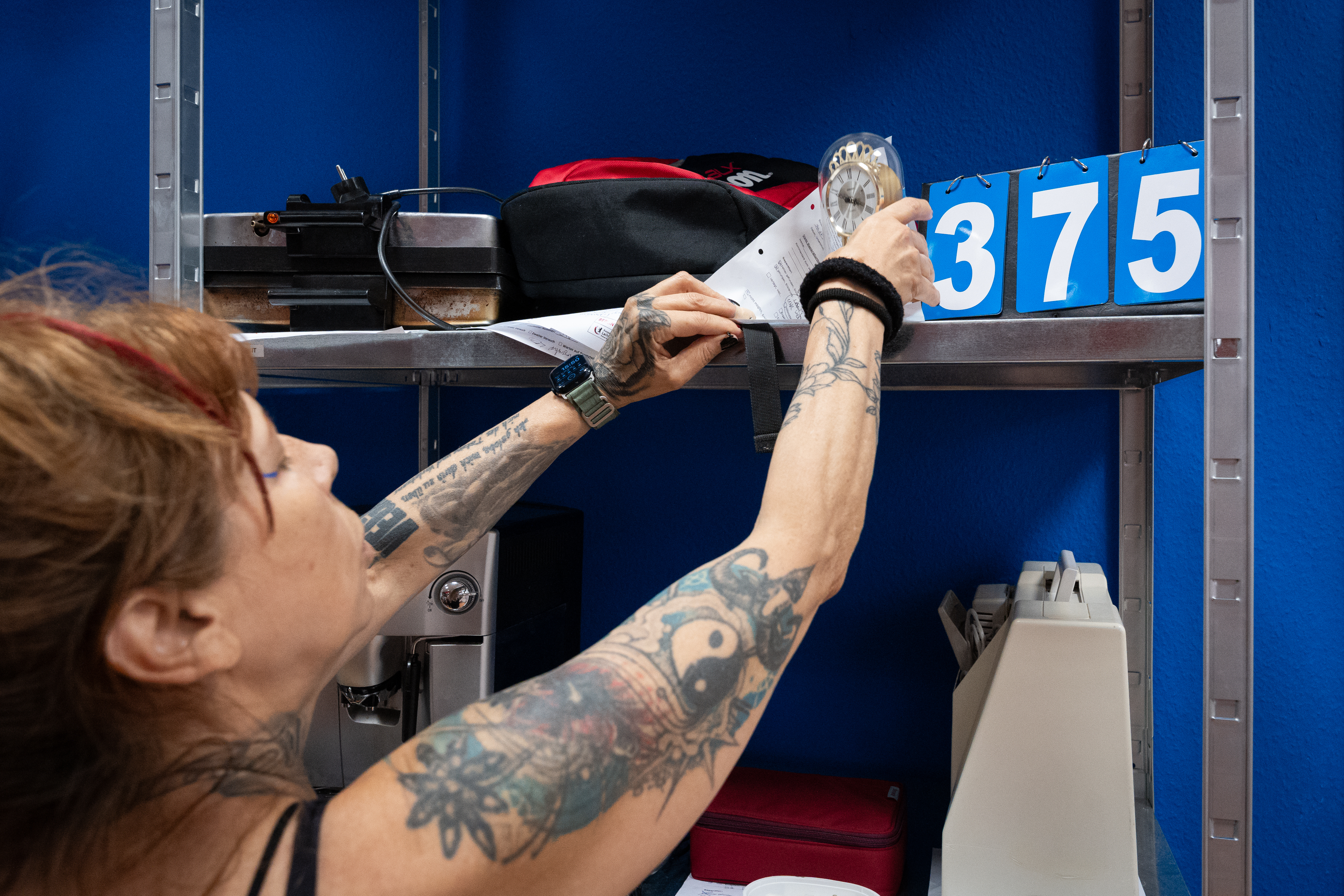
Kreisler is a neighbourhood-based repair and sharing hub located in Berlin-Gropiusstadt, a high-rise area marked by social diversity, limited household incomes and a lack of accessible repair infrastructure. The project transforms a vacant retail unit in a local shopping centre into a permanent circular hub with fixed opening hours, professional repair services, guided self-repair and a community lending shelf. Residents can repair items themselves with support or have them fixed by our repair crew, making repair as accessible as everyday shopping.
The pilot site opened in November 2024 and has since become part of daily life in the neighbourhood. In its first year, Kreisler was open on 198 days, welcomed more than 2,300 visitors, carried out 571 repairs and enabled 124 loans of shared items. The repairs helped avoid new purchases worth around 90,000 euros and led to estimated savings of approximately 46 tonnes of CO₂e through extended product lifetimes and avoided production and disposal. More than 200 members now contribute to the operation through a solidarity-based membership model.
Beyond measurable environmental results, Kreisler generates strong social impact. Many visitors, especially people with low incomes, families and elderly residents, use the space regularly. For some, it has become a reliable meeting point that fosters exchange, mutual support and intergenerational learning.
In the long term, Kreisler aims to anchor repair and sharing as permanent parts of urban infrastructure rather than temporary initiatives. Building on the pilot’s results, additional locations in Berlin are planned from 2026 onwards, particularly in neighbourhoods with similar social and spatial conditions. At the same time, the team is in discussion with initiatives in other cities that want to adapt and replicate the model in their own contexts.
Kreisler emerged from a predecessor project with a municipal housing company in the area. The original goal was to engage tenants around sustainability and climate-friendly behaviour. Through workshops, repair events and neighbourhood formats, we realised that issues such as repairing, owning and consuming everyday products were often perceived as stressful rather than empowering. Many residents expressed a willingness to repair, but lacked accessible, affordable infrastructure and reliable support.
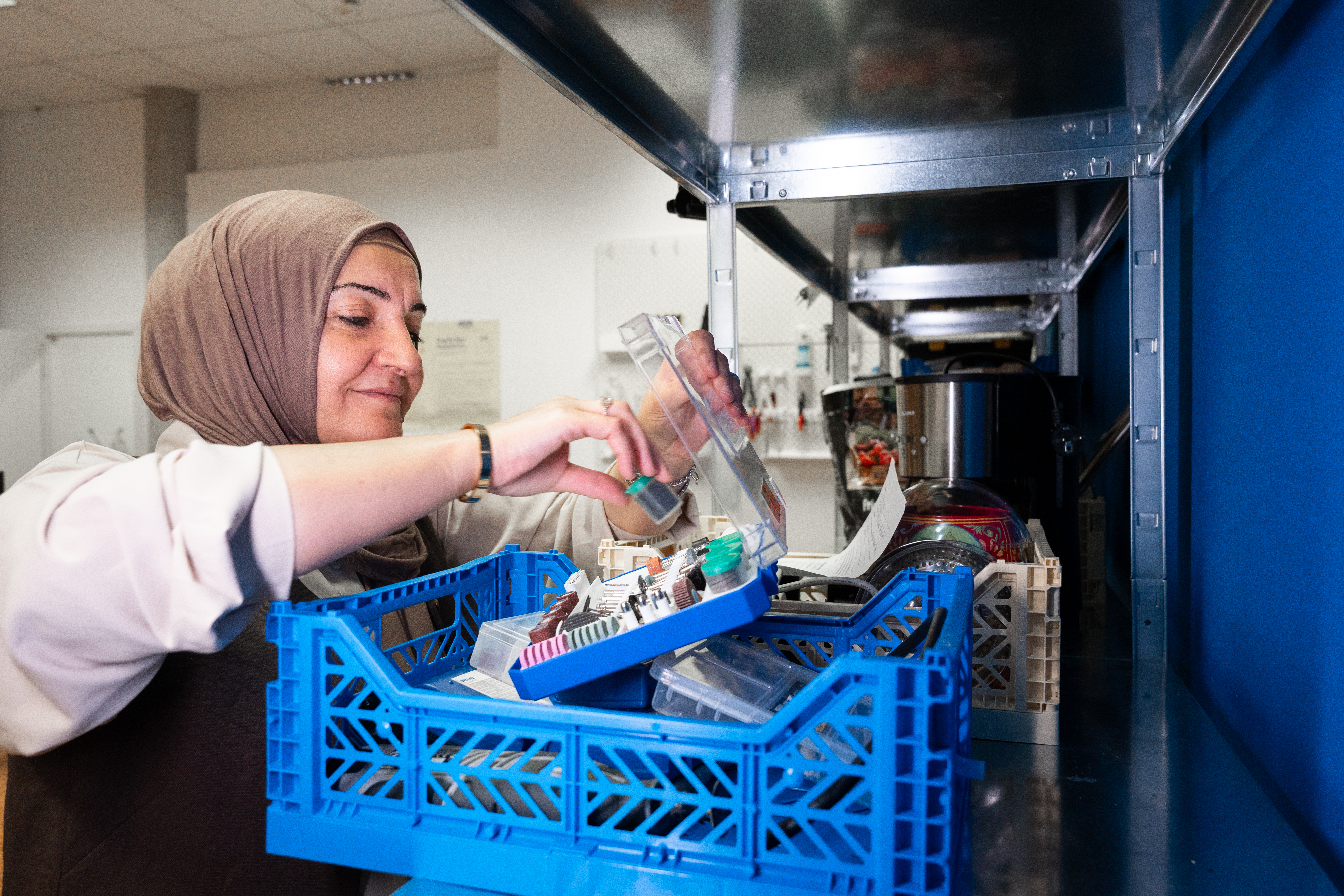
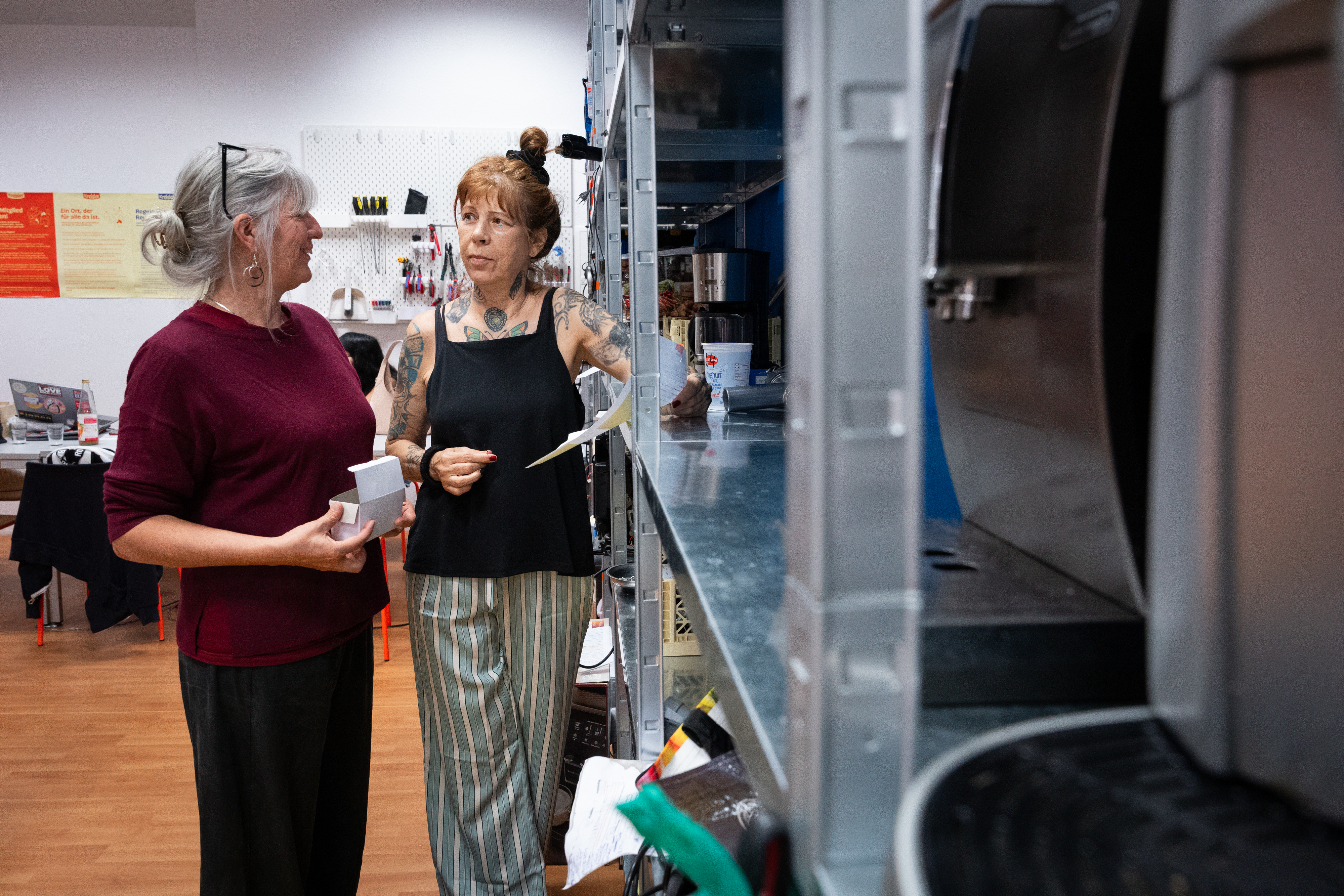
At the same time, a small retail unit in the local shopping centre became vacant. This coincidence turned insight into opportunity. Instead of running temporary events, we decided to create a permanent place where repair and sharing would become part of daily life. Within two months, the empty shop was renovated and equipped as a workshop and lending space. Workbenches, tools, storage systems and a welcoming front area were installed to ensure professional yet low-threshold operation.
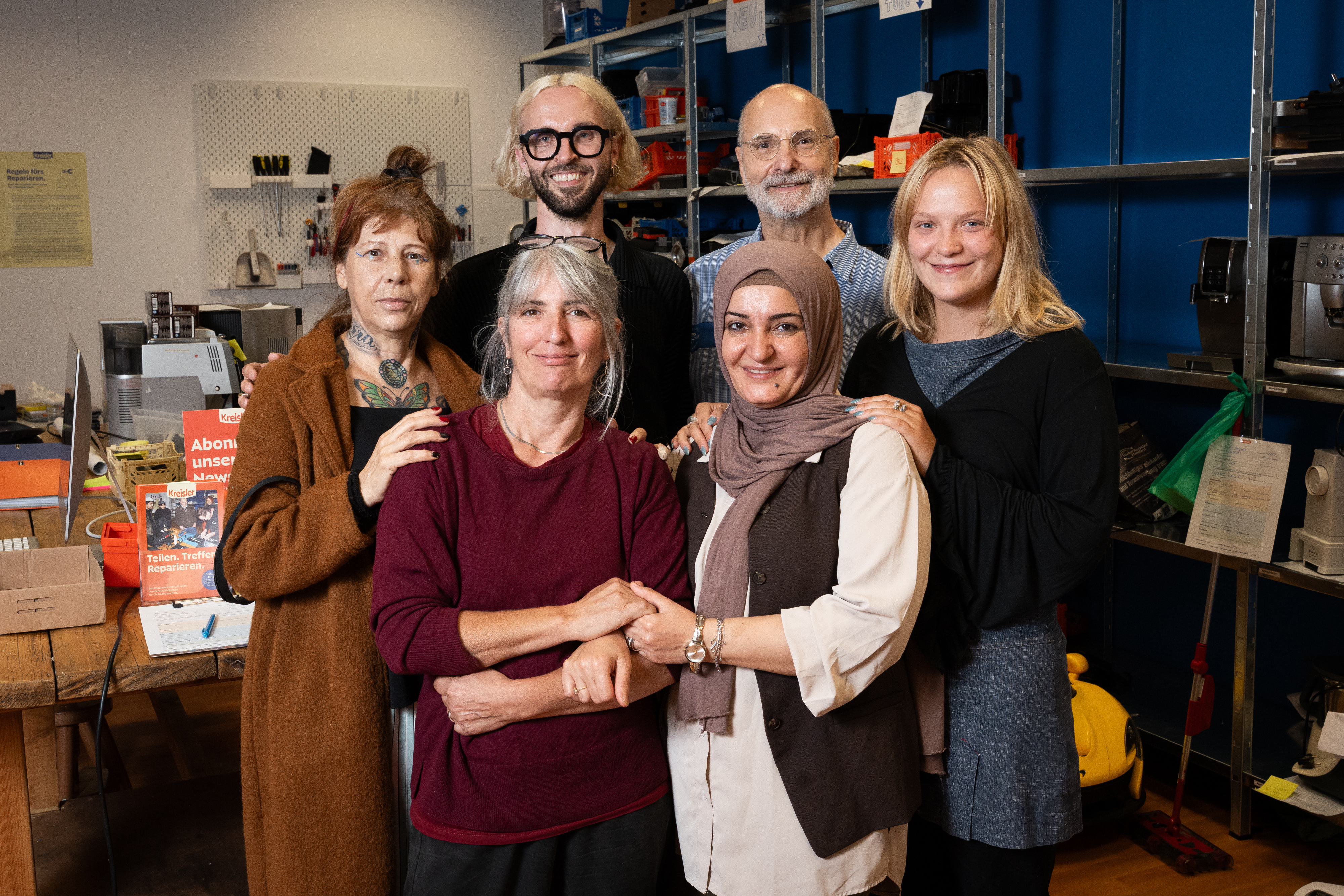
From the beginning, implementation was community-based. We reached out to residents, craftspeople and volunteers from the neighbourhood to build a local repair team. Using co-creation methods, we developed the governance and business model together. This included defining a solidarity-based membership system, setting contribution levels that remain affordable, and establishing clear operational processes for repairs, lending and opening hours.
The neighbourhood was not only involved as users, but as co-creators and supporters of the infrastructure. Continuous feedback loops helped refine the offer, simplify procedures and integrate multilingual communication. Through this iterative approach, Kreisler evolved from an idea into a functioning circular hub rooted in its local context and shaped by the people it serves.
circular economy
repair and reuse
community co-ownership
accessibility
social inclusion
Kreisler addresses a structural environmental challenge: the premature disposal of repairable products and the resource-intensive production of new goods. In Berlin-Gropiusstadt, many functional or repairable items are discarded due to missing infrastructure, lack of access to repair knowledge and the dominance of low-cost replacement products. This contributes directly to material waste streams and avoidable carbon emissions.
Kreisler establishes a permanent, neighbourhood-based circular hub within an existing retail unit. By extending the lifetime of products, it reduces demand for new resource extraction, manufacturing, transport and disposal. In its first year, 571 items were repaired and 124 items were lent instead of newly purchased. These activities resulted in estimated savings of approximately 46 tonnes of CO₂e through prolonged product use and avoided production.
The project advances circularity by prioritising maintenance, repair and shared use over replacement. It addresses products at the use phase, where environmental impact can be significantly reduced by extending lifecycles. Repair is treated as a climate action strategy, directly preventing waste generation and reducing pressure on raw materials and energy-intensive supply chains.
Kreisler is exemplary in environmental sustainability because it moves from awareness to measurable material impact. It operationalises circular economy principles in a real urban setting and demonstrates that significant emission reductions can be achieved through low-tech, community-based and -owned infrastructure. By embedding repair and reuse in daily routines, the project contributes to the reduction of environmental impact at the neighbourhood scale.
Kreisler contributes to aesthetics by redefining how circular infrastructure appears and feels in everyday life. Instead of placing repair in hidden back rooms or improvised settings, the project occupies a visible retail unit in a local shopping centre in Berlin-Gropiusstadt. The space is deliberately designed with a strong visual identity that draws on the familiarity of supermarkets and everyday retail environments. Clear signage, structured shelving and a recognisable layout create a feeling that is ordinary rather than experimental.
This branding choice is intentional. Kreisler does not present itself with stereotypical “eco” aesthetics or niche sustainability imagery. It looks approachable, organised and familiar. By referencing the visual language of daily shopping, the project lowers barriers and reduces the perception that repair is complicated, ideological or only for a specific audience. Circular practices are framed as normal consumer behaviour, integrated into routines rather than positioned as moral statements.
The quality of experience is equally important. Visitors enter a bright, structured workshop space where tools and materials are clearly arranged and processes are transparent. This clarity creates trust and confidence. Repair becomes a positive and empowering act rather than a sign of financial constraint.
By transforming a vacant storefront into an active, well-designed public space, Kreisler improves the appearance and vitality of the shopping centre. It fosters a sense of belonging by connecting environmental action with everyday culture and shows that circular economy can be embedded in familiar urban forms, combining strong design, emotional resonance and accessibility beyond functionality.
Kreisler addresses inclusion by removing financial, social and psychological barriers to repair and participation. In Berlin-Gropiusstadt, many households have limited disposable income. Professional repair services are often unaffordable, while commercial alternatives encourage replacement. Kreisler operates with a solidarity-based model: membership fees are freely chosen and repairs are donation-based. This ensures that access to repair does not depend on income. Making repair accessible to all is a core principle, not an add-on.
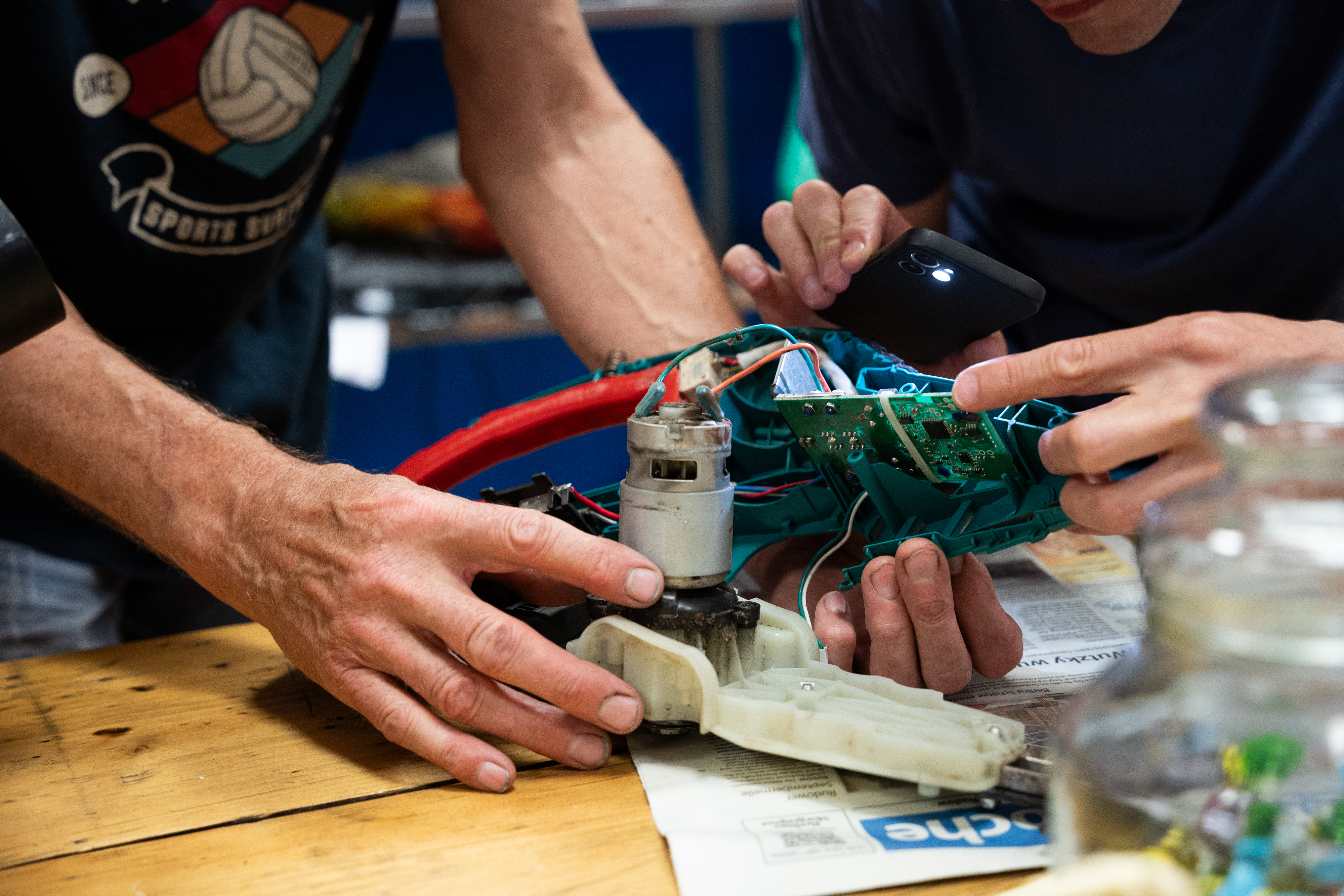
Accessibility is also spatial and cultural. The hub is located in a local shopping centre along everyday routes, not in a remote or specialised setting. Communication is multilingual (German, English, Arabic, Turkish) and processes are simple and transparent. The space is open to people with different levels of knowledge, language skills and confidence. Visitors can choose whether to repair independently with guidance or rely on the repair crew.
Inclusion is further strengthened through intergenerational exchange. Retired residents contribute their practical knowledge by repairing electronics, textiles or household devices. Young people come to fix bicycles or game consoles, learn technical skills and in some cases complete career orientation days in the workshop. These encounters create mutual recognition and shared learning between generations that would rarely meet otherwise.
Governance is community-based. Volunteers, members and users are involved in shaping processes, pricing structures and programme development in monthly meetings and quarterly Open Assemblies. The neighbourhood is not only a target group but a co-owner of the infrastructure.
Kreisler was co-developed with the neighbourhood from the outset. The idea emerged from earlier sustainability formats with tenants, where residents articulated that repair was desirable but inaccessible, unaffordable or too complicated in everyday life. These insights directly shaped the concept of a permanent, low-threshold repair hub in a shopping centre rather than temporary events.
Before and during the opening phase, we held local conversations, test repair days and outreach activities to refine the model. Feedback influenced key decisions, including fixed opening days per week (Wednesday to Saturday), multilingual communication, and a solidarity-based membership model with freely chosen contributions and donation-based repairs.
This participatory structure has shifted the project from a service for residents to infrastructure shaped and partly operated by them. It has increased trust, long-term engagement and a shared sense of ownership over the circular hub.
At the local level, a municipal housing company and the district administration were involved early on to identify a suitable vacant retail unit in Berlin-Gropiusstadt and to provide initial project support and funding. Their involvement ensured spatial integration within the neighbourhood and alignment with local development goals.
At the regional and national level, exchange with repair networks such as Netzwerk Reparatur-Initiativen informed the operational setup. Through peer learning, we identified appropriate workshop equipment, safety standards and realistic process design for community-based repair formats. This avoided duplication of mistakes and anchored the project within an existing repair ecosystem.
At the European level, dialogue with organisations such as Fixing Factories in the UK and The Restart Project helped refine the business model. These exchanges helped us strengthen the combination of professional repair, guided self-repair and solidarity-based financing.
The added value of this multi-level engagement lies in combining local embeddedness with external expertise. Local actors ensured contextual relevance, while regional, national and European partners strengthened quality, scalability and strategic positioning within a broader circular movement.
Kreisler combines knowledge from multiple disciplines in both its design and daily operation. Environmental sciences and circular economy frameworks inform the focus on lifecycle extension and CO₂ reduction. Engineering and craftsmanship shape the repair of electronics, textiles and household devices. Design and branding expertise guide the spatial concept and visual identity, creating a retail-like, accessible environment.
Social sciences and community development approaches influence the governance model, participation formats and solidarity-based financing. Educational practice is embedded through guided self-repair and informal skill transfer.
Our core team reflects this diversity, with backgrounds in design and marketing, sustainability management, social justice and community engagement, climate activism and engineering. Equally important is non-academic knowledge. Retired craftspeople, volunteers and residents contribute hands-on experience and lived knowledge that directly shape processes and decision-making.
Kreisler operates as a non-profit association that combines community-based contributions, earned income and project-based support to sustain a permanent repair and sharing infrastructure.
The core of the model is a solidarity-based membership system that generates recurring revenue. Members freely choose their contribution level according to their financial capacity, ensuring accessibility while creating predictable monthly income. In addition, repairs are donation-based. Visitors decide themselves what they can contribute after a repair, which keeps the service open to all while generating ongoing revenue linked directly to activity.
In the first year, project-based funding and partner support enabled the setup and initial operation of the pilot site. After this start-up phase, the organisation has reached a point where it stands financially and economically on its own feet. The recurring membership fees together with donations per repair are sufficient to cover all operational expenses, including staff coordination and rent.
This combination of community financing and service-related donations creates a model in which environmental impact and financial viability reinforce each other. The more the hub is used for repair and sharing, the more stable the financial base becomes. As additional locations are prepared, standardised processes and shared structures will allow the model to be transferred and scaled while maintaining economic resilience.
Kreisler is designed as a transferable model rather than a single-location project. Several core elements can be replicated in other neighbourhoods and cities.
These include the combination of professional repair and guided self-repair under one roof, the solidarity-based membership model with freely chosen contributions, donation-based repair pricing, standardised workshop setup and safety processes, multilingual low-threshold communication, and the retail-inspired branding that embeds repair into everyday routines. The operational workflows, governance structure and documentation of impact measurement are structured in a way that can be adopted by others.
We are currently preparing to open-source the model. This includes detailed process documentation, guidelines for spatial setup and equipment, templates for membership systems, financial planning tools and key learnings from the pilot phase. The aim is to enable other initiatives to establish their own local Kreisler hubs independently, adapted to their context. This scale-out approach allows decentralised growth without central ownership.
At the same time, we plan to open additional locations in Berlin that are directly operated by our organisation. This dual strategy combines local replication by partners with structured expansion within the city. Together, it creates a scalable framework for neighbourhood-based circular infrastructure that can be transferred across diverse urban contexts while maintaining core principles and quality standards.