Strengthening Local Democracy and Inclusion
Boost Your Future
Boost Your Future: StartUp and Design Thinking for Youth of Kosovo
This project brings together 30 ambitious youth (15 girls and 15 boys), aged 15–18, from three municipalities in Kosovo for a hands-on, inclusive, and gender-smart STEAM program. Through entrepreneurship, creativity, and deep connections to the local startup and tech scene, participants—marginalized Roma youth and their peers from mainstream schools—will collaborate, innovate, and co-create solutions that make their communities stronger, fairer, and more vibrant.
Kosovo
Local
Gjakove Municipality (City of Ali Ibra)
Prizren Municipality (City of Prizren and City of Suharekë).
Prizren Municipality (City of Prizren and City of Suharekë).
It addresses urban-rural linkages
It refers to other types of transformations (soft investment)
Prototype level
No
No
No
Organisation
The project “Boost Your Future: StartUp and Design Thinking for Youth of Kosovo” aims to empower 30 young people (15 girls and 15 boys), aged 12–18, from Prizren, Gjakova and Suhareka, through an inclusive and gender-responsive learning program that strengthens entrepreneurial thinking, creativity, and connections to the local start-up and technology ecosystem.
Implemented between January and October 2026, the project will bring together marginalised Roma youth and their peers from schools to learn, collaborate, and co-create community-driven solutions. By fostering interaction between youth from different backgrounds, the program also aims to strengthen social cohesion and mutual understanding.
Participants will develop practical skills in social entrepreneurship, design thinking, budgeting, problem-solving, teamwork, and public speaking. Through interactive workshops and mentorship, they will gain early exposure to innovation processes and potential career pathways in technology and entrepreneurship.
The program ensures equal participation of girls and boys, addresses gender-specific barriers to participation, and highlights inspiring examples of women-led and women-focused businesses. Special emphasis will be placed on encouraging girls to develop and lead project ideas related to issues relevant to their communities.
By the end of the project, the following results are expected:
• At least 70% of participating youth demonstrate improved skills in social entrepreneurship and public speaking
• A minimum of six innovative youth-led community project ideas are developed and publicly presented.
• Networking and mentorship opportunities are initiated during a final matchmaking event involving 8–10 local businesses.
The project aims to create lasting impact by equipping young people with practical tools to navigate future education and labour market opportunities, while fostering youth-led innovation and cross-community collaboration.
The idea for this project emerged from an existing collaboration with the innovation centre Bonevet Gjakova. When we identified the funding opportunity, Bonevet was a natural partner due to their strong experience in creative learning, design thinking, and technology-based youth education. Thus, we signed a partnership agreement between Concordia Kosovo and Bonevet, coordinated school exchanges and finalised the implementation plan.
At the same time, the collaboration represents a new direction for both organisations. Bonevet has traditionally worked with youth already interested in innovation and technology but has had limited engagement with vulnerable or marginalised groups. Through this partnership, they are interested in expanding their outreach and contributing their expertise to initiatives that support socially disadvantaged youth.
For our organisation, the project also represents a new approach. While we have extensive experience working with marginalised youth in Kosovo, we have not previously implemented such a close collaboration with an innovation and start-up focused organisation in the country.
The concept was therefore developed jointly through a collaborative process. Both partners met to explore how Bonevet’s existing learning methods—particularly design thinking and hands-on experimentation—could be adapted to the needs of the youth we support. Together we developed a program that combines entrepreneurial learning with social inclusion by bringing together marginalised Roma youth and students from mainstream schools. Local vocational high schools in Gjakova, Prizren and Suharekë support the outreach and nominate participating students. The idea was also inspired by previous cooperation with Bonevet in an earlier project, where young participants visited the centre and were introduced to its creative learning environment. The enthusiasm and motivation expressed by the youth during that visit demonstrated the strong potential of such an approach.
Youth and Citizen Engagement
Entrepreneurship
Social inclusion
Ethnic minorities, low income and at-risk families
Stakeholder partnerships
The sustainability of the project is ensured through several complementary mechanisms that strengthen long-term social and economic impact. First, youth participants will gain practical and transferable skills in entrepreneurship, financial literacy, digital tools, teamwork, and problem-solving. These competencies, combined with direct exposure to the tech sector and mentoring opportunities, will increase their long-term employability and economic resilience. Particular attention will be given to girls and young women, who will be supported in identifying role models, developing gender-aware business ideas, and navigating gender-specific challenges in entrepreneurship and the labour market. Furthermore, workshops n entrepreneurship and technology focus on sustainable methods such as impact of renewable energy, problem solving in addressing community issues proactively. Second, teachers and social workers involved in the program will be introduced to the project’s learning methodologies and training materials. This will enable them to replicate and further implement the approach within schools and youth centres after the project ends. Training resources will remain accessible for future cohorts, ensuring continuity and scaling potential. Third, the project promotes long-term social sustainability by bringing together youth from ethnic minority communities (Roma, Ashkali, and Egyptian) and non-minority youth. Through mixed teams, collaborative activities, and joint problem-solving exercises, participants will build relationships that challenge stereotypes and strengthen social cohesion within local communities. Cross-sector partnerships between educational institutions, NGOs, and local tech companies will create a sustainable support network for youth development. These collaborations will foster knowledge exchange, mentoring opportunities, and potential future initiatives that continue to support youth entrepreneurship and innovation beyond the project duration.
“Sometimes one simple idea can completely change how something works.” – R.B., student from “11 Marsi” High School.
This quote reflects the spirit of the project: creating spaces where young people can discover new possibilities and imagine different futures.
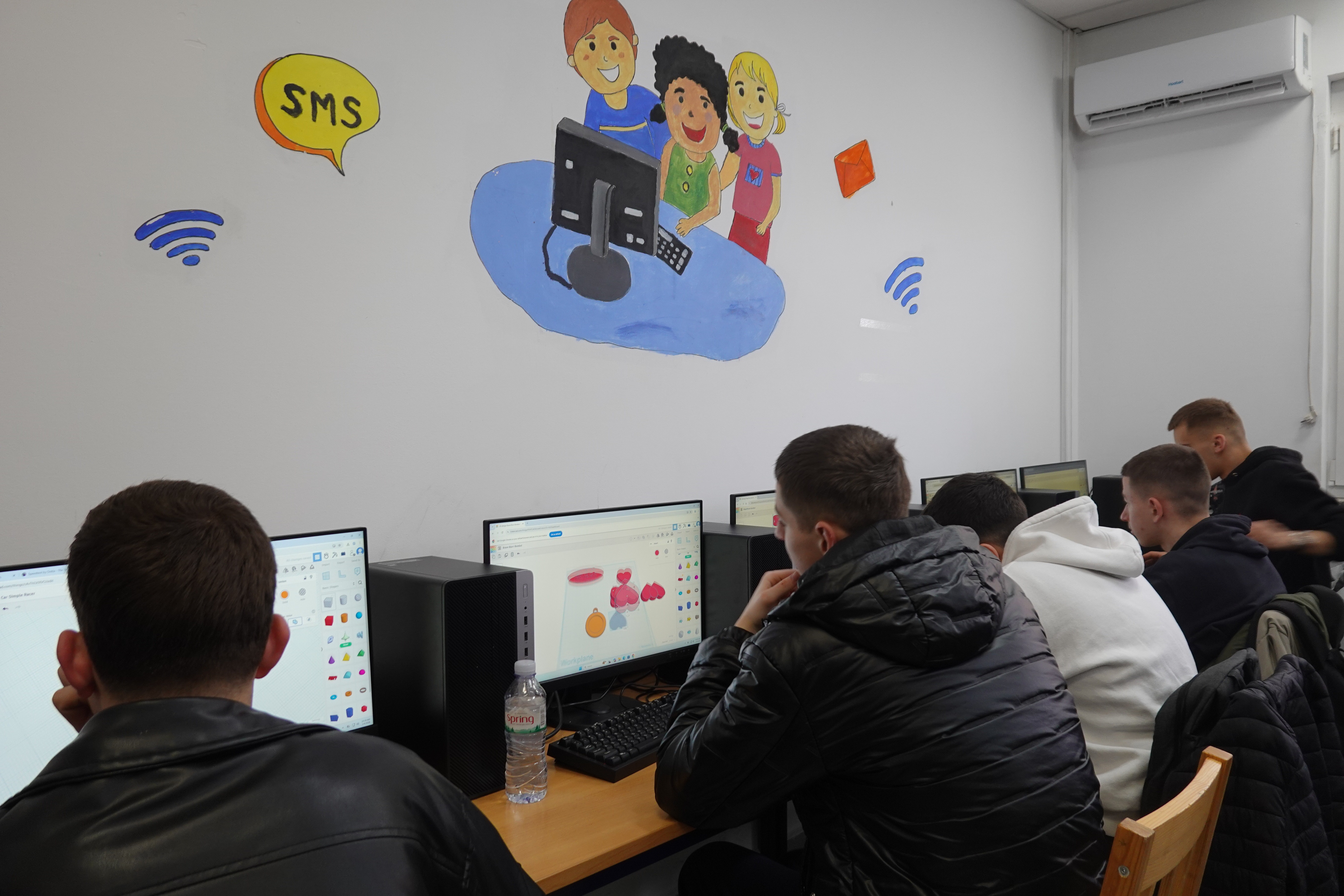
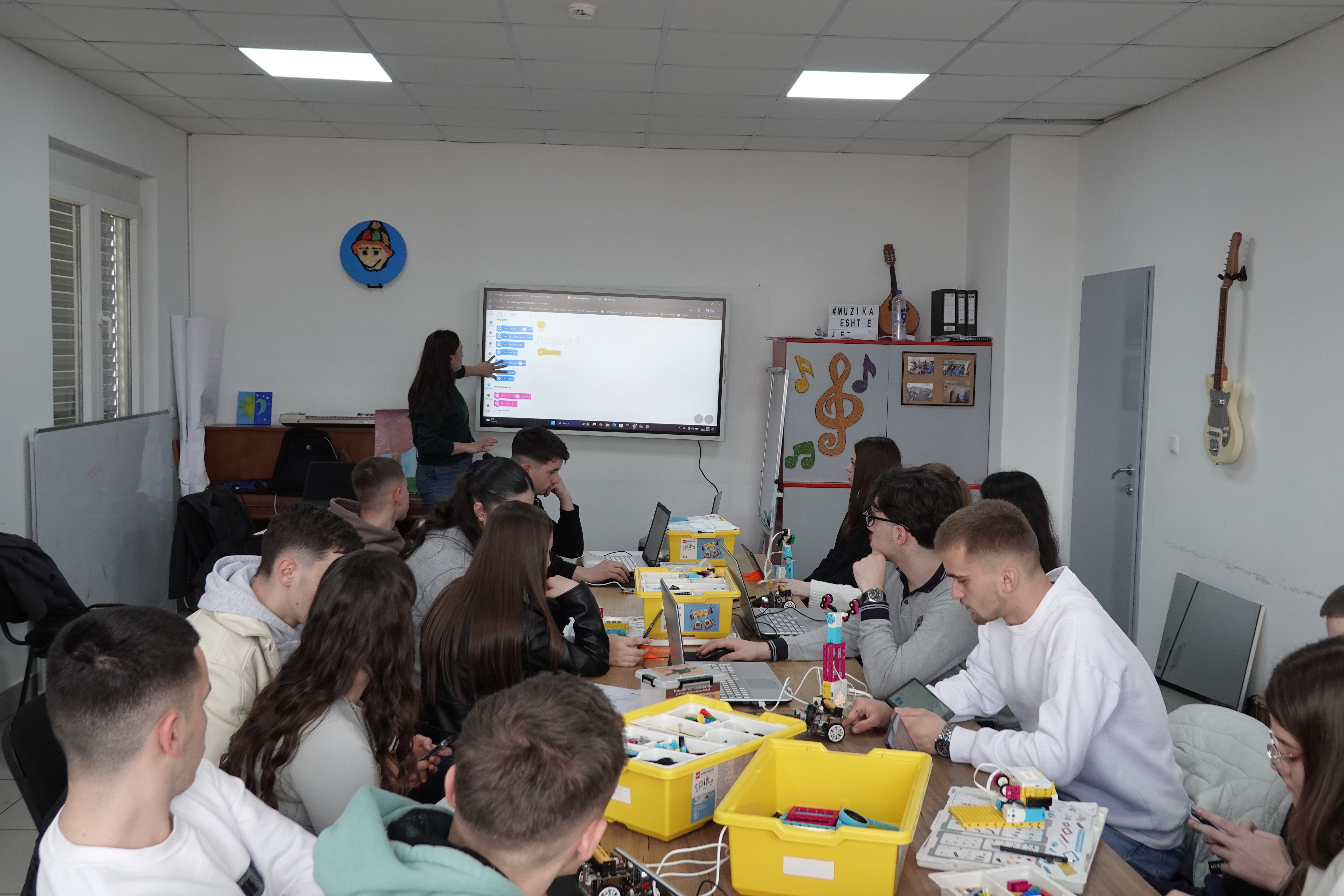
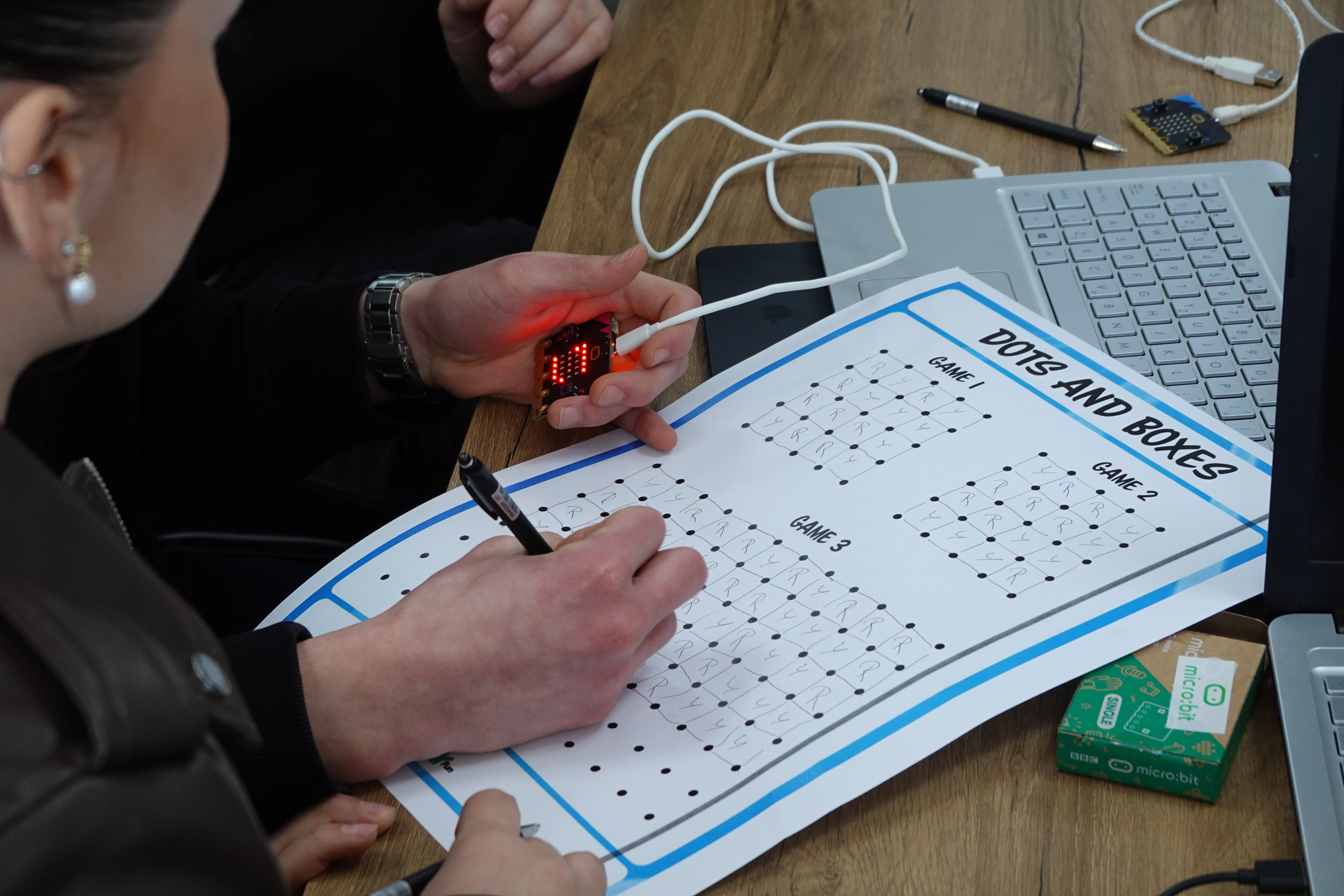
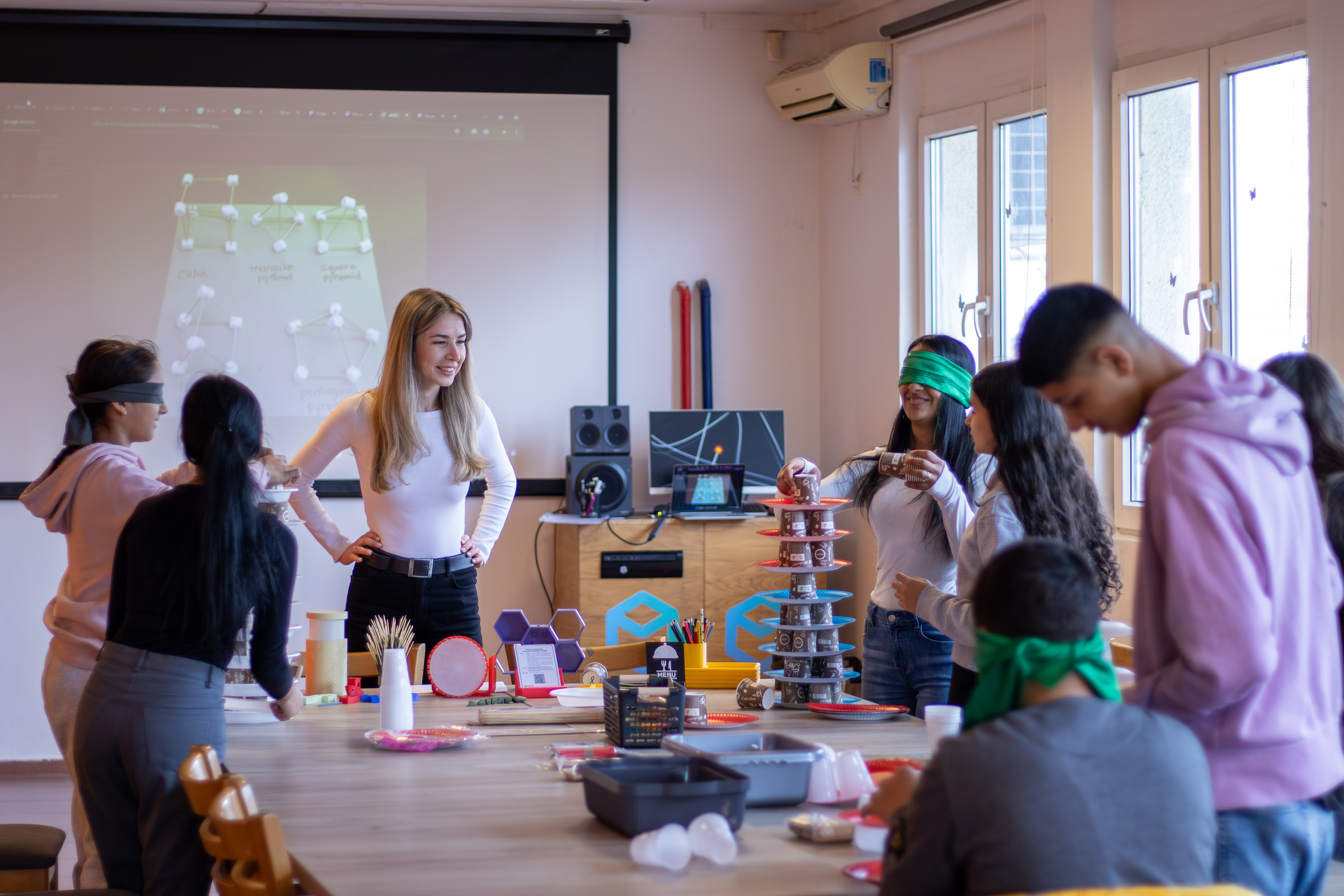
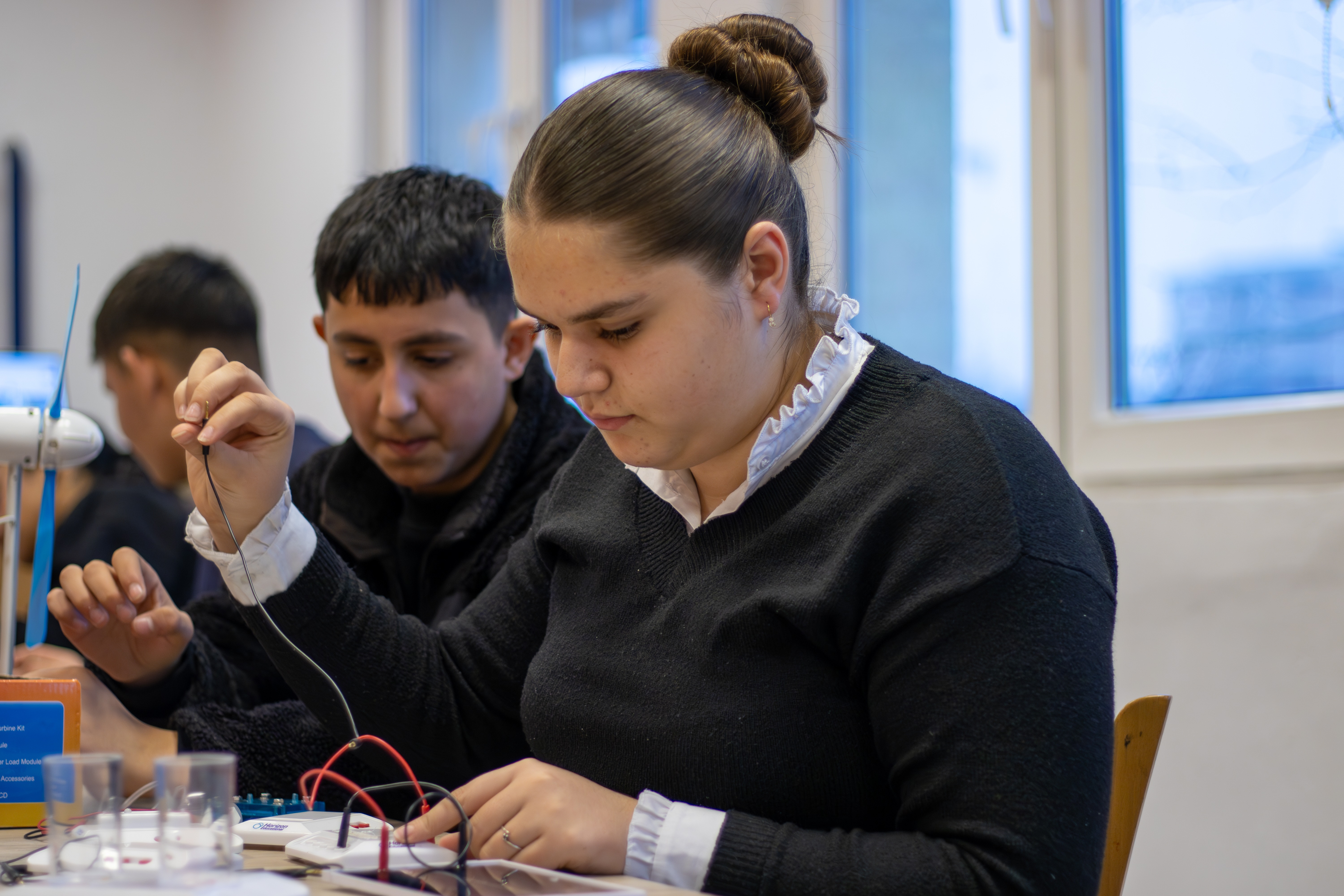
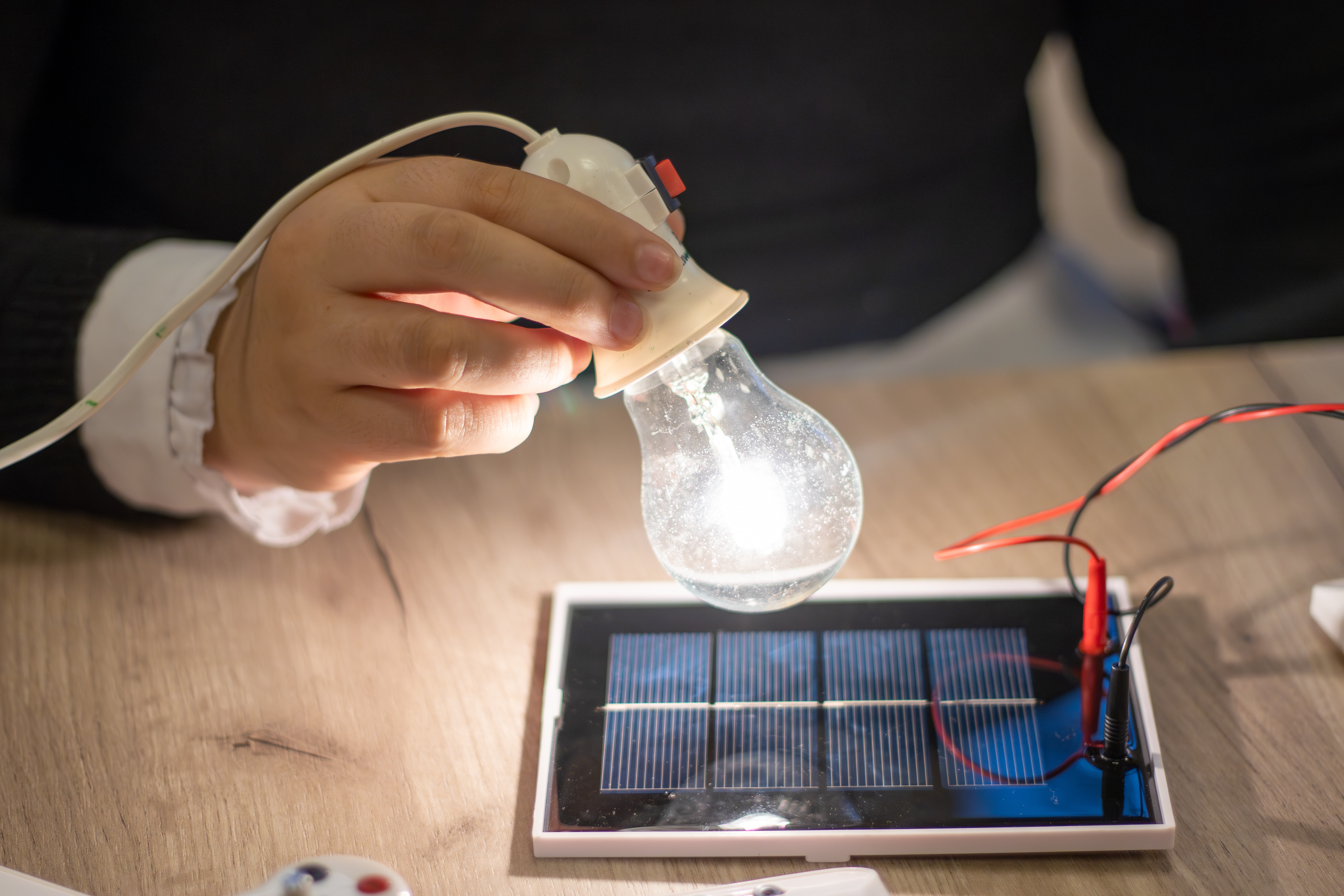
During the workshops, the atmosphere is filled with concentration, curiosity, and collaboration. Youth experiment with STEAM technologies, build robots, explore how solar panels work, and test new models together. They help each other solve problems, exchange ideas, and learn through hands-on experiences. Their motivation and engagement are visible in the way they work in teams, ask questions, and proudly present what they have created. Early feedback from participants shows that they enjoy the workshops and appreciate the opportunity to explore fields that previously felt distant or inaccessible.
What makes the project particularly inspiring is the creativity and exchange that emerge during the workshops. Young people share ideas, discuss solutions, and collaborate regardless of their social or economic backgrounds. The focus lies on teamwork, curiosity, and the collective process of solving problems and creating something new together.
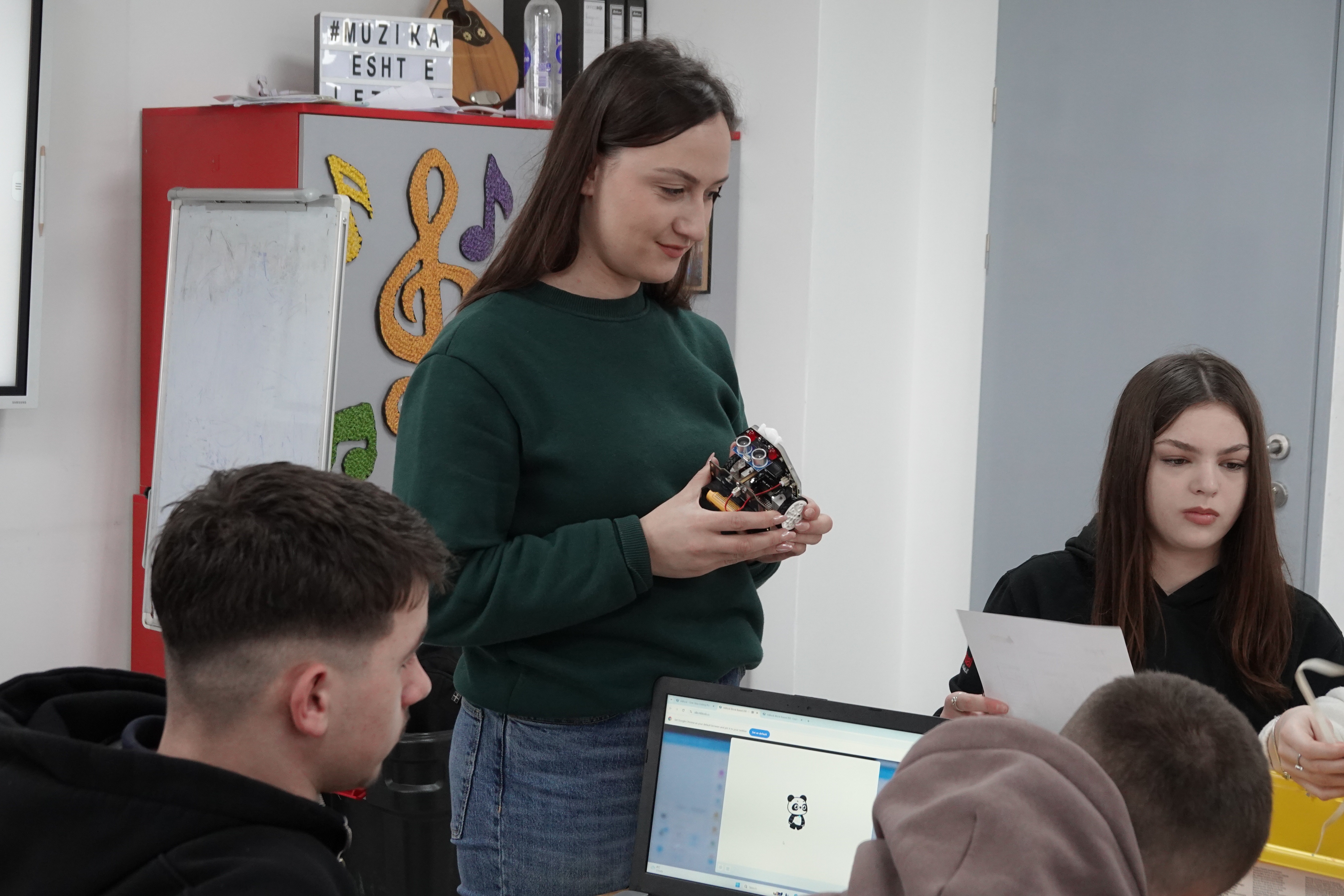
Both workshop trainers are women, demonstrating our commitment to gender equality. They serve as important role models for the young women and men participating in the workshops, showing that innovation and technological fields are open to everyone.
Beyond the workshops, the project nurtures a sense of belonging and care for the community. By encouraging youth to develop ideas that respond to local challenges and opportunities, participants begin to see themselves as active contributors to their neighbourhoods.
The project is exemplary in its aesthetics because it creates inspiring spaces of creativity, curiosity, and cooperation—where learning, innovation, and social inclusion come together to make communities more vibrant, inclusive, and hopeful.
Inclusion is the foundational principle of this project, integrated into the participant selection, accessibility protocols, and activity design.
The initiative specifically supports youth from low-income families and marginalised communities who face systemic barriers to quality education and professional growth. This includes a focus on individuals from Roma, Ashkali, and Egyptian communities, alongside others from vulnerable backgrounds. By enhancing their skills and professional networks, the project actively reduces inequalities and fosters inclusive economic participation.
To ensure affordability, participation is fully funded, removing all financial barriers for young people. Logistical accessibility is equally prioritised; activities are scheduled outside of school hours to protect educational attendance. We cover all transportation costs, including fuel and vehicle hire, to bridge geographical gaps. For instance, participants from Gjakova are provided with transport to the training centre. In other localities, trainers travel directly to established Concordia day centres. This "mobile trainer" model ensures that those affected by geographical isolation or safety concerns can still participate equally in their own familiar environments.
The project promotes new societal models through mixed-group collaboration. By structuring teams with youth from diverse ethnic and social backgrounds, the programme fosters mutual understanding and challenges entrenched stereotypes through shared goals.
Finally, the curriculum will be continuously adapted to the needs and circumstances of participants. Through constant cooperation between partner organisations, the learning materials are continuously adapted to meet the specific needs and circumstances of the participants. This ensures the experience remains relevant and accessible to every individual involved, making the project an exemplary model of inclusive governance and social equity.
The concept was developed through continuous consultation with key stakeholders, including schools, municipalities, social workers, youth organisations, and young people themselves. Letters of support from participating schools and municipalities demonstrate both the relevance of the initiative and their commitment to actively engage in its implementation.
The project also builds on previous collaboration with Bonevet through the Digi Youth project. Feedback from participating youth showed strong interest in applying their knowledge to develop community-oriented ideas and technological solutions. Their motivation to continue learning about STEAM topics and to collaborate in groups directly informed the decision to design a follow-up initiative focused on youth skills development and entrepreneurship.
Practitioners working directly with vulnerable youth were actively consulted during the design phase. Social workers reviewed the proposed activities and assessed their feasibility, particularly regarding the entrepreneurship training and pitching event. Their input ensured that the activities are adapted to the needs and realities of marginalised youth and that a strong “do no harm” approach is embedded throughout the project design.
In addition, the concept draws on the existing networks of both partner organisations, including local businesses and start-ups.
Through these consultations, stakeholder participation strengthened the relevance, feasibility, and inclusiveness of the concept. It ensured that the project responds to the interests of young people, is grounded in the experience of practitioners working with vulnerable groups, and is connected to the local economic ecosystem. The final matchmaking event will further extend this participatory approach by bringing together youth participants, businesses, civil society organisations, and community actors to exchange ideas and build future collaborations. Please find participatory in annex (workshop report).
At the local level, the project works closely with schools and municipalities, particularly in Prizren and Gjakova, where CONCORDIA Kosovo maintains formal cooperation agreements. These partnerships support the social integration of Roma, Ashkali, Egyptian, and other vulnerable children and youth. Local businesses and employers will also play a key role, benefiting from access to a motivated pool of young people with enhanced entrepreneurial and digital skills, while providing mentorship, inspiration, and potential recruitment opportunities.
At the community level, families and local communities will benefit from the wider effects of youth empowerment, including improved economic prospects and stronger social cohesion. Educational institutions, NGOs, and community stakeholders will also gain increased awareness of the barriers faced by marginalised youth and the opportunities offered through entrepreneurship training and digital skills development. This will be reinforced through the project’s social media outreach and the final matchmaking event.
At the civil society level, the project benefits from CONCORDIA Kosovo’s active participation in national NGO networks such as the Coalition of NGOs for Child Protection (KOMF) and CIVIKOS, as well as its coordination role within the network of NGOs providing social services in the Municipality of Prizren. These platforms facilitate knowledge exchange and allow successful approaches to be shared and replicated.
At the national level, Concordia maintains working relationships with the Ministries of Education, Justice, and Culture, Youth and Sports. The project will also be promoted among relevant ministries as a promising initiative with potential for replication and scaling. In addition, dialogue with diplomatic representatives, including the Austrian Embassy, provides opportunities to connect the initiative with wider regional and European discussions on youth empowerment and social inclusion.
The project adopts a transdisciplinary approach that combines expertise from social sciences, entrepreneurship, digital technologies, and education in order to address the complex challenges faced by marginalised youth.
A central element of the concept is the integration of social inclusion approaches with entrepreneurship and STEAM-related skills (Science, Technology, Engineering, Arts and Mathematics). By combining these fields, the project enables young people not only to develop technical and digital competences but also to strengthen their creativity, problem-solving skills, and entrepreneurial mindset.
The training modules integrate knowledge from economics and entrepreneurship, digital literacy, social work, and education, ensuring that participants acquire both practical skills and the confidence needed to explore self-employment or further education pathways. The pitching and mentoring components further connect these disciplines by translating learning into concrete project ideas and entrepreneurial initiatives.
The project also benefits from the multidisciplinary expertise within CONCORDIA Kosovo, which employs a diverse team including teachers, psychologists, nurses, outreach workers, social workers, and music teachers, supported by strong internal structures in project coordination, finance, and fundraising. This diversity allows the project to address educational, social, and psychological aspects of youth development in a holistic way.
The concept also integrates a gender-sensitive perspective, with a particular focus on encouraging the participation and entrepreneurial engagement of young women, as well as promoting especially female representation in entrepreneurship and STEAM fields. This ensures that the project contributes not only to youth empowerment but also to greater gender equality in access to economic opportunities.
The initiative combines grant funding, institutional partnerships, and scalable program development to ensure long-term financial sustainability. The current pilot phase is funded through the Boost Western Balkans initiative, enabling us to implement activities with a small group of beginner participants, test and refine the methodology, and build evidence of impact. Participation in the Boost network also provides capacity building, knowledge exchange, and opportunities for regional partnerships and joint funding.
In the medium term, the program will expand through increased participation and outreach. The number of workshops and participants can gradually grow, creating a cascade effect through youth clubs and peer networks where participants share their knowledge with others. In the long term, we aim to offer targeted workshops and support for girls and young women. As more young people enter STEAM education or entrepreneurship pathways, their success will increase visibility and representation of vulnerable and marginalized groups in these fields.
Financial sustainability will be supported through continued fundraising from international donors, foundations, and regional cooperation programs at local, regional, and EU levels. The initiative further strengthens collaboration with municipalities, educational institutions, and regional stakeholders through community-driven engagement.
The model is innovative because it offers free access to STEAM education for vulnerable youth while providing mentorship and peer support. Inclusive learning groups foster participation of girls and young women and promote gender representation in STEAM fields.
The concept is adaptable and scalable, allowing expansion to other communities in Kosovo We aim to replicate it to other countries, Concordia is active in South-Easter Europe and adapt it to local circumstances.
A key element that we would like to transfer when expanding the project, is the STEAM workshop methodology. The project combines hands-on learning, creative experimentation, and problem-solving with storytelling sessions featuring professionals and role models. This participatory learning approach encourages curiosity, critical thinking, and practical engagement with technology and innovation. The methodology is flexible and can easily be adapted to different settings such as youth centres, schools, community organizations, or non-formal education programs, and can be adjusted to different age groups or levels of technical knowledge.
Another core methodology is the intentional inclusion approach. The project actively encourages the participation of girls and young women as well as youth from Roma, Ashkali, and Egyptian communities, addressing structural barriers and stereotypes that often limit access to STEAM fields. This focus on inclusive outreach, safe learning spaces, and visible role models can be applied in many contexts where marginalized youth have limited opportunities to access innovation and technology education. Future iterations aim to further strengthen the participation of girls and young women and expand activities to additional regions in Kosovo.
The concept is also supported by strong institutional networks, which increase its scalability. BONEVET’s network of innovation centres across Kosovo, including connections with neighbouring and conflict-affected regions, provides a practical platform for expanding the activities geographically. In addition, the Concordia international network creates opportunities to transfer the model to partner organizations in the Western Balkans and potentially to other Southern European countries. Through regional partnerships and knowledge exchange, the concept can be adapted and implemented by organizations working with marginalized youth in different socio-economic contexts (illustrated in annex).
Step 1: Preparation and outreach (Months 1–3)
The project team will coordinate with BONEVET and local partners to finalize the program design, identify mentors and guest speakers from local tech companies, and prepare workshop materials. Outreach activities will target marginalized youth aged 15–18, with a particular focus on Roma, Ashkali, and Egyptian communities, ensuring inclusive participation.
Step 2: Implementation of STEAM workshops (Months 4–8)
A 10-week program of interactive STEAM workshops will be delivered, covering topics such as renewable energy, robotics, design thinking, technology and AI, and 3D printing. Each session will include hands-on activities as well as storytelling sessions with professionals from local technology companies who share their career journeys and inspire participants.
Step 3: Community Pitching Day (Month 3-8)
All participants will gather at BONEVET Gjakova to develop and present their community project ideas. Working in mixed and diverse groups, youth will receive mentorship to refine their concepts and prepare pitches. The event will strengthen teamwork, creativity, and presentation skills while fostering connections among participants from different communities.
Step 4: Final Matchmaking and Project Showcase Event (Month 8-10)
The program will culminate in a public showcase where youth teams present their projects to local businesses, stakeholders, and families. The event will facilitate networking, mentorship opportunities, and potential follow-up support from businesses and community actors. Outstanding projects will receive awards and recognition.
Step 5: Follow-up and visibility (Months 10–12)
Project results will be documented and shared through communication materials, including photos and success stories. Partnerships with businesses and institutions will be further developed to support promising youth initiatives and explore opportunities for future editions of the program.