Strengthening Local Democracy and Inclusion
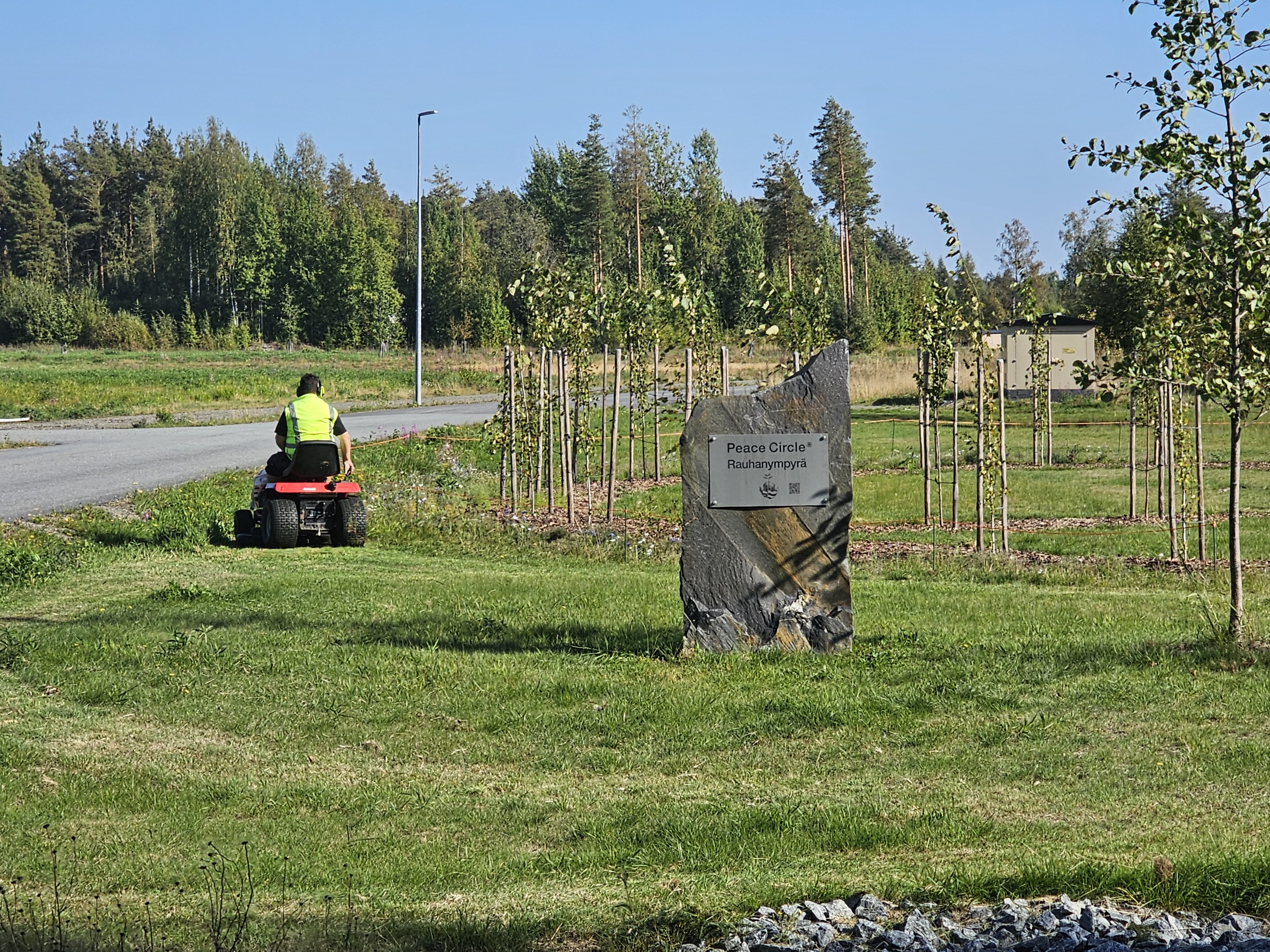
Peace Circle
Peace Circle – Spatial Democracy in Practice
What if democracy had a place? Peace Circle transforms an ordinary green area into a living space where people meet as equals and share responsibility. Built by citizens together with their municipality, it combines beauty, ecological care and dialogue in everyday life — helping rebuild trust and connection from the ground up.
Finland
Local
The municipality of Liperi
It addresses urban-rural linkages
It involves a physical transformation of the built environment (hard investment)
Yes
2025-11-20
No
No
No
Organisation
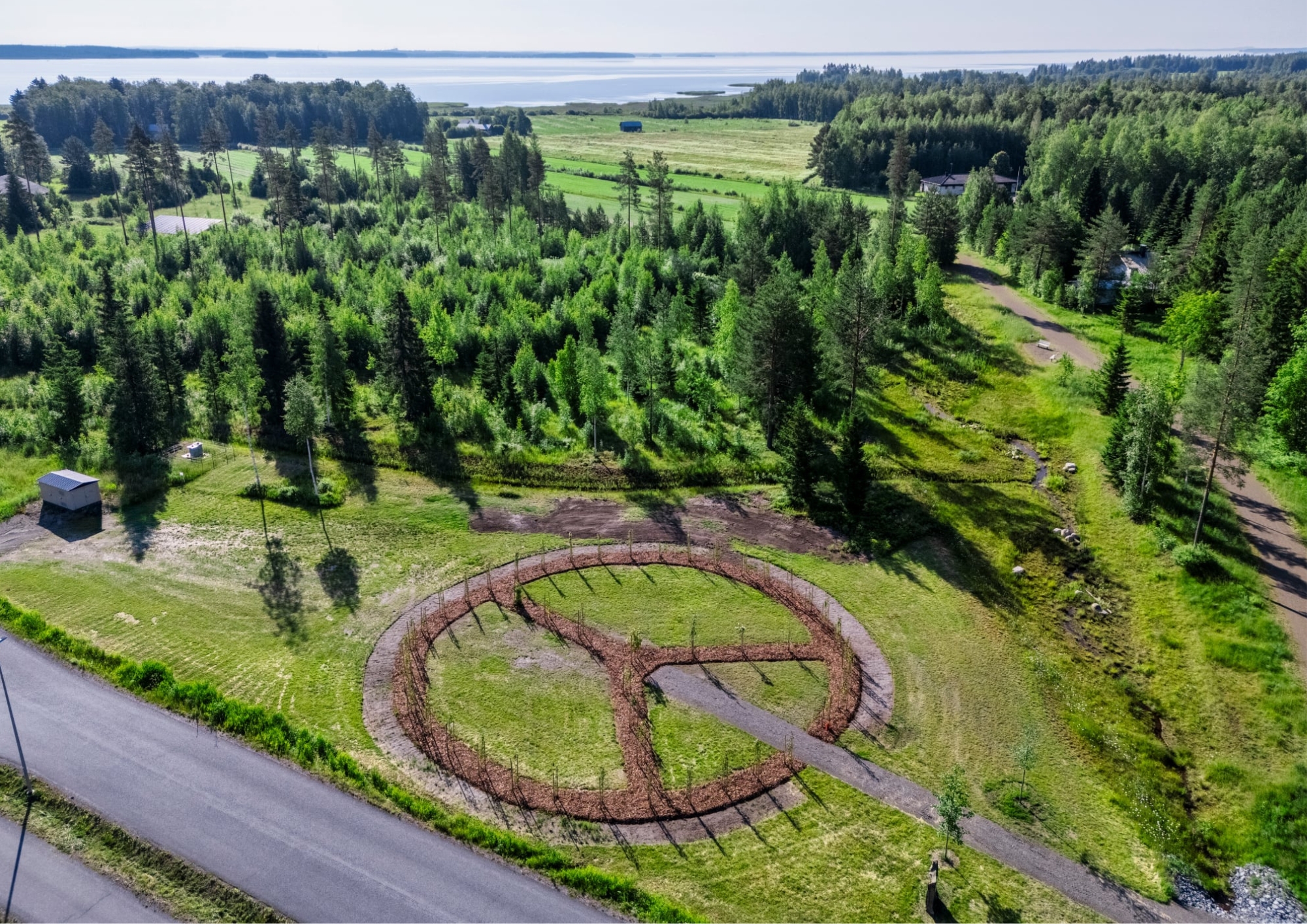
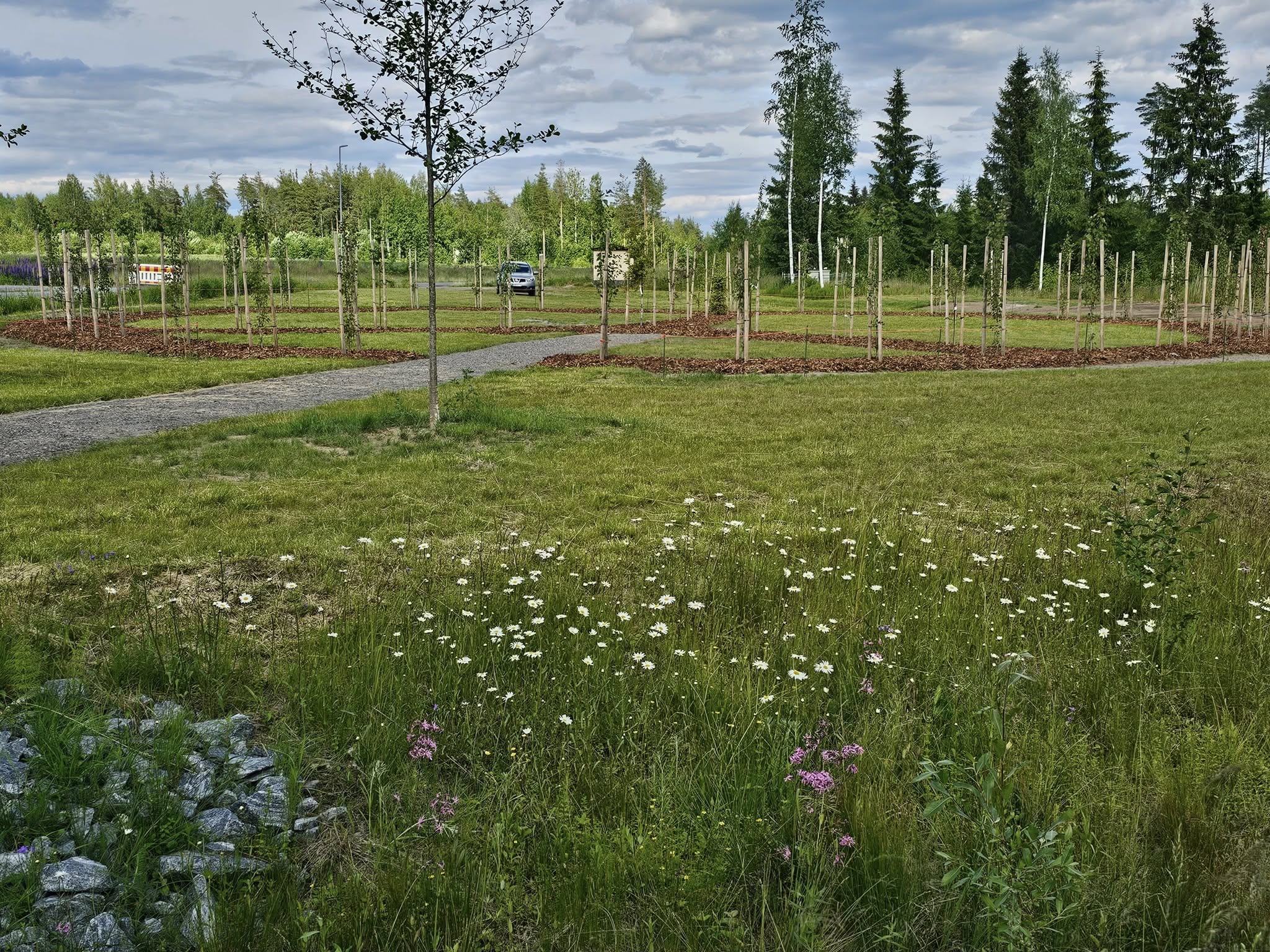
Peace Circle is a civic public space established in 2024 in Liperi, Finland. Initiated by a civic association and realised with the municipality, it transforms a municipal green area into a circular gathering space structured around spatial equality and shared responsibility.
The design integrates a biodiversity meadow, low-impact materials and climate-adapted vegetation on clay soil shaped by former lake conditions. Instead of heavy interventions, it prioritised nature-based solutions and compact geometry, reducing land use and material intensity while strengthening ecological resilience.
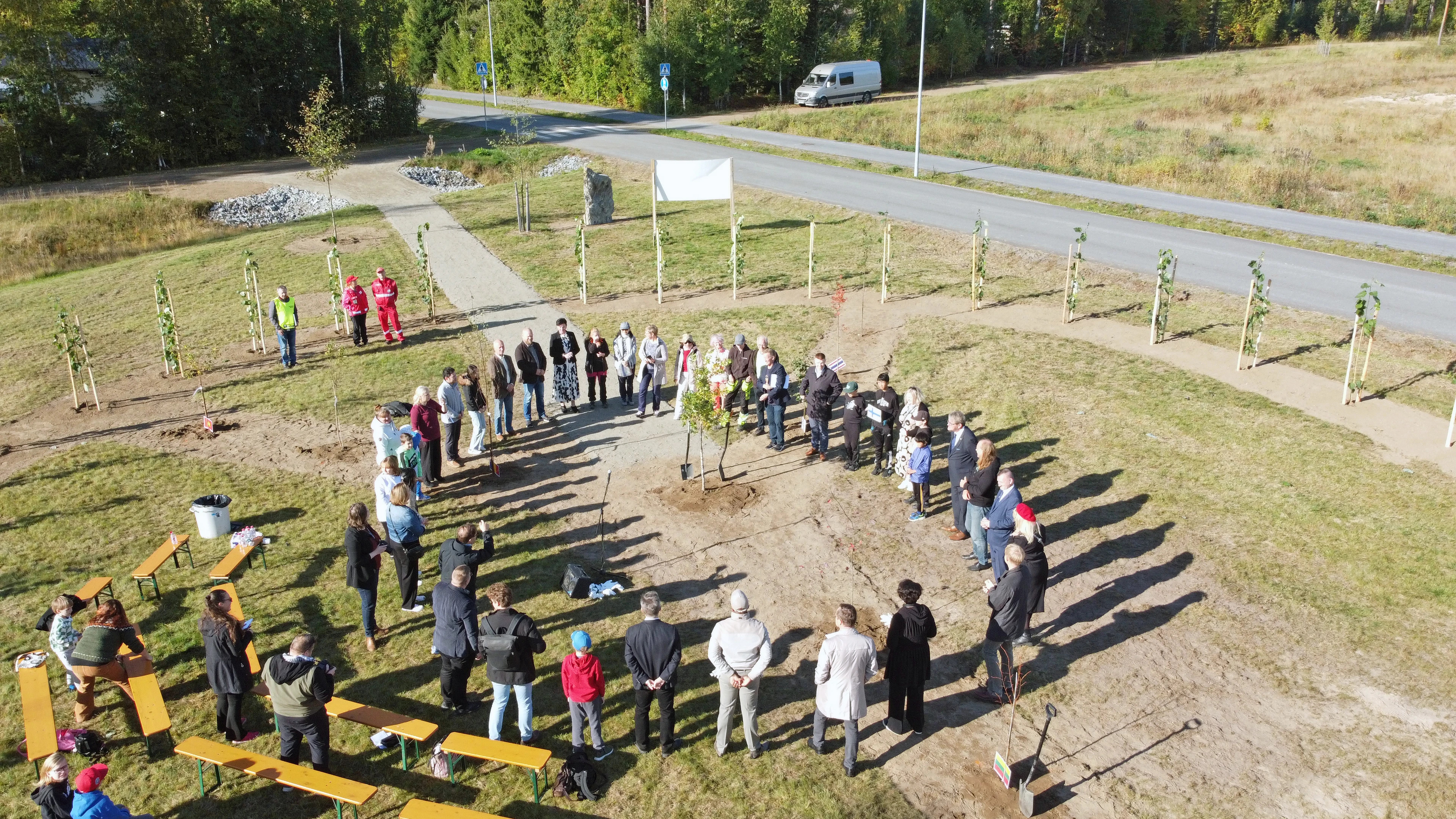
From the outset, the project was developed through participatory co-design involving residents, schools, local associations and municipal representatives. Between 20 and 50 volunteers contributed to implementation, and the initial phase was financed through local crowdfunding (€5,000), establishing civic ownership. The municipality provided the land and formalised maintenance through a cooperation agreement.
Since completion, the space functions as an active civic platform. In spring 2025, more than 200 schoolchildren participated in structured dialogue sessions linking environmental stewardship and democratic responsibility. The project was introduced to teaching staff representing approximately 950 students and is embedded in local educational practice. In 2024, the municipality recognised Peace Circle as “Act of the Year.”
The cooperative governance model and circular framework are being transferred to other contexts and expanding internationally, including reference within the URBACT BiodiverCity programme through the City of Sarajevo. Peace Circle establishes a transferable typology of democratic infrastructure for 21st-century Europe.
At a time when trust in democratic institutions is under pressure across Europe, the project demonstrates how democratic practice can be strengthened locally through shared space, responsibility and everyday participation.
Peace Circle emerged from a civic initiative to create a shared space for dialogue and community building in a newly developed residential area of Liperi, where social connections were still forming. From the outset, the initiating association approached the municipality to jointly identify a suitable public site and develop the concept in cooperation.
An open participatory process followed, involving residents, schools, local associations and municipal representatives. Discussions shaped the circular spatial layout, the role of the central tree and the long-term stewardship model. The project was co-designed rather than imposed, ensuring shared ownership from the beginning.
The municipality provided the land for public use, while the initial implementation — including tree saplings and basic materials — was financed through local crowdfunding (€5,000). Between 20 and 50 volunteers contributed to ground preparation, planting and site formation through community work days. The municipality supported technical coordination and later formalised cooperation through a maintenance agreement covering landscape care, watering and seasonal protection.
Located on clay soil influenced by former lake conditions, the design required careful adaptation. Heavy structural interventions were avoided in favour of vegetative layers and low-impact materials. Biodiversity meadows were introduced to support pollinators and reduce maintenance intensity.
Completed in 2025, the project has since evolved into a recurring civic platform. Its cooperative implementation model — developed jointly by civic actors and local government — enables transfer to other contexts while remaining locally grounded.
Spatial Democracy
Community Co-Design
Nature-Based Public Space
Shared Governance
Democratic Resilience
Peace Circle integrates ecological thinking directly into its spatial form. Biodiversity meadows replace conventional lawn areas, supporting pollinators and increasing habitat diversity while reducing maintenance intensity. Vegetation is selected to adapt to northern climate conditions, allowing the landscape to mature gradually alongside the community it serves.
Located on clay soil shaped by former lake conditions, the design responds carefully to existing ground realities. Instead of heavy structural interventions, the project prioritized nature-based solutions and compact geometry. The entire circle fits within a 25-metre diameter footprint, demonstrating how biodiversity and civic space can coexist even in spatially constrained environments.
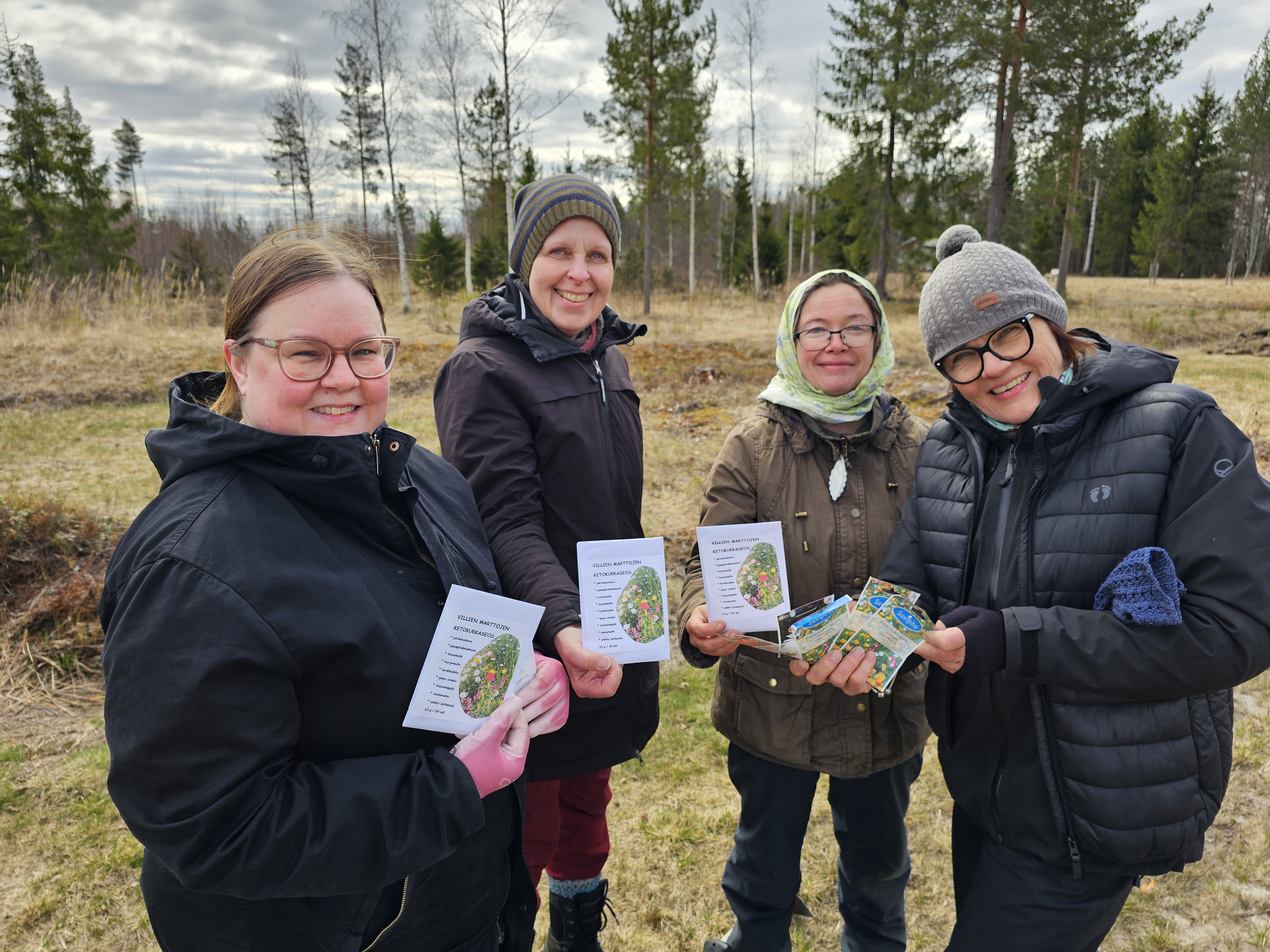
Annual meadow cutting returns biomass to the natural cycle, and invasive species have been removed in cooperation with local volunteers. Biodiversity monitoring is being initiated with schools and local environmental actors, embedding ecological awareness into civic practice.
By combining spatial restraint, community stewardship and ecological expertise, the project demonstrates how small-scale public interventions can strengthen biodiversity, reduce resource intensity and embed sustainability into everyday democratic space.
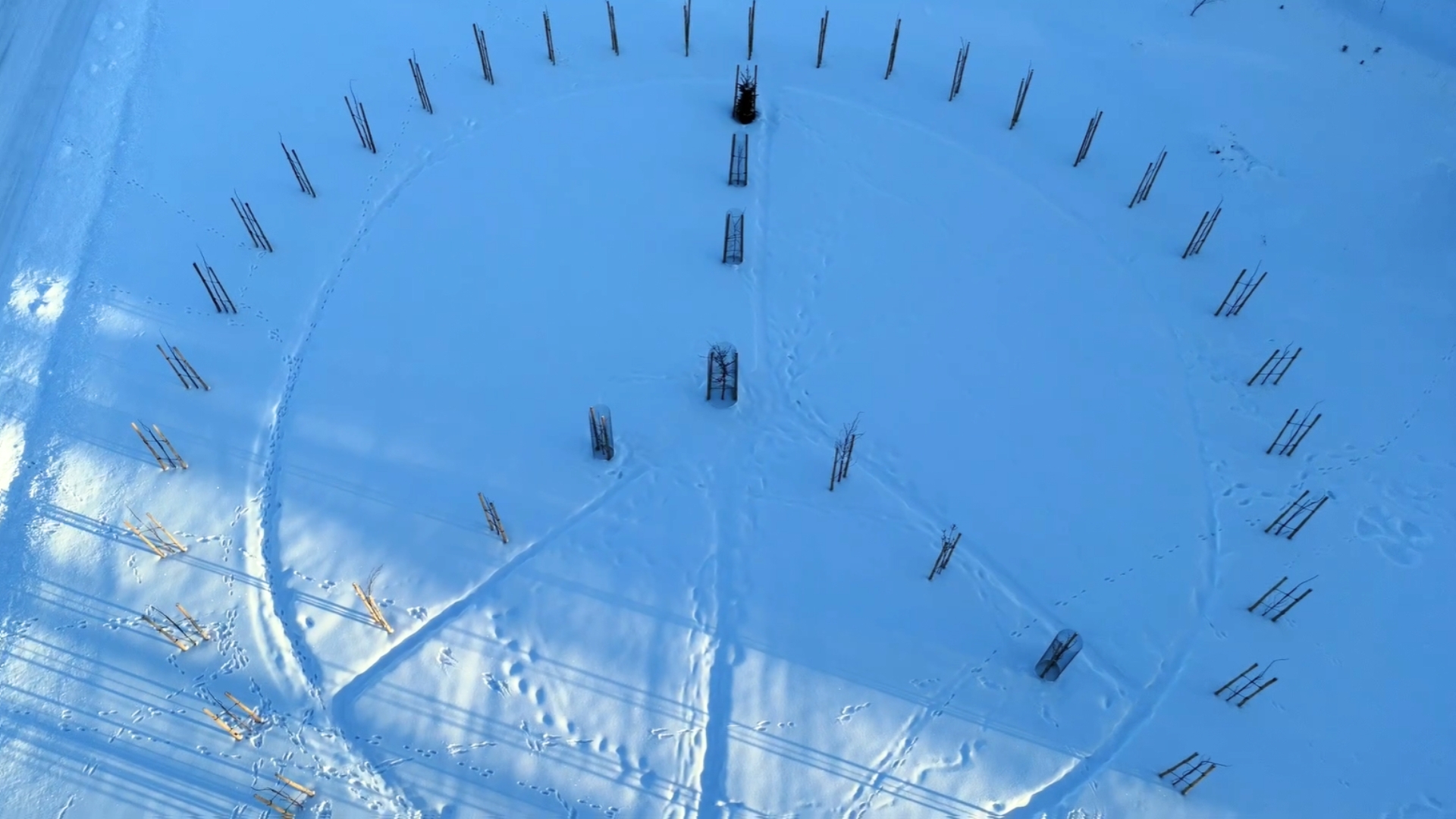
Peace Circle contributes to beauty through spatial clarity and intentional form rather than ornamentation. The composition is structured around a central tree, encircled by a ring of trees and articulated by three axial lines, each defined by three trees. This precise yet restrained geometry establishes orientation, rhythm and balance, transforming an ordinary green area into a consciously designed civic landscape.
The circular form resonates with the European tradition of civic gathering — from the agora and forum to the village commons — where spatial proximity embodies collective presence and dialogue. Here, equality is not symbolic alone but spatially enacted: there is no front, back or elevated position. Meaning emerges through proportion, alignment and shared orientation rather than decorative elements.
The design works with the northern landscape and seasonal light. In summer, meadow vegetation introduces texture and movement; in winter, snow reveals the underlying geometry with particular clarity. The compact scale fosters intimacy without enclosure, enabling collective presence while remaining open to the surrounding sky and horizon.
By combining geometric restraint, ecological sensitivity and cultural continuity, Peace Circle demonstrates how modest spatial intervention can create an emotionally resonant, culturally grounded and enduring civic environment.
Peace Circle embeds inclusion directly into spatial design, governance and access. The circular geometry removes hierarchical positioning: there is no front, back or elevated platform. All participants share equal spatial status, reinforcing dignity and visibility in collective settings.
The site is located along a pedestrian and cycling route within walking distance of the town centre, ensuring barrier-free everyday access without entry fees or controlled opening hours. The space is permanently open and free of charge, making participation independent of economic capacity.
Inclusive governance is built into the project structure. Residents, schools, local associations and municipal representatives co-defined the design and long-term stewardship. Rather than being consulted after decisions were made, community members shaped both the physical form and symbolic meaning of the space.
The project integrates intergenerational inclusion through school engagement and public gatherings, while the digital extension broadens access for those unable to attend physically. By combining open access, shared authorship and cooperative maintenance between civic actors and municipality, Peace Circle demonstrates an inclusive governance model that aligns citizen agency with institutional responsibility.
Its exemplary character lies in showing that inclusion is not an added programme but a spatial and structural condition. Equality is embedded in geometry, affordability in open access, and participation in governance. The result is a civic space where belonging is not symbolic but operational.
Peace Circle was developed through an open participatory process from its earliest conception. The initiating association approached the municipality at the outset to jointly identify a suitable site, ensuring that the project would emerge through dialogue rather than unilateral proposal.
Residents, local associations, schools and municipal representatives were involved in defining the spatial concept, symbolic structure and long-term stewardship model. The circular form and the dedication of surrounding trees to shared democratic values were shaped through collective discussion, embedding community meaning directly into the landscape.
Between 20 and 50 volunteers participated in community work days, contributing physically to planting, preparation and implementation. This hands-on involvement transformed participants from passive beneficiaries into co-creators of the space.
Local crowdfunding (€5,000) financed the initial planting and materials, enabling citizens to take direct financial responsibility for the project’s realisation. Rather than being externally funded, the first phase was enabled by the community itself, strengthening ownership and long-term commitment.
The participatory process has had lasting impact. The space is actively used for school dialogues, community meetings and seasonal gatherings, and it has strengthened trust between civic actors and municipal authorities. Participation did not end at implementation; it continues through shared maintenance, programming and educational use.
Peace Circle demonstrates that participatory practice can shape not only programming but physical form, governance and symbolic meaning. Citizens were not consulted — they co-defined and co-built the space that now structures their collective civic life.
Peace Circle operates through structured collaboration across multiple governance levels.
At the local level, the initiating civic association led concept development and community engagement, while the municipality provided land access, participated in site selection and formalised long-term maintenance responsibilities, including landscape care, watering and winter protection. This alignment ensured that citizen initiative and institutional continuity were integrated from the outset.
Local companies contributed through modest annual commitments, reinforcing horizontal cooperation within the municipality without commercialising the space. Schools are active users of the site, embedding the project into the local educational ecosystem.
At the regional level, the digital extension received support from the Regional Council of North Karelia, enabling the development of an immersive 360° platform. This support expanded accessibility and connected the project to broader regional innovation and development strategies.
Nationally and internationally, the model has attracted attention from municipalities, schools and civic actors exploring replication. Visits and exchanges have contributed to knowledge transfer and contextual adaptation in other European and global settings.
The added value of this multilevel engagement lies in durability and scalability. Local ownership ensures relevance and daily use; municipal partnership guarantees continuity; regional support strengthens innovation capacity; and international exchange enhances transferability. Rather than operating in isolation, Peace Circle demonstrates how civic initiative can align with institutional structures across levels to create resilient and replicable democratic infrastructure.
Peace Circle was developed through the integration of multiple knowledge fields rather than a single disciplinary perspective. Landscape design, civic governance, environmental sciences and educational practice were combined to shape both the spatial structure and its long-term use.
Ecological expertise informed the establishment of the biodiversity meadow and soil-sensitive design on clay ground conditions. Educational professionals contributed to embedding the space into school curricula and structured dialogue practices. Municipal landscape management ensured technical feasibility and long-term maintenance integration. Digital expertise enabled the creation of an immersive 360° extension that broadens access while reinforcing the primacy of the physical space.
Crucially, non-academic knowledge played an equal role. Residents and volunteers shaped symbolic elements, tree dedications and spatial meaning through dialogue. The project therefore integrates professional expertise, public administration and lived community knowledge into a unified spatial framework.
Rather than layering disciplines sequentially, Peace Circle demonstrates how ecological, social, spatial and educational perspectives can be co-produced within a single civic intervention. This transdisciplinary integration is embedded in both the design and governance structure of the project.
Peace Circle operates through a low-cost, shared-responsibility financial model combining civic initiative, municipal commitment and modest private-sector support.
The physical circle was implemented through €5,000 in local crowdfunding, covering trees and essential materials. The municipality provided the land free of charge and formalised long-term maintenance responsibilities, including landscape care, watering and winter protection, integrating the space into its regular public infrastructure management.
The digital extension was developed with a total budget of €5,000, of which €3,000 was provided by the Regional Council of North Karelia, €1,500 by GreenStar Hotels and €500 by the initiating association. This distributed funding structure combined regional innovation support, private-sector contribution and civic co-investment without creating recurring financial dependency.
Long-term financial sustainability is reinforced through a modest annual cooperation agreement with a local company (€400 per year) dedicated to supporting maintenance. The agreement does not involve visible branding in the space, ensuring that civic character and public ownership remain intact.
The model demonstrates that democratic public space can be created and sustained without large capital investment, commercialisation or continuous grant reliance. Its affordability and shared responsibility make it financially replicable across municipalities and neighbourhoods of varying scale.
Peace Circle is designed as a transferable civic typology rather than a site-specific artwork. Its scalability lies in three core elements: spatial structure, participatory methodology and cooperative governance.
The spatial framework — a compact circular geometry that removes hierarchy — can be implemented in neighbourhood parks, schoolyards or urban infill spaces with modest land requirements. The design does not depend on specific materials or climate conditions; vegetation and surface treatments can be adapted to local ecosystems.
The participatory process is replicable through a structured co-design methodology in which communities define the symbolic meaning of the space and contribute to its physical realisation. This ensures that each implementation is locally grounded while maintaining conceptual consistency.
The governance model is equally transferable. By aligning civic initiative with municipal maintenance structures, the project avoids dependency on continuous grants or commercial sponsorship. The modest implementation costs (approximately €5,000 for initial planting) and low annual maintenance commitments make the model financially accessible to municipalities of different sizes.
The digital extension further enhances scalability by providing a replicable communication and engagement tool that can be adapted to local contexts and languages.
The model has already been implemented in multiple European contexts and is expanding internationally, demonstrating adaptability across rural and urban settings, different governance environments and diverse cultural landscapes.
Rather than exporting a fixed design, Peace Circle offers a transferable process through which communities spatially enact democratic values within their own environmental and social realities.