Enhancing Circularity, Sustainability, and Innovation
Fracture – composing a new ground
Fracture – breaking the surface and composing a new ground
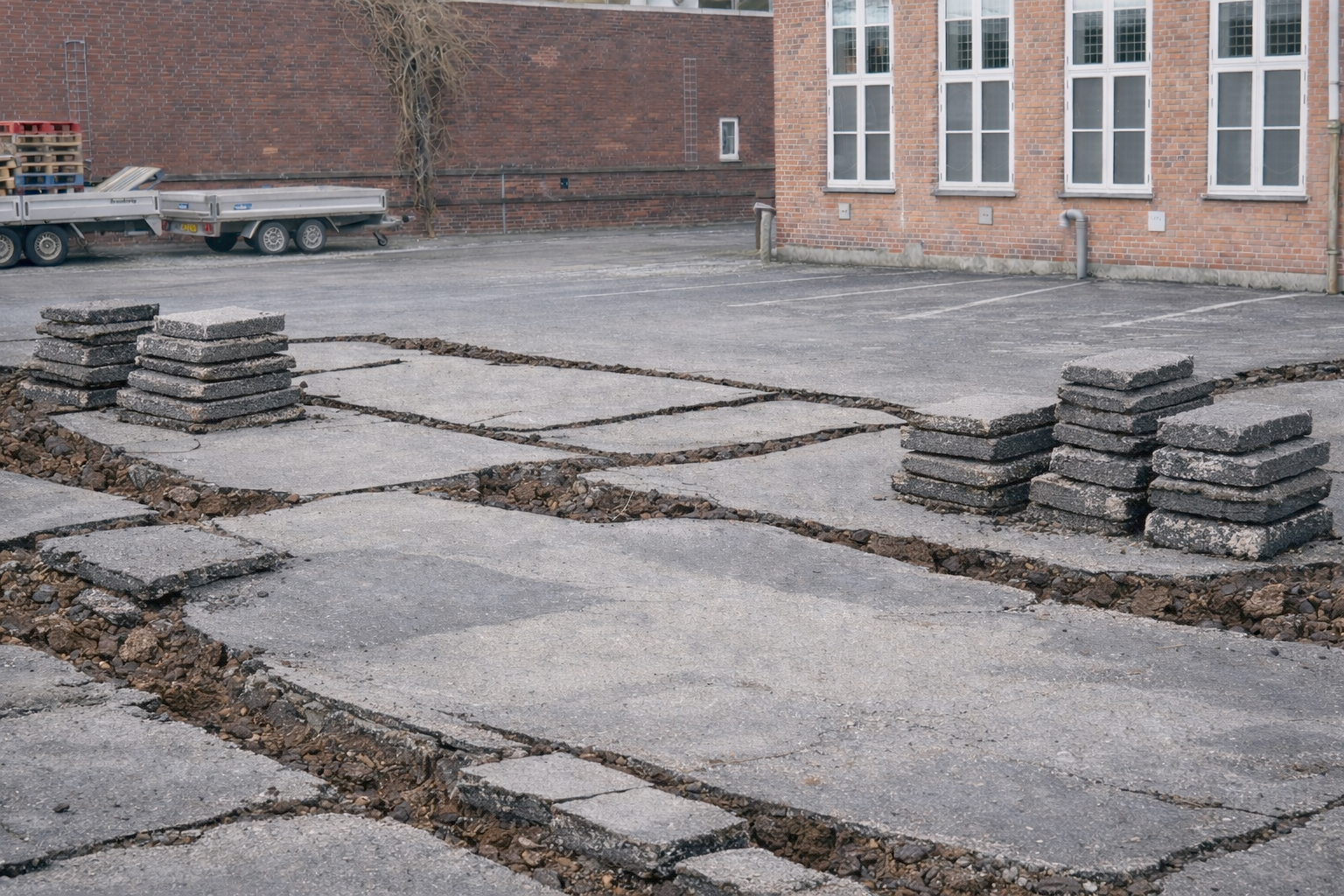
Our cities are sealed in asphalt, built for speed and convenience. In smoothing every crack, we have silenced the life beneath our feet. This project reopens the ground by breaking the asphalt and allowing soil, water, and pioneer plants to return. By following cracks, holes, and dents, these traces become habitats for flowers, insects, and urban biodiversity. What was once lifeless pavement can be broken up and rearranged into living ground, shared by humans and other species alike.
Denmark
Local
Copenhagen
Mainly urban
It involves a physical transformation of the built environment (hard investment)
Early concept
No
No
Yes
Individual
Our cities are dominated by sealed, homogeneous surfaces designed for speed and efficiency. Asphalt enables human mobility but restricts soil life, prevents rainwater infiltration, and contributes to declining urban biodiversity. Underused pavement remain ecologically inactive.
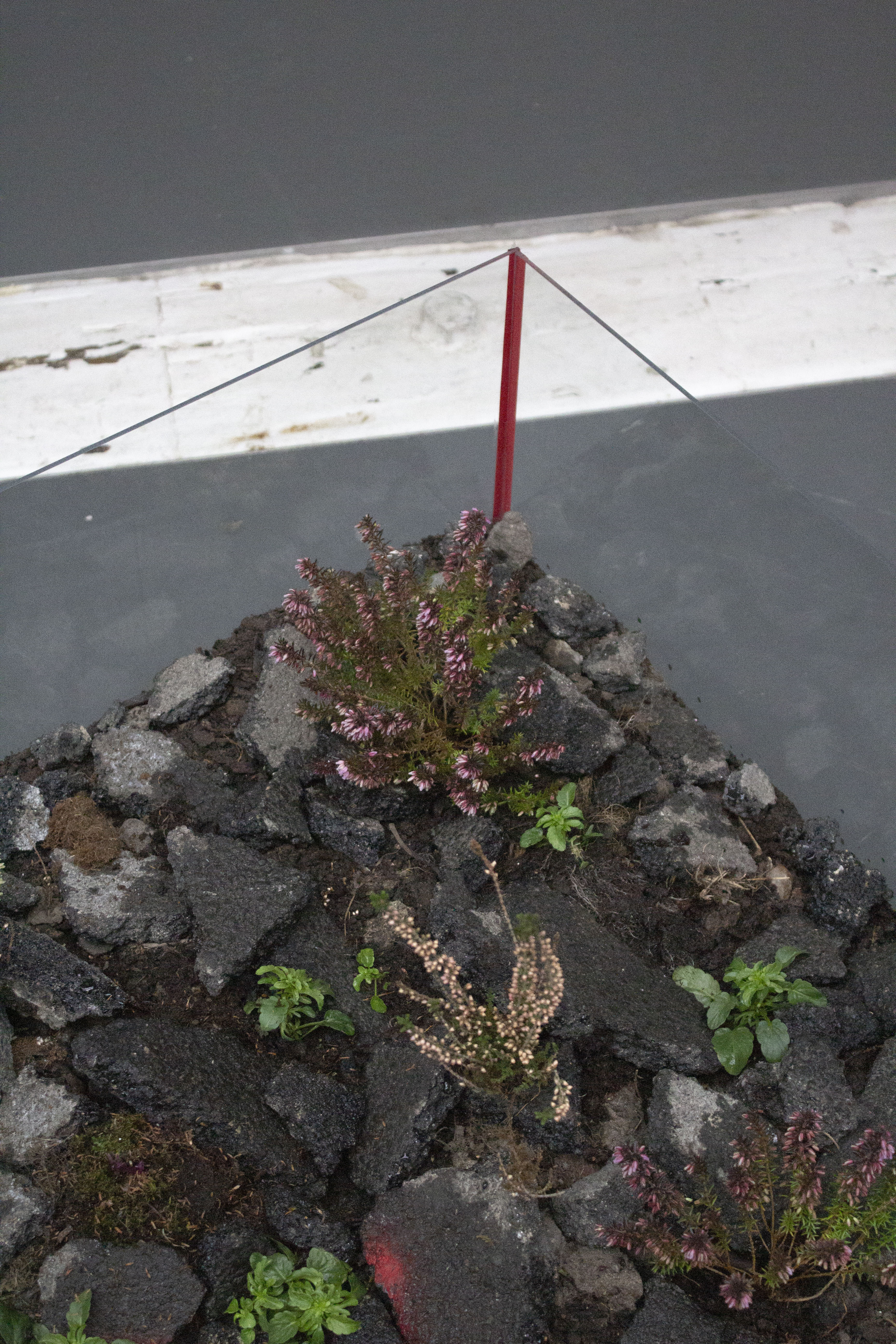
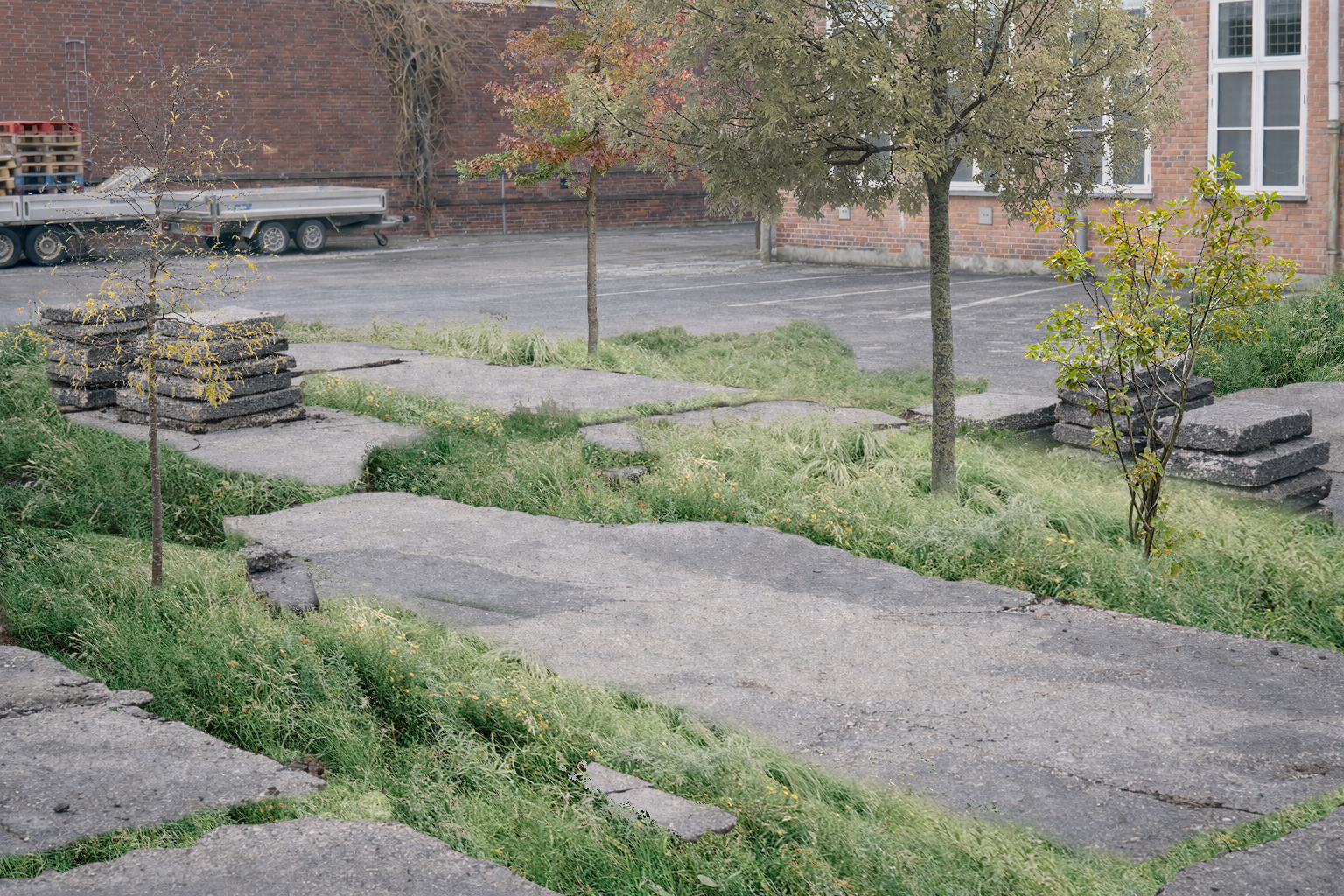
This project rethinks these surfaces as potential habitats. By reading the fractures and selectively breaking and rearranging existing asphalt, the ground is reopened without adding resource-intensive materials. Soil is redistributed between fractured slabs, allowing air, water, and seeds to enter. Over time, vegetation can establish itself, and cracks develop into micro-habitats for insects, bees, butterflies, beetles, and spiders. Sealed ground is gradually transformed into living ecosystems.
The concept is designed for residual or oversized asphalt areas such as former parking lots, infrastructural edges, and logistics sites. It can function as a temporary ecological layer between urban functions or as a permanent landscape strategy. The method minimizes material input while maximizing ecological and spatial impact.
Expected results include improved stormwater infiltration, increased soil resilience, and measurable gains in biodiversity. In areas with compacted or polluted soil, strategies such as soil blending or partial replacement ensure viable growing conditions.
The concept has been recognized through the award-winning proposal “Vilddyr søger bolig” (Wildlife Seeking Housing) 2025 by Utzon Center and the Danish Architecture Center. We are in dialogue with the Municipality of Copenhagen regarding pilot sites aligned with the city’s biodiversity initiatives, and exploring collaborations with other Danish municipalities and private infrastructure actors.
Beyond physical change, the project proposes a scalable, low-resource approach to urban transformation, fostering coexistence between humans and other species while reconnecting citizens with the living soil beneath their feet.
The idea began with a simple observation: asphalt is everywhere in the city. While walking, we began noticing its cracks, fractures, dents, and patterns — marks shaped by weather, footsteps, plant roots, traffic, and slow geological movements beneath the surface. What is usually perceived as damage revealed its own aesthetic and spatial qualities. At the same time, the project emerged from a desire to reconnect with the ground we collectively stand on and to question why it remains sealed and unnoticed.
The concept was developed through hands-on experimentation. Rather than imposing a new design, we followed existing cracks and traces in the asphalt, accentuating them and carefully breaking the surface along its natural lines of stress. The removed asphalt pieces were kept on site and reused to form new edges and structures, while the openings allowed water and air to reach the soil below.
Implementation relied on simple, accessible tools — a sledgehammer, pickaxe, and other manual equipment — demonstrating that transformation does not require advanced technology, but attention and physical engagement.
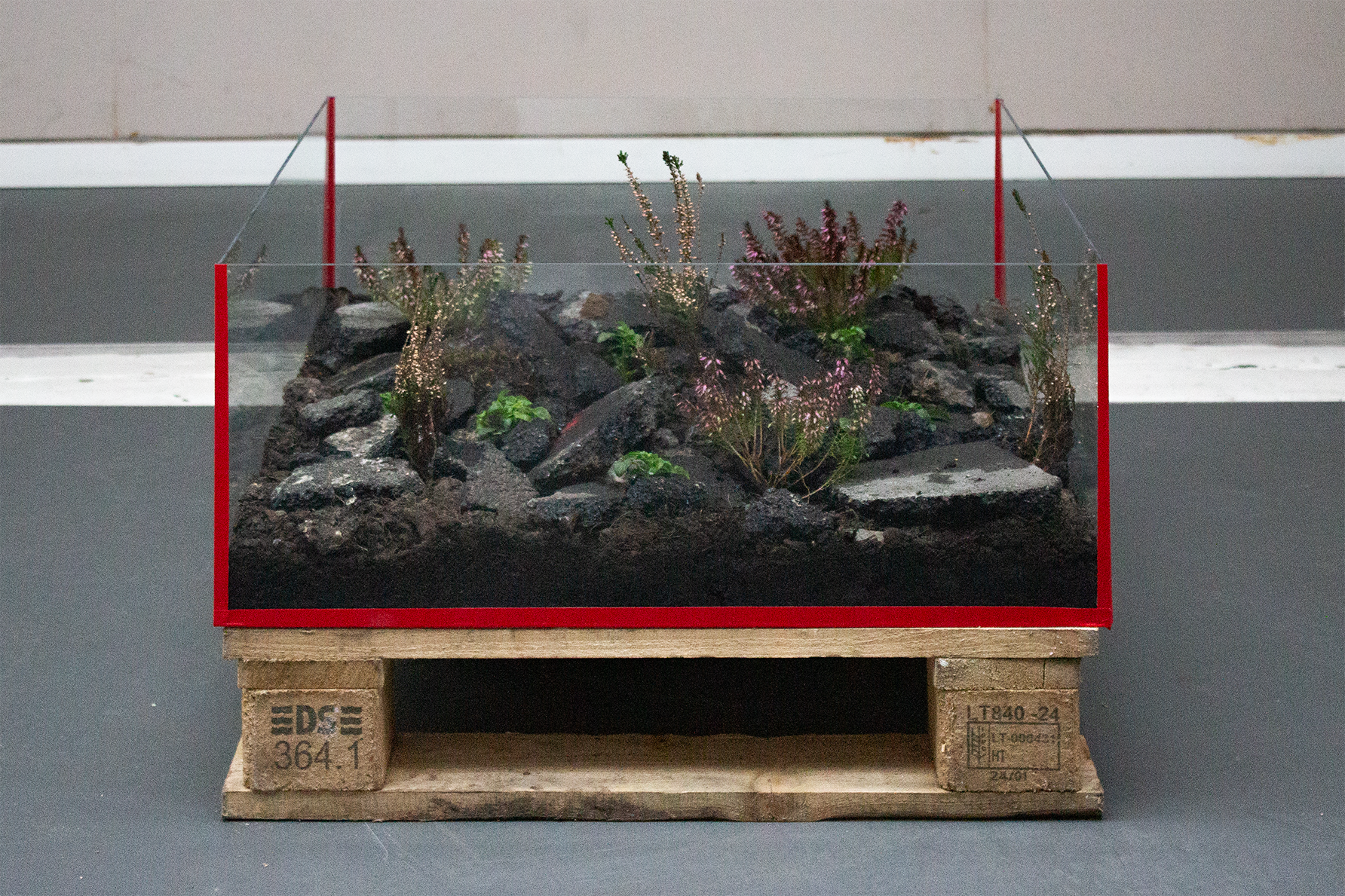
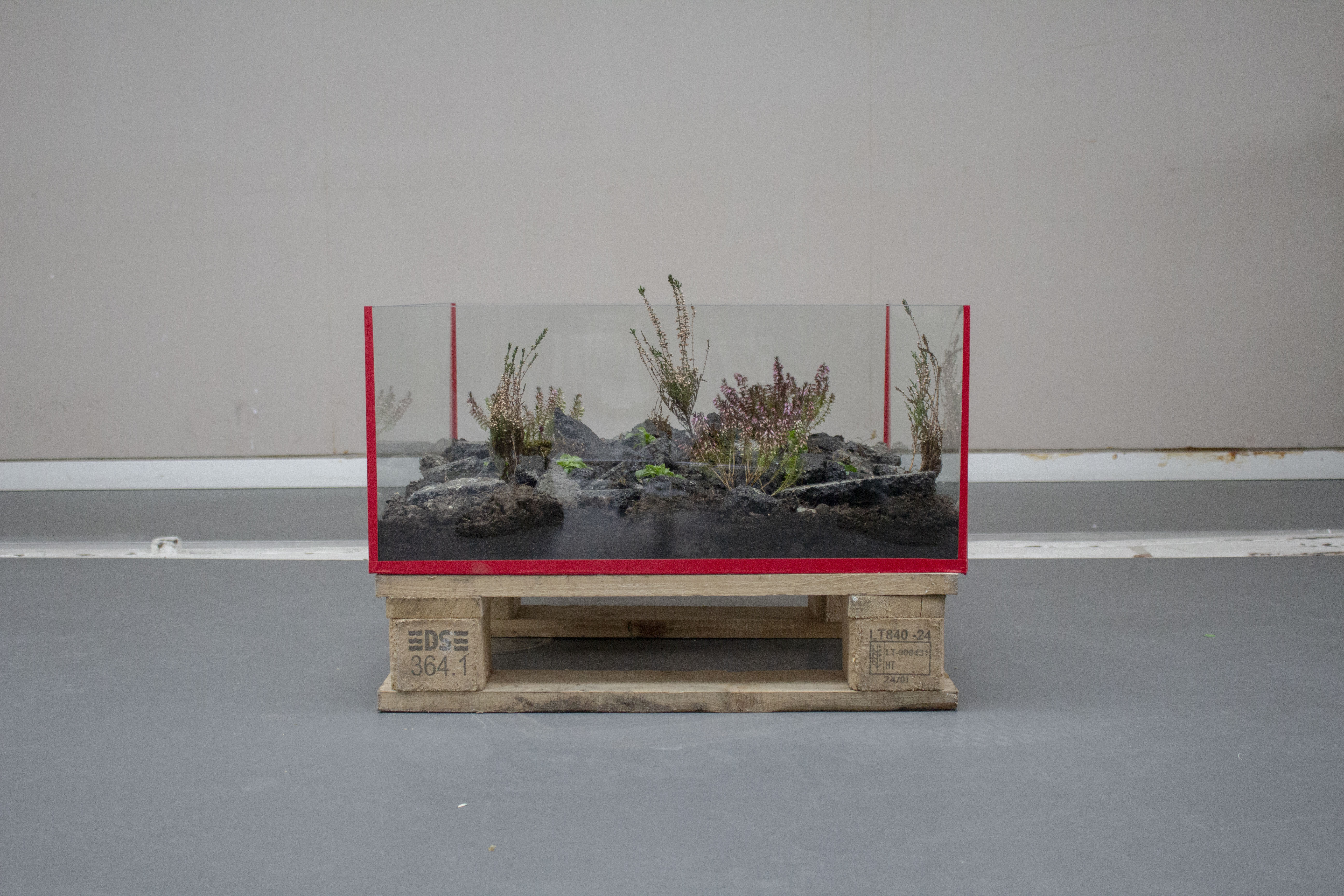
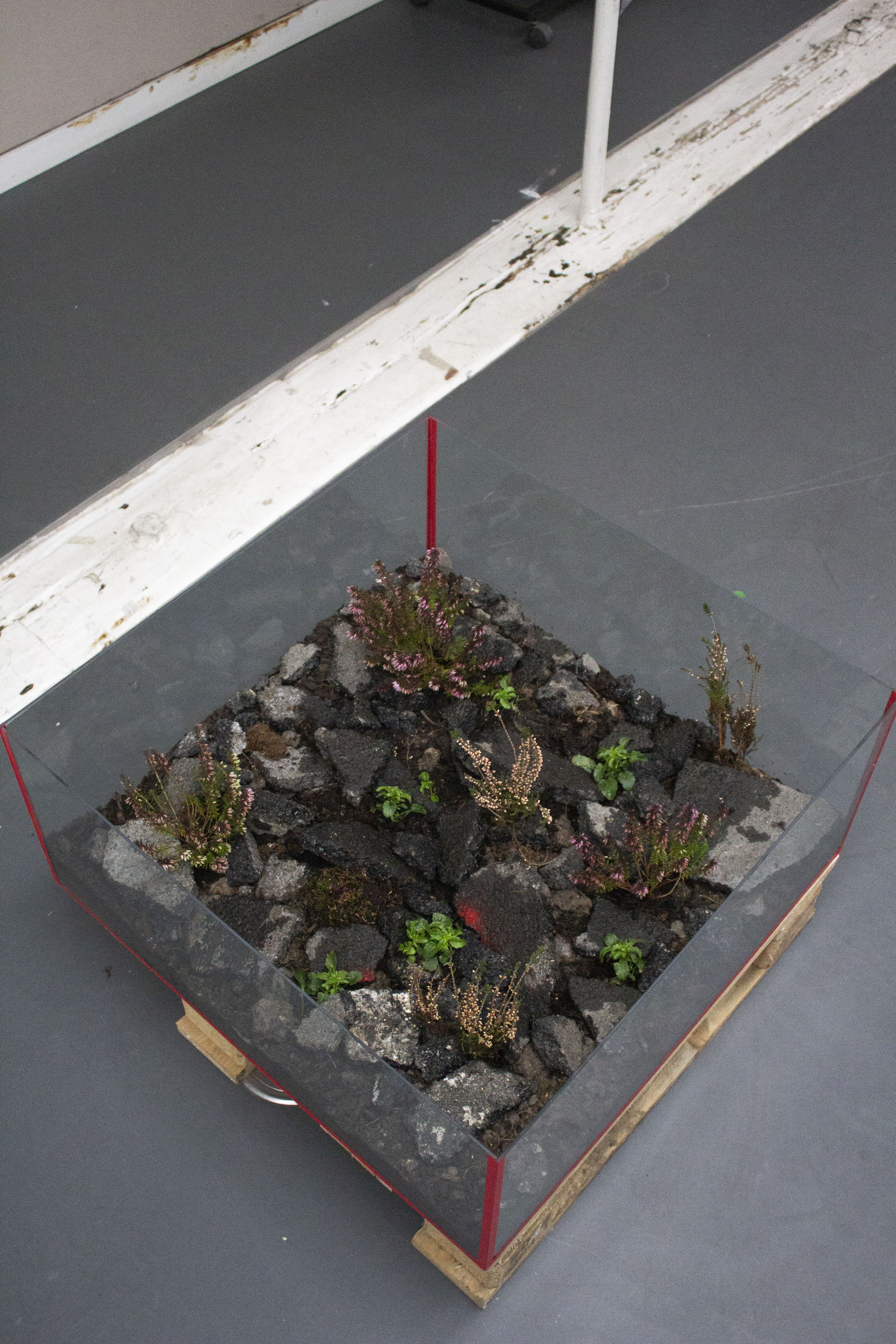
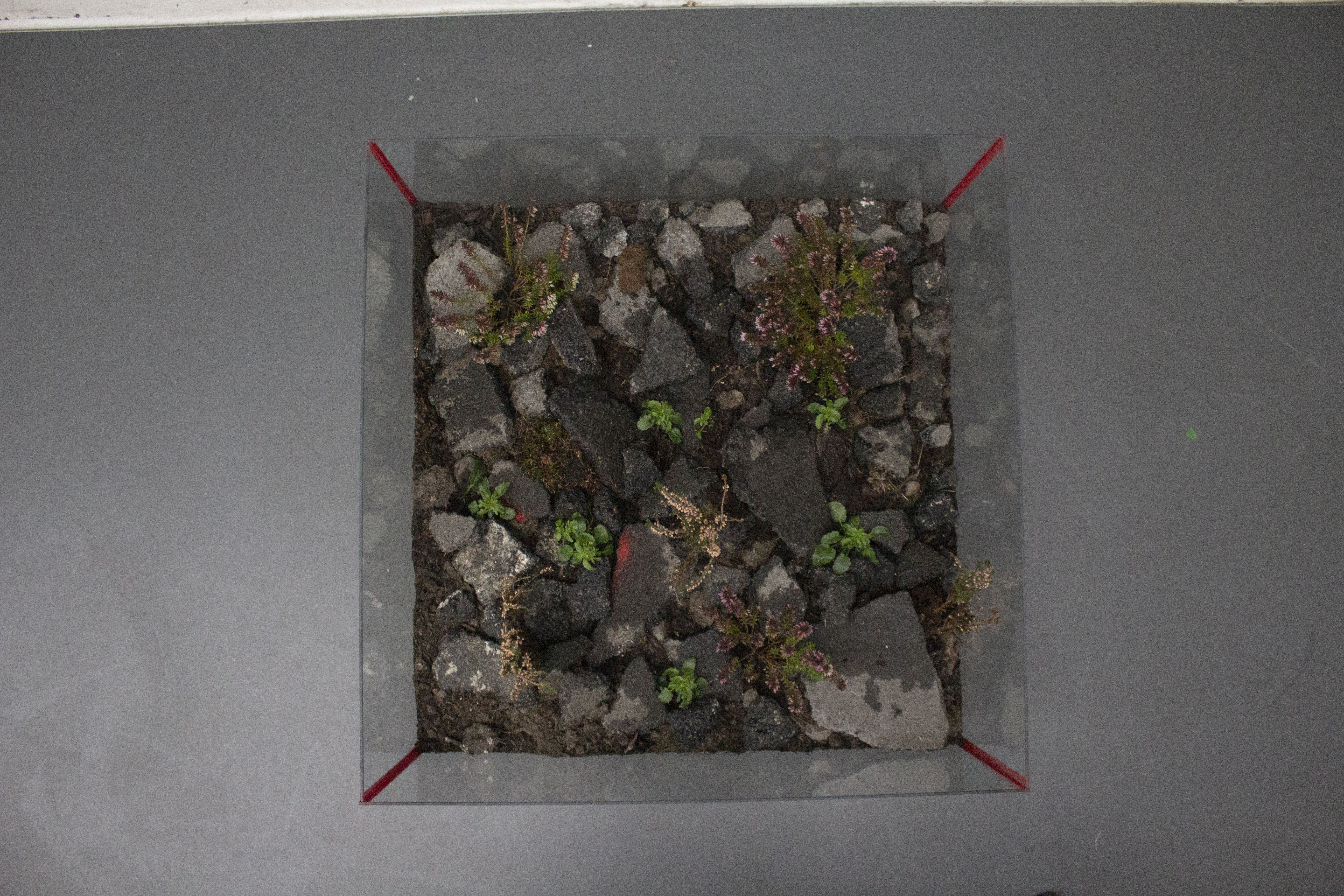
The first implementation took the form of a 60 x 60 cms prototype to test the compositional qualities inherent in the asphalt and the conditions under which vegetation could establish itself.
The process followed five main steps:
1. Mapping and categorizing cracks and fractures according to the forces that created them.
2. Breaking the asphalt along these lines and retaining the material on site.
3. Improving the soil by mixing existing ground with compost and planting soil where necessary.
4. Introducing planted or spontaneous vegetation and arranging asphalt fragments to define new soil beds.
5. Allowing plants to establish over time, supporting gradual soil regeneration through phytoremediation.
While the intervention is locally grounded, asphalt behaves similarly across cities worldwide. The strategy therefore offers a replicable, low-tech method.
Nature-based solutions
Circular design and economy
Grounded aesthetics
Local and community co-design
Compositional Strategies
The project operates through reuse rather than replacement. Existing asphalt is selectively broken and rearranged on site, eliminating demolition waste and minimizing the need for new construction materials. By working with what is already present, the intervention reduces embodied carbon, transport, and resource consumption compared to conventional landscape redevelopment.
Reopening sealed surfaces restores ecological functions. The intervention increases rainwater infiltration, reduces surface runoff, and mitigates urban heat accumulation. By allowing air, water, and seeds to reach the soil, it supports natural regeneration processes and strengthens soil resilience. Pioneer vegetation establishes over time, creating habitats for pollinators and insects while contributing to measurable gains in biodiversity. In compacted or polluted soils, blending or partial soil replacement enables phytoremediation and long-term ecological recovery.
The method is low-tech and energy-efficient. It relies on simple hand tools rather than heavy machinery, reducing fuel use and construction impact. Because the asphalt fragments are retained and reused on site, the process follows circular design principles and avoids downcycling.
Social sustainability is embedded in the approach. The accessible tools and small-scale implementation make it possible for local communities to participate in the transformation of their surroundings. This fosters shared stewardship, environmental awareness, and a stronger connection to urban soil systems.
Economically, the strategy offers a cost-effective alternative to large-scale redevelopment. It activates underused asphalt areas — such as former parking lots or infrastructural edges — without requiring extensive new investment.
By combining circular material use, ecological restoration, low-energy implementation, and community engagement, the project demonstrates a scalable and replicable model for climate-resilient urban transformation.
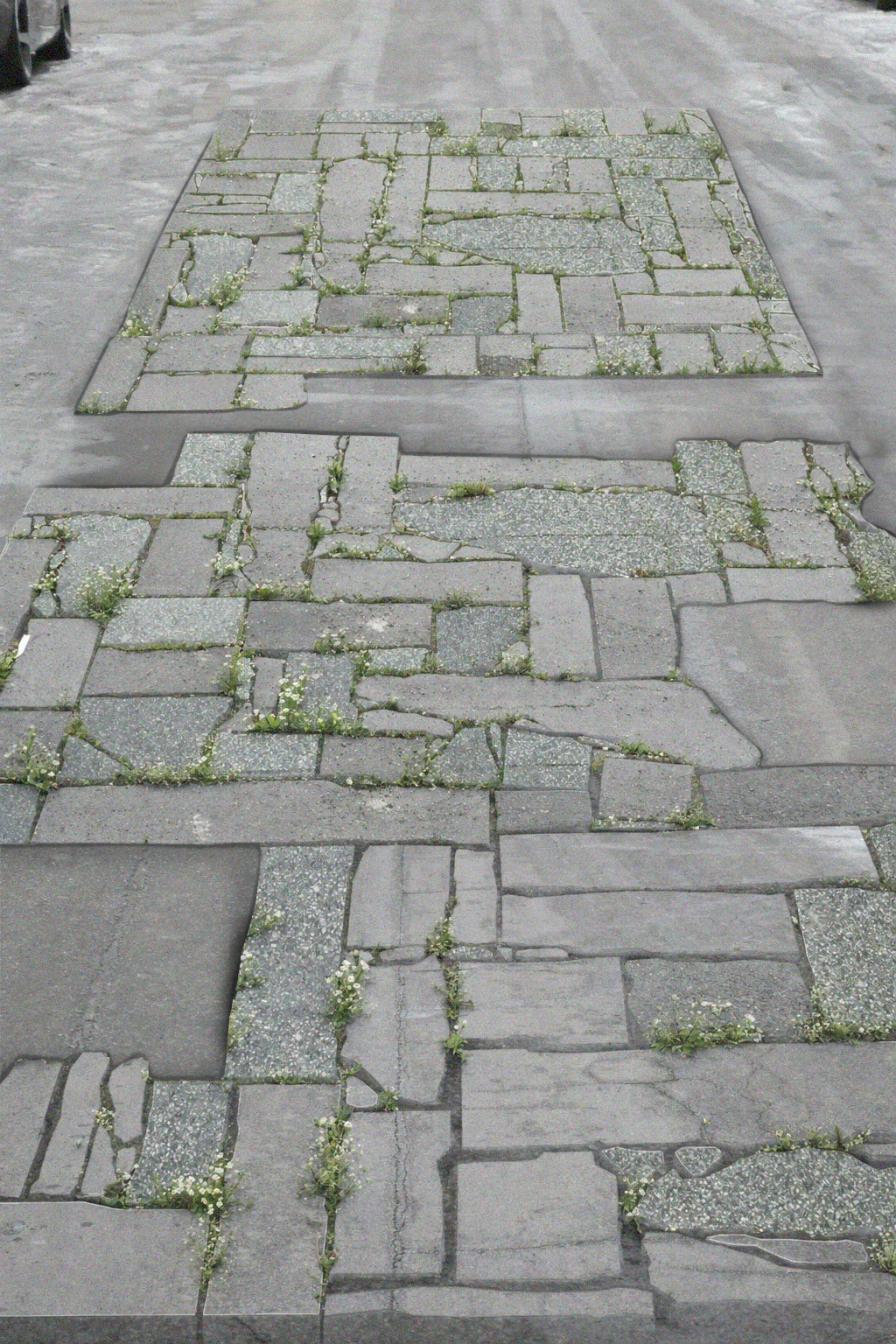
The project redefines urban beauty by revealing the hidden qualities of what is already present. Instead of covering, replacing, or polishing surfaces, it works with the cracks, fractures, and textures of asphalt — transforming marks of wear into spatial and aesthetic potential. What is normally perceived as damage becomes composition.
By selectively breaking and rearranging the asphalt, new patterns emerge: contrasts between rough and soft, light and dark, solid and porous. The fragmented slabs frame soil beds and spontaneous vegetation, creating a landscape that changes over time. Flowers, grasses, and plants introduce movement, colour, scent, and seasonal variation into otherwise monotonous environments. Everyday urban spaces — former parking lots, infrastructural edges — become places of sensory richness.
This evolving aesthetic fosters attentiveness – an attentiveness to a more-than-human aesthetic. Residents can witness gradual transformation: plants establishing, insects returning, soil regenerating. Beauty is not imposed as a finished design but unfolds through natural processes. This creates a sense of care and belonging, as the place visibly responds to time, climate, and human participation.
Because the intervention is small-scale and tactile, it invites physical engagement. The use of simple tools and on-site materials strengthens the connection between people and place, reinforcing collective stewardship. The project proposes an aesthetic rooted in coexistence — where human traces and ecological life intertwine rather than compete.
The concept tries to demonstrate that sustainability and beauty are not separate ambitions. By embracing imperfection, transformation, and living processes, it offers a new urban aesthetic — one grounded in material honesty, ecological awareness, and shared responsibility.
The project promotes inclusion by lowering the threshold for participation in urban transformation. Its implementation relies on simple, affordable tools and existing materials, making it accessible to municipalities, local organisations, and community groups without requiring large budgets or specialized equipment. By working with what is already on site, the approach reduces economic barriers and allows small-scale interventions to generate meaningful impact.
The process encourages collective engagement. Because the asphalt is opened and reshaped manually, residents can actively take part in mapping cracks, breaking surfaces, planting, and caring for the emerging landscape. This participatory model fosters shared ownership and strengthens local stewardship of public space. The ground becomes something shaped with, not only for, communities.
In terms of spatial accessibility, the project transforms underused and often neglected asphalt areas into environments that invite lingering, observation, and interaction. Rather than prioritizing speed and efficiency alone, the intervention creates slower, more sensorial spaces that are welcoming to diverse age groups and users.
The concept also expands inclusion beyond the human perspective. By creating habitats for insects, pollinators, and other species, it acknowledges cities as shared ecosystems. This multi-species approach reframes inclusion as coexistence, embedding care for non-human life into urban development.
Because the method is low-cost, scalable, and adaptable to different contexts — from former parking lots to infrastructural edges — it can be implemented across varied neighbourhoods, including areas with limited resources. In this way, the project proposes an inclusive model of urban repair: participatory, affordable, and ecologically shared
The concept is currently in an early development phase and has so far been driven by hands-on experimentation and prototype testing. As such, users, citizens, and stakeholders have not yet been directly involved in the physical implementation of the project. However, the participatory dimension is embedded in the methodology itself and forms a central ambition for future phases.
The project has already generated strong interest from a wide range of actors. Following its recognition through the award-winning proposal “Vilddyr søger bolig” (Wildlife Seeking Housing) (2025), dialogues have been initiated with the Municipality of Copenhagen regarding potential pilot sites aligned with biodiversity strategies. Interest has also been expressed by other Danish municipalities and by private actors within infrastructure and logistics sectors, where large asphalt surfaces present clear opportunities for transformation.
Because the method relies on simple tools, on-site materials, and low-tech processes, it is inherently suited for community involvement. Future implementations are envisioned as collaborative processes in which local residents, municipal actors, and site users participate in mapping cracks, breaking surfaces, planting, and long-term care. In this way, participation is not an add-on but a structural component of the concept.
The concept is designed to operate simultaneously at local, municipal, and broader strategic levels, combining bottom-up engagement with large-scale implementation frameworks.
At the local level, residents, site users, and community groups are expected to participate in mapping, breaking, planting, and long-term stewardship. Their involvement ensures contextual sensitivity, strengthens ownership, and anchors the intervention in everyday urban life.
At the municipal level, city administrations, workers and gardeners — such as the Municipality of Copenhagen, with whom dialogue has been initiated — play a key role in identifying pilot sites, aligning the project with biodiversity and climate adaptation strategies, and facilitating permits and maintenance frameworks. Municipal engagement enables the concept to move from prototype to integrated urban policy.
At the regional and national levels, collaboration with the other architects, research institutions, and environmental experts contributes technical knowledge in soil remediation, biodiversity monitoring, and climate resilience. This strengthens the scientific credibility and long-term measurability of the project.
Private actors, particularly within infrastructure and logistics sectors, provide access to large asphalt areas and demonstrate how ecological transformation can be integrated into operational and economic structures. Their involvement supports scalability and financial feasibility.
The added value of this multilevel collaboration lies in the combination of local knowledge, institutional capacity, scientific expertise, and implementation power. Together, these actors ensure that the concept is not only experimental, but durable, measurable, and capable of being scaled across contexts.
The concept operates at the intersection of architecture, landscape design, environmental science, engineering, social practice, and digital technology.
Architectural and landscape methodologies inform the spatial strategy — reading asphalt fractures as compositional structures and transforming them into new ecological ground. Environmental sciences contribute knowledge on soil systems, biodiversity, stormwater infiltration, and phytoremediation, ensuring long-term ecological performance. Engineering insights support safe and strategic intervention in existing load-bearing surfaces.
At the same time, the project integrates advanced digital tools with low-tech implementation. Point cloud technologies and 3D scanning are used to document existing asphalt surfaces, map crack patterns, and analyze micro-topographies with high precision. These digital datasets allow for detailed understanding of surface conditions, water flow, and structural behavior, supporting site-specific design decisions and future scalability.
However, the physical intervention itself relies on manual, accessible tools such as hammers and pickaxes. This deliberate combination of high-resolution digital analysis and low-tech execution ensures both technical insight and democratic accessibility. Data informs the strategy, while hands-on processes enable participation and reduce energy consumption.
Social sciences and participatory design frameworks guide how communities can engage in mapping, breaking, planting, and caring for the transformed spaces.
By merging digital precision with tactile, manual practice, the project bridges technological innovation and embodied knowledge. This transdisciplinary integration strengthens ecological performance, aesthetic sensitivity, and social inclusion — demonstrating how advanced tools and simple methods can coexist within a shared sustainable framework.
The envisioned business model is context-responsive and adaptable to local conditions. Revenue generation depends on the specific site, stakeholders involved, and available funding structures, allowing the concept to operate across diverse economic contexts.
In municipalities with access to public funding, implementation can be financed through climate adaptation budgets, biodiversity strategies, urban regeneration programs, or EU-supported environmental initiatives. Because the intervention contributes to stormwater management, soil restoration, and biodiversity enhancement, it aligns with existing public sustainability frameworks.
In areas with limited public funding, the model supports community-based implementation. Local groups can participate directly in low-cost, small-scale interventions using accessible tools and on-site materials. Crowdfunding or micro-grants can further support these grassroots initiatives.
Private actors represent another key revenue stream. For infrastructure companies, logistics hubs, or real estate developers, the intervention can function as a tangible sustainability action. Workshops where employees participate in breaking and transforming asphalt can operate as team-building activities while simultaneously contributing to corporate ESG goals and EU sustainability compliance. In this way, the physical act of opening asphalt becomes both a symbolic and measurable environmental commitment.
Companies may finance interventions as part of biodiversity net-gain strategies, climate adaptation measures, or CSR programs — ensuring that sustainability is embedded in their operational landscape.
By combining public funding, private investment, and community-driven implementation, the model creates multiple entry points. Its low material costs, minimal infrastructure requirements, and scalable format ensure financial resilience over time while generating long-term ecological and social value.
The concept is inherently scalable because it is based on a transferable methodology rather than a fixed design. The core principle — reading, selectively breaking, and reusing existing asphalt to restore ecological function — can be applied wherever sealed surfaces dominate urban environments.
Several elements are directly replicable:
Methodology:
The step-by-step process of mapping fractures, breaking along natural stress lines, improving soil conditions, and introducing vegetation can be adapted to different climates, soil types, and urban contexts.
Material strategy:
The circular reuse of on-site asphalt fragments eliminates dependency on specific suppliers or materials, making the approach viable in both resource-rich and resource-limited settings.
Tools:
The intervention relies on simple manual tools, making it accessible to communities, municipalities, and private actors without specialized machinery. Where available, digital mapping technologies such as point cloud scanning can be integrated, enabling both low-tech and high-tech contexts.
Implementation formats:
The concept can operate as community-led micro-interventions, municipal pilot projects, or large-scale transformations in infrastructure and logistics areas. It can function as a temporary activation strategy or a permanent landscape solution.
Because asphalt surfaces exist in cities worldwide, the conditions for implementation are globally present. By combining a clear methodology, circular material logic, and flexible implementation models, the concept offers a scalable framework for regenerative urban transformation.
The project demonstrates a clear and actionable commitment to implementation through a structured sequence of pilot actions, partnerships, and knowledge dissemination. In the year following the application, the primary focus will be on realizing a first small-scale, physical de-sealing project in collaboration with local public and private actors. This initial implementation will serve as a proof of concept, enabling testing of methods, tools, and collaborative formats while generating tangible biodiversity and water management benefits .
Simultaneously, the project will strengthen partnerships with municipalities, local stakeholders, and private companies, including engagement with experts in soil, biology, and infrastructure. These collaborations will support both the execution of the pilot project and the refinement of the concept for broader applicability.
A key step will be the documentation and development of a strategy handbook, translating the insights from the pilot project into a scalable framework. This handbook will guide future de-sealing initiatives and empower local actors to replicate the approach independently.
Communication and dissemination are integral to the implementation strategy. The completed pilot project will be actively promoted through media exposure to raise awareness and attract new partners, enabling the initiation of additional projects in other urban contexts.
Finally, the project will explore diverse funding streams, including public grants and private sector involvement (e.g. team-building activities), to ensure long-term viability and scalability. Through this combination of physical implementation, stakeholder engagement, and strategic dissemination, the project establishes a strong foundation for continued development and real-world impact.