Strengthening Local Democracy and Inclusion
Urban garden with sensory elements
First urban garden with sensory elements in Sarajevo
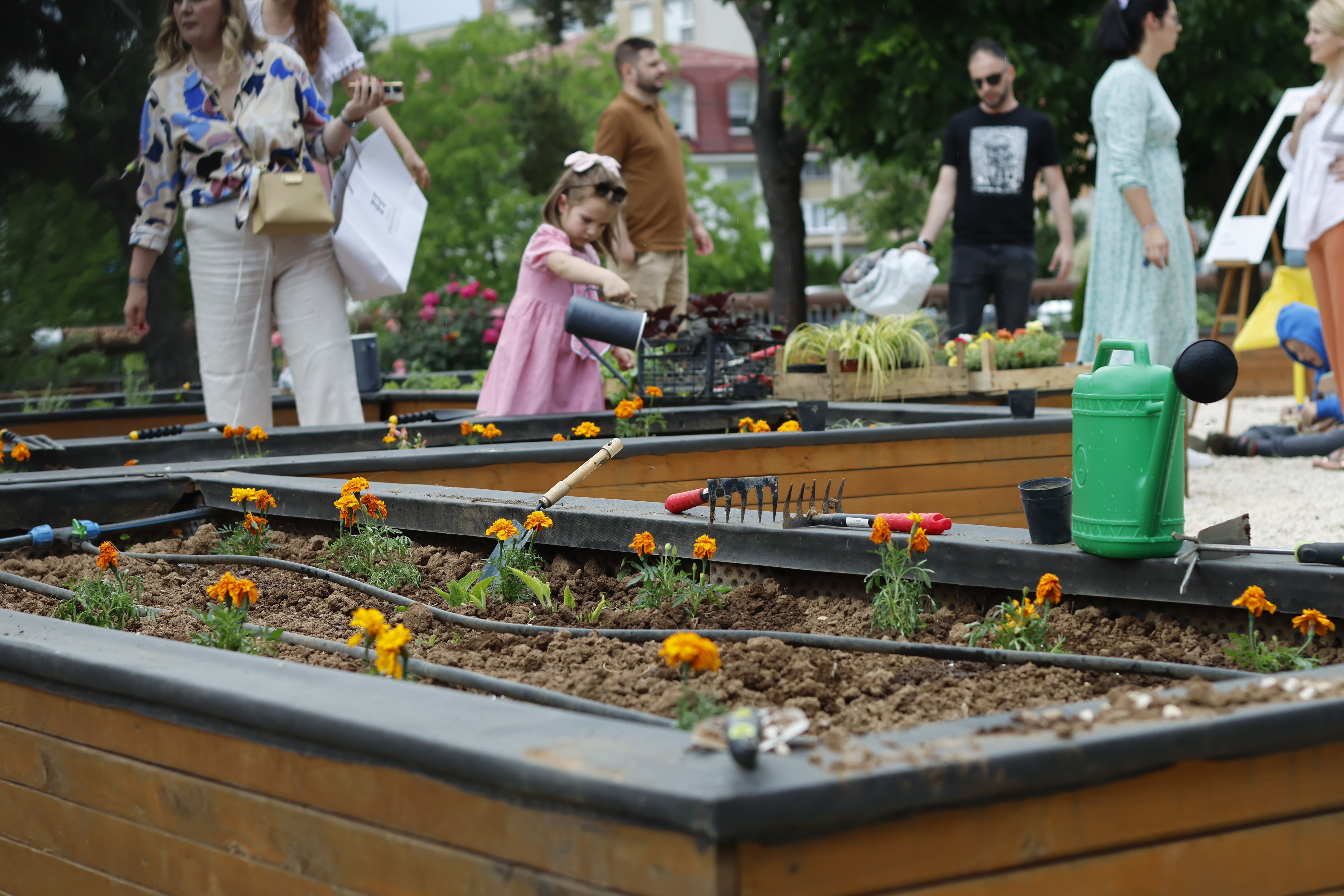
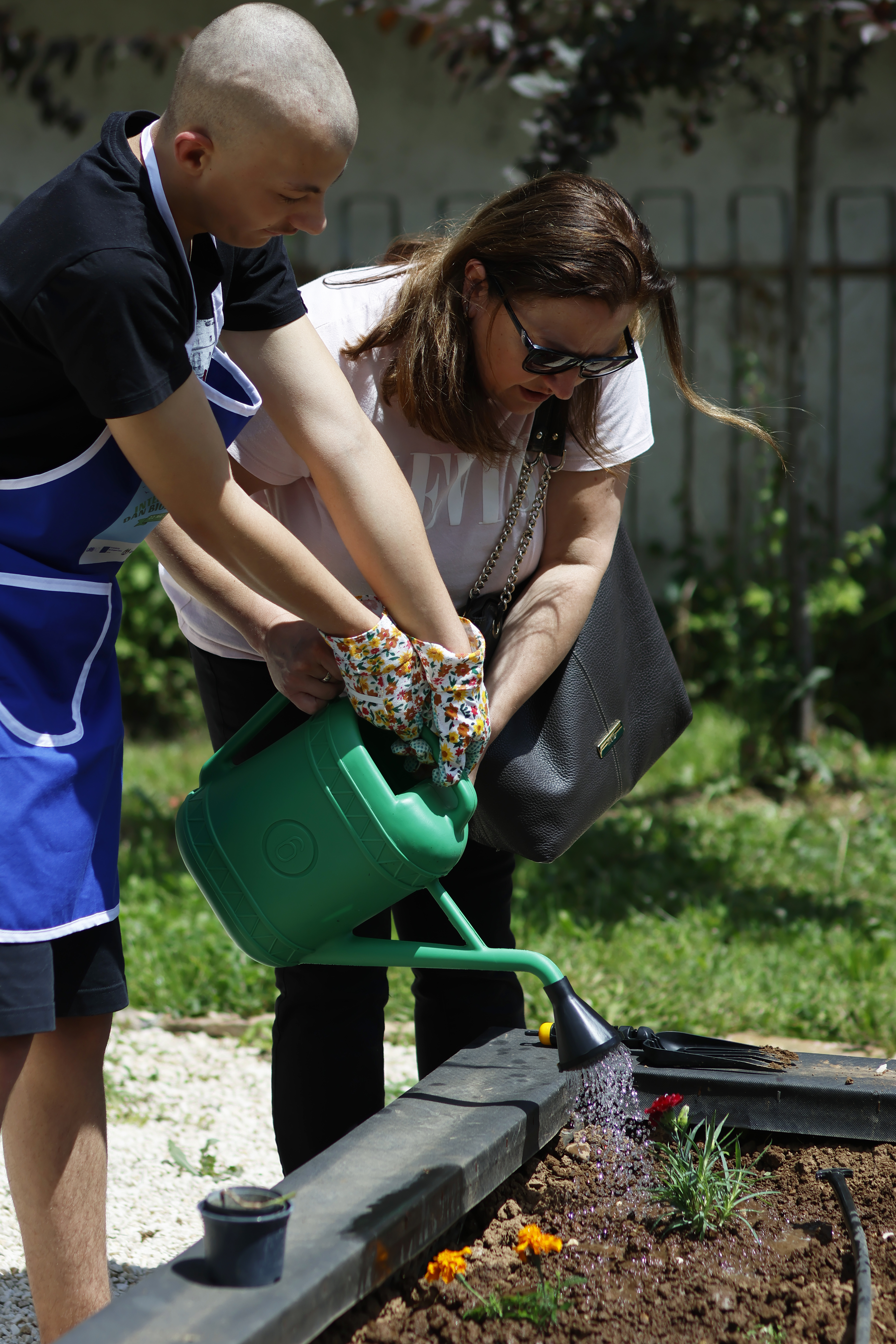
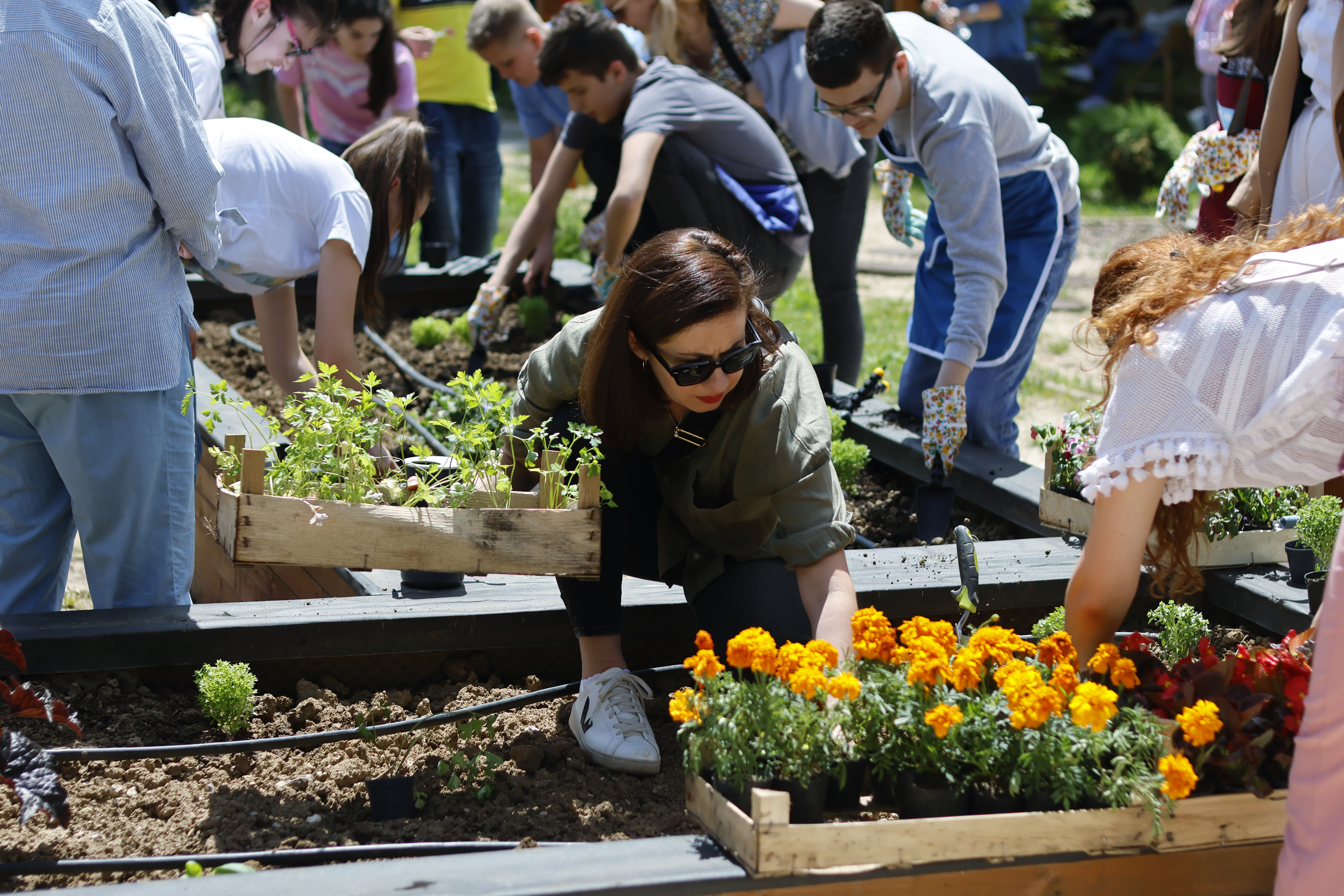
The Urban Garden with Sensory Elements in Sarajevo is an award-winning, community-driven green space initiative designed for all, with special focus on children with developmental disabilities from a nearby vocational school. As the first garden of its kind in the Eastern Europe, it blends inclusion, education and nature-based solutions, transforming a small urban space into a model of social and environmental innovation.
Bosnia and Herzegovina
Local
City of Sarajevo
Mainly urban
It involves a physical transformation of the built environment (hard investment)
Yes
2023-06-09
Yes
Horizon2020 / Horizon Europe
No
No
Organisation
The Urban Garden with Sensory Elements in Sarajevo is the first inclusive sensory urban garden in the Western Balkans, designed as a shared community space with a special focus on children and young people with developmental disabilities from a nearby vocational school.
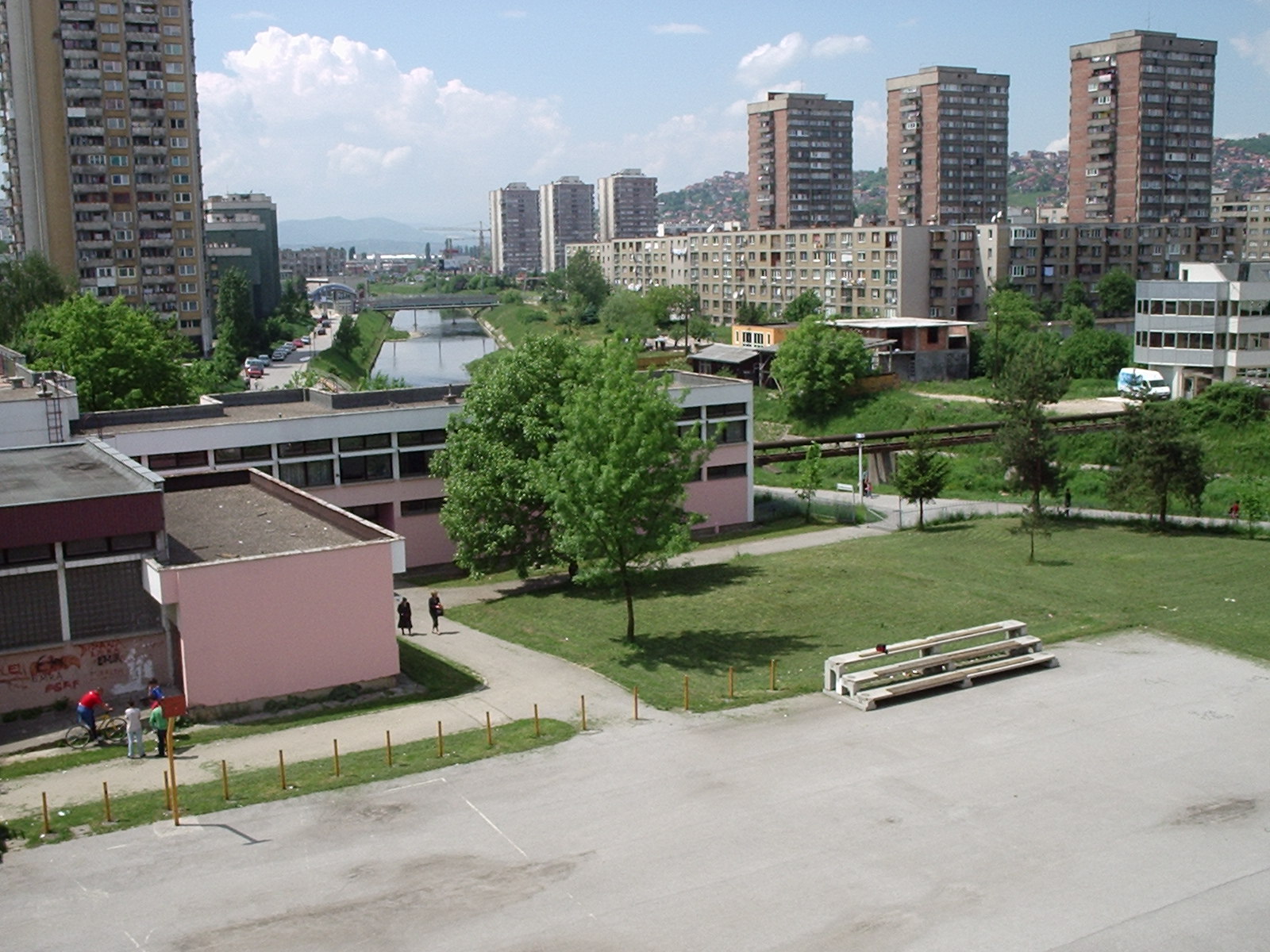
The project addressed three key challenges: lack of inclusive public green spaces, underused urban land, and limited opportunities for intergenerational and cross-ability interaction. Its main objective was to transform an underutilised urban plot into a nature-based, accessible, and socially integrative environment that supports wellbeing, learning, and community cohesion.
Specific goals included:
• creating an accessible green space based on “design for all” principles,
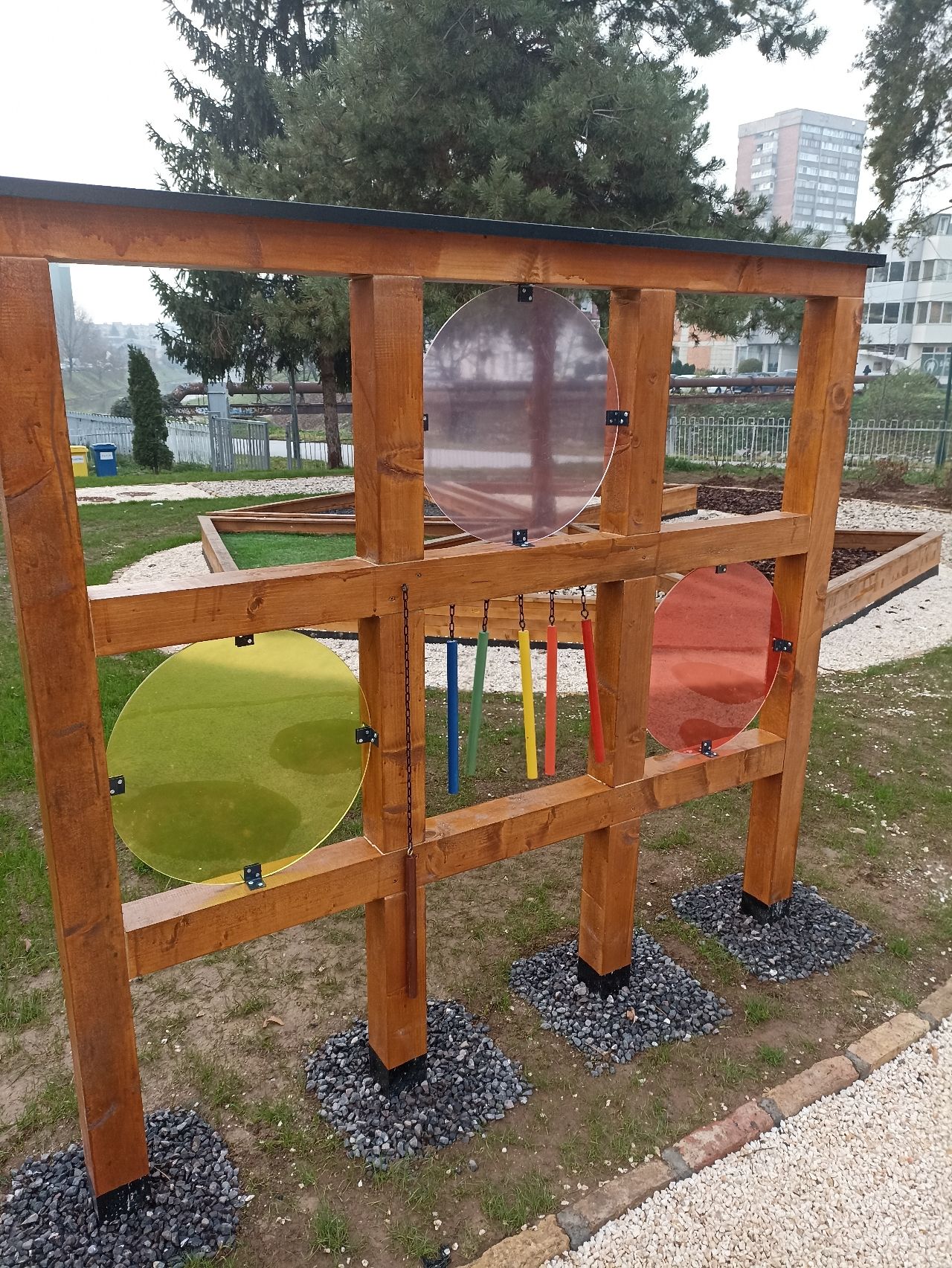
• integrating sensory elements that stimulate sight, smell, touch and sound,
• strengthening biodiversity through native planting and low-maintenance landscaping,
• fostering participatory governance and community ownership.
The garden was implemented through a co-creation process involving the City of Sarajevo, the vocational school, UNDP, Sarajevo Regional Development Agency, the Municipality of Novo Sarajevo and local citizens. Digital participation tools were used to translate citizens’ ideas into the final design.
Achieved results include:
• transformation of a neglected site into a vibrant, fully functional inclusive garden,
• regular use by students with disabilities and the wider community,
• improved biodiversity and reduced water consumption through nature-based solutions,
• strengthened intergenerational interaction and community cohesion.
The project demonstrates how small-scale, low-budget urban interventions (approx. €50,000) can generate long-term environmental and social impact. Its transformative potential lies in combining inclusion, sustainability and participatory governance into a scalable model of inclusive green urban regeneration.
The Urban Garden with Sensory Elements emerged from Sarajevo’s participation in the Horizon 2020 project Connecting Nature, where the City acted as a Fast Follower City implementing the Nature-based Solutions (NbS) Framework. Through this process, Sarajevo identified a lack of inclusive green infrastructure and the need to connect environmental regeneration with social inclusion.
The idea evolved through structured stakeholder engagement under the Connecting Nature methodology. The City of Sarajevo, together with SERDA, the Municipality of Novo Sarajevo, UNDP and the School for Secondary Vocational Education and Work Training, co-defined the vision: to create an inclusive urban garden that would serve students with developmental disabilities, users of the nearby Centre for Healthy Ageing, and the wider community.
Implementation followed several key phases:
1. Research and framework alignment: The project applied the Connecting Nature NbS Framework, integrating environmental, governance and financial planning dimensions into the design process.
2. Co-creation and participatory design: Through workshops and UNDP’s “Re-imagine my street” initiative, citizens, school representatives, NGOs and local stakeholders contributed ideas. Digital visualization tools translated community input into concrete spatial solutions.
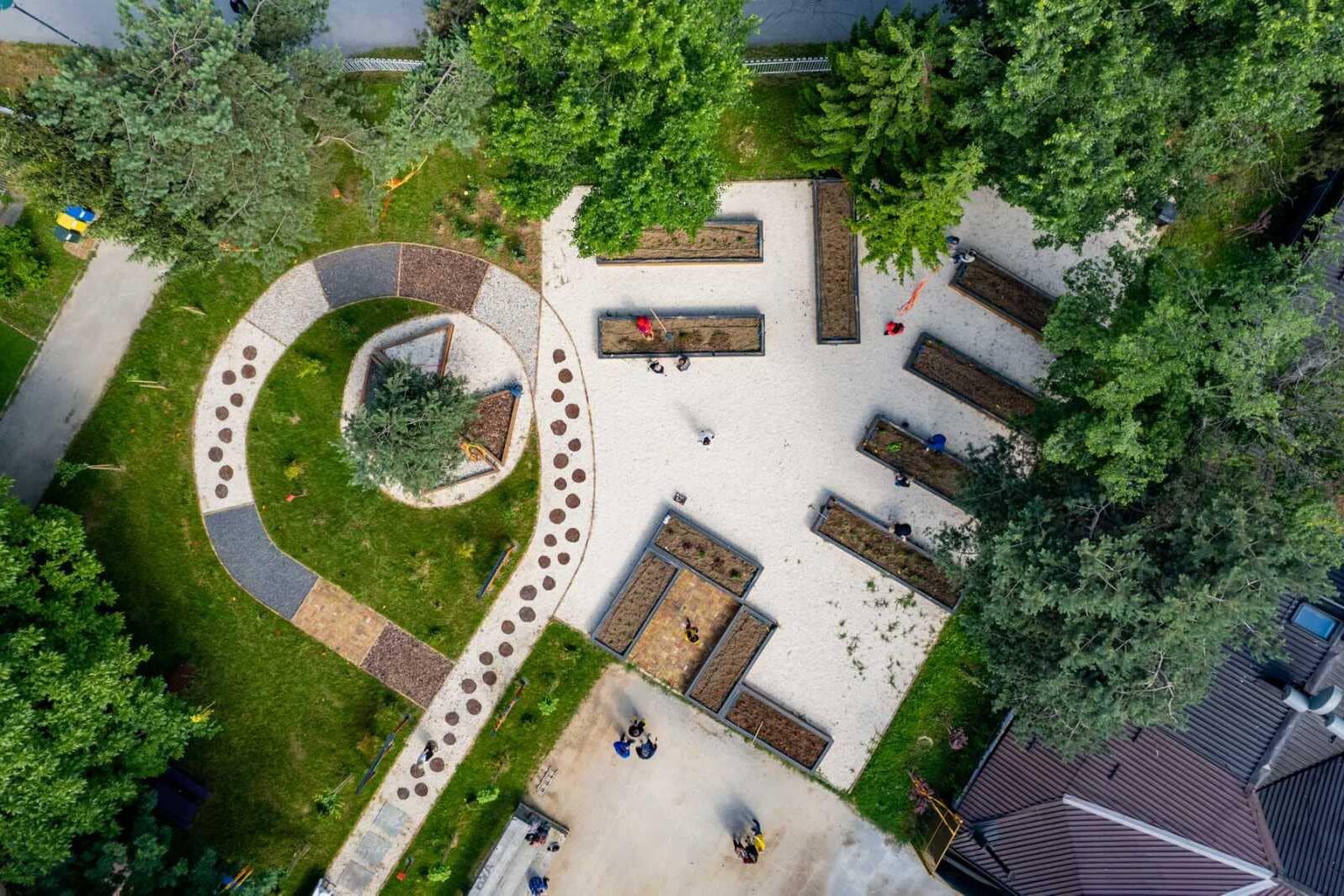
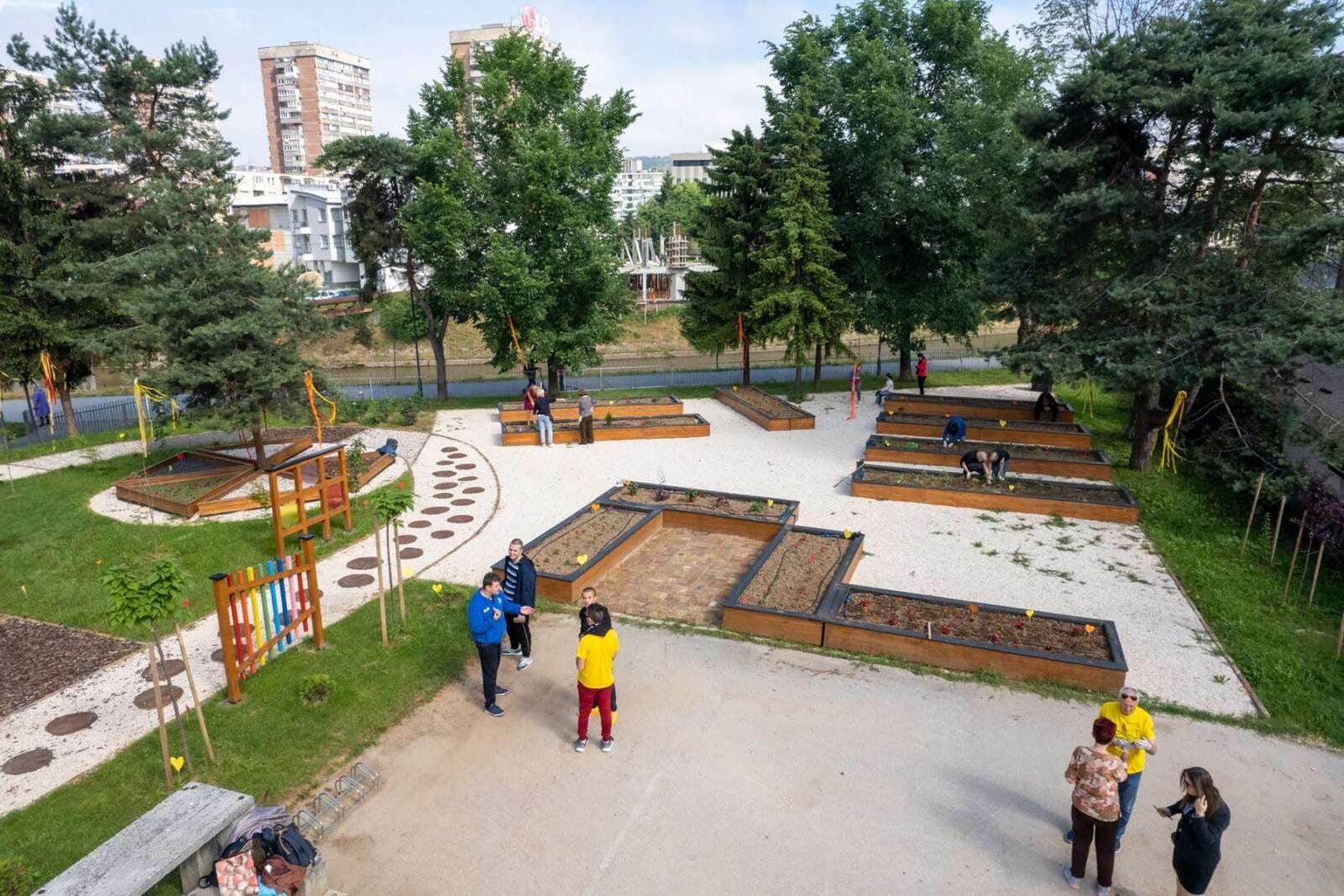
3. Design and implementation: The site was transformed from an underutilised area into urban garden with sensory elements using nature-based solutions, native plant species and inclusive design principles. Sensory pathways, textured surfaces, aromatic plants and accessible layouts were introduced to stimulate the five senses.
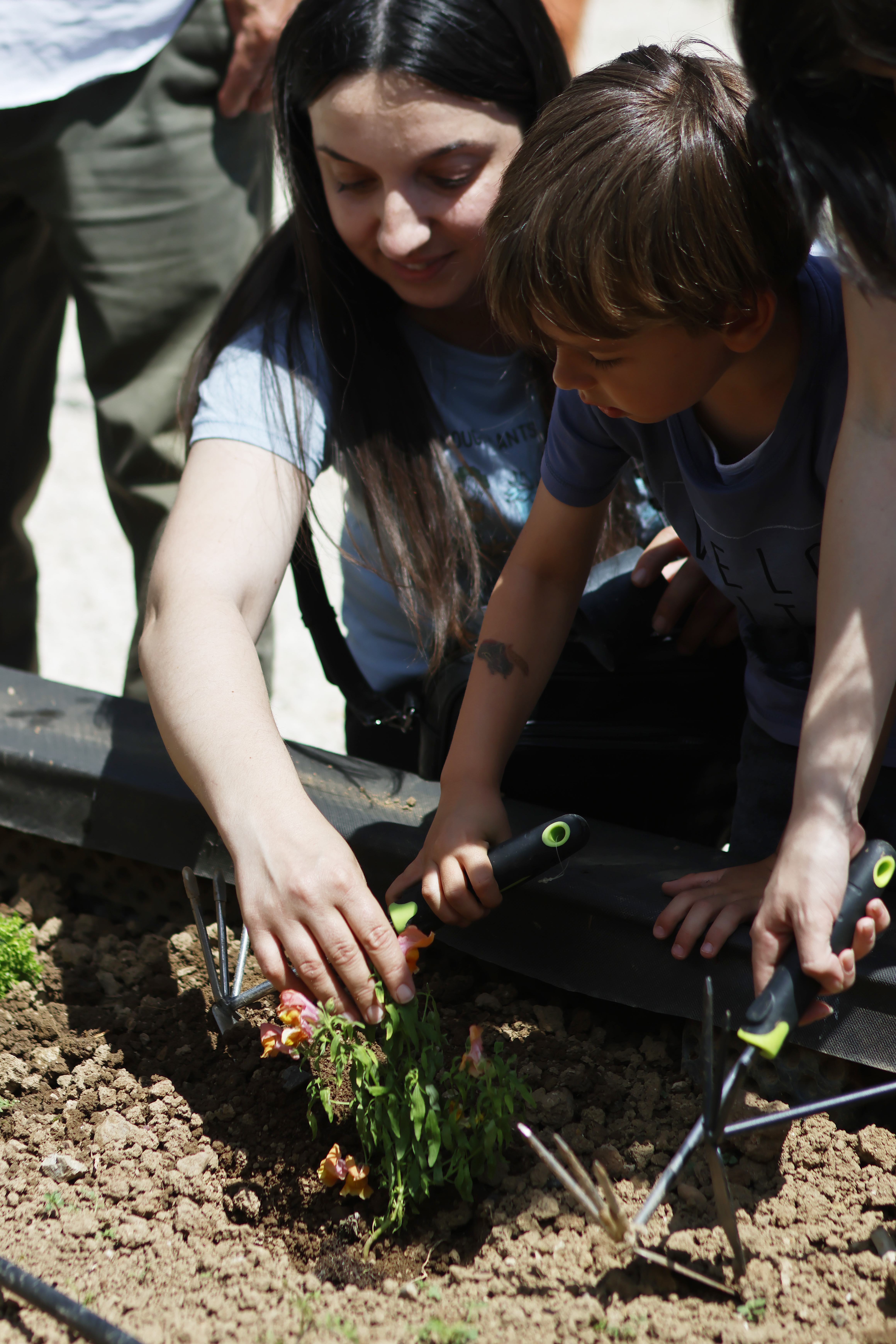
4. Testing and activation: The garden became an active learning and therapeutic environment for students and elderly users, while remaining open to the public, strengthening intergenerational interaction.
Inclusive nature-based urban regeneration
Health-centred public space design
Co-creation for social cohesion
Climate-resilient green infrastructure
Community-driven urban transformation
The Urban Garden with Sensory Elements addresses sustainability through an integrated environmental and social approach rooted in Nature-based Solutions (NbS).
Environmentally, the project transformed an underutilised urban plot into a biodiverse green space using native plant species, low-maintenance landscaping and water-efficient design. The intervention contributes to urban heat mitigation, improved microclimate, enhanced biodiversity and reduced water consumption. By applying the Connecting Nature NbS Framework, the project ensured long-term ecological resilience rather than a one-time spatial upgrade.
Social sustainability is equally central. The garden was designed as an inclusive, accessible environment serving students with developmental disabilities, elderly users from the nearby Centre for Healthy Ageing, and the wider community. By promoting intergenerational interaction and equal access to green space, the project strengthens social cohesion and long-term community wellbeing.
Economically, the project demonstrates how modest public investment (approx. €50,000) can generate durable environmental and social value. Maintenance costs remain low due to the use of climate-adapted vegetation and nature-based design principles, ensuring financial sustainability over time.
Culturally, the garden promotes environmental stewardship and reconnects citizens with nature in a dense urban setting, fostering behavioural change towards more sustainable lifestyles.
The exemplary character of the project lies in its systemic integration of ecological resilience, inclusive design and participatory governance. Rather than treating sustainability as purely environmental, the project operationalises it as a combined ecological–social transformation model that is scalable, replicable and aligned with European climate and biodiversity ambitions.
The Urban Garden with Sensory Elements enhances everyday life by transforming a previously neglected urban area into a space of beauty, comfort and sensory richness. Its aesthetic approach goes beyond visual design: it engages all five senses and creates an immersive, human-centred environment.
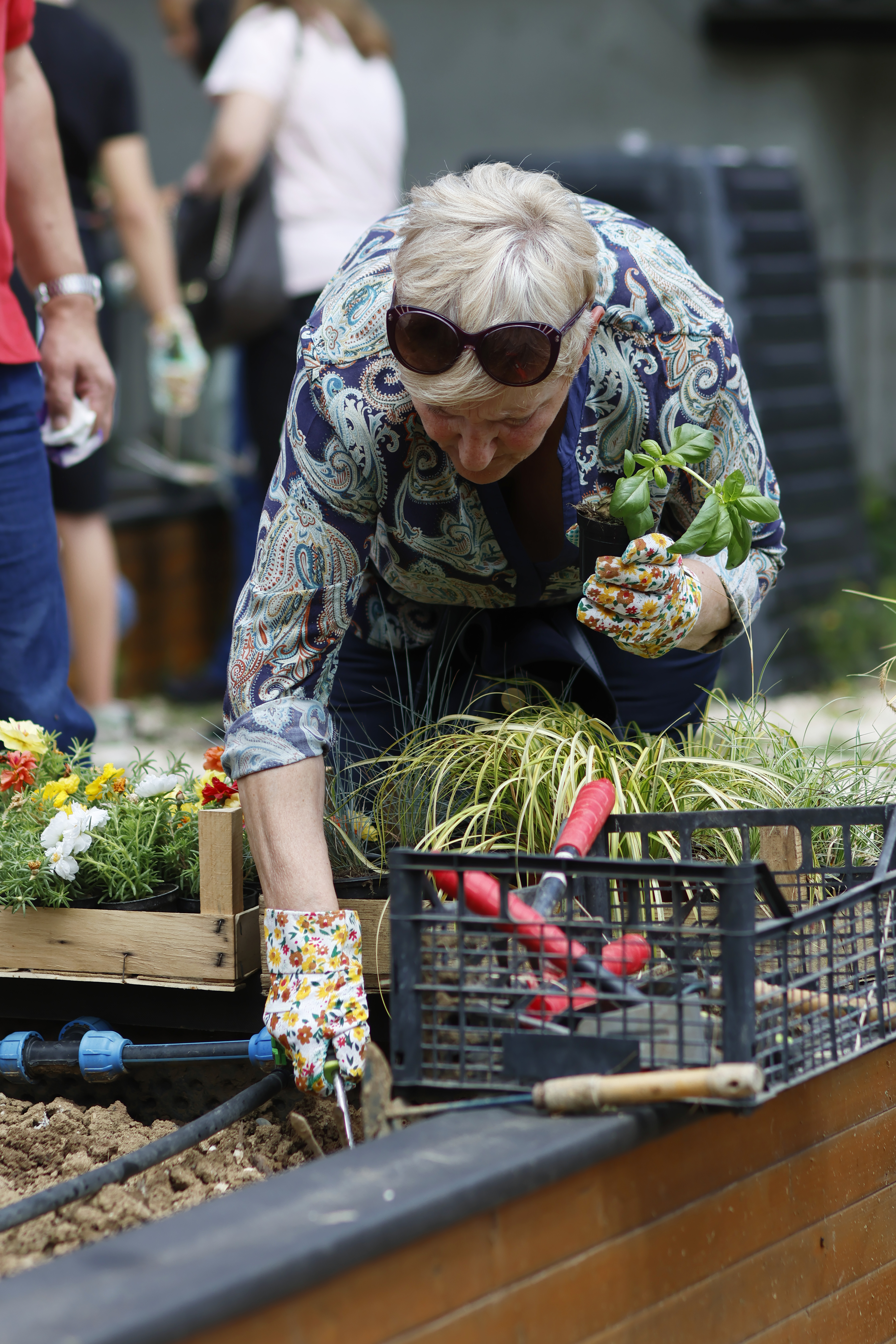
The garden integrates textured pathways, aromatic plants, colourful seasonal vegetation, shaded seating areas and natural materials that stimulate sight, smell, touch and sound. The design intentionally combines functionality with emotional experience, ensuring that users – particularly children with developmental disabilities and elderly citizens – can perceive and navigate the space intuitively and comfortably.
Rather than imposing a decorative landscape, the project embraces natural growth patterns, biodiversity and seasonal change. This dynamic aesthetic fosters a living relationship between people and nature, allowing the space to evolve over time and remain engaging throughout the year.
The garden strengthens belonging by being open to all while maintaining a strong connection to its primary users: students from the nearby vocational school and users of the Centre for Healthy Ageing. Shared activities such as planting, gardening and outdoor learning create emotional attachment and collective responsibility. Citizens recognise the space not as municipal infrastructure, but as “their garden”.
Culturally, the project contributes to redefining public space in Sarajevo – from purely functional to inclusive and experiential. It demonstrates that beauty in urban environments can be rooted in accessibility, ecological sensitivity and care.
The exemplary character lies in integrating inclusive design, sensory urbanism and nature-based aesthetics into a coherent public space model. The project shows that beauty can be regenerative, accessible and socially transformative at the same time.
Inclusion is the foundational principle of the Urban Garden with Sensory Elements. The concept was conceived from a simple but powerful premise: public space should be designed starting from those who are most often excluded. In Sarajevo, children and people with developmental disabilities had no dedicated, accessible green space tailored to their sensory and physical needs. The project responded by rethinking how urban environments are conceived and for whom they are created.
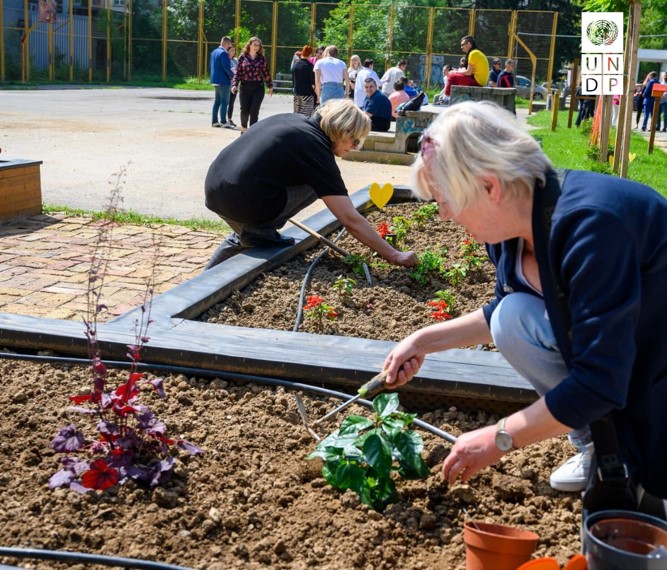
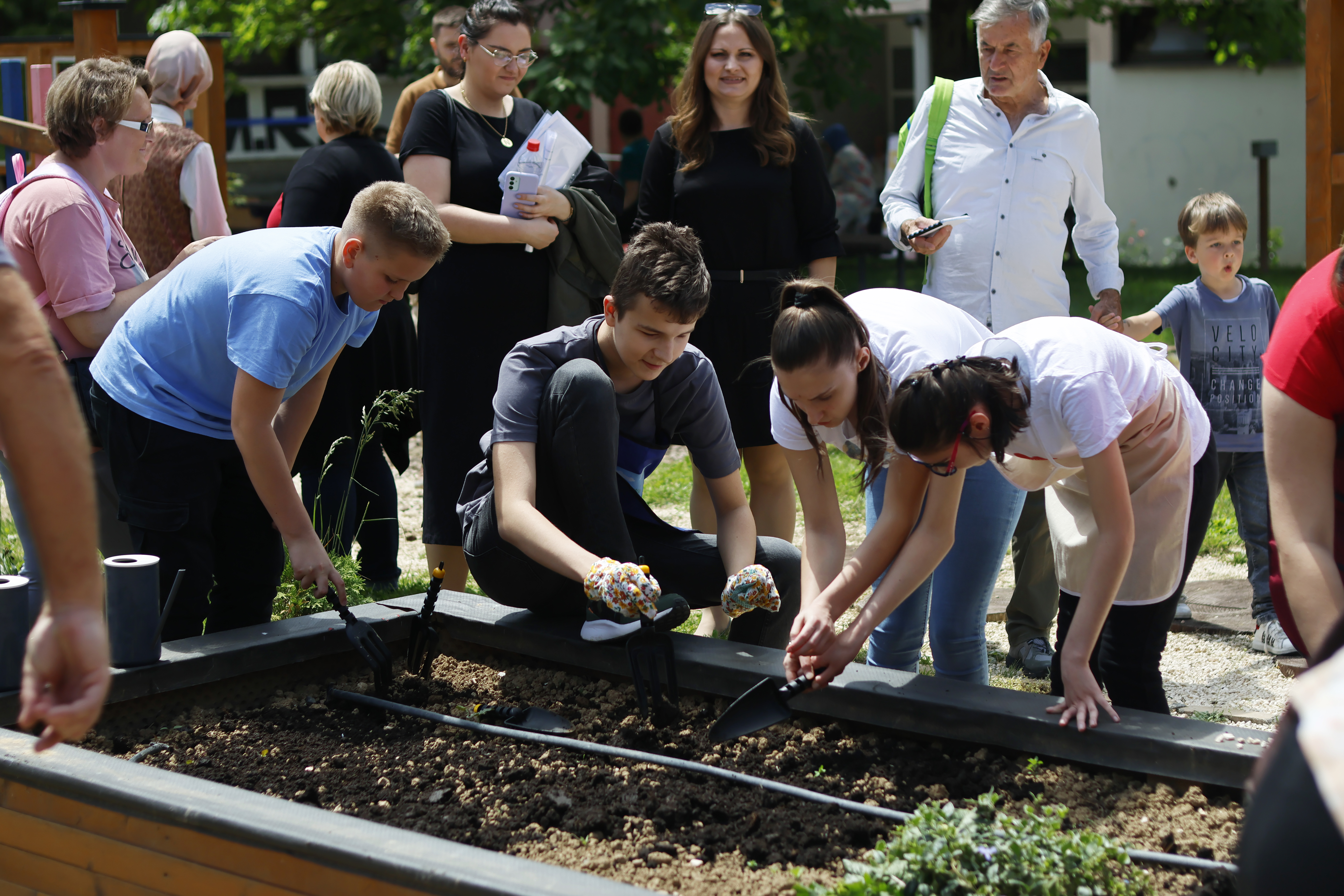
From the outset, the garden was shaped around diverse abilities rather than the “average user”. Its spatial organisation, tactile materials, raised beds, sensory pathways and intuitive circulation allow users to navigate independently and comfortably. The design stimulates multiple senses and supports different cognitive and physical capacities, enabling meaningful engagement with nature rather than passive presence. At the same time, the garden remains fully open to the wider community, ensuring that inclusion does not lead to segregation but to shared use.
The space is free of charge and embedded within the neighbourhood, removing economic and spatial barriers. Elderly users from the nearby Centre for Healthy Ageing, students, families and residents meet and interact, creating everyday opportunities for intergenerational exchange and social cohesion.
The project’s exemplary character lies in being the first urban garden of this kind in this part of Europe specifically designed for persons with developmental disabilities while remaining a shared public space. It demonstrates that inclusion can be structurally embedded in urban regeneration, not treated as an afterthought, and that accessibility, dignity and beauty can coexist in one coherent model.
The Urban Garden with Sensory Elements was built through a genuinely participatory process that placed users and local stakeholders at the centre of decision-making. The idea emerged from dialogue with the nearby school for children with developmental disabilities and local community actors who identified the lack of inclusive green spaces as a pressing need.
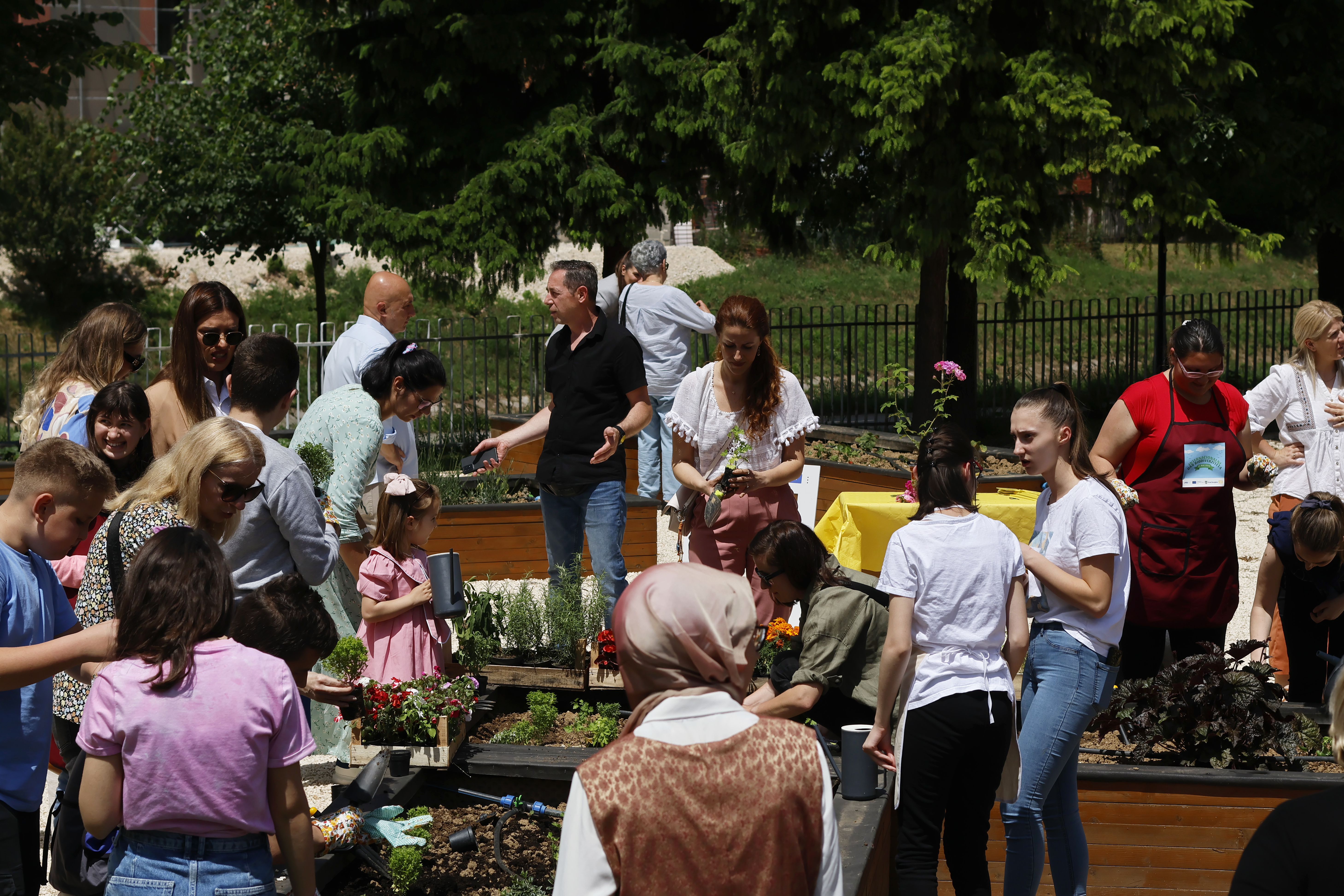
The project was developed through stakeholder meetings, co-design workshops and on-site consultations involving educators, parents, children, environmental NGOs, university representatives and municipal departments. Their feedback directly influenced the spatial layout, choice of materials, sensory features and accessibility solutions. Rather than consulting users after decisions were made, the project integrated their perspectives from the earliest planning stages to final implementation.
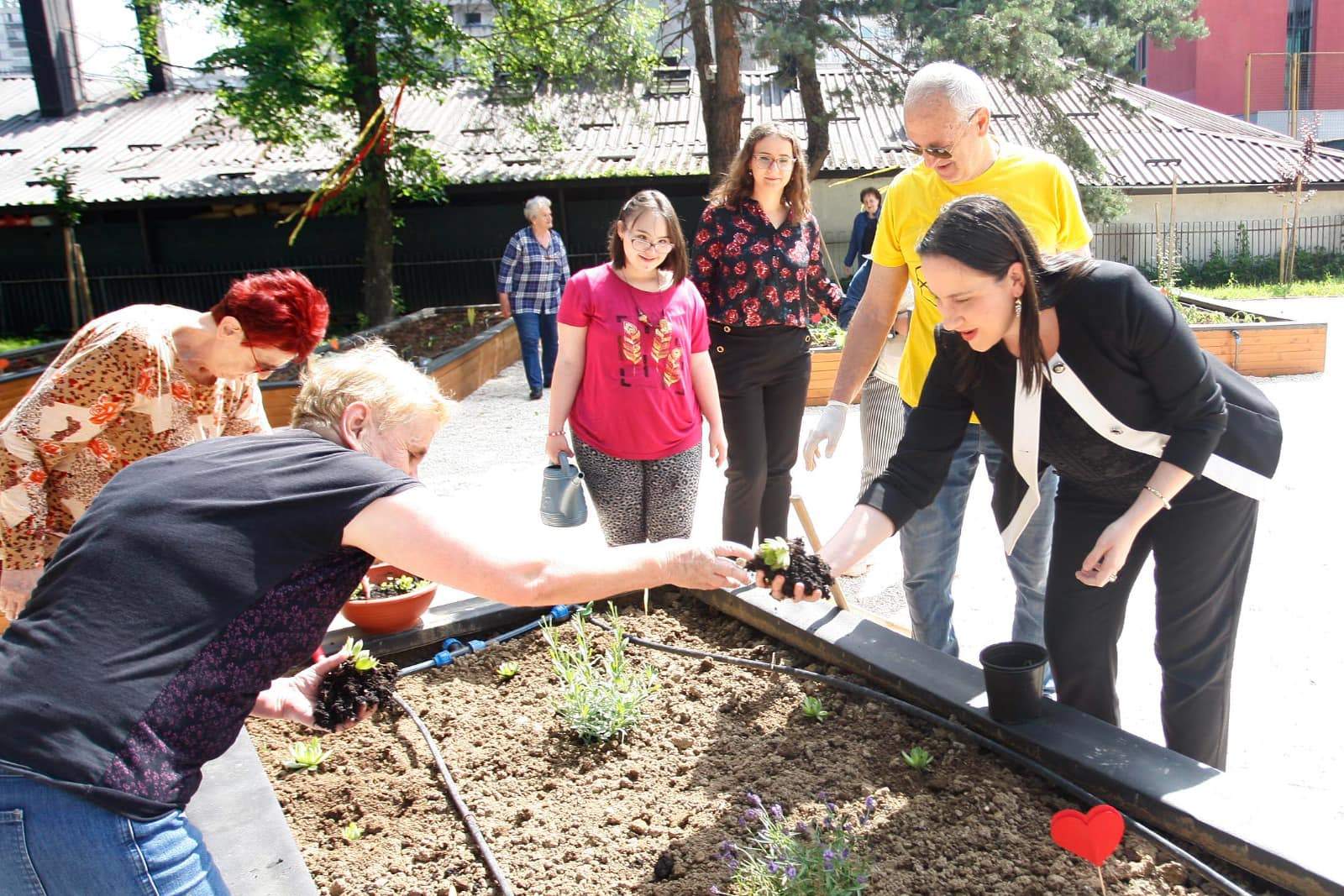
Participation did not end with construction. The garden continues to function as a living platform for exchange and learning. Workshops are regularly organised with local schools, the Centre for Healthy Ageing, and civil society organisations. The space has also hosted international study visits and knowledge-exchange sessions, including groups from other European cities and universities, creating opportunities for peer learning and shared reflection. Public events such as biodiversity awareness activities further strengthen community ownership.
This continuous involvement has strengthened trust between citizens and local authorities, improved the quality and usability of the space, and ensured that the garden responds to real needs rather than abstract planning assumptions. The project demonstrates that participation is not a one-off consultation, but an ongoing governance model where citizens shape, use and care for the space together.
The Urban Garden with Sensory Elements was shaped through coordinated action across municipal, regional and European levels, ensuring that it evolved as a structurally embedded initiative rather than a standalone local intervention.
At local level, the City of Sarajevo led the process in close cooperation with the nearby school for children with developmental disabilities, the Centre for Healthy Ageing, civil society organisations and academic experts. The Municipality of Novo Sarajevo, as one of the city municipalities, supported local coordination and alignment with neighbourhood development priorities.
At regional level, SERDA – the Sarajevo Regional Development Agency – contributed to strengthening the project’s strategic positioning within broader sustainable development and innovation agendas for the Sarajevo region, reinforcing its integration into regional planning perspectives.
International dimensions were equally important. The project benefited from collaboration with UNDP and from knowledge and methodologies developed under Horizon-funded frameworks such as Connecting Nature, which supported the structured implementation of nature-based solutions. These links anchored the project within European sustainability discourse and policy directions, including the European Green Deal, the EU Biodiversity Strategy for 2030, the EU Strategy on Adaptation to Climate Change and the New European Bauhaus.
Through this layered governance approach, Sarajevo translated European policy ambitions into a tangible, inclusive public space while simultaneously contributing practical experience back to transnational networks. The added value lies in this two-way exchange: local needs shaped implementation, while European frameworks enhanced quality, legitimacy and long-term strategic coherence.
The Urban Garden with Sensory Elements emerged from a genuinely transdisciplinary collaboration that brought together expertise from environmental sciences, landscape architecture, urban planning, social sciences, education, health and digital participation. The project was approached not only as a spatial intervention but as a living environment where ecological, social and therapeutic dimensions intersect.
Landscape architects and urban planners worked closely with educators, special education professionals and therapists who work daily with children with developmental disabilities. Their insights were essential for understanding how users perceive, navigate and experience space. This knowledge directly influenced the layout of the garden, the design of sensory pathways, the selection of tactile materials and the organisation of planting beds and resting areas that support different sensory and cognitive abilities.
Environmental expertise was equally important. Ecologists and horticulture specialists contributed to the selection of plant species that provide biodiversity value, seasonal diversity and a rich sensory experience. The garden was conceived as a nature-based solution, integrating ecological thinking into the design of an accessible and inclusive urban green space that contributes to wellbeing and environmental awareness.
Social scientists and community facilitators supported the participatory dimension of the project. Because the garden was implemented during the COVID-19 pandemic, the process combined in-person workshops with digital participation tools, including an online platform where citizens could share ideas and comment on design proposals.
This project demonstrates how diverse knowledge fields can work together to create inclusive and resilient public spaces that support both social wellbeing and ecological awareness.
The Urban Garden with Sensory Elements was developed through a collaborative public-sector model combining local public funding with international development support. The initial implementation was financed through a partnership between the City of Sarajevo, UNDP and the Sarajevo Regional Development Agency (SERDA), demonstrating how relatively modest investments can generate long-term social, environmental and educational value.
Rather than relying primarily on revenue generation, the garden operates as a public good embedded within the city’s broader sustainable development and social inclusion policies. Its long-term sustainability is ensured through integration into the activities of the nearby School for Secondary Vocational Education and Work Training and the Centre for Healthy Ageing, whose users regularly participate in gardening, learning and community activities.
The project also shows how community engagement can support financial sustainability. For example, a group of women from the United Kingdom who organise nature retreats visited the garden and participated in a planting workshop together with the school’s students. Inspired by the experience, they later made a financial donation to the school to support the continued maintenance of the garden.
Operational costs remain intentionally low thanks to the use of nature-based solutions, resilient plant species and community stewardship. Recognition through the URBACT Good Practice label (2024) and the Green Champions of the Western Balkans Award (2023) has further increased the visibility of the initiative and its potential to attract new partnerships and funding opportunities.
The project was designed as a transferable model that can be adapted to different urban environments and social contexts. Its scalability lies not only in the physical design of the garden but also in the methodology behind it, which combines participatory co-design, NbS and cross-sector collaboration between public institutions, civil society and educational organisations.
The model has already demonstrated strong replication potential. Recently, students of architecture and physiotherapy from the University of Banja Luka, together with representatives of the City Administration of Banja Luka and their civic association, visited Sarajevo to learn about the concept and explore possibilities for implementing a similar initiative in their city.
At the same time, the City of Sarajevo is actively adapting and replicating the concept within the framework of the Interreg Euro-MED programme, transferring the approach to three additional locations in the city. While preserving the core principles of accessibility, biodiversity and community engagement, each site adapts the concept to its specific context. In the courtyard of the first eco-school in Bosnia and Herzegovina and a school with highest number of children with developmental disabilities, a sensory garden is being developed to support inclusive outdoor learning. In the University of Sarajevo Campus, the concept is adapted into an educational urban garden for students, researchers and the community, while a similar garden is being created for the Centre for Healthy Ageing in the Municipality of Centar.
Beyond the physical space, the project also functions as a learning model, demonstrating how small-scale NbS can be implemented through participatory processes and institutional partnerships. This combination of adaptable design, community engagement and knowledge transfer makes the approach easily replicable in schools, universities, social centres and community spaces.