VirtualBikeTourism
Basic information
Project Title
Full project title
Category
Project Description
In this case, the right type of tourism is cycling. How can people be more motivated? Through virtual reality. They will have the opportunity to watch the route with a VR visor and then ride!
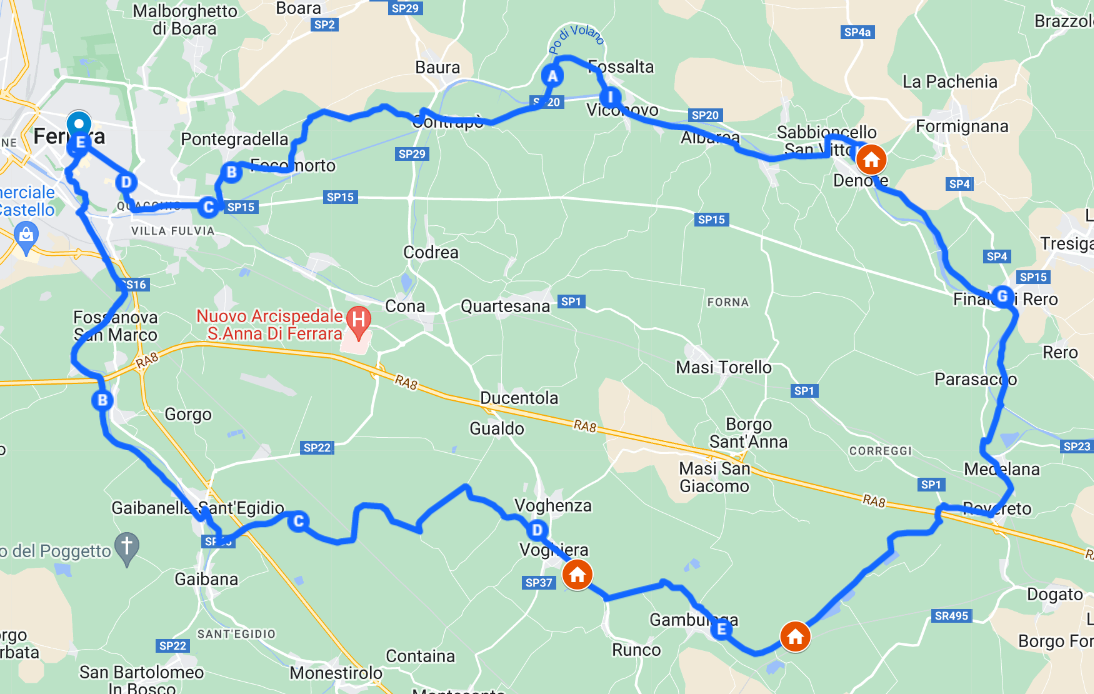
The considered area is in Ferrara, Italy. Here are the "Delizie Estensi" (The Este Villas): XVI century noble residences that embody the history of this territory.
Current stage development
Geographical Scope
Project Region
Urban or rural issues
Physical or other transformations
EU Programme or fund
Description of the project
Summary
Concretely, it is about a specific itinerary, designed for cycling. People have the opportunity to preview the route through a VR oculus, and then to decide to take it. But it is not a random itinerary: the journey is designed to cross crucial points of the territory of Ferrara (Italy). Three reference points that represents the history of the city. I am talking about the "Delizie Estensi", which are noble palazzos, built during Renaissance by the House of Este. A fundamental Dinasty of that period, that made the history of Ferrara. The overall aim is to create a sense of belonging to the community, through a sustainable tourism.
The element of virtual reality contributes to encourage citizens to try new experiences, because they are attracted by innovation.
Beyond the fact that people discover important places of their culture, this itinerary allows to reconnect with nature, because it follows mainly country roads and paths in the middle of the green.
All the target groups are welcome. The trip is ideal for families, individuals, children and adults and less experienced cyclists. Very important principles at the base of the project are inclusion, collaboration, accessibility and awarenesses: the VR vision allows to know, before taking the route, if the streets are accessible to people with mobility difficulties, and also to try "virtually" the trip for those who cannot do it in real life, due to more serious motor disabilities. Furthermore, it could be added sounds and smells, to make it more realistic.
In this specific case, the project considers the region of Ferrara, but it could be extended to other regions in Europe. The common objective will be to make citizens proud and aware of our heritage, and part of a tight-knit community, as well as respectful of nature.
Key objectives for sustainability
The bike allows you to move at a reduced speed to appreciate better the features of the landscape. Furthermore, there is a direct contact with nature and respect for the environment that surrounds us. Children that take part to the trip, learn this respect and are educated to biodiversity conservation. In this way, the future generations acquire the right mindset.
Virtual Reality plays a role in promoting sustainability: the visor, located in the city center, attracts the public and promotes this type of excursion, so that people move out of the central area and live the nature.
This action, that involves more people who want to travel by bike, could stimulate public administrations to do something real to improve cycling infrastructure. Citizens would be more enticed to go by bike: a positive ripple effect.
Key objectives for aesthetics and quality
First of all, visiting these places, people could admire splendid architectural structures. Then, they could increase their cultural knowledge, learn more about their origins, create a closer link with the territory and feel even more part of the community.
Thereby, partecipating in the experience is qualitative in terms of aesthetics and cultural value.
Lastly, highlighting these Villas could lead to a renovation and better conservation.
Key objectives for inclusion
This proposal can include two different ways to utilize Virtual Reality in favor of accessibility.
Firstly, people who need special means of transport to move, like wheelchair bike, could preview, through the visors, if the road is suitable and accessible for their passage. They could receive important information concerning the route and alternative roads.
Secondly, for those who do not have the physical possibility to navigate the course, the virtual trip can be a valid method to live the experience as close to reality as possible. Other elements can be integrated to make the virtual adventure more immersive, like sounds, smells and touch.
Everyday new technologies are developing more and more. It is right to exploit their resources to achieve as much equality as possible.
How Citizens benefit
The citizens are the protagonists of the project, because they are the ones who make it tangible, not only by participating in the journey but also by suggesting new routes to create and make accessible.
They are always an active part: by testing the route, they can suggest changes or additional elements to improve the experience for everyone.
The benefit they gain aligns with the goal of the project: to regain a sense of belonging to the territory and pass it on.
Physical or other transformations
Innovative character
Disciplines/knowledge reflected
Methodology used
How stakeholders are engaged
To give some examples, the following will have the opportunity to be involved:
- institutions that deal with the "Este Villas"
- public administrations regarding cycling infrastructure
- bike rental businesses, they can promote the idea in exchange for a return in clientele.
Global challenges
There could be a positive "green" example that will espand more and more in the regions, also thanks to the element of Virtual Reality.
Learning transferred to other parties
Next steps
The project has all the prerequisites to be realized, as partnerships are already being created to take the idea to the next level. It will be part of the #LANOSTRABIOSFERA (our biosphere) Community. An educational program that originates from the University of Ferrara, with a focus on regenerative sustainability for UNESCO Biosphere Reserves. Innovative skills, technologies, and enabling digital tools are explored to activate immersive "environmental storydoing" operations for the dissimination of topics related to the new European Green Deal policy and concrete actions to achieve the 17 Sustainable Development Goals of the UN 2030 Agenda and climate neutrality by 2050.<br />
Furthermore, the project will collaborate with Action Tank ITALIA2030, a format aimed at raising public awareness through collective actions 'managed from the bottom up' regarding the 17 Sustainable Development Goals of the UN Agenda 2030, through the mindful use of new media and with a specific focus on rural areas, biospheres and parks to be reforested, and historical villages in EU countries.