A village as a park
Basic information
Project Title
Full project title
Project Description
Current stage development
Project Region
Municipality
EU Programme or fund
Description of the project
Summary
Key objectives for sustainability
Key objectives for aesthetics and quality
Key objectives for inclusion
How Citizens benefit
Innovative character
By embracing interdisciplinarity, the project combines cutting-edge engineering techniques with landscape expression, creating a green space. Additionally, the design allows for flexibility and adaptability over time, enabling the structure to respond to changing environmental conditions. Climate-adaptation measures, such as rainwater harvesting systems, further enhance the project's resilience and sustainability. By embracing the natural environment, the project sets a new standard for urban revitalization, offering a model for future developments that prioritize circularity, community engagement, and environmental management.
Disciplines/knowledge reflected
A steering committee of elected representatives monitored all stages of the design process. This committee has evolved over the years, incorporating new members who have always been involved in discussions with Atelier Paul Arène.
Atelier Paul Arène, in its role as project manager, called on partners to complement its skills and enrich the project:
- Ai&Géo for road construction and civil works and technical and coordination support
- The Cadegeau consultancy on the hydraulic aspects, to ensure the project's feasibility in terms of integrated rainwater management.
- Technical service providers such as Vecteur Réseaux for land surveys essential to the technical and financial sizing of the project
- Institutional partners such as the Conseil Departmental (roads department) for its advice and recommendations on sections of departmental road, or the Agence de l'Eau (water agency) for the hydraulic aspect, or the services of the agglomeration, managers of the drinking water supply networks for the coordination of concomitant repair work.
For its part, the mayor's office, through its elected representative Mme Guibert, has approached several public bodies and put together various public subsidies applications. (Two public funding bodies have already agreed to support the project:
- € 212,391 from the French government's Green fund for the renaturation of towns and villages.
- The Departement of Maine et Loire, which will provide € 95,626 in support of municipal investment and € 20,790 for rainwater management.
The Loire Bretagne Water Agency has also been asked to support the project.
Methodology used
- Making the ground permeable again and renaturing of the village's public spaces to combat heat islands and bring life and biodiversity back to the heart of living spaces.
- Integrating rainwater management that allows water infiltration and soil remediation.
- Better living together, through the redevelopment of a central village road that today constitutes an obstacle to soft mobility and village life, and which tomorrow will lead to a general calming.
- Safety for soft modes of transport and the development of an intergenerational shared space, enhancing the life and mixed uses of the village (paths, squares, benches...).
- Working together, through the participative aspect of the studies and the involvement of citizens at every stage of the project.
How stakeholders are engaged
Residents of Noyant-la-Plaine were directly engaged with the project in 2019. Without the residents the project would not have been possible.
The Village as a park project team was a collaboration between:
Muncipality representatives
Cabinet Paul Arène (landscape architect)
State/Region
Sous-préfecture
Project manager of the program "villages d'avenir"
Agence de l'eau
Departement
Agglomération (water department)
Additional contributors:
CAUE (Conseil d'architecture, d'urbanisme et de l'environnement)
Vecteurs réseaux (topography)
Air Géo (technical support)
Cadegeau (rainwater management
Global challenges
Learning transferred to other parties
Next steps
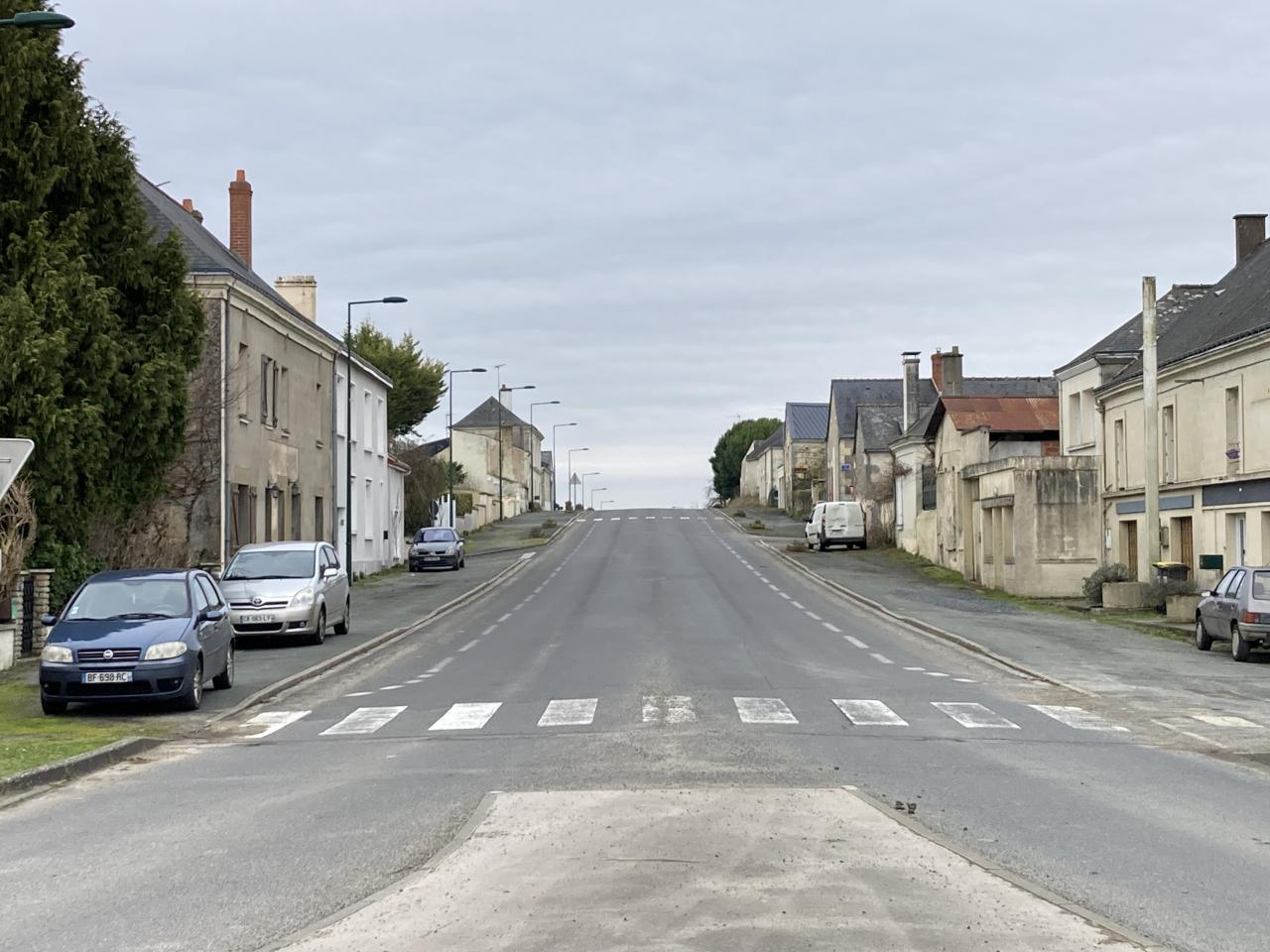
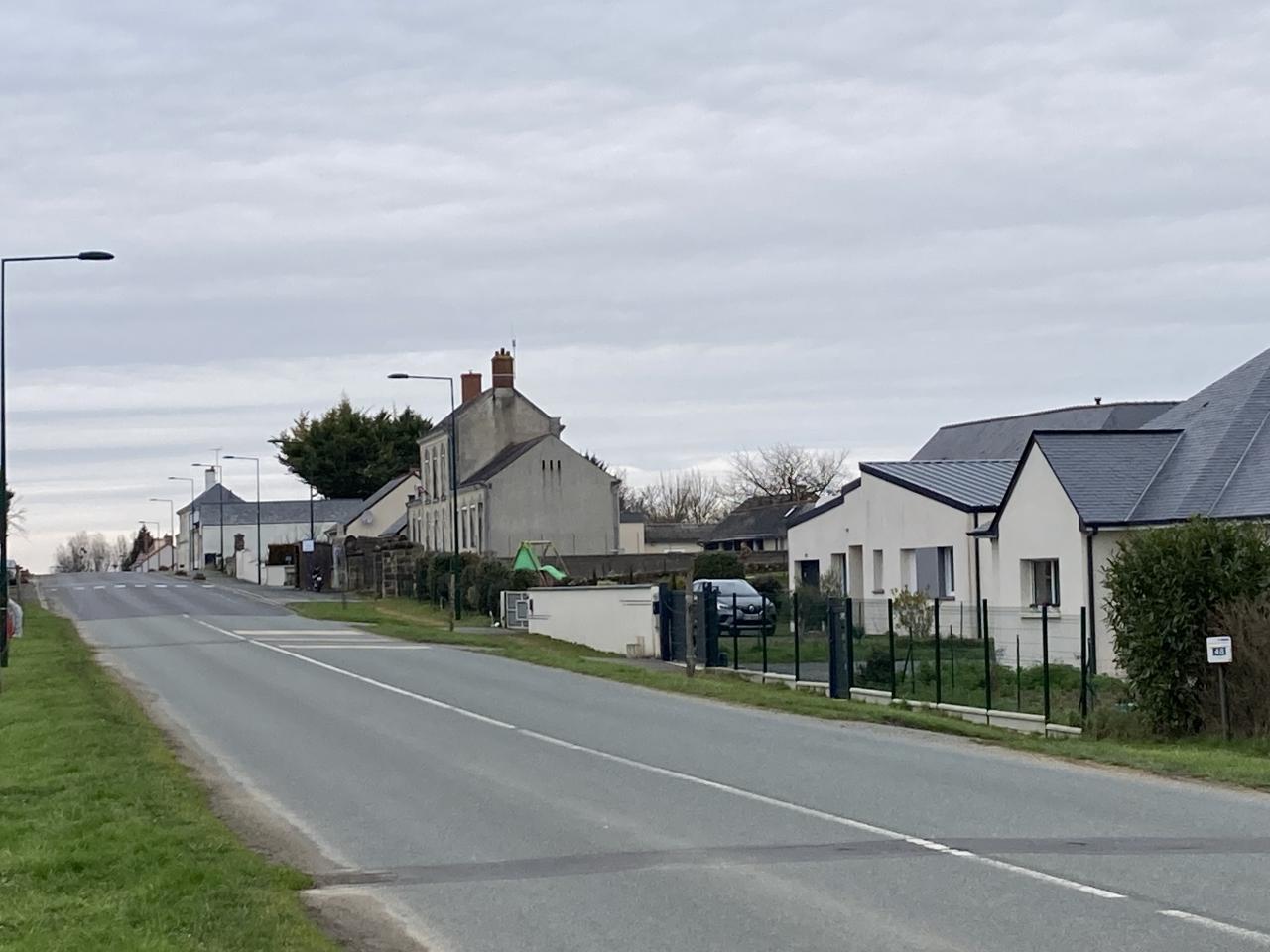
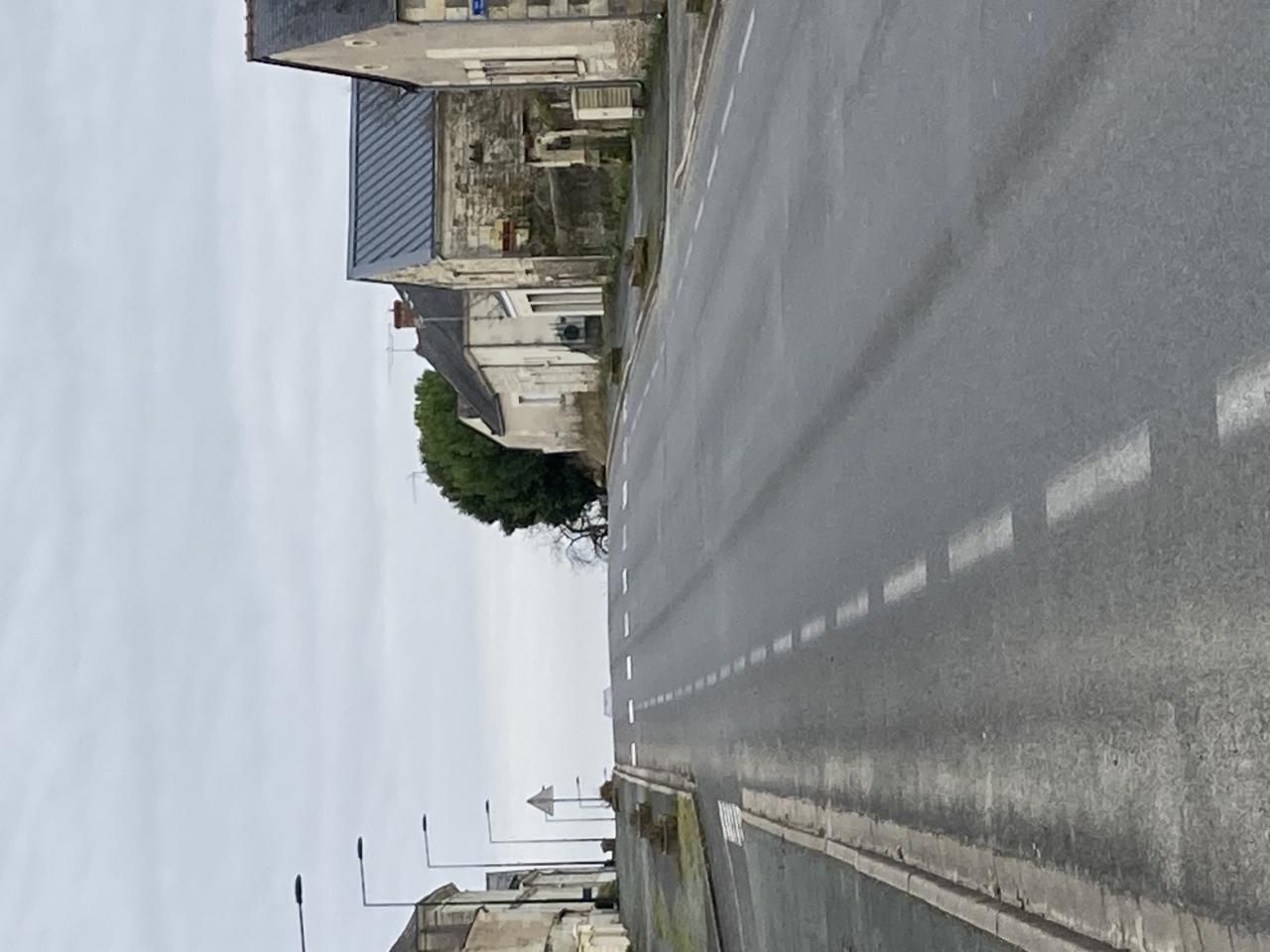
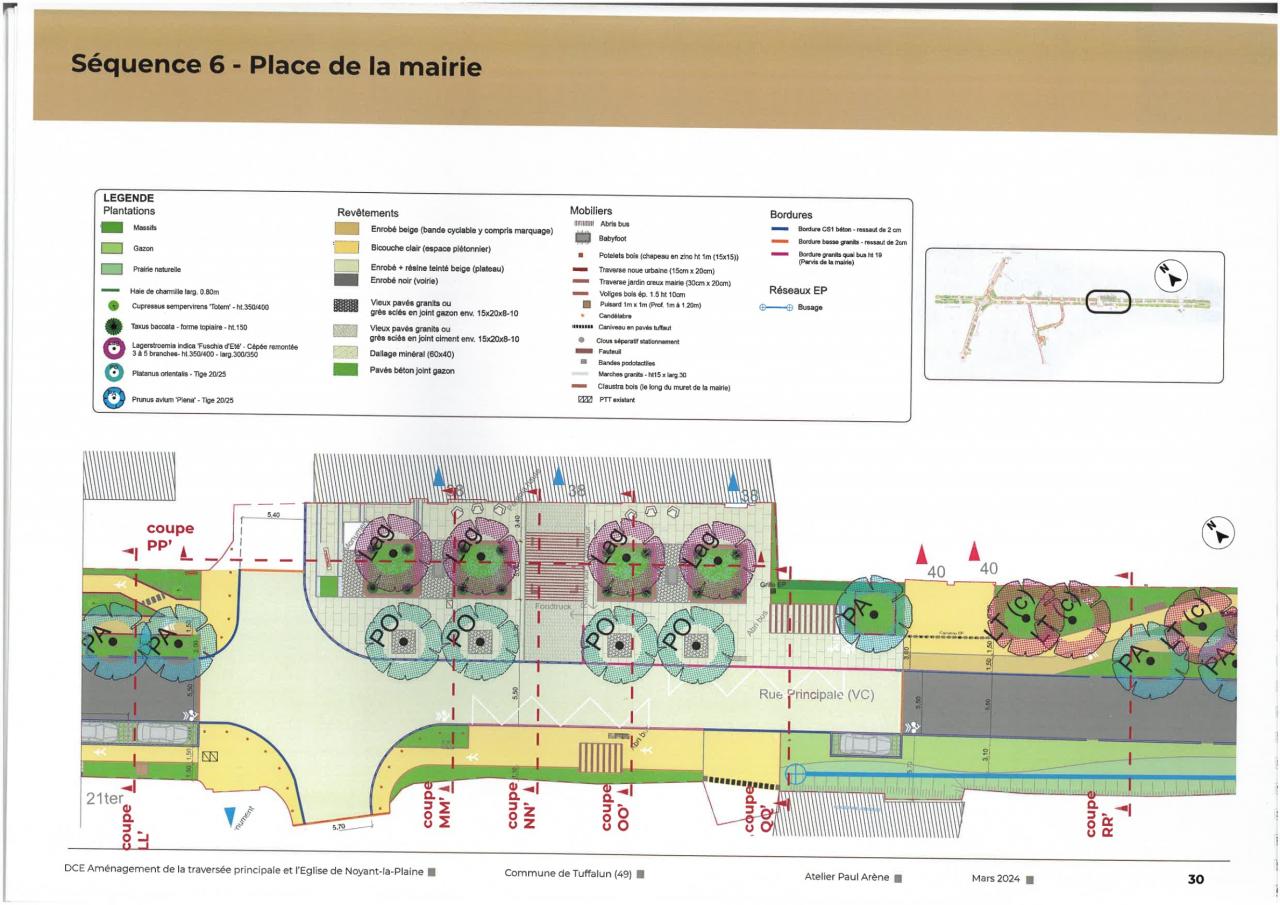
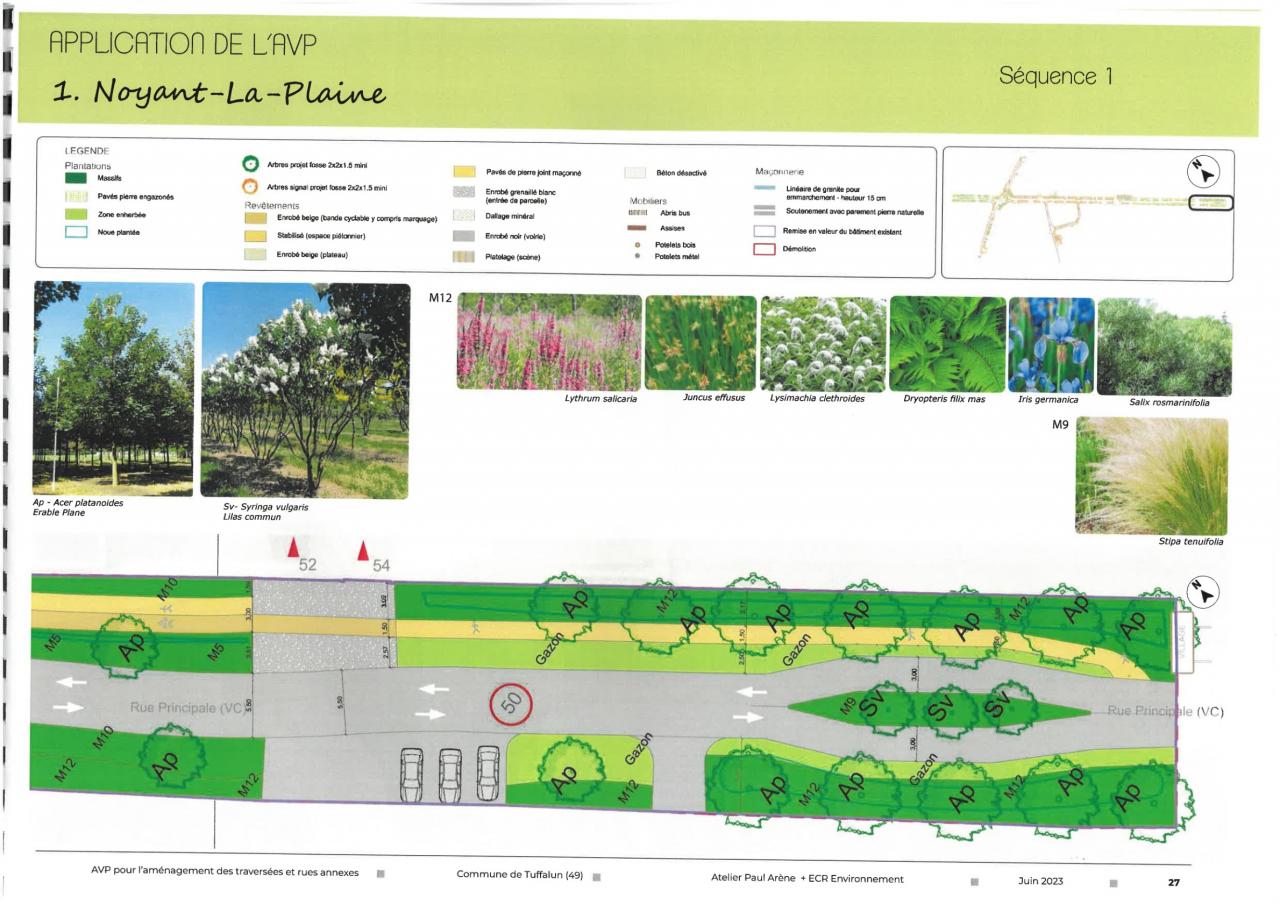
The Village as a park project is divided into sequences: the village entrances and exits, the main crossing and the central areas along this route. For each sequence, the issues and actions to be implemented were identified.<br />
a) Village entrances and exits: <br />
Important issues: Speed reduction, Landscape transition<br />
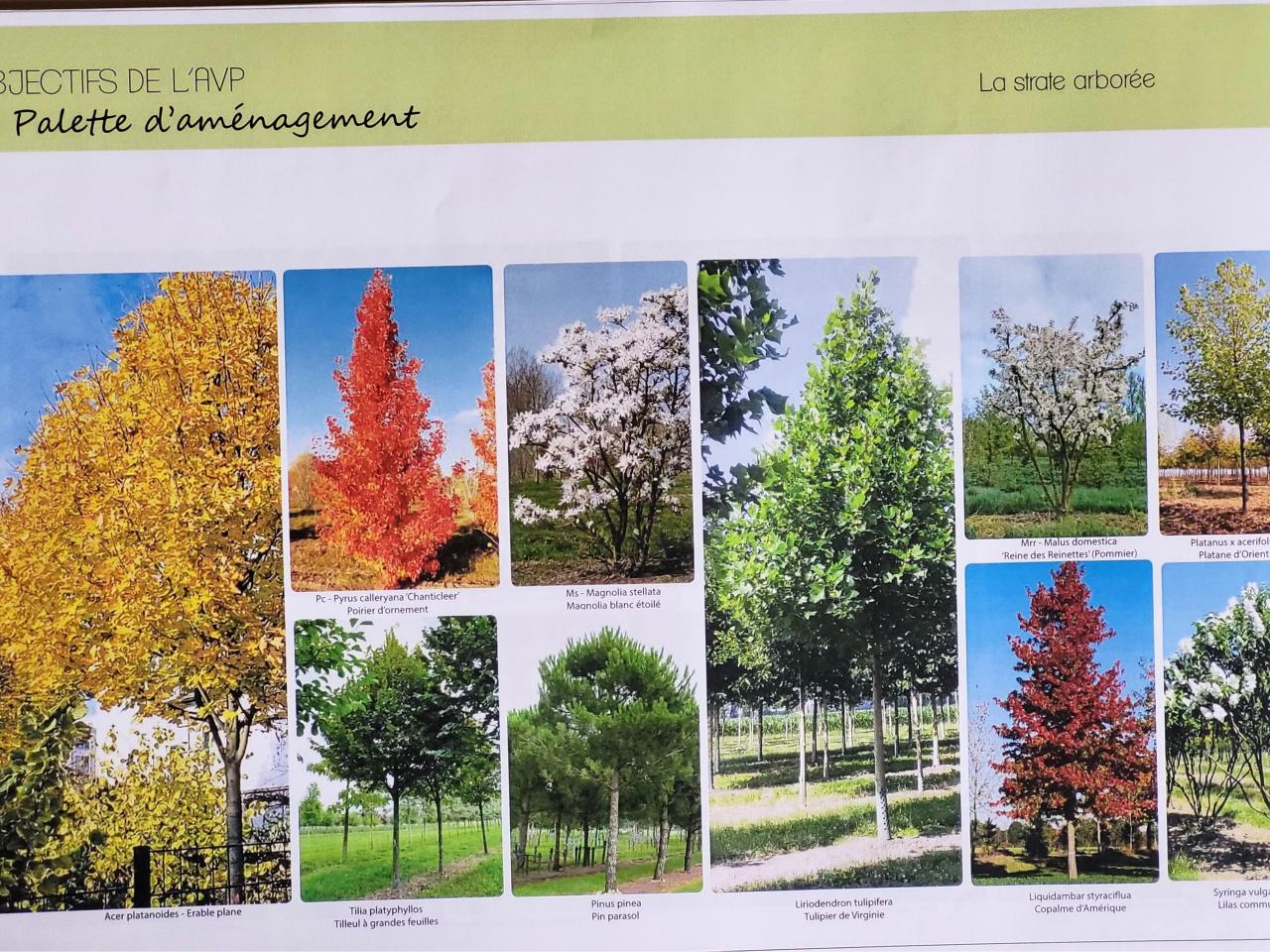
Actions: Plant rhythm to slow vehicle speeds, Progressive narrowing of the track, A strong green and blue fabric: rainwater management areas<br />
b) Main crossings: <br />
Main issues: Crossing safety, Speed reduction, Noise pollution to be reduced, Reducing the waterproof surfaces <br />
Actions: Significant tightening of the road network, Assertive plant punctuation, Parking organization, Integration of soft mobility.<br />
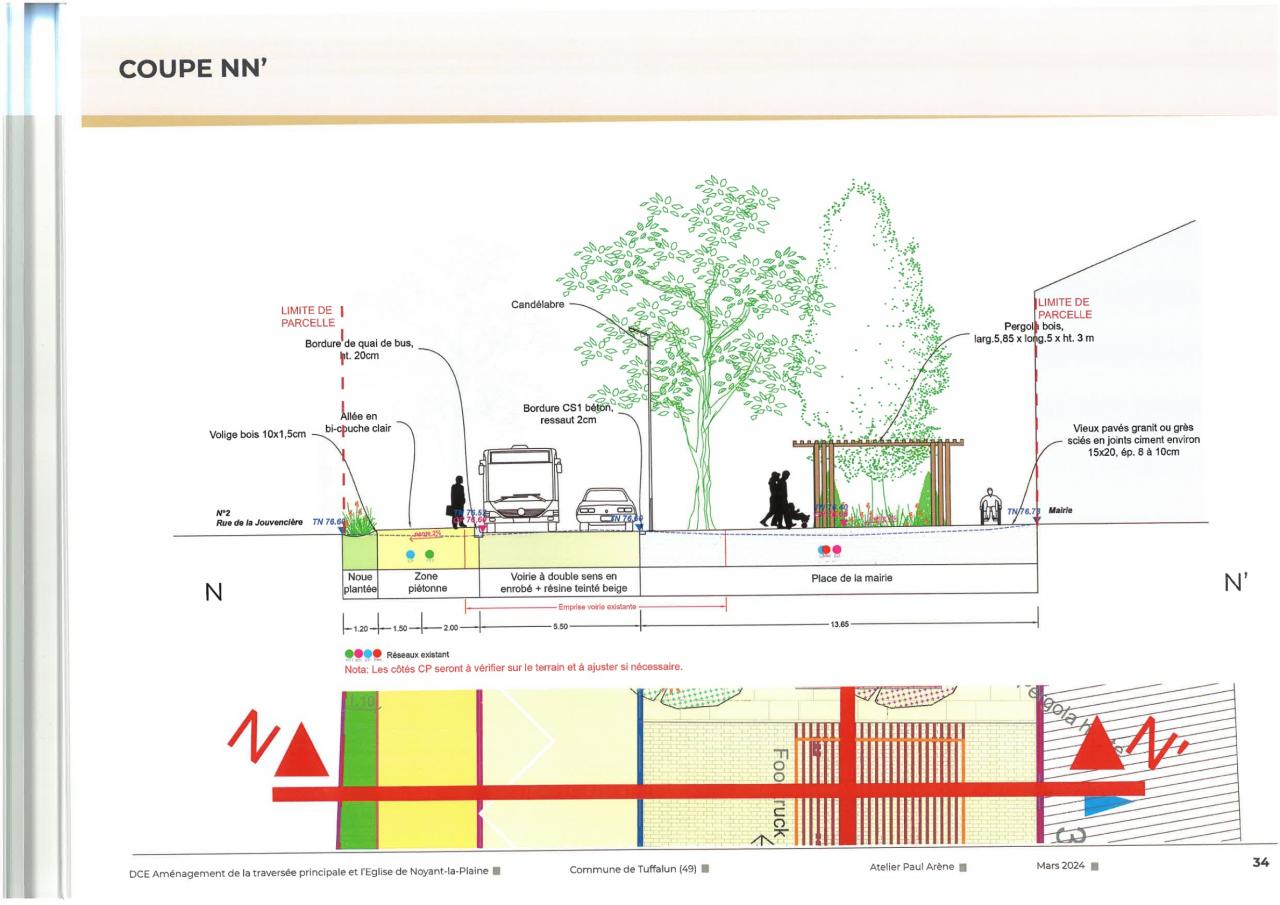
c) Centres of citizen’s life: Town hall and municipal hall: <br />
Main issues: Pooling of flows and "blurring of the road", Enhancing the heritage of urban facades, Activate ground floors and indoor/outdoor interfaces <br />
Actions: Uniform floor treatment, Affirmation of the green treatment of facades, Incorporation of landmark trees, Parking organization, Integrated soft traffic - Strolling zone<br />
Multidisciplinary process: <br />
Cabinet Paul Arène has been asked to submit a preliminary design study and a tender document for the project. A steering committee of elected representatives monitored all stages of the design process. It has evolved over the years, incorporating new members. Atelier Paul Arène, in its role as project manager, called on partners to complement its skills and enrich the project: Air&Géo (road construction and civil works), Cadegeau consultancy (hydraulic aspects), Vecteur Réseaux (from technical to financial sizing of the project), Institutional partners such as the Conseil Departmental (roads), or Agence de l'Eau (water agency), or managers of the drinking water supply networks to coordinate repair work.<br />
Throughout the project, public participation has been the guiding principle of its realisation.