Urban Courtyard Transformation
Basic information
Project Title
Full project title
Category
Project Description
Current stage development
Geographical Scope
Project Region
Urban or rural issues
Physical or other transformations
EU Programme or fund
Description of the project
Summary
Overall Aim:
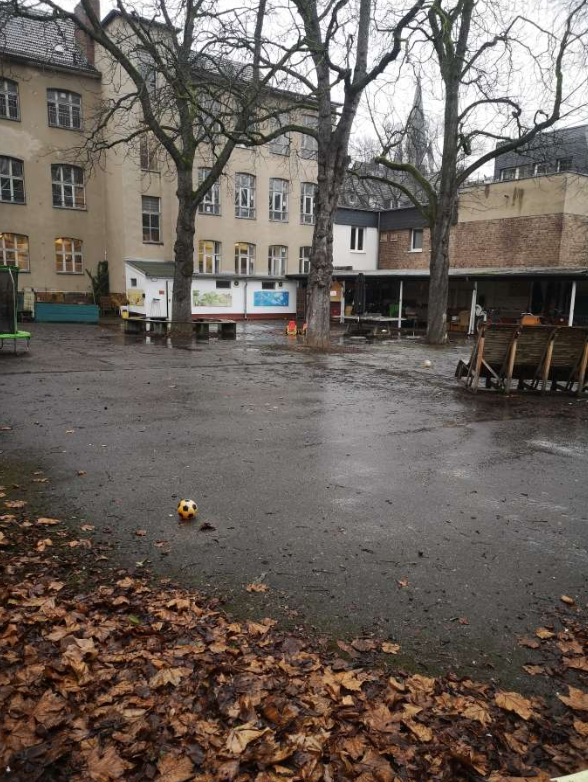
The project’s primary goal is to convert a sealed, degraded urban space into a thriving, green environment. By unsealing asphalt, regenerating the soil, and implementing green infrastructure, we create a resilient ecosystem that supports biodiversity while providing a safe, welcoming space for community interaction.
Target Groups:
Local Residents: Including those from vulnerable and marginalized backgrounds who need accessible, inclusive public spaces.
Community Gardening Groups: Engaging neighbors in hands-on activities that foster a sense of ownership and pride.
Students and Researchers: In collaboration with the Faculty of Architecture at TH Köln, who contribute innovative ideas and practical skills to the project.
Civil Society and NGOs: Who offer support, expertise, and advocacy for inclusive urban development.
Specific Objectives:
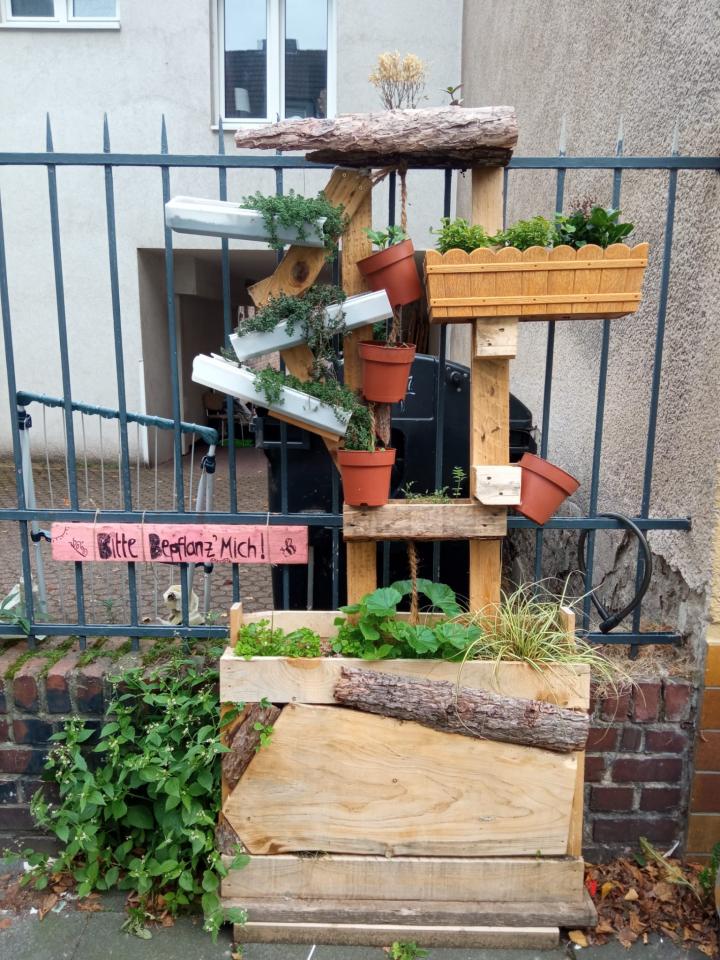
Environmental Regeneration: enrich soil with compost and mulch, and build raised beds to restore the natural ecosystem and enhance local biodiversity.
Sustainable Infrastructure: Install a greenhouse made from recycled materials, implement rainwater harvesting with drip irrigation, and create a terrace as a gathering space.
Community Empowerment: Establish a community workshop and host a Summer School that brings together scholars, experts, and community members for collaborative learning and co-creation.
Achieved Outcomes: Enhanced Biodiversity contributing to local climate adaptation and ecological resilience and Community Engagement.
Key objectives for sustainability
Objective: Improve degraded soil by removing sealing layers and restoring its natural functions for soil health and increasing soil life. The asphalt surface is going to be removed, and the soil will be revitalized using compost, mulch, and raised beds to support long-term fertility. This fosters a healthy ecosystem for plants, insects, and microorganisms.
Second: Climate Adaptation and Water Management. Objective: Reduce urban heat island effects and manage stormwater sustainably in the courtyard. The courtyard is really hot in the summer as it is fully sealed with asphalt, which traps the heat. The project includes a rainwater harvesting system and a drip irrigation setup, ensuring efficient water use and reducing runoff. Green spaces with high water retention capacity help cool the environment.
Third: Circular Economy and Material Reuse. Objective: Minimize waste by repurposing materials in construction.
Asphalt debris ´will be reused for dry-stone walls, and a greenhouse will be built using recycled materials such as pallets, reclaimed wood, and plexiglass. These efforts demonstrate how waste can be turned into valuable resources, especially repurposing asphalt as a component makes it unique and innovative.
All these activities in the courtyard should be having a focus in social Sustainability and Community Involvement as the goal is to create an inclusive space that promotes shared responsibility for sustainability.
Key objectives for aesthetics and quality
One aesthetic point will be restoring natural ecosystem and its beauty through the increase of Biodiversity. The removal of impermeable asphalt and regeneration of soil breathes new life into the space, allowing native plants, flowers, and microhabitats to flourish. The integration of dry-stone walls, insect-friendly plant beds, and a greenhouse built from recycled materials ensures a diverse and visually dynamic landscape that attracts pollinators and enriches the urban ecosystem. The resulting biodiversity fosters a multi-sensory experience, where visitors can hear buzzing bees, feel the coolness of shaded greenery, and witness the vibrant colors of seasonal blooms. Another point will be the transformed space and enhancing cultural enrichment. The project creates multiple zones that cater to different activities. A terrace with seating offers a welcoming space for rest, reflection, and social interaction. Inspired by permaculture principles, the space promotes circularity and sustainability, integrating materials repurposed from the site itself. Aesthetically, the design celebrates imperfection and authenticity, highlighting textures of reclaimed materials and the organic growth of plants over time. Third: The space is designed to be a sanctuary within the city, providing a calming retreat from urban noise and stress. Community members, especially marginalized groups, are actively involved in shaping and maintaining the space, fostering a sense of belonging and empowerment. Seasonal events, cultural gatherings, and hands-on workshops turn the courtyard into a living space of shared experiences, reinforcing its role as a social and cultural anchor. Revitalizing neglected spaces into beautiful, biodiverse, and climate-resilient environments.Combining nature and culture through participatory design.
Key objectives for inclusion
Universal Accessibility: We design spaces that are easy to navigate and use by people of all ages and abilities. The courtyard transformation incorporates accessible pathways, seating areas, and gathering zones that allow everyone to enjoy the revitalized space without barriers.
Affordability and Free Use: By converting a neglected, sealed courtyard into a thriving green oasis, we are creating an open, free space that is available to all, irrespective of economic background. This initiative removes financial barriers to access, ensuring that marginalized groups and residents can use the space as a sanctuary for relaxation, community interaction, and cultural activities.
Participatory Governance and Co-Creation: At the heart of our project is a grassroots, bottom-up approach. Community members, including local residents, marginalized groups, and students and experts from the Faculty of Architecture at TH Köln, actively participate in the design, construction, and management of the space. This inclusive model of governance empowers citizens by giving them a real voice in decision-making and fosters a strong sense of ownership and community cohesion.
Design for All Principles: We embrace universal design principles, ensuring that our project is welcoming and beneficial for diverse cultural, physical, and socio-economic groups. By integrating a range of perspectives into the planning process, we are creating a flexible, adaptable environment that supports innovative societal models and promotes social equity.
How Citizens benefit
Civil society organizations and local NGOs have also played a key role, offering expertise in sustainable urban design and social inclusion. Their involvement has reinforced the project’s commitment to environmental stewardship and equitable access, ensuring that the regenerated courtyard is both resilient and welcoming.
Through continuous dialogue and feedback loops, community members have become co-designers and co-builders, instilling a strong sense of ownership and responsibility. This participatory process has led to innovative design solutions that reflect local values and priorities, ensuring that the final outcome is not only sustainable but also a true reflection of the community’s aspirations.
Physical or other transformations
Innovative character
Disciplines/knowledge reflected
Methodology used
We follow an iterative process of planning, prototyping, and refinement, using pilot projects and community feedback to continuously improve our approach. Sustainability is central—through soil regeneration, material reuse, and circular practices, we turn urban decay into a vibrant, resilient space.
How stakeholders are engaged
Global challenges
Moreover, the rapid loss of biodiversity is a worldwide concern, exacerbated by habitat destruction and urban sprawl. Transforming an asphalt-sealed courtyard into a vibrant, ecologically diverse space supports the restoration of local ecosystems, providing essential habitats for pollinators and other species. This not only bolsters regional biodiversity but also offers a replicable model for urban ecological regeneration that can be adapted globally.
Social inclusion is another critical global challenge. In many rapidly gentrifying cities, vulnerable communities are often marginalized. Our project addresses this by creating an accessible, inclusive space where community members, including marginalized groups, can gather, learn, and engage in co-creation. This approach not only fosters social cohesion and empowerment locally but also serves as an example of equitable urban development that can inform broader societal models.
Learning transferred to other parties
The practical techniques employed, such as soil regeneration, rainwater harvesting, drip irrigation, and the reuse of recycled materials for constructing green infrastructure (e.g., raised beds, dry-stone walls, and greenhouses), offer a toolkit that can be adapted to various settings. The project generates valuable insights on integrating social inclusion with sustainable design, demonstrating how accessible public spaces can be created in diverse contexts. These learnings can inform policymakers, urban planners, and community organizations, providing guidelines for replicating successful models of urban regeneration worldwide.
Next steps
Looking ahead, the project has a clear roadmap for the coming year. Immediate action will focus on preparing for the construction of raised beds, which is slated to start no later than next month. This foundational work will revitalize the soil and create essential green spaces for the community.<br />
<br />
Concurrently, we are finalizing plans for a Summer School in collaboration with the Faculty of Architecture at TH Köln. Scheduled for this summer, the Summer School will serve as an immersive learning platform where students, experts, and local residents come together to explore sustainable urban design, ecological restoration, and community-building practices.<br />
<br />
Over the course of the year, additional initiatives will be rolled out, including the installation of blue infrastructure—such as rainwater harvesting and drip irrigation systems—and the construction of a greenhouse, terrace, and community workshop. These actions aim to transform the courtyard into a multifunctional hub that not only supports biodiversity but also fosters social inclusion and active community participation.<br />
<br />
We will document each phase of the project through social media, public events, and continuous feedback sessions, ensuring that lessons learned are shared widely. This iterative process, combined with regular community workshops, will keep the project adaptive and responsive to local needs, ultimately creating a replicable model for sustainable urban regeneration.