Sustainable Municipal Hub & Surrounding
Basic information
Project Title
Full project title
Project Description
Current stage development
Project Region
Municipality
EU Programme or fund
Description of the project
Summary
Target Groups:
Municipal office staff and visitors
Residents of the neighboring Senior House
Children from the nearby Kindergarten
The broader communityacross all generations
Specific Objectives:
Infrastructure Improvement: Upgrading outdated electrical installations, optimizing heating and ventilation systems, and implementing modern, energy-efficient solutions.
Renewable Energy Integration: Installing photovoltaic panels connected to a local energy-sharing system, benefiting both the municipal office and the neighboring Senior House.
Community Space Development: Creating an open meeting area behind the municipal office to foster intergenerational interaction and social cohesion. This space will serve as a venue for organized community events, such as Sunday brunches, outdoor movie screenings, and other social activities.
Environmental and Educational Enhancement: Planting fruit trees native to the region and developing an educational nature trail for the local Primary School, helping children learn about local tree species in their natural habitat.
Expected Outcomes:
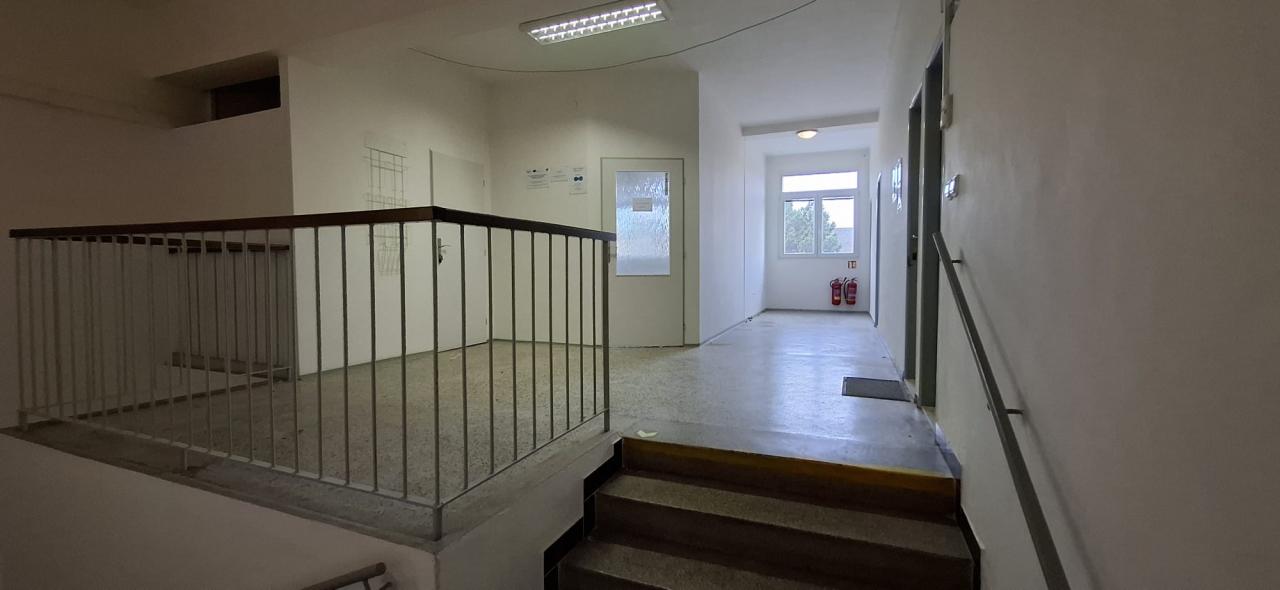
A modernized and energy-efficient municipal office providing a comfortable setting for both employees and the public.
Strengthened community ties through organized gatherings and an inclusive public space.
Increased environmental awareness and education for schoolchildren and the community.
A sustainable and eco-friendly municipal infrastructure benefiting both the office and the Senior House.
By integrating sustainability, community engagement, and education, we try to create a more connected and environmentally responsible municipality.
Key objectives for sustainability
Energy Efficiency & Renewable Energy Integration
Replacement of outdated electrical installations to improve energy efficiency.
Optimization of heating and ventilation systems to reduce energy consumption.
Installation of photovoltaic panels, contributing to a local energy-sharing system with the neighboring Senior House.
Sustainable Public Space & Green Infrastructure
Development of an open, multi-purpose community space behind the municipal office, designed for intergenerational interaction.
Planting of fruit trees native to the region, enhancing biodiversity and providing environmental benefits.
Educational nature trail for schoolchildren to learn about local tree species, fostering environmental awareness from an early age.
Circular Economy & Long-Term Impact
Utilization of sustainable materials and eco-friendly construction methods during renovation.
Promotion of local and community-led initiatives such as shared activities (e.g., Sunday brunches, outdoor cinema, exhibitions) to reinforce the long-term social and environmental benefits of the space.
By integrating sustainable energy solutions, fostering community engagement, and promoting ecological awareness, this initiative serves as a model for municipalities seeking to create people-centered, environmentally responsible public spaces. The project embodies the NEB principles by harmonizing sustainability with beauty and functionality while strengthening social bonds across generations.
Key objectives for aesthetics and quality
Human-Centered Design & Comfort
The renovation of the municipal office prioritizes warm, inviting interiors that provide a comfortable and dignified environment for both employees and visitors.
The integration of natural materials and improved lighting enhances well-being and productivity.
The seamless connection with the adjacent municipal apartment ensures a functional and fluid space that meets the needs of the community.
Functional Outdoor Space: The new community gathering area behind the office is designed to be a vibrant, multi-purpose space-fostering social interaction and intergenerational exchange.
The area is surrounded by native trees, creating an attractive and seasonally changing environment that engages the senses and strengthens the connection to local nature.
Comfortable seating, soft landscaping, and flexible areas will allow for various activities, from relaxation to cultural events.
Cultural Enrichment & Positive Emotions
The space will host public events such as Sunday brunches, outdoor movie nights, and exhibitions, bringing art and culture closer to the community.
A nature-based educational trail will introduce schoolchildren to local tree species in an engaging, hands-on way, turning learning into an experience rather than just theory.
The initiative embraces local heritage through design choices that reflect the region’s identity, reinforcing a sense of belonging and pride.
Our initiative sets a precedent for how small municipalities can integrate aesthetic quality with functionality while fostering social and cultural vibrancy.
Key objectives for inclusion
Accessibility for all
Renovation follows universal design principles, ensuring barrier-free access for people with disabilities, seniors, and parents with strollers.
Improved entrances, pathways, and amenities enhance usability for all residents.
The new outdoor space is open, safe, and inviting, with seating and pathways accommodating diverse mobility needs.
Intergenerational & Community-Oriented Spaces
A shared hub for all generations, fostering social connections.
Events like Sunday brunches, educational workshops, and outdoor movie or theatre nights bring together children, families, and seniors.
Nature-based educational trail connects local schoolchildren with the environment, enhancing outdoor learning.
Inclusive Governance & Community Participation
Transparent decision-making encourages residents’ active participation in planning and events.
Collaboration with local businesses, primary school and seniors ensures diverse perspectives.
The space fosters a sense of belonging by serving all residents, regardless of background.
Affordability & Social Cohesion
Free or low-cost community events ensure participation for all socio-economic groups.
The photovoltaic energy system reduces operational costs, benefiting the entire community.
Exemplary Impact: By removing physical and social barriers, this initiative strengthens social cohesion and civic pride. Municipality of Křenovice serves as a model for inclusive and community-driven spaces, aligned with the NBE values.
How Citizens benefit
Participatory Planning and Open Consultations
The municipality regularly organizes public meetings to gather feedback and suggestions.
Questionnaires were distributed in the past to capture diverse perspectives from residents, including seniors, parents, and youth. Through this questionnaire, the current Strategic plan was created.
Local stakeholders, including community groups and primarily school, actively contributed.
Collaboration with Local Civil Society Organizations
Partnerships with local businesses and cultural organizations help organize events, such as Sunday brunches and outdoor cinema screenings, promoting social interaction across generations.
Youth and Educational Involvement
The local primary school is developing an interactive educational trail around native trees in Křenovice, encouraging children to connect with nature while learning about their local environment.
Continuous Engagement and Feedback Mechanisms
We plan to establish a feedback platform to gather ongoing input regarding the use and development of the space.
Regular events will ensure that the initiative remains responsive to changing needs.
Impact of Citizen Involvement
Enhanced Social Cohesion: The creation of a shared, inclusive space fosters intergenerational interactions and stronger community bonds.
Sustainable and Relevant Development: The initiative remains aligned with community needs thanks to continuous feedback and collaboration.
By placing citizens and local businesses at the heart of the process, this project demonstrates how collaborative and inclusive planning can create vibrant, sustainable, and community-driven spaces, serving as a model for other municipalities.
Innovative character
Renewable Energy and Local Energy Sharing
Installation of photovoltaic panels linked to a local energy-sharing system with the neighboring Senior House improves energy efficiency and reduces costs.
Unlike mainstream renovations, which focus solely on building upgrades, this project integrates a sustainable energy model.
From Administrative Building to Community Hub
The project expands the function of the municipal office, creating a shared outdoor meeting space for all generations.
Events like Sunday brunches, outdoor cinema or theatres, and educational workshops go beyond traditional municipal use.
Community-Driven and Interdisciplinary Approach
Involves architects, experts and local residents to balance sustainability, accessibility, and aesthetics.
Education and Nature-Based Learning
Unlike standard municipal renovations, this initiative includes an educational nature trail to teach children about local tree species and biodiversity.
The space encourages lifelong learning and environmental awareness.
Long-Term Affordability and Social Inclusion
Ensures free or low-cost access to community events, fostering intergenerational interaction and inclusivity.
Unlike mainstream projects focused on infrastructure alone, this initiative prioritizes social impact and long-term accessibility.
This project redefines municipal buildings by combining green energy, community engagement, and intergenerational inclusion. It sets a new standard for sustainable, inclusive, and community-driven public spaces, aligned with the NEB principles.
Disciplines/knowledge reflected
Architecture & Urban Planning
Ensured the functional, aesthetic, and inclusive design of the renovated municipal office and public spaces.
Created an intergenerational meeting space that fosters social interaction.
Environmental & Energy Sustainability
Integrated photovoltaic systems to reduce the municipality’s carbon footprint and operational costs.
Applied green infrastructure principles, including native tree planting, to enhance local biodiversity.
Addressed energy efficiency in the municipal building, optimizing heating, ventilation, and lighting systems.
Social Sciences & Community Engagement
Developed inclusive programming (e.g., educational trail, intergenerational events) to encourage participation across age groups.
Public Administration & Governance
Aligned the project with regional, national, and European policies, ensuring compliance with legal and funding requirements.
Fostered transparent and participatory governance, allowing residents to contribute to decision-making.
Established long-term management and maintenance strategies for the newly created spaces.
Education & Cultural Heritage
Designed an educational nature trail to teach local school children about native tree species.
Integrated cultural and artistic elements into the public space to reflect the community’s heritage.
Created opportunities for lifelong learning and knowledge-sharing among residents.
Interdisciplinary Collaboration and Added Value
Experts work together in a participatory process, ensuring that the project balanced technical, social, and environmental needs.
Regular meetings facilitated knowledge exchange between architects, bau & energy specialists and local authorities.
Methodology used
Participatory Planning & Community Involvement
Collaboration with schools, local communities, and local businesses helped shape the design and programming of the new space.
Interdisciplinary Design
The project integrates expertise, architects, environmental specialists to ensure a balanced and functional design.
Universal design principles were applied to guarantee accessibility for all, including people with disabilities and seniors.
The inclusion of sustainable energy solutions (photovoltaic panels) was informed by technical assessments and energy efficiency studies.
Sustainability & Innovation in Infrastructure
The initiative follows the NEB principles, combining sustainability, aesthetics, and inclusivity.
Green infrastructure elements, such as native tree planting and an educational nature trail, enhance biodiversity and environmental awareness.
Local energy sharing with the Senior House ensures efficient use of renewable energy and reduces operational costs.
Pilot Testing & Continuous Improvement
The project includes phased implementation, allowing for pilot testing of new features and community activities.
Regular evaluation and adjustments ensure long-term relevance and effectiveness.
Our new municipal space will serve as a scalable model for other municipalities.
How stakeholders are engaged
Local Level: Community and Municipal Engagement
Involvement of residents, schools, businesses and organizations has been crucial in planning and execution.
Impact: Strengthened public support and inclusive spaces accessible to all generations.
Regional Level: Institutional Partnerships
Collaboration with public and private actors ensures alignment with regional strategies.
South Moravian Region Authorities: Provided guidance and co-funding, particularly for renewable energy integration.
Cross-Municipal Knowledge Exchange: Best practices from neighboring municipalities optimize project design.
Impact: Access to funding, improved project effectiveness.
National Level: Policy and Funding Integration
The project aligns with national strategies on sustainability and energy efficiency.
Ministry of Regional Development: Supported through grants for municipal infrastructure modernization.
Czech National Energy Strategy: Photovoltaic installation supports national renewable energy goals.
Impact: Increased financial support, regulatory compliance.
European Level: Alignment with EU Priorities
The project supports NEB goals of sustainability, inclusion, and aesthetics.
European Best Practices: Inspired by similar community projects across Europe.
Impact: Enhanced visibility at the European level, opportunities for international collaboration. The project also represents a collaboration opportunity for other municipalities that wish to take inspiration from this approach and is open for implementation in other parts of Europe.
By engaging stakeholders at all levels, the project has become a model of participatory and sustainable community development, fully aligned with NEB principles.
Global challenges
Climate Change & Energy Efficiency
Global Challenge: Reducing carbon emissions and transitioning to renewable energy.
Local Solution: Installation of photovoltaic panels within a local energy-sharing system reduces fossil fuel dependence and municipal energy costs. Energy-efficient heating, lighting, and ventilation enhance sustainability.
Social Inclusion & Accessibility
Global Challenge: Many cities lack inclusive spaces for seniors, people with disabilities, and marginalized groups.
Local Solution: The initiative applies universal design principles, ensuring equal access to public services and shared spaces for all residents.
Urbanization & Community Well-Being
Global Challenge: Rapid urbanization weakens social cohesion and community bonds.
Local Solution: A municipal office is transformed into a multifunctional hub, fostering intergenerational interaction, public events, and educational activities.
Biodiversity & Environmental Awareness
Global Challenge: Loss of biodiversity and urban disconnection from nature.
Local Solution: A nature-based educational trail teaches children about native species, enhancing environmental awareness and biodiversity conservation.
Economic & Social Resilience
Global Challenge: Small towns struggle with declining social infrastructure and economic challenges.
Local Solution: Affordable community spaces support local businesses, encourage social entrepreneurship, and strengthen community resilience.
This initiative proves that local actions can drive global change, making cities more sustainable, inclusive, and resilient. It serves as a model, demonstrating that small communities can lead in climate action, social inclusion and others,
Learning transferred to other parties
Community-Centered Planning & Participatory Governance
The bottom-up approach, involving consultations and surveys, ensures that projects meet local needs.
Sustainable & Energy-Efficient Infrastructure
The integration of photovoltaic panels with local energy sharing can be applied in small towns, schools, senior homes, and community centers.
The optimization of heating, ventilation, and lighting serves as a scalable solution for enhancing public building efficiency.
Universal Design & Accessibility
Municipalities can use this initiative as a model for creating inclusive, multi-use community hubs.
Intergenerational & Educational Components
The educational nature trail can be replicated in schools, parks, or other municipalities to promote environmental awareness.
Intergenerational programs, such as public events and cultural activities, can be implemented across different regions to strengthen social cohesion.
Affordable & Sustainable Community Engagement
Organizing low-cost or free events (e.g., outdoor cinema or theatre, Sunday brunches, exhibitions etc.) fosters inclusion and social interaction.
By combining sustainable infrastructure and inclusive design, this initiative sets a replicable example for municipalities, institutions, and community organizations. Its modular and scalable approach makes it easy to transfer across different regions and beneficiary groups, contributing to a more sustainable and people-centered built environment.
Next steps
Planned Next Steps according to NEB Values<br />
1. Infrastructure Completion (Sustainability & Aesthetics)<br />
February – September 2025 – Complete the renovation of the municipal office, ensuring an eco-friendly, modern, and visually appealing space.<br />
October 2025 – Final approval and inspection of the newly renovated spaces.<br />
By the end of 2025 – Implementation of the educational nature trail, integrating biodiversity and outdoor learning.<br />
2. Expanding Community Programs (Inclusion & Participation)<br />
Autumn 2025 – Launch of outdoor theater performances, strengthening cultural life and intergenerational engagement.<br />
Regular community events, such as cultural activities, and public discussions, to ensure continuous community interaction.<br />
3. Long-Term Sustainability & Governance (Sustainability & Participation)<br />
Establish a monitoring system to track the impact of renewable energy solutions and community use of the space.<br />
Develop a long-term funding and maintenance plan to ensure the space remains functional, accessible, and vibrant for future generations.<br />
By integrating the NEB values from concept to execution, this initiative sets a precedent for sustainable, inclusive, and aesthetically engaging municipal spaces. The planned next steps will ensure that the project remains impactful, participatory, and adaptable to evolving community needs, serving as a model for other municipalities looking to create sustainable and community-driven public spaces.