Renovation - Extension of village hall
Basic information
Project Title
Renovation - Extension of village hall
Full project title
Renovation - Modifications - Extension of Huilly-sur-Seille village hall
Project Description
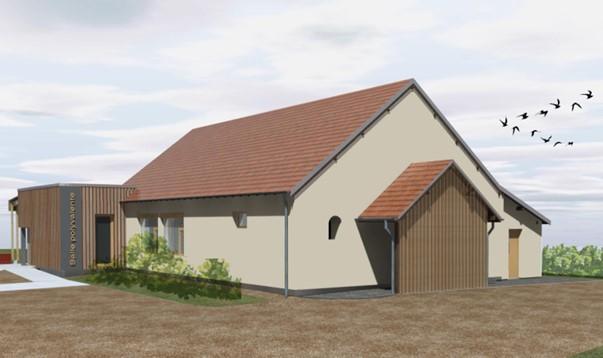
Inaugurated in 1987, the village hall has never been renovated or brought up to significant standards until today. Following the last safety commission, the evolution of society in communities and new needs, as well as the aging of the building and current installations, it has become necessary to undertake repair work, to bring it up to standards in particular PMR, and to do this to enlarge the existing building.
Current stage development
Prototype level
Project Region
France
Municipality
71234: Huilly-sur-Seille (FR)
EU Programme or fund
No
Description of the project
Summary
Inaugurated in 1987, the village hall has never been renovated or brought up to significant standards until today. Following the last safety commission, the evolution of society in communities and new needs, as well as the aging of the building and current installations, it has become necessary to undertake repair work, to bring it up to standards in particular PMR, and to do this to enlarge the existing building.
The objectives pursued:
- Thermal renovation of the existing building: exterior insulation, attic insulation, replacement of the heating method
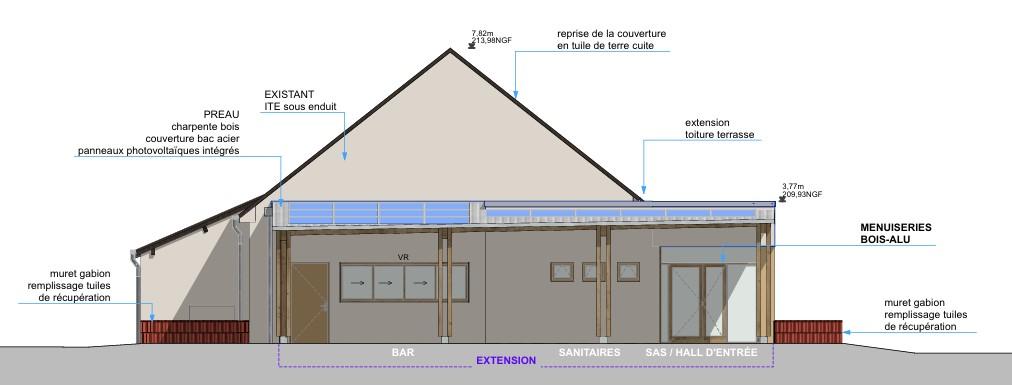
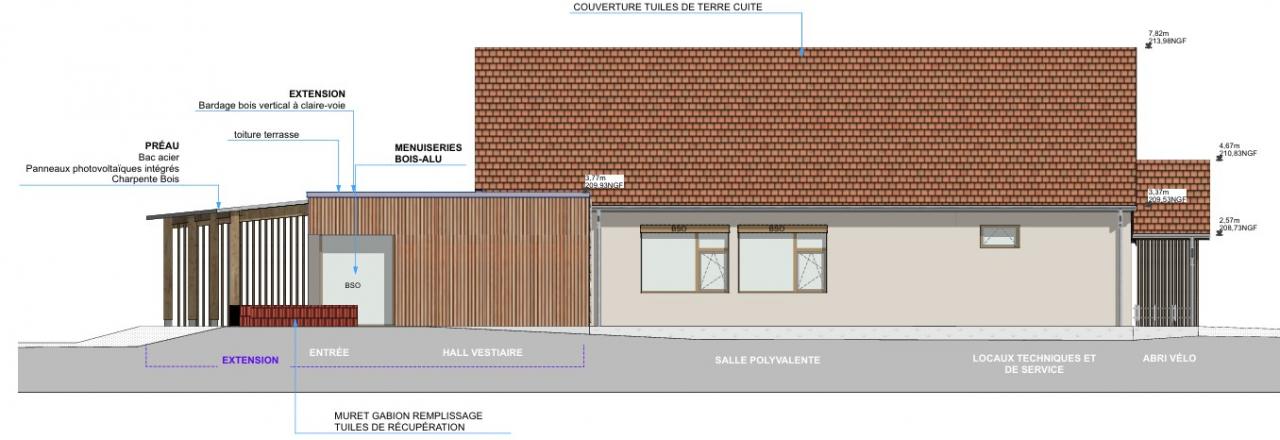
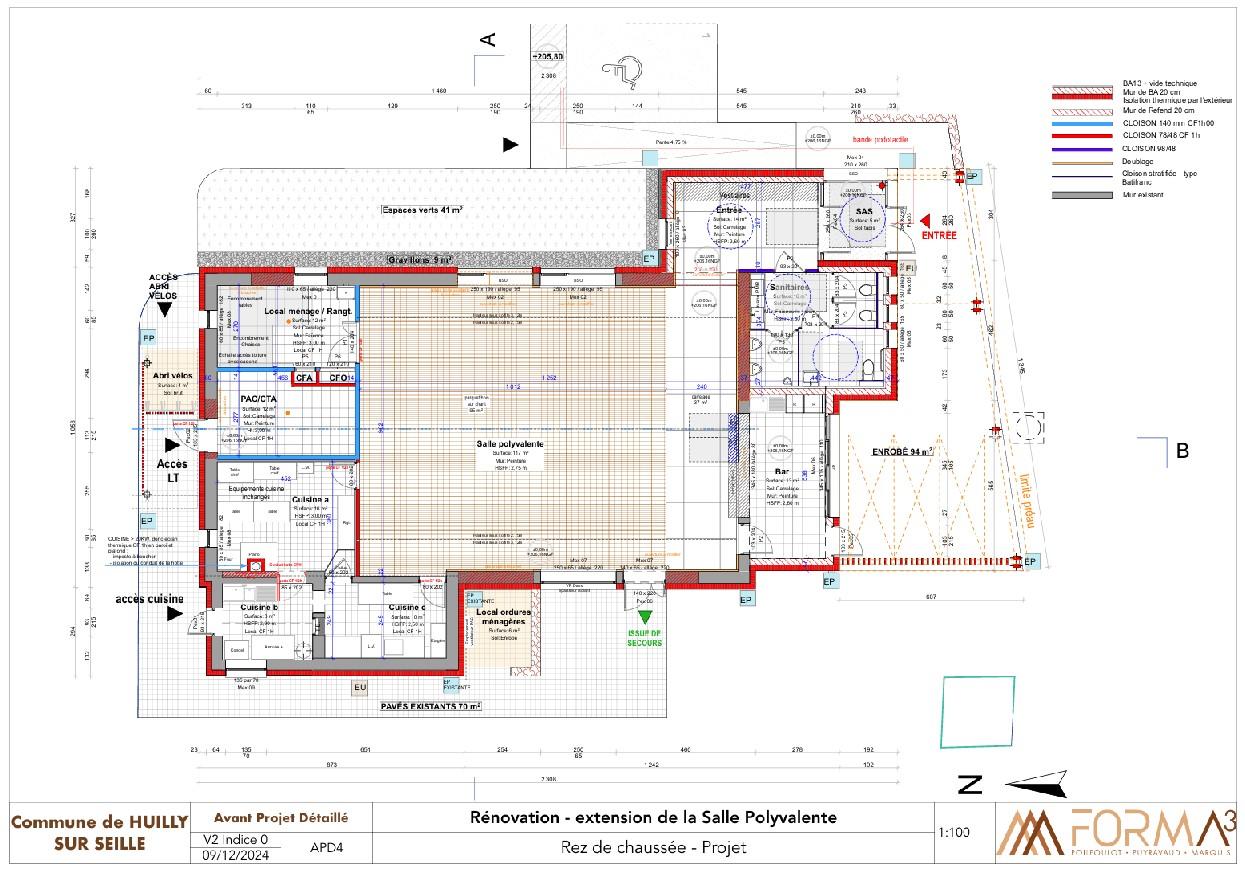
- Upgrade to PMR accessibility standards: relocation and expansion of the door and entrance hall near dedicated parking spaces, creation of a new sanitary area in the extension
- Replacement of obsolete and dilapidated equipment: frames (wooden), exterior zinc work, parquet flooring in the main room, lighting and the entire electrical installation
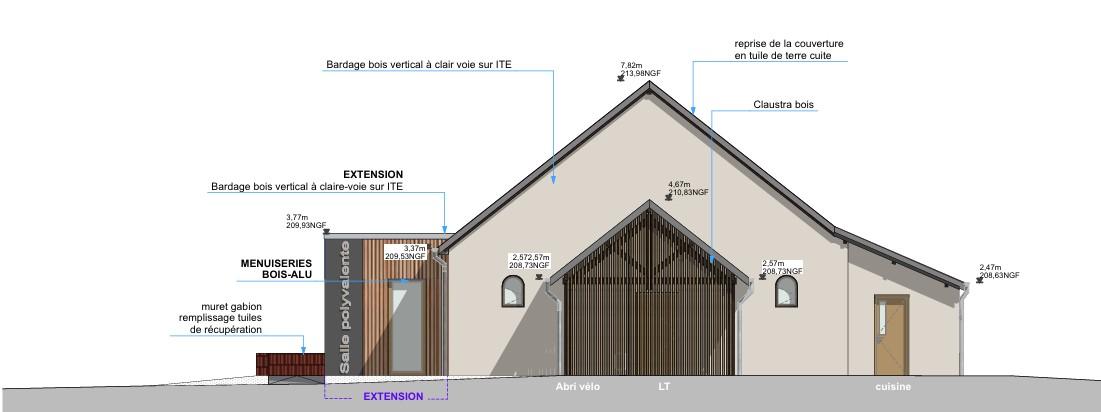
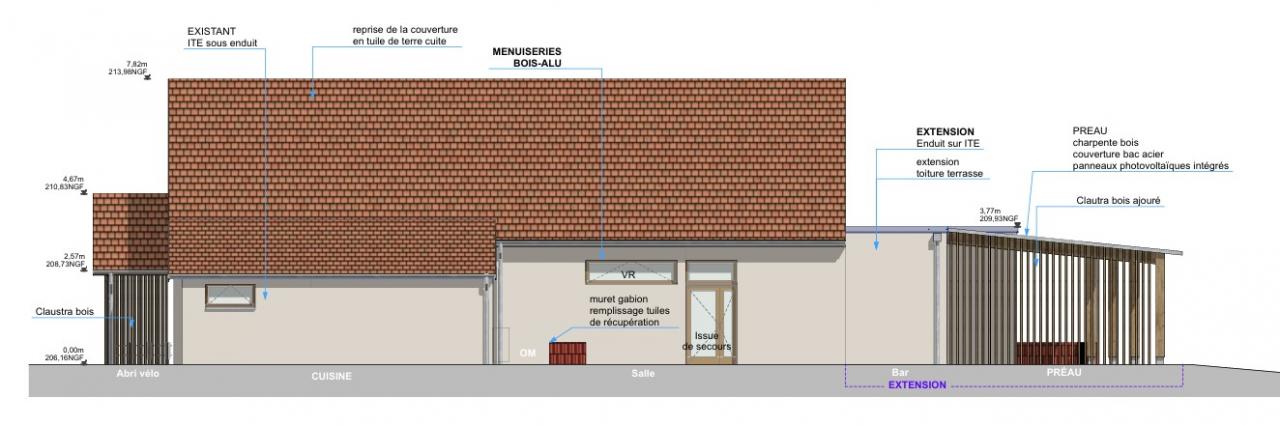
- Expand the building for better comfort for users and the neighborhood: relocation of the entrance on the south side with the creation of an awning overlooking the Seille, creation of a bicycle room on the north side, creation of a bar area in the extension to free up space (accessible inside and outside), creation of a storage room for tables and chairs
- Reduce the energy bill: installation of photovoltaic panels to implement collective self-consumption in all municipal buildings
The Final Preliminary Project validated in December 2024 takes into account the latest reports from the safety commission, the observation of the damage recorded on the building, the needs identified among the users of the village hall (private, associative, municipal) and the evolution of town planning and the standards to be respected (accessibility for disabled people, heating method, thermal insulation, sound insulation, etc.).
The objectives pursued:
- Thermal renovation of the existing building: exterior insulation, attic insulation, replacement of the heating method
- Upgrade to PMR accessibility standards: relocation and expansion of the door and entrance hall near dedicated parking spaces, creation of a new sanitary area in the extension
- Replacement of obsolete and dilapidated equipment: frames (wooden), exterior zinc work, parquet flooring in the main room, lighting and the entire electrical installation
- Expand the building for better comfort for users and the neighborhood: relocation of the entrance on the south side with the creation of an awning overlooking the Seille, creation of a bicycle room on the north side, creation of a bar area in the extension to free up space (accessible inside and outside), creation of a storage room for tables and chairs
- Reduce the energy bill: installation of photovoltaic panels to implement collective self-consumption in all municipal buildings
The Final Preliminary Project validated in December 2024 takes into account the latest reports from the safety commission, the observation of the damage recorded on the building, the needs identified among the users of the village hall (private, associative, municipal) and the evolution of town planning and the standards to be respected (accessibility for disabled people, heating method, thermal insulation, sound insulation, etc.).
Key objectives for sustainability
- Thermal renovation of the building: wall insulation, attic insulation, replacement of the heating method with a heat pump
- Recycling of materials during work: for example recovery of roof tiles to build gabions
- Production of energy for self-consumption on the building with the installation of photovoltaic panels on the building extension
- Recycling of materials during work: for example recovery of roof tiles to build gabions
- Production of energy for self-consumption on the building with the installation of photovoltaic panels on the building extension
Key objectives for aesthetics and quality
- Maintaining a gathering place for the population of all generations
- Moving the main entrance from North to South to allow better harmony of the building with the neighborhood, and allow outdoor receptions with an awning overlooking a large natural space
- Promote municipal, associative and private events with a more comfortable party room in all seasons
- Moving the main entrance from North to South to allow better harmony of the building with the neighborhood, and allow outdoor receptions with an awning overlooking a large natural space
- Promote municipal, associative and private events with a more comfortable party room in all seasons
Key objectives for inclusion
- Upgrading the building to accessibility standards, with the creation of a suitable entrance near the dedicated spaces in the car park, and a new sanitary area allowing problem-free access for people with reduced mobility
- Provision of the building for associations and individuals in order to organize events bringing together all generations within the same family or the same community
- Modifications and renovation of the building based on comments and feedback made by users in recent years to improve comfort and further encourage its use
- Provision of the building for associations and individuals in order to organize events bringing together all generations within the same family or the same community
- Modifications and renovation of the building based on comments and feedback made by users in recent years to improve comfort and further encourage its use
How Citizens benefit
For this project, the Municipal Council took into account feedback and comments from users since the building existed 40 years ago. The project emerged from discussions which made it possible to synthesize the expectations and needs of users: municipal teams and employees, associations and private tenants.
The Building Commission created for the occasion met at regular intervals to take stock of the proposals and choices, which were communicated through numerous press articles. The municipality also communicated through its Petit Journal communal and through its website to obtain feedback from the population. Finally, the final project selected was presented in a complete and detailed manner to all residents during the greeting ceremony on January 11, 2025.
The Building Commission created for the occasion met at regular intervals to take stock of the proposals and choices, which were communicated through numerous press articles. The municipality also communicated through its Petit Journal communal and through its website to obtain feedback from the population. Finally, the final project selected was presented in a complete and detailed manner to all residents during the greeting ceremony on January 11, 2025.
Innovative character
The innovation on this project comes from the complete change of orientation of the existing building: the main entrance on the north facade will currently be switched to the south facade to facilitate the entry of people with reduced mobility, improve thermal insulation, and allow the creation of an exterior canopy for outdoor receptions with a breathtaking view of the Seille meadows, a Natura 2000 classified area!
The currently electric heating method will be replaced by an air/water heat pump with a hygrometric regulation system inside the building, for better comfort in winter and summer...
Finally, the innovation also lies in the energy autonomy of the building with the installation of photovoltaic panels which will produce the electricity necessary for the operation of the village hall, through collective self-consumption.
The currently electric heating method will be replaced by an air/water heat pump with a hygrometric regulation system inside the building, for better comfort in winter and summer...
Finally, the innovation also lies in the energy autonomy of the building with the installation of photovoltaic panels which will produce the electricity necessary for the operation of the village hall, through collective self-consumption.
Disciplines/knowledge reflected
The company Forma3, as project manager, has brought together the necessary skills for the studies, analyzes and orientations of the project:
- the architect for the definition, creation and coherence of the building and its use
- the structural office to modify and support the supporting structure of the existing building, and create the extension
- the energy office to reduce energy consumption, change the heating mode, check the electrical and fluid networks
- acoustics for the harmony of the building in the existing landscape, and interior sound insulation
- finance to reduce the cost of work as much as possible, and respect the budget set at start-up
- the architect for the definition, creation and coherence of the building and its use
- the structural office to modify and support the supporting structure of the existing building, and create the extension
- the energy office to reduce energy consumption, change the heating mode, check the electrical and fluid networks
- acoustics for the harmony of the building in the existing landscape, and interior sound insulation
- finance to reduce the cost of work as much as possible, and respect the budget set at start-up
Methodology used
1- inventory of the needs of the population using the village hall
2- establishment of the Municipal Building Commission to summarize requests and expectations
3- recruitment of a project manager to make development proposals
4- validation of a project outline, and requests corresponding financial estimates
5- adjustment of the proposals made, validation of the general operating principles of the building
6- validation of the final preliminary project with precise budget estimate
7- presentation of the preliminary draft to the population for feedback of opinions and remarks
8- search for financing to definitively launch the project
9- creation of quotes and choice of companies
10- start of work
11- reception of the work and opening of the new village hall
2- establishment of the Municipal Building Commission to summarize requests and expectations
3- recruitment of a project manager to make development proposals
4- validation of a project outline, and requests corresponding financial estimates
5- adjustment of the proposals made, validation of the general operating principles of the building
6- validation of the final preliminary project with precise budget estimate
7- presentation of the preliminary draft to the population for feedback of opinions and remarks
8- search for financing to definitively launch the project
9- creation of quotes and choice of companies
10- start of work
11- reception of the work and opening of the new village hall
How stakeholders are engaged
The renovation project - extension of the village hall is the "flagship" project of the 2020 - 2026 municipal mandate. It has been awaited by the population for several years now, and as such benefits from strong support from residents with local elected officials.
Our project is supported by the Community of Communes Terres de Bresse and its president who sees in this initiative a maintenance of "good living" in the countryside and a greater attractiveness of our territory.
The Department of Saône-et-Loire participates financially in the project, as well as the Bourgogne Franche-Comté Region which also participates financially through the Effilogis standards that we have imposed on ourselves.
We also have the national support of the State through the DETR subsidy that we requested, which resulted in the visit of the Sub-Prefect on Thursday January 9 to our commune for the complete presentation of the project, who recognized its coherence and its necessity!
Our project is supported by the Community of Communes Terres de Bresse and its president who sees in this initiative a maintenance of "good living" in the countryside and a greater attractiveness of our territory.
The Department of Saône-et-Loire participates financially in the project, as well as the Bourgogne Franche-Comté Region which also participates financially through the Effilogis standards that we have imposed on ourselves.
We also have the national support of the State through the DETR subsidy that we requested, which resulted in the visit of the Sub-Prefect on Thursday January 9 to our commune for the complete presentation of the project, who recognized its coherence and its necessity!
Global challenges
Le projet répond avant tout au défi du réchauffement climatique, avec la rénovation complète de l'isolation du bâtiment pour limiter la déperdition de chaleur en hiver, et limiter les besoins de refroidissement en été ; mais aussi la production d'électricité grâce aux panneaux solaires pour l'autosuffisance énergétique de la salle des fêtes.
Learning transferred to other parties
The project could be reproduced in all the village halls of small surrounding villages or even in France. These are the gathering places of the population necessary for the survival of small communities. The methodology used (studies - financing - works) is classic, which allows it to be easily transposed to other large-scale projects... The new techniques imagined and implemented on the building correspond to current development trends, no originality that could not be reproduced elsewhere: alternative heating by heat pump, photovoltaic panels...
Next steps
The final preliminary project plans were validated in December 2024. From now on, it is the search for financing which conditions the continuation of the project, with the request for subsidies from Department 71, the Burgundy Franche Comté Region and the State with the DETR.<br />
The municipality will cover approximately 50% of the overall amount of the project, with €120 to €150,000 drawn from budget reserves and €180 to €200,000 supplemented by a new loan...<br />
An additional financial boost within the framework of the NEB would be welcome for the realization of the project which is vital for our municipality, but which due to its small size cannot embark on such large-scale works without certainty of success!
Infrastructure or public space
Yes
Political support
Yes
Monetary value awarded
No