Practice Place
Basic information
Project Title
Full project title
Category
Project Description
Current stage development
Geographical Scope
Project Region
Urban or rural issues
Physical or other transformations
EU Programme or fund
Description of the project
Summary
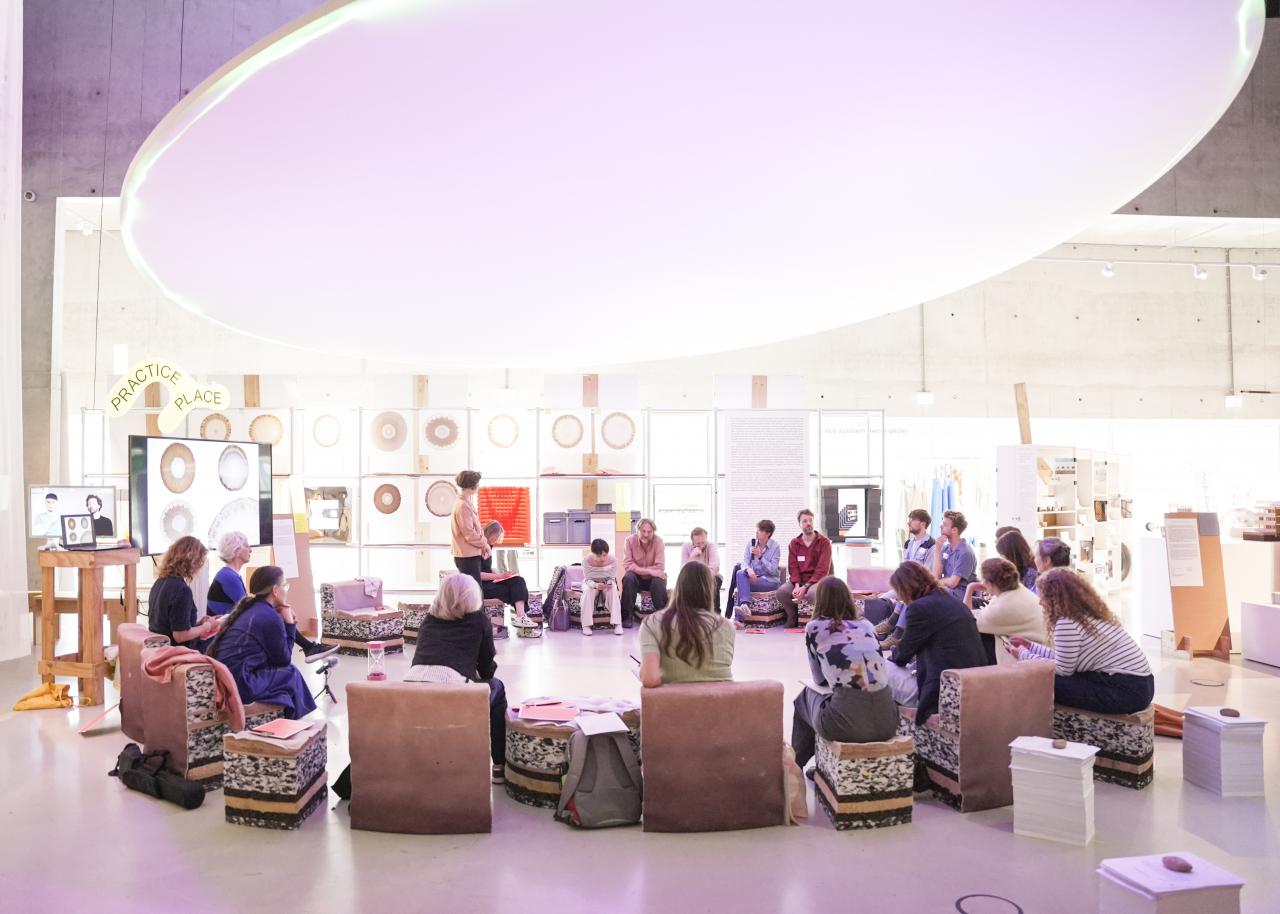
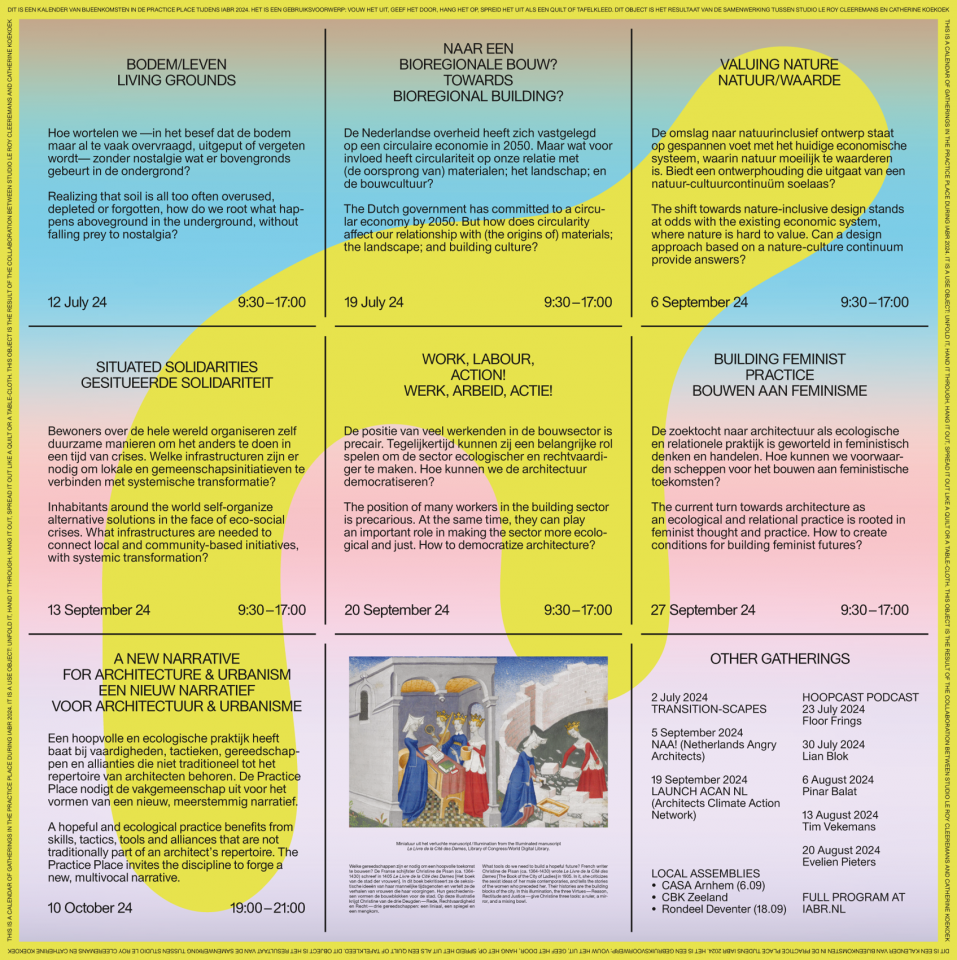
The Practice Place was developed by Catherine Koekoek for the 11th International Architecture Biennial Rotterdam (IABR 2024), Nature of Hope, which explored an emerging, widening brief for architecture based in regenerative rather than extractive modes of working. What are the challenges for bringing this widening brief into everyday practice? Architecture has traditionally been strongly product-oriented, fostering an exclusive working culture and distance between professional designers and the lives impacted by their designs. A regenerative, sustainable, and inclusive building culture therefore requires cultivating different attitudes on the part of the professionals involved in the building process. Nature of Hope made space for such cultural transformation by hosting the Practice Place, a soft space for encounter in the exhibition with an extensive programme.
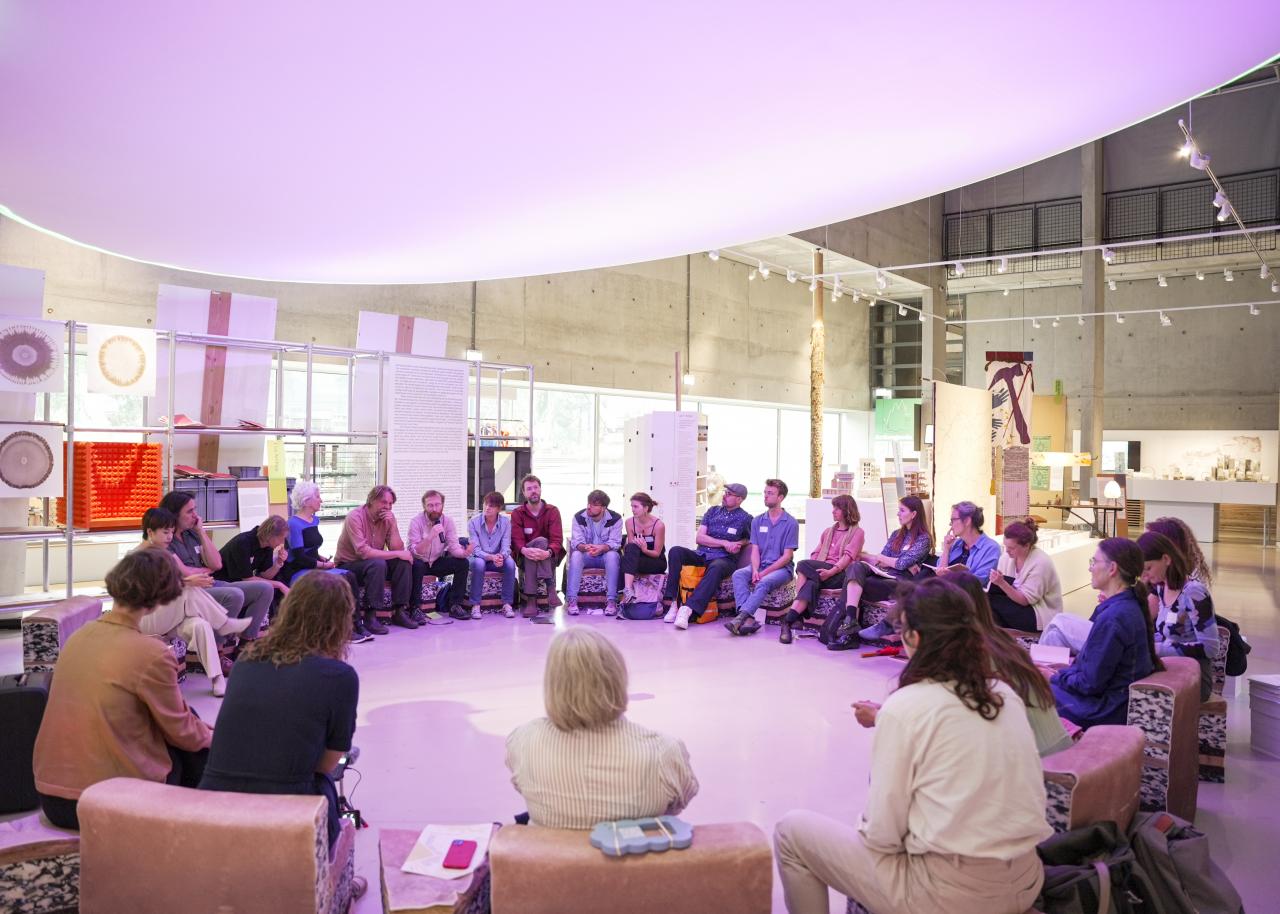
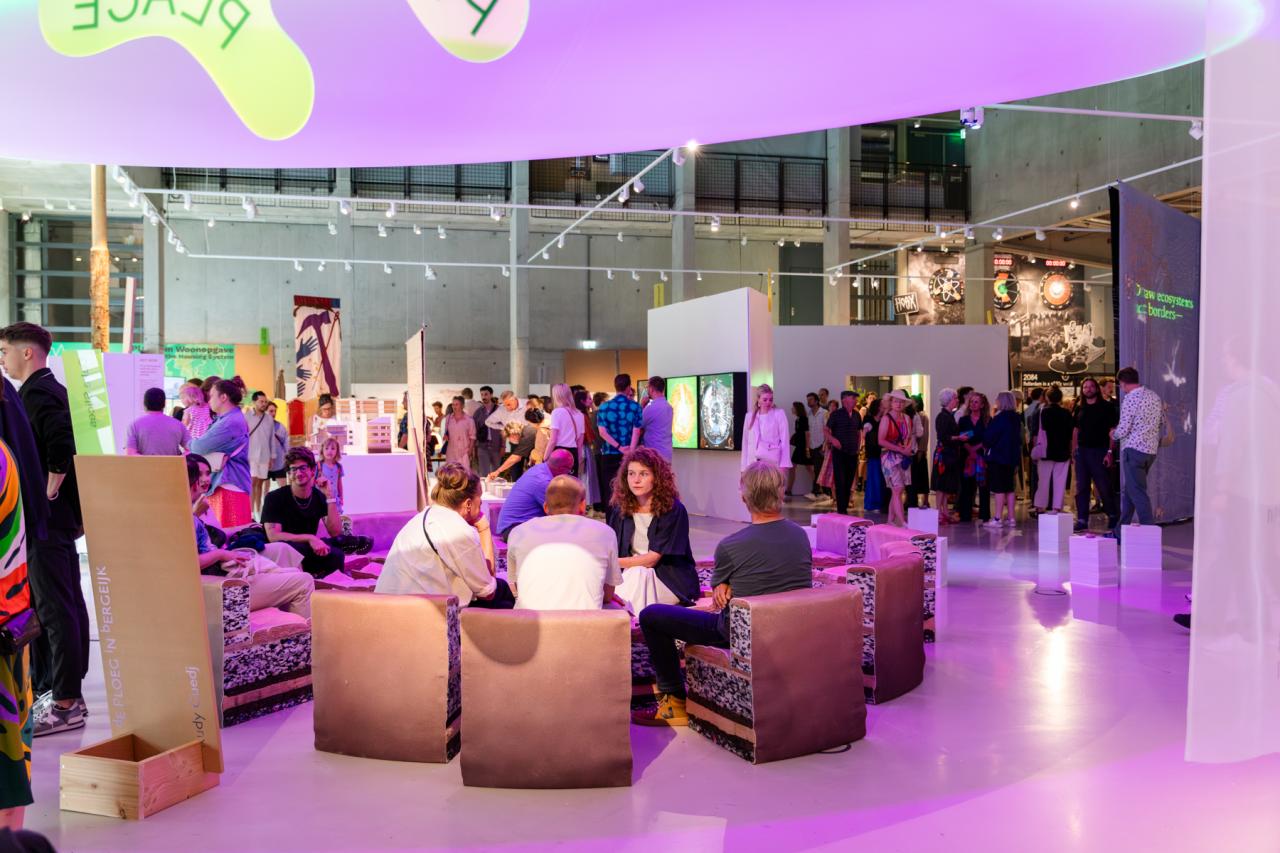
Over the course of the biennale, co-curator Catherine Koekoek hosted 6 full-day Practice Place assemblies in the dedicated Practice Place with over 200 professionals, alongside 3 regional assemblies, 6 podcast episodes in collaboration with De Architect magazine, and a plenary closing event bringing a new narrative for transformation back to the architectural community.
Key objectives for sustainability
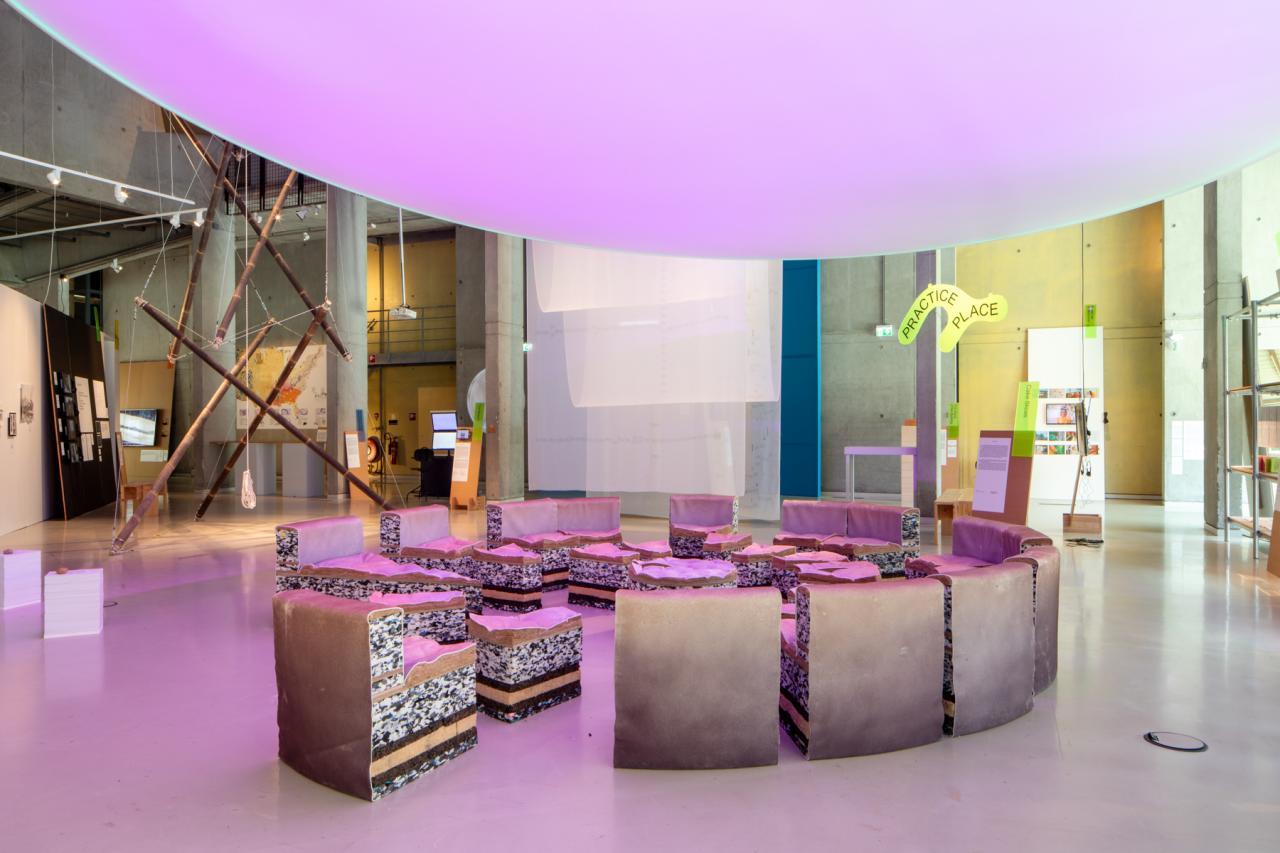
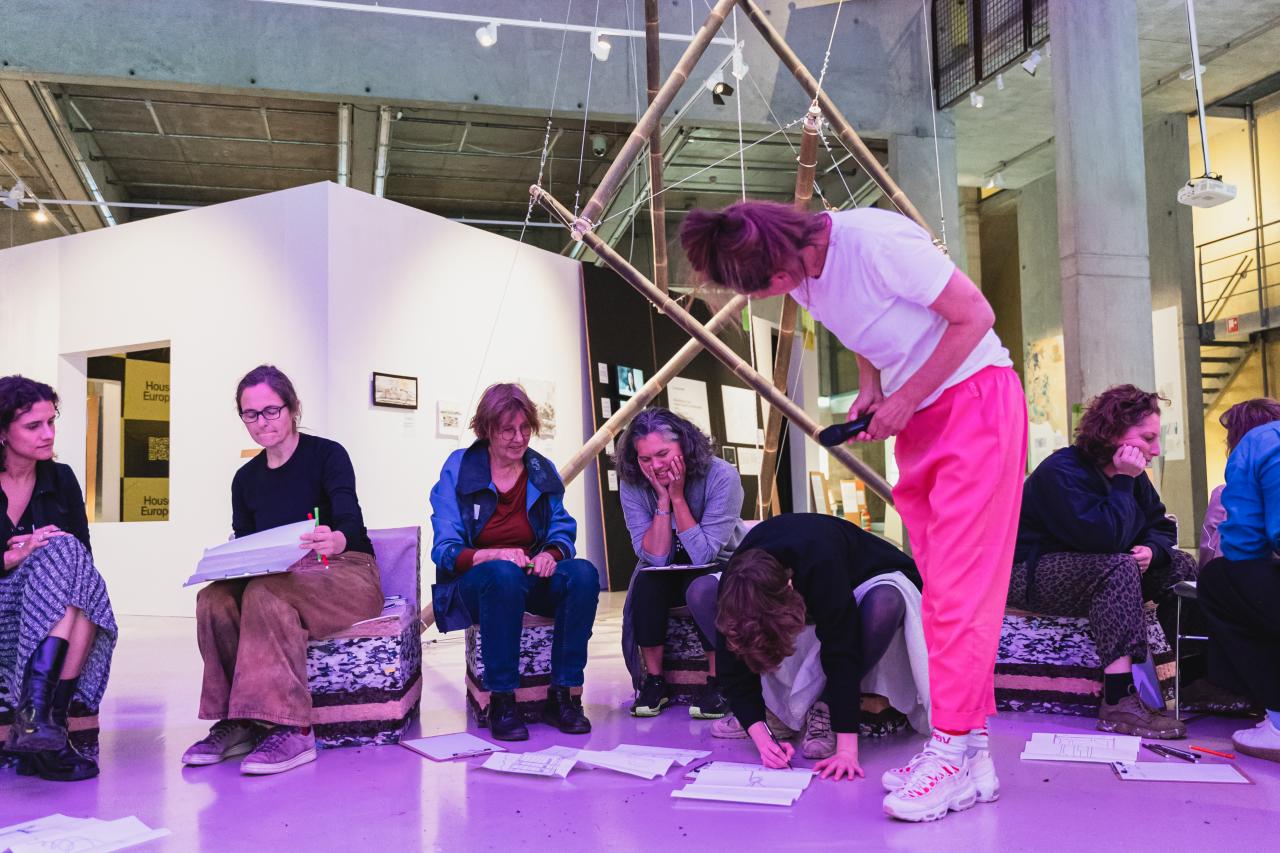
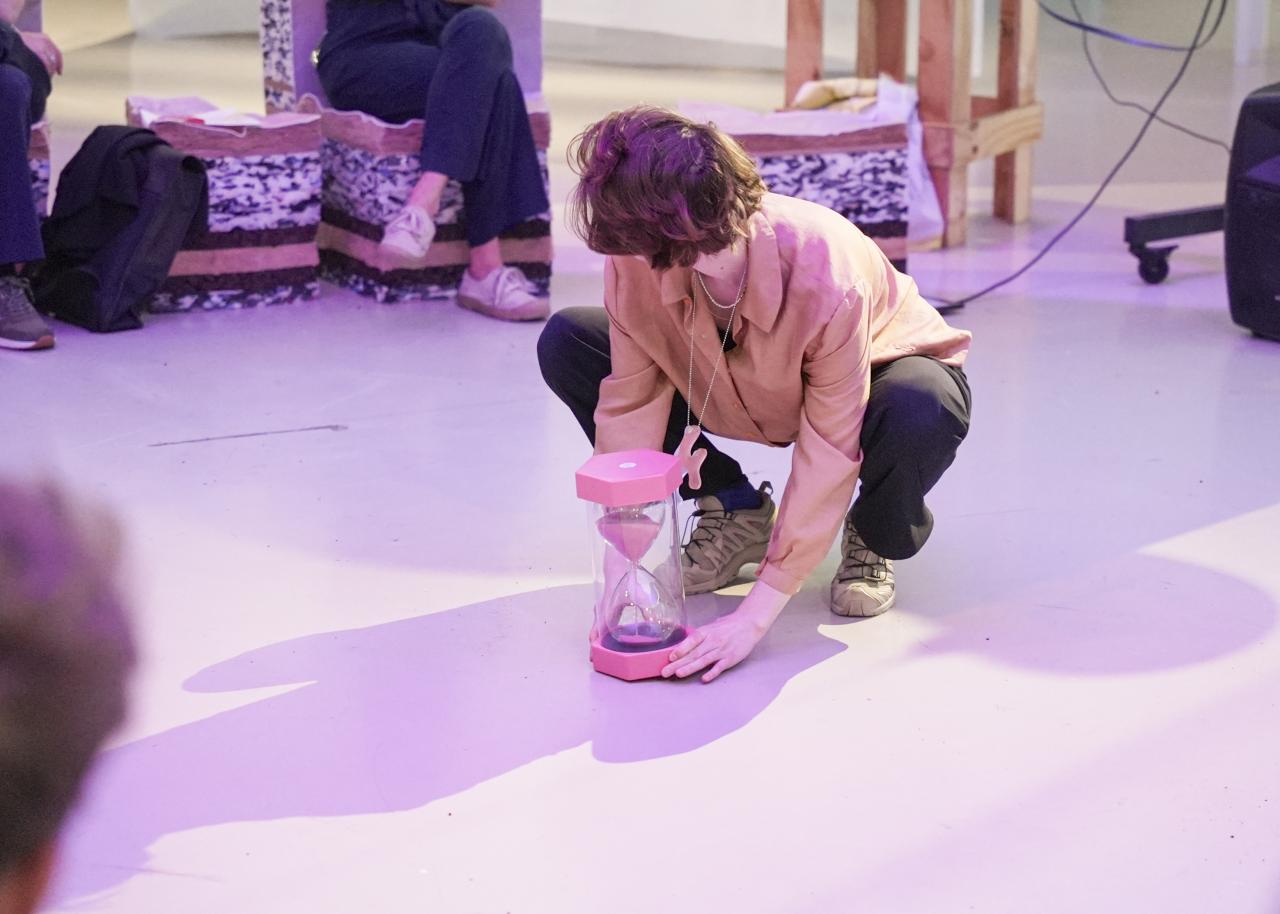
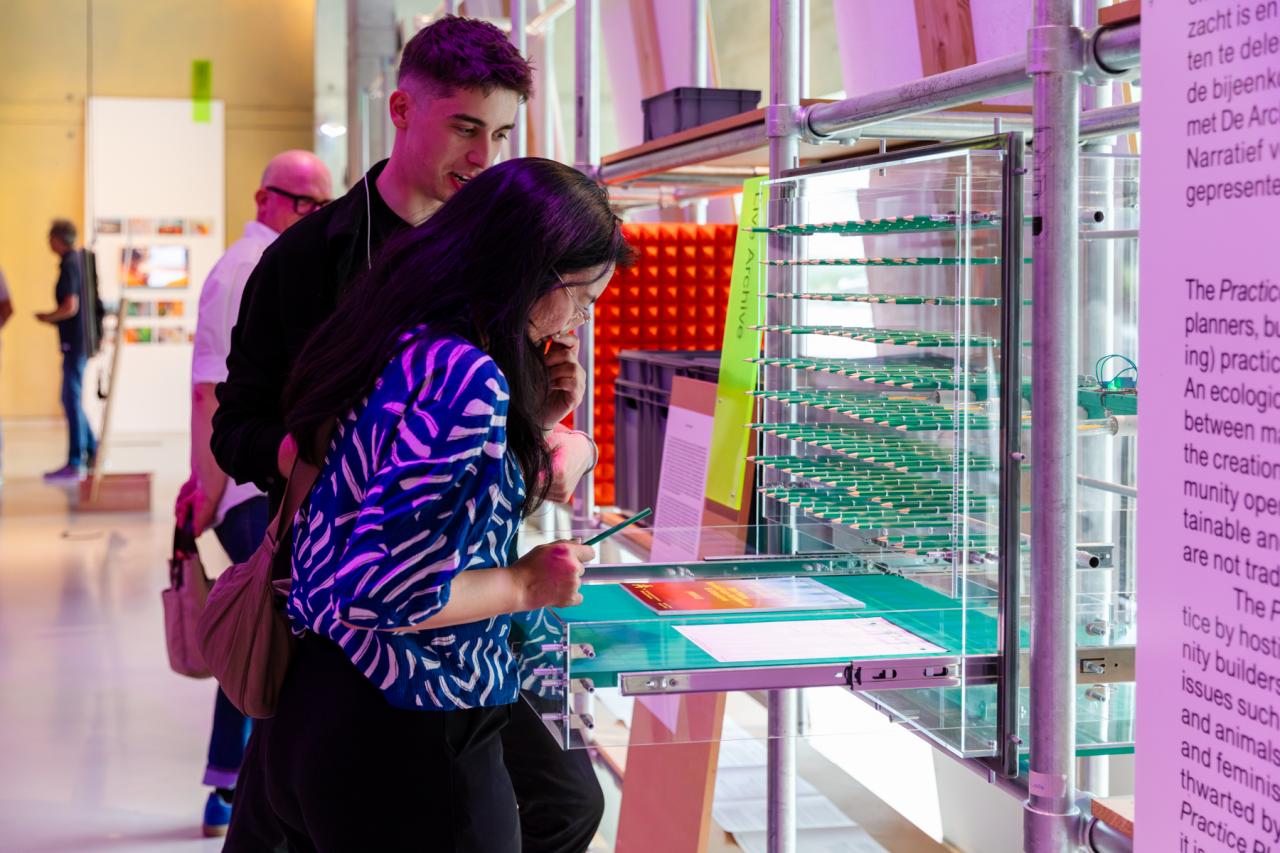
The complete spatial design of Nature of Hope (spatial/material consultants: DPS studio) was fully circular. It was made from reused wood from previous exhibitions, added with a small amount of recycled acrylate panels. All materials have been re-used after the exhibition. The Practice Place scenography celebrated the beauty of working sustainably, consisting of a soft seating element in the shape of a ‘cake’ (designed and made by Théo Demans and Clemence Seilles) made out of repurposed insulation materials, and a shelving unit that functioned as a ‘live archive’ (designed by meta office) documenting the gatherings taking place in the exhibition.
The gatherings fostered an ecological culture in architecture practice focused on creating regenerative relationships between materials, users and occupants in specific places. The themes included biodiverse soil, local and bioregional building, nature-inclusive design, community-based practice, working conditions and culture, and building feminist practice. For the gatherings to informal actual change, each session connected ‘amplifying’ figures with decision-making capacity (like government advisors) with emerging designers. The Bioregional Building theme was also rooted locally with three regional place-based meetings in Saeftinghe, Deventer, and Arnhem involving local stakeholders. The project’s inclusive approach to sustainable transition, connecting different stakeholders to address big themes rooted locally, make it exemplary.
Key objectives for aesthetics and quality
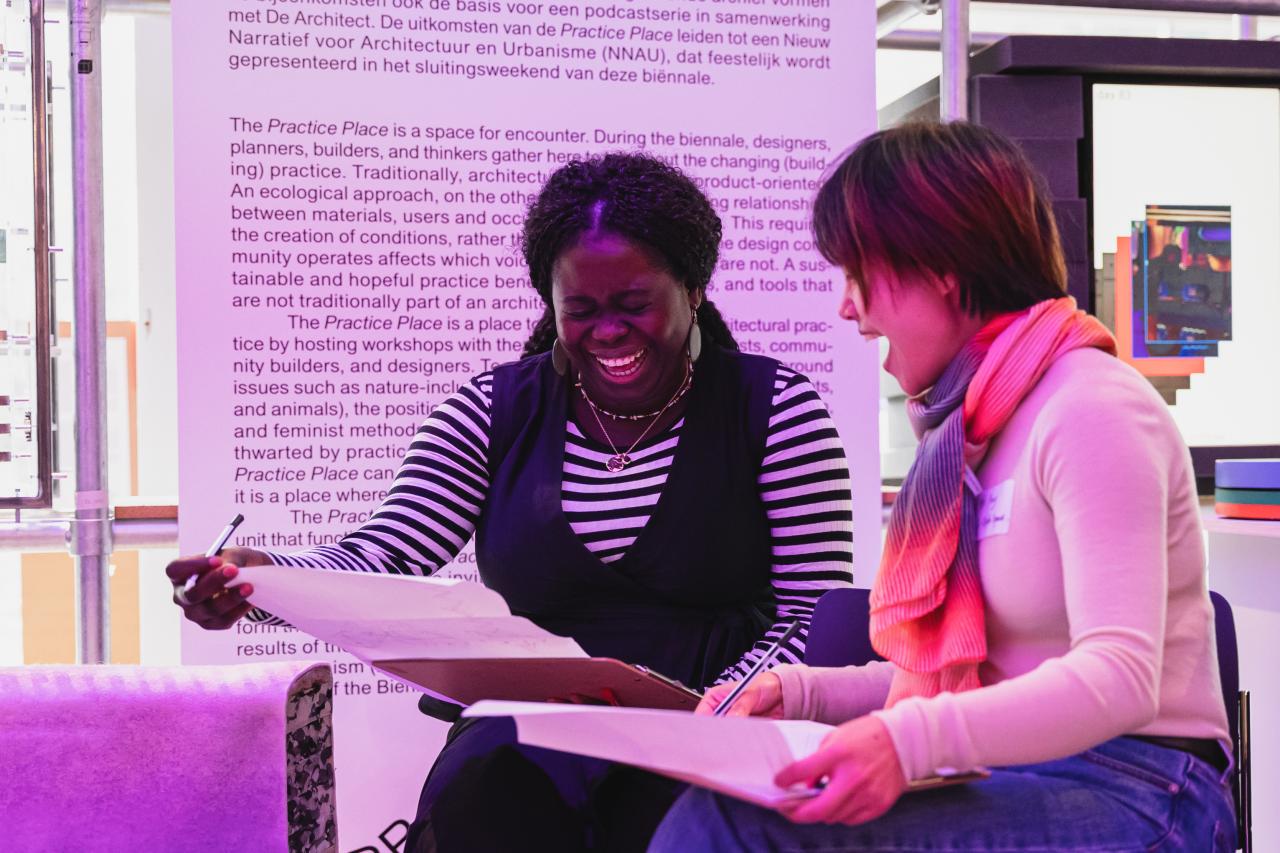
Through careful design and facilitation, using aesthetic and embodied registers, the Practice Place is a method for bringing professionals together in a way that allows for sharing professional experiences in a safe space that enables being touched not just as a professional, but as a human. By centring human connections the days allowed for meaningful connections across difference. The scenography of the space, taking place in a central place in the exhibition, elevated and staged the exchanges that took place in the Practice Place.
The project is an example of critical facilitation using aesthetic, community-based methods to create meaningful connections across professional participants. Such connections are crucial to furthering and sustaining any lasting transformation.
Key objectives for inclusion
The Practice Place was exemplary in terms of inclusion not only in terms of its programme and objectives, but also in the way the full-day sessions were designed and facilitated. The story circle method at the heart of each session is designed to create an equal and accessible way to share experiences and knowledge without reproducing (implicit) hierarchies. By prompting everyone to tell a story based on their own experience (‘tell a story of a moment when you couldn’t continue practicing as before’) the diversity of experiences in the group is explicated and valued. Combined with welcoming and critical facilitation by Catherine Koekoek, this created a base of equality for the rest of the day, so that everyone felt ready to speak.
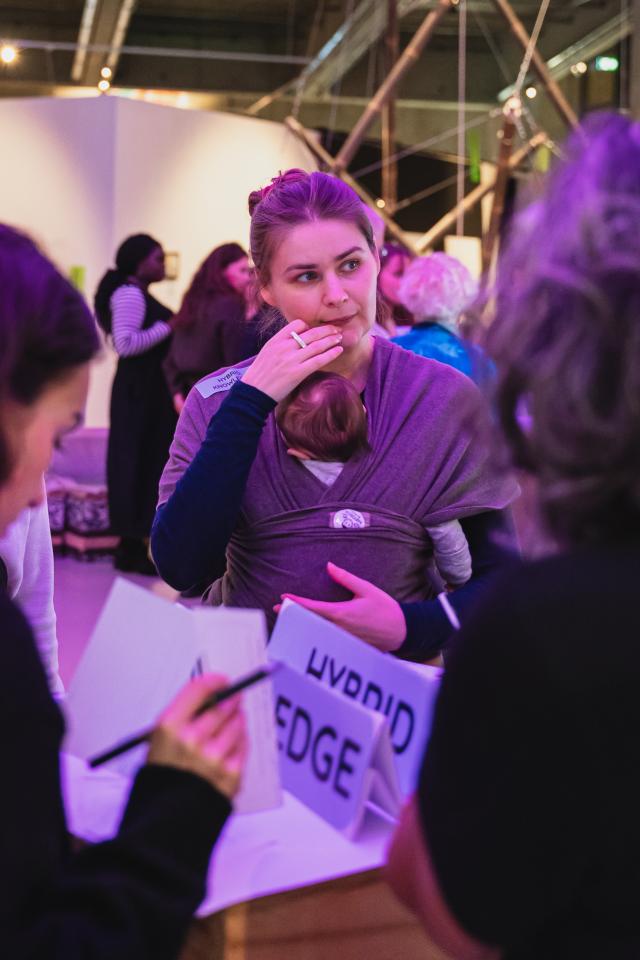
To further enable inclusive participation, diverse participants were invited in advance. To create a space accessible also to people with special needs, detailed information regarding the programme, possibilities for rest, breast-feeding spaces, physical accessibility of the space, and food was shared in advance. It was surprising how many professional participants took their baby with them during the sessions.
How Citizens benefit
One Practice Place gathering themed “Situated Solidarity” invited community organisers and community-based artists and designers to develop infrastructures for situated solidarity between local and international cooperative design practices, and systemic transformation. The insights, tools and roles they developed during this session were shared with the wider architectural field as part of a “new narrative” for the Dutch building culture presented on 10 October 2024.
As an inclusive facilitation method that invites and celebrates a diversity of experiences, the Practice Place is well-suited to deepen participatory processes. Beyond the International Architecture Biennale Rotterdam 2024 for which it was developed, the method holds potential to co-develop knowledge and tools with groups of inhabitants and professional stakeholders in a way that values their diverse expertise. It is also very useful to share practical knowledge across facilitators of participatory processes and to develop knowledge on the difficulties and benefits of participatory practice.
Physical or other transformations
Innovative character
The Practice Place approached the question of cultural change by first creating a community of over 30 innovative forerunners for each theme (from living soil to nature-inclusive design and work culture). By focusing not on predefined results, but instead creating a context for sharing experiences and building alliances, these 30 forerunners supported each other to create a multivocal ‘new narrative’ – supported and legitimated by institutional organisations like the biennale and the Dutch Board of Government Advisors – which is presented to and gains momentum in mainstream practice. The Practice Place acts as an infrastructure for transforming mainstream practice into an ecological practice that builds regenerative and beautiful relations between places, lived lives, materials, and professional expertise. This can but not necessarily results in built buildings.
As a method, the Practice Place is innovative because it combines a personal approach with professional expertise, inviting people to join not only as professionals but as humans with all kinds of experiences. This has potential as a non-extractive method in participatory design as well as research.
Disciplines/knowledge reflected
Over 200 participants from various disciplines were part of the Practice Place programme from July – October 2024. Each session and theme related different disciplines to the fields of architecture and design, for instance:
LIVING GROUNDS (12/7/24) brought together (soil) ecologists, (landscape) architects, urbanists, researchers, artists, builders and civil servants. Speakers included Lot Locher (architecture + urban design with focus on healthy soil) Debra Solomon (community builder & researcher) and theatre collective Walden who discussed their community opera Songs for a Shifting Soil (Dorset 2023).
SITUATED SOLIDARITIES (13/7/24) brought together social, graphic and industrial designers, architects, community organisers, community artists, researchers, facilitators, builders, real estate developers.
WORK, LABOUR, ACTION! (20/9/24) brought together union workers, community builders, architects, landscape architects and urban designers, dancers, artists, civil servants, politicians, entrepreneurs, cycling couriers.
The benefit of these interdisciplinary exchanges was sharing knowledge from various perspectives, around a shared theme and intention, building horizontal alliances for change.
Methodology used
1) Curating: Identifying (in collaboration with relevant partners) which themes or questions should be addressed and who needs to be in the room. Formulating a clear description of the urgency and intention of the event. Doing research to get an overview of a diversity of the relevant actors in the field, both horizontally (across disciplines) and vertically (up-and-coming and decision-making power). Identifying and inviting relevant workshop facilitators.
Curating or designing the physical assembly space and a way to archive the event. Getting institutional stakeholders on board who can become ambassadors (or ‘midwives’) for the outcomes of the Practice Place assembly..
2) Inviting and preparing. Sending personalised invitations to longlist of invitees (around 80-100). Advertising the event, opening up registration (20 for pre-invited participants, 10+ for self-registered participants). Developing and sharing the in-detail programme with participants, arranging catering (if necessary).
Developing a collaborative document with bio’s of all participants to share in advance. Rehearsing the meeting with everyone with a role in the event. Sending a mail with accessibility notes and the final programme to all participants
3) Critical facilitation. Setting up the space & possible slides/technique. Welcoming participants. Introducing all participants: ‘we are here with a very special group of people from diverse backgrounds, like…’ Introducing speakers. Facilitating story circle: sharing the prompt, iterating story circle rules (it’s about listening, you don’t have to share, we will come back to you at the end, introducing 2-minute hourglass); afterwards: inviting people to stand up; ‘crosstalk’ (building collective archive of phrases and images remembered from the story circle). Introducing speakers/workshop facilitators and facilitating collective conclusions
4) Aftercare
SEE ATTACHED PROGRAM
How stakeholders are engaged
The Dutch chief government advisor on the Built and Rural Environment, Jannemarie de Jonge, played an important role to realise this multi-level engagement. She acted as a ‘midwife to the new narrative’ developed in the Practice Place, inspired by the description of Socrates’ role as ‘midwife’ to new knowledge that is already present in his conversation partners. During the sessions, De Jonge reflected on the conversations, and she helped articulate the ‘new narrative’ of the Practice Place. Her presence added legitimacy and weight to the gatherings and ‘amplified’ their findings vertically to the government and architecture practice at large.
The Practice Place was further amplified in connection with Dutch architecture magazine De Architect, who co-hosted 5 podcast episodes with Practice Place participants.
Locally, the Practice Place facilitated three regional ‘Place councils’ in Saeftinghe (Zeeland province), Deventer (Overijssel) and Arnhem (Gelderland), together with ‘Ministerie van de Toekomst’, a deliberative democratic organisation. These gatherings brought together local builders, contractors, designers and farmers to build horizontal alliances for bioregional building, and vertically articulated their experiences and expertise to the national discourse and government.
Internationally, the ‘Work, Labour, Action!’ event established connections between international labour organisers advocating a green transition of the building sector.
Global challenges
This is an overwhelming task. The desire for transformation is widely shared but often runs into practical, cultural, economic and policy constraints. The Practice Place addresses these global challenges by developing a local space for sharing knowledge and building alliances for transformation in the here-and-now. It centres experiences of those who are already trying to change practice, including experiences of dissonance and frustration, to learn from them and develop alternative routes. It shares and develops concrete tools for movement building, working with builders in a different way, for working with local materials or involving community actors.
Moreover, the three regional Practice Place gatherings on Bioregional Buildings connected stakeholders for bioregional building – from civil servants and foresters to contractors, nature conservers, builders and architects – which more directly led to networks for realising locally-sourced buildings.
Learning transferred to other parties
Also the format of the practice place as a participatory assembly of some 30 participants, building horizontal alliances across different disciplinary perspectives, and articulating their perspectives vertically towards decision-making institutions and mainstream, can be reproduced.
However, this is especially valuable if it is combined with creating an intimate and safe context for sharing (for instance through a method like a story circle) to make it possible for people to connect on a human level.
The Practice Place inspired the Belgian organisation Platform voor Architectuur en Feminisme (paf) to also organise a Feminist Assembly (February 2025) bringing together Belgian feminists in architecture to build their movement further, which used the same programme and method (with my permission). The Practice Place is a powerful method for movement building and developing shared perspectives. However, all depends on the skills and care put in by the facilitator, who is in the end the one who makes people feel welcome and sets the ‘code’ for the space.
The physical seating elements, the Practice Place ‘cake’ was transferred to an artist space in Brussels. The ‘live archive’ installation will hopefully be repurposed at Norwich university.
Next steps
The ‘proof of concept’ of the Practice Place happened during the International Architecture Biennale Rotterdam (July – October 2024) which included a specifically-designed physical meeting space where the method was used to facilitate a series of assemblies, resulting in the presentation of a ‘new (multivocal) narrative for architecture and urbanism’ on 10 October 2024. <br />
However, during these sessions it became clear just how rich this method is. By bringing together 30 forerunners around a dedicated team, sharing not just their professional functions and projects but also their personal experiences, a wealth of knowledge and inspiration opens up. This makes space for imagining collective alternatives, while the personal connections developed through non-standard facilitation methods such as story-telling, movement, ‘time travel’ or other artistic practices, leads to a shared sense of urgency and commitment. The method is useful not just to develop knowledge, but also for movement-building. It has potential to be developed and implemented more widely into design and research practice, and to further build the movement for changing industrial ecosystems into life-cycle thinking. In the context of the biennale, however, the project was over after the biennale closed its doors.<br />
In the coming year, I look forward to developing the Practice Place further by further documenting the methodology, academically and publicly, so (elements) of it can be used in other contexts as well. In addition to written/visual documentation I could give workshops in facilitating story-circles and assemblies. <br />
Content-wise, the 6 sessions during the biennale have developed a wealth of knowledge on each of 6 topics including designing for a living soil, bioregional building, nature-inclusive design, community-based design, working culture and organising, and the feminist building site. I want to analyse and publish the outcomes of these gatherings so they can be used in wider practice.