Piazza di Terra (Earth Squares)
Basic information
Project Title
Full project title
Project Description
Current stage development
Project Region
Municipality
EU Programme or fund
Description of the project
Summary
Our specific objectives are to:
Enhance infrastructure and accessibility of the prototype earth square (Educandato San Luigi garden) through participatory art and design interventions;
Train and empower citizen groups to replicate the earth square prototype through a training program culminating in the exTopic Fest, an urban regeneration festival;
Launch networking and dissemination campaigns to coordinate citizen-led urban regeneration projects and inspire communities at local, regional and European levels.With the support of NEB funding, we aim to produce the following outcomes:
1 permanent artwork for Educandato San Luigi created through a participatory art program co-designed outdoor furniture for the garden of Educandato San Luigi, built through design lab targeting migrant youths, psychiatric rehabilitation communities and training program attendees,200 citizens involved in participatory art program and design workshop
a network of 30 citizen-led organizations involved in urban regeneration projects in Sicily
3,000 participants to exTopic Fest
100,000 people informed about Piazza di Terra via public dissemination
Key objectives for sustainability
Transform at least 400 sqm of the abandoned garden into a community-managed food forest
Facilitate the transformation of further abandoned places into community gardens through the sensibilization of 250 people in Caltagirone
Harvest 5000 kg of organic fruits and veggies, devoting at least 3500 hours to community gardening
Build a composting site to produce 1 ton of compost
Increase on-site biodiversity through 10 refuges for insects and birds and 200 local varieties of garden plants and trees
Raising awareness on organic and seasonal food through 20 community meals, events and workshops
Dedicate 1250 hours to guided gardening sessions, training, school classes and workshops
Network with 1000 local, regional, national and international actors
After 3 and half years since the start of our project, we have reached the first goal (a), and our established, organic community garden is well poised to meet our goals in terms of organic food production (c), composting (d), urban biodiversity (e), and public events (f). Through our earth square, we are effectively contributing to sustainability in our local context with regard to the following SDGs:
2 (food security)
11(sustainable cities)
12 (responsible consumption and production)
13 (climate action)
17 (partnership for the goals)
Looking ahead, with the support of NEB, we intend to meet all our goals for the prototype earth square and, more importantly, to replicate the model locally and to inspire other citizens in Europe, especially those living in inner or underdeveloped areas, to launch similar initiatives, multiplying the impact of the project in terms of ecological sustainability
Key objectives for aesthetics and quality
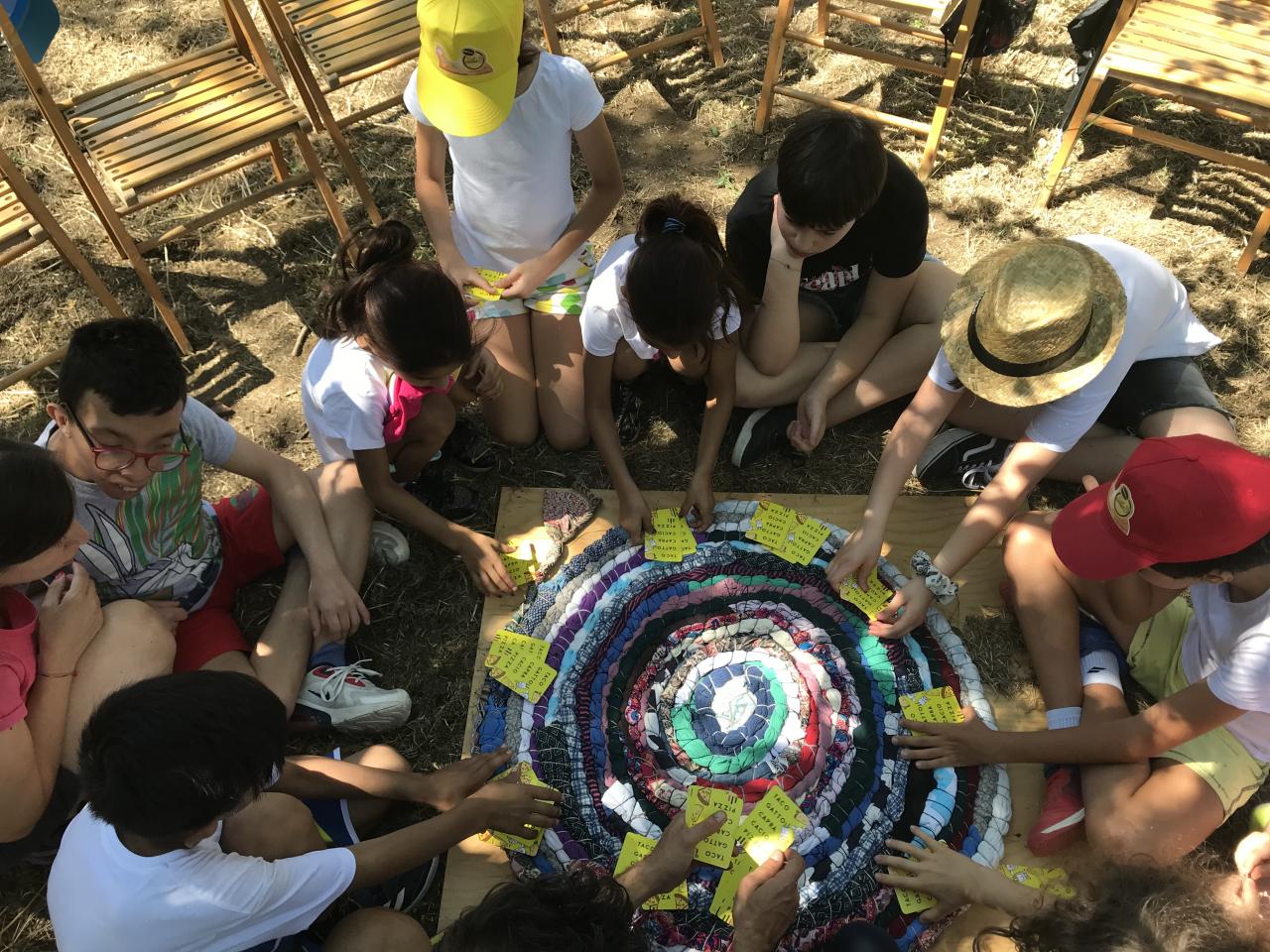
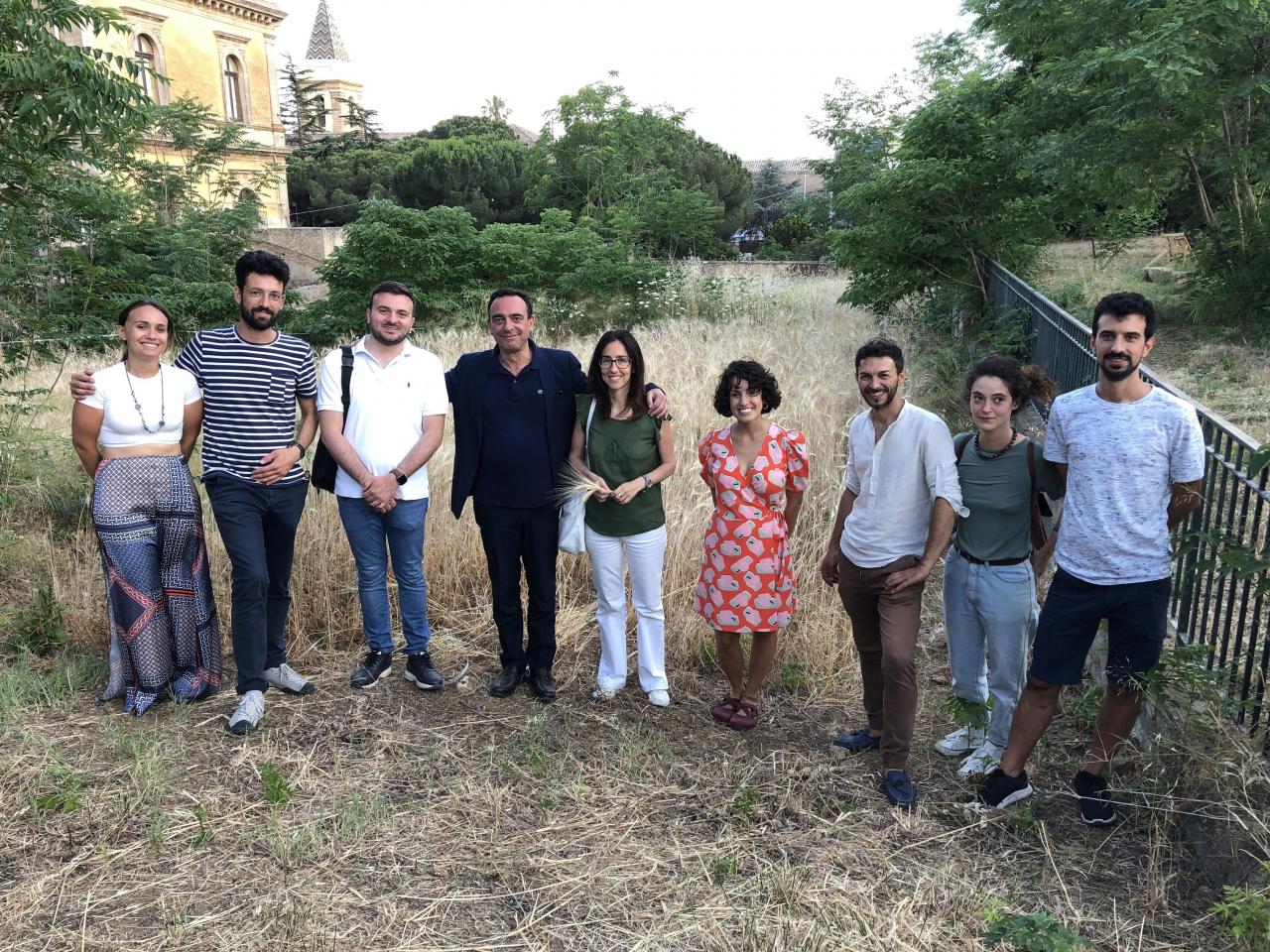
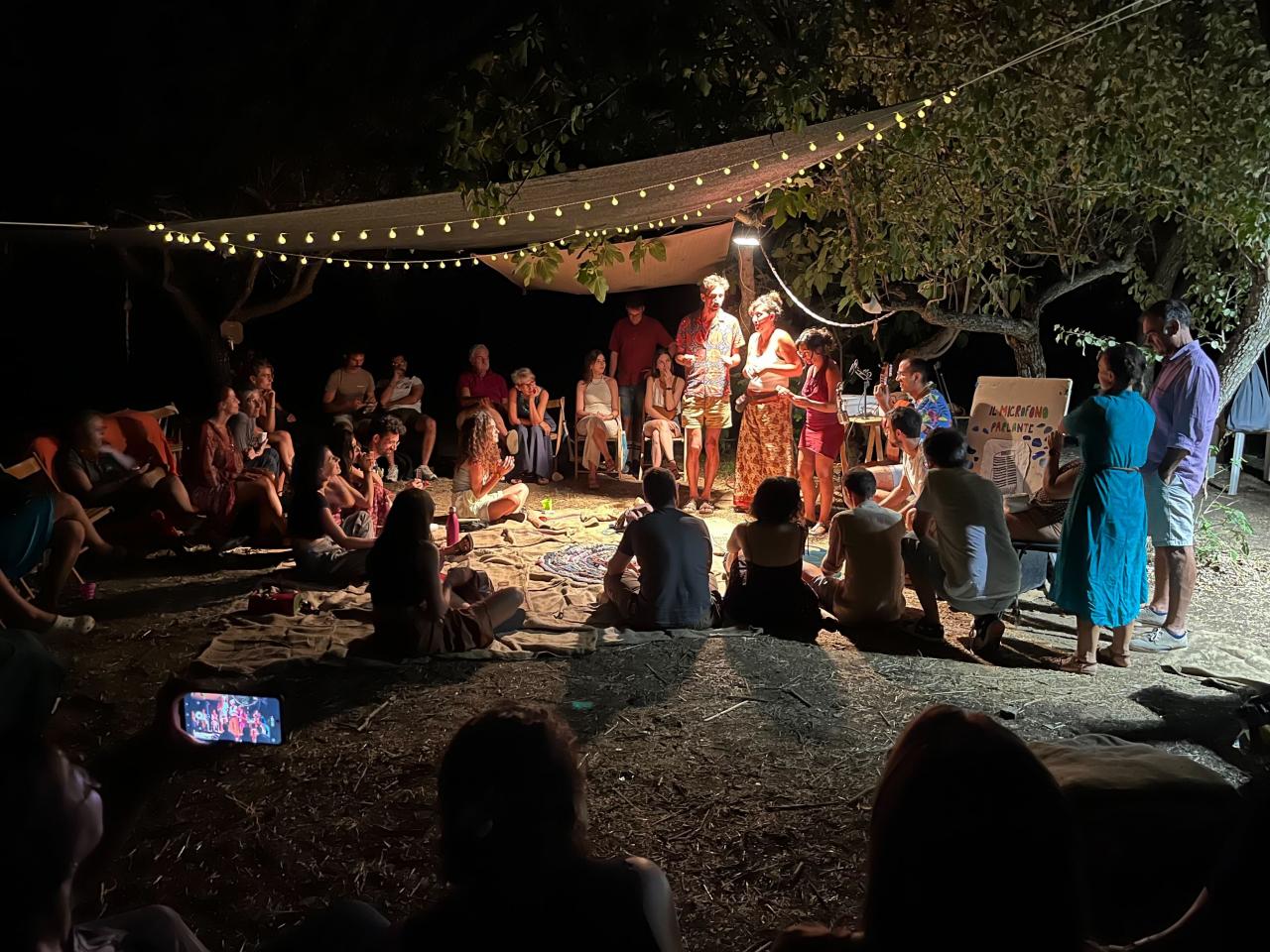
Beauty and joy are key to any regenerative process. This is why, in addition to our gardening and ecological practices, in our earth square we regularly host a broad variety of cultural and artistic events and activities, including theatre performances, poetry readings (see photo 3), live acoustic concerts, open-mic improvisation sessions, fanzine-making workshops (see photo 4), astronomical observation nights, pride-related events for the local queer community, folk dance workshops (see photo 2), and more.
While we are grateful to the devoted volunteers who have been organizing and running these activities in the past 3 and half years, with the help of NEB funding we aim to bring the organization and communication of these activities to the next level. In particular, we seek to hire professional curators, artists, and educators to facilitate the participatory art and training programs, which will culminate in the exTopic Fest. We also aim to invest in professional communication in order to enhance our capacity to involve more citizens and share our aesthetic and ethical values with larger local, national and European audiences
Key objectives for inclusion
Focus on public spaces which are open and accessible to all citizens. This also allows lower-income and vulnerable social groups to access the benefits of healthy, organic, locally grown food and open-air activities in nature.
Time banking. Our volunteer team is managed through a time banking system where the hours devoted to the earth square can be rewarded through access either to the harvest or to services provided by other people and subjects affiliated with the time bank. This enables people to exchange proximity services at no financial cost, further facilitating social integration and collaboration within the civic community. Time banking also works as a social equalizer, emphasizing the equal value of people’s time regardless of the services offered.
Social integration. Our bi-weekly community gardening sessions are attended by mixed groups of people, including different generations (children and elderly people), cultures (migrant families and visiting students as well as local residents), and abilities (psychiatric rehabilitation patients are often in attendance). This practice fosters social integration and interpersonal bonding to an extent that is difficult to achieve in daily contexts.
Partnership with public schools. Our outdoor educators are regularly involved in teaching sessions with public kindergartens and primary schools in town. We strongly value these partnerships because we believe in the paramount role of public education in fostering an inclusive and equitable society with easy access to quality education for all.
A local hub for the queer community. Our prototype earth square is a LGBTQAI+-friendly place hosting pride-related activities and promoting body positivity, civil rights and freedom for all.
How Citizens benefit
Our participatory approach is also reflected in our planned activities for our prototype earth square. Through a participatory art intervention primarily targeting local children and youths, we aim to improve public accessibility and connection between the earth square prototype and the larger urban context; in addition, our design workshop will involve regular earth square attendees in the collective design of outdoor furniture with the aim of improving the aesthetic experience of the earth square itself, starting from the observations of people who have spent significant amounts of time on site.
Innovative character
Disciplines/knowledge reflected
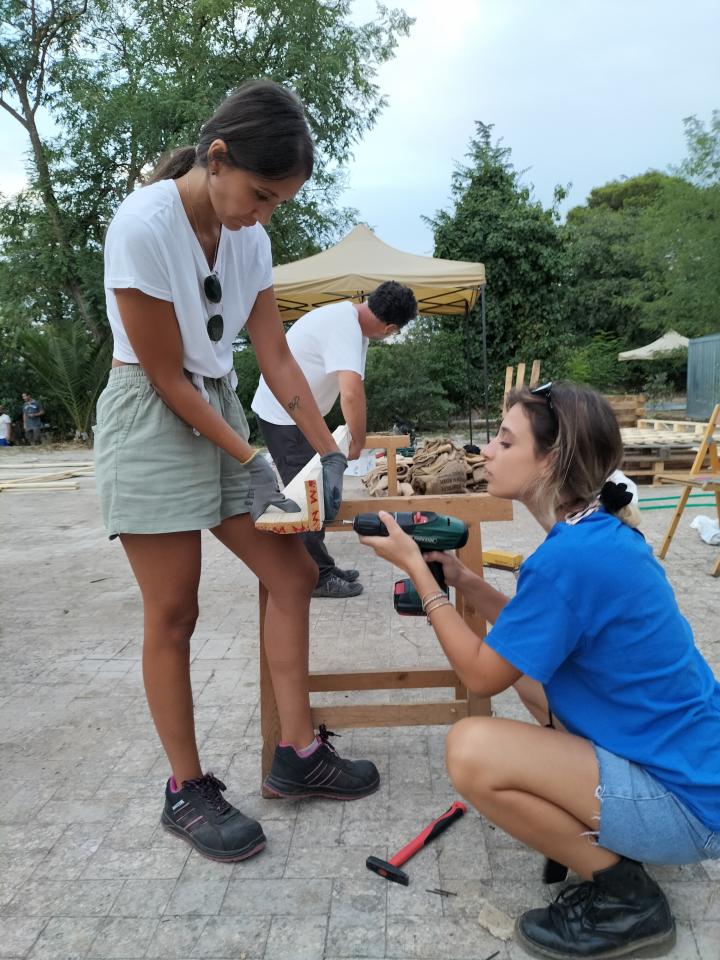
Over the last 3 and half years, we have built on our different backgrounds and competences, with the added value of being able to organize a variety of cultural and educational activities (see above) involving several target groups, including children, migrant youths and psychiatric rehabilitation communities. At the same time, we integrated new disciplines, bringing more variety and richness to the project. To begin with, we trained ourselves in group facilitation and playfulness, learning new tools and games to animate and enhance group activities and decision-making. We also integrated architecture through the collaboration with the University of Catania in the context of Bosco Colto Campus, a summer school for architecture and design international students. During the Campus, physical interventions were made to the Educandato San Luigi garden as part of a design and instant construction workshop (see photo 6).
Looking ahead, our multidisciplinary approach also informs the training program through which we intend to replicate our prototype. The program includes the following modules:
Introduction to group facilitation
Urban gardening and agroforestry
Artivism and green crafts for urban regeneration
Outdoor furniture design with reused materials
Introduction to fundraising & EU grants
Coaching on legal aspects of public land management.
Methodology used
Empowerment and participation. We start from the premise that communities are able to organize themselves to care for the public space, highlighting at the same time the importance of sharing tools related to urban agroforestry, group facilitation, legal frameworks, etc. This is why we encourage participatory design and creative processes while also focusing on workshop-based transmission of skills and best practices, in order to empower other groups to replicate them.
Experiential and outdoor learning. We strongly believe that there is no better way to learn how to regenerate communities and public spaces than directly engaging in such processes. Most of our training activities are conducted through outdoor workshops in our prototype earth square, in order to offer people an opportunity to directly engage and experiment with the processes of urban regeneration where they are taking place. For example, during our outdoor summer camp in our prototype earth square, children have been directly involved in the maintenance of our veggie garden (see photos 1; 5) and in other arts and crafts projects, including the construction of biodiversity stations.
Permaculture ethics (Earth care, people care, fair share) and design principles (Observe and interact, Catch and store energy, Obtain a yield, Integrate rather than segregate, Creatively use and respond to change, just to name a few that are particularly relevant to our project). We have integrated these ethics and design principles in our project since the outset, which has offered a shared framework to orient specific decisions.
Playfulness. Games and recreational moments are key to our activities, because they generate joy, facilitate community building and make learning processes easier and more effective. In our original vision, earth squares are places where people of any age feel safe and free enough to play games and spend fun time together.
How stakeholders are engaged
Looking ahead, the initiative aims to strengthen its regional presence by developing the *Rete Orti Comunitari Siciliani (ROCS)* and integrating the exTopic Fest into the *Val di Noto Festival Network* to increase visibility and partnerships. On a broader scale, engagement with national and European organizations focused on urban gardening and regeneration will further enhance the initiative’s impact. To support these efforts, improved communication strategies, including bilingual content in English and Italian, will be implemented to foster wider outreach and engagement at all levels
Global challenges
Climate change and its localized manifestations, such as desertification, water scarcity, biodiversity loss and food insecurity. We practice urban agroforestry and promote a plant-based diet, creative reuse and energy efficiency as local strategies for climate change mitigation. We also focus on adaptation, especially in terms of resilient agriculture, uplifting the use of locally adapted and drought tolerant edible varieties as well as techniques for rainwater harvesting and efficient use (eg. micro-irrigation).
Social marginality and limited access to healthy food and nature, especially for lower-income communities. Even in our town, low-income citizens have limited access to the benefits of healthy food and nature-based open-air activities. Our public, community-managed earth square provides free access to nature right in the middle of the urban space.
Plastic pollution and environmental degradation. Unfortunately, many of our public green areas are abandoned and heavily degraded by plastic pollution and other forms of environmental degradation, something that heavily contrasts with the UNESCO World Heritage status of our Baroque city center. We aim to invert this trend by entrusting more public areas to local communities, fostering civic participation and collective responsibility in the process.
Social isolation and polarization. Digital technologies and an increasingly polarized political landscape have weakened local communities, limiting face-to-face interaction and a shared sense of belonging. To address this challenge, we enhance public areas as collectively managed community hubs, fostering social integration and intergenerational collaboration.
Learning transferred to other parties
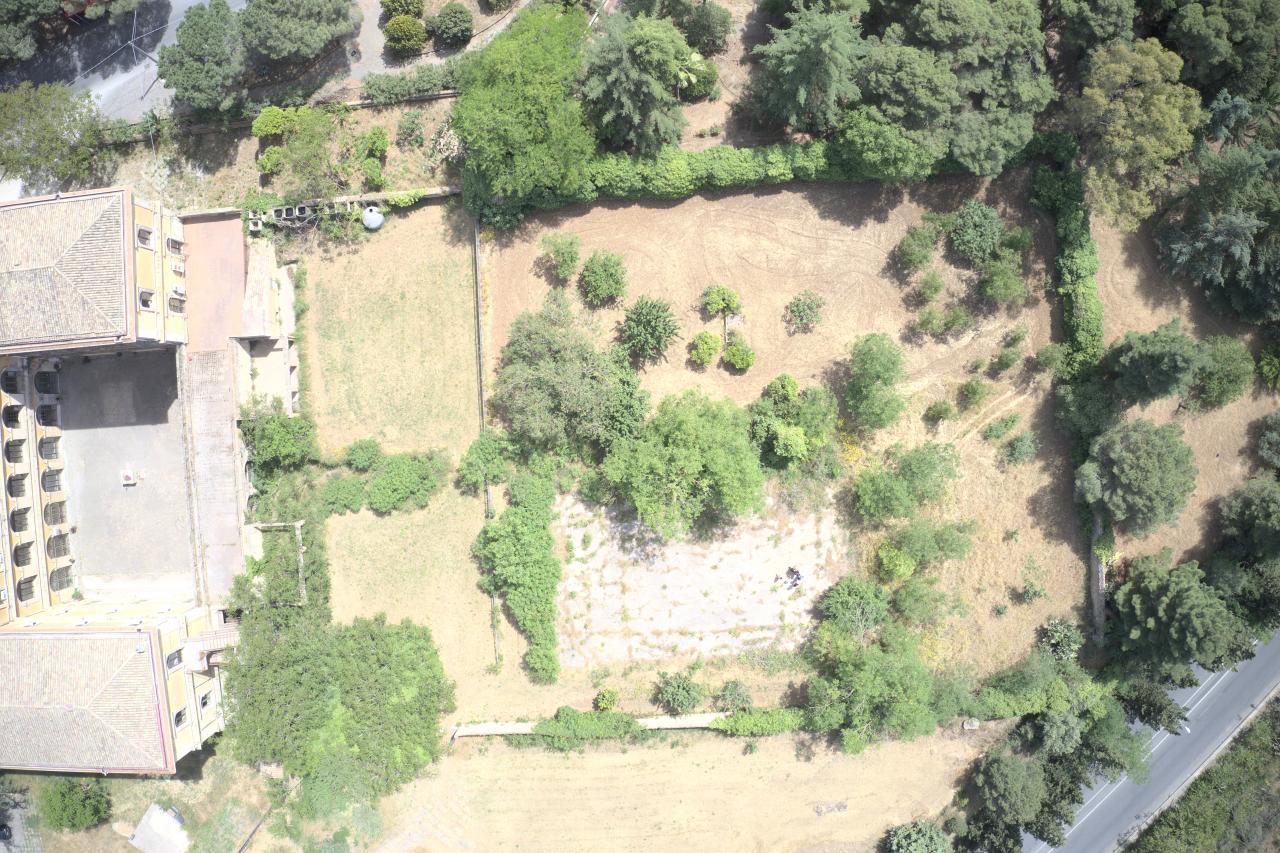
Mapping of Urban Areas – Our methodology for identifying and assessing underutilized public spaces can be applied in different urban contexts to support place-based community initiatives (see photo 4)
Institutional Support (Pact of Collaboration) – The framework for cooperation between citizens and local institutions can serve as a model for formalizing community-led urban regeneration efforts elsewhere.
Urban Gardening & Agroforestry – The integration of urban gardening and agroforestry principles, particularly through permaculture, can be adapted to diverse climates and urban settings to promote sustainable food systems and green infrastructure.
Citizen Engagement & Democratic Participation – Our participatory approach empowers local communities to co-design and manage public spaces, fostering civic engagement and collective responsibility, a model that can strengthen grassroots movements in other regions.
Use & Development of Handmade Artefacts – Creative and educational tools such as fanzines, workshops, and locally crafted artefacts provide accessible ways to share knowledge, inspire community involvement, and document local practices, making them easily adaptable to different cultural and social contexts.
By sharing our methodologies and learnings, we aim to support the replication of our model in other urban and rural areas, contributing to a broader movement of community-led environmental and social regeneration.
Next steps
Our initiative continues to evolve through planned activities that align with the NEB values while fostering participatory approaches.<br />
Planned Activities:<br />
Restoring Access Between the Building and Garden – Integrating our prototype earth square into urban life to ensure accessibility for all.<br />
Equipping the Garden – Installing furniture to support open-air activities linked to the public library, encouraging interaction and knowledge-sharing.<br />
Developing Sustainable Infrastructures – Implementing water-efficient solutions to reinforce ecological responsibility and self-sufficiency.<br />
Hosting the exTopic Fest Annually – As a platform to promote urban gardening and community-led regeneration projects.<br />
Creating a Vademecum – Documenting best practices to support replication and knowledge transfer.<br />
Integration of NEB Values and Working Principles<br />
Sustainability: Our focus on creative reuse, water conservation, and urban agroforestry directly aligns with NEB’s ecological aspirations.<br />
Inclusion: The participatory approach ensures that diverse community members, institutions, and grassroots organizations co-create and benefit from the initiative.<br />
Aesthetics & Quality of Experience: By revitalizing neglected spaces and integrating art, culture, and design, we foster beautiful, functional, and inviting environments that strengthen the local sense of place.<br />
Expected Steps<br />
Enhancing Infrastructure – Completing access restoration and equipping the garden for community use.<br />
Strengthening Stakeholder Engagement – Expanding collaborations at local, regional, and European levels to increase impact.<br />
Scaling Sustainable Practices – Advancing water-resilient solutions and refining permaculture-based interventions.<br />
Expanding Knowledge Sharing – Organizing workshops and creating shareable content to disseminate best practices.<br />
Institutionalizing the Model – Advocating for policies centering urban gardening and social regeneration as mainstream strategies in urban planning.