Perle Garden
Basic information
Project Title
Full project title
Project Description
Current stage development
Project Region
Municipality
EU Programme or fund
Description of the project
Summary
The chosen characteristic for the Pērle Garden is healing nature, so that it serves as a space for recreation, art, gardening, socialization and interaction, for residents, guests, families, children and elderly to enjoy. Gradually there will be more noticeable walking paths, natural meadow, forest, art-space and garden colours.
The main innovative aspects of the initiative are the regeneration of territory by building nothing in the traditional meaning and creating healing territory that is inviting “normal” people to the place for mentally and socially disabled people. A special novelty of the project is recognizing nature as the greatest artist and the regeneration of the environment around excellent architecture, not creating man-made greenery. Pērle Garden partially will be maintained by people with mental disabilities, thus highlighting the capabilities of those people.
Key objectives for sustainability
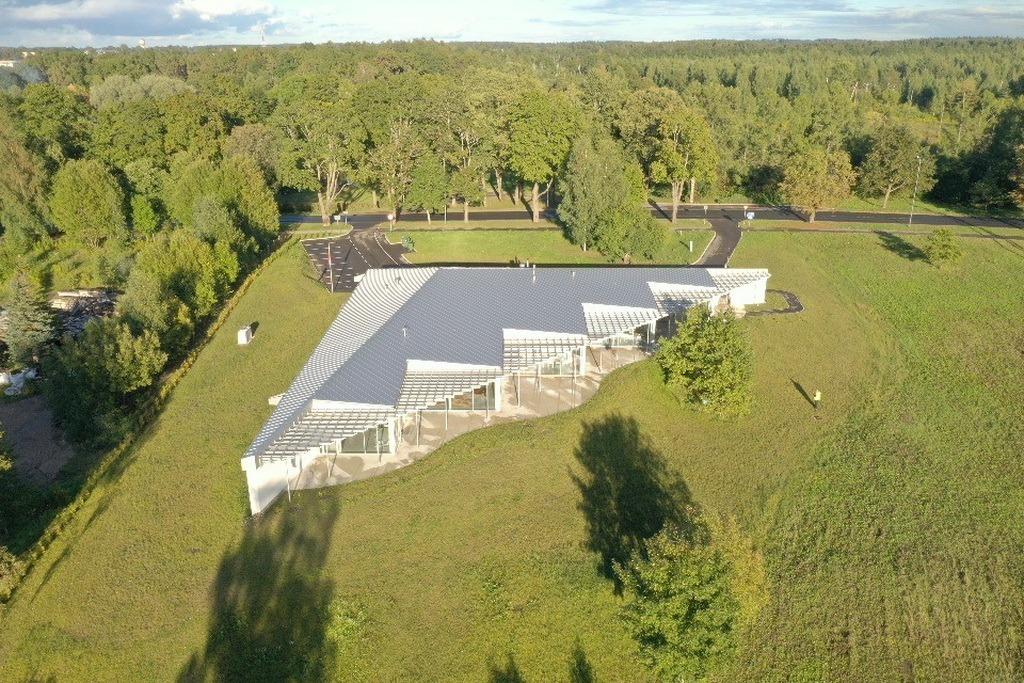
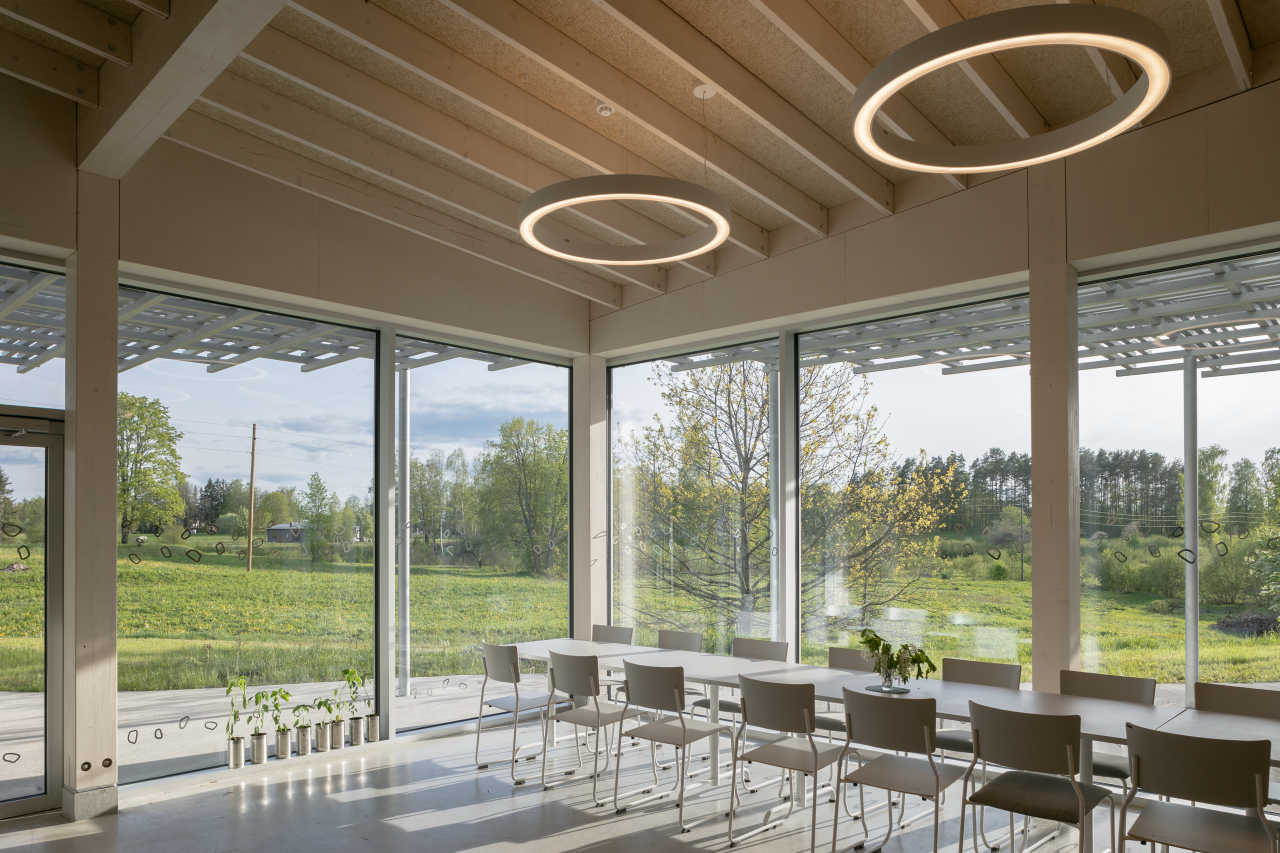
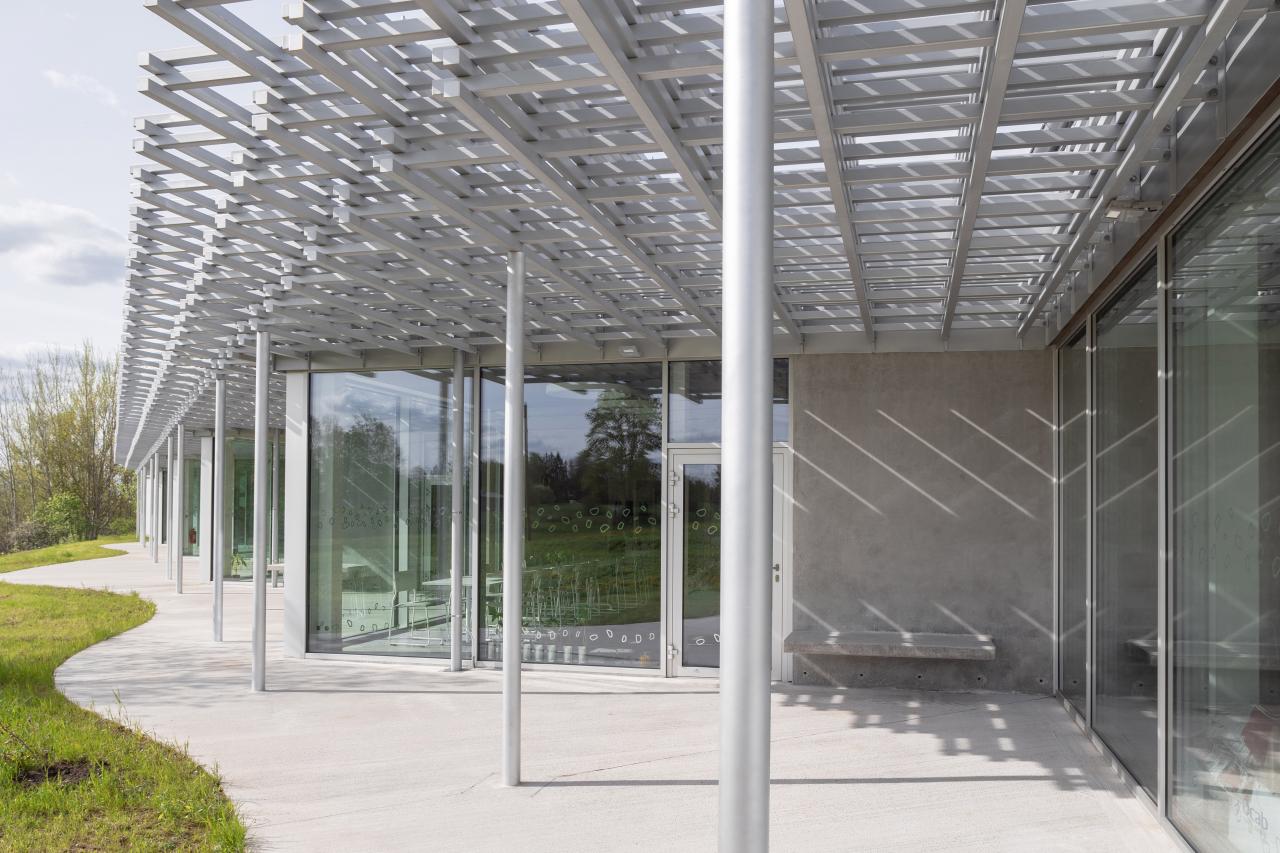
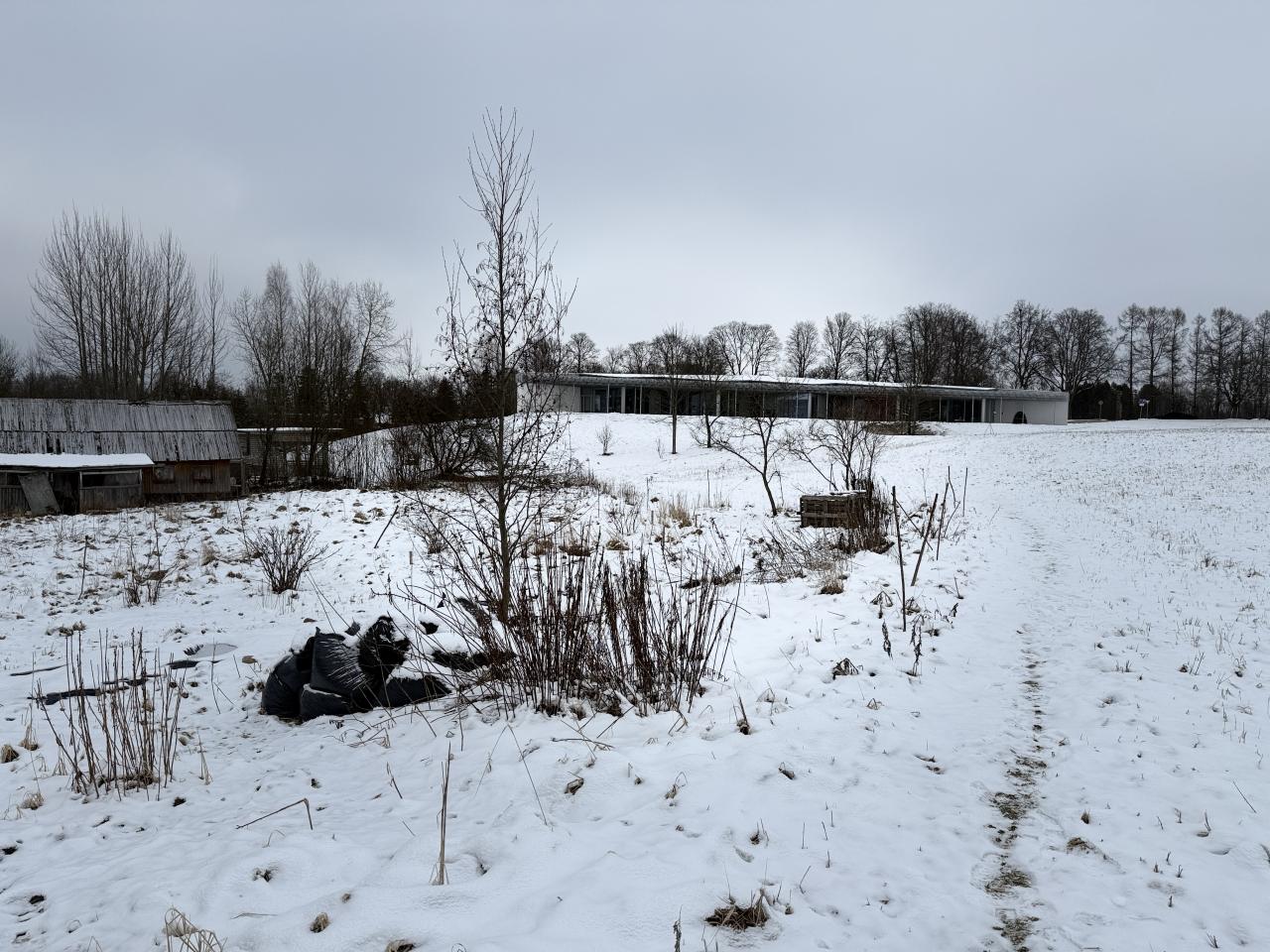
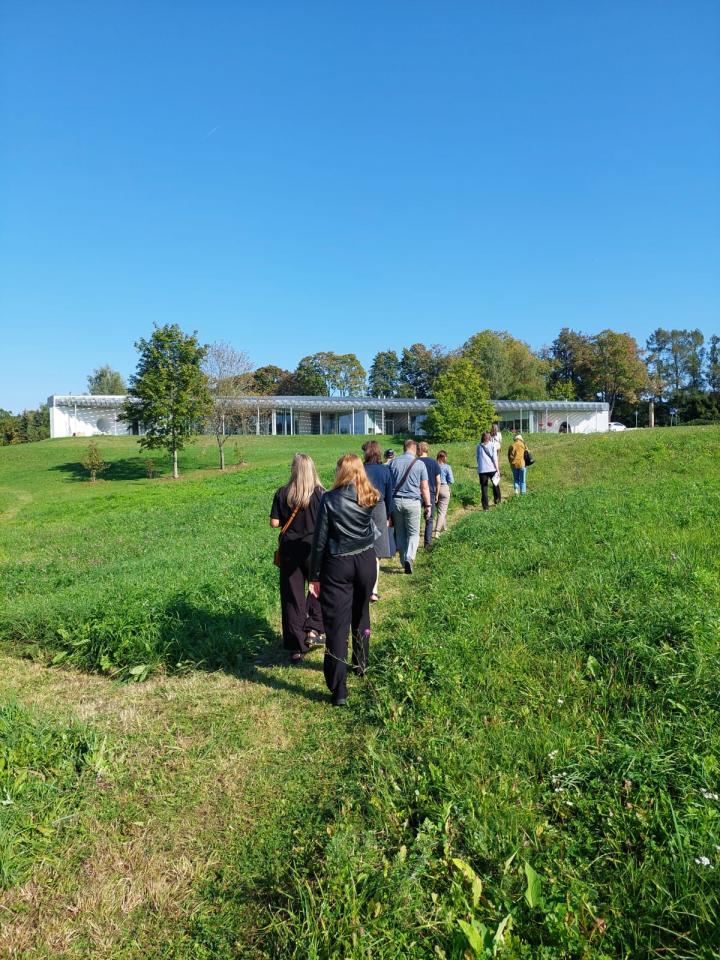
In 2021, Social care center “Pērle” was built on a 1.6 ha urban area in Cēsis, at Rīgas Street 90, which used to be allotments. In 2022, an international jury awarded it the Latvian Architecture Award of the Year, noting its special “Gesamtkunstwerk” spirit (pict.01;04). The building’s surroundings are only maintained in the immediate area, about half of the area is overgrown gardens, young growth along the Mellupīte River and invasive plants. The project envisages to regenerate the public space, which would be an excellent set for an excellent building (pict.05;06;07).
Exemplary: placemaking by building nothing in the sense of construction, thus meeting circular economy criteria.
2. To create Pērle Garden as natural and diverse as possible.
The project has started work by respecting habitats characteristic of local biodiversity - a meadow, a piece of forest, unmodified banks of the Mellupīte River and the opportunity for people to walk there. At the same time, the Pērle team has begun to restore such cultural and historical value as allotments, it is planned to gradually cultivate the Cēsis Heritage Plant Garden. The territory is planned to be developed according to a masterplan, the creation of which will involve multi-disciplinary team of experts.
Exemplary: greenspace as natural as possible; avoiding the use of synthetic materials and creating non-permeable surfaces and artificial lighting.
3. Develop the economic benefits of maintaining Perle Garden.
Currently, Cēsis Municipality has funding for regular maintenance of part of the territory. For a year now, Pērle clients have been creating temporary flower beds in gardening classes and have created a part of walking path along the river. The project aims to achieve the goal that Pērle clients and volunteers maintain a high-quality public greenspace and art-space, while at the same time reducing public funds needed for maintenance.
Key objectives for aesthetics and quality
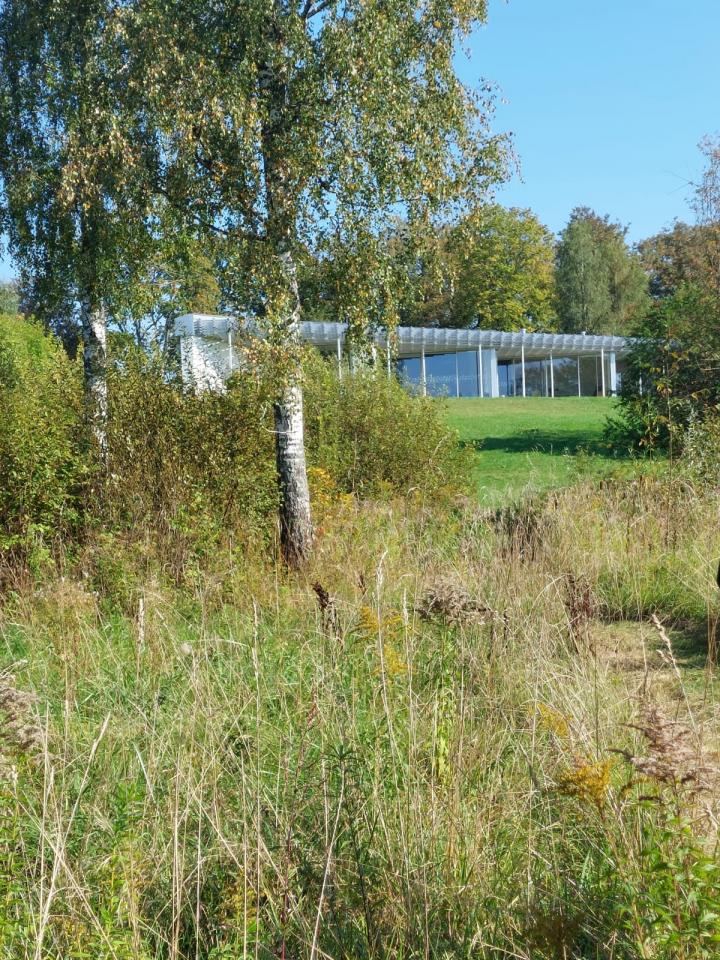
Nature is the most inimitable artist, and Pērle Garden is as if created for this aesthetic pleasure – starting from sunsets not shaded by buildings and ending with a clearing with wild strawberries on the riverbank or the wind waving in a summer flower meadow (pict.00;02). The innovation is to highlight it and sometimes it can be emphasized with the placement of episodic photo frames at different viewpoints.
2. To create a place for an art space on the slope of Pērle Garden.
The task of the project is to preserve the spaciousness of Pērle Garden as a resource, clean and permanently unfilled. This is a challenge, because everyone has an opinion on what could be placed or created there. The spaciousness is precisely the art space, where a variety of art events can take place – theatres, concerts, parties, Midsummer celebrations, exhibitions, plein airs. No more than half of the time, so that there is room for nature as an artist.
3. To design the Pērle Garden as a healing landscape.
Tastes vary, but any visitor will be able to experience the healing effect of nature on the walking trails. A diverse aesthetic offer is provided for different tastes – both the flower beds full of cheerful colours near the building, and a natural meadow, forest and a little-modified river bank, and some allotments with their own specifics. Importantly, volunteers will have the opportunity to reduce daily stress in therapeutic garden works, while Pērle clients have already been taking their first steps for a year, improving their health with the help of horticulture therapy. For a traditional small-town society, the innovation and challenge will be the plants in flower beds not cut in autumn, reflecting the full cycle of life, including death as a component. But the joyful aspect of it is the opportunity to add to the diversity of forms in the winter landscape.
Key objectives for inclusion
With the construction of the Pērle building, people no longer perceive this place as public. The project team will create both inviting infrastructure, communication, and events so that the excellent values of the place can be enjoyed both during the day, when there are customers in Pērle, and in the evenings and weekends, when the building is empty and quiet, and during gardening, which will provide an unobtrusive opportunity for socializing.
2. Ensure physical and understandable accessibility of the place to residents, passers-by and any interested party.
For this purpose, one of the essential elements in the master plan is to create a convenient and perceptible zoning of the place into publicness – accessible to anyone (universal design) at any time, (trails, semi-publicity – accessible at any time only to certain users, but there is an opportunity to become such, f.e., allotment gardeners; and semi-privateness – this space is intended for Pērle clients during the working hours, and other time to any user.
3. Ensuring the Living Lab process in the creation and maintenance of the Pērle Garden, including the Cēsis Heritage Plant Garden.
It is planned to involve both residents and interested parties, in the development of the Masterplan. The Heritage Plant Garden will provide a regular opportunity for engagement with the Pērle Garden – its creation depends on the sharing of heritage plants by the Cēsis residents. The Pērle team is responsible for the maintenance of the garden. Interested parties will be invited to regular master classes, where the care of the heritage garden will take place and regular gardening activities, which are potentially of interest to those people who do not have their own garden. Currently, there is no such practice in Latvia, but in UK it is very popular.
How Citizens benefit
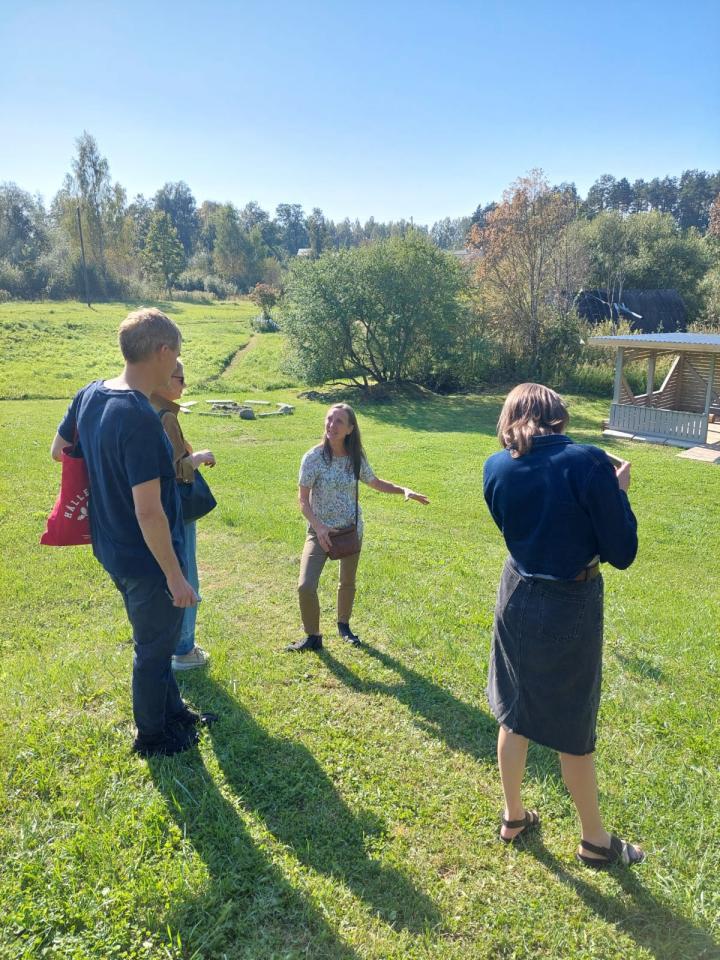
Already on 19.09.2024. an open public consultation on the future of the Pērle Garden was held (Annex 4). It is planned to involve both residents and interested parties, as well as various cooperating institutions, in the development of the Masterplan. The Cēsis Rotary Club also helps once a year with more difficult work as a volunteer. As a result of the involvement, the project team obtains both creative ideas for implementation and highlights potentials challenges that must be addressed through communication (.
Multi-level involvement – from the autumn think tank there are contacts of several people, both Cēsis residents and various specialists from the region and Latvia, looking for further cooperation. In the implementation of the project, the Pērle team is the main territory creator, which has weekly meetings with the Social Service of the Cēsis County Council. Close co-operation is with municipality’s Property Management Department regarding territory's maintenance, as well as the Development Department regarding project creation for attracting funding. In this cooperation, the project gains energy from mutual support and can no longer stagnate, even if individuals change.
Interdisciplinary approach - experts in healing landscapes, biodiversity, universal design and art therapy (CVs attached, Annex 5) will be involved in the development of the master plan of the site. The development of the Pērle Garden in terms of its content will be based on three pillars – a place for walks, an art-space and a place for gardening. Depending on the decisions of the participatory process, each of these aspects can be accentuated or muted. The three different content functions will attract diverse users.
Innovative character
The project is a time-, resource- and high-level specialist-intensive work. In this sense, building nothing, but the creation of high-quality public outdoor space in accordance with the spirit of NEB is a high-value challenge for the team, The success sign will be when the wider community will see and accept the value of placemaking and building nothing.
The mainstream in Cēsis, Latvia and all across Europe is to gradually sacrifice urban allotments in order to build outstanding architecture and public objects. The Pērle building was also built on the site of a former allotments. So, this project is innovative by bringing back allotment function in part of territory (semi-public use of space).
New European Bauhaus emphasizes the accessibility for all in new or regenerated buildings. Our project is creating healing territory that is inviting “normal” people to the place for mentally and socially disabled people.
A special novelty of the project is the regeneration of the environment around excellent architecture, not creating man-made greenery, but leaving as much space as possible for the natural development of forests, meadows, bushes and riverbanks and creating a place for nature therapy.
Nature is the greatest artist. The territory of Pērle is as if created for enjoying “natural art”. (pict. 02; 03; 08). The challenge and innovation are not to clog the currently free space with man-made art objects or recreation infrastructure.
Noteworthy the innovation is that part of the regular maintenance of the Pērle Garden will be carried out by people with mental disabilities, and this project will highlight the capabilities of those people.
Disciplines/knowledge reflected
Knowledge of communication issues and communication itself, as well as experience in project development and management, is a main tool for attracting stakeholders and the basis for the long-term operation of the project. An essential common denominator is the planned master plan, in the creation of which the knowledge and skills of landscape architects to put such diverse considerations on one unambiguous page will be particularly important.
Up to now, all specialists in the mentioned fields have cooperated with each other, thus the Pērle Garden project has reached its current vision, and in addition, the territory is being observed slowly and the most suitable solutions for achieving the project's goals have been felt.
As a result of the collaboration, the Pērle team's initial proposal to voluntarily participate in the creation of public space has become a broad and ambitious municipal project, in which an art component has also found its place.
Methodology used
To ensure the high quality of the project, various experts are already involved in its team. After the plan is completed, allies will be sought for individual components, generally strictly adhering to healing nature overarching task and the functional zones and their characteristics set out in the master plan.
From the governance aspect, public involvement in the project is already taking place in various ways (for example, inviting interested parties to the Latvian Ornithological Society’s video lectures on Latvian birds) and is planned to continue in the future through master classes, talks, think tanks and, possibly, some other new ways.
How stakeholders are engaged
The Pērle team, in cooperation with the regional Social Service, organized a think tank about Pērle Garden future with the participation of residents, specialists and Swedish experts. The team is already currently carrying out gradual development of the territory, refraining from conceptual intervention until the completion of the master plan, but preserving the existing natural values and creating an environment for Pērle clients to practice outdoors.
Municipal level – the Property Management Department carries out partial maintenance of the territory (budget in Annex 8). The Development department, in cooperation with the Pērle team, creates projects to attract various financial resources and is always open to new initiatives. The Social service creates and places information on social networks and in the local regional newspaper.
The Nordic Council of Ministers financed a visit of two Swedish experts to Cēsis, to a think tank on the development of the Pērle area. The LIFE LATESTadapt project co-financing is intended for the development of a Masterplan in 2025-2026 (Annex 6). Cooperation with the Nordic Council of Ministers will continue in 2025, focusing on accessibility for all, nature as a playground and places adapted for the needs of aging people.
Global challenges
The project creates a place for simple coexistence of different social classes with unifying goals – public health, art space and gardening. Although it does not directly reduce social stratification, which has economic causes, the project nevertheless creates a space where the consequences are mitigated, and the opportunity is given to reduce territorial stratification for recreational purposes.
The world's ecological capacity is decreasing due to the expansion of construction in natural areas, a significant contribution to this is, for example, the asphalting, paving and conversion of gardens and courtyards into outdoor living rooms or sports “rooms”. That is why the project placemaking by building nothing in the context of construction has an important setting to meet not only the NEB, but also broader sustainability criteria. With such a direction of territorial development, urban sprawl is also prevented, because without this project, the municipality, in limited budget conditions, would separate part of the 1.6 ha and sell it to developers for construction.
Learning transferred to other parties
Elsewhere in Latvia and Europe, ensuring access to nature with the simplest means, rather than expensive infrastructure, would be applicable. This has disadvantages, because accessibility may decrease in some circumstances, but the benefits are that under good circumstances much more space would be available, and natural places would be less technologically influenced, thus reducing the therapeutic effect of nature. In a couple of years, the project team will probably be able to mention safe and proven elements on this topic that are suitable for transfer to other places.
One of the most valuable aspects, according to the project team, is placemaking by building nothing. In turn, the mindset of modern consumer society is oriented towards new things, processes, and we want to acquire something beautiful and valuable that we have seen elsewhere for ourselves. We focus on man-made objects, not nature itself. Thus, consumption and production continue. However, a natural playground for children would be the most valuable, which should be transferred to wider use. Children must learn to occupy themselves and not be bored in nature, otherwise the development of their imagination and the creativity of the next generation are at risk.
Next steps
The project development plan with actions and their compliance with NEB values is provided in Annex 1.<br />
The environmental sustainability aspect has been the basis of the project from the very beginning and the very essence is based on it – to preserve the 1.7 ha of territory adjacent to the Pērle building as a natural territory, without dragging building elements and diverse infrastructure elements into it. Social sustainability is predefined by Pērle's 46 clients with special needs, their health, mutual socialization and life experience are improved by being/working in nature, while the regeneration of the territory into an open public space gives additional capacity to both the territory and the social processes taking place in it. Economic sustainability from the perspective of resource saving and circular economy is determined by the budget – donated tools are used, all client work in the garden is a voluntary contribution to the development of the public territory. The use of second-hand tools will be continued as an operating principle, eventually even creating events for the exchange of garden items. The plant bank is also being created from its own resources.<br />
The aesthetic pleasure and adventure in this place are from nature as art, and the challenge is to highlight and keep it as the main one. The ambitious goal to design the place as healing nature place guarantees the aesthetics by definition. At the same time, the excellent terrain of Pērle with its wide free slope has already prompted art therapists to plan to use it for human-made art.<br />
In addition to participation, two components – co-creation and placemaking – are a feature of the Pērle Garden project. People, including specialists and institutions, are invited not to participate in a ready-made concept, but to be co-creators in terms of ideas and solutions as well.<br />
The idea of a Pērle Garden has proven how it is gradually being accepted and taken root in local minds, let’s garden it!