Osteodes
Basic information
Project Title
Full project title
Category
Project Description
Current stage development
Geographical Scope
Project Region
Urban or rural issues
Physical or other transformations
EU Programme or fund
Description of the project
Summary
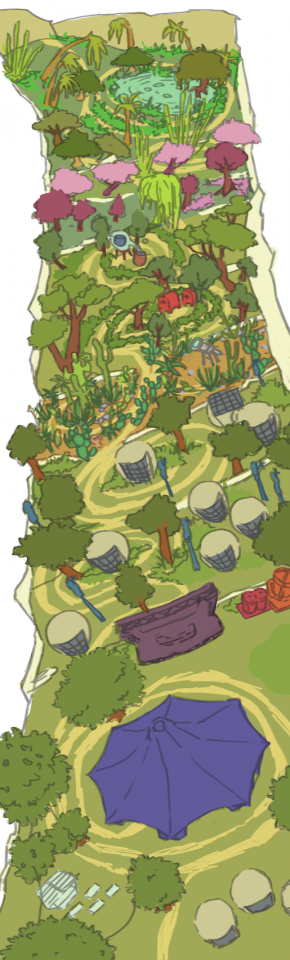
Target groups include local residents, tourists, students, researchers, and volunteers who seek an immersive ecological experience blending scientific inquiry with cultural and social engagement. By creating thematic “biomes” (tropical, Mediterranean, woodland, and more), Osteodes demonstrates how biodiversity, soil health, and responsible water management can thrive under challenging island conditions. Off-grid infrastructures—solar panels, micro-wind turbines, and biodigestors—are planned to minimize carbon footprints while providing hands-on lessons in circular resource use.
Specific objectives encompass:
Designing an educational permaculture garden that illustrates distinct ecosystems and highlights the role of fungi, bacteria, and pollinators in soil vitality.
Building collaborative labs that integrate DIY biotech (e.g., plastic-degrading enzymes, microbial composting) with local traditions and materials.
Hosting workshops and cultural events (concerts, art shows, youth exchanges) that inspire active involvement and co-creation among diverse participants.
Though still in early development, Osteodes has already cleared some terraces, inoculated soils with beneficial microbes, and launched initial workshops on eco-building techniques. These achieved outcomes have begun to revitalize community interest, encouraging locals and visitors to share knowledge, celebrate nature’s beauty, and envision Ustica as a global model for climate resilience. Ultimately, Osteodes aspires to replicate its methods in other small islands or rural communities.
Key objectives for sustainability
First, the project’s regenerative permaculture approach aims to restore abandoned terraces through diverse plant guilds and soil-building methods—such as inoculating with beneficial fungi and bacteria—so that each “biome” (e.g., tropical, Mediterranean, woodland) reflects both its ecological function and local cultural heritage. This increases soil fertility, prevents erosion, and rejuvenates native flora and fauna. By emphasizing species diversity and intercropping, Osteodes seeks resilience against climate extremes, a growing concern on small islands.
Second, closed-loop resource use underpins the project’s infrastructure plans. Off-grid energy solutions—solar panels, micro-wind turbines, and biodigestors—help decarbonize day-to-day operations. Organic waste and agricultural byproducts are fed into composting systems or biodigestors to generate biogas, returning nutrients to the soil and reducing landfill dependence. Whenever possible, local materials (e.g., canes, volcanic rock, mycelium-based composites) are utilized in bio-construction, cutting transportation costs and emissions.
Third, community engagement ensures that sustainability goals are not mere technical achievements but part of a shared vision. Workshops, youth exchanges, and open labs invite locals and visitors alike to learn hands-on about energy-saving measures, plastic-degrading microbes, and eco-friendly building. This strengthens collective ownership and social adoption of green practices.
Key objectives for aesthetics and quality
To reinforce a sense of place and heritage, the project incorporates local volcanic rock, traditional Sicilian vegetation, and artisanal craftsmanship in structures such as geodomes or pavilions. By merging bio-based materials (e.g., mycelium composites, cane frameworks) with indigenous design elements, Osteodes fosters harmony between built spaces and the wild landscape. Small artistic details—like sculptural seating, mosaic pathways, or aromatic herb corners—offer quiet corners for contemplation and rest, facilitating a high-quality, culturally resonant experience.
In parallel, the cultural program (concerts, mini-festivals, artist residencies) enriches aesthetic enjoyment with social engagement. Live performances and art installations adapt to the natural contours of the terraces, transforming them into open-air galleries or pop-up stages. This layered approach to experience—where local music, culinary traditions, and ecological learning converge—gives visitors a holistic encounter that goes beyond a simple walk in nature.
Osteodes is exemplary in uniting ecological restoration with uplifting design and cultural expression. Rather than imposing purely functional solutions, it celebrates beauty and conviviality as key drivers for environmental stewardship. By intertwining innovation, art, and heritage, the project demonstrates how design choices can cultivate both ecological balance and a profound sense of wonder for all who visit.
Key objectives for inclusion
Inclusive governance principles, inspired by sociocracy/holacracy, empower residents, volunteers, and external experts to co-decide on next steps, from which plants to introduce to how events should be organized. This open, participatory structure fosters multigenerational collaboration: youth can learn new skills or test DIY prototypes, while older community members share traditional agricultural wisdom and local cultural insights. The resulting synergy enriches communal ownership and ensures that decisions truly reflect varied perspectives and abilities.
Furthermore, educational outreach is a central pillar: free or low-cost workshops on permaculture, bio-construction, and off-grid systems allow individuals of different socio-economic statuses to acquire practical, employment-relevant know-how. By hosting inclusive events—like concerts, mini-festivals, and hands-on labs—Osteodes encourages visitors and islanders to mingle, exchange, and collaborate, weakening social barriers and cultivating a sense of belonging for all.
In this way, Osteodes exemplifies how inclusive design, grassroots governance, and community-centered learning can seamlessly intertwine.
How Citizens benefit
To maintain an inclusive process, Osteodes adopts sociocracy/holacracy-inspired governance, holding “circle” meetings that unite local stakeholders, volunteers, and visiting researchers. For instance, the “Garden Circle” pairs small-scale farmers with new volunteers to plan planting schedules and test regenerative methods. Meanwhile, the “Events Circle” collaborates with local cultural associations to curate concerts and workshops that celebrate Ustica’s heritage.
This hands-on engagement yields tangible results. Islanders share ancestral knowledge—like time-tested irrigation techniques—to improve water management in the terraces. Younger participants contribute DIY and social media skills, helping document progress and attract outside collaborators. Local civil society groups, such as environmental clubs or school committees, join in biodiversity monitoring, fusing on-the-ground observation with scientific approaches from external partners.
Such involvement keeps innovations grounded in local culture, boosting acceptance and viability. It also builds a shared sense of ownership, transforming Osteodes from a top-down project into a community-driven initiative that spreads social, educational, and ecological benefits to everyone involved.
Physical or other transformations
Innovative character
Whereas typical rural development projects may concentrate solely on agricultural productivity or tourism, Osteodes employs a transdisciplinary governance model (sociocracy/holacracy) that ensures decisions and prototypes emerge from the collective input of farmers, architects, researchers, and local youth. By treating each terrace as a “living experiment,” the project transcends the usual farmland-restoration pattern. Additionally, it actively documents processes and findings under open licenses, encouraging replication in other island or remote contexts.
In short, the project’s novelty lies in its synergy—combining advanced ecological experimentation, inclusive governance, and multi-sensory cultural experiences. This ensures that nature restoration, scientific discovery, and social cohesion happen concurrently, reshaping both the island’s landscape and its community life in a way rarely seen in standard environmental or agricultural interventions.
Disciplines/knowledge reflected
Permaculture & Agronomy: Farmers and agronomists refine crop rotations, mycorrhizal treatments, and terraced irrigation.
Biotechnology: Researchers and DIY enthusiasts test plastic-degrading microbes and mycelium-based materials, linking lab findings with ecological goals.
Architecture & Bioedilizia: Makers and architects build geodomes from bamboo, volcanic rock, and natural binders, uniting heritage with climate resilience.
Social Sciences & Cultural Studies: Facilitators and pedagogues design inclusive workshops, youth exchanges, and conflict-resolution methods, ensuring broad engagement.
Arts & Design: Artists create thematic paths, installations, and visuals that celebrate local culture and amplify aesthetic appeal.
This transdisciplinary synergy yields integrated, creative solutions, blending agronomic insights, scientific research, and cultural perspectives to forge a cohesive project that neither discipline could achieve alone.
Methodology used
Regenerative Permaculture: Each terrace is treated as a distinct “biome,” using techniques like soil inoculation with beneficial microbes, crop rotation, and natural water catchment.
DIY/Open-Source R&D: Participants co-develop prototypes such as biodigestors, plastic-degrading microbes, and mycelium-based construction materials. All data, designs, and progress notes are openly documented for replication.
Participatory Co-Creation: Citizens and experts collaborate in regular circle meetings, ensuring that local knowledge (e.g., traditional irrigation methods) informs modern solutions and that new ideas (bio-tech, arts) integrate with community needs.
Holistic Cultural Integration: Beyond land restoration, events like concerts, festivals, and workshops—often hosted in the newly revitalized terraces—enrich the social fabric and cultivate a sense of shared ownership.
By weaving together technical experimentation, hands-on learning, and culture-led engagement, Osteodes aligns ecological regeneration with social and creative dimensions, offering a replicable model for multi-stakeholder collaboration.
How stakeholders are engaged
Local Level
The municipality of Ustica provides logistical support and initial clearances. Island elders and local farmers guide species selection and share ancestral water-saving methods, merging tradition with modern permaculture. Youth volunteers contribute labor and creative ideas, reinforcing ownership and spreading awareness. Cultural associations co-design events, ensuring every workshop or festival remains true to Ustica’s identity.
Regional Level
Sicily’s environmental agencies and agronomy institutes offer advice on drought resilience, soil improvement, and sustainable wastewater solutions. This synergy helps Osteodes serve as a demonstration site for Mediterranean eco-innovation, aligning local trials with wider regional strategies.
National Level
Collaborations with Italian universities (e.g., Palermo) expand R&D on bio-based materials (mycelium composites) and plastic-degrading microbes. By integrating academic research, Osteodes gains access to state-level grants and scientific networks, deepening its investigative scope.
European Level
Emerging Erasmus+ links and cross-border partnerships connect Osteodes with peers across the EU exploring regenerative agriculture, circular design, and inclusive governance. NGOs and funding instruments (such as Horizon) offer mentorship and resources, situating Ustica’s transformation in a broader European conversation on climate resilience.
Added Value
This multi-tier engagement weaves grassroots ingenuity with institutional expertise and EU collaboration. By blending local knowledge, formal research, and pan-European best practices, Osteodes becomes an adaptable model for ecological and social regeneration that resonates well beyond Ustica’s shores.
Global challenges
Climate Change & Resource Scarcity:
By adopting regenerative permaculture practices (crop diversification, soil building, water capture), Osteodes helps restore degraded terraces and boost natural resilience. Off-grid infrastructure—solar panels, micro-wind turbines, biodigestors—reduces dependency on fossil fuels and showcases carbon-saving strategies suited for small islands and rural communities globally.
Biodiversity Loss:
The project’s “biome” model integrates region-appropriate plants, fungi, and beneficial microbes, revitalizing soil health and habitats. This local-scale intervention combats monoculture-driven ecosystem decline and offers a replicable template for restoring biodiversity in fragile landscapes.
Plastic Pollution & Circular Economy:
Research on plastic-degrading microbes, combined with upcycling of organic waste into biogas or compost, contributes to circular resource flows. Sharing these open-source solutions helps other communities confront global waste problems with feasible, small-scale approaches.
Social Inclusion & Resilience:
Through sociocratic governance circles, local residents and external experts share decision-making power. This fosters broader community engagement in environmental stewardship, bridging the gap between global challenges (such as social inequality or climate migration) and local collaboration.
By rooting these responses in local culture—Sicilian agrarian traditions, volcanic landscapes, and communal events—Osteodes demonstrates that the pathway to solving planetary issues can be anchored in culturally rich, place-based innovations that are both replicable and context-sensitive.
Learning transferred to other parties
Themed terraces (tropical, Mediterranean, woodland) serve as replicable templates for regenerative design, adaptable to neglected lands or small farms elsewhere. Each “biome” exemplifies how strategic planting, soil-building techniques, and water management can revitalize degraded areas.
DIY/Open-Source R&D
Prototypes for biodigestors, plastic-degrading microbes, and mycelium-based materials are documented under open licenses. Other communities can access these designs and tailor them to local conditions without onerous licensing barriers, accelerating eco-innovation.
Sociocratic Governance Circles
Local stakeholders, volunteers, and experts convene in “circles” to co-decide on everything from planting schedules to event planning. This inclusive, bottom-up structure can be replicated in diverse rural or urban settings, fostering stronger community ownership.
Multi-Sensory Cultural Engagement
Workshops, concerts, and art installations integrated into reclaimed landscapes can be reproduced by groups seeking to merge ecological restoration with cultural vibrancy. Engaging all senses fosters a deep connection to nature and communal identity.
Layered Educational Modules
Low-cost trainings—covering soil fertility, off-grid energy, and bio-based construction—provide practical know-how that can be scaled or adapted globally. Hands-on learning and open documentation empower participants to replicate successes and refine them in new environments.
Taken together, Osteodes’ methodologies, open documentation, and transdisciplinary governance form a flexible blueprint that communities can adapt to their own climates, socio-economic realities, and cultural contexts, creating resilient ecosystems and vibrant social spaces.
Next steps
In the first year after submission, Osteodes will focus on three priority areas to move from concept to actionable reality:<br />
<br />
Physical Setup and Pilot Implementation<br />
Site Preparation: Finish clearing identified terraces, integrate basic water catchment systems, and complete soil inoculation with beneficial microbes.<br />
Prototype Development: Construct at least one geodome or small biobuilding structure to serve as an open-source lab for testing biodigestors, plastic-degrading microbes, and off-grid energy modules (solar + micro-wind).<br />
Early Harvest & Monitoring: Plant select species in each “biome” terrace (e.g., Mediterranean aromatic plants, tropical fruit trees) and track soil fertility, water usage, and biodiversity indicators.<br />
Community Engagement and Educational Programs<br />
Workshops and Training: Host hands-on sessions for locals and volunteers on permaculture basics, composting, and DIY biotech, cultivating local expertise and ownership.<br />
Cultural Events: Organize small-scale concerts or art exhibitions in the newly restored spaces, showcasing how environmental restoration can blend with community-led creative expression.<br />
Youth Involvement: Expand collaboration with local schools and Erasmus+ partners for short-term exchanges, reinforcing the sociocratic governance circles with fresh perspectives.<br />
Documentation, Outreach, and Partnerships<br />
Open Documentation: Publish blueprints, test results, and lessons learned via open-source platforms, ensuring transparency and facilitating replication beyond Ustica. Local & Regional Collaboration: Collaborate with Sicily’s environmental agencies on drought resilience and with Italian universities (e.g., Palermo) for ongoing biotech experiments, building a pipeline of specialized knowledge. Visibility and Fundraising: Showcase pilot successes on social media and at relevant eco-innovation events, seeking additional grants or sponsorship to scale up biodigestors, expand thematic terraces, and refine off-grid prototypes.