Oltre l’Arte - Matera
Basic information
Project Title
Full project title
Category
Project Description
Current stage development
Geographical Scope
Project Region
Urban or rural issues
Physical or other transformations
EU Programme or fund
Which funds
Description of the project
Summary
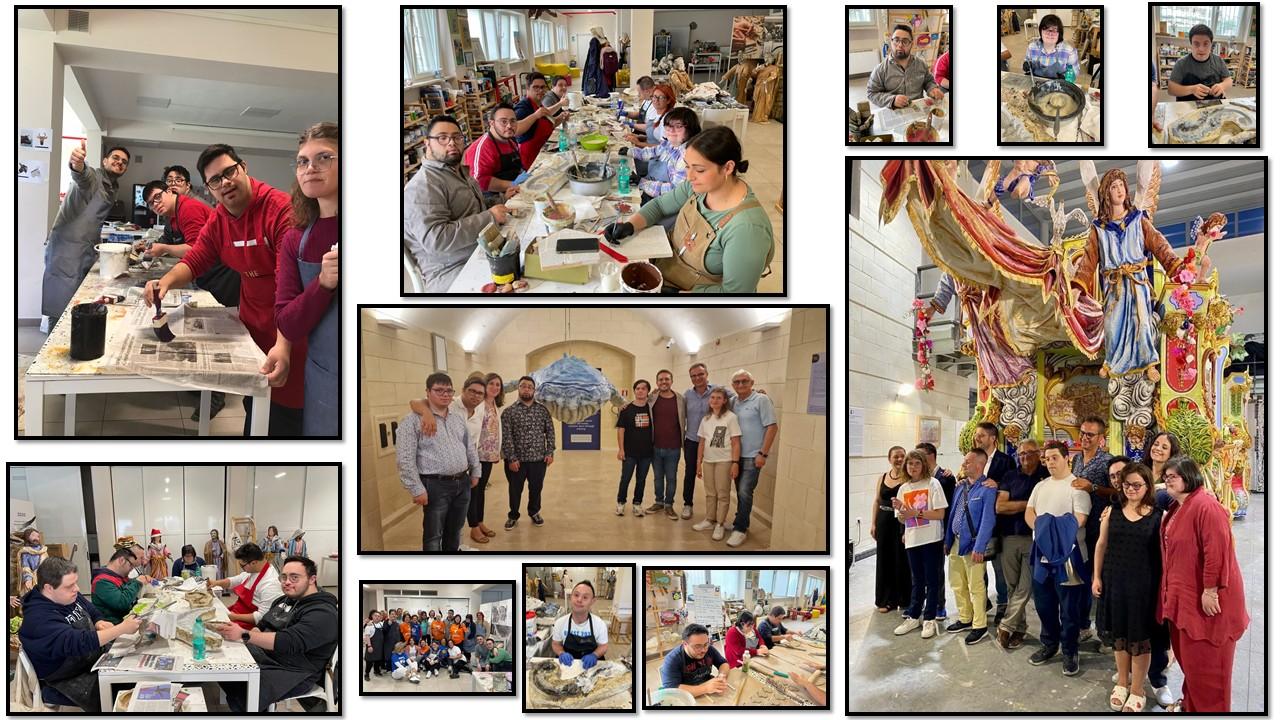
The idea of the "Artigianato Solidale" Workshop was born from Uccio, the artistic director of the workshop. In 2019, he proposed to the Oltre l'Arte Cooperative to try working on the creation of small artistic works together with Niccolò, a young man with Down syndrome. After some time, he realized that, thanks to the practice of craftsmanship, Niccolò was developing good manual skills and a sense of autonomy. Thus, the idea of integrating other young people with Down syndrome into the project was born.
Through workshops open to the community, in which we created artistic works of great value, we worked on processes of active participation, education, autonomy, social innovation, and urban regeneration, involving institutions and associations in the process.
Key objectives for sustainability
Key objectives for aesthetics and quality
For example, from 2020 to 2022, the Solidarity Craft Workshop group created the float for the patronal festival of the city of Matera, a major community event where tradition and a sense of belonging come together. More recently, a large papier-mâché whale was created and exhibited at the Ridola Museum in Matera; this artwork was made during workshops that involved numerous children.
The workshop experience demonstrates how art can be integrated with initiatives that promote inclusion, participation, and community well-being.
Key objectives for inclusion
Thanks to their employment, they can achieve economic independence, enhancing their dignity and self-esteem. Working in the workshop also helps them improve their cognitive and social skills.
The work of these young people and their dedication to daily activities is a great source of pride for all of us who work with them. Seeing their progress in both work and social autonomy every day motivates us to set even greater goals to achieve.
How Citizens benefit
In recent years, several works of art have been created thanks to community involvement: co-designed murals to revitalize urban areas, co-created sculptures, social animation workshops in schools to combat dropout rates, workshops for the prevention of NEET (Not in Education, Employment, or Training), and meetings with families to strengthen parent-child relationships through shared artistic experiences. These are just a few examples of how the workshop engages the local community, fostering civic engagement and overall well-being.
Physical or other transformations
Innovative character
Disciplines/knowledge reflected
Inclusive Education: Knowledge of inclusive education was integrated to ensure that the activities and approach were adaptable to the specific needs of participants with Down syndrome.
Psychology: A psychological understanding of cognitive and emotional development, particularly for individuals with Down syndrome, was crucial in designing activities that were both stimulating and emotionally supportive. Techniques drawn from developmental psychology helped tailor activities to foster creativity and motor skills while maintaining a positive emotional atmosphere.
Art and Visual Communication: The field of visual arts and design contributed in shaping the aesthetics and the creative process of the workshop. Techniques in color theory, composition, and visual storytelling were employed to allow the participants to explore their creativity freely while gaining practical skills. This interaction with visual art techniques also fostered a sense of accomplishment as participants could see their progress and create tangible results.
The collaboration among professionals from these different fields, such as art therapists, special education teachers, psychologists, and visual artists, was essential in ensuring that the project was both artistically valuable and inclusive. For example, art therapists provided emotional guidance while educators ensured that the teaching methods were accessible. Psychologists contributed insights on cognitive development, which allowed for tailored activities that promoted individual growth. Together, they ensured that the activities were not only creative but also therapeutic and educational, offering a holistic approach.
Methodology used
How stakeholders are engaged
The workshop team has conducted artistic residencies within the region, creating a co-designed artwork with the community of Corleto Perticara.
At the national level, the social cooperative Oltre l’Arte has received several awards and recognitions in the field of civil economy for its work.
Through the European project CraftHub EU, the workshop’s artistic director, together with one of the young participants with Down syndrome, conducted papier-mâché tradition workshops in Swansea, Wales.
The ability to build networks both locally and nationally has helped foster a culture of social work in the region, sharing experiences and know-how on how to empower young people with different abilities and give them a leading role in society.
Global challenges
The horizontal and inclusive approach that characterizes the work in the workshop aims to contribute to reducing inequalities for people with diverse abilities, promoting work that is dignified for everyone.
The choice to use waste materials to create works of art aligns with the fight against climate change, making cities more sustainable, and promoting responsible consumption.
The promotion of workshops aimed at the community encourages the participation of citizens of all ages, contributing to the creation of psycho-physical well-being. Additionally, the workshop’s actions aim to reduce educational poverty, through targeted initiatives aimed at young people and families
Learning transferred to other parties
Sustainability through the use of waste from other processes can be a replicable method at zero cost in artistic and craft contexts, where creativity is part of the circular economy.
The horizontal learning methodology allows everyone to contribute actively and continuously learn, placing themselves in a position of listening and sharing.
The possibility of using art as a means to create well-being and participation is a replicable methodology in any context, fostering both social and urban regeneration.
The elements of our solidarity craftsmanship workshop that could be replicated or transferred to other places, groups of beneficiaries, and contexts include both the methodology and the processes we use. Our approach of horizontal learning and teaching—where everyone is both a teacher and a learner—encourages active participation and fosters a collaborative environment. This model can be applied in other settings to promote inclusion and personal growth among individuals with diverse abilities.
In terms of processes, our focus on using discarded materials from other crafts to create works of art promotes sustainability and can be easily adapted to different artistic and craft communities, emphasizing the value of creativity within the circular economy. Additionally, our emphasis on community involvement and creating a sense of shared purpose can be replicated to build connections and foster social regeneration in various contexts, whether urban or rural.
Next steps
Among the possible future goals, we foresee new job placements for individuals with diverse abilities, thanks to the increase in job requests generated by improved communication of the work already completed.<br />
We aim to increase the hours and work commitment of the young people already involved.<br />
We also intend to make the workshop space a place of aggregation, activation, and participation for a greater number of civil society organizations in the area.<br />
Additionally, we plan to develop a solidarity tourism model by recovering the space above to welcome tourists and enhance the autonomy levels of local individuals with disabilities who will be involved in hosting.<br />
Certainly, we want to continue joining regional/national/european hubs and networks for learning exchange, to improve our practice and apply for international awards/ attend professional conferences / workshops for networking and disseminating the outcomes and collecting feedback.