Montagna Fiorentina
Basic information
Project Title
Project Description
Current stage development
Project Region
Municipality
EU Programme or fund
Which funds
Description of the project
Summary
Citizen and stakeholder engagement has shaped project specific objectives around sustainable tourism, social cohesion, accessibility, and innovation in education and employment.
The initiative benefits residents, especially youth and women, by empowering them through placemaking, co-creation, and training. It also attracts visitors, expands sustainable experiences, and fosters rural entrepreneurship, benefiting local businesses and creatives. Non-profits play a crucial role in co-producing cultural programs. Public institutions and higher government levels support the strategy by financing interventions through regional, national, and European programs.
A key intervention is the adaptive reuse of Chalet del Lago di Londa into a multifunctional hub for culture and sustainable tourism. Located at the gateway to Casentino Park, the renewed Chalet eliminates architectural barriers and integrates renewable energy, serving as a model for rural heritage repurposing.
Expected outcomes include territorial resilience, new job opportunities, and stronger local economy. Montagna Fiorentina provides a governance and funding framework adaptable for small municipalities, ensuring long-term transformation. By merging multi-level policies, participatory planning, and cultural activation, it offers a scalable model for rural areas, proving that small municipalities and communities can co-design the future of rural Europe.
Key objectives for sustainability
The Chalet del Lago di Londa embodies NEB Ambition I: To Repurpose, transforming an abandoned facility into a multifunctional hub. Instead of demolishing and rebuilding, the project preserves existing materials, avoids soil sealing, and integrates locally sourced terracotta and timber, reducing its carbon footprint while supporting local craftsmanship. Its design ensures long-term adaptability, allowing spaces to evolve with community needs while minimizing resource consumption.
Aligned with NEB Ambition II: To Close the Loop, the project enhances energy efficiency, reducing reliance on external resources. Passive design strategies - high-performance insulation, natural ventilation - cut energy demand, while solar panels and heat pumps generate renewable energy. This lowers emissions while making sustainability accessible even in small municipalities with limited budgets.
Sustainable mobility solutions further reduce environmental impact. The Chalet will become a gateway to slow mobility, connecting e-bike sharing, pedestrian pathways, and improve public transport links. Reducing car dependency lowers CO₂ emissions and enhances accessibility for both residents and visitors, improving rural connectivity.
Located in a forest-rich area (96% coverage), partly managed with FSC and PEFC certification and partly protected by a national park, the project does not prioritize ecosystem restoration (NEB ambition III), but focuses on impact minimization.
By showcasing how rural towns can repurpose built heritage using low-carbon methods, the project offers a transferable model for sustainable regeneration.
Key objectives for aesthetics and quality
The Chalet del Lago di Londa is not an imposition on the landscape but a dialogue with it. Its renovation prioritizes light, warmth, acoustics, and textures, creating a welcoming space in all seasons. It is a gathering place where nature, culture, and daily life converge. This transformation integrates built spaces with cultural activation, redefining beauty—not as mere appearance, but as a lived, evolving relationship between people and place (NEB Ambition I: To Activate).
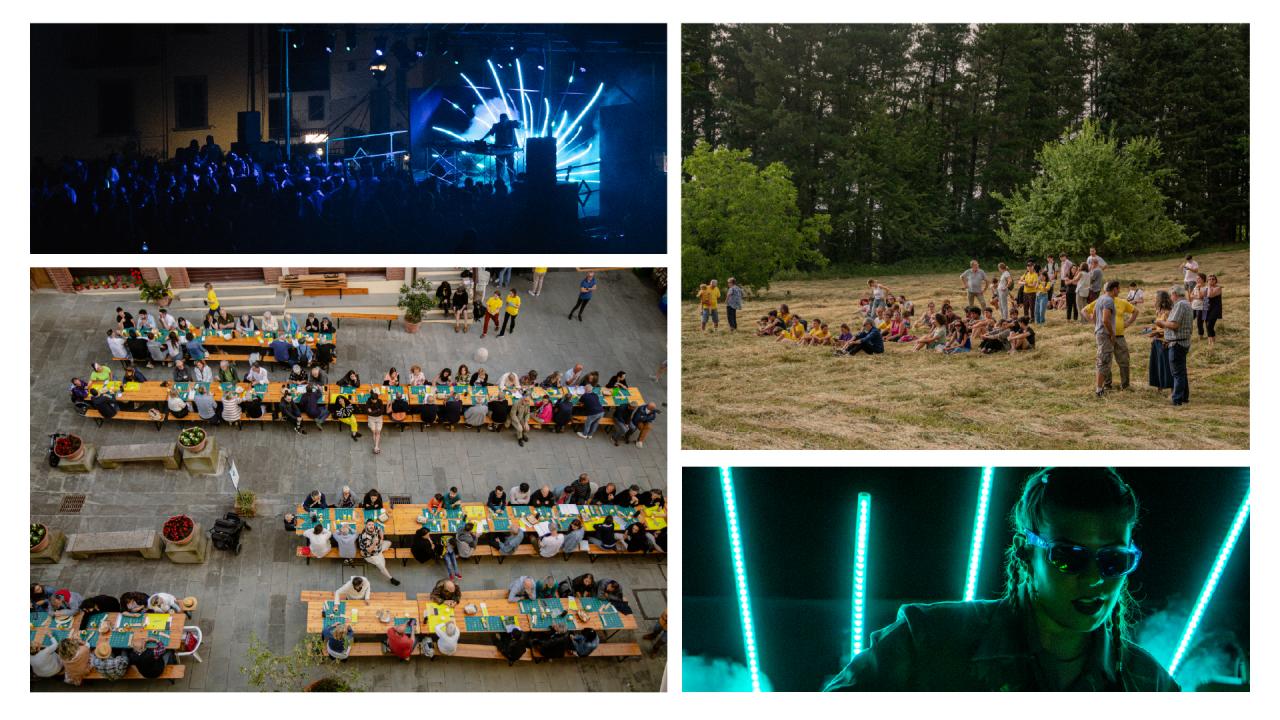
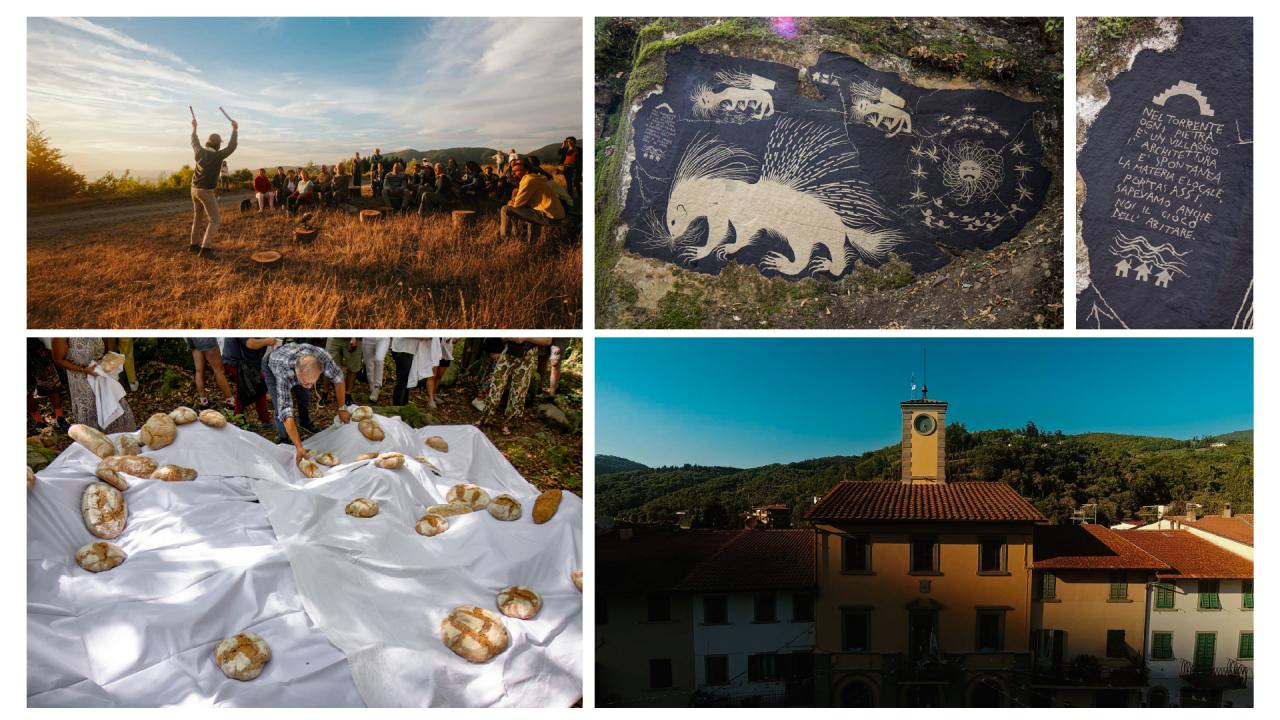
Artistic interventions ensure the Chalet is not just restored but continuously reinterpreted by those who inhabit and visit it. The Festival della Montagna Fiorentina (montagnafiorentina.com/festival/) and A Dimora artistic residencies (www.adimora.xyz/) are central to this process, embedding aesthetics in daily life through performances, storytelling, and artistic research. By fostering interaction between residents, visitors, and creatives, they transform spaces into dynamic cultural environments, reinforcing the Chalet’s role as a social and artistic hub (NEB Ambition II: To Connect).
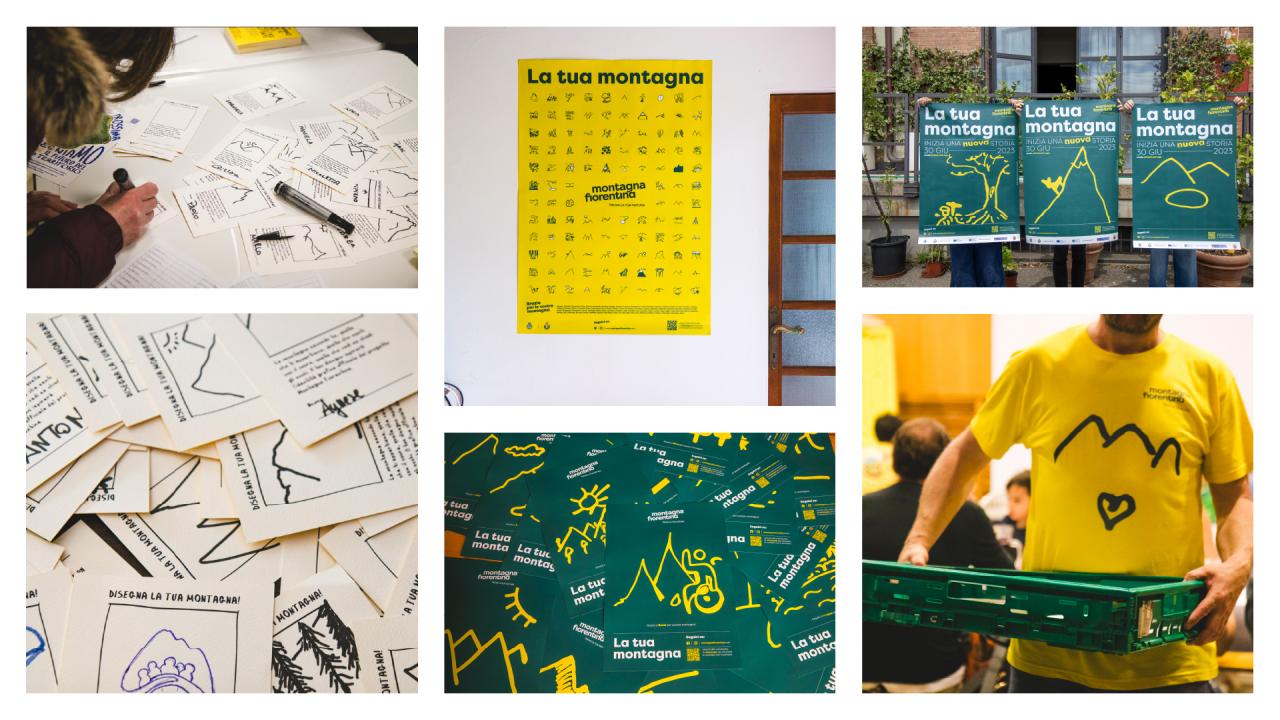
Montagna Fiorentina's visual identity, co-created through participatory workshops and community mapping, reflects the diversity of those who shaped it. Rather than a static representation, it evolves with the project, reinforcing a shared sense of belonging and distinct presence.
Rather than turning rural heritage into a static postcard, this initiative embraces change as a collective, ongoing act (NEB Ambition III: To Integrate). The Chalet, festival, and residencies are interconnected platforms sustaining Montagna Fiorentina’s vision for an evolving mountain culture. This is not just a conservation project—it creates new cultural values and redefines the relationship between people and places.
The Chalet is not a finished space but an invitation to gather, to share, and to imagine what comes next.
Key objectives for inclusion
The Chalet del Lago is designed for everyone (NEB Amb. I: To Include). Its renovation ensures Barrier-free access for people with disabilities, elderly, and young families. Affordability prevents exclusive-use models that limit cultural access. Its repurposing involved underrepresented groups—young people, women entrepreneurs, rural workers, and local businesses—alongside universities and public entities like the Unione dei Comuni and the Region, embedding their needs into the transformation.
Beyond consultation, the initiative fosters collaborative governance models (NEB Amb. II: To Consolidate). Co-production models characterized intangible services, such as a digital platform for sustainable tourism (montagnafiorentina.com) and long-term cultural programming for the Festival della Montagna Fiorentina and A Dimora artistic residencies. The intermunicipal approach strengthens cultural programming and public services, preventing fragmentation and fostering collaboration.
Montagna Fiorentina does not aim to replicate urban regeneration approaches but rather to reverse rural decline (NEB Amb. III: To Transform). The Festival and A Dimora are not just events but cultural ecosystems, positioning rural areas as spaces of creation rather than extraction. Many stakeholders engaged in Montagna Prossima are now co-owners of interventions, ensuring local actors define transformation rather than adapt to it.
By embedding inclusive governance, economic participation, and identity co-ownership, Montagna Fiorentina is not just making inclusion possible - is redefining power in rural development.
How Citizens benefit
The process began with listening sessions in Londa and San Godenzo, where long-time residents, youth considering leaving, and local businesses defined priorities together. Rather than just collecting opinions, discussions led to working groups on tourism, community spaces, and local economies, where participants co-designed proposals instead of reacting to external plans (NEB Ambition I & II: Consultation to Co-Development).
The Chalet del Lago is a focal point. Through co-design sessions, residents shaped its future, imagining services for gathering, learning, and reconnecting with the landscape. Women, youth, and underrepresented groups played an active role in defining its use, programming, and governance.
But participation extends beyond design—into long-term community ownership (NEB Ambition III: Towards Self-Governance). Many stakeholders from Montagna Prossima are now co-owners of interventions, formally recognized through public-private partnerships. Discussions continue on how local associations, cooperatives, and informal groups can manage spaces like the Chalet, ensuring engagement outlives funding. Programming remains open and adaptable, shaped by community needs rather than external dictates.
Montagna Fiorentina embodies NEB Ambition II: Co-Development, with citizens shaping decisions, and moves toward NEB Ambition III: Self-Governance, establishing long-term, community-led structures. The goal is not just participation but a shift in agency, where residents move from being consulted to leading the process and shaping their future.
Innovative character
Unlike top-down approaches, Montagna Fiorentina began with a shared vision, defined by Londa and San Godenzo, then refined through Montagna Prossima participatory process, where residents actively shaped their future. The result is a holistic regeneration plan that blends infrastructure (hardware) with community activation (software).
Instead of competing for resources, they built Public-Private Partnerships (PPP) and secured funding for physical renovations (e.g., Chalet del Lago) and actions placing participation, culture, and art at the core.
What makes this model innovative is that it goes beyond securing funding. Key interventions are distributed among local associations, cooperatives, and social enterprises, ensuring decentralized ownership. This prevents projects from becoming institutionally dependent and allows local actors to take autonomous leadership, as reflected in the attached stakeholder map.
To address mountain areas’ lack of accessibility to information, the initiative developed a digital platform aggregating cultural heritage, local services, and regeneration efforts (montagnafiorentina.com). Previously, this information was scattered, making navigation difficult for residents and visitors. The platform enhances accessibility, inclusion, and sustainable tourism.
Montagna Fiorentina, beyond spatial transformation, is a scalable rural model. It shows how small communities can overcome fragmentation, align planning with citizen aspirations, integrate cultural and environmental strategies, and secure collective resources to shape their future.
Disciplines/knowledge reflected
Beyond academia, urban planners, designers, and sustainability experts are also involved. The OSSIGENO social innovation residency (2023) brought territorial strategists, policymakers and social entrepreneurs to Londa, facilitating methodological exchanges for rural transformation. At a beyond-disciplinary level, the project merges local wisdom, traditions, and lived experience, balancing history with contemporary needs. Participatory mapping and co-design with 2,000 residents shaped Montagna Fiorentina’s identity, now embedded in the visual communication of all the Montagna Fiorentina initiatives alongside territorial marketing.
On creativity, A Dimora brings artists and performers together within the community through site-specific works that reinterpret the landscape and reimagine local experiences. Their projects, showcased during the Festival della Montagna Fiorentina, contribute to a living cultural ecosystem where art, nature, and community intersect.
This model fosters cultural and economic resilience by merging research, creative expression and new governance models. The Chalet fits within a broader revitalization frame, ensuring that years of processes will have a place to grow in.
Methodology used
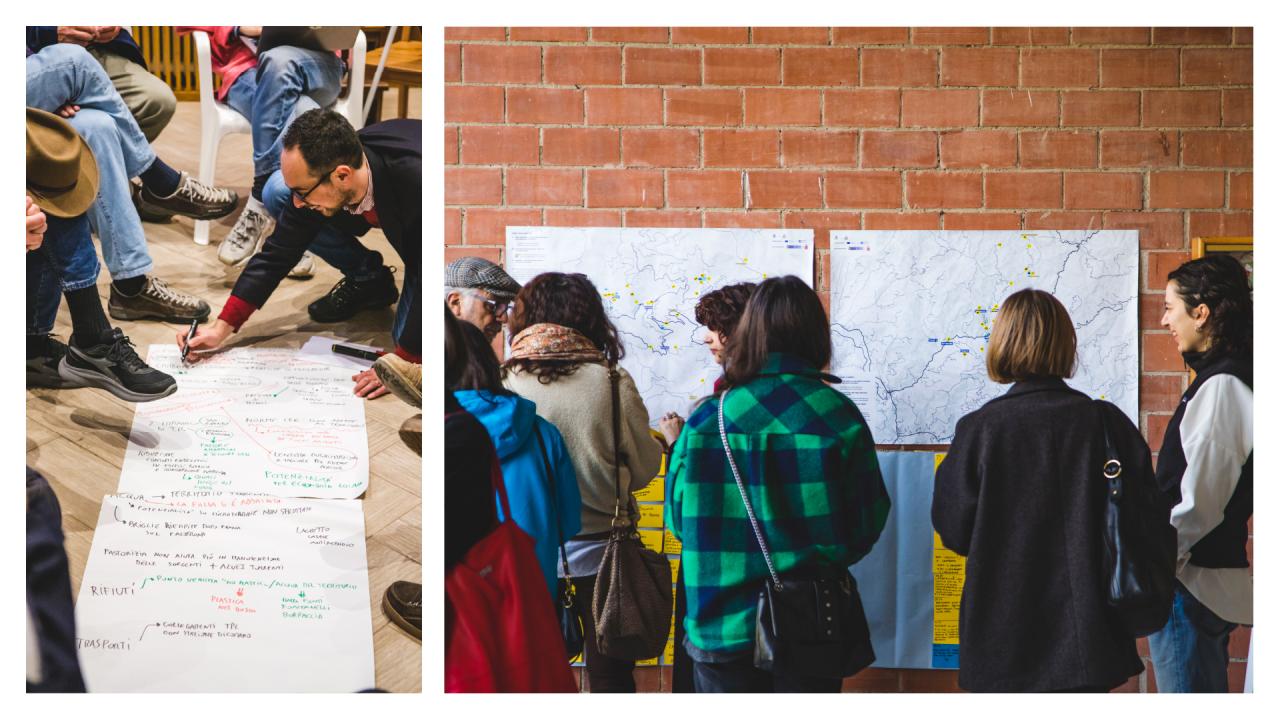
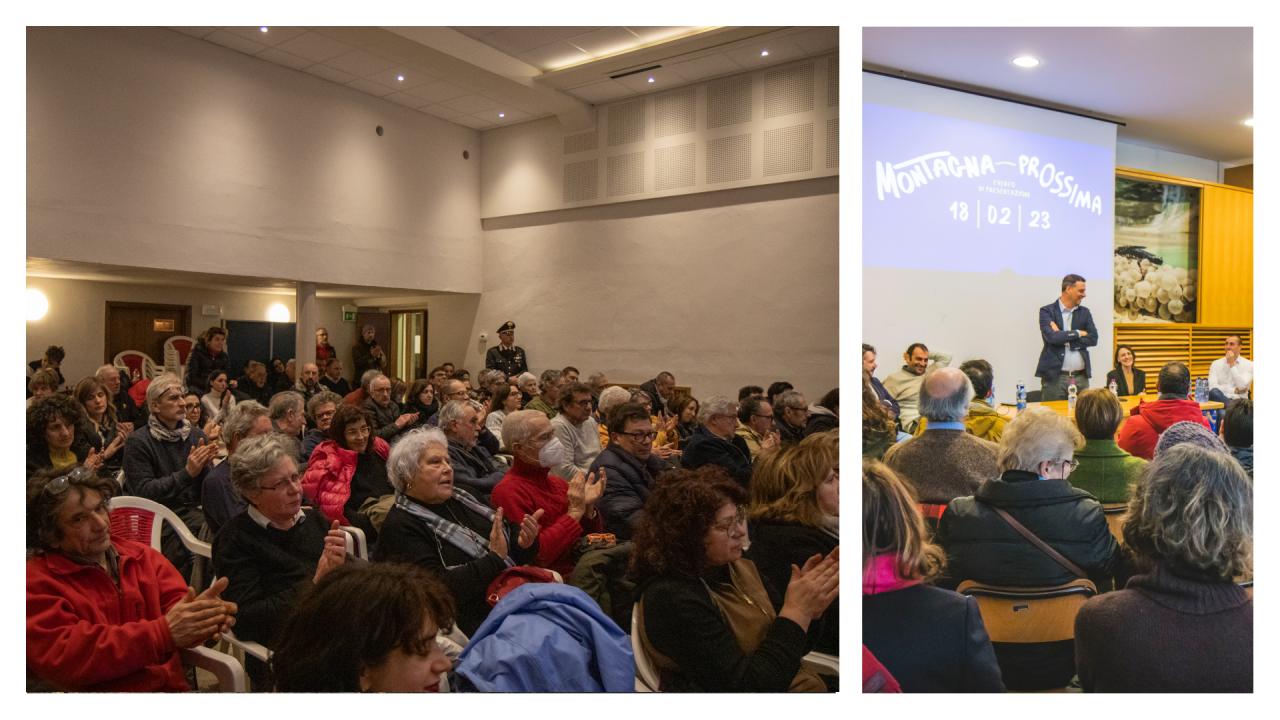
From the start, the New European Bauhaus (NEB) Compass guided municipalities as facilitators, ensuring a place-based, community-driven transformation (NEB Amb. I: To Activate). This took shape through Montagna Prossima, as the 2021 Strategic document—born of intermunicipal dialogue—opened to the community. Using Snowball Sampling, key stakeholders were mapped and engaged, while listening stations, thematic mapping, and co-design workshops allowed residents to express themselves and shape the priorities of the strategy.
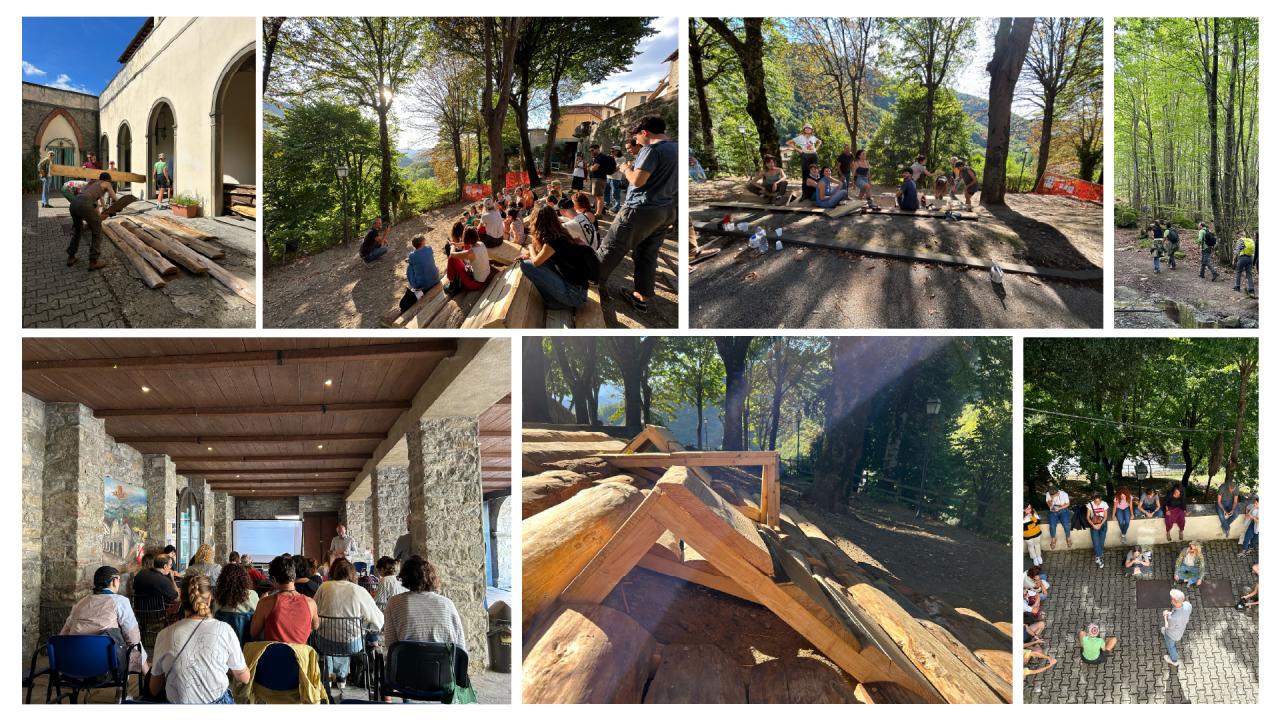
Simultaneously, NEB Amb. II: To Connect informed how cultural and artistic interventions became central. The Festival della Montagna Fiorentina and A Dimora artistic residencies serve as platforms where creative practitioners interact with communities, generating new cultural narratives and reinforcing the social fabric. These events also test future Chalet programming.
The Chalet del Lago -tangible intervention- follows a NEB-aligned sustainability approach: it reuses existing infrastructure (To Repurpose), eliminates architectural barriers (To Include), and integrates renewable energy (To Close the Loop). More than a renovation, its co-developed governance ensures community participation remains central beyond completion.
Montagna Fiorentina embeds participation into governance (Towards Self-Governance). By combining policy alignment, participatory research, cultural production, and adaptive infrastructure, it offers a replicable model where small municipalities actively shape their future rather than passively managing decline.
How stakeholders are engaged
At local and regional level, Londa and San Godenzo took a joint approach to rural regeneration, prioritizing collaboration between small municipalities over isolated efforts. At the regional level, Montagna Prossima participatory process was funded by Tuscany’s Participation Authority, in order to foster dialogue between public policies and local communities. Residents, associations, businesses and other local public bodies - In collaboration with the Region itself - co-designed public spaces, new value chains, and cultural programming, leading to the Montagna Fiorentina Initiative.
At national level, the funds to implement were secured by the two municipalities through multi-level public policies. A significant portion (appr.2 million euros) comes from a Ministry of Culture call via NextGen EU funds (Bando Borghi), while the remaining (appr.1.2 million euros) comes from Development and Cohesion Funds and the European Regional Development Fund, through negotiations with the Union of Municipalities and Tuscany Region
The place-based process of designing the local development strategy, leveraging culture and the capacity of stakeholders to attract funding, is laying the foundation for Montagna Fiorentina to be studied and replicated both nationally and internationally. It is already one of eight pilots for rural cultural regeneration through Future Divercities (CREA-CULT-2021-COOP-3), testing artistic residencies for community activation. Local Model Forest is engaging with the Mediterranean Model Forest Network, shaping discussions on sustainability and rural governance.
Global challenges
One of the most pressing global issues is the decline of rural and mountain areas, where lack of economic opportunities and inadequate services and infrastructures lead to outmigration and the erosion of local cultural identities. Instead of merely mitigating these effects, Montagna Fiorentina actively reinvents the role of small municipalities, proving that they can be sites of innovation rather than places in decline. Through participatory planning, intermunicipal cooperation, and multi-source funding strategies, the initiative offers a model for reversing depopulation trends by making rural life more viable and attractive.
The initiative also addresses the challenge of sustainable land use and heritage conservation in the face of climate change. Many rural areas struggle to balance preservation with the need for environmental and energy efficiency upgrades. Montagna Fiorentina demonstrates how historic rural buildings can be adapted using sustainable renovation techniques, ensuring that spaces like the Chalet del Lago and Palazzo del Campana become functional, low-impact community hubs.
Finally, the initiative tackles the global need for more inclusive, bottom-up governance models. Communities often experience top-down decision-making that fails to engage residents in shaping their future. The initiative provides a transferable approach where local governments and communities co-develop territorial strategies, ensuring that investments align with real needs. This method offers a blueprint for small municipalities worldwide looking to build participatory governance structures that are adaptable, inclusive, and sustainable over time.
Learning transferred to other parties
The built environment approach is also highly replicable. The Chalet del Lago is part of a broader strategy prioritizing sustainability, flexibility, and accessibility. This model is already being replicated in San Godenzo, where Palazzo del Campana, another historic public space, will undergo a similar co-designed transformation, demonstrating this methodology’s adaptability to rural contexts.
Another key transferable element is Montagna Fiorentina’s financial strategy, aligning multi-level funds for long-term activation. This prevents rural projects from becoming static and keeps them economically and socially relevant over time.
The initiative’s distributed governance model shifts ownership from municipalities to a network of associations, social enterprises, and local actors. The attached stakeholder map shows this scalable framework, useful for small towns with limited capacity. Moreover the involvement of the academia in a living lab reinforce the project capacity of modeling and scaling the processes, at the same time strengthening its transferability.
Through documentation and national and European engagement, Montagna Fiorentina provides a roadmap for municipalities integrating governance, sustainability and cultural heritage.
Next steps
Montagna Fiorentina is a scalable model of sustainable, inclusive, and beautiful rural regeneration rooted in the New European Bauhaus (NEB) Compass. It integrates existing initiatives with new strategic actions, advancing toward the highest NEB ambitions.<br />
<br />
The Chalet del Lago and soon the Palazzo del Campana will become cultural, economic, and social hubs, ensuring long-term impact beyond renovation. Their activation is strengthened by artistic residencies and the Festival della Montagna Fiorentina, reinforcing identity, creative engagement, and social cohesion (To Connect). Expanding its vision, Montagna Fiorentina also introduce new economic and environmental actions. The Londa School of Economics, a distributed learning and practice lab, rethinks rural economies by bringing together researchers, policymakers, and local actors to foster alternative models (To Transform). FOR.SA – Forest Therapy, will foster nature-based well-being, environmental education, and sustainable tourism, shifting from sustainability to regeneration (To Inspire Change).<br />
<br />
Montagna Fiorentina is Sustainable, embedding adaptive reuse, energy efficiency, and sustainable mobility, progressing from impact reduction to active regeneration. It is Beautiful, shaping placemaking, intergenerational connection, and cultural experimentation, deepening Montagna Fiorentina’s collective identity. It is Together, ensuring broad, intersectional participation, fostering long-term engagement through local partnerships, redefining rural living as an opportunity, not a limit. <br />
<br />
Montagna Fiorentina fully embodies NEB Working Principles. Participation, initiated through Montagna Prossima, has evolved into co-development. Multi-level engagement aligns local action with regional, national, and European strategies, ensuring policy integration and funding continuity. Transdisciplinarity fosters collaboration between designers, researchers, creatives and communities, ensuring holistic solutions.<br />