Le Merle Blanc
Basic information
Project Title
Full project title
Project Description
Current stage development
Project Region
Municipality
EU Programme or fund
Description of the project
Summary
As a key neighborhood in the city, the Merle-Blanc project is a priority for the municipal majority. This neighborhood consists of private homes and buildings or housing estates. No major outdoor development had taken place since the construction of these buildings. Residents expressed a lack of pride in living in this area. Additionally, the aging of part of the population and the establishment of an emergency accommodation center for asylum seekers reinforced the strong need to promote "living together."
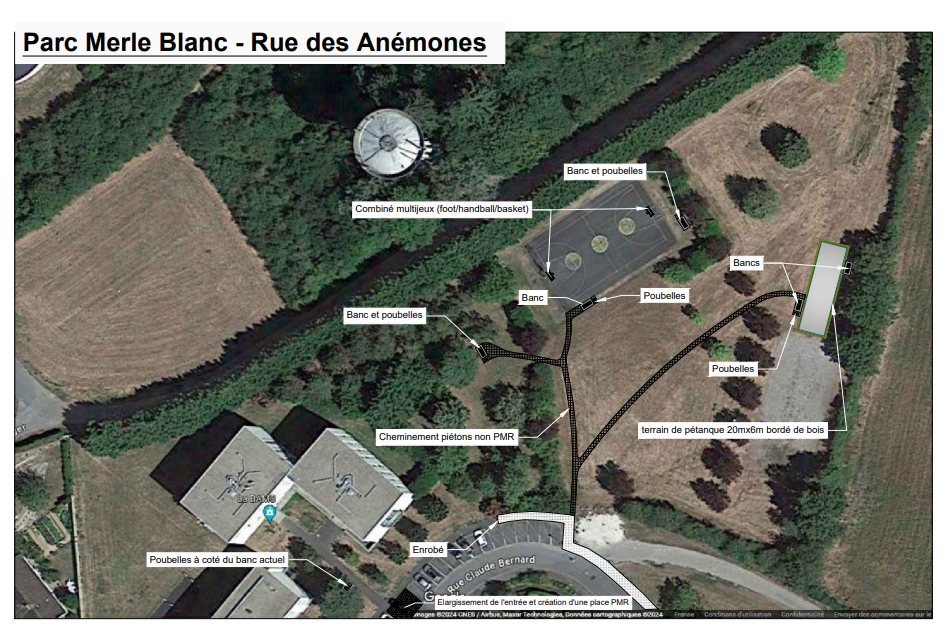
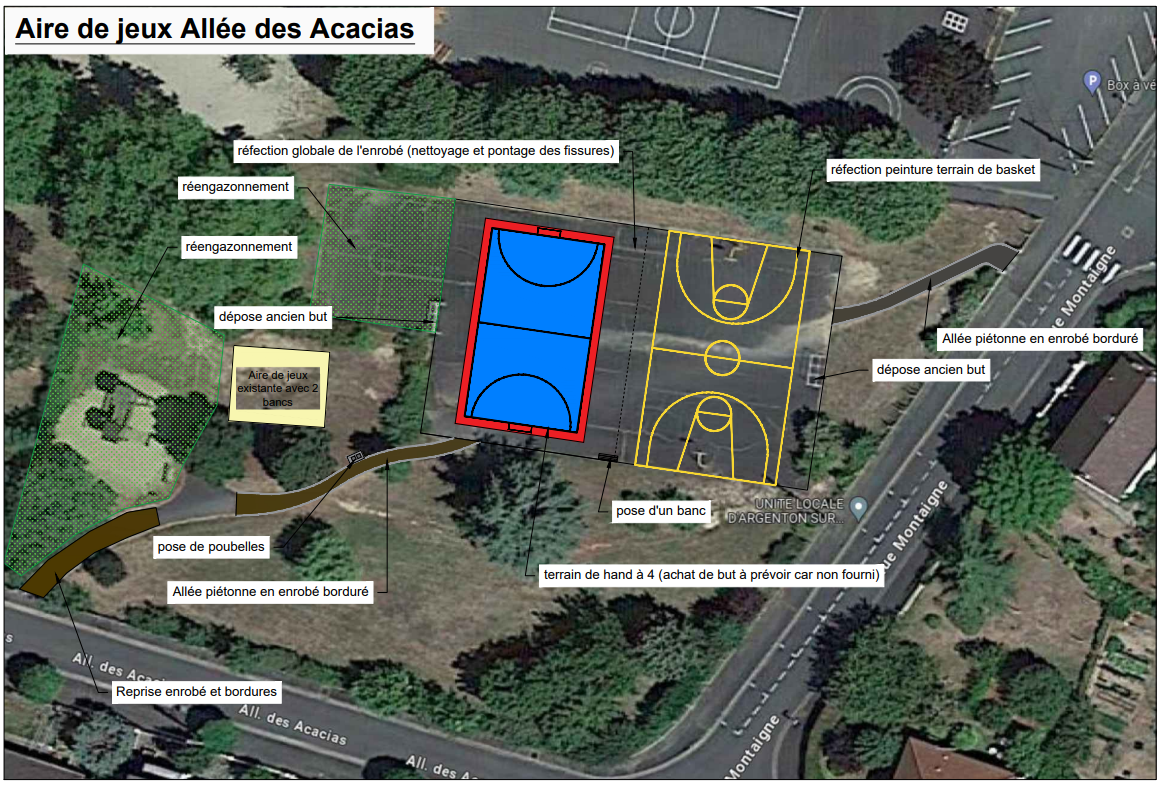
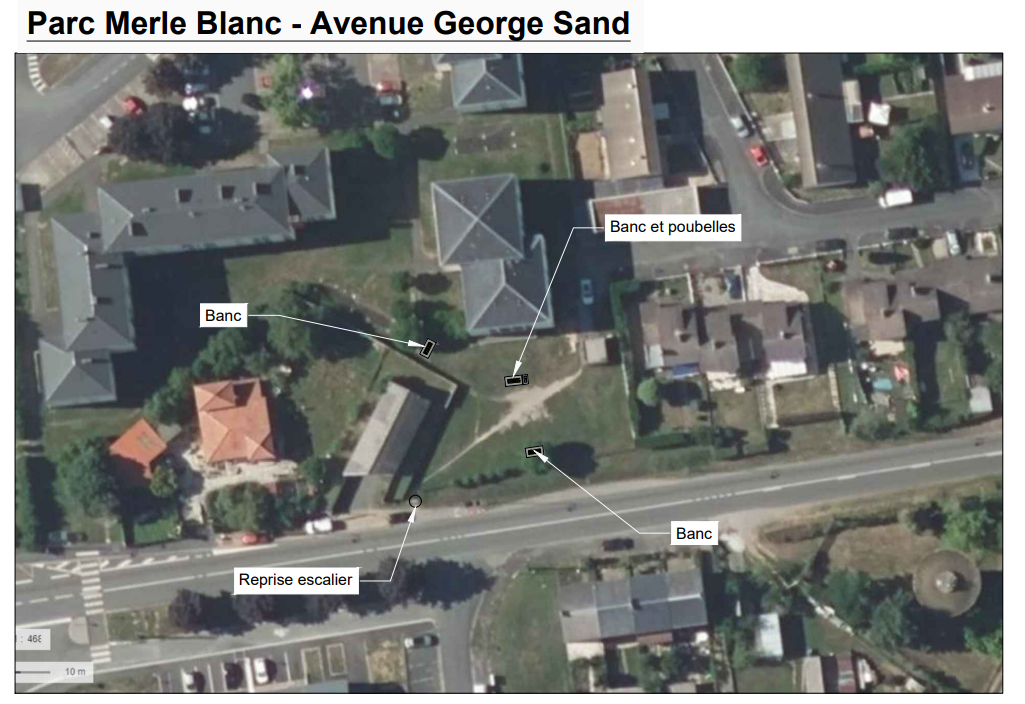
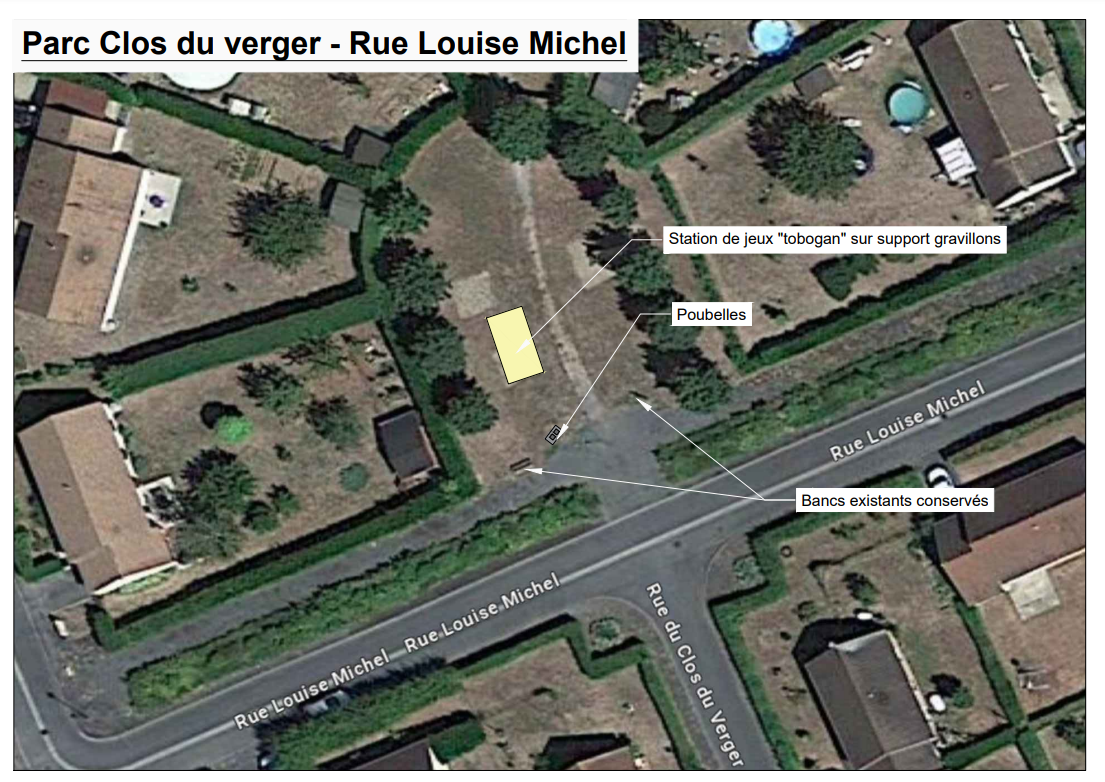
A citizens' workshop was set up to decide how to develop these public spaces. All residents were invited to participate in the workshop, which met five times from January to July 2024 to conceive all elements of the project (pedestrian paths, trees, playground areas, sport infrastructures…). The work will begin in the spring of 2025, with the second phase scheduled for the fall of the same year.
This workshop resulted in the establishment of a permanent neighborhood council for Le Merle Blanc, which will support future projects. This council will serve as an ongoing platform for citizen involvement, ensuring that future developments continue to meet the needs and expectations of the community. The BAMS (Bienveillance, Aide, Mixité, Solidarité) association, heavily involved in this initiative, played a key role in facilitating the workshops and fostering dialogue. Thanks to this involvement, BAMS was recognized as a social living space, which will enable them to fund a full-time employee to support their activities. Therefore, this initiative has not only revitalized public spaces but also laid the foundation for a sustainable model of participatory governance, promoting well-being and social cohesion in the neighborhood.
Key objectives for sustainability
The project aims to adapt to and mitigate climate change on this predominantly urban site. Its four main sustainability objectives therefore concern the restoration of the soil permeability, the reduction of water use, the fight against the heat island phenomenon and the development of soft mobility.
Heavy rainfall linked to global warming is increasing the risk of flooding in the lower part of the city. One of the primary objectives of the Merle-Blanc project was therefore to reduce the high level of soil waterproofing, particularly in the higher urban areas, to improve rainwater absorption. Grass have been given priority in the choice of soil, and areas that are to remain "hard" will be treated with permeable materials.
Trees, shrubs and flowerbeds will be resistant to temperature rises and consume little water. Perennial plants will be used in the beds. All techniques to reduce the use of water in managing green spaces will be used. Rainwater tanks have been installed as part of the construction of the new technical centre, which will be built nearby.
Finally, to ensure that the Merle Blanc and its surroundings tend more towards a cool island than a heat one, the existing tree-lined areas will be maintained, and others will be created in places chosen by the residents.
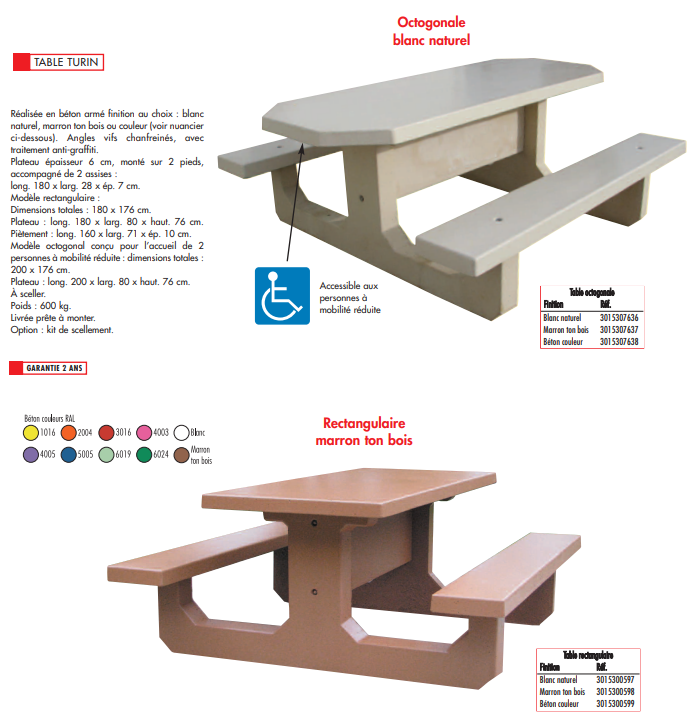
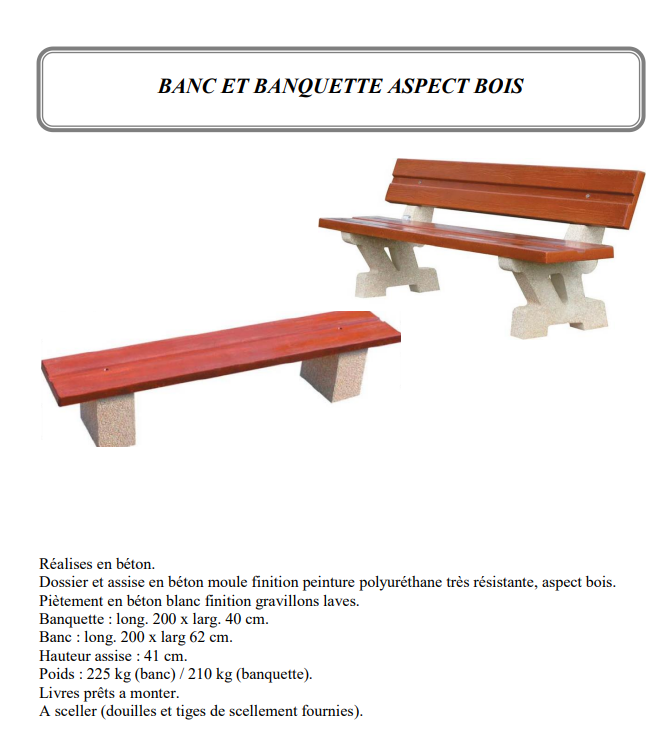
Finally, particular attention has been paid to the choice of street furniture, to encourage sustainable and active forms of mobility, whether cycling or walking. This furniture will comply with specifications in line with expectations in terms of sustainability.
Key objectives for aesthetics and quality
We deliberately chose not to commission a landscape architect. We wanted to rely solely on the proposals and decisions of the citizens' workshop and on the experience, supported by the skills of the municipality's "green spaces" department, to maximize residents empowerment and that the final project resembles them as closely as possible.
As a reminder, we wanted the residents of the Merle Blanc to be proud of the public spaces that surround them. Their landscaping should make them want to walk around and relax, just like in their own garden. If the municipality had opted to use an external service provider to decide on the project, it would have run the risk of failing to keep all residents on board as soon as the dialogue became too technical. This participatory approach fostered strong emotional engagement, as residents could see their ideas take shape, reinforcing their attachment to their neighborhood and enhancing their everyday experience.
The exemplary nature of this initiative lies mainly in its bold approach to governance and funding allocation. By deliberately choosing not to appoint a project management firm, the municipality ensured that the maximum budget was dedicated to tangible improvements in public space rather than intermediary fees. While this decision made the project less eligible for certain national and regional subsidies—many of which require the involvement of private firms—it reinforced direct collaboration between citizens, elected officials, and municipal staff. This streamlined approach fostered a more organic and resident-driven transformation, ensuring that every euro spent translated into visible, meaningful changes, resulting in a more meaningful and welcoming urban environment.
Key objectives for inclusion
Discussions within the citizen workshop highlighted the need for meetings between residents and the facilitators of the Center for Asylum Seekers of the neighborhood. The first of these meetings took place in early 2025 and will be held annually.
The pedestrian path to be developed will facilitate interactions between the nursing home residents and neighborhood inhabitants, as well as to improve access to the nearby healthcare center—one of the largest in the Centre-Val de Loire region, with over 50 practitioners.
Additionally, pedestrian connections with the lower part of the city, where the commercial center and sports hub are located, are included in the overall project, for a better access to services, sports and culture structures.
Cherry on the cake, the citizen participatory workshop (open to all residents, without any selection) created for this project has ultimately become a permanent neighborhood council at the residents’ request. This is a true success for an inclusive neighborhood governance, as the municipality was keen to ensure that the dialogue established during the project’s development phase would continue into the maintenance phase. The more the project reflects the residents' choices, the more they will collectively care for its upkeep. A landscaped development is a living space that requires ongoing attention, both from its users and from those responsible for its maintenance.
How Citizens benefit
The success of this workshop, both in terms of the quality of its output and the number of participants, led to the continuation of the initiative. Following this experience, a neighborhood committee was created, encompassing all residents of the northern part of the city, which corresponds to the school catchment area for the nursery and elementary schools.
This committee is made up of residents over 16 years old who volunteer to take part. If the number of volunteers exceeds the available seats, an election process is implemented. Associations involved in neighborhood life also participate, including representatives from the community center, the events committee, the parents’ association, and the refugee support group.
This neighborhood committee is intended to become a model for participatory democracy. Its mission is to involve the local population in the decision-making process for actions that concern them and their implementation. For example, the upcoming demolition of four buildings, each containing six apartments, will free up space that will be designed and developed with input from the residents.
This participatory approach has not only ensured that residents are actively involved in shaping their environment but has also fostered a stronger sense of ownership and pride in their neighborhood. Their direct input has influenced key design decisions, ensuring that future developments truly reflect the needs and aspirations of the community.
Innovative character
First, the participatory process enabled unprecedented citizen engagement by placing residents at the heart of decision-making from the definition of needs to project design. While consultations are often limited to isolated discussions, this project relied on a structured citizen workshop that gathered a diverse group of residents (parents, seniors, social workers, newcomers).
Next, the absence of traditional project management represented a break from conventional public works models. By entrusting a part of the implementation to municipal technical services and involving citizens in prioritizing expenses, the project achieved a significant reduction in costs while ensuring better alignment with local expectations. This model demonstrates that a more flexible and inclusive approach can result in high-quality outcomes without heavy investments in external engineering.
Finally, this initiative offers an evolving vision of urban development, with a phased implementation according to a controlled budget, and keeping unselected proposals for future stages. This flexibility ensures that the project continues to meet the changing needs of the residents, avoiding the static nature of conventional urban development.
Thus, this innovative approach offers a new path to reinvent public spaces through shared governance, optimized resource management, and collective ownership of living environments.
Disciplines/knowledge reflected
Key disciplines and knowledge areas integrated into the project include three main fields.
First, urban planning and social inclusion: Citizens shared their experiences of mobility, accessibility, and shared spaces, fostering a design that promotes interaction between different social groups.
Then, public finance and technical execution: The municipality's internal expertise ensured a realistic budget and efficient implementation, maximizing investment in infrastructure rather than consultancy fees.
Finally, environmental considerations: Discussions included green spaces and pedestrian-friendly areas, in line with sustainable urban development principles.
This transdisciplinary approach aligns with the New European Bauhaus vision, where community-driven processes bridge urban planning, social cohesion, and sustainability. The added value of this model lies in its ability to foster stronger community cohesion, empower local actors, and create public spaces that are both functional and deeply rooted in residents' identities.
Methodology used
1st step – Setting up: As soon as the redevelopment of the district was confirmed as a political objective, a participatory body was created to involve the residents. Five workshops were held in total, each led by a pair of a local councillor and a member of the BAMS association.
2nd step – Creating a climate of trust: The first workshops focused on creating links between the participants, to define a framework conducive to dialogue.
3rd step – Design: Following workshops focused on encouraging the expression of concrete ideas, through participative tools facilitating the active involvement of citizens. For example, one of them was an ideation walk around the neighbourhood. Each workshop was the subject of a detailed report, and several feedback sessions were organised.
4th step – Feasibility assessment: Once all proposals gathered, the Mairie assessed the cost and feasibility of each idea. It appeared that the budget required to implement all the proposals exceeded the budget limits.
5th step - Prioritization: New editions of the citizens' workshop were therefore organised, this time to prioritise ideas. The proposals not selected as priorities were retained for a second phase of the project, once a larger budget had been secured.
6th step – Implementation: Public procurement tenders are to be launched (in March) to select the providers that will implement the selected ideas.
We opted for this methodology to put residents at the heart of the decision-making process. The Mairie acted as a facilitator, securing both the framework of the process and the feasibility of the project.
Now that the participatory body set up as part of the project has been established as a permanent neighbourhood council, this methodology can be replicated for the implementation of future projects.
How stakeholders are engaged
The Department of Indre played an active role through the involvement of local departmental councilors. The councilor of the canton participated in the citizen workshop, and the Fonds d’Actions Rurales contributed €33,000 to finance investments related to the project.
At the national level, the Caisse des Allocations Familiales (CAF) through its local services is closely monitoring the progress of this initiative. It has approved the creation of a Social Living Space (EVS) and a Parent-Child Reception Center (LAEP) in the neighborhood. That will open once the facilitators will have completed the training required by the CAF.
The project's environmental and housing aspects align with various strategies and recommendations established by the Centre-Val de Loire Region and the European Union. The project has also been identified as a pilot initiative by regional services.
This initiative brings together stakeholders at multiple levels, from local citizen engagement to departmental funding and regional oversight. Each level plays a role in ensuring the project’s success, demonstrating an effective model of multi-level governance that balances grassroots participation with institutional support. A future potential European award would complete the scheme!
Global challenges
First, regarding climate change adaptation, the project incorporates sustainable solutions that enhance resilience. For example, the redesign includes green spaces that mitigate urban heat islands and improve local air quality. The introduction of permeable surfaces helps reduce runoff and water absorption, addressing issues of flooding, a concern exacerbated by climate change.
In terms of social cohesion, the project directly engages with the global issue of migration and often of the consequent issue of social cohesion. The Merle Blanc neighborhood features an Hébergement d’Urgence pour Demandeurs d’Asile (HUDA), which provides emergency housing for asylum seekers. The initiative promotes interactions between refugees, residents, and other vulnerable groups such as seniors, through community events and shared spaces. Regular meetings between local inhabitants and refugees foster mutual understanding and integration, also facilitated by the action of the BAMS association now recognized as an Espace de Vie Social (EVS, see earlier).
The project encourages the coexistence of different social groups by providing inclusive public spaces, such as pedestrian walkways, that connect the residents with the refugee center, senior homes, and nearby amenities. This physical and social integration tackles global challenges related to migration by creating a cohesive environment where people from diverse backgrounds can coexist harmoniously.
In sum, the Merle Blanc project offers a localized response to global issues by combining environmental resilience with social inclusion, promoting an integrated, sustainable, and human-centred community model.
Learning transferred to other parties
This methodology was born out of the desire to revive a sense of pride among residents. The means of action to be implemented may differ greatly depending on the context and the target population, but this guiding principle as such is easily transferable: a resident who is proud to live in his or her neighbourhood is synonymous with appropriate, high-quality infrastructure, confidence in the public authorities and a benevolent and reassuring collective social climate - objectives shared by all European municipal authorities.
Our methodology also led to a replicable project management model, adapted to small municipalities and their resources. A fixed budget was communicated from the start, so that the participatory process would not be a source of frustration because the ideas expressed ultimately required unavailable resources, while at the same time retaining all the ideas expressed to structure future projects.
The evolution of the participatory workshop around the project into a permanent neighbourhood council is also a result that could be reproduced by sharing the legal model chosen, i.e. an emanation of the town council.
Another lesson learnt from our project is linked to the BAMS association: born out of the initiative of three parents who wanted to improve homework help for local children, the association's involvement in the project greatly contributed to its recognition as an EVS (espace de vie social) by the CAF (Caisse des Allocations Familiales). In particular, this status will enable the association, whose activities have become essential in the neighbourhood, to finance its first employee. This is a replicable example, at least on a French scale, of the synergies that a project can generate for the civil society stakeholders involved.
Next steps
Regarding the actual project, meaning the implementation of the citizens’ proposals to which the available budget was allocated, work will start in spring 2025, and will be completed by the end of the year (planned in two separate periods).<br />
This project will contribute to the municipality's ambition to develop "better living together" between the different types of residents in the Merle-Blanc neighbourhood and will also set in motion a longer-term dynamic.<br />
Structuring the exercise of local democracy by setting up a neighbourhood committee will be one of the first steps.<br />
In addition to the Clos-du-Verger EHPAD and HUDA, we are then planning to involve all the institutional partners active in the neighbourhood. The first of these will be OPAC, one of Indre's social landlords. Around 2/3 of households in the district are OPAC tenants. Household waste sorting, noise pollution and respect for shared indoor and outdoor spaces are all issues that concern the OPAC in the same way as the municipality.<br />
A second stage will be devoted to the subject of outdoor landscaping, this time to encourage people to work together by setting up collective compost bins or shared vegetable gardens. The BAMS association could be involved in this.<br />
However, it will only be with real, frequent meetings or events that people will automatically, or even unconsciously, live together. To encourage inclusion, the creation of a multi-purpose, intergenerational space will be considered. At this stage, despite the obvious need, it is still too early to define the precise specifications for both the construction and management aspects. The success of the next stages will enable the municipality, residents and partners to further define the practicalities supporting the achievement of the vision for the quartier of Le Merle Blanc. <br />