Kintsugi Earth
Basic information
Project Title
Full project title
Category
Project Description
Current stage development
Geographical Scope
Project Region
Urban or rural issues
Physical or other transformations
EU Programme or fund
Description of the project
Summary
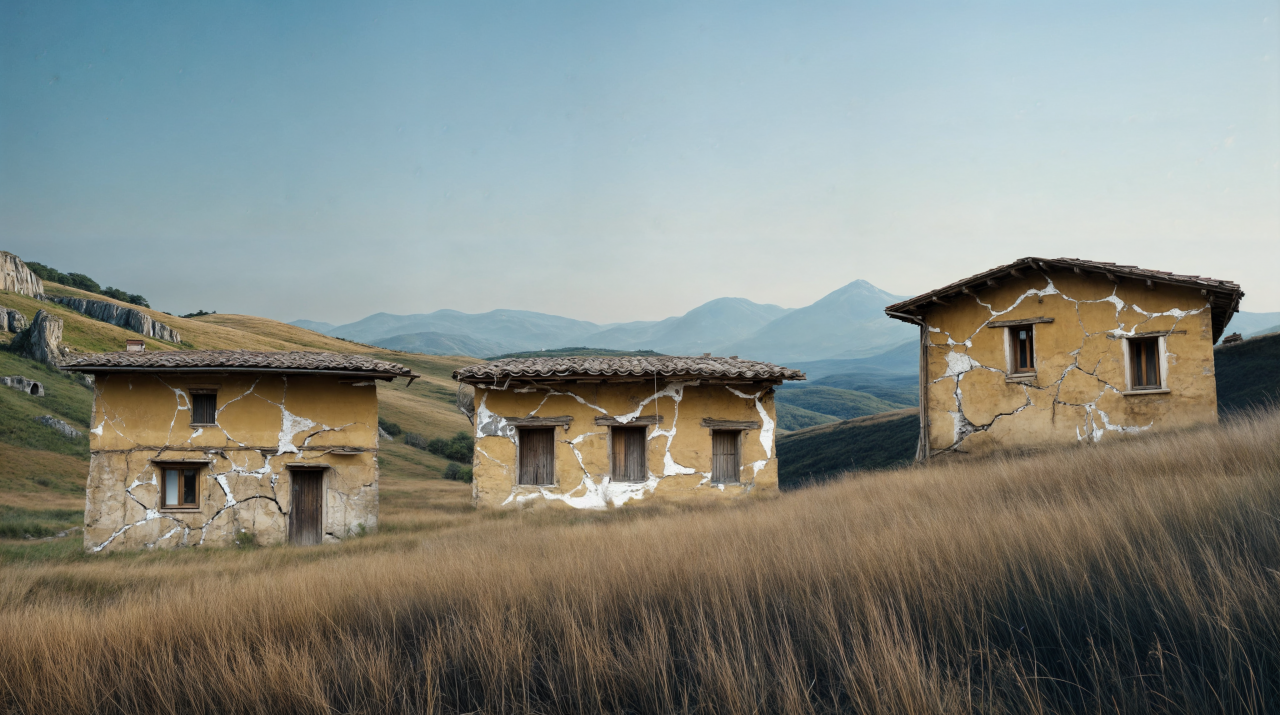
Rather than a conventional restoration, Kintsugi Earth treats repair as an artistic and cultural act. Local artisans, architects, and communities will collaborate in the process, ensuring that restoration fosters not only sustainability but also a revived sense of belonging. Each house becomes a story of transformation, embracing the visible marks of time as part of its identity.
As a reflection of New European Bauhaus values, the project integrates sustainability, aesthetics, and inclusion. Natural, locally sourced materials ensure environmentally responsible restoration, while kintsugi-inspired repair creates spaces that blend history with poetic storytelling. By actively involving local craftsmen and fostering an exchange between Italian and Japanese traditions, the project strengthens community ties and brings new perspectives to architectural preservation.
Abruzzo faces depopulation, rural decline, and the erosion of its cultural heritage. Kintsugi Earth addresses these challenges by revitalizing abandoned homes, empowering local artisans, and attracting new residents and visitors through cultural tourism and creative residencies. More than a preservation effort, this project reimagines architecture as a living, evolving narrative—one where brokenness is not a flaw but a testament to history, resilience, and renewal.
Key objectives for sustainability
The restoration process prioritizes natural and locally sourced materials, reducing the carbon footprint by avoiding industrial construction methods. By preserving existing structures rather than demolishing them, the project significantly minimizes waste and resource consumption. Traditional building techniques, adapted with modern insights, ensure energy efficiency and climate responsiveness, making these homes naturally insulated and reducing the need for artificial heating or cooling.
Social and economic sustainability is equally central. By involving local artisans and training new generations in earth-building and Japanese kintsugi-inspired repair techniques, Kintsugi Earth fosters a sustainable economy rooted in craftsmanship. This knowledge-sharing ensures that these skills are not lost but evolve for contemporary use, creating long-term employment opportunities.
As a model for circular and regenerative design, the project reinvents rural heritage as an asset rather than a burden. Instead of treating decay as a reason for abandonment, it transforms damage into a celebrated feature of the home, extending the life cycle of the architecture. This philosophy shifts mindsets around conservation, offering an exemplary model for sustainable restoration projects across Europe.
By blending ecological responsibility, cultural heritage, and artistic storytelling, Kintsugi Earth demonstrates that sustainability is not just about materials but also about identity, community, and the ways in which architecture can evolve without losing its soul.
Key objectives for aesthetics and quality
The design process respects and elevates the unique character of each house, embracing its imperfections as part of its identity. Instead of erasing time’s impact, cracks, wear, and restoration marks become part of a carefully crafted visual language, blending Italian earthen building traditions with Japanese techniques of delicate yet expressive repair. Through this, the project creates spaces that tell a story, enhancing the experience of those who inhabit or visit them.
Beyond aesthetics, Kintsugi Earth fosters an immersive cultural experience. Each restored home becomes a platform for creative exchange, hosting artists, architects, and thinkers who contribute to its evolving narrative. The project also reconnects local communities with their built heritage, offering workshops and hands-on experiences in traditional craftsmanship. These interventions ensure that the houses are not just preserved but actively used and appreciated, preventing them from becoming static monuments of the past.
As an exemplary project, Kintsugi Earth challenges conventional restoration approaches, demonstrating how architecture can embrace imperfection, celebrate history, and create profound human experiences. It shows that sustainability and aesthetics are not separate goals but deeply intertwined, offering a new way to think about beauty—not as something flawless, but as something enriched by time, repair, and cultural dialogue.
Key objectives for inclusion
At its core, the project promotes affordable and accessible restoration, demonstrating how forgotten rural architecture can be revitalized without excessive costs or exclusive development. Using locally available natural materials and low-tech building techniques, Kintsugi Earth makes preservation viable for communities rather than relying on external, high-cost interventions. This approach allows local residents, rather than large developers, to take part in restoring their own heritage, preventing gentrification and displacement.
The project is also a platform for inclusive knowledge-sharing, where artisans, designers, and architects collaborate with local residents to preserve and reinterpret earth-building traditions. Through workshops and participatory design sessions, younger generations can learn from traditional craftsmen while contributing contemporary insights. This creates a living architectural practice, where cultural heritage is not frozen in time but evolves dynamically.
Beyond physical restoration, Kintsugi Earth introduces a new societal model for rural resilience, transforming abandoned homes into creative residencies, cultural spaces, and community hubs. These spaces welcome artists, researchers, and social innovators, fostering a global-local dialogue that enriches both Abruzzo’s identity and international perspectives on sustainable living.
How Citizens benefit
Local artisans and builders will be engaged in the restoration of the earth houses, using traditional building methods and the innovative kintsugi-inspired repair techniques. Workshops will be organized to train younger generations in these techniques, ensuring the transmission of traditional skills while adapting them for contemporary needs. These hands-on activities will create employment opportunities and help instill pride in the cultural heritage of the region.
The community will also be involved in the design and governance of the project. Local residents will have input on the aesthetic and functional aspects of the restoration, ensuring the final design meets their needs and aspirations. The project will adopt a participatory model, involving local civil society organizations in decision-making, and ensuring that the community’s values and priorities are reflected throughout.
Beyond the restoration work, Kintsugi Earth will provide ongoing spaces for cultural exchange and social engagement. The restored homes will host creative residencies, workshops, and public events that local citizens can attend and participate in. These spaces will become centers for innovation and community building, offering a platform for people of all backgrounds to come together.
By providing citizens with the opportunity to actively shape their environment, the project will help reinvigorate the social and cultural life of Abruzzo.
Physical or other transformations
Innovative character
Another key innovation is the integration of sustainable construction practices with traditional materials. While many mainstream restoration projects focus solely on using modern materials or techniques, Kintsugi Earth will use locally sourced, natural materials in conjunction with cutting-edge sustainable methods. This not only reduces the environmental footprint but also strengthens the connection between the community and their natural surroundings, fostering local employment and craftsmanship.
Moreover, the project actively involves the local community in both the design and implementation stages. By engaging with residents, artisans, and younger generations through workshops and consultations, the project ensures that it is socially inclusive and rooted in the specific needs of the community. This participatory approach contrasts with more top-down, detached development models commonly seen in rural revitalization efforts.
Disciplines/knowledge reflected
Architects and heritage preservation specialists lead the restoration of the earth houses, blending traditional methods with modern design principles. This ensures the preservation of cultural value while making the buildings functional and adaptable. Sustainable construction experts focus on using eco-friendly materials and energy-efficient methods, reducing the environmental impact while supporting long-term sustainability.
Community development specialists will work closely with local residents to ensure the project addresses their needs and fosters a sense of ownership. Workshops and consultations with local artisans will keep traditional craftsmanship alive while creating employment opportunities. Environmental sustainability experts will ensure that the project aligns with broader regional sustainability goals, incorporating natural resources responsibly.
The interdisciplinary collaboration in Kintsugi Earth allows for a deeply integrated project that balances heritage, innovation, and sustainability. This approach fosters a resilient community, preserves cultural heritage, and contributes to environmental sustainability, making it a model for future projects.
Methodology used
1. Assessment and Research: The project begins with a thorough analysis of the earth houses' historical context and materials. Heritage preservation and architectural experts ensure the restoration respects the original structure’s cultural value.
2. Community Engagement: Active involvement from the local community is central to the project. Workshops and consultations ensure the design reflects residents' needs, while local artisans and younger generations are trained in traditional techniques and kintsugi-inspired restoration, creating employment opportunities.
3. Design and Restoration: The restoration incorporates the kintsugi-inspired approach, where imperfections are celebrated rather than hidden. Sustainable materials and energy-efficient systems are integrated into the design, blending modern needs with historical authenticity.
4. Sustainability Integration: The project uses locally sourced materials, recycled elements, and eco-friendly technologies. Circular economy principles are applied, focusing on waste reduction and material reuse to ensure long-term sustainability.
5. Monitoring and Adaptation: Continuous feedback from the community ensures that the project remains adaptable and responsive to local needs. Monitoring throughout the implementation phase helps address challenges in real-time.
This methodology, which combines tradition with sustainability and community involvement, makes Kintsugi Earth a model for future heritage preservation and architectural projects.
How stakeholders are engaged
At the regional level, collaboration with regional government bodies and cultural institutions will be essential for securing necessary funding, permits, and logistical support. These stakeholders will help integrate the project into broader sustainable development and heritage preservation efforts, ensuring it supports regional goals of revitalizing rural areas and promoting cultural tourism.
On a national level, cultural heritage organizations, sustainability experts, and architectural institutions will be involved in ensuring the project meets national standards for preservation while utilizing innovative restoration techniques. Their involvement will help place Kintsugi Earth within the context of national sustainability goals and rural revitalization initiatives.
At the European level, collaboration with EU cultural and environmental programs will connect the project to broader initiatives on sustainable architecture and rural development. European stakeholders will help secure funding, share best practices, and foster international visibility, ensuring the project has a far-reaching impact and can serve as a model for similar initiatives across Europe.
Global challenges
Additionally, the project addresses environmental sustainability by promoting eco-friendly construction and the use of local materials. In a world where the construction industry is a major contributor to environmental degradation, Kintsugi Earth demonstrates how sustainable practices—such as circular economy principles and the use of locally sourced, renewable materials—can be applied to heritage buildings. By reducing waste and carbon footprints, the project helps mitigate the environmental impacts of traditional construction while creating energy-efficient and eco-conscious spaces.
The project also tackles the loss of local craftsmanship. In many rural areas, traditional construction skills are dying out as younger generations migrate to cities for work. Through its emphasis on training local artisans and younger community members in both traditional techniques and sustainable building practices, Kintsugi Earth provides a means of preserving these valuable skills, thus fostering local economic development and offering employment opportunities in sustainable sectors.
Learning transferred to other parties
Another transferable element is the kintsugi-inspired restoration technique, where imperfections are celebrated, and the restoration process embraces the history of the structure. This approach can be applied to other heritage sites in need of repair, promoting the philosophy of “healing” rather than “restoring to perfection.” It allows the preservation of cultural identity while integrating sustainable practices, making it adaptable to other historical buildings across the globe.
The project’s sustainable construction practices—such as the use of locally sourced materials, energy-efficient systems, and recycled elements—offer a scalable model for sustainable architecture. These principles can be replicated in various construction and renovation projects, not only in rural areas but also in urban settings, promoting eco-friendly building practices and reducing environmental impact.
Lastly, the capacity-building initiatives for local artisans and youth, offering training in both traditional and sustainable construction techniques, can be transferred to other regions. This educational model preserves craftsmanship and promotes skill development, ensuring that heritage is passed on to future generations while creating employment opportunities.
Next steps
Early in the year, the team will initiate more in-depth workshops and participatory design sessions with local residents, artisans, and other stakeholders. In parallel, partnerships with local educational institutions and artisans will be strengthened to create training programs on sustainable restoration and traditional building methods, empowering future generations.<br />
<br />
Secondly, detailed project design and planning will begin. This includes finalizing architectural and restoration plans, focusing on incorporating eco-friendly materials and technologies. Specific attention will be given to the integration of energy-efficient systems, local material sourcing, and the application of sustainable building practices that can be replicated elsewhere. Collaboration with environmental experts and architects specializing in heritage preservation will ensure that the designs will meet modern sustainability standards.<br />
<br />
Thirdly, the team will approach potential investors, regional governments, and European sustainability-focused organizations to secure financial support for the implementation phase. This will involve presenting the project’s cultural, environmental, and social benefits as a model for sustainable heritage preservation.<br />
<br />
Additionally, promotion and awareness will be crucial in the year following the application. The team will begin creating a communication strategy that highlights the project's uniqueness and impact, including creating promotional materials, an online presence, and engaging with local and international media outlets. The project will be presented at relevant architecture and sustainability events, with the goal of attracting additional partners, supporters, and collaborators.<br />
<br />
Lastly, the project will begin the restoration process in select pilot locations within the Abruzzo region. The first phase will focus on a small number of earth houses to demonstrate the effectiveness of the kintsugi-inspired restoration technique.