Green areas to stop climate change
Basic information
Project Title
Green areas to stop climate change
Full project title
Creation of green areas and implementation new initiatives to face the effects of climate change
Project Description
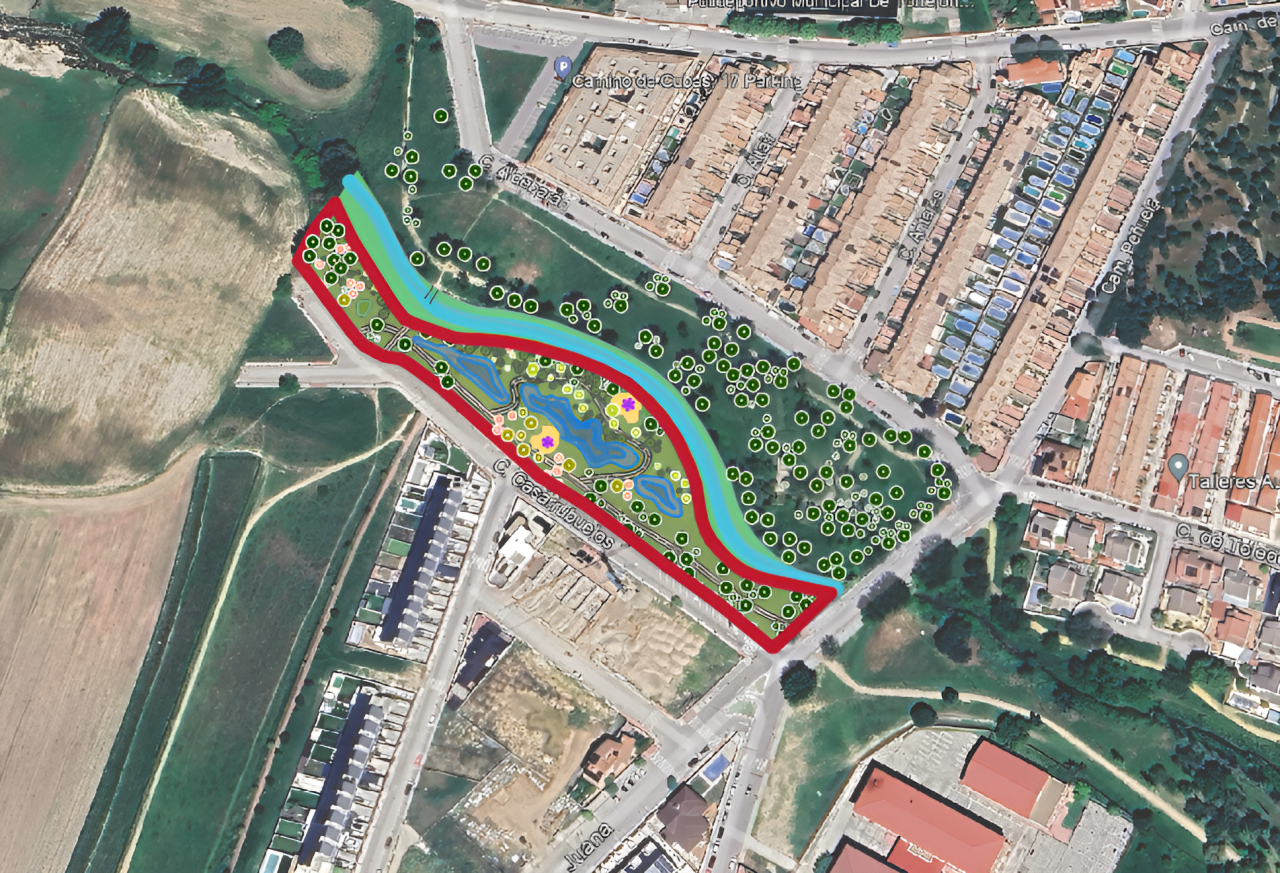
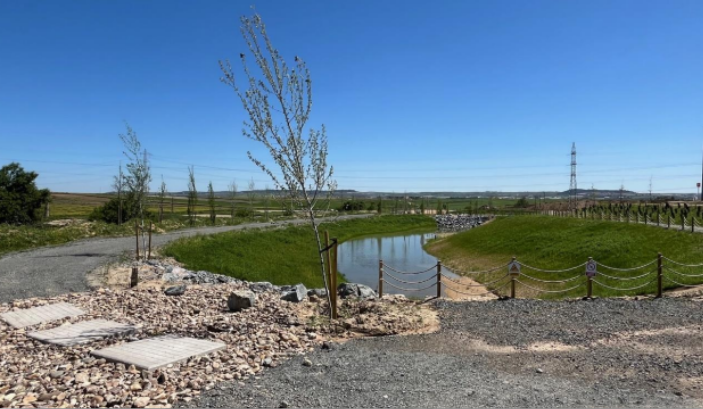
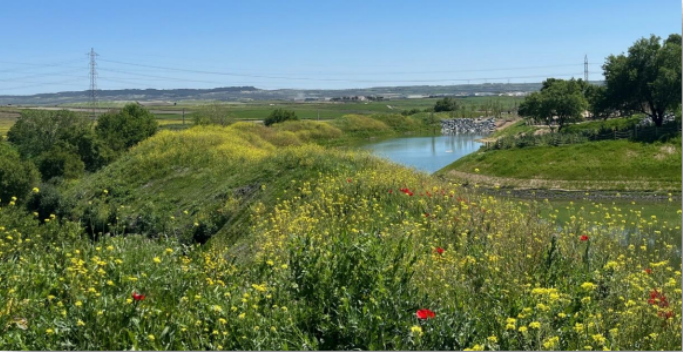
This initiative revitalizes the unique natural features of the Arroyo de la Peñuela by restoring and rehabilitating its green corridors. By blending nature-based solutions with inclusive design, the project promotes ecological conservation and sustainable enjoyment of the landscape—embodying the spirit of the New European Bauhaus.
Current stage development
Prototype level
Project Region
Spain
Municipality
28149: Torrejón de la Calzada (ES)
EU Programme or fund
No
Description of the project
Summary
Overall Aim and Approach:
This project employs nature-based solutions to create a resilient, sustainable, and inclusive urban environment.
It is structured around four environmental pillars:
• Water:
Implementing an integrated water cycle management strategy that promotes efficient, respectful use of rainwater. By capturing, infiltrating, and naturally reintroducing water into the ecosystem, we prevent overloads at external treatment plants and reduce flood risks.
• Soil:
Designing green areas to integrate seamlessly with the natural landscape, protecting the soil from erosion and stimulating ecological processes that improve soil health.
• Energy:
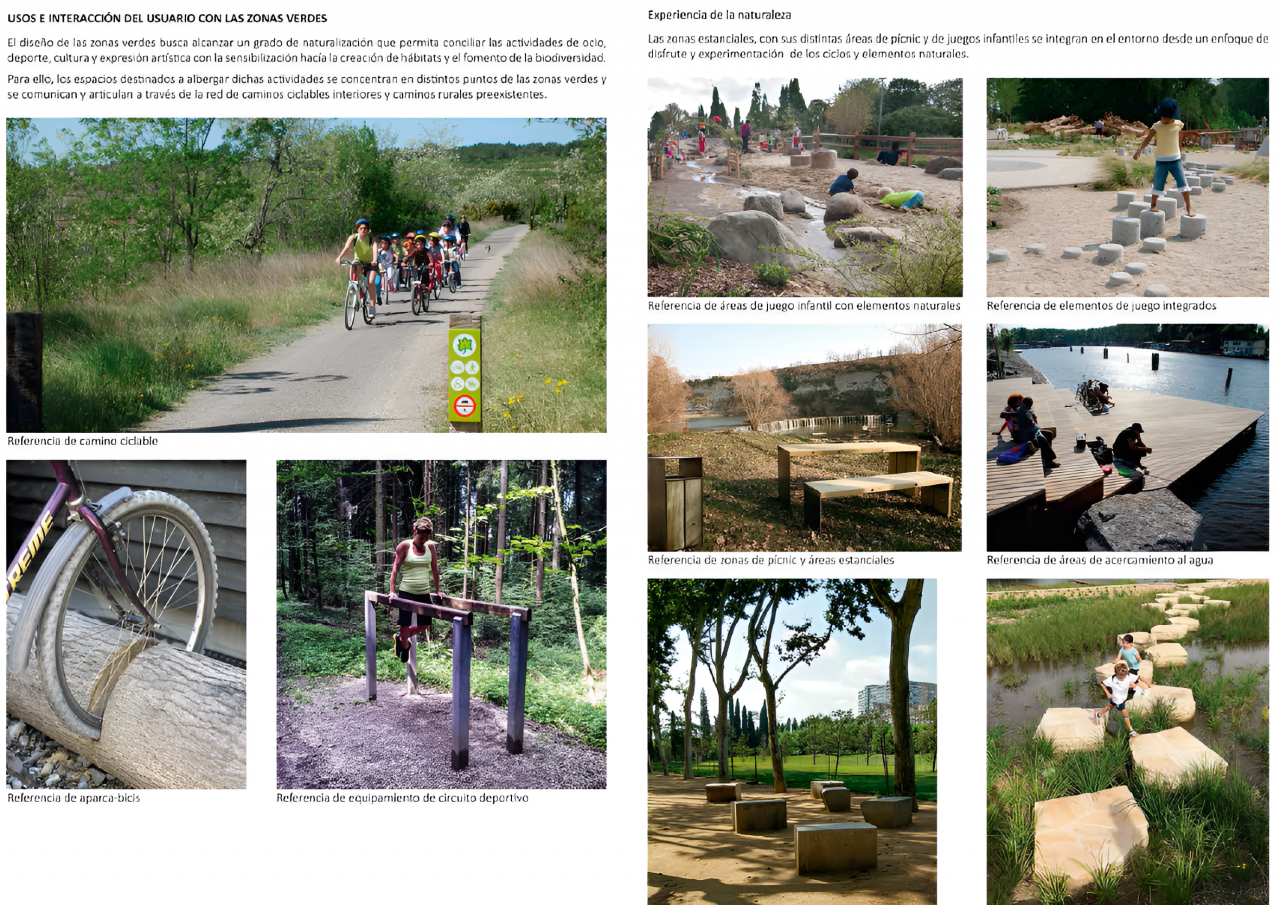
Promoting sustainable mobility by designing interconnected cycling paths that encourage the use of eco-friendly transport alternatives, thus reducing reliance on vehicles.
• Society:
Fostering a collaborative environment through partnerships with all involved institutions, ensuring that community needs and local identities are reflected in every stage of the project.
Target Groups and Expected Outcomes:
The initiative benefits local residents, municipal employees, businesses in the industrial area, and the wider community.
Expected outcomes include:
• Enhanced stormwater management and flood prevention.
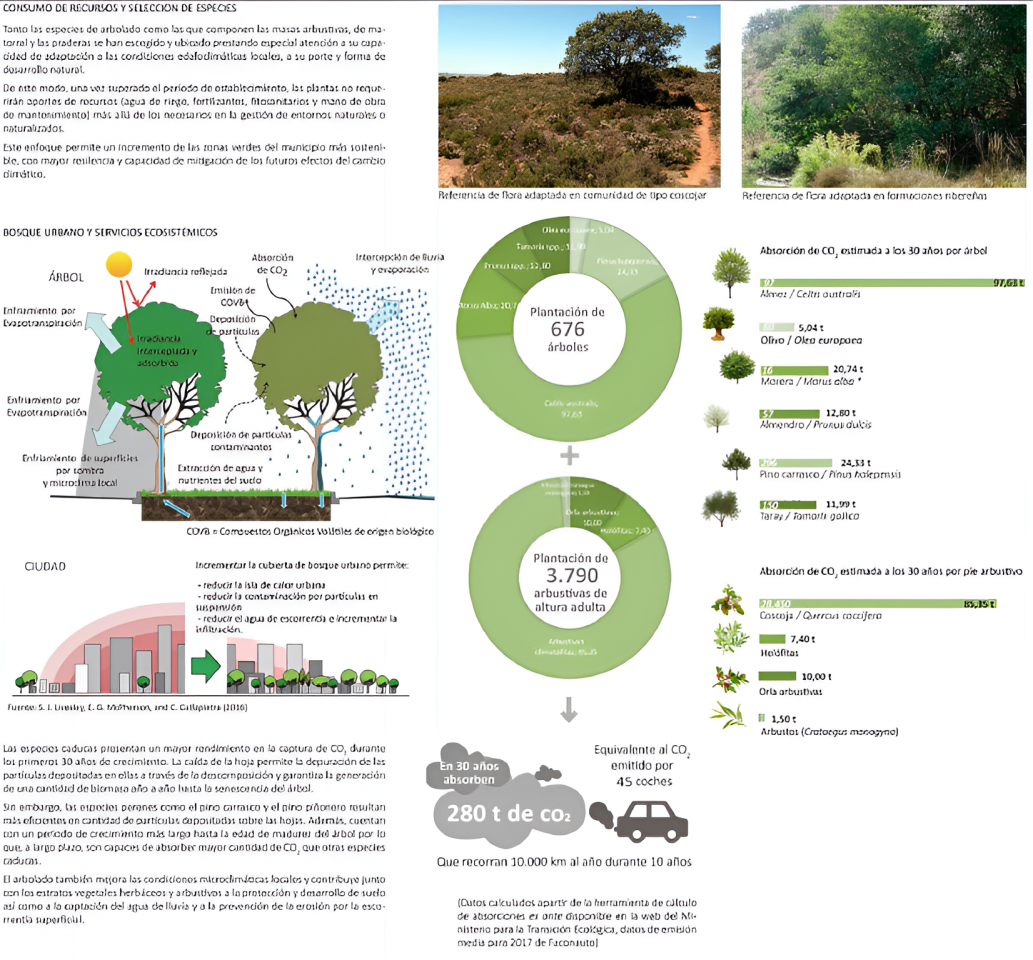
• Reduced urban heat island effect through increased vegetation and natural microclimates.
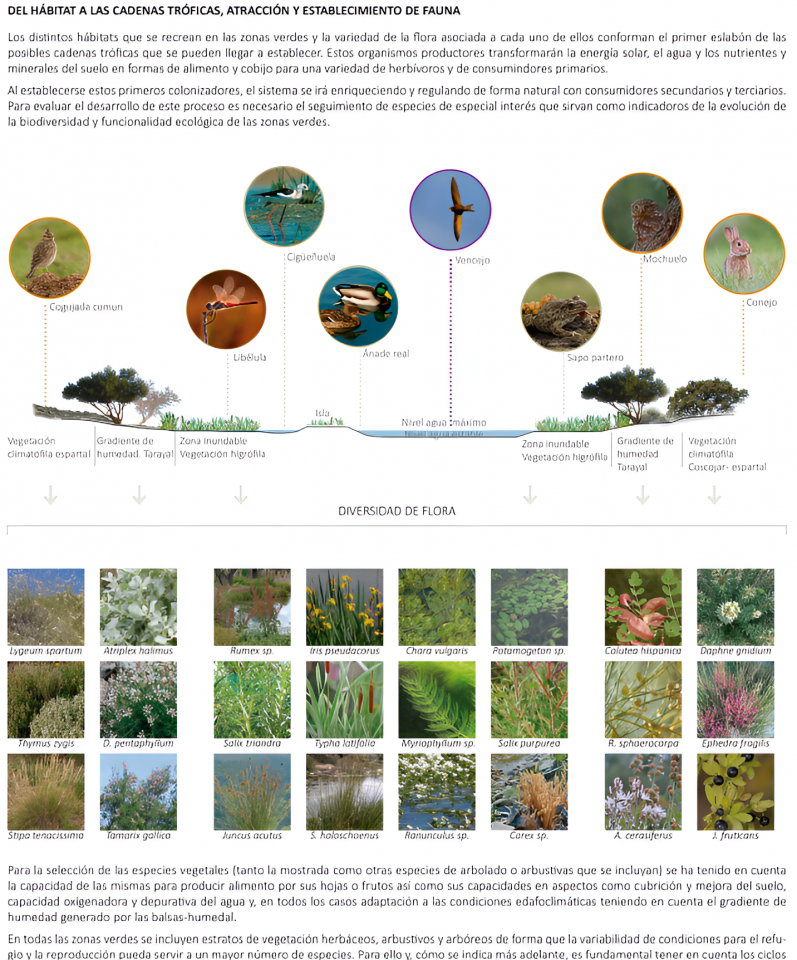
• Improved biodiversity and landscape aesthetics.
• A more accessible, culturally vibrant public space that strengthens community ties and promotes environmental education.
This project employs nature-based solutions to create a resilient, sustainable, and inclusive urban environment.
It is structured around four environmental pillars:
• Water:
Implementing an integrated water cycle management strategy that promotes efficient, respectful use of rainwater. By capturing, infiltrating, and naturally reintroducing water into the ecosystem, we prevent overloads at external treatment plants and reduce flood risks.
• Soil:
Designing green areas to integrate seamlessly with the natural landscape, protecting the soil from erosion and stimulating ecological processes that improve soil health.
• Energy:
Promoting sustainable mobility by designing interconnected cycling paths that encourage the use of eco-friendly transport alternatives, thus reducing reliance on vehicles.
• Society:
Fostering a collaborative environment through partnerships with all involved institutions, ensuring that community needs and local identities are reflected in every stage of the project.
Target Groups and Expected Outcomes:
The initiative benefits local residents, municipal employees, businesses in the industrial area, and the wider community.
Expected outcomes include:
• Enhanced stormwater management and flood prevention.
• Reduced urban heat island effect through increased vegetation and natural microclimates.
• Improved biodiversity and landscape aesthetics.
• A more accessible, culturally vibrant public space that strengthens community ties and promotes environmental education.
Key objectives for sustainability
• Optimized Rainwater Management:
Preventing the overload of external treatment plants by promoting local water infiltration and natural filtration processes.
• Flood Prevention and Local Water Cycle Restoration:
Minimizing flood risks and maintaining a balanced, localized water cycle.
• Resource Efficiency:
Reducing water and energy consumption through rational use and maintenance practices.
• Mitigation of Urban Heat Island Effect:
Increasing ambient humidity through the creation of vegetated water bodies that enhance local microclimates.
• Cost Reduction:
Lowering construction, operational, and maintenance expenses through innovative, nature-based solutions.
• Biodiversity Enhancement:
Using water management as an opportunity to improve local biodiversity, landscape quality, and overall community well-being.
Preventing the overload of external treatment plants by promoting local water infiltration and natural filtration processes.
• Flood Prevention and Local Water Cycle Restoration:
Minimizing flood risks and maintaining a balanced, localized water cycle.
• Resource Efficiency:
Reducing water and energy consumption through rational use and maintenance practices.
• Mitigation of Urban Heat Island Effect:
Increasing ambient humidity through the creation of vegetated water bodies that enhance local microclimates.
• Cost Reduction:
Lowering construction, operational, and maintenance expenses through innovative, nature-based solutions.
• Biodiversity Enhancement:
Using water management as an opportunity to improve local biodiversity, landscape quality, and overall community well-being.
Key objectives for aesthetics and quality
• Design Excellence:
Creating an inspiring, culturally rich space that integrates natural elements with thoughtful, artful design.
• Emotional and Cultural Benefits:
Ensuring that the space offers positive, uplifting experiences that encourage community engagement and foster cultural expression.
• Connection with Local Identity:
Reflecting local heritage and natural beauty in design choices to create a unique sense of place.
Creating an inspiring, culturally rich space that integrates natural elements with thoughtful, artful design.
• Emotional and Cultural Benefits:
Ensuring that the space offers positive, uplifting experiences that encourage community engagement and foster cultural expression.
• Connection with Local Identity:
Reflecting local heritage and natural beauty in design choices to create a unique sense of place.
Key objectives for inclusion
• Universal Accessibility:
Designing pathways with gentle slopes, non-slip surfaces, and braille signage to accommodate all ages and abilities.
• Ergonomic and Adaptable Urban Furniture:
Installing benches with armrests, accessible water features, and shaded rest areas.
• Inclusive Programming:
Offering free environmental education and cultural activities that cater to diverse community groups, including persons with disabilities, families, and seniors.
• Community Governance:
Encouraging active local participation in the design, implementation, and maintenance of the space, thereby fostering equitable, inclusive decision-making.
Designing pathways with gentle slopes, non-slip surfaces, and braille signage to accommodate all ages and abilities.
• Ergonomic and Adaptable Urban Furniture:
Installing benches with armrests, accessible water features, and shaded rest areas.
• Inclusive Programming:
Offering free environmental education and cultural activities that cater to diverse community groups, including persons with disabilities, families, and seniors.
• Community Governance:
Encouraging active local participation in the design, implementation, and maintenance of the space, thereby fostering equitable, inclusive decision-making.
How Citizens benefit
Citizen involvement is a cornerstone of our approach. So far we have:
• Organized community workshops to define local needs and priorities.
• Planned the establishment of neighbourhood committees for ongoing supervision and conservation. This active participation ensures the project remains aligned with the community’s vision, enhancing its sustainability and long-term success.
• Organized community workshops to define local needs and priorities.
• Planned the establishment of neighbourhood committees for ongoing supervision and conservation. This active participation ensures the project remains aligned with the community’s vision, enhancing its sustainability and long-term success.
Innovative character
Compared to conventional urban interventions, our initiative is innovative because it:
• Prioritizes Nature-Based Solutions: Emphasizing ecological restoration over standard engineering practices.
• Decentralizes Decision-Making: Leveraging community workshops and participatory processes.
• Embraces Social Inclusion: Integrating accessibility features and targeted educational programs. These innovative strategies not only set a new benchmark for urban green projects but also embody the transformative principles of the New European Bauhaus.
• Prioritizes Nature-Based Solutions: Emphasizing ecological restoration over standard engineering practices.
• Decentralizes Decision-Making: Leveraging community workshops and participatory processes.
• Embraces Social Inclusion: Integrating accessibility features and targeted educational programs. These innovative strategies not only set a new benchmark for urban green projects but also embody the transformative principles of the New European Bauhaus.
Disciplines/knowledge reflected
The project is the result of a collaborative effort among:
• Environmental Scientists: Providing expertise on biodiversity and ecosystem restoration.
• Urban Planners and Architects: Ensuring the design is both functional and aesthetically pleasing.
• Community Representatives: Integrating local insights through participatory methods. This multidisciplinary approach adds significant value by harmonizing ecological, social, and cultural objectives.
There was a very active collaboration among ecologists and the town’s neighbours to ensure a harmonic integration of all disciplines and to ensure that the project was as beautiful and functional as it was sustainable.
• Environmental Scientists: Providing expertise on biodiversity and ecosystem restoration.
• Urban Planners and Architects: Ensuring the design is both functional and aesthetically pleasing.
• Community Representatives: Integrating local insights through participatory methods. This multidisciplinary approach adds significant value by harmonizing ecological, social, and cultural objectives.
There was a very active collaboration among ecologists and the town’s neighbours to ensure a harmonic integration of all disciplines and to ensure that the project was as beautiful and functional as it was sustainable.
Methodology used
Our approach is integrated, participatory, and multidisciplinary:
• Preliminary Phase:
o Data collection, topographical surveys, and geotechnical studies.
• Design and Documentation:
o Development of basic and execution project documents, including hydraulic calculations.
• Implementation and Oversight:
o A structured execution plan with continuous monitoring and community feedback. This methodology ensures the project’s long-term ecological, social, and economic viability while staying true to NEB principles.
• Preliminary Phase:
o Data collection, topographical surveys, and geotechnical studies.
• Design and Documentation:
o Development of basic and execution project documents, including hydraulic calculations.
• Implementation and Oversight:
o A structured execution plan with continuous monitoring and community feedback. This methodology ensures the project’s long-term ecological, social, and economic viability while staying true to NEB principles.
How stakeholders are engaged
The design and implementation process have actively involved:
• Local Stakeholders: Municipal authorities and community groups. It was mainly them who drove the initiative during the first stages.
• European Perspectives: Alignment with broader EU sustainability and cultural agendas, particularly those outlined by the New European Bauhaus. This multi-level engagement guarantees that the project is not only locally relevant but also exemplary on a broader scale and can be replicated anywhere in Europe.
• Local Stakeholders: Municipal authorities and community groups. It was mainly them who drove the initiative during the first stages.
• European Perspectives: Alignment with broader EU sustainability and cultural agendas, particularly those outlined by the New European Bauhaus. This multi-level engagement guarantees that the project is not only locally relevant but also exemplary on a broader scale and can be replicated anywhere in Europe.
Global challenges
Climate change represents one of the greatest threats and challenges and its effects, such as extreme temperatures, heavy rainfall and prolonged droughts, are especially evident in urban areas. It is in these areas that pollution generated by large cities contributes to environmental degradation. This causes the reduction or disappearance of species and the destruction of habitats, putting biodiversity and ecological balance at risk. By directly addressing climate change, the project tackles global challenges such as:
• Extreme Weather Events:
Mitigating flood risks and heatwaves through improved water management and increased green cover.
• Biodiversity Loss:
Restoring native ecosystems to protect species and habitats.
• Urban Environmental Degradation:
Reducing the urban heat island effect and enhancing the overall quality of the urban environment. These local solutions contribute to broader efforts to build resilient, sustainable cities across Europe.
• Extreme Weather Events:
Mitigating flood risks and heatwaves through improved water management and increased green cover.
• Biodiversity Loss:
Restoring native ecosystems to protect species and habitats.
• Urban Environmental Degradation:
Reducing the urban heat island effect and enhancing the overall quality of the urban environment. These local solutions contribute to broader efforts to build resilient, sustainable cities across Europe.
Learning transferred to other parties
Key elements of our initiative that can be adapted elsewhere include:
• The integration of nature-based solutions for urban water and green space management.
• The participatory, community-led design process.
• The multidisciplinary collaboration model. These aspects make the project scalable and transferable to other urban contexts facing similar challenges.
• The integration of nature-based solutions for urban water and green space management.
• The participatory, community-led design process.
• The multidisciplinary collaboration model. These aspects make the project scalable and transferable to other urban contexts facing similar challenges.
Next steps
Implementation Phases:<br />
1. Construction of Retention Basins:<br />
o Installation of coconut fiber nets and bio-rolls.<br />
o Hydroseeding of slopes and placement of rip-rap for channel protection.<br />
2. Development of Permeable Walkways (Zahora):<br />
o Preparation of sub-bases, leveling, compaction, and cleaning.<br />
3. Ground Improvement and Green Zone Treatment:<br />
o Selection, preparation, and planting of native species.<br />
o Hydroseeding to ensure minimal water usage.<br />
4. Integration with Stormwater Networks:<br />
o Hydraulic connections between basins, water filters, and treatment systems.<br />
5. Installation of Urban Furniture:<br />
o Supplying and placing accessible, ergonomic public amenities.<br />
Infrastructure or public space
Yes
Political support
Yes
Monetary value awarded
No