Education and Community Center
Basic information
Project Title
Full project title
Project Description
Current stage development
Project Region
Municipality
EU Programme or fund
Description of the project
Summary
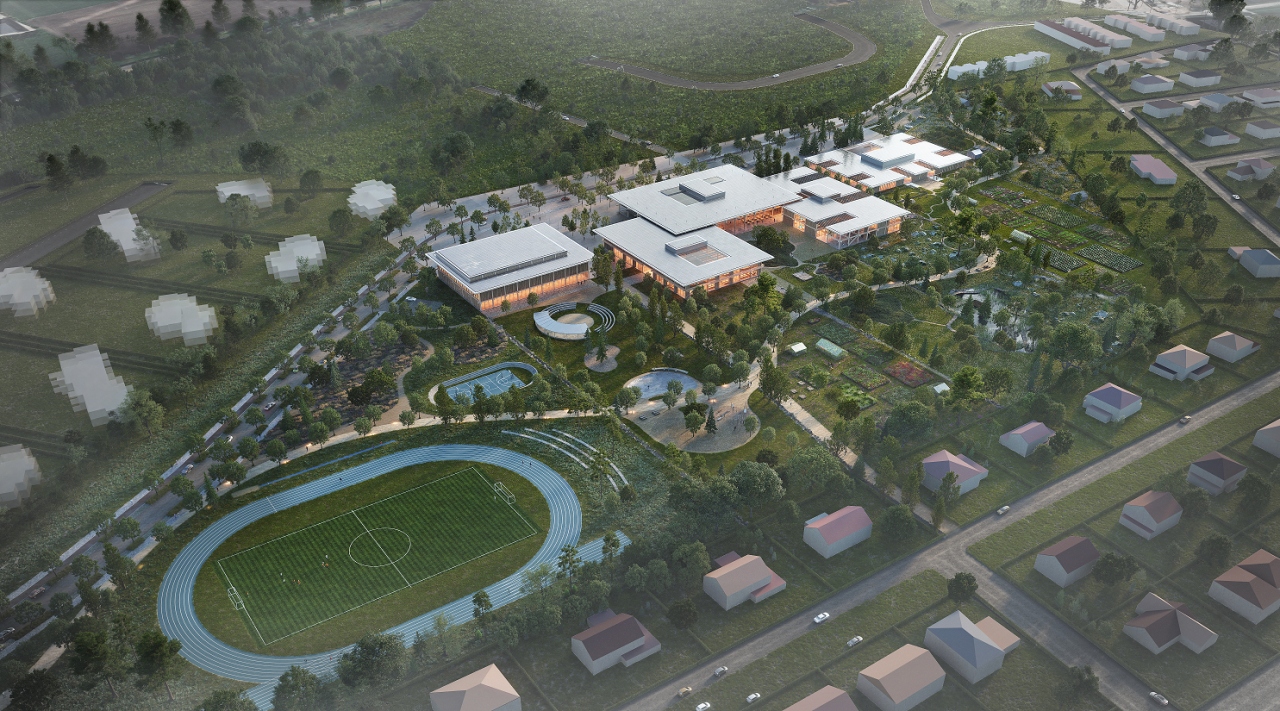
The idea of a community centre was born from the need to build a new kindergarten and school and to add additional facilities in the form of spaces and public areas to meet the needs of the community.
To identify the wishes of the community, a brainstorming exercise was carried out, which provided input for an architectural competition to find the best solution to respond to everyone's wishes.
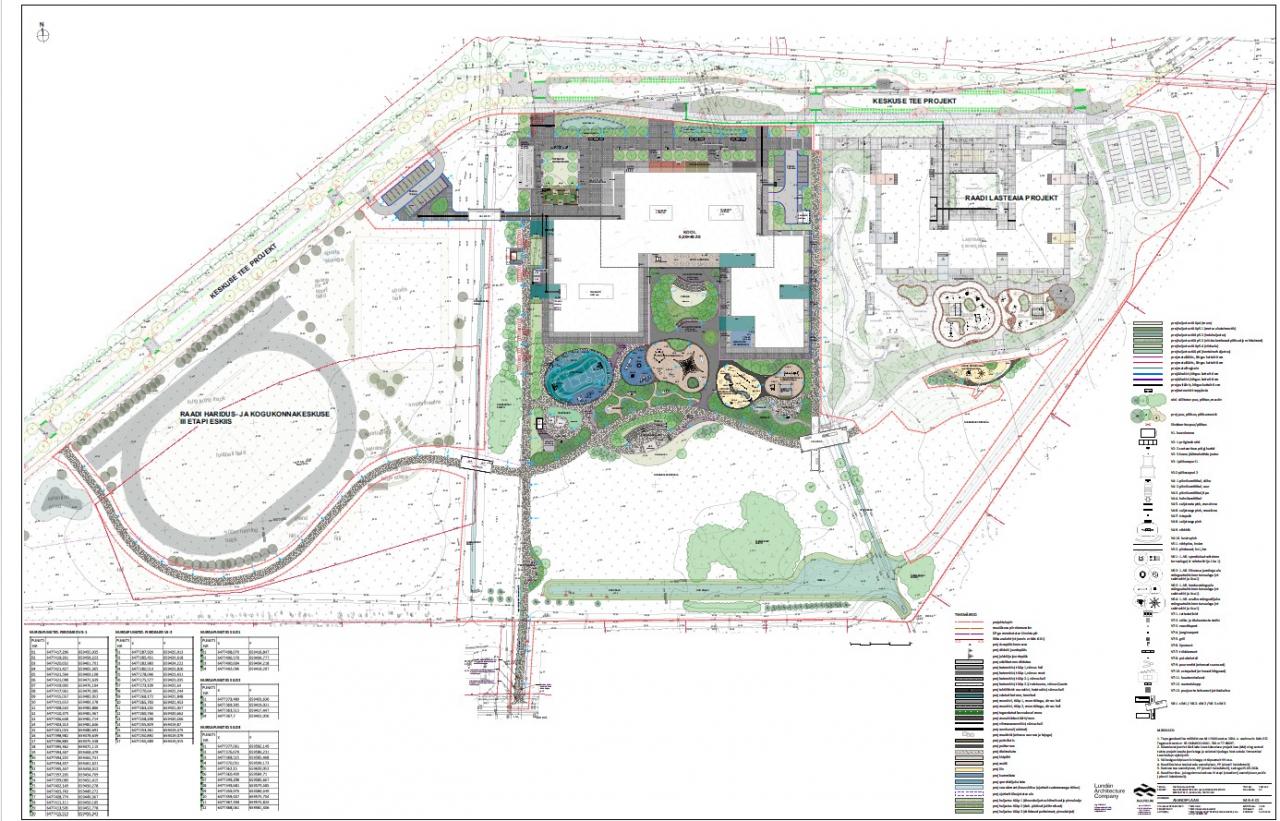
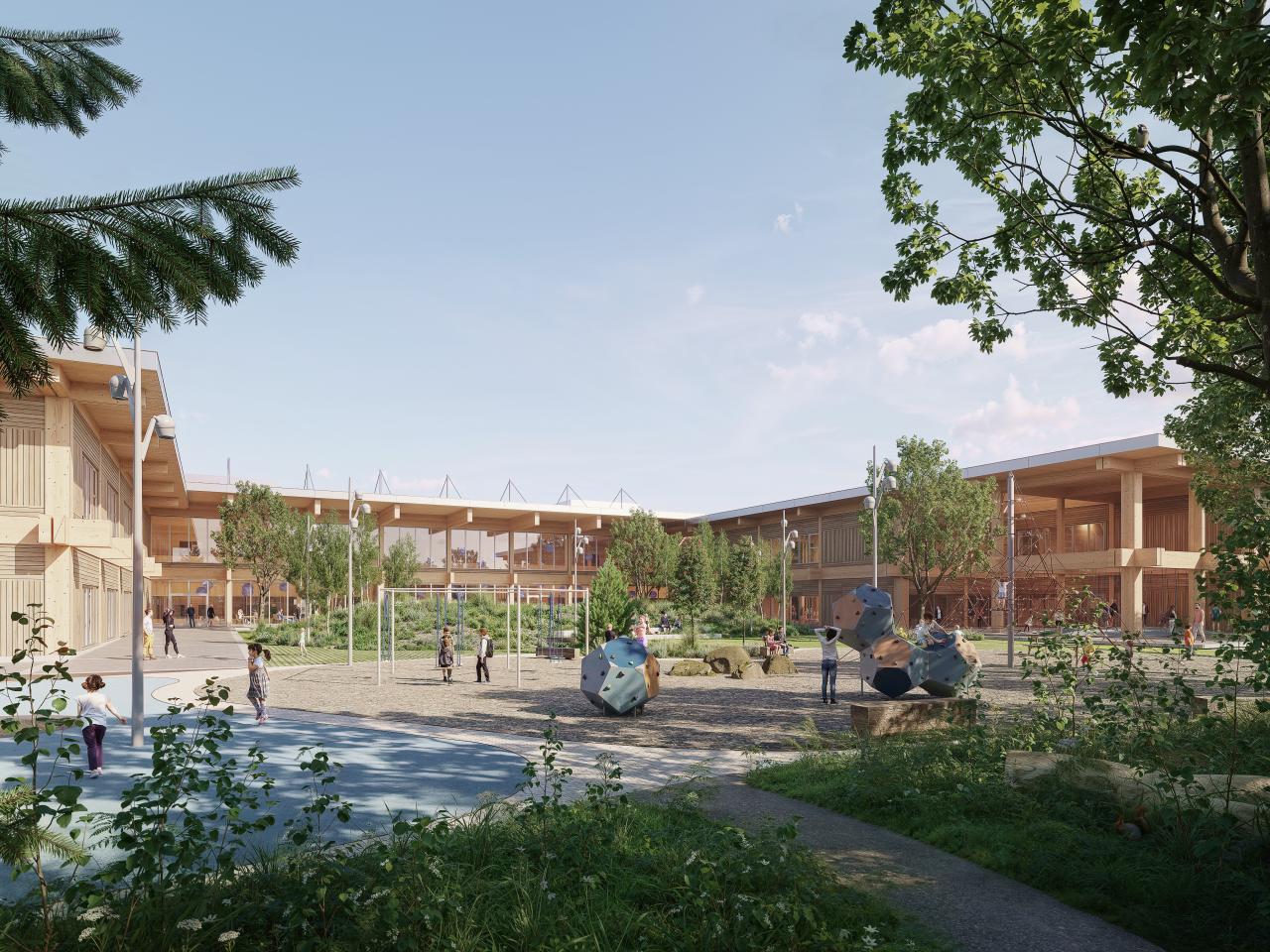
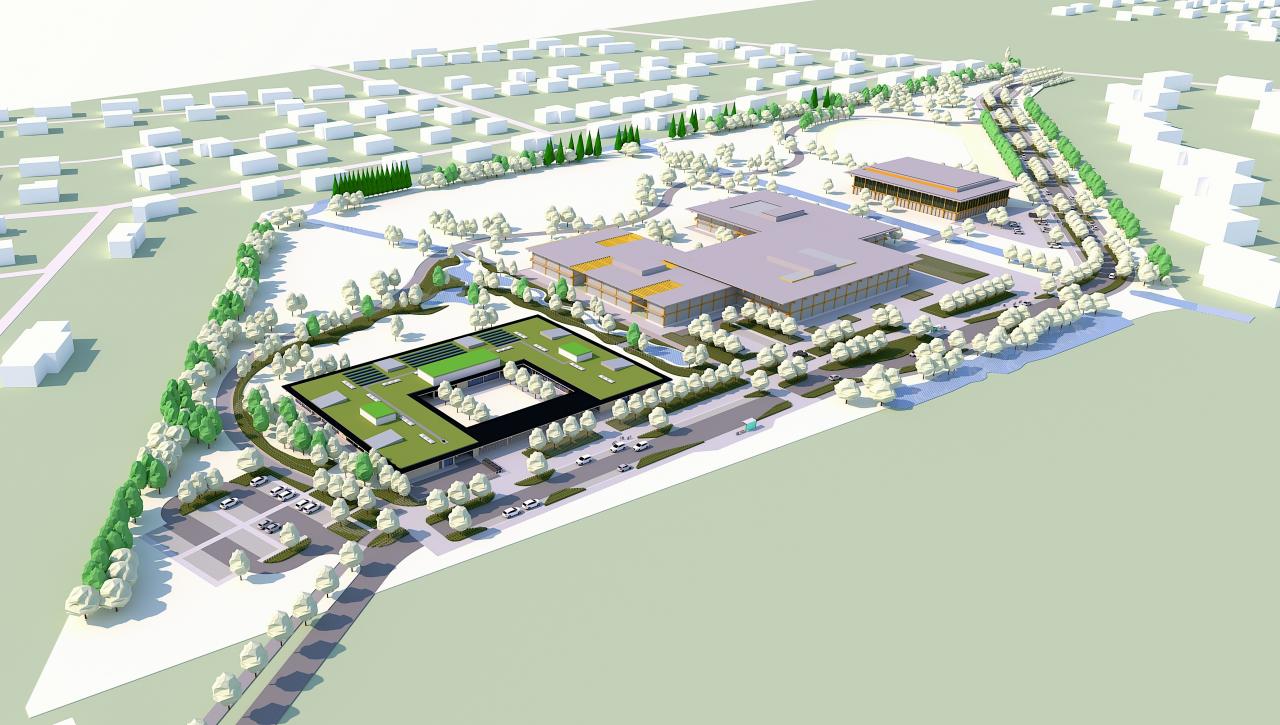
The winner of the architectural competition came up with a solution that met both the needs of the municipality and the wishes of the community. The final result will be an education and community centre, including a kindergarten, school, sports facilities and public space for all.
Key objectives for sustainability
The proposed solutions can serve as a model environment for similar projects to follow.
Key objectives for aesthetics and quality
Carefully chosen materials, colours and lighting create a harmonious whole that provides visual pleasure and supports the development of local identity and culture.
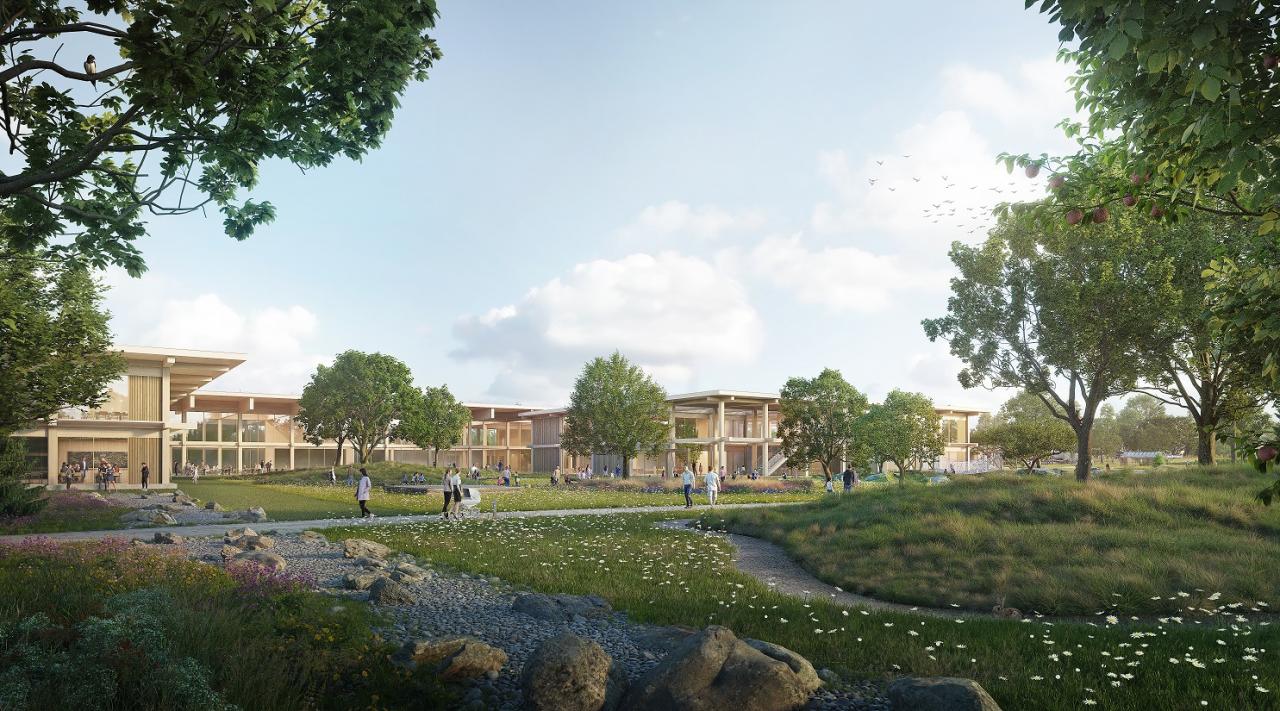
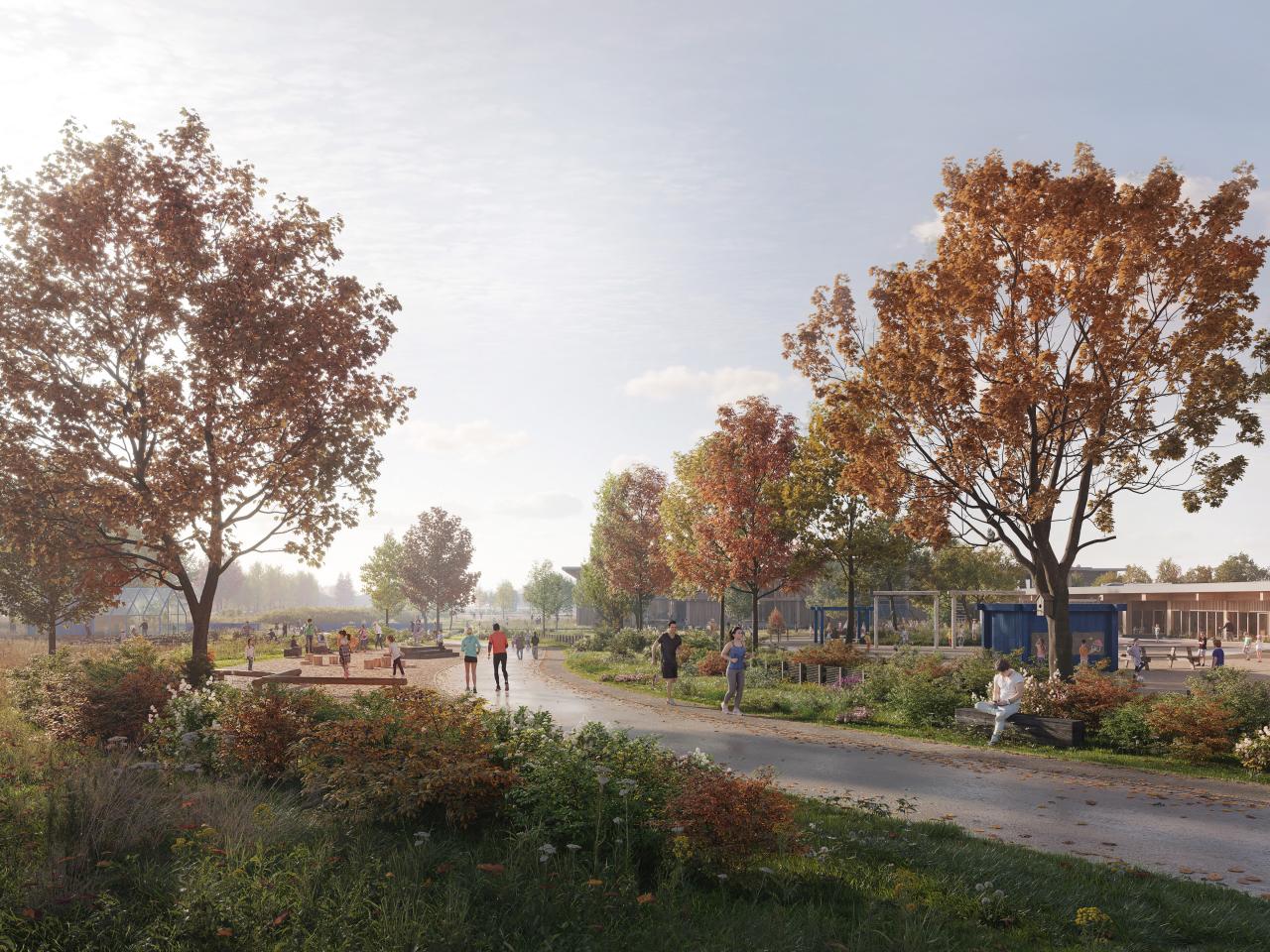
The elements used in public spaces are human-scale. For example, seating areas, shelters and landscaping provide opportunities for relaxation and contact with nature.
The role of public space in creating social cohesion is particularly important. When spaces are inviting and inclusive for all groups in society, they help to reduce segregation and promote understanding between different people.
A variety of activities (playgrounds, sports facilities or areas for cultural events) invite people to actively use the space. They also enrich and reinforce community identity. Well-designed details such as water features and interesting views will create a sense of discovery.
The proposed solutions can serve as a model environment for similar projects to follow.
Key objectives for inclusion
The solutions created can be used as ideas in similar situations.
How Citizens benefit
Direct neighbours have also been involved at various stages of the design process.
Innovative character
Ideas for community-used sites were collected through a community idea collection.
As this is a start-up school, there was no existing collective to discuss needs with at the planning stage, so field experts and teachers from relevant fields of study from across the municipality and neighbouring municipalities were used to develop the educational space needs and ideas.
Disciplines/knowledge reflected
Specialists from different disciplines worked together in workshops, where active discussions and idea generation took place. This approach allowed innovative solutions to be found, bringing together best practice from different disciplines. The added value of interdisciplinary collaboration was the holistic approach to the learning environment, where each expert's contribution contributed to a better outcome. For example, the practical experiences of teachers highlighted needs that architects were able to address with innovative spatial options to support learners' well-being and development.
Methodology used
The call was a success. 12 entries were submitted. The composition of the designers was international. The best idea was selected by a panel of experts. The entries were anonymous at the time of the evaluation, i.e. the jury did not know the authors.
The authors of the winning idea were awarded a design contract in 2023. During the design phase, we used participatory planning methodology to discuss with the community the future look and functioning of the environment, including the public space.
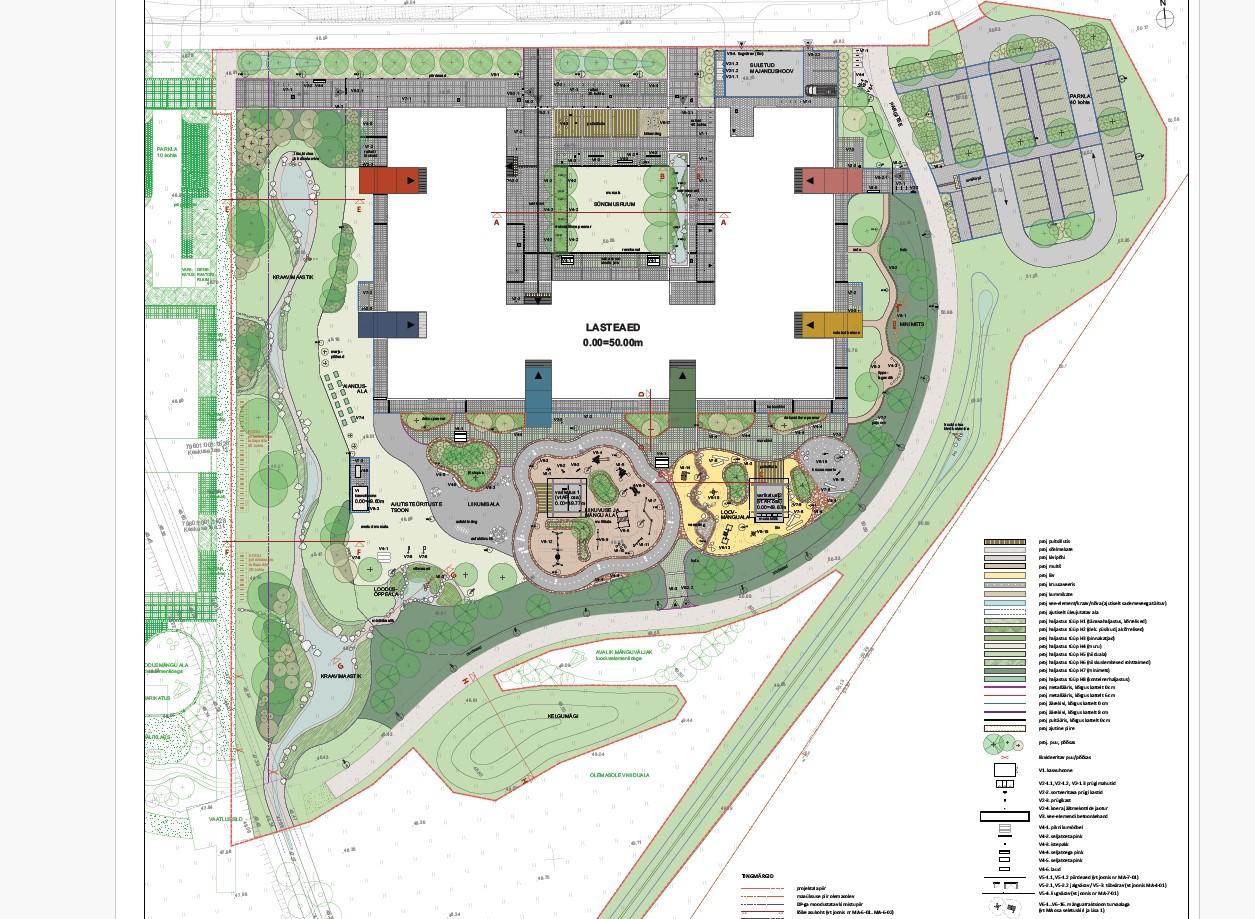
In 2023, a conceptual design of the whole site was completed and in 2024, Phase I of the design works - the nursery building and outdoor areas - was completed.
In 2024, the design work for Phase II started. During the design work, specialists from different fields were involved to ensure the best possible outcome, both as an educational institution and as a community centre. Meetings and workshops were used as working methods.
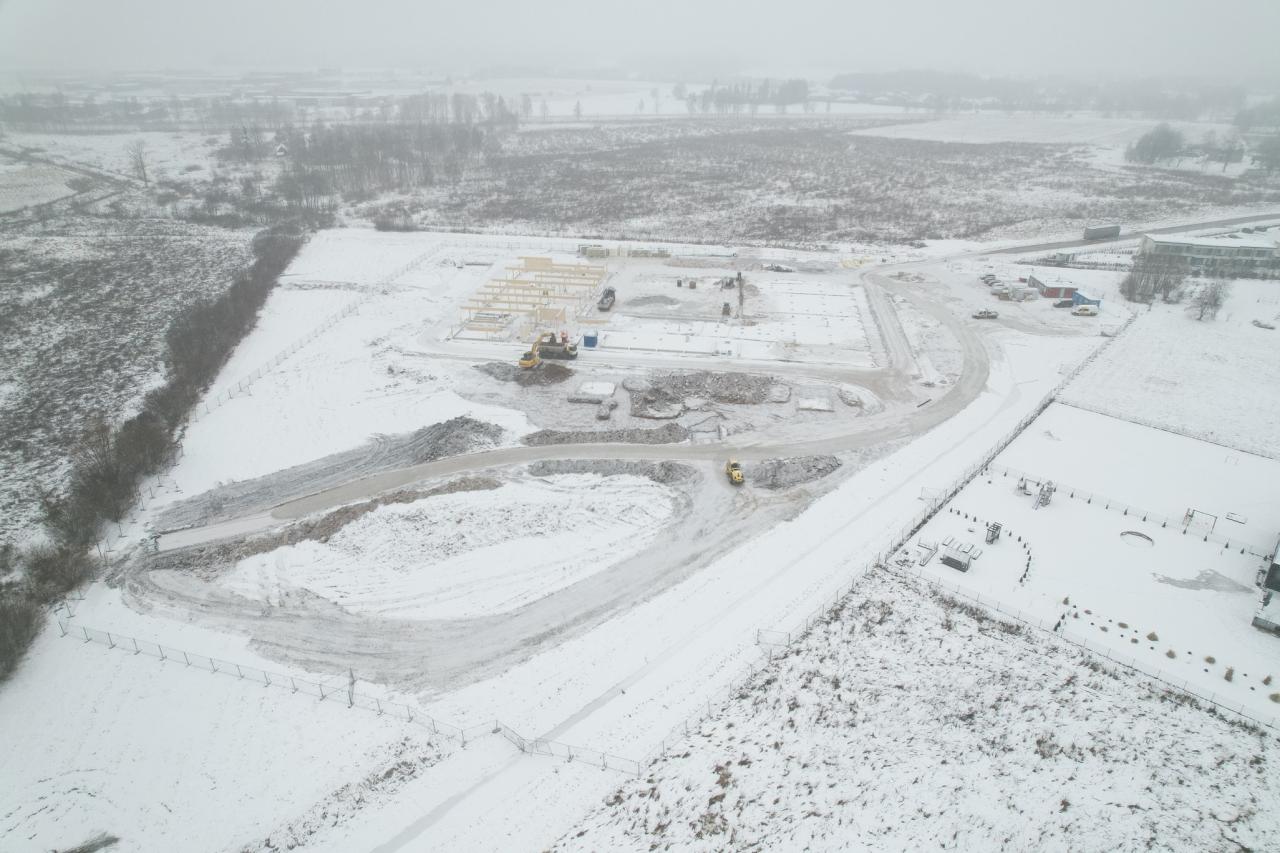
At the end of 2024, the first construction works for the project implementation started.
An indicative timetable for the implementation and development of the project is attached to the application.
How stakeholders are engaged
The involvement at local level involved a wide range of stakeholders:
- Staff from educational institutions who brought in a professional perspective on the needs of the learning environment.
- Neighbours in the close by who will be directly affected by the new development
- The local community at large, to ensure that the development is appropriate to the needs of the area.
Involvement took place through various forms of collaboration:
- During the brainstorming phase, all stakeholders were given the opportunity to express their visions and wishes.
- Meetings were organised to discuss different perspectives and solutions.
- Workshops were held to identify the best solutions through practical activities.
Global challenges
Promoting inclusive education is a global priority, and the learning environment we have created will support this at local level. The environment we are creating will take into account the needs of all learners, providing a modern and safe learning environment for both learners and teachers. This will help reduce educational inequalities and ensure access to quality education for all.
An innovative learning environment will support the development of modern learning skills. Spatial solutions enable flexible learning and the use of digital solutions in line with global educational trends. This helps learners develop the 21st century skills needed to cope with an increasingly complex world.
In addition, the project contributes to promoting mental health and well-being. Well-designed spaces, natural light and a peaceful environment will support the well-being of both learners and staff, helping to tackle the global mental health challenge.
The project will strengthen community development and social cohesion. The community spaces that will be created will make an important contribution to creating a shared sense of belonging and a common cultural space. The inclusive planning process has created a strong network of cooperation between local residents, professionals and educational institutions. Such an approach helps to build resilient communities, which is an important step towards social cohesion.
Environmental sustainability is one of the project's core values. A number of innovative and sustainable solutions have been implemented to create the environment:
- Extensive use of wood-based materials
- Innovative stormwater solutions
- Large-scale recycling of wood
- Use of renewable energy sources
- Solutions that value local nature
Learning transferred to other parties
Community involvement and brainstorming:
The methodology for gathering ideas from the community is applicable regardless of geographical location or community specificity. The approach we used, combining online idea generation with physical meetings, allows for the engagement of different audiences and the collection of diverse input. This method is particularly valuable for local development projects where community knowledge and needs are critical to the success of the project.
The workshops are valuable for the development of local communities:
The methodology of involving professionals from different disciplines in a workshop format is also highly transferable to other contexts. Our experience has shown that a structured but flexible workshop format is possible:
- Bring together expertise from different fields
- Find innovative solutions to complex problems.
- Create synergies between different perspectives
- Ensure that the final solution meets the needs of all parties involved.
All the above methods can be adapted accordingly:
- Cultural specificities of different regions
- The scale and resources of the projects
- Specific sectoral needs
- Local conditions and opportunities
Next steps
The project experience reflects the NEB's core values of inclusiveness, sustainability and aesthetics. The active involvement of the community in the planning process has generated valuable knowledge that we can apply to the design of future public spaces. We, in Tartu Rural Municipality, have found a balance between sustainable, affordable and accessible solutions that support both environmental sustainability and social inclusion.<br />
The long-term duration of the project allows us to continuously learn and adapt. In the next phases, including the development of sports facilities, we plan to work again in deeper partnership with the community. This is particularly important as the community will evolve and change with the space created, bringing with it new needs and visions. This is a way of taking an iterative approach to ensure that the end result truly meets the needs of the community and creates a high quality, inclusive and sustainable living environment.