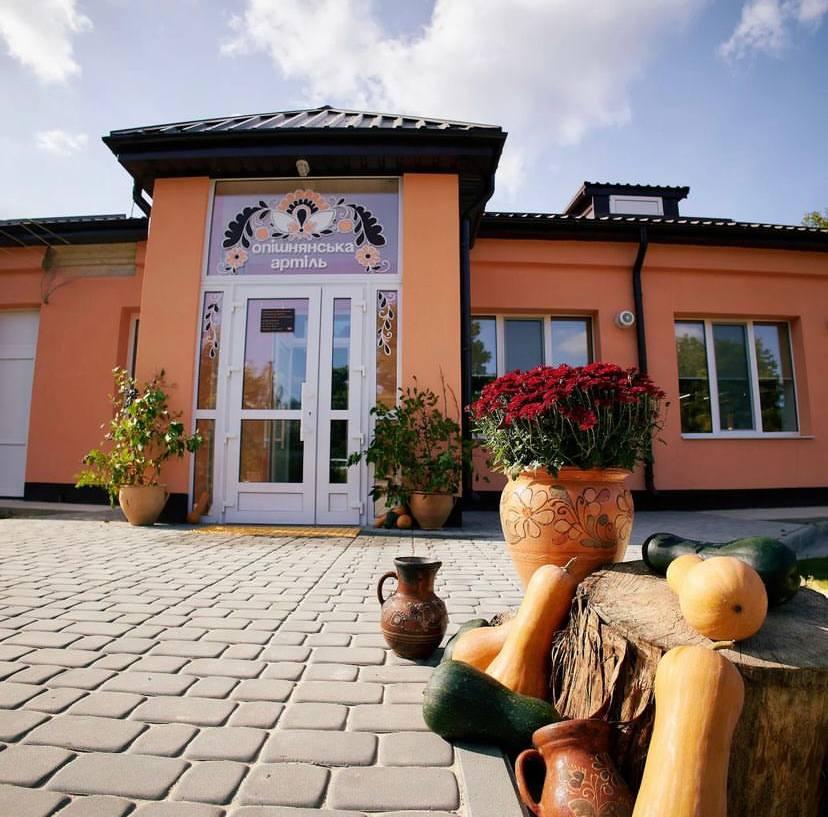
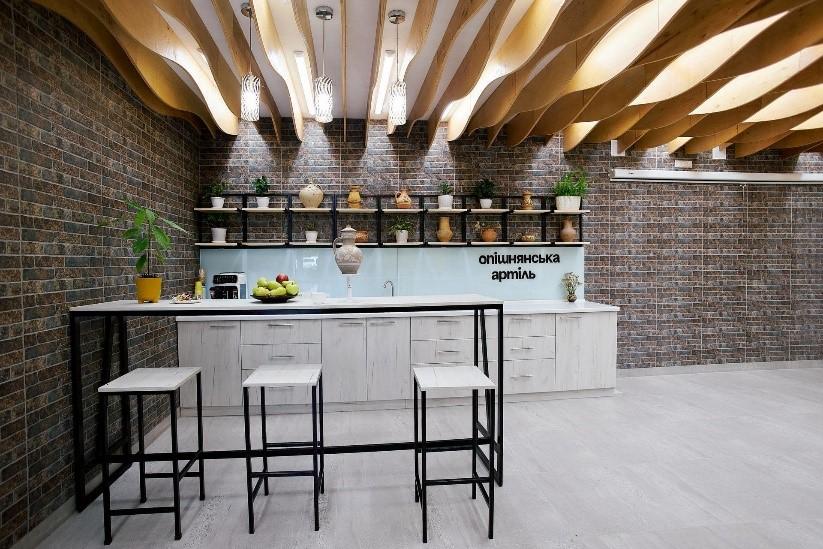
Crafts Development Centre
Basic information
Project Title
Crafts Development Centre
Full project title
Creation of a Crafts Development Centre in the Opishnyanska Territorial Community of Poltava Oblast
Category
Prioritising the places and people that need it the most
Project Description
The Crafts Development Centre brings together beginners and experienced potters to work together, share experiences and sell products, which will give impetus to the development of pottery. This institution hosts master classes, art therapy sessions for children, socially vulnerable groups and tourists, exhibitions of their works and art events. The Centre constantly employs master potters, painters and students of art institutions.
Geographical Scope
Local
Project Region
Territory of the Opishnya community , Ukraine
Urban or rural issues
It addresses urban-rural linkages
Physical or other transformations
It refers to a physical transformation of the built environment (hard investment)
EU Programme or fund
No
Description of the project
Summary
Objective: to create a Crafts Development Centre on the basis of the Opishnyanska Artel to provide comfortable working conditions, training and cooperation for promotion and sales.
Key objectives for sustainability
This space has brought together beginners and experienced potters to work together, share experiences and sell their products, which has become an impetus for the development of pottery. It also hosts masterclasses, art therapy sessions for children, socially vulnerable groups and tourists, exhibitions of their work and art events.
Key objectives for aesthetics and quality
The main activity of the Opishnyanska Artel is the production of various forms of tableware and clay decorative toys. And anything else that might be in demand among visitors. They also hold masterclasses on the technological process of making products on a potter's wheel, on decorative painting, making and decorating tiles, and clay toys.
‘The Opishnya Artel is one of the tourist magnets of Poltava region and, in particular, the Opishnya community.
‘The Opishnya Artel is one of the tourist magnets of Poltava region and, in particular, the Opishnya community.
Key objectives for inclusion
The Opishnya Artel project has great potential to promote inclusion and social integration in the community. Here are some key goals that can be achieved through the implementation of this project:
1. Involvement of people with different capabilities in the process of learning pottery, which contributes to the preservation and development of traditional crafts.
2. The Crafts Development Centre has become a meeting place for people with different backgrounds and capabilities, promoting mutual understanding and tolerance.
3. The project created new jobs for local residents, including people with disabilities and other vulnerable groups.
4. The Crafts Development Centre has become part of a tourist route that will attract tourists to Opishne and its traditions.
1. Involvement of people with different capabilities in the process of learning pottery, which contributes to the preservation and development of traditional crafts.
2. The Crafts Development Centre has become a meeting place for people with different backgrounds and capabilities, promoting mutual understanding and tolerance.
3. The project created new jobs for local residents, including people with disabilities and other vulnerable groups.
4. The Crafts Development Centre has become part of a tourist route that will attract tourists to Opishne and its traditions.
Results in relation to category
Sustainable economic growth of the community: development of tourism potential, increase in employment of the rural population.
How Citizens benefit
The project involved an initiative group of stakeholders that worked throughout the project. Meetings and discussions were held. The initiative group brought together all segments of the population, including local authorities, representatives of various professional groups, including local businesses, NGOs, representatives of socially vulnerable groups such as internally displaced persons, national minorities, people with special needs, etc.
Physical or other transformations
It refers to a physical transformation of the built environment (hard investment)
Innovative character
The innovative nature of the project lies in the fact that it combines the preservation of traditions with the use of modern tools and approaches. This allows not only to preserve the unique cultural heritage, but also to make it relevant and competitive in the modern market. The project aims to preserve and develop the traditional pottery craft of Opishnia. At the same time, it is expected to use modern technologies, design and marketing to promote Opishne ceramics.
Disciplines/knowledge reflected
The Opishnya Artel project is multifaceted and covers a variety of disciplines and areas of expertise. Here are some of them:
Research into traditional pottery methods, ornaments, and symbolism;
Study of the cultural context of pottery, its role in community life;
Research on the needs of the local population;
Documentation, compliance with legislation;
Product promotion, brand building.
Research into traditional pottery methods, ornaments, and symbolism;
Study of the cultural context of pottery, its role in community life;
Research on the needs of the local population;
Documentation, compliance with legislation;
Product promotion, brand building.
Methodology used
To implement this ambitious project, a comprehensive approach was used, which included a variety of methods and tools:
Involvement of the local community: Active participation of local residents in the design and implementation of the project.
Cooperation with craftsmen: Close interaction with experienced potters to preserve and develop traditional techniques.
Participatory decision-making: Involvement of the local community in discussions and decision-making.
Integrated problem solving: Considering the project as a holistic system, including production, marketing, tourism and social aspects.
Social inclusion: Involving people with different capabilities in the project.
Involvement of the local community: Active participation of local residents in the design and implementation of the project.
Cooperation with craftsmen: Close interaction with experienced potters to preserve and develop traditional techniques.
Participatory decision-making: Involvement of the local community in discussions and decision-making.
Integrated problem solving: Considering the project as a holistic system, including production, marketing, tourism and social aspects.
Social inclusion: Involving people with different capabilities in the project.
How stakeholders are engaged
The project was implemented through a joint effort of an international migration organisation, an initiative group, and local authorities, with funding from the usaid from the american people.
Global challenges
The Opishnya Artel project is aimed at addressing a number of global challenges related to the preservation of cultural heritage, local community development and sustainable development.
1. Disappearance of crafts: Many traditional crafts are disappearing due to lack of demand and changing lifestyles. The project promotes the revival and popularisation of pottery.
2. Jobs: The project creates new jobs in regions with high unemployment.
3. Promotion of Ukrainian culture abroad: Opishnya ceramics becomes a visiting card of Ukraine on the world stage.
1. Disappearance of crafts: Many traditional crafts are disappearing due to lack of demand and changing lifestyles. The project promotes the revival and popularisation of pottery.
2. Jobs: The project creates new jobs in regions with high unemployment.
3. Promotion of Ukrainian culture abroad: Opishnya ceramics becomes a visiting card of Ukraine on the world stage.
Learning transferred to other parties
1. Creating a specialised space where craftsmen can work, learn and demonstrate their products.
2. This project can be easily adapted to other regions with developed crafts. For example, a ceramics centre could organise pottery workshops, exhibitions of local craftsmen's work, and souvenir sales.
3. This element can be adapted for any region with developed other crafts.
2. This project can be easily adapted to other regions with developed crafts. For example, a ceramics centre could organise pottery workshops, exhibitions of local craftsmen's work, and souvenir sales.
3. This element can be adapted for any region with developed other crafts.
Infrastructure or public space
No
Political support
No
Monetary value awarded
No