The Common Garden
Basic information
Project Title
Category
Project Description
Current stage development
Geographical Scope
Project Region
Urban or rural issues
Physical or other transformations
EU Programme or fund
Description of the project
Summary
Key objectives for sustainability
Key objectives for aesthetics and quality
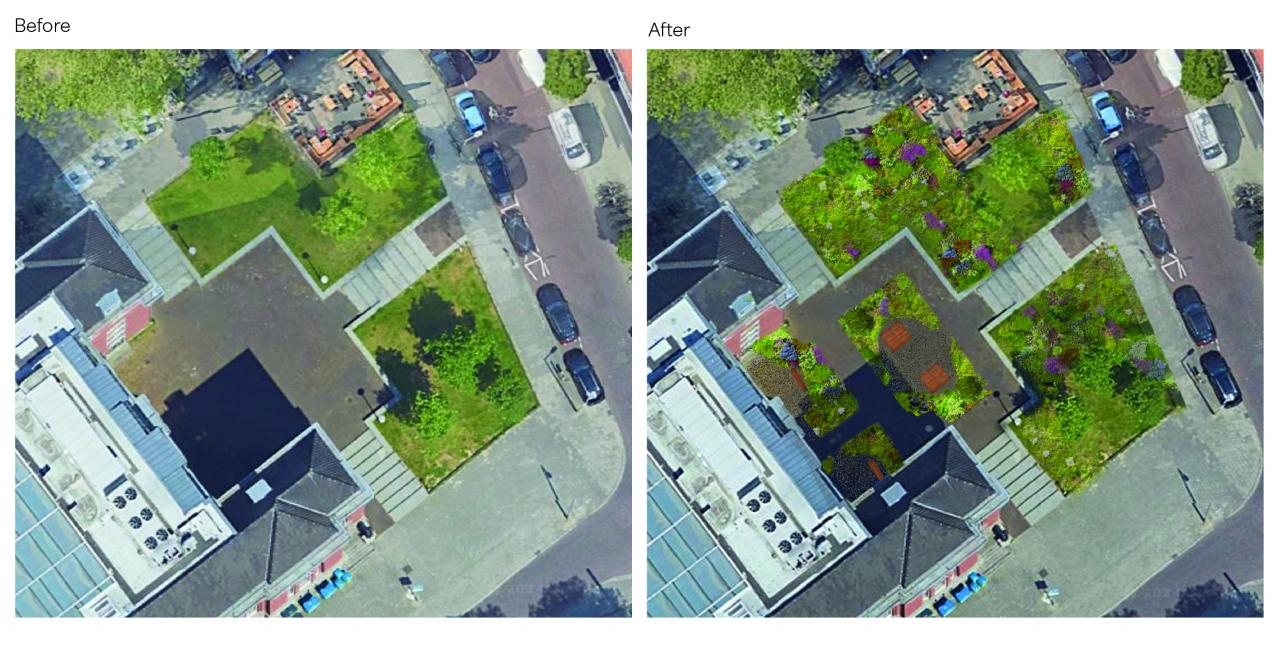
The integration of social and environmental concerns is explored through creating small outdoor rooms for seating that are immersed in the garden. This allows for moments of privacy for students in between classes or people to come together. Creating screens of privacy through plants can generate a sense of being surrounded by nature, while being in the city center.
The site is below ground level, surrounded by downward slopes. In the context of the Netherlands, with sealevel and flooding of concern, the design embraces the water runoff and was inferred by water absorption and drainage. Channeling the water runoff into the planting beds allows the garden to act like a sponge. Another component is maximising the removal of excessive hard surfaces, support a rich variety of plant life while mitigating the risk of flooding.
which allows water to replenish the ground and encourages biodiversity.
Key objectives for inclusion
In terms of the location of the square, it is open to everyone who visits the city center. The square borders the monument in which EUC is housed and is a public space, open to everyone. When we discussed our idea with the business community of the area, they explained that they had been requesting more green and more seating-opportunities in the area so that people would feel more like spending time in the area.
A wide range of people were consulted while developing this project: landscape architects, urban ecologists, biologists, restaurateurs, shop-keepers, students, residents, city planners, city management and city gardeners. Each had their own point of view on the project and each of their voices can be read in the details of the project. For example, when visiting the square with someone from city management, a discussion about drainage points led to their current location in the design.
Affordability was also a key consideration in the design of the square. The design focuses on the removal of parts of the tiling, rather than taking everything out. Some of the original tiles are kept in place to serve as pathways through the garden. The planting plan keeps weekly student maintenance and half-yearly municipal maintenance in mind. Gardening moments will be open to residents of the area but will be organized from the study-association of the university. The main cost of the project is the renovation itself, after which costs can be kept low as a result of the enthusiastic involvement of the community.
How Citizens benefit
As a student-led initiative, we have been involved in every stage—from conceptualizing the idea and conducting site analysis to engaging with stakeholders and advocating for municipal support. Our hands-on participation ensures that the design meets the needs of students and local residents while promoting a culture of sustainability. This process highlights how grassroots initiatives can successfully drive urban transformation.
The local business community (MaHO) has also contributed through discussions where we gathered feedback and explored the project's impact on the neighborhood. These conversations helped shape a collaborative approach that balances environmental goals with local interests.
The Gemeente (municipality) of Rotterdam has played a key role in the project’s development. Since the square is public space, it falls under their jurisdiction rather than the university’s. Our initial presentation led to an ongoing dialogue, requiring us to submit multiple documents in line with urban planning guidelines. This process included refining the design, specifying planting beds and materials, and creating a detailed planting plan to ensure ecological benefits. As of now, we have submitted all required documents and are awaiting further updates on the project's construction timeline.
Finally, EUC has provided institutional backing, supporting long-term involvement. While the university does not own the land, its commitment to sustainability and student engagement has helped propel the project forward.
Physical or other transformations
Innovative character
The planting plan embraces a wilder and more biodiverse approach than what is typically seen in Rotterdam’s urban spaces. While the municipality is gradually shifting towards a more biodiverse and ‘wild’ street aesthetic, it is still not the norm.Mainstream landscaping in the city often favors neatly trimmed greenery and limited plant variety, whereas this project introduces a richer, more ecologically dynamic planting scheme. By prioritizing native and climate-adaptive species, the garden fosters greater biodiversity and resilience, setting an example for future green infrastructure.
Disciplines/knowledge reflected
Plant biology and ecology played a crucial role in shaping the planting plan. By selecting diverse, climate-adaptive species, the design aimed to enhance biodiversity, support pollinators, and improve soil health. This ecological approach ensured that the garden would thrive within the urban environment while contributing to local green infrastructure.
The project was also informed by climate resilience research, particularly insights from Rotterdam’s Weerwoord initiative. This research highlighted the growing challenges of urban heat stress and water management, reinforcing the necessity of transforming the square into a sponge garden—a landscape designed to absorb and retain rainwater. By embracing water runoff, the design mitigates flooding while creating a thriving ecosystem.
The nature of this project, being initiated by students, also brought in a unique and valuable form of local knowledge—the lived experience of those who see and use the space daily. As members of the EUC community, students and staff had firsthand insight into how the square functioned (or failed to function) in its current state. This place-based knowledge allowed the design process to be more responsive to the actual needs of its users, ensuring that the space was not only ecologically resilient but also socially meaningful.
Methodology used
Undeterred, we submitted a request through the municipality’s website, explaining our vision for a green transformation. We never expected a response, but weeks later, a city planner called, asking about our plan. That conversation kickstarted the project. Over the next few months, we collaborated with students, professors, landscape architects, urban ecologists, biologists, and EUC management to refine our vision and build support. When we presented our detailed proposal to the city planners, they were impressed and pledged their support in making it a reality.
Now in 2025, the project is still moving through municipal departments, but our engagement with the municipality remains strong. We have held numerous meetings with stakeholders, each contributing insights and adjustments, leading to a realistic and actionable plan.
We have pursued this project entirely voluntarily, balancing it alongside full-time studies and part-time jobs. It has required long nights, relentless follow-ups, and unwavering dedication to keep momentum. Getting more people on board and securing ongoing support has been essential to ensuring its future.
Even now, persistence remains key. We are focused on long-term sustainability and are prepared to commit further to maintaining this space for years to come—a commitment we are more than happy to make.
How stakeholders are engaged
What stood out to us each time we presented the idea to others familiar with the area was that they had already been thinking along similar lines about repurposing the square. There are many people in the area who think the square should be used for much more than it currently is. It was great to hear about their visions for the future of the square (as well as their concerns) and to be able to develop an idea that we feel really represents the community.
The people we are in contact with from the municipality have been unwavering in their support for the project and have been helping us get through the bureaucratic obstacles that will take this project from an idea to reality.
Global challenges
Learning transferred to other parties
However, a bottom-up approach requires persistence. Driving meaningful change in public space demanded continuous effort, patience, and advocacy. While rewarding, it was difficult to sustain over time. Looking back, involving a larger group from the start would have distributed the workload, reduced stress, and made the process more manageable.
Looking back on the process, there are key lessons to consider for future replication. One of the biggest challenges was the nature of our work being unpaid. While professors and stakeholders appreciated our efforts, the lack of financial support made it difficult to balance studies, part-time jobs, and project responsibilities. Though we were never motivated by money, the absence of formal recognition from the municipality affected the sustainability of our involvement. The Gemeente stated that while they could fund construction, they could not allocate funding for our work. This experience taught us the importance of establishing a work contract upfront, especially for bottom-up initiatives, to ensure fair compensation and recognition.
Future initiatives can learn from both our successes and challenges—by leveraging local government support, ensuring financial sustainability, and involving a broader team to maintain momentum and drive lasting change.
Next steps
The next steps for implementing the project focus on ensuring its long-term success and sustainability. We have now submitted all the documents from our side for the construction of the garden to take place. In the coming year, we hope that the renovation of the square will begin. <br />
To maintain the space effectively, we have planned the establishment of a dedicated maintenance group composed of students and local residents. This will foster a sense of shared responsibility while ensuring that the garden remains a healthy and well-cared-for environment over time. Engaging both the EUC community and neighbourhood residents will also strengthen community ties and promote awareness of urban greening efforts.<br />
If we received this award, we would use the money towards the longevity and maintenance of the project alongside compensating the past unpaid labour. Beyond the initial renovation, financial support will be necessary to cover ongoing maintenance, improvements, and educational initiatives related to the space. While much of the work was driven by passion and commitment, recognizing and addressing the unpaid labor that went into the project will help set a precedent for fair compensation in future grassroots sustainability initiatives.<br />