CEAC & Centro de Día
Basic information
Project Title
Full project title
Project Description
Our Community Centre for Active Aging is a welcoming space where seniors find purpose, companionship, and vitality. As a dedicated Day Centre for Seniors, we offer engaging activities, wellness programs, and social connections that nurture mind, body, and spirit.
With a focus on enriching lives and strengthening the community, we provide families peace of mind, ensuring their loved ones are cared for, connected, and thriving.
Current stage development
Project Region
Municipality
EU Programme or fund
Which funds
Other Funds
The NextGenerationEU funds belong to the Recovery and Resilience Facility (RRF) programme - year 2021
Description of the project
Summary
The CEAC promotes autonomy and cognitive stimulation through activities, workshops, and engagement initiatives. The Centro de Día provides structured, professional care, assisting with daily activities in a safe environment. The project aims to reduce social isolation, improve access to essential services, and enhance seniors’ quality of life. A key element is community involvement. Local feedback has shaped the project, ensuring it meets real needs. The initiative aligns with national and regional elderly care policies, contributing to a sustainable, inclusive aging model.
Through this initiative, the municipality seeks to establish a model of social infrastructure that not only addresses immediate care needs but also promotes long-term resilience and quality of life for older adults. By providing a high-quality care alternative, the project helps families balance personal and professional responsibilities. More than just a care facility, it establishes a long-term model for elderly well-being, positioning Gata de Gorgos as a leader in integrated elderly care services in the region.
Key objectives for sustainability
Located near a hospital, the centre is designed as a flexible social and therapeutic space that evolves with the needs of the elderly. Activities will maximize existing municipal facilities and resources, ensuring efficient use of materials. Situated in a green area, the project reduces its carbon footprint by integrating gardens and orchards that support local production, organic waste management, and carbon sequestration. Additionally, solar panels will provide renewable energy, while cultivation areas promote natural materials and reduce reliance on industrial products.
Aligned with circular economy principles, the project prioritizes recyclable, reusable, and sustainable materials. Smart energy management, insulation improvements, and efficient water use further reduce waste and pollution. At its highest ambition, the project fosters regeneration, enhancing biodiversity, well-being, and social interaction. The inclusion of green spaces and accessible outdoor areas strengthens the urban ecosystem, going beyond carbon reduction.
By promoting active aging and community engagement, the CEAC & Centro de Día redefines elderly care as a socially and environmentally integrated experience. It sets a benchmark for sustainable, inclusive, and regenerative urban development, demonstrating how elderly facilities can be functional, energy-efficient, and environmentally responsible.
Key objectives for aesthetics and quality
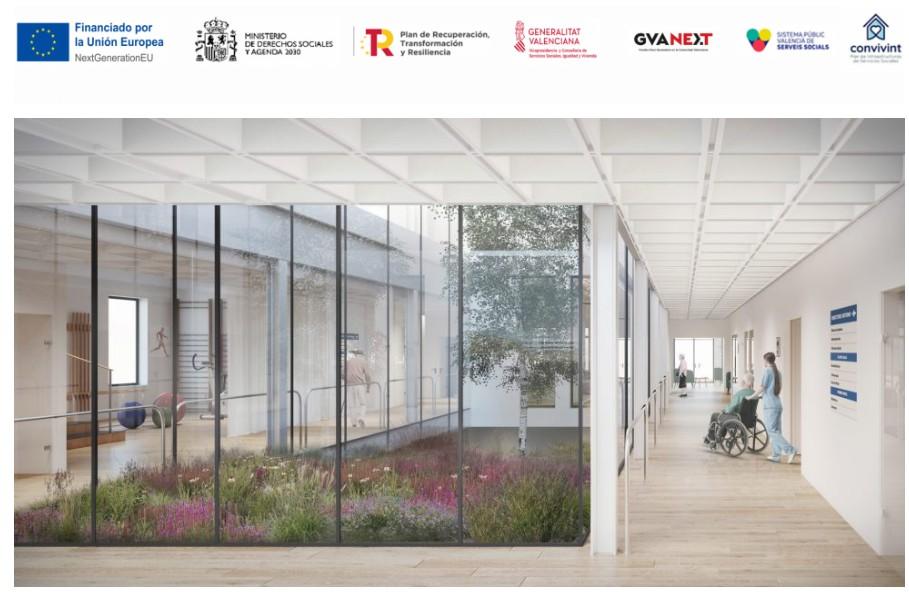
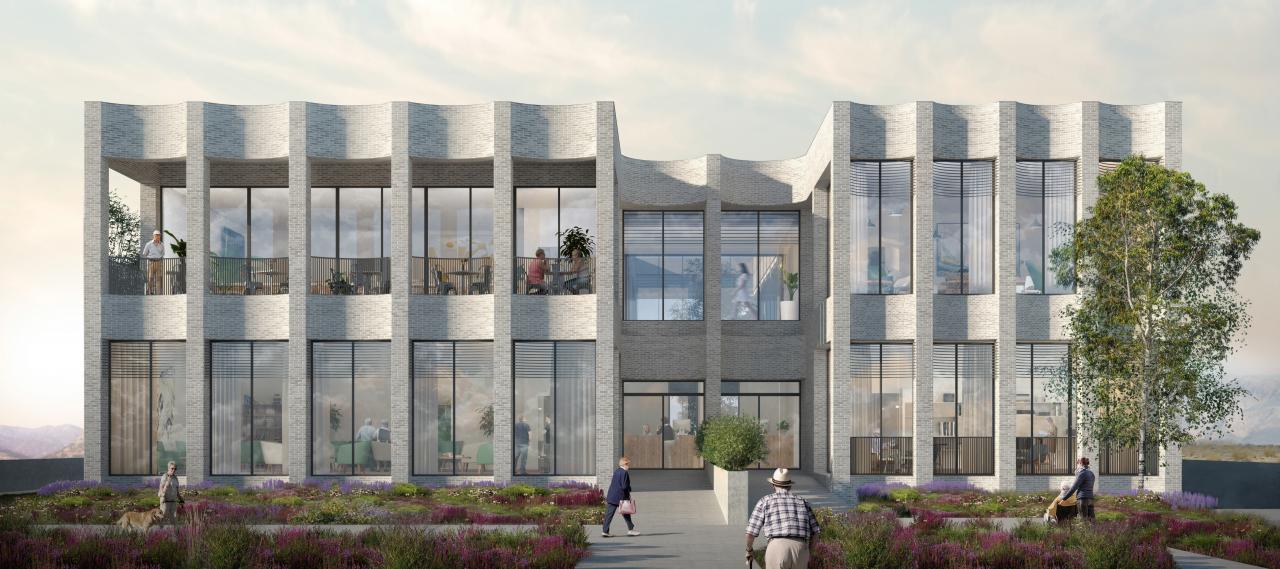
• Integration with the Environment: The architecture blends with its surroundings using natural materials and earthy tones, ensuring a calm, inviting atmosphere. The layout integrates green spaces, shaded areas, and gathering spots, fostering relaxation, interaction, and connection with nature. Vegetable gardens and orchards contribute to local food production and sustainability while enhancing sensory experiences.
• A Warm, Homely Setting: Unlike institutional facilities, the centre prioritizes comfort and familiarity. Thoughtful spatial organization, materials, and lighting create a cosy, dignified environment where seniors feel at home. Acoustic balance, soft textures, and warm colours enhance sensory well-being, making the space pleasant and accessible.
• Social & Cultural Connection: The layout promotes community interaction with open gathering spaces, shaded outdoor areas, and multi-purpose rooms. Inspired by Mediterranean design, it incorporates courtyards, shaded walkways, and vernacular materials, reinforcing cultural identity and belonging.
• Cultural Identity & Engagement: The centre hosts artistic and cultural programs, including traditional crafts, music, storytelling, and local festivities, keeping seniors mentally stimulated and emotionally connected to their heritage. Activities foster intergenerational exchange, strengthening social ties.
By merging functionality with beauty, the CEAC & Centro de Día sets a new standard for elderly care—harmonious, enriching, and transformative, ensuring dignity and well-being for all.
Key objectives for inclusion
• Active Aging & Social Integration: The center redefines elderly care, shifting from passive assistance to active participation. Social activities, workshops, craft fairs, and shared spaces encourage autonomy and interaction, keeping seniors engaged through gardening, crafts, and community involvement.
• Barrier-Free & Inclusive Design: (1) Mobility: Wheelchair-accessible pathways, wide corridors, and automatic doors ensure seamless movement, (2) Sensory & Cognitive Accessibility: High-contrast signage, clear wayfinding, non-reflective surfaces, and soothing colors create a calming, navigable space, (3) Multisensory Spaces: Sensory gardens and textured walking paths provide therapeutic benefits, especially for those with cognitive challenges.
• Affordable & Publicly Accessible Model: The centre is publicly funded, ensuring affordable access to essential care. A sliding-scale fee system will support low-income seniors, while NGO and government collaborations will provide financial aid. Free cultural and wellness programs will promote engagement without financial barriers.
• Community-Led Governance: An inclusive governance model will empower seniors and families through advisory boards, feedback sessions, and town halls, ensuring the center evolves based on real community needs.
• Intergenerational & Volunteer Programs: Collaboration with schools, universities, and local organizations will foster lifelong learning and social integration, uniting seniors and young people in a dynamic, enriching environment.
By integrating accessibility, affordability, and participatory governance, the CEAC & Centro de Día sets a new standard for inclusive, community-centered elderly care
How Citizens benefit
• Community-Led Design & Social Inclusion: The project promotes active aging, not passive care. Social activities, workshops, fairs, and shared spaces encourage autonomy and interaction. Elderly participants will co-design recreational programs, accessibility features, and intergenerational activities, while caregivers will provide insights on daily care needs. Collaboration with local associations will enhance cultural and social inclusion through events and volunteer programs.
• Accessibility & Financial Inclusion: The centre guarantees barrier-free architecture, ensuring spaces are navigable for individuals with reduced mobility or cognitive challenges. It is publicly funded, with a sliding-scale fee system to make high-quality care affordable to all.
• Multisectoral Engagement & Impact: (1) Local NGOs & Civil Society: Co-creating mental wellness initiatives, digital literacy programs, and volunteer networks, (2) Businesses & Private Sector: Providing sponsorships, employment opportunities, and craft workshops for seniors. (3) Educational Institutions: Developing student engagement programs and aging research projects, (4) General Public: Engaging in awareness campaigns, cultural events, and advocacy efforts.
By merging participatory governance, intergenerational exchange, and financial sustainability, the CEAC & Centro de Día sets a new standard for inclusive, community-driven elderly care.
Innovative character
A key innovation is its dual functionality, combining a Centro de Envejecimiento Activo Comunitario (CEAC) for independent seniors with a Centro de Día for those needing daily support. This ensures continuity of care, allowing elderly individuals to remain engaged within the same space as their needs evolve.
A New Standard in Elderly Care:
• Sustainability & Energy Efficiency: Passive design strategies reduce energy consumption, integrating natural ventilation, daylight optimization, and green spaces for well-being.
• Community Integration: Unlike isolated care homes, this centre acts as a social hub, bringing together seniors, families, and the community through shared activities.
• Aging in Place: The model supports independence, allowing seniors to stay within their communities while receiving tailored care.
• Universal Accessibility: Goes beyond legal standards, ensuring barrier-free spaces, dementia-friendly layouts, and multi-sensory environments for cognitive and physical needs.
• Proactive Healthcare: Focuses on prevention and well-being, offering cognitive stimulation, therapy spaces, and wellness programs instead of reactive medical care.
• Smart Aging & Assistive Tech: Integrates health monitoring, digital learning spaces, and AI-driven support to enhance independence.
The CEAC & Centro de Día stands out for its innovative approach. While similar projects exist in Europe, such as the Havelhöhe Psychosomatic Hospital in Berlin, this would be the first time these methodologies are applied in a Day Centre for the elderly. Additionally, implementing it in a small municipality makes it a pioneering model.
Disciplines/knowledge reflected
Key Disciplines & Their Roles:
• Architecture & Urban Planning: Designing barrier-free spaces, incorporating natural lighting, ventilation, and green areas to enhance comfort and cognitive well-being.
• Healthcare & Geriatrics: Developing medical services, cognitive therapy, and rehabilitation areas, ensuring preventive and long-term care while promoting autonomy.
• Accessibility & Inclusive Design: Ensuring a "Design for All" approach with contrast-rich signage, sensory-friendly layouts, and ergonomic furniture, facilitating ease of movement for all users.
• Environmental Sustainability: Implementing solar panels, water conservation systems, and bioclimatic strategies, reducing energy consumption and improving air quality.
• Technology & Assistive Innovation: Integrating smart monitoring, digital literacy programs, and assistive devices, supporting independence and enhancing daily living.
• Social Sciences & Community Engagement: Designing participatory governance, intergenerational programs, and social inclusion initiatives, strengthening social bonds and active aging.
• Cultural & Artistic Development: Creating art, music, and local heritage programs, using creative expression as a tool for cognitive stimulation and emotional well-being.
The collaborative Impact: Through co-design workshops, evidence-based planning, and continuous feedback, experts will work in synergy to create a facility where urban design supports healthcare, sustainability enhances comfort, and social inclusion fosters autonomy.
Methodology used
Key Phases & Methodology:
1) Assessment: Demographic studies, surveys, and stakeholder interviews identified challenges in elderly care, accessibility, and inclusion, shaping the facility’s design and services.
2) Co-Creation: Workshops and focus groups will engage citizens, caregivers, and local organizations, ensuring barrier-free mobility, culturally relevant activities, and flexible spaces.
3) Sustainable & Inclusive Design: Architects, healthcare professionals, and sustainability experts develop a low-carbon, energy-efficient, and universally accessible facility using bioclimatic strategies and smart aging technologies.
4) Implementation: A public-private partnership ensures efficient execution, integrating quality control, accessibility audits, and environmental impact assessments.
5) Evaluation & Adaptation: A continuous monitoring framework will measure health outcomes, social participation, and energy efficiency, refining the model based on user feedback.
Innovative & Scalable Approach:
• User-Centered & Participatory: Designed by and for seniors, ensuring real-life functionality.
• Interdisciplinary Collaboration: Merges urban planning, healthcare, sustainability, and technology for a holistic care model.
• Scalability & Adaptability: A replicable framework for other regions, ensuring long-term impact.
• Sustainability-Driven Execution: Combines bioclimatic design, smart aging technologies, and universal accessibility, setting a new standard for elderly care.
This data-driven, community-led methodology redefines elderly care, turning aging into an opportunity for empowerment, connection, and well-being.
How stakeholders are engaged
Multi-Sectoral Engagement & Roles:
• Local Government: Leading funding, policy alignment, and public consultations, ensuring financial feasibility and long-term sustainability while integrating the project into regional aging policies.
• Elderly Community & Caregivers: Participating in co-design workshops, shaping accessibility, activities, and services to ensure a user-centric space that prioritizes autonomy and well-being.
• Architects & Urban Planners: Developing an accessible, energy-efficient design with bioclimatic strategies, barrier-free spaces, and therapeutic environments to enhance cognitive and physical well-being.
• Healthcare Professionals: Structuring preventive healthcare, rehabilitation, and dementia-friendly spaces, integrating mental wellness initiatives, therapy rooms, and multi-sensory areas.
• NGOs & Local Groups: Creating intergenerational, cultural, and volunteer-led programs, fostering active aging, social inclusion, and community engagement through storytelling, digital literacy, and civic participation.
• Private Sector & Tech Providers: Supplying assistive technology, sustainable energy solutions, and smart aging innovations, ensuring operational efficiency and adaptable comfort.
Added Value & Impact:
This collaborative approach blends professional support with community participation, redefining elderly care beyond passive assistance. By merging healthcare, urban planning, and social inclusion, the CEAC & Centro de Día becomes a holistic, future-ready model, ensuring dignity, autonomy, and social connection for all seniors.
Global challenges
Key Challenges & Local Solutions:
a) Aging & Social Isolation:
*Solution: Promotes aging in place with intergenerational programs, cultural events, and digital literacy training to strengthen social ties.
*Impact: Reduces loneliness, fosters inclusion, and shifts elderly care toward active participation.
b) Accessibility & Urban Inclusivity
*Solution: Universal design ensures barrier-free spaces, dementia-friendly layouts, and sensory-rich environments for all mobility levels.
*Impact: Sets a new standard for age-friendly urban planning, improving autonomy and inclusion.
c) Climate Resilience & Sustainability
*Solution: Integrates bioclimatic design, solar energy, and green spaces to reduce environmental impact and enhance well-being.
*Impact: Lowers carbon footprint, improves air quality, and creates nature-integrated spaces.
d) Preventive Healthcare & Well-being
*Solution: Focuses on preventive health, cognitive therapy, and wellness programs to reduce health risks.
*Impact: Lowers healthcare costs and improves quality of life.
e) Economic Sustainability & Affordability
*Solution: A public-private model with sliding-scale fees ensures equitable access.
*Impact: Creates a scalable, cost-effective model that balances financial sustainability with inclusion.
The conclusion: A Scalable Model for Global Aging, the CEAC & Centro de Día proves that sustainable, community-led solutions can redefine elderly care, ensuring dignity, autonomy, and connection while addressing global challenges.
Learning transferred to other parties
Next steps
The CEAC & Centro de Día is advancing into its next phase, focusing on design finalisation, sustainability, participatory engagement, and NEB alignment. The project will enhance community-driven approaches, environmental responsibility, and interdisciplinary collaboration, ensuring it remains an innovative, replicable elderly care model.<br />
Key Next Steps:<br />
a) Finalising Construction & Operations: Implement energy-efficient systems, sustainable materials, and barrier-free design, minimising environmental impact while maximising well-being.<br />
b) Green Space Integration: Improve biodiversity, air quality, and user experience through enhanced landscaping.<br />
c) Community Engagement: Conduct workshops, participatory design sessions, and pilot programs to refine services based on user needs.<br />
d) Governance & Feedback: Strengthen user-driven decision-making to ensure ongoing adaptation.<br />
e) Cross-Sector Collaboration: Engage municipal authorities, healthcare experts, urban planners, and NGOs to foster innovation in elderly care.<br />
f) Digital & Accessibility Integration: Introduce health monitoring tools and inclusive tech solutions while maintaining affordability.<br />
g) Future Scaling & Knowledge Sharing: Expand the model, document best practices, and collaborate with the NEB community to inspire similar initiatives across Europe.<br />
<br />
By embedding sustainability, beauty, and inclusion, the CEAC & Centro de Día not only transforms elderly care in Gata de Gorgos but also contributes to human-centred, sustainable urban development.