Bioarchitecture in the heart of Latvia
Basic information
Project Title
Full project title
Category
Project Description
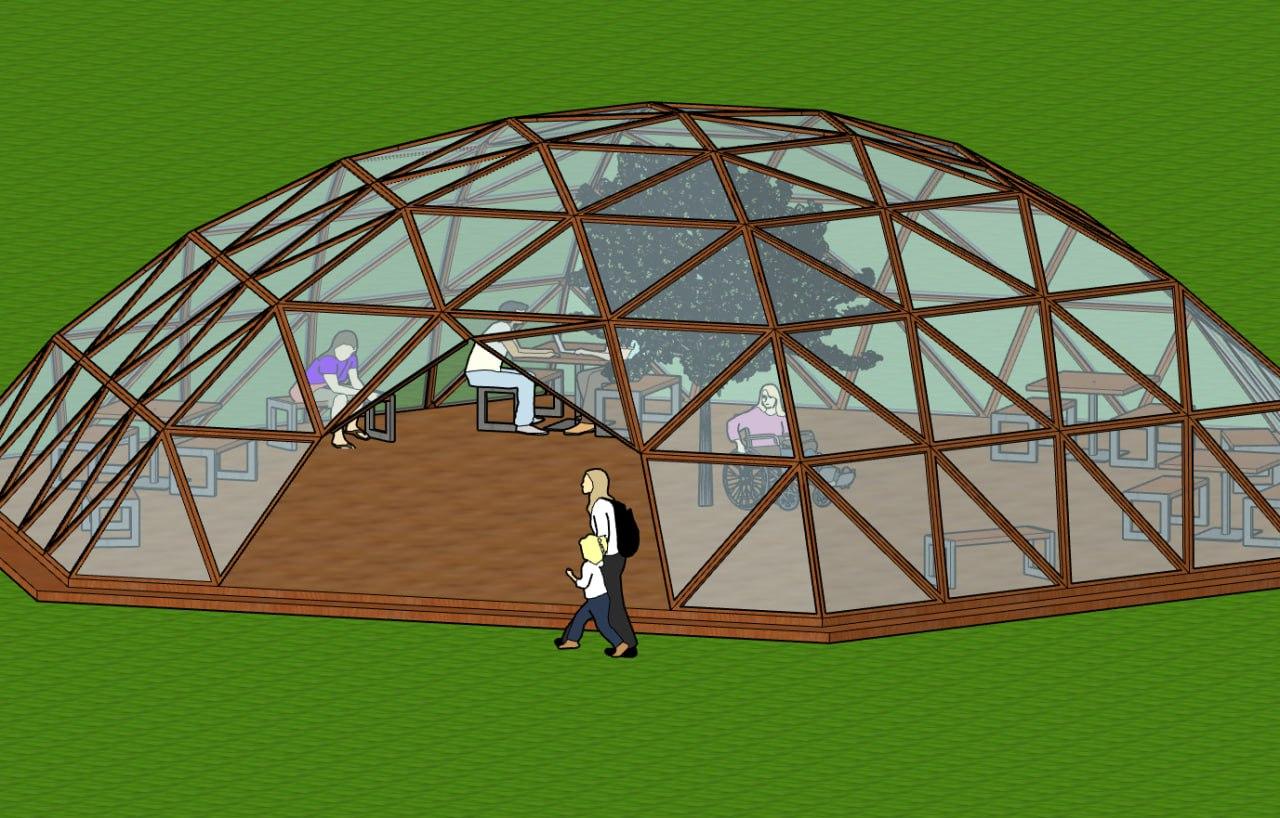
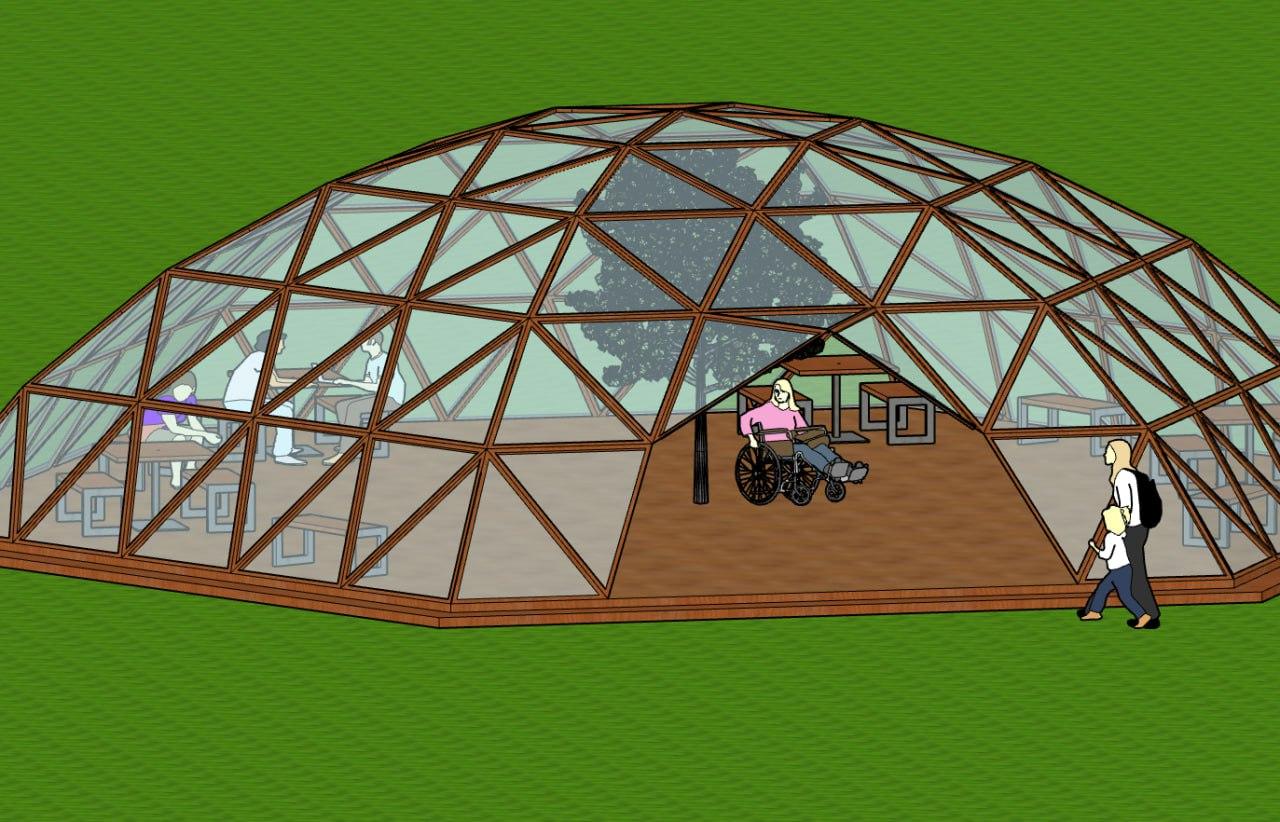
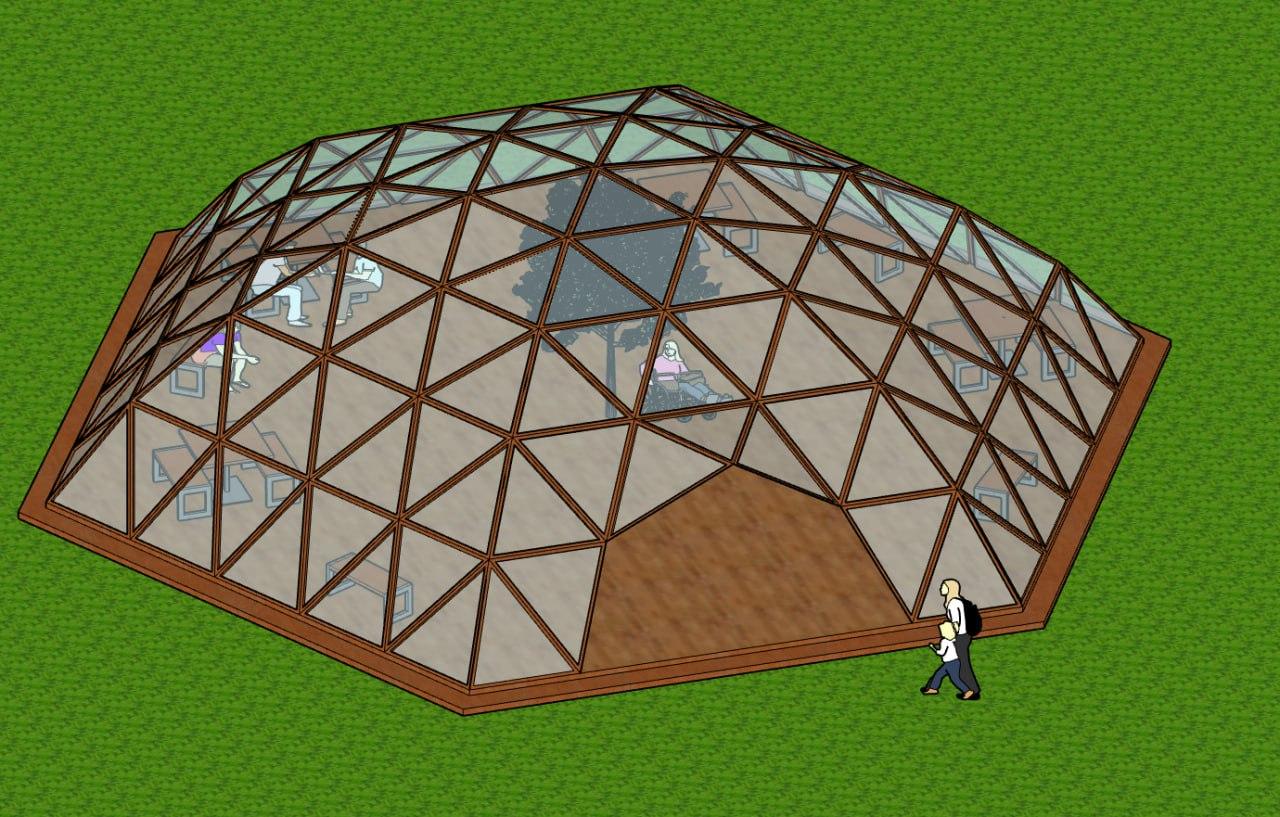
In the center of the dome there is a tree, symbolizing the unity of nature and architecture, and also creating a natural microclimate.
✓ Beauty
✓ Sustainability
✓ Inclusiveness
Current stage development
Geographical Scope
Project Region
Urban or rural issues
Physical or other transformations
EU Programme or fund
Description of the project
Summary
2. Inclusion: The benches inside the biodome create a place for communication and relaxation, promoting social interaction and inclusion. This reflects the values of accessibility and participation of all community members.
3. Aesthetics: The biodome design can combine functionality and beauty, which is in line with the NEB 2025 philosophy of creating harmonious and inspiring spaces.
4. Health and Well-being: The presence of greenery and the opportunity to be outdoors contribute to the improvement of people’s quality of life and psycho-emotional state, which is an important aspect in modern cities.
5. Community and connection with nature: The project can inspire people to have a closer connection with nature and to actively participate in its conservation, which is also part of the NEB 2025 goals.
Key objectives for sustainability
✓Objective: Use of sustainable, biodegradable and local materials to construct the biodome.
✓Implementation: Research and selection of materials such as natural fibers and recycled resources.
: This approach minimizes environmental impact and supports the concept of a circular economy.
2. Energy Efficiency:
✓Objective: Design the biodome to optimize energy use through natural lighting and ventilation.
✓Implementation: Use strategically placed windows and vents to improve air flow and reduce reliance on artificial lighting and heating.
✓Exemplary: Energy efficient design serves as a model for how comfortable spaces can be created with minimal energy consumption.
3. Integration with Nature:
✓Objective: Create a space that harmonizes with the surrounding ecosystem and supports local biodiversity.
✓Implementation: Incorporation of trees and native plants in and around the biodome.
✓Exemplary: This integration shows how architecture can positively impact the environment and deepen the connection between people and nature.
4. Accessibility:
✓Objective: To ensure accessibility to the biodome for people with disabilities.
✓Implementation: Including an accessible entrance for people with disabilities and barrier-free circulation routes within.
✓Exemplary: This highlights the importance of inclusive design.
5. Multifunctionality:
✓Objective: To create a space suitable for a variety of activities.
✓Implementation: Including tables and open spaces for gatherings and interaction.
✓Exemplary: This transforms the biodome into a hub for community life.
6. Educational Opportunities:
✓Objective: To use the biodome as a learning center for sustainable practices and environmental conservation.
✓Implementation: Organizing information exhibitions, workshops and events.
✓Exemplary: This can inspire others to adopt sustainable practices and protect the environment.
Key objectives for aesthetics and quality
✓Objective: Create a visually appealing structure that blends seamlessly with its natural surroundings.
✓Implementation: Use organic shapes and natural materials in the design, mimicking forms found in nature, such as shells or organic structures.
✓Exemplary Aspect: This approach emphasizes aesthetic harmony and demonstrates how architecture can enhance the beauty of the environment rather than detract from it.
2.Inviting Spaces:
✓Objective: Design interiors that promote comfort, relaxation, and social interaction.
✓Implementation: Incorporate comfortable seating, communal areas, and open layouts that encourage people to gather, interact, and engage with one another.
✓Exemplary Aspect: By fostering a sense of community, the design enhances the overall experience, showing how thoughtful spatial arrangements can lead to meaningful connections among users.
3.Cultural Integration:
✓Objective: Reflect and celebrate local culture through design elements and artwork.
✓Implementation: Integrate local art, cultural motifs, or traditional craftsmanship into the structure.
✓Exemplary Aspect: This focus on cultural integration fosters pride and connection within the community.
4.Engagement with Nature:
✓Objective: Create a space that enhances the connection between people and nature.
✓Implementation: Design large windows, skylights, and outdoor spaces that allow for natural light and views of the surrounding landscape, bringing the outdoors inside.
✓Exemplary Aspect: This connection to nature not only enhances aesthetic appeal but also contributes to mental well-being.
5.Flexible and Multi-Functional Spaces:
✓Objective: Provide versatile areas that can accommodate various activities and events.
✓Implementation: Design spaces that can be easily reconfigured for workshops, performances, or community gatherings,including movable furniture and adaptable layouts.
✓Exemplary Aspect: This flexibility encourages diverse uses of the space.
Key objectives for inclusion
How Citizens benefit
The project also offered volunteer opportunities, which strengthened the sense of ownership and pride among community members. Citizen participation ensured that the project was tailored to their needs and increased support, as residents were more likely to use a space they had a stake in.
In this way, citizen engagement at different levels – from councillors to volunteers – made the biodome more relevant and sustainable, serving as an example for future projects that want to incorporate community voices into their development.
Physical or other transformations
Innovative character
Firstly, it uses biophilic design, integrating natural elements and promoting biodiversity, which improves user well-being.
Secondly, the focus on sustainability is realized through the use of eco-friendly materials and passive design strategies, significantly reducing the project’s carbon footprint.
Thirdly, the community-oriented approach ensures the active involvement of local residents at all stages, which contributes to the creation of a space that reflects their needs and values.
Furthermore, the project is highly accessible and inclusive, offering universal solutions for all users, including people with disabilities.
Another innovation is the creation of a multifunctional space that can be used for a variety of events and activities, making it more flexible.
Finally, the integration of smart technologies improves functionality and sustainability, including solar systems and intelligent lighting, which also helps educate visitors about sustainable practices.
The Biodome project thus sets new standards for public spaces, featuring a holistic, community-oriented approach and the integration of technology and nature.
Disciplines/knowledge reflected
The interaction between these disciplines took place through regular meetings where ideas and solutions were discussed. This collaboration allowed for the creation of a holistic project that was not only beautiful and functional, but also sustainable and socially inclusive. This approach provided innovative solutions and cultural relevance, which contributed to the sense of belonging among residents to the new space.
Methodology used
Firstly, it uses biophilic design, integrating natural elements and promoting biodiversity, which improves user well-being.
Secondly, the focus on sustainability is realized through the use of eco-friendly materials and passive design strategies, significantly reducing the project’s carbon footprint.
Thirdly, the community-oriented approach ensures the active involvement of local residents at all stages, which contributes to the creation of a space that reflects their needs and values.
Furthermore, the project is highly accessible and inclusive, offering universal solutions for all users, including people with disabilities.
Another innovation is the creation of a multifunctional space that can be used for a variety of events and activities, making it more flexible.
Finally, the integration of smart technologies improves functionality and sustainability, including solar systems and intelligent lighting, which also helps educate visitors about sustainable practices.
The Biodome project thus sets new standards for public spaces, featuring a holistic, community-oriented approach and the integration of technology and nature.
How stakeholders are engaged
At the local level, residents actively participated in workshops and surveys, which ensured that the project met their needs and increased their sense of belonging. Local authorities provided advice on zoning and permits, which helped to comply with regulations and integrate the project into community development plans.
At the regional level, planning agencies assessed the impact of the project on the environment and infrastructure, and NGOs supported community engagement and offered resources, which enriched the project with expertise in the field of sustainability and social inclusion.
At the national level, public authorities provided funding and supported the project’s alignment with national priorities. Links with European Union initiatives provided access to resources and best practices, increasing the credibility of the project.
Thus, the multi-level involvement of various stakeholders significantly strengthened the project, ensuring its sustainability and relevance to the needs of the community.
Global challenges
Firstly, it contributes to the fight against climate change by adopting sustainable design practices such as the use of eco-friendly materials and energy-efficient systems. This reduces the carbon footprint and increases biodiversity.
Secondly, in the context of increasing urbanization, the project offers a model for creating green public spaces that improve the quality of urban life and help reduce the urban heat island effect.
Thirdly, the project supports social inclusion by actively involving diverse community members in the design process and ensuring accessibility for all. This helps combat social exclusion and creates a sense of belonging.
In addition, the project contributes to the conservation of biodiversity by using biophilic elements and promoting local flora and fauna, which helps mitigate the global problem of habitat destruction.
The focus on health and well-being also creates spaces for recreation and community events, which responds to the global challenge of mental health and accessibility to recreational areas.
Finally, the project promotes responsible resource management by using sustainable materials and technologies such as solar panels. This encourages local communities to adopt sustainable practices, which contributes to global efforts to protect resources.
In this way, the biodome project effectively addresses global challenges such as climate change, urbanization, social inclusion, biodiversity loss, health and well-being, and resource management by providing innovative local solutions.
Learning transferred to other parties
Firstly, the method of active involvement of residents through workshops and surveys can be adapted for different projects, helping to create a sense of belonging and meet the needs of the local population. Secondly, bringing together experts from different fields, such as architecture and ecology, can promote innovative solutions and an integrated approach in other initiatives.
The use of environmentally friendly materials and energy-efficient systems can also become an example for other urban projects, helping to reduce the ecological footprint. The iterative design method based on feedback can be applied in different contexts to continuously improve projects. Elements of inclusive design, such as universal accessibility, can be implemented in other public spaces.
In addition, the integration of smart technologies, such as solar panels, can increase the sustainability of other initiatives. The involvement of local volunteers in construction and maintenance can strengthen the connection with the community. These elements can significantly improve the quality of life and sustainability in different places and for different groups of people.
Next steps
In the year following the submission of the biodome project application, several key steps will be taken to further develop, promote and implement the project. First, based on the feedback gathered from the community and experts, the design solutions will be refined to improve functionality and aesthetics. Second, efforts will be stepped up to attract funding through grants, sponsors and partner organizations to ensure the successful implementation of the project.<br />
<br />
A marketing strategy will also be developed to raise awareness of the project both in the local community and beyond, using social media, events and press releases. An important step will be to establish partnerships with local NGOs, educational institutions and businesses to create joint initiatives and involve more participants.<br />
<br />
The project implementation phase will begin with the construction and equipment of the biodome, taking into account sustainable technologies and materials. Finally, monitoring systems will be established to evaluate the effectiveness of the project and its impact on the community, which will help in further improvement and adaptation of the concept. These steps are aimed at the successful implementation and sustainable development of the project, creating a solid foundation for its future achievements.