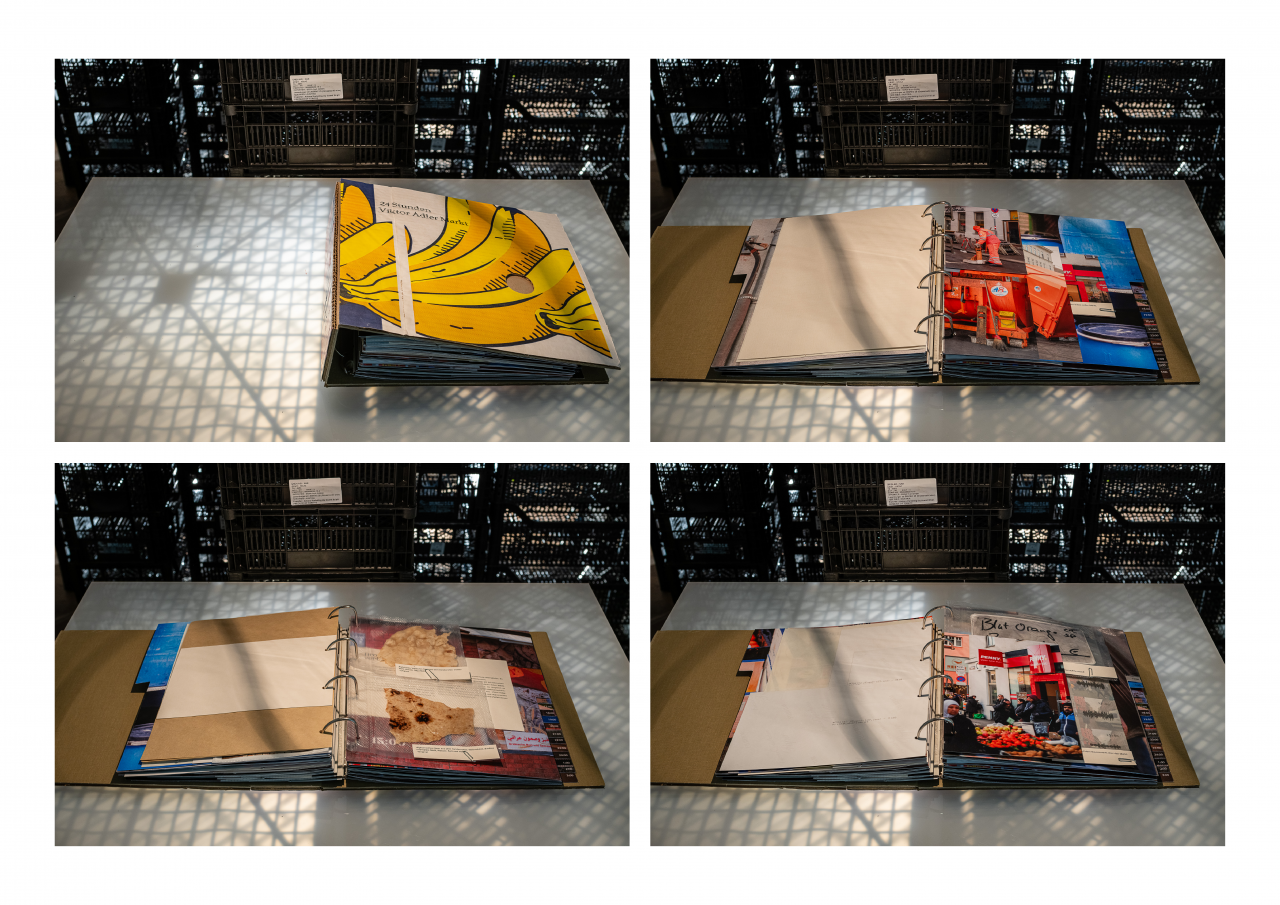
24 Hours Viktor-Adler-Markt
Basic information
Project Title
Full project title
Category
Project Description
Current stage development
Geographical Scope
Project Region
Urban or rural issues
Physical or other transformations
EU Programme or fund
Description of the project
Summary
Target Groups:
• Local vendors, customers, and migrant communities
• Residents, urban researchers, and activists
• Policymakers and cultural institutions
Objectives & Achieved Outcomes:
• Documenting & Preserving Local Knowledge: An artist book captures the market’s daily rhythms through photography, sensory mappings, interviews, and historical research, bridging lived experiences with broader urban challenges.
• Engaging the Community: Public multimedia readings bring together vendors, activists, and policymakers for discussions on themes like identity, affordability, and urban resilience, creating a platform for empowerment and advocacy.
• Influencing Policy: Insights from discussions are compiled into a publication with concrete policy recommendations, advocating for community-driven market protection.
Integration of New European Bauhaus Values:
• Sustainability: Supports local food systems and reduces environmental impact through short supply chains.
• Inclusion: Amplifies diverse voices and promotes markets as essential, accessible urban spaces.
• Aesthetics: Uses engaging storytelling, immersive photography, and live events to make research tangible and emotionally resonant.
By fostering dialogue and influencing urban policies, the project strengthens Viktor-Adler-Markt’s role as a community-driven space, offering a replicable model for inclusive, sustainable urban development.
Key objectives for sustainability
By documenting the ever-evolving social and cultural momentum of Viktor-Adler-Markt, our project preserves vital internal processes—many of which remain undocumented in existing literature. This archival effort is a proactive measure to safeguard knowledge about sustainable market practices, cultural traditions, and community-driven labor dynamics.
Furthermore, the project raises public awareness and sparks discussion by highlighting the market's multifaceted functions: it is a nutritional resource, an affordable retail space, and a crucial social hub that supports labor opportunities and community cohesion. By hosting the multimedia live reading series, discussion rounds as well as policy advocacy the project contributes to empowering and sustaining Viennas fresh markets.
By advocating for the enduring value of such markets, our project contributes to the NEB core value of sustainability. It demonstrates that preserving and celebrating local food systems can lead to more resilient, sustainable urban living—thereby reinforcing the importance of community-driven, environmentally conscious public spaces in contemporary cities.
Key objectives for aesthetics and quality
The adaptable folder, crafted from market-sourced materials, reflects ongoing transformations. It combines documentary photography that immerses viewers in the market’s vibrant life, sensory mappings of smells and crowd dynamics, and interviews offering insights from vendors, customers, and other market users. Historical documents, including legal texts and archives, connect past and present, emphasizing the market’s lasting significance. Original objects like price tags and textiles add a tactile dimension to the artist’s book.
A fictionalized narrative, based on participatory observation, unfolds over 24 chapters—one for each hour—illustrating the market’s functions, from providing affordable fresh food to serving as an arrival point for migrants and a hub for marginalized communities. This subjective storytelling makes broader social themes tangible while also protecting the identities of market users who contributed anonymously.
Public multimedia live readings, featuring video and sound, immerse audiences in the market’s life and themes of affordability, cultural identity, and belonging. An interactive platform fosters discussions on gentrification, touristification, and the importance of community-driven urban spaces.
By collaborating with cultural institutions, local movements, and policymakers, the project embodies NEB values of sustainability, inclusion, and aesthetics. It demonstrates how design and culture merge to enhance public spaces, advocating for markets as vital social and economic pillars in urban life.
Key objectives for inclusion
Our public multimedia readings further highlight market users often overlooked in policy discussions. These events bring together vendors, residents, experts, and policymakers to share perspectives, sparking dialogue on fresh markets’ contemporary role. By fostering open conversations, we challenge dominant narratives and encourage community-driven decision-making.
The project aims to empower and preserve Vienna’s fresh markets while building a bridge and discussion platform between market users, experts, and policymakers. We also plan to collaborate with European initiatives addressing similar challenges, creating a platform for cross-border exchange.
Through participatory practices, public events, and collaborative networks, our project showcases how inclusion can shape urban policy and design. It highlights the significance of community markets while setting a standard for empowering public spaces and its users in rapidly changing cities.
How Citizens benefit
In addition to these direct interactions, local community members and civil society organizations, such as Stand 129 from Caritas played a supportive role, further broadening our understanding of the market's social dynamics and contributed substantially to the project, ensuring our documentation reflects the authentic pulse of the market.
The project’s impact is set to expand significantly during our series of public multimedia live readings. These events will convene a diverse group of stakeholders, including market vendors, everyday customers, experts, local politicians, and policymakers. This interactive platform will facilitate open discussions about the market’s value and the challenges it faces—especially in the context of gentrification and touristification. By giving voice to those who work in and rely on the market, the project fosters empowerment, community cohesion, and active civic dialogue.
In essence, the involvement of citizens and civil society has not only enriched our documentation but also will establish a robust, ongoing forum for advocacy. This collaborative approach ensures that the project remains rooted in the lived experiences of its beneficiaries and continues to inspire policies that support community-driven urban spaces.
Physical or other transformations
Innovative character
Our approach ensures that the voices of local vendors, residents are embedded in the project. Rather than imposing an external perspective, we co-create knowledge with those shaping the market daily, making this an inclusive and community-driven initiative.
Moreover the media usage of:
- Immersive photography draws viewers into the vibrant market atmosphere.
- Sensory mappings document smells, noise levels, etc. and translating intangible aspects of urban life into visual narratives.
- Historical research and legal documents bridge past and present urban transformations.
- A fictionalized narrative, based on real encounters, guides readers and listeners , allowing them to connect analytically and emotionally.
Public multimedia live readings, unlike standard discussions, bring together vendors, cultural institutions, activists, and policymakers, fostering real-time dialogue and policy-oriented reflections. The insights gathered are transformed into a publication with concrete policy demands, ensuring that the project moves beyond documentation to active advocacy.
By being adaptable and evolving with the market’s transformations, our model serves as a replicable blueprint for urban storytelling and community empowerment. It offers a transformative alternative to mainstream urban research, emphasizing inclusivity, resilience, and the balance between tradition and innovation in shaping sustainable, community-driven urban spaces.
Disciplines/knowledge reflected
Immersive photography captures the market’s visual and emotional essence; dynamic mappings translate sensory experiences—such as smells, crowd dynamics, and spatial configurations—into evocative visuals; and narrative storytelling weaves together interviews, historical research, and creative interpretation. This collaboration of disciplines blends empirical data with artistic expression, enriching our layered narrative and providing a robust documentation of the market.
A key component of our project are the public discussion sessions. At these events, invited guests from cultural institutions, activist groups, and political representatives join local vendors and market users in open, moderated discussions. Each session, centered around themes like empowerment, affordability, and belonging, fosters a holistic approach to understanding and protecting community-shaped urban spaces. These discussions not only yield valuable insights but also generate concrete policy demands that reflect both academic perspectives and grassroots experiences.
This collaborative process adds significant value by creating a holistic model that documents the market’s historical and contemporary functions while stimulating vibrant public engagement and policy dialogue. Our approach serves as an exemplary model for future projects aimed at documenting, preserving, and enhancing community spaces, proving that the fusion of research, creative expression, and inclusive dialogue can yield profound cultural and social insights.
Methodology used
The project’s unique 24-chapter structure, with each chapter representing an hour of the day, captures the temporal dynamics and rhythmic evolution of the market. We blend immersive photography, sensory mappings (which translate experiences such as smells, sounds, and spatial dynamics into evocative visual narratives), and archival historical research with original objects collected from the market. These diverse media elements are interwoven by a fictionalized narrative inspired by real-life encounters, which not only documents the market’s current life but also evokes its underlying cultural and social essence.
Public multimedia readings and visual presentations further extend our methodology by transforming the documented content into interactive, community-engaging experiences. These events stimulate public discussion and foster a collaborative dialogue among local vendors, residents, experts, and policymakers.
Overall, our approach is both adaptable and replicable. By integrating participatory research with innovative narrative techniques, we create a holistic and dynamic archive that documents everyday market life while challenging conventional urban documentation practices. This methodology not only preserves transient cultural moments but also empowers the community, setting a new benchmark for inclusive, community-driven projects in urban settings.
How stakeholders are engaged
Although obtaining formal information from local authorities proved challenging due to bureaucratic hurdles, this very difficulty highlighted the market’s unique informal value, encapsulated by its “by the people and for the people” ethos.
Looking ahead, we will collaborate with a local urbanism festival Urbanize and cultural institutions like the district museum to spark public discussions about the value of community-shaped urban spaces. These events will offer alternative storytelling that reflects the lived experiences of those who use the market daily, countering superficial narratives from tourism agencies.
At the policy level, we plan to engage with district and city representatives by presenting collaboratively collected demands from our live reading sessions and discussion rounds. This direct engagement aims to influence urban policy to better protect and empower local markets.
At a broader level, we intend to expand our network by connecting with similar initiatives in other European cities facing challenges from massive tourism. This multi-level engagement creates a holistic, people-centered perspective that enriches our project while establishing a replicable model for sustainable urban development and policy innovation.
Global challenges
Our project documents the daily life of Viktor-Adler-Markt, one of Vienna’s markets still largely unaffected by gentrification and tourism. By capturing its unique identity, we highlight the social and cultural importance of fresh markets, ensuring that their value is recognized before irreversible changes take place.
Markets like Viktor-Adler-Markt contribute to urban resilience by maintaining access to healthy, affordable food, supporting small businesses, and reducing environmental impacts through short supply chains. Beyond the local context, our project addresses broader issues of social inequality by amplifying voices often overlooked in urban development.
Engaging directly with vendors, migrants, and residents, we advocate for inclusive policies that protect these spaces from commercial exploitation. By resisting the commodification of public spaces, we promote a sustainable, community-driven vision for urban growth that prioritizes people over profit.
Learning transferred to other parties
The integration of multiple media forms—immersive photography, sensory mappings that capture smells, sounds, and spatial dynamics, in-depth interviews, archival research, and the collection of original objects—creates a multisensory archive that can be replicated to highlight local cultural and social processes elsewhere. This holistic approach not only documents visual and historical aspects but also conveys the intangible, lived experiences of a community.
Furthermore, our public multimedia readings and interactive events serve as dynamic platforms for dialogue and community engagement. These events can be adapted to different settings to foster public discussion, influence policy, and empower stakeholders by giving voice to those who are often marginalized.
In essence, the combination of participatory research, innovative narrative techniques, and diverse media creates a replicable model that can be transferred to various locations and beneficiary groups. This model offers a valuable blueprint for documenting and celebrating local cultural landscapes, promoting sustainable urban development, and stimulating inclusive, community-driven policy discussions.
Next steps
In the year following the application, we will implement our project through a structured plan that builds community engagement, promotes public dialogue, and influences policy.<br />
Phase 1: Local Engagement and Awareness (March – August 2025)<br />
• Public Multimedia Live Readings: Host readings at Viktor-Adler-Markt and cultural spaces (e.g., Stand 129, Ankerbrot Fabrik), using video projections and sound to immerse audiences in the market’s daily rhythms.<br />
• Moderated Discussions: Following each reading, vendors, customers, experts, activists, and policymakers will engage in open discussions on themes like affordability, identity, and belonging.<br />
• Community Network Building: Strengthen relationships with cultural institutions and grassroots initiatives to broaden the project’s reach and impact.<br />
• Documentation: Collect key insights from discussions to shape policy recommendations.<br />
Phase 2: City-Wide Expansion (September – December 2025)<br />
• Readings in Other Markets and Institutions: Expand events to other market spaces and cultural venues across Vienna (e.g.Urbanize Festival).<br />
• Collaboration with Policymakers: Present findings to district and city representatives to advocate for urban policies that safeguard fresh markets.<br />
• Draft Policy Publication: Compile discussion outcomes into a publication outlining community-driven demands.<br />
Phase 3: Political Engagement and Advocacy (Ongoing in 2025)<br />
• Publication and Presentation: Finalize and present policy recommendations to city officials and Vienna Tourism representatives.<br />
• Social Media and Petition Campaign: Mobilize public support to push for policy changes.<br />
Phase 4: European Networking (January – March 2026)<br />
• International Exchange: Connect with similar European initiatives, organize knowledge-sharing events, and create a transnational platform for market preservation.<br />
This phased approach ensures long-term impact, fostering inclusion, sustainability, and a renewed sense of belonging in urban markets.<br />