Shaping the Future
Basic information
Project Title
Full project title
Project Description
Current stage development
Project Region
Municipality
EU Programme or fund
Description of the project
Summary
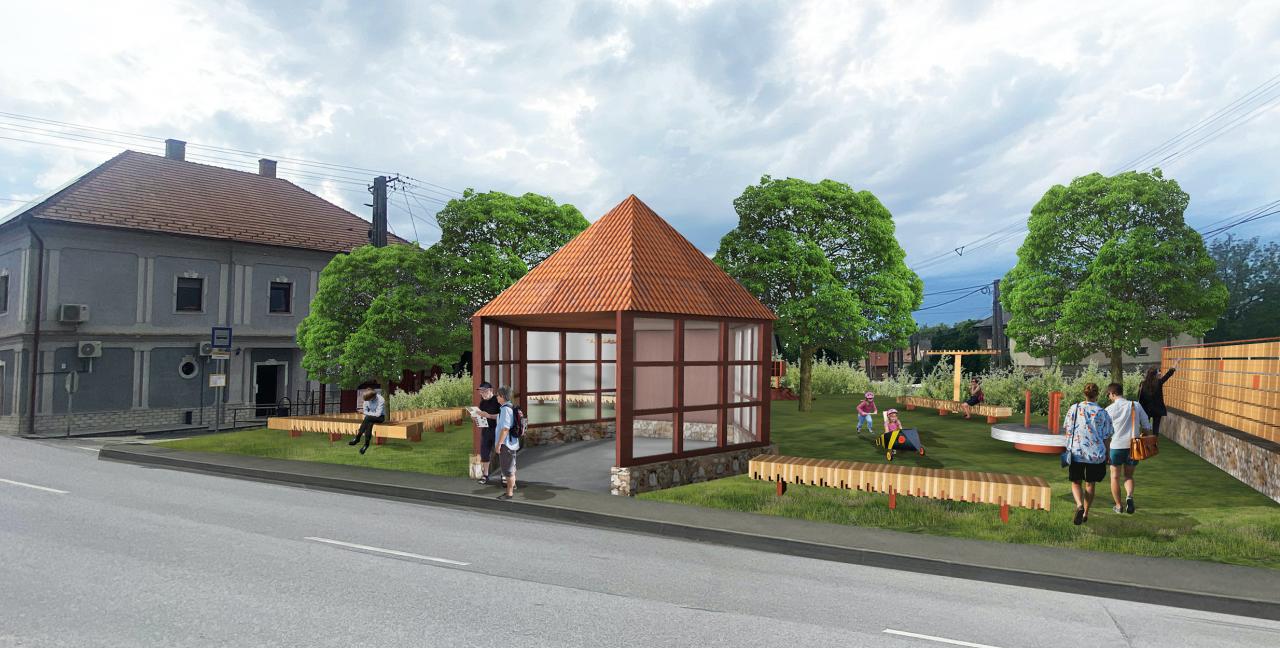
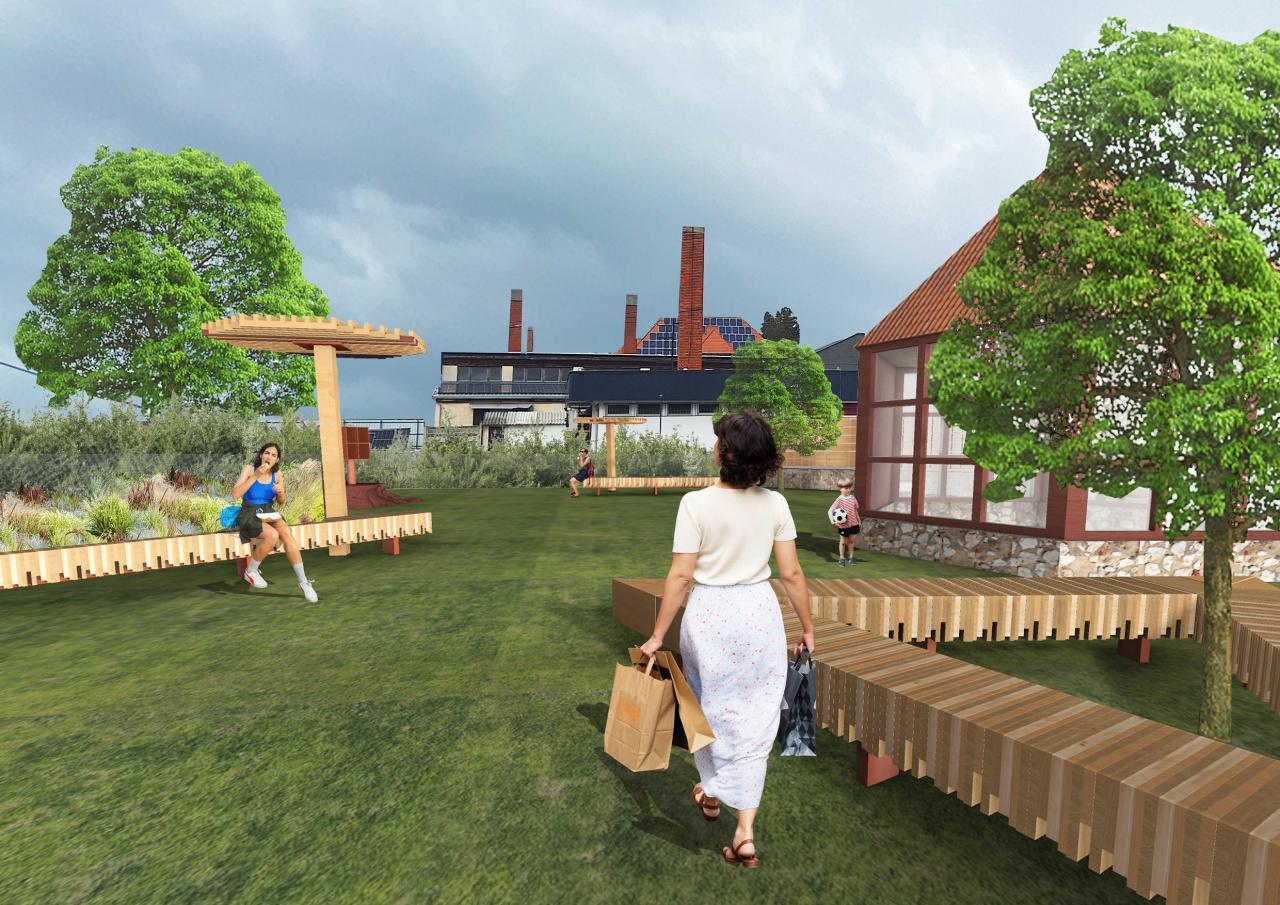
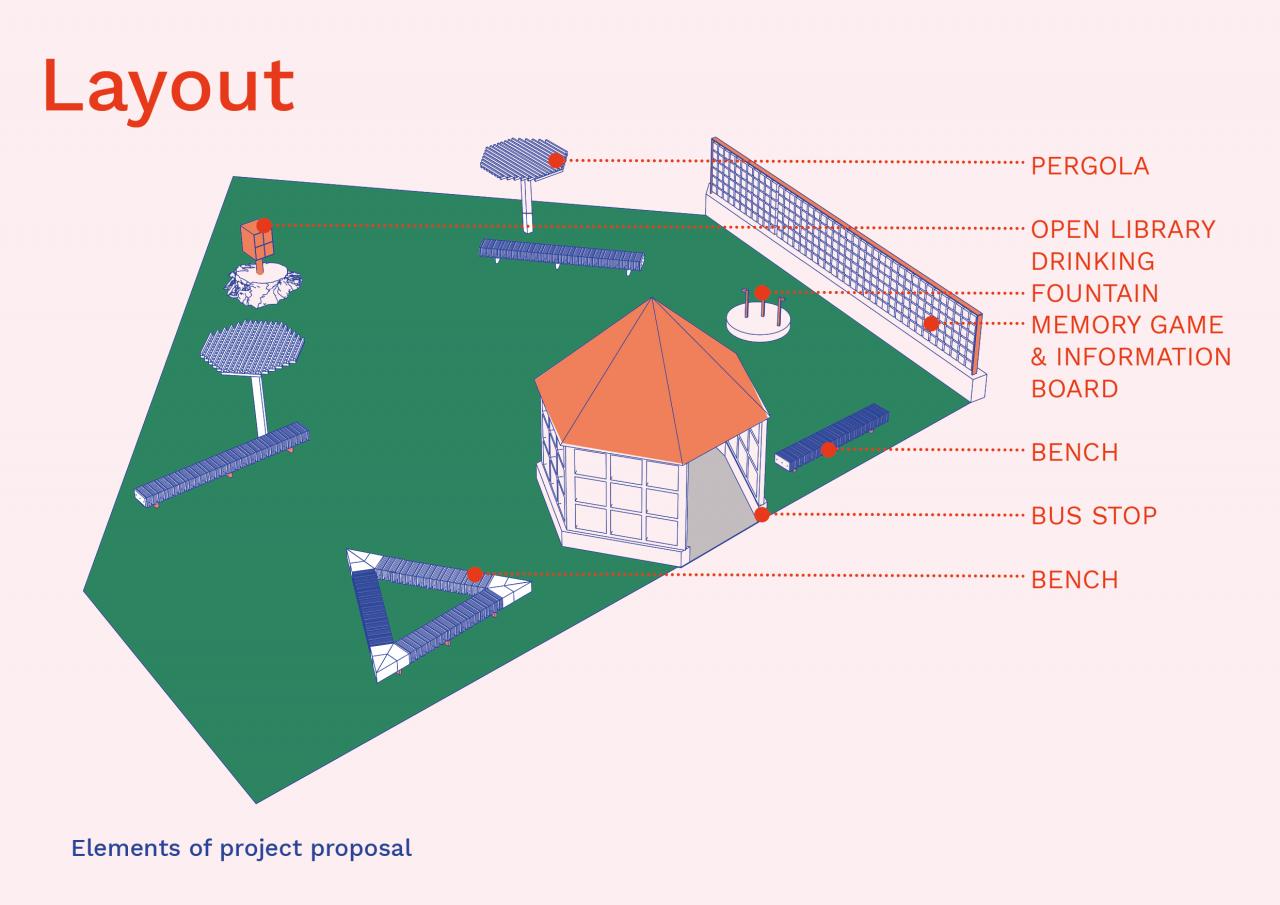
'Shaping the Future' is the umbrella term of the project, under which several sites within Csabrendek are going to be renewed following the above mentioned principles. The individual site names are going to be suggested by the locals to make them more local and engaging.
Key objectives for sustainability
Wood waste is often used for heating adding to the already enormous air pollution problem of Hungary that has even increased due to the rising energy prices. While offering feasible recycling alternatives, the project also aims to raise awareness on the very current issue of waste burning and air pollution.
Key objectives for aesthetics and quality
The project will be carried out in collaboration with the locals. The plans of each phase will be presented to them at different community meetings to discuss the concepts. Local craftsmen play a pivotal role in both the design and the production phase. Furthermore, some elements will be produced by the local elementary school students and the members of the senior’s club. These inclusion measures enhance the residents’ personal attachment to the objects, and foster responsibility and partnership.
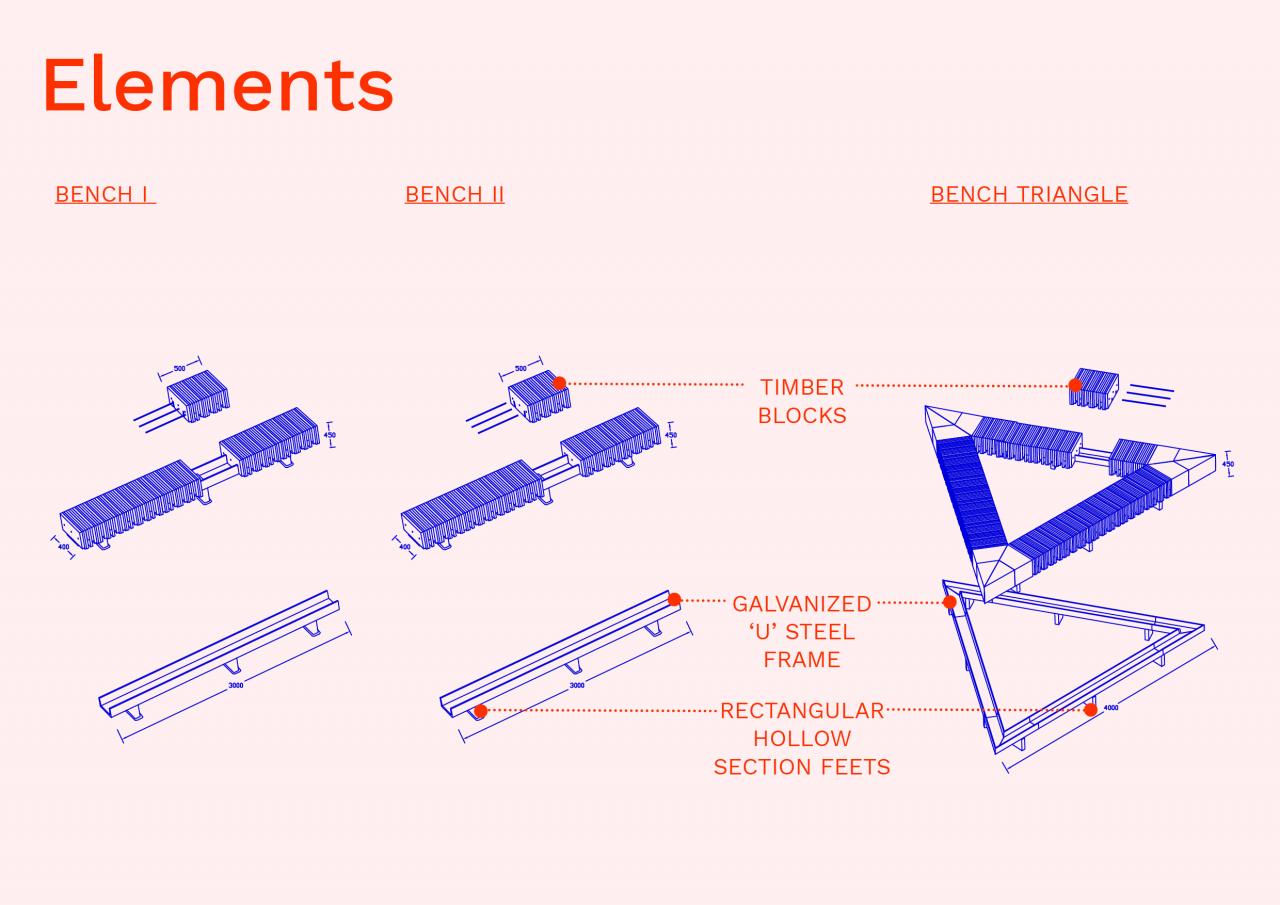
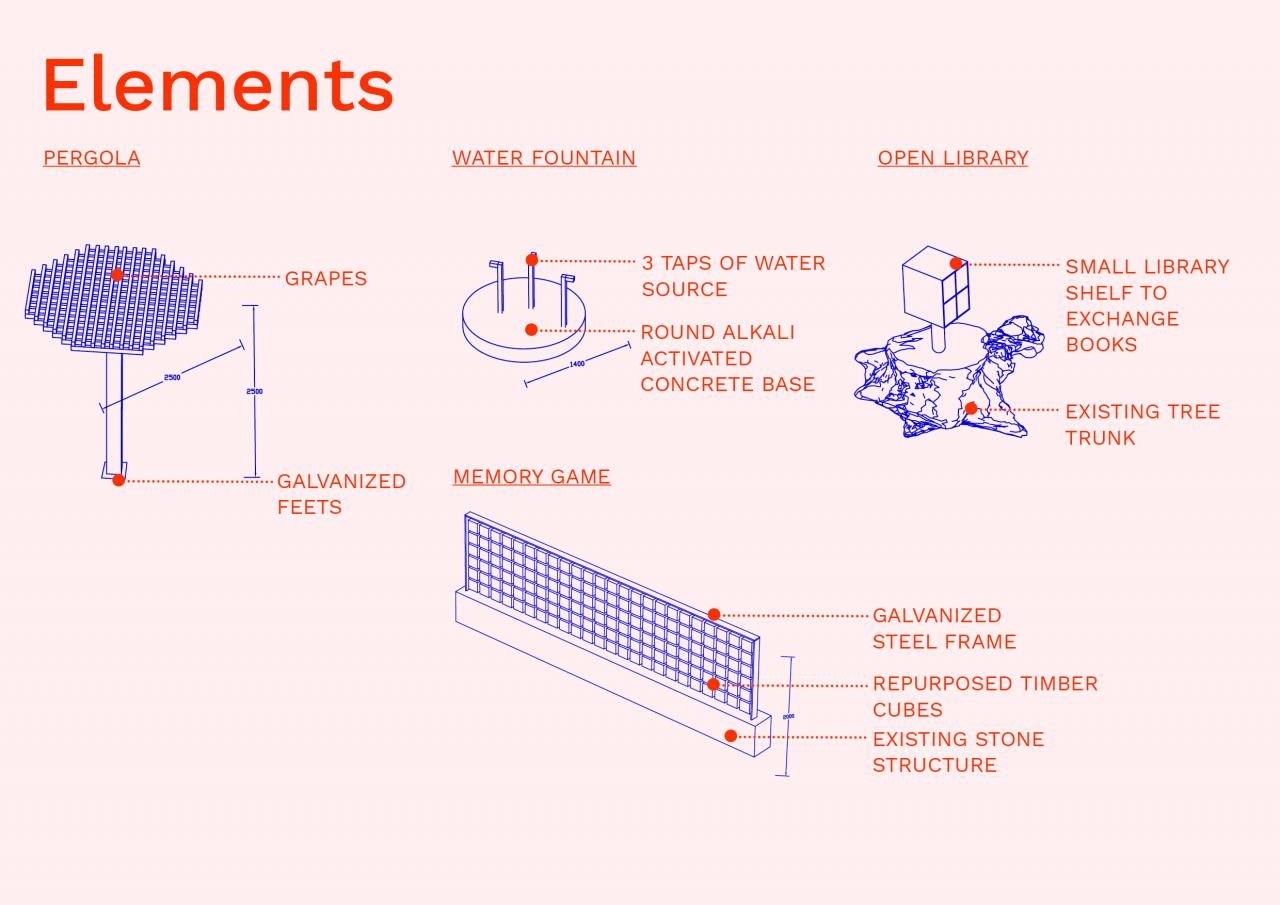
As outdoor timber structures have limited durability, the design puts high emphasis on modularity. The wood waste is going to be assembled into specifically designed individual blocks that can easily be replaced in case of erosion or malfunction.
The intervention puts as much emphasis on meeting the participatory, sustainability and modularity criteria as the artistic qualities, and aims for a distinctive design. The contemporary design pieces have the potential to shape the image of Csabrendek, thus contributing to its urban development.
The design plans also include a “little free library” box, a drinking-fountain, an information board and a board game, in order to add a more personal touch to the site, and to strengthen the community.
Key objectives for inclusion
Besides the partnership with local craftsmen and entrepreneurs, some phases of the production are going to be carried out by the students of the local elementary school and the members of the seniors’ club. These collaborations are also great occasions for waste recycling education and raising awareness.
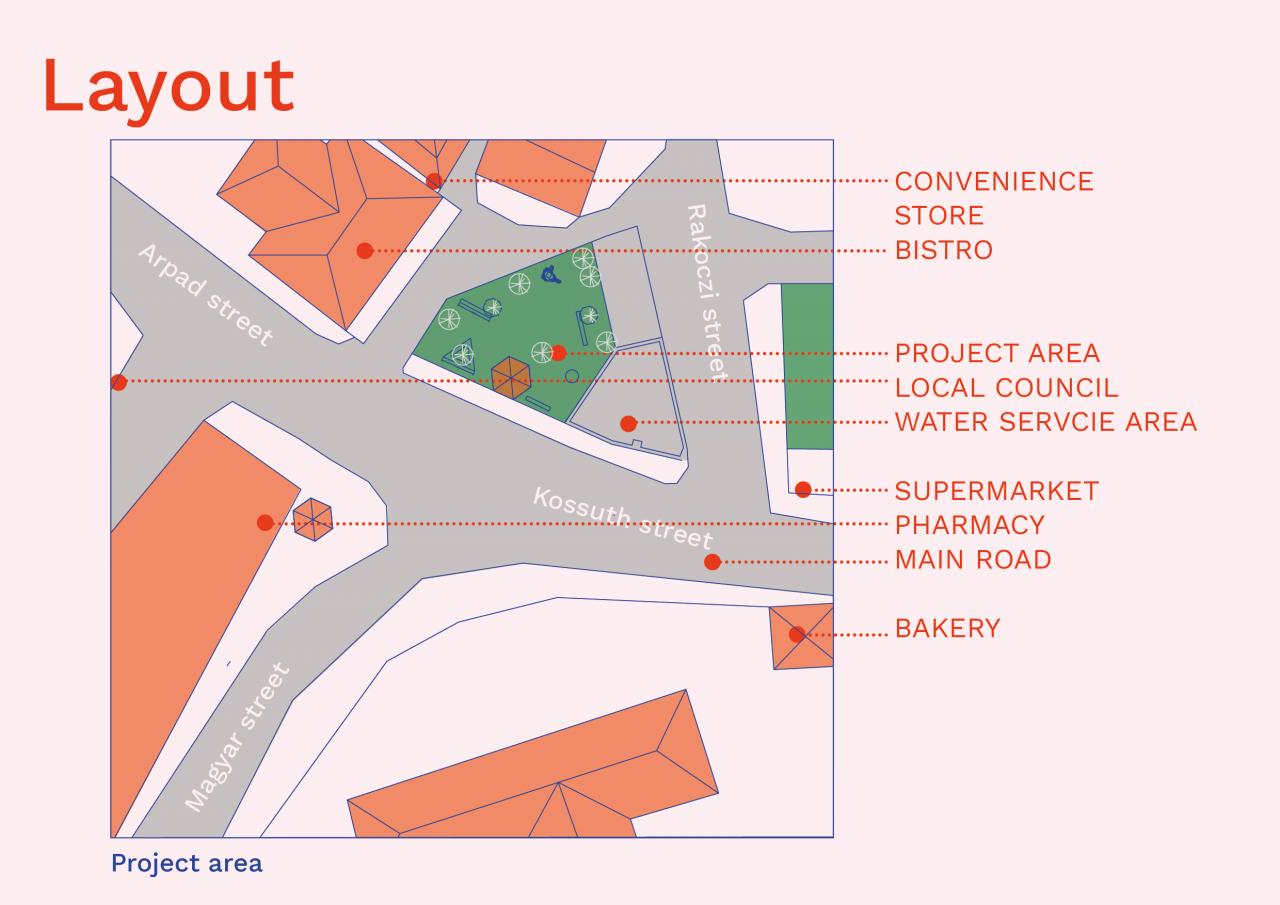
'Shaping the Future' aims for permeability and connectivity as well as accessibility. The central and hub-like location is perfect for inviting people with very different backgrounds to share this public space.
Such a complex public site development in a small community is a huge added value to the character of the municipality, that makes the village more attractive to newcomers. Furthermore, due to the project’s participatory nature, people feel more involved, more attached and very proud which strengthens their collective identity.
How Citizens benefit
From a more technical point of view, the main resource, the locally produced timber waste poses several challenges to the design and implementation. Thus the design has to be very carefully developed in order to meet the sustainability, modularity and participatory criteria, and to also become a landmark of the village.
Innovative character
The project also undertakes the challenge of fulfilling and fusing four major aspects, namely that it should be sustainable, local, affordable and replicable. These alone are quite considerable fields, and to successfully merge them, is what makes 'Shaping the Future' a one-of-a-kind undertaking.
Disciplines/knowledge reflected
The design and the concept are done by ex-local resident and founder of AHA Objects design studio Ms Anna Horváth. Anna holds a BSc in Architecture (MOME, Budapest) and an MSc in Narrative Environments (Central Saint Martins, London), and her main focus in the past decade has been sustainable design, locally sourced materials, participatory design and waste management (with a special focus on construction waste). Last year, together with the municipality Anna started the revitalization of a local architectural heritage, the abandoned 18th century baroque-style Bogyai-Gyarmathy curia, which aimed to be turned into a cultural hub with exhibitions and residencies after some renovation.
Local craftsmen were invited to participate in the planning and execution of the project. The carpenter and locksmith play a pivotal role in the design of the wood elements, the waste manager coordinates the incoming and outgoing waste, while the gardener designs the natural environment of the project. All subcontractors consult with Anna to achieve maximum sustainability.
Methodology used
The guiding keyword throughout the design process has been: local. The focus is on local resources, local knowledge and skills, something that reflects the local social context and is site-specific. The design, while aiming to be distinctive and characteristic, has to be feasible by local entrepreneurs, and it has to rely on local resources, mainly timber waste. The participatory nature also poses certain limitations, but at the same time this feature enables the final design to truly convey the local characteristics.The second guiding principle has been: modularity. Since these installations will be used by people and wood is not the most durable material, the design has to be simple and easily replaceable. By creating uniform blocks of compressed timber waste, broken or eroded elements can simply be replaced. Another aspect is adaptability: this combination of durable galvanised steel and recycled wood has to be applicable to other objects as well for the future continuation of the 'Shaping the Future' project. For instance, the same modular blocks used for this public space should be applicable to a fence or a lookout tower (that are definite plans for the continuation of the project). The strength of this material combination is that the wood is recycled and replaceable, while the galvanised steel ensures durability.
Civil involvement will happen personally at community forums, and there will be regular updates and surveys published in the local newspaper and online.
How stakeholders are engaged
As the most important guiding keyword throughout the project is ‘local’, almost all of the stakeholders are local: the designer, the municipality, the subcontractors and the residents, except for Eurofa Ltd. that is located at a nearby village, Bazsi. There is however, one future regional stakeholder, the Balaton Uplands National Park Directorate. The project plans to expand in the future, and one of the proposed spots the “Kőkatlan trail of Csabrendek” lies at an UNESCO heritage site, the Bakony–Balaton UNESCO Geopark.
Global challenges
Societies are becoming more and more fragmented and isolated. It is due to a number of reasons globally, but in a local context we can identify for instance the aging village population, vanishing community customs, the main communication channels and forms of contact being online or access to social events. The numerous lockdowns during the recent covid 19 pandemic just amplified these processes. Contemporary consumer and entertainment habits favor the bigger cities, and leave smaller communities at the risk of fragmentation and isolation. At the same time, in Hungary we currently see a rise in counter urbanisation processes, especially among young families, which challenges smaller communities to be more attractive, and to invest in urban developments.
Over-consumption and over-production hand-in-hand amplify the climate crisis by generating an enormous amount of waste, and there is a need for feasible recycling programs for citizens. The term waste semantically excludes its recycling opportunities, which could be changed by education and raising awareness. Even traditional waste management is full of misunderstandings and misuse within the broad Hungarian society, let alone the sustainable aspects. 'Shaping the Future' aims to educate citizens by showing them hands-on, feasible ways to reuse wood waste, and teaching them about the uses to avoid when recycling wood - even with the best intentions. And small communities provide a great starting point or platform to successfully achieve these aims.
Learning transferred to other parties
This methodology can be applied to other small communities, like villages, districts, residential communities, eco-communities, etc. where there is any sort of construction or industrial waste that can be utilised for public purposes. This way, the recirculation of waste material is not a top-down process, but leaves room for innovative uses that best reflect local needs and characteristics.
As explained earlier not only the installation can be repeated but the combination of durable galvanised steel and recycled wood has to be applicable to other objects as well for the future continuation of the Shaping the Future project. For instance, the same modular blocks used for this public space should be applicable to a fence or a lookout tower (that are definite plans for the continuation of the project). The strength of this material combination is that the wood is recycled and replaceable, while the galvanised steel ensures durability, and both are 100% recyclable.
Next steps
The municipality has long planned to start a public revitalisation project which promotes sustainable values, and already allocated 6.000.000 HUF of its budget to the realisation of the first, central public space. On behalf of the municipality, the whole project is a long-term objective, and therefore takes a lot of meticulous planning in order to be adaptable and replicable. <br />
<br />
The project started in 2024 with identifying the existing public spaces, the key problem areas and the possible opportunities for development. Since then, there has been an active phase of planning and coordination on the creative, engineering and administrative fields. On the 11th of February, the first community assembly took place in the local community center, and the residents shared some valuable insights and articulated their needs and ideas based on the printed version of the first designs that were on display. Now, the project designer and the municipality are both working on implementing the findings and results of the community assembly into the design concept. During the summer, the municipality will start to do an overall cleanup at the site, and the kiosk hut’s timber material will be transported to the local carpenter. Parallel to the cleanup, production will start on behalf of the designer and the entrepreneurs, with the active involvement of students and the senior club (from September, 2025 onwards). The metal construction will entirely be carried out in the locksmiths studio, but locals will be actively involved in the shaping of the modular wood blocks. In February, 2026 transportation and installation will start with the involvement of volunteers, and in June, the gardening duties will be carried out by the local gardener and members of the senior’s club. Simultaneously, in this last phase, the municipality will invite the locals to propose names to the specific site in the centre. The ribbon cutting ceremony is planned to take place in September, 2026.