CIFE
Basic information
Project Title
Full project title
Project Description
Current stage development
Project Region
Municipality
EU Programme or fund
Which funds
Description of the project
Summary
Considering the high scientific, didactic and heritage value present in the protected area, the exceptional known biodiversity, the traditional architecture of the villages, as well as the sociological, craftsmanship and landscape aspects of great interest, underlies the general objective “to promote the preservation, valorization and interpretation of the natural, cultural and geological heritage of the region, adopting a sustainable, inclusive and aesthetically integrated approach to the landscape”.
The main recipients of the initiative are: tourists, the local community, the educational community in general, researchers and the senior population in particular.
Specific objectives include valuing natural and cultural heritage, preserving and disseminating the stories, traditions and ways of life of local communities; the conservation and sustainability of the protected area; environmental education and awareness, through promoting knowledge about the Park's biodiversity and ecosystems; the accessibility and inclusion of local actors, in particular the local community, and also the promotion of sustainable tourism, stimulating the development of responsible tourism.
Consequently, the expected results are the dissemination and greater awareness of natural and cultural values among visitors, greater involvement in the preservation and dissemination of heritage, an increased sense of belonging in the local community, the growth of sustainable tourism with benefits for the local economy, as well as enhancing scientific research.
Key objectives for sustainability
From a sustainability perspective, the project values the fact that the Interpretive Center was established in a ruined house with significant historical value for the local community and great importance for preserving the natural heritage of Alvão Natural Park. The entire structure was preserved, maintaining the original architectural style while respecting both the original materials and those recommended/authorized by Alvão Natural Park. The landscape integration was prioritized to minimize negative visual and environmental impacts, as well as to preserve the existing vegetation and tree cover in the surrounding areas.
The infrastructural intervention incorporates sustainability measures in the building, including the replacement of wooden frames with aluminum frames with thermal break and low-emissivity double glazing; the restoration and maintenance of the roof, thermal insulation, and an artificial lighting system using LED technology.
Key objectives for aesthetics and quality
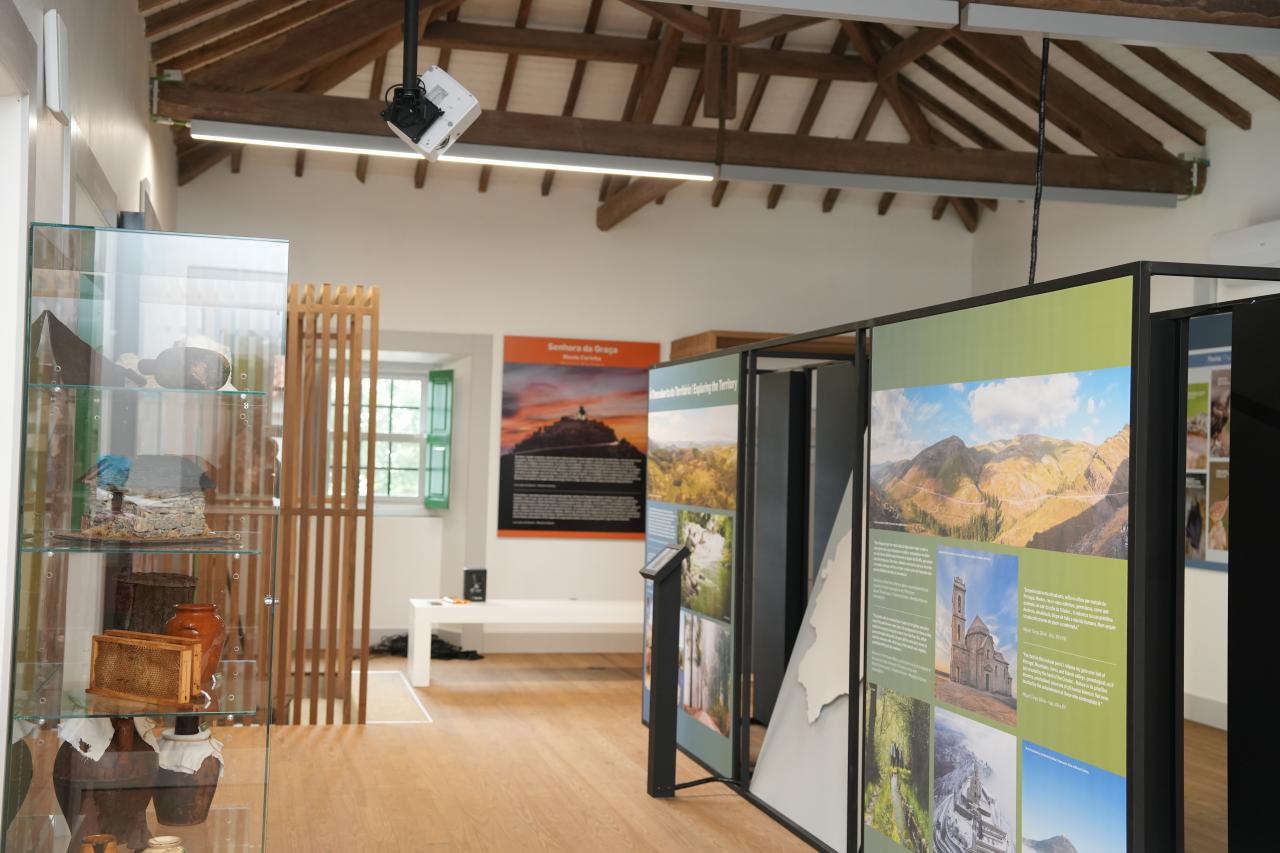
Aesthetically and strategically located in the Interpretive Centre is the Senhora da Graça panel, an iconic element of the area. Those who immerse themselves in the image of the panel are transported to a holistic dimension favoured by the possibility of contemplating it live through the adjoining window. The production of a map of the area with images of the town and mountains, villages, rivers, nature experiences and useful information about the region, allows visitors to get to know and explore the area in an interactive way, simply by selecting and exploring the various themes available. The great benefit of this equipment will be to perpetuate the county's heritage over time and keep it constantly updated.
Key objectives for inclusion
The adaptation of the building's original architecture to the new project was designed to guarantee access for all. The adapted bathrooms, the ramps outside, the absence of stairs inside and other physical barriers are proof of this concern. The fact that the service is free of charge is another important factor in promoting the right to participate and integrate into local and regional social and cultural life. In this way, the principles of design and inclusion have been achieved and ensured.
The community benefits from the coverage of a number of inclusive government systems, including the CLDS-5G (Local Social Development Contracts) and Mondim + Próximo programmes.
The CLDS-5G programme aims to strengthen social inclusion and anti-poverty policies in Portugal, seeing the territory as an essential dimension for their implementation, concentrating interventions on the population groups that show the most significant fragility and promoting change by taking vulnerability factors into account. And, to prevent and combat social exclusion, particularly child exclusion, breaking intergenerational cycles of poverty and social exclusion and ensuring social and territorial cohesion.
How Citizens benefit
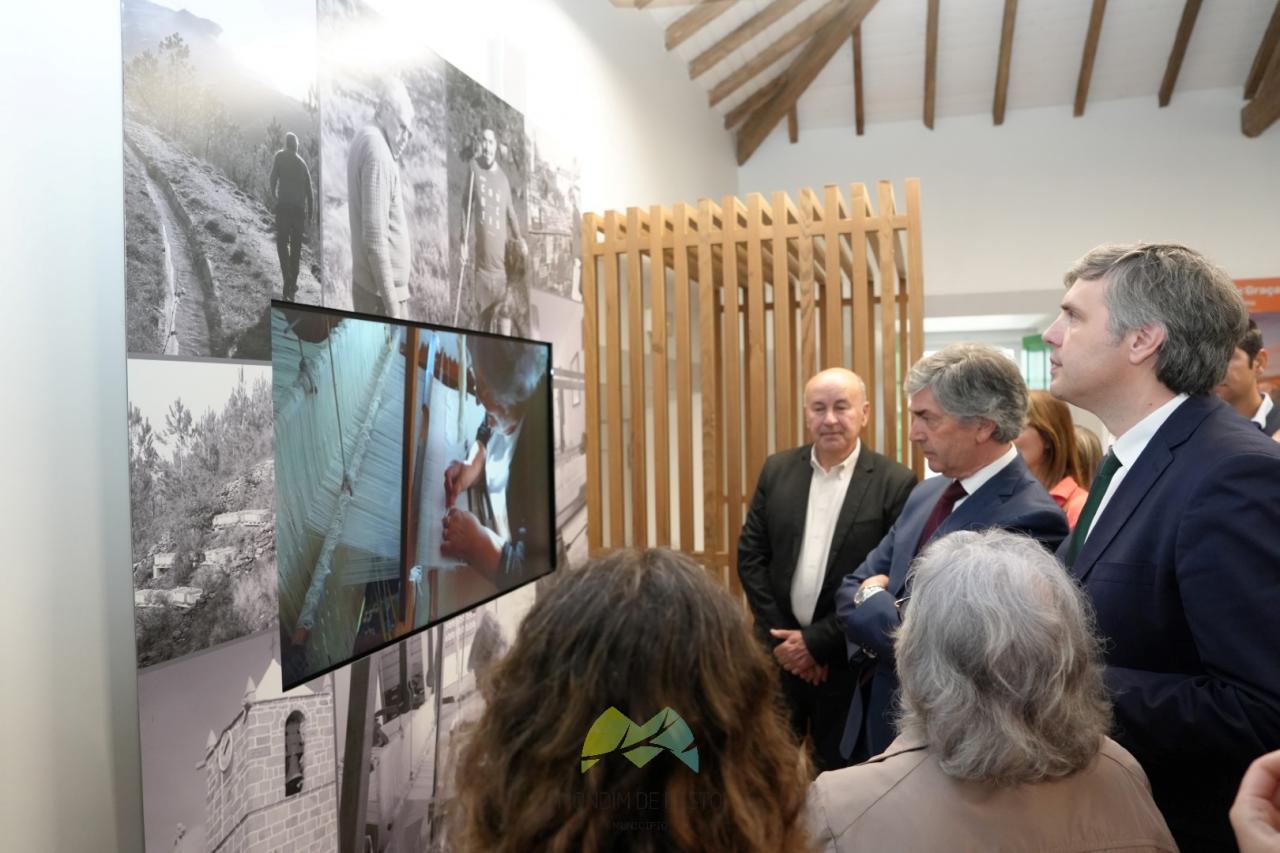
Local people who know the modus vivendi of the Centre's surroundings were invited to get involved in the plan, and a video was made with their testimonies, where visitors can select what they want to see and hear in the first person.
Beekeepers, wine producers, restaurants, accommodation units and tourist entertainment companies in the municipality have all benefited from being involved in the project, promoting their activities and products.
Local artisans took part in decorating the Interpretive Centre by offering artefacts associated with the art and tradition of the village. The population sees this renovated space as a meeting place to relive the past, to get in touch with new technologies and to integrate themselves into the Centre's activities. A way of reducing loneliness and social isolation.
The project is neither finished nor finalised. The underlying concept of this Interpretive Centre is to share with visitors the local history in which the figures who marked the building as the forester's residence, the adjacent barracks and the chapel of São José stand out.
Innovative character
Located in the protected area of the Alvão Natural Park and close to the Fisgas de Ermelo viewpoint - one of the largest waterfalls in Europe, based on quartzite rocks that are around 480 million years old, where their fracturing allowed water from the Olo River to cross (prick) them - the Interpretive Center combines the use of innovative digital technologies to offer interactive and immersive, personalized and dynamic so that visitors better understand the geology, biodiversity, ecosystems and ways of life of the populations of the Alvão Natural Park.
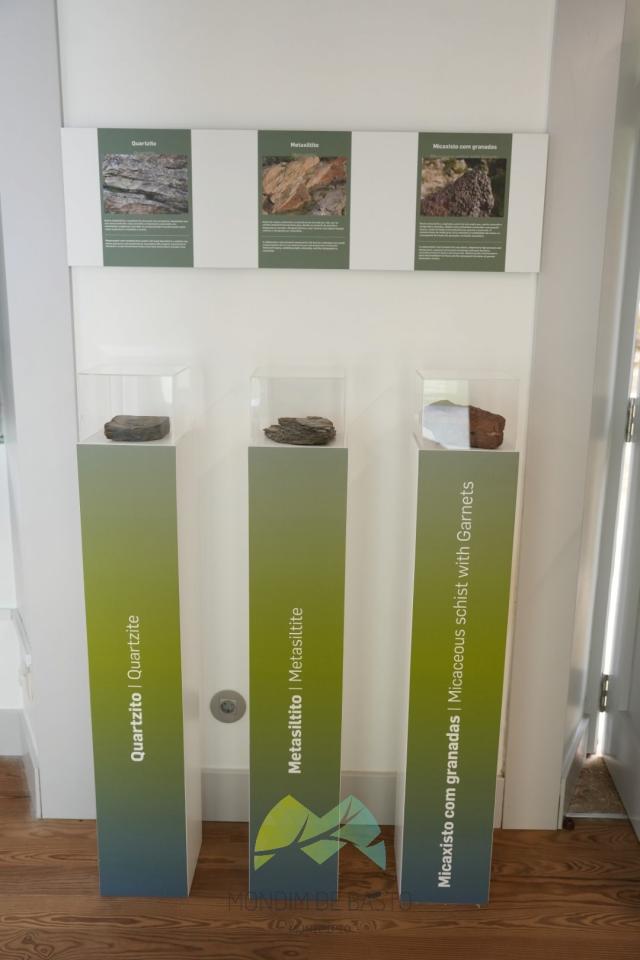
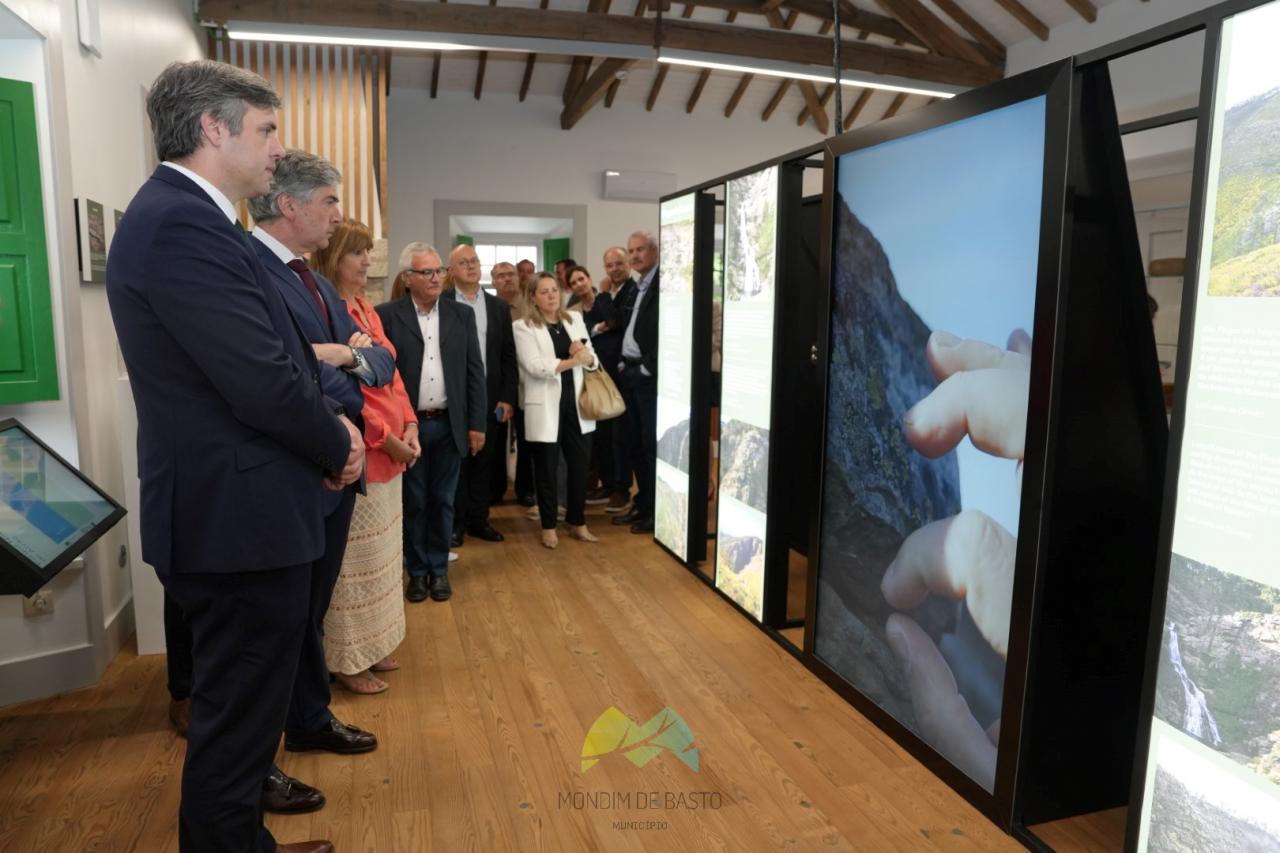
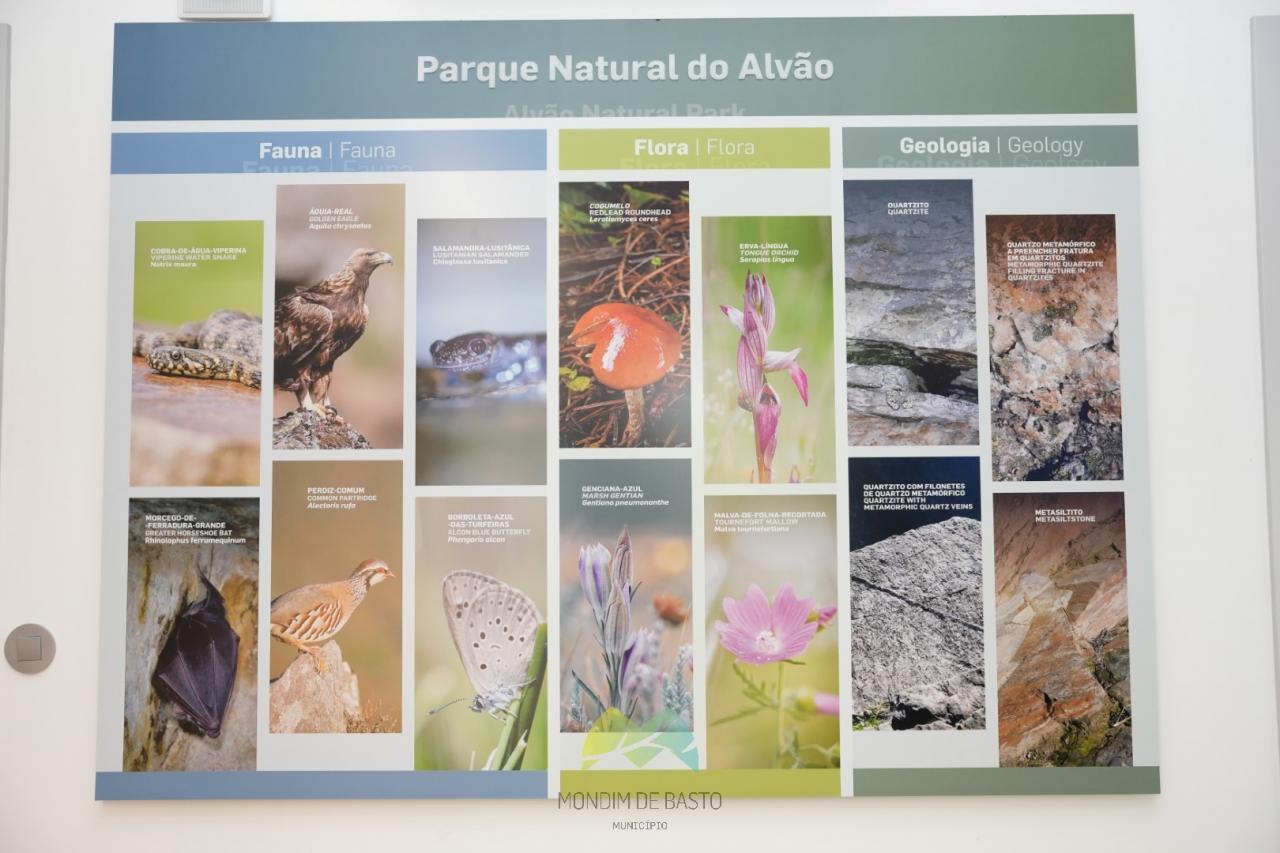
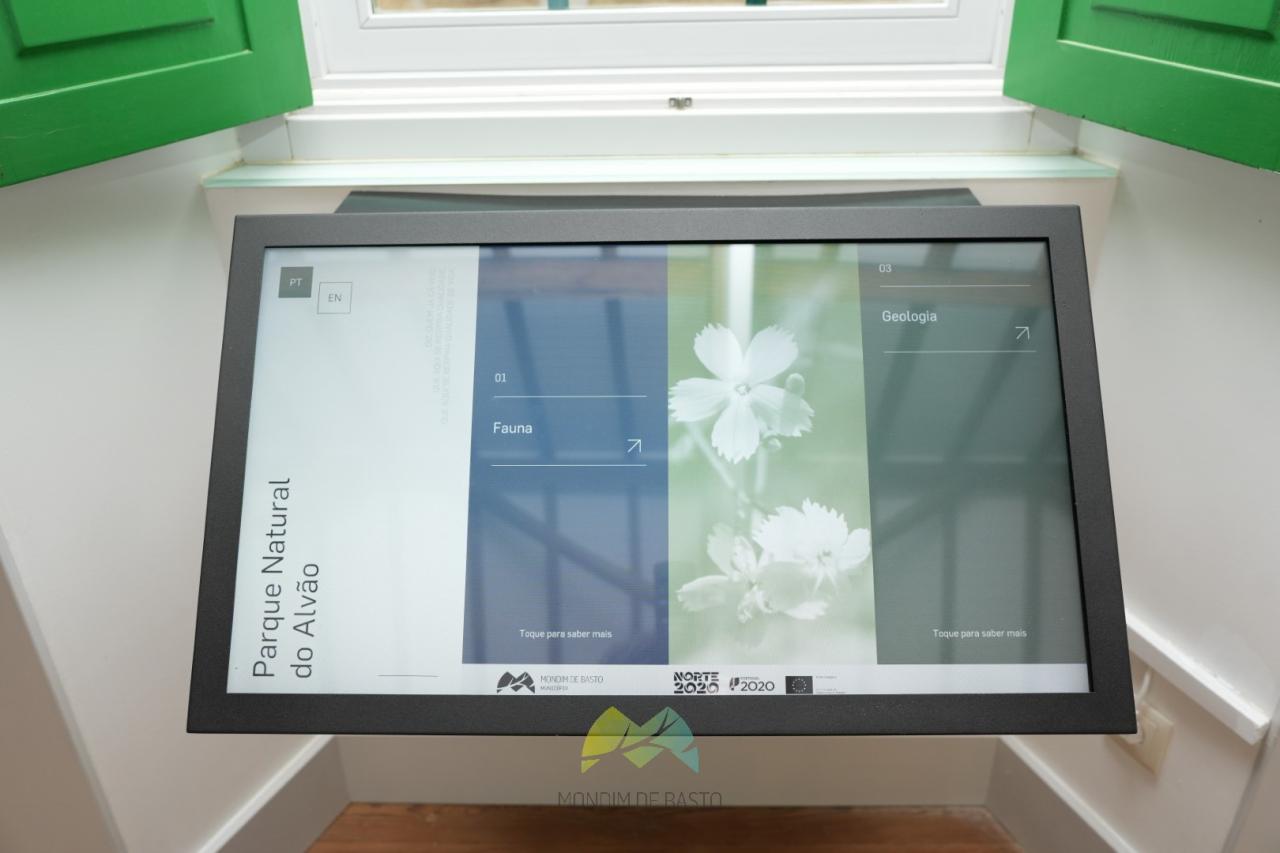
To this end, it offers customized and interactive digital solutions that allow scientific information to be obtained about the fauna, flora and geology of the protected area; consult and design on a model map the points of interest to be explored in the territory; view immersive film about the formation of the geological phenomenon that gives Fisgas de Ermelo its name, using animations, illustrations and motion graphics; listen to recorded testimonies of the cultural heritage of the people who live there and the way they shaped the local landscapes through agriculture and livestock, as well as contemplate objects that were once used in agriculture or local ways of life.
The Center, in a sensorial and educational way, through the values inscribed there and the testimonies given by the local population, aims to encourage responsible visits to the protected area, promoting visitors' awareness of the preservation of heritage and the importance of its conservation.
The involvement and active participation of the scientific community, entities responsible for nature conservation and the local community is also reiterated, having demonstrated a strong involvement in the development of the project.
Disciplines/knowledge reflected
The work methodology favoured interaction between professionals and non-professionals involved in a transdisciplinary approach, so that in the end the result was of added value.
Methodology used
Based on knowledge of natural values, such as flora, fauna and geology; of cultural values, always having the cultures and traditions of the local community as an underpinning and the desire to preserve and share this rich and differentiating heritage, that the approach taken at the Interpretive Center would also have to be innovative and differentiating.
As such, the methodologies used rely on the combination of technology, sustainability and sensory immersion, thus making the experience of those who visit us also rich and differentiating. It is also believed that the success of the project occurs due to the involvement of the local community in the design of the initiative. It is through the sharing and participation of all local actors relevant to the project that the project is intended to be fully successful.
In this way, the approach covered:
- Sensory education – Allowed to touch replicas of rocks, hear the sound of waterfalls, learn scientific concepts and involve visitors in participating in activities that awaken the various senses;
- Integration of scientific and local knowledge – combining validated scientific information with local knowledge, valuing the culture and identity of the territory, plus the interpretation of space beyond science, connecting it with history and human heritage;
- Concept of interpretation based on emotion and connection with the territory – focusing on engaging narratives that create an emotional connection between visitors and the territory and increase the feeling of belonging to the local community, sealing a commitment to preservation;
- Digital interactivity and immersive experience – The use of innovative technology that allows you to explore patent resources in an intuitive and dynamic way.
How stakeholders are engaged
The project developed in several stages, according to the proposed timetable. We would highlight the participation of some of the municipality's partner organisations, such as the Nature Conservation and Forestry Institute, the Alvão Natural Park Co-Management Committee and the University of Trás-os-Montes and Alto Douro, which brought credibility and merit.
The first stage centred on drawing up the required content, and then moved on to the structural part. At this stage, the Nature Conservation and Biodiversity Department of the Natural Park was called in to support the project by analysing the work of the scientific areas related to the themes of Flora, Fauna and Geology of the Alvão Natural Park.
A multimedia company was responsible for designing the structural solutions and equipment that make up the Interpretive Centre, namely the panels, models, videos and the film with Motions Graphics and 3D animations.
Global challenges
The project follows a municipal strategy to create a tourist offer based on the concept of a green destination, capable of stimulating and promoting the circularity observed in various human and economic activities, so rooted in traditional agriculture, pastoral activity and beekeeping that give the municipality its identity. The Shepherd's Trail, the Honey Trail, the Bread Trail, the Mountain Walks and the Levadas are examples of valuable, quality experiences that reflect the cycle of life.
Learning transferred to other parties
The use of innovative technological tools triggers greater interest on the part of those visiting the territory, making the equipment more appealing and visitable, an ultimate objective for the promotion and dissemination of the values on display.
In addition, the involvement and participation of relevant actors, whether local, regional or national, which in addition to promoting moments of sharing that legitimize local knowledge with scientific knowledge and evidence, naturally also result in an enrichment of the information available and to be made available, at the same time, increasing satisfaction and a sense of belonging to the project.
Next steps
It soon became clear that the project would only go ahead with the involvement of professionals from different fields and non-professionals, such as local associations. Its grandeur and scope inspired those involved and triggered participation. <br />
The CIFE couldn't be set up anywhere else than in the village of Ermelo. “From the very beginning of the monarchy, Ermelo seems to have had a certain importance, and this can be seen in the first charter granted to Ermelo by King Sancho I and confirmed by King Afonso II in the following reign.” (Eduardo Teixeira Lopes, 2000). <br />
<br />
The construction of the Forest House dates back to the 50s and was in operation until the 90s. These buildings are a symbol of the presence of the state forestry services, which served as a shelter for rangers responsible for forest perimeters, embodying a deep relationship between man and nature. <br />
A heritage lost in time, but not forgotten. The precious stone was already there, it just needed to be polished. Without distorting the origin and purpose for which the house had been built, the project installed there underwent a happy transformation as it was regenerated and adapted to the new reality. <br />
<br />
The project is recognized as being invaluable, a sense of belonging, transversal to the whole community, which at every moment adds more stories, more knowledge, in an inclusive space, of freedom of expression, in a reciprocal function of giving and receiving, of transmitting and welcoming. <br />
This continuous flow of sharing forms the basis of an activity plan focused on opening up ideas, based on the values of Sustainability, Inclusion and Aesthetics and Quality of People's Experience.<br />
The project goes beyond the creation of physical and technological structures; the concept of inclusion takes precedence over any other dimension. It sets an example for other projects of the same size, of how a service station can become something very beautiful for humanity.