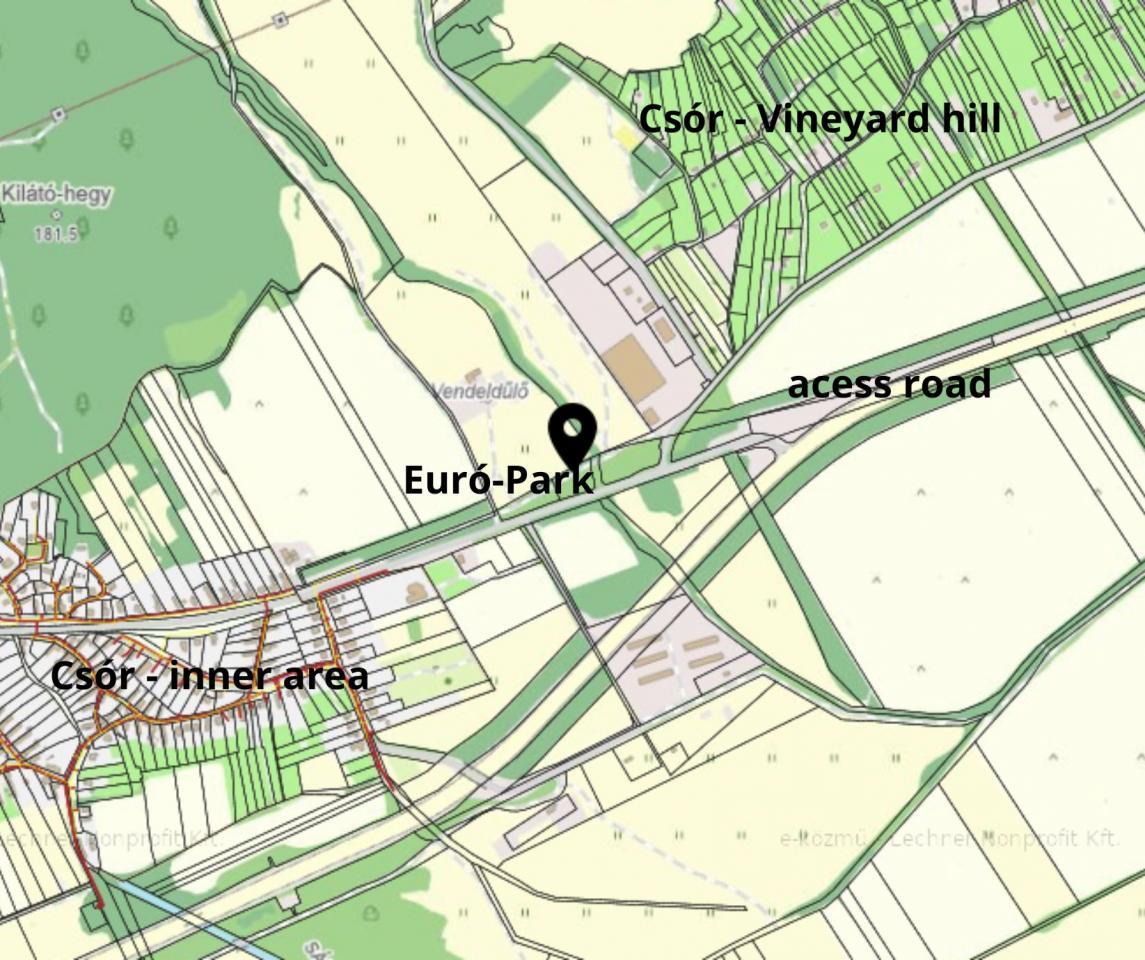
EURÓ-PArk in Csór
Basic information
Project Title
Full project title
Project Description
Current stage development
Project Region
Municipality
EU Programme or fund
Description of the project
Summary
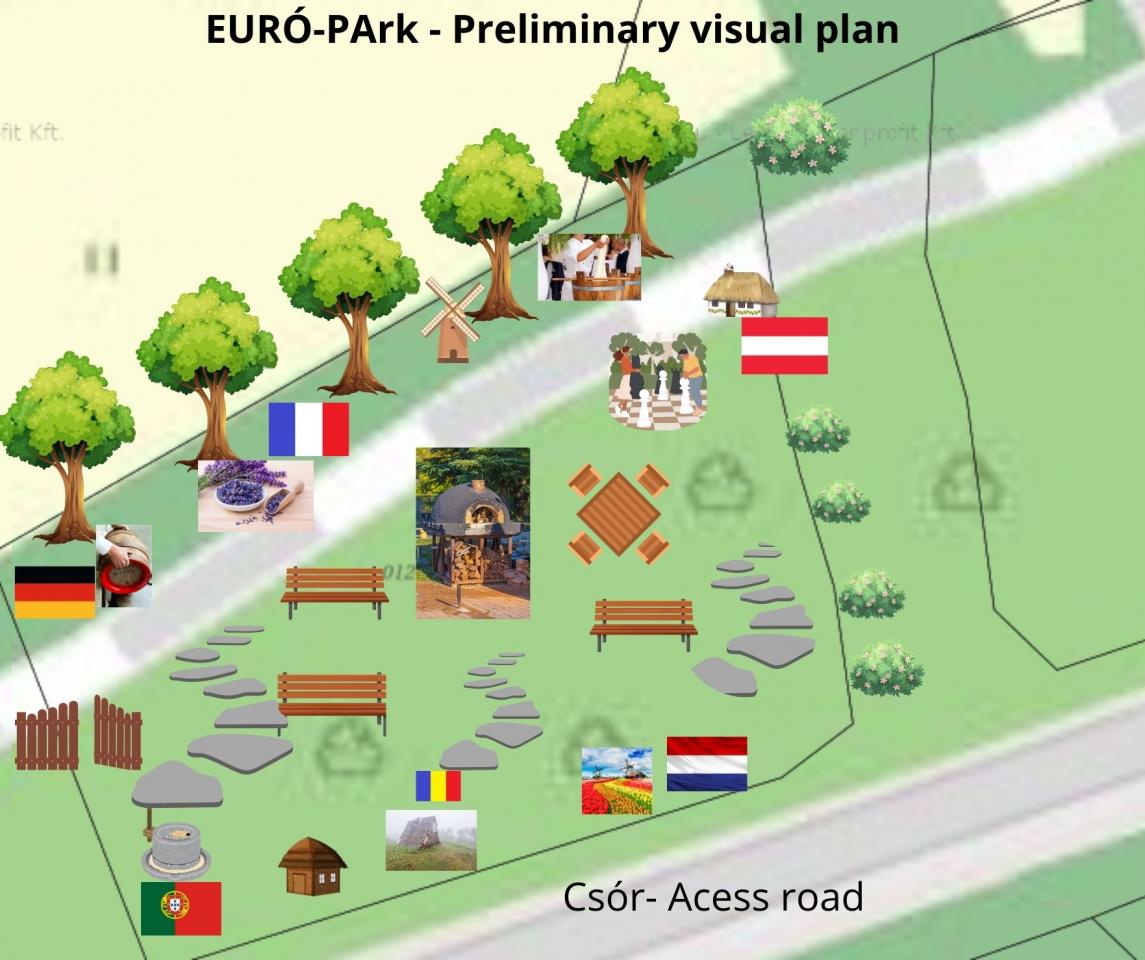
In the central part of the park, a cooking area will be set up to host community events and celebrations of the gastronomic traditions of the Member States. In addition, there will be an open-air playground with games specific to each region (e.g. swinging bowls, giant chess, petanque, etc.) and benches for relaxation.
The target group will be mainly the local population and the surrounding area, with particular attention being paid to linking the outlying and "inner" population of the village, which is already an important part of the community planning process. On a wider scale, the municipality od Csór would like to involve the surrounding municipalities and then build a network between their twin municipalities in other Member States, as well as involving young people residing in the region as part of the EVS programme. In the long term, this networking can ensure that the project is not only a place for local residents to spend their leisure time, but also that the space is filled with regular and meaningful programmes that reflect the diversity of rural Europe.
Key objectives for sustainability
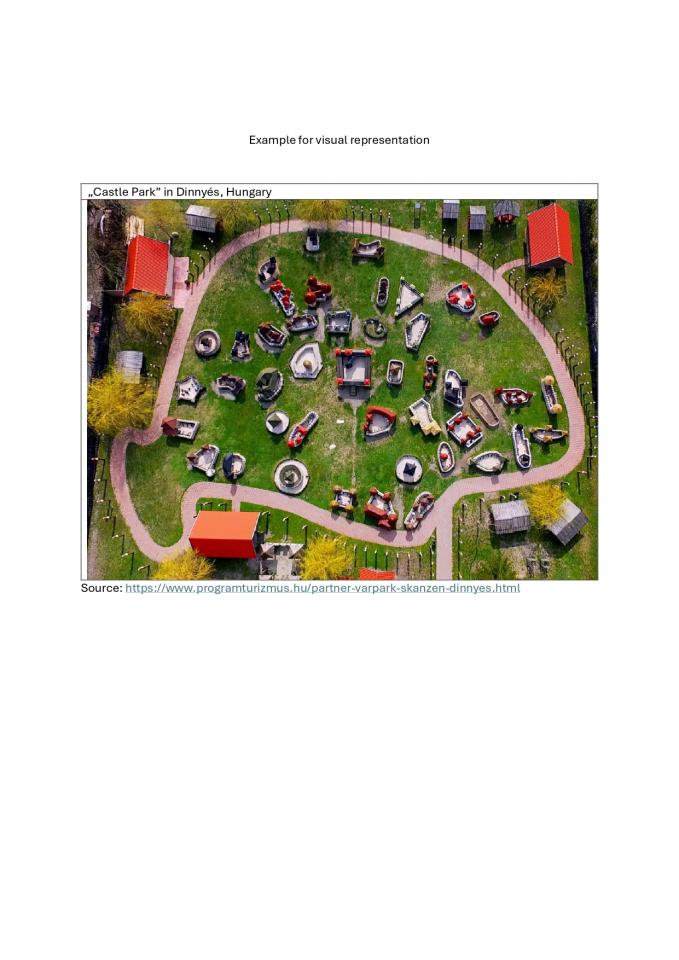
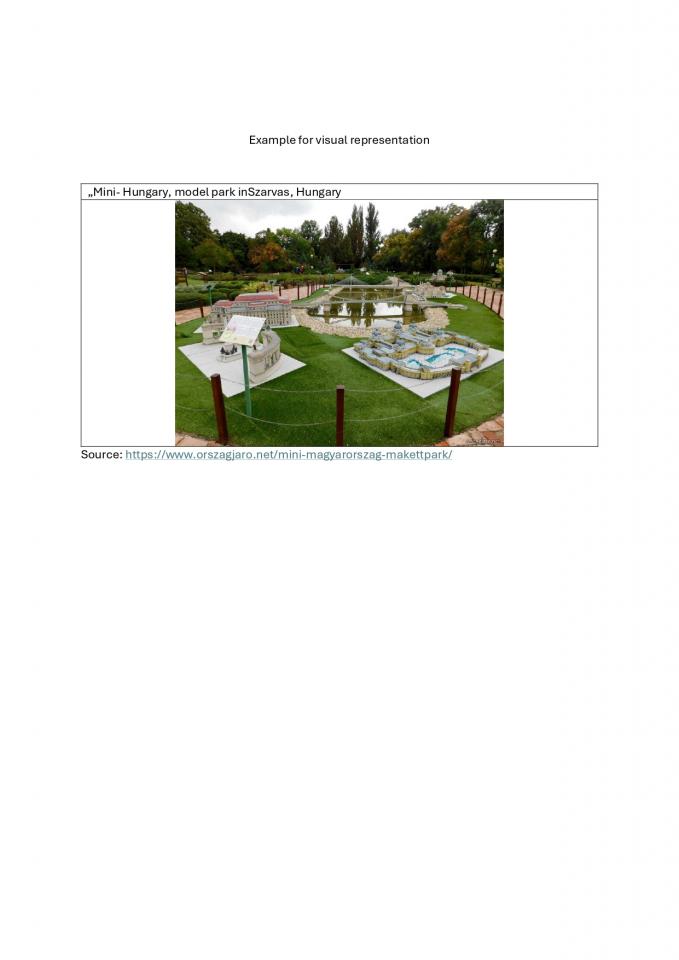
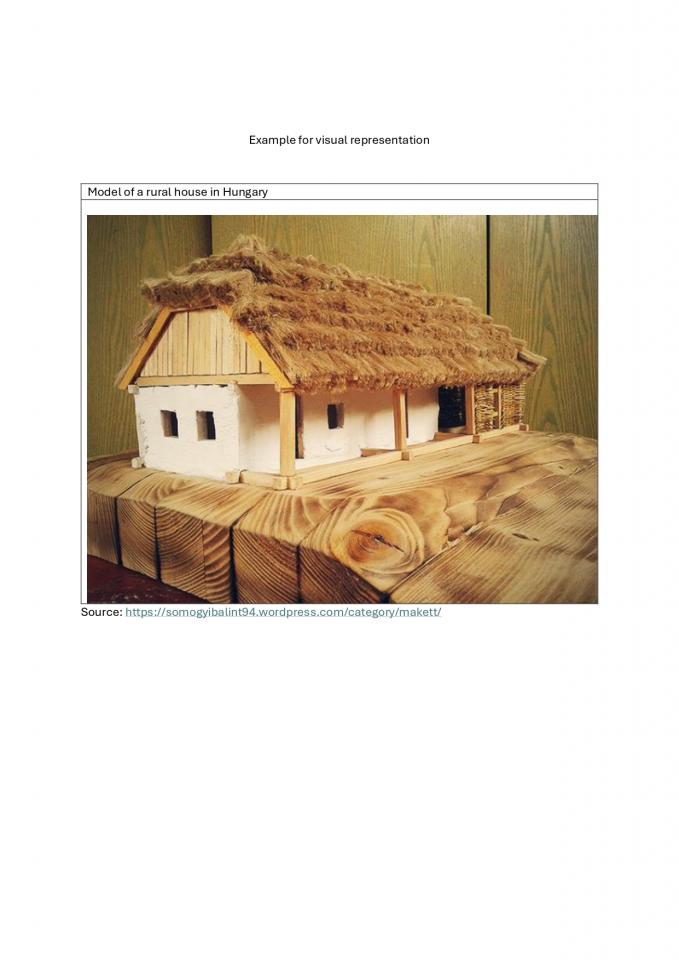
The aim is to present characteristic features of rural Europe in the form of models, whether it is a Bavarian farm, a Scandinavian fishing hut, an Italian olive mill or the work of Romanian shepherds. We believe that learning about the specificities and customs related to rural life also helps inhabitants to rediscover and maintain their own local values, connects them with people of other nationalities, and experiences the a community space have a cohesive effect.
During the planning and implementation of the project, we rely heavily on the work and ideas of local and nearby civil societies and residents, and we plan the design of the models in several stages, continuously expanding the range of countries and customs that can be presented year after year. In the long term, network expansion (twin towns, EVS) will also ensure that we can organise programs that offer cultural experiences for locals and visitors alike.
Key objectives for aesthetics and quality
In recent years, several local projects have been implemented in Csór, thanks to the voluntary work of local people, as a completely grassroots initiative. Local volunteers built pergolas, tidied up the cemetery, installed some benches or solar lights in public spaces, civil societies have paved the streets with the help of teenagers. We would also like to use these examples in the construction of EURÓ-PArk. Because we experienced that participants not only enjoy co-creating, but they also develop positive emotions, such as feeling important in the local community, feeling that they have an influence on their local environment, and that they can do something useful beyond to their daily work and chores. This also affects individual self-confidence, provides a sense of community and strengthens the belief in democracy when people feel that decisions are not made far away, over their heads, but together with them.
Key objectives for inclusion
How Citizens benefit
During the planning and implementation of the project, the municipalty pay special attention to community planning, which not only has a positive impact on the tangible results, but also strengthens the commitment of the involved residents, groups and organisations to participatory democracy. Our civil partners have proven on several occasions that they are able to move and activate residents for local issues. For example, the renovation and expansion of a park and the restoration of the cemetery were carried out through community planning and social work. Several benches and solar lamps were placed on the public squares of the settlement at the initiative of the citizens from below, and volunteers flowered, painted and collected garbage on several occasions. The municipality therefore believes that the population is open to taking actions for its own environment, to express their opinion, to make suggestions and participate.
Community planning is carried out in several phases: (Photos of his initial steps are attached).
1. Citizens' Forum
2. Drawing competition
3. Voting on social media platforms
4. Community planning days (3 occasions)
5. Setting up of working groups
6. Final opinion on the plans
Regular activities within the framework of local civil societies (pensioners’ club, choir, vigilance guard, baby-mom club, gymnastics) and civic programs are an important way of reaching out to residents. There is a demand for street forums and local residents’ meetings, which can be publicised through leaflets and community portals.
Innovative character
Disciplines/knowledge reflected
The implementation of this project and the realistaion of the professional programs, will require an in depth knowledge of geography, ethnography, agricultural history, architecture and gastronomy. The selection of the themes for the models will be the task of a team of people who are experienced in these disciplines. During the implementation, we rely on the help of local and regional artisans and craftsmen. The gastronomic programme will also involve representatives of the visiting twin villages to work together, as well as young people from different Member States who are studying or volunteering in the region.
Methodology used
Before the implementation phase, the wider public will again be involved by presenting concrete plans. Then the concrete investment is made by assembling teams of professionals and volunteers that can be involved in the implementation.
How stakeholders are engaged
The municipality also want to involve local residents, civil societies and businesses in the six-step community planning process described in the previous section. Consultations with regional actors has started in the form of cultural cooperation between the 8 small settlements in the area. With the help of the other municipalities, we would like to establish the future twinning network, i.e. to directly involve partners at European level in the project. This phase occurs in parallel with the physical implementation. At the regional level, an important partner will be the Youth of Europe Association, which will also help young people from other countries to get involved in organizing the programs and events planned in the park. The regional centre is Székesfehérvár, from where we will be able to involve young people from educational institutions doing community service in secondary school through civil partners.
Global challenges
Due to the processes of globalization, many segments of our lives have become uniform, as we can do the same jobs, eat the same fast food, and get the same cultural impressions, wherever we live in the world. More and more people think that we have to slow down our lifestyles, try to consume local products instead of mass-produced from the other continent, not travel to far-off landscapes, but live in a way that is aware of and cares for our environment. The EURÓ-PArk project can also be a means of strengthening rural lifestyles and habits, pointing out how many people in Europe are getting on in rural areas. It is not only the international programs, meetings and the experience of diversity that have a positive effect, but also the fact that the community can be strengthened during the planning and creation of a jointly created space. Aliens who do not communicate with each other - or only in the online space - can be good neighbours, whether we are talking about the relationship between individual people, between the vineyard and the inhabitants of the inner area, or between the inhabitants of neighbouring communities or even twin settlements.
Learning transferred to other parties
Due to the processes of globalization, many segments of our lives have become uniform, as we can do the same jobs, eat the same fast food, and get the same cultural impressions, wherever we live in the world. More and more people think that we have to slow down our lifestyles, try to consume local products instead of mass-produced from the other continent, not travel to far-off landscapes, but live in a way that is aware of and cares for our environment. The EURÓ-PArk project can also be a means of strengthening rural lifestyles and habits, pointing out how many people in Europe are getting on in rural areas. It is not only the international programmes, meetings and the experience of diversity that have a positive impact, but also the fact that the community can be strengthened during the planning and creation of a space that is created together. Strangers who do not communicate with each other - or only in online space - can become good neighbours, whether we are talking about the relationship between individuals, between the vineyard and the inhabitants between neighbouring communities or even twin settlements.
Next steps
The activities of the project, in connection with the value system of the NEB, aim at the sustainable development and aesthetic transformation of the small settlement environment, while at the same time creating an inclusive community space presenting European values in a diverse way. <br />
<br />
In community planning, we seek to involve as wide a range of local and regional residents, organisations and entrepreneurs as possible in shaping the development that will actually take space. The resulting innovative EURÓ-PArk is a concept that fits into the landscape, as it tries to showcase the diversity of European rural life in a unique way in the region, using a series of models. The inclusive approach is also reflected in the organisation of the programmes on several levels, the first level being the creation of a link between the inhabitants of the village centre and the inhabitants of the suburbs. The second level is to familiarize the surrounding small villages and the inhabitants of the region with the diversity of rural values, and at international level, through the civil societies linked to the EVS programme, and network with international partners of the small villages of the region, we can contribute to making the values formulated in the NEB programme tangible for as many people as possible. <br />
<br />
In the first period of the project, we plan to build about 15 models, with a steady increase in the following years. So the creative work does not stop, year after year we would like to showcase the rural values of a new country, in a way that is easily accessible to the community, not as a one-off tourist attraction, but as a regular meeting place and gastronomic programme. <br />