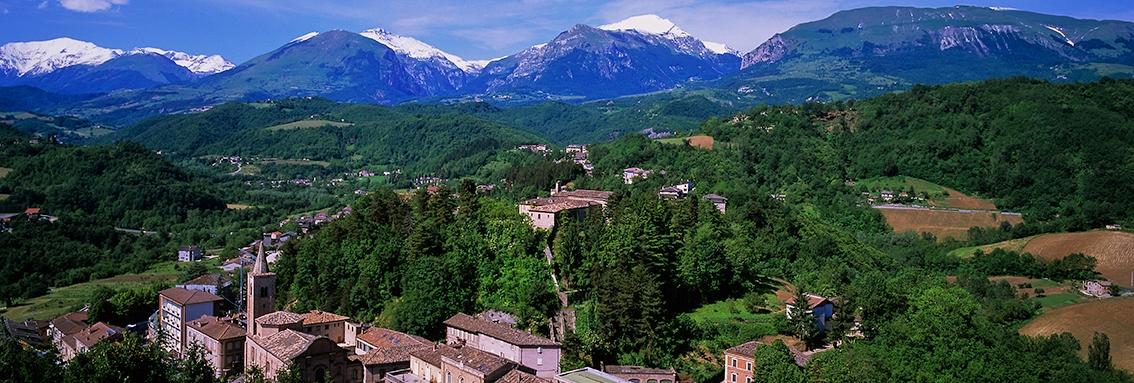
“Beauty will save the world"
Basic information
Project Title
Full project title
Category
Project Description
Current stage development
Geographical Scope
Project Region
Urban or rural issues
Physical or other transformations
EU Programme or fund
Description of the project
Summary
The initiative targets local residents, fostering engagement and skill development, while also attracting visitors interested in responsible tourism. It provides a unique space for creative professionals, digital nomads, and students seeking educational experiences in sustainability and heritage.
Amandola’s transformation is guided by key objectives. The town has focused on urban regeneration with spaces like the Casa del Parco, a sustainable hospitality and educational hub, and the Ufficio FUTuristico, an innovative tourist center integrating augmented reality and eco-friendly design. Tourism is developed with an emphasis on sustainability, enhancing local culture while driving economic growth. Technology and sustainability are at the heart of the initiative, incorporating smart solutions and immersive learning experiences. Cultural and educational programs further strengthen community bonds and promote heritage preservation.
The project has achieved significant outcomes. Public spaces have been revitalized, fostering local engagement and attracting new visitors. Amandola has positioned itself as a leading destination for eco-conscious travelers, creating economic opportunities while preserving its cultural identity. As a result, it has become a model for small European towns, demonstrating how beauty, sustainability, and inclusion can drive lasting transformation.
Key objectives for sustainability
Another fundamental goal is fostering sustainable tourism. Amandola has developed an eco-tourism model that enhances local culture while preserving natural resources. Through immersive experiences, visitors engage with the environment in a responsible manner, participating in activities that promote biodiversity conservation and sustainable agriculture. The Ufficio FUTuristico integrates innovation with sustainability by using augmented reality to provide an interactive and low-impact way to explore the territory, reducing the need for intrusive physical infrastructure.
Sustainability is also embedded in social and economic development. The project creates opportunities for residents, local artisans, and entrepreneurs, encouraging circular economy practices and responsible resource management. Cultural and educational initiatives provide training on sustainability, equipping the community with the knowledge and skills needed to maintain long-term environmental and social balance. Amandola stands as an exemplary model by proving that small communities can lead sustainable transformations. It demonstrates how integrating green architecture, eco-tourism, and technological innovation can create a future where tradition and modernity coexist harmoniously.
Key objectives for aesthetics and quality
Key objectives for inclusion
How Citizens benefit
Citizens have been involved in multiple ways, from co-designing public spaces to participating in educational programs focused on sustainability and cultural heritage. Local artisans, entrepreneurs, and hospitality providers have helped shape the Casa del Parco into a hub that reflects the authentic character of Amandola while promoting eco-tourism and community-driven economic opportunities. The Ufficio FUTuristico has been developed with input from local innovators and cultural organizations, ensuring that its interactive storytelling and technological tools enhance the visitor experience while preserving and promoting local history.
This high level of civic engagement has had a profound impact on the project. It has strengthened social cohesion by fostering a shared sense of purpose and belonging, creating spaces that genuinely serve the community. It has also ensured that the regeneration efforts align with the town’s heritage and future aspirations, making Amandola a model of inclusive and sustainable development. By giving citizens a central role, the project has not only rebuilt physical spaces but has also revitalized the social and cultural fabric, demonstrating how collective action can lead to meaningful and lasting change.
Physical or other transformations
Innovative character
One key innovation is the Casa del Parco, which is not just a hospitality space but a sustainability hub where visitors actively engage with the environment through experiential learning and cultural immersion. Similarly, the Ufficio FUTuristico reinvents the concept of tourist information by using augmented reality and interactive storytelling, offering a dynamic and immersive way to explore local heritage.
The project also introduces a participatory model where citizens co-create solutions, ensuring that development aligns with local needs and aspirations. This contrasts with traditional top-down urban planning approaches, making Amandola a leader in inclusive decision-making.
By merging sustainability, digital tools, and community-driven strategies, Amandola demonstrates a forward-thinking model that goes beyond conventional rural development. It sets a precedent for small communities, proving that innovation can emerge in unexpected places by integrating tradition, technology, and sustainability in a seamless and meaningful way.
Disciplines/knowledge reflected
Cultural heritage specialists worked alongside designers and local historians to preserve Amandola’s identity while making it accessible through innovative storytelling. Digital technology experts introduced augmented reality and interactive experiences in the Ufficio FUTuristico, enhancing visitor engagement. Social scientists and community organizers facilitated participatory processes, ensuring citizen involvement in decision-making and reinforcing social cohesion.
Collaboration between these disciplines enriched the project by fostering holistic solutions that balance tradition with innovation. The interaction between experts, local stakeholders, and policymakers created a dynamic exchange of ideas, leading to a more inclusive, sustainable, and forward-thinking model. This interdisciplinary approach made Amandola a pioneering example of how diverse knowledge fields can come together to regenerate communities while preserving their cultural and environmental integrity.
Methodology used
The participatory design process ensures that local residents, businesses, and organizations play an active role in decision-making. Through workshops, public consultations, and co-creation sessions, the community contributed to shaping spaces such as the Casa del Parco and the Ufficio FUTuristico, ensuring they reflect local needs and values. This bottom-up approach contrasts with traditional top-down urban planning and fosters a strong sense of belonging.
Environmental sustainability is central to the project, with the use of eco-friendly materials, energy-efficient systems, and sustainable tourism practices. The Casa del Parco serves as both an accommodation and an educational hub, promoting environmentally responsible living and nature-based experiences.
Digital innovation enhances accessibility and engagement. The Ufficio FUTuristico employs augmented reality and interactive tools to offer visitors an immersive exploration of Amandola’s landscape and cultural heritage, making history and nature more accessible in an engaging way.
Cultural revitalization ensures that traditions are not just preserved but actively integrated into the town’s regeneration. Events, workshops, and artistic initiatives create new connections between the past and the future, strengthening local identity.
This methodology ensures a holistic and sustainable transformation, making Amandola an innovative model for community-driven rural regeneration that balances tradition with forward-thinking solutions.
How stakeholders are engaged
At the regional level, institutions and development agencies provided funding, expertise, and strategic support, integrating Amandola into broader sustainability and tourism initiatives. Their engagement positioned the town as a model for responsible rural development while promoting eco-tourism and cultural heritage.
National agencies contributed policy guidance, technical assistance, and financial resources, ensuring alignment with Italy’s strategies for sustainability and heritage preservation. This support reinforced the project’s viability and long-term impact.
At the European level, collaboration with the New European Bauhaus initiative brought innovation, funding, and best practices in sustainable regeneration and participatory governance. This multi-level engagement has been crucial in providing financial stability, expertise, and visibility, making Amandola a model for integrating sustainability, culture, and technology to drive meaningful transformation.
Global challenges
Amandola also combats rural depopulation and economic decline by creating opportunities for young entrepreneurs, artists, and remote workers. Through coworking hubs and the Ufficio FUTuristico, it fosters innovation and redefines rural living, making small towns attractive again.
The project enhances social inclusion and participatory governance by actively involving residents in decision-making and cultural activities. This approach strengthens community bonds and ensures long-term sustainability.
It also addresses cultural heritage preservation in the digital era by using augmented reality and interactive storytelling to make history accessible.
By integrating sustainability, economic revitalization, social inclusion, and digital tools, Amandola offers a scalable model, proving that small communities can lead the way in tackling global challenges with innovative and community-driven solutions.
Learning transferred to other parties
The integration of sustainability in architecture, tourism, and daily life can serve as a blueprint for other rural and urban areas. The Casa del Parco, designed as both an eco-friendly hospitality space and an educational hub, demonstrates how sustainable tourism and responsible land use can revitalize communities while preserving their natural and cultural assets. This model could be replicated in other heritage-rich or environmentally sensitive areas, promoting regenerative tourism and environmental education.
The technological solutions implemented in the Ufficio FUTuristico showcase how augmented reality and interactive storytelling can enhance cultural heritage experiences. These digital tools can be applied in other historical sites, museums, or tourist destinations to make local history more engaging and accessible.
Processes such as interdisciplinary collaboration between architects, environmental experts, digital innovators, and cultural heritage specialists also offer a transferable model for holistic, sustainable development. The project’s focus on integrating tradition with innovation demonstrates how small towns can thrive without sacrificing their identity.
By combining participatory governance, sustainable design, digital technology, and cultural preservation, Amandola presents a scalable and adaptable model that can inspire other communities across Europe and beyond.
Next steps
In the next year, “Amandola, l’Anima Verde dei Monti Sibillini” will focus on expanding and promoting its impact. Efforts will include completing and enhancing the Casa del Parco and the Ufficio FUTuristico, integrating eco-friendly solutions, smart technologies, and accessibility improvements to strengthen their role as sustainability and innovation hubs.<br />
<br />
Community engagement will be intensified through new workshops and training programs in sustainability, digital innovation, and cultural tourism. These initiatives will empower local residents and entrepreneurs, fostering a self-sustaining ecosystem of knowledge and skills.<br />
<br />
Tourism promotion will also be a priority, with targeted campaigns to attract eco-conscious travelers, digital nomads, and creatives. Partnerships with regional and European networks will increase visibility and funding opportunities.<br />
<br />
Digital innovation will continue with enhanced augmented reality experiences and interactive storytelling at the Ufficio FUTuristico, offering visitors immersive ways to explore Amandola’s heritage.<br />
<br />
Finally, policy integration and long-term sustainability planning will ensure lasting impact. Collaborations with institutions at various levels will align the project with broader sustainability and cultural preservation goals, securing its future as a replicable model of rural regeneration.