Empowering Families and Advancing Inclus
Basic information
Project Title
Full project title
Category
Project Description
Current stage development
Geographical Scope
Project Region
Urban or rural issues
Physical or other transformations
EU Programme or fund
Description of the project
Summary
Overall Aim:
The project aims to expand and enhance the services of the "Sunny House" Daycare Center and establish a Social Care Complex in Varna. This initiative seeks to address a critical gap in support services for individuals with severe disabilities and their families by increasing service capacity and introducing Varna’s first Replacement Care service.
Objectives:
Expand "Sunny House" Daycare Center:
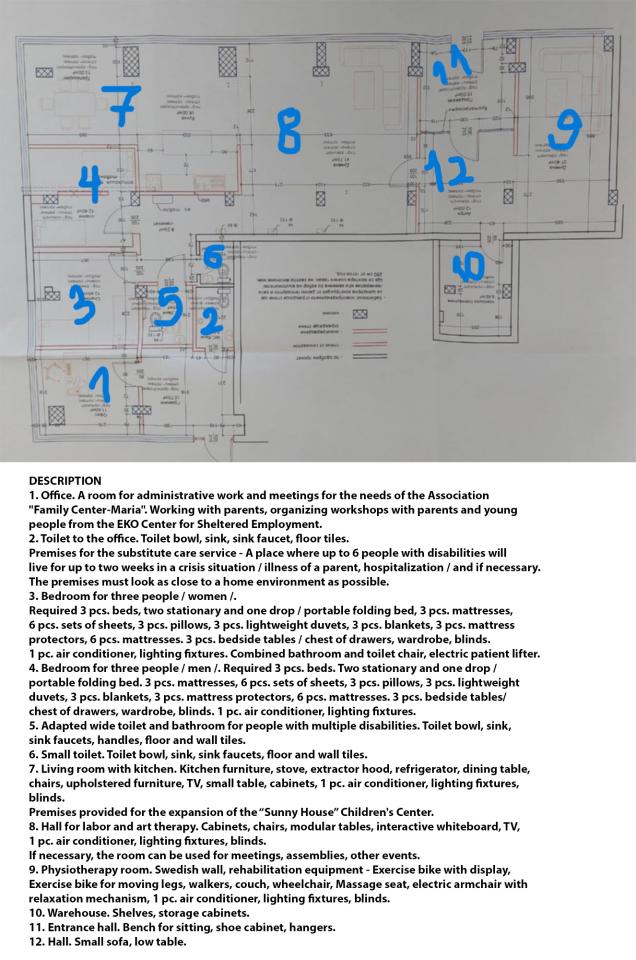
Establish an art and occupational therapy office.
Create a rehabilitation hall to provide specialized care and therapy services.
Increase service capacity for individuals with disabilities in Varna.
Introduce a Replacement Care Service:
Provide 24/7 temporary care for individuals with severe disabilities whose primary caregivers are unavailable due to illness, hospitalization, or emergencies.
Prevent caregiver burnout and ensure continuity of care for affected families.
Develop Adaptive and Accessible Infrastructure:
Renovate and furnish municipal premises to create a comfortable, home-like environment.
Establish bedrooms, a kitchen, and living areas designed for individuals with multiple disabilities.
Prioritize accessibility, safety, and dignity in social care facilities.
Ensure Long-Term Sustainability and Community Engagement:
Develop a community-centered model that fosters inclusion and social participation.
Secure financial sustainability through partnerships, donations, and municipal support.
Set a precedent for expanding similar support services in other regions.
Target Groups:
People with Disabilities in Varna: Approximately 800 individuals in need of daycare services, with only 25 currently served at "Sunny House."
Families of Individuals with Severe Disabilities: Parents and caregivers requiring temporary replacement care due to emergencies or health-related challenges.
Key objectives for sustainability
The key objectives of the "Sunny House" Daycare Center project in terms of sustainability focus on creating a long-lasting, energy-efficient, and environmentally responsible space that meets the needs of its visitors while minimizing its ecological footprint. Sustainability has been integrated into every stage of the renovation process, ensuring that materials and resources are used efficiently.
A major aspect of this commitment is the installation of modern, energy-efficient piping and electrical systems, reducing overall energy consumption and long-term maintenance costs. By prioritizing high-quality insulation and replacing outdated glazing with energy-efficient windows, the project enhances thermal efficiency, reducing heating and cooling demands. Furthermore, the project will incorporate energy-efficient solutions like LED lighting. This reduces operational costs in the long run and aligns with environmental sustainability goals.
The renovation process incorporates durable, eco-friendly materials wherever possible, ensuring longevity and minimizing waste. Additionally, the selection of furniture is guided by sustainability principles, with a focus on responsibly sourced, long-lasting materials that align with both functional and environmental standards.
Key objectives for aesthetics and quality
Key objectives for inclusion
A strong emphasis is placed on inclusivity and accessibility, ensuring that every aspect of the space caters to the unique needs of people with severe disabilities. Adaptive facilities, ramps, accessible furniture, and sensory-friendly design elements create an environment where individuals can move freely and comfortably, fostering both independence and dignity.
To enhance the overall experience, the expansion of the "Sunny House" Daycare Center includes dedicated spaces for art and occupational therapy. These areas provide a stimulating and engaging environment that supports mental, emotional, and physical well-being through creative and therapeutic activities.
Beyond functionality, the project prioritizes emotional well-being, offering families peace of mind by ensuring their loved ones are in a safe, supportive, and nurturing environment. The combination of thoughtful design, accessibility, and engaging spaces creates a place where individuals with disabilities can thrive while their families feel confident in the care provided.
How Citizens benefit
Physical or other transformations
Innovative character
One of its key innovations lies in the integration of the Replacement Care service, which provides temporary care for individuals with disabilities,. while offering much-needed rest for their families. Unlike conventional caregiving models that often lack flexibility, this service is designed to be adaptable to the unique needs of each individual and their caregivers, promoting a more person-centered approach.
Another groundbreaking aspect is the architectural and design philosophy behind the center. Instead of resembling a clinical or institutional facility, "Sunny House" is designed to feel like a home, with warm, accessible spaces that foster a sense of comfort and security. This focus on aesthetics and functionality ensures that individuals with disabilities experience a welcoming and empowering environment rather than a restrictive care setting.
The project also distinguishes itself through its emphasis on active citizen involvement. While mainstream actions in the field often rely on top-down planning, this initiative integrates the voices of individuals with disabilities, their families, local NGOs, and advocacy groups at every stage, from design to implementation. By prioritizing co-creation and participatory decision-making, the project ensures that services are tailored to real-life needs, making it more effective and sustainable.
Additionally, sustainability is at the core of the initiative, setting it apart from traditional care models that may overlook long-term environmental and economic considerations. The use of energy-efficient materials, sustainable infrastructure improvements, a
Disciplines/knowledge reflected
Social care professionals played a central role in shaping the core services of the project, particularly the development of the Replacement Care service. Their expertise helped ensure that the services provided were appropriate, person-centered. They worked closely with architects and healthcare professionals to design spaces that supported both the practical care requirements of users and their emotional well-being, ensuring the environments were suitable for individuals with various disabilities.
Architects and designers focused on creating spaces that were accessible, safe, and welcoming for people with disabilities. They applied universal design principles, ensuring that the built environment was functional for all users, with considerations such as wheelchair accessibility, sensory-friendly spaces, and adaptable layouts. These design decisions were informed by the feedback from social care professionals about the practical needs of individuals with disabilities.
Healthcare professionals, particularly those with expertise in rehabilitation and therapy, contributed to designing spaces that would support the physical and mental health needs of individuals. They helped ensure that the therapy areas were well-equipped and conducive to healing. Their collaboration with social care professionals and architects resulted in spaces that were not only accessible but also clinically effective for therapy and rehabilitation.
Community development experts played a vital role in engaging the local community, including families of individuals with disabilities, throughout the planning and implementation process. Their involvement ensured that the project was community-centered and tailored to the real needs of families, helping to secure long-term community buy-in.
Methodology used
How stakeholders are engaged
At the local level, individuals with disabilities and their families were actively involved through consultations, focus groups, and surveys. Their firsthand experiences and insights were essential in defining the most urgent needs, particularly regarding accessibility, care services, and the functionality of the spaces. Local non-governmental organizations (NGOs) and advocacy groups also played a vital role, offering expertise in disability rights and inclusive design while helping to mobilize community support. The Varna Municipality provided financial backing for key infrastructure work, including initial piping, electrical installations, and overall room renovation, demonstrating a strong commitment to social inclusion.
At the regional level, social service providers and healthcare institutions collaborated to ensure that the services within the center aligned with existing care frameworks and best practices. Their involvement helped integrate the project within the broader regional support system for people with disabilities, ensuring a seamless connection between healthcare, social services, and community-based care. This level of engagement also facilitated knowledge exchange, allowing for innovative and sustainable service models to be implemented.
At the national level, Ministry of Labor and Social Policy in Bulgaria of were engaged in discussions regarding funding and long-term sustainability of the project. Their role was crucial in securing regulatory approvals.
Global challenges
Learning transferred to other parties
One of the most transferable aspects of the project is its care model, particularly the Replacement Care service. This service, which provides temporary, high-quality care for individuals with disabilities while supporting their families, could be implemented in different regions or for other vulnerable groups, such as elderly individuals or those with chronic illnesses. Its flexibility allows it to be adapted to different social and healthcare systems while maintaining a strong person-centered approach.
Another replicable feature is the participatory methodology used in designing and implementing the project. The involvement of individuals with disabilities, their families, NGOs, and local authorities ensures that the services developed are directly aligned with real needs. This co-creation process can be applied to other social service projects, reinforcing community ownership and long-term sustainability.
The inclusive and accessible architectural design of the center is also a model that could be transferred to other settings. Instead of relying on outdated institutional models, the project demonstrates how spaces can be designed to feel like home while incorporating accessibility, sensory-friendly elements, and adaptive infrastructure. This approach can be applied to schools, rehabilitation centers, or community hubs serving diverse populations with special needs.
Тhe project’s emphasis on sustainability and efficiency offers lessons that can be adopted elsewhere. The integration of energy-efficient infrastructure, durable materials, and eco-friendly furnishings can be replicated in other public or social care buildings.
Next steps
In the year following the application, the "Sunny House" Daycare Center project will undergo several crucial steps aimed at further developing, promoting, and implementing its concept. These efforts will focus on completing renovations, improving service delivery, strengthening community engagement, and ensuring long-term sustainability.<br />
<br />
The immediate priority is to complete essential infrastructure upgrades. With initial funding already secured for piping, electricity, and room renovations, the next phase will focus on obtaining additional financial support to replace the glazing, furnish the space, and finalize interior enhancements. Fundraising will continue through charitable donations, corporate sponsorships, and grant applications to ensure the successful realization of the project.<br />
<br />
Concurrently, work will begin on refining and structuring the Replacement Care service. This will involve creating clear operational guidelines, recruiting and training qualified staff, and building partnerships with local healthcare providers and social services to ensure smooth care integration. Active engagement with families and caregivers through focus groups and consultations will shape the service model, ensuring it is flexible, responsive, and tailored to their needs.<br />
<br />
To raise awareness and promote the project, a comprehensive communication campaign will be launched. This will involve collaboration with local and national media, social media initiatives, and informational events to engage the broader community. The campaign will emphasize the importance of inclusive care services, encouraging greater stakeholder involvement. Partnerships with NGOs, advocacy groups, and policymakers will be strengthened, positioning it as a model for replication in other regions.