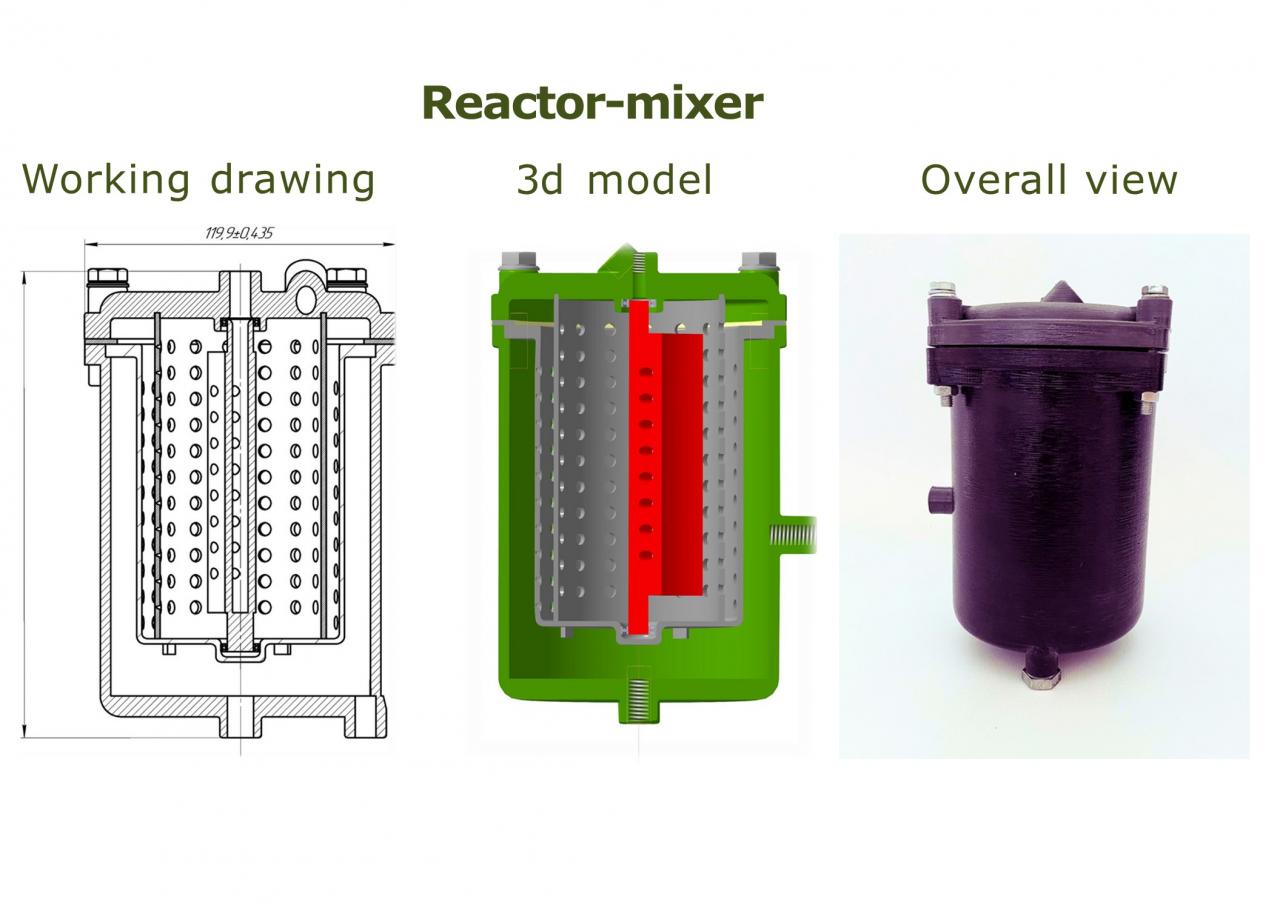
Reactor-mixer
Basic information
Project Title
Full project title
Category
Project Description
Current stage development
Geographical Scope
Project Region
Urban or rural issues
Physical or other transformations
EU Programme or fund
Description of the project
Summary
Specific objectives:
• Conducting a comprehensive analysis of the impact of biofuel parameters on the reliability of fuel system components.
• Optimization of the composition of fuel mixtures to increase their energy efficiency.
• Development of a fuel supply system and mixer that minimizes the cost of converting machines to use biofuels.
Achieved results:
• Methods have been developed to study the impact of biofuels on the operation of the fuel system.
• The optimal biofuel mixture ratios have been determined to ensure high engine efficiency.
• A fuel supply system and mixer have been created that allow machines to be economically adapted to operate on biofuel.
This project contributes to reducing oil fuel consumption, reducing harmful emissions into the atmosphere, and developing sustainable energy technologies.
Key objectives for sustainability
1. Reducing dependence on fossil fuels
project developed optimized fuel compositions that provide a higher percentage of biofuel while maintaining engine efficiency and performance.
2. Minimizing environmental impact
Research results confirmed that the use of the developed biofuel blends leads to reduced emissions, contributing to improved air quality and reduced environmental impact.
3. Improving energy efficiency
A thorough analysis of fuel system parameters led to the optimization of fuel injection and combustion processes, ensuring high energy output while minimizing fuel consumption.
4. Cost-effective transition to biofuels
have been developed that allows equipment to be easily and cost-effectively adapted to use biofuels, making environmentally friendly energy solutions more accessible.
5. Promoting the integration of renewable energy
innovations and findings create a model for industries seeking to transition to renewable energy sources, serving as an example of the practical and scalable implementation of green fuel solutions.
This project serves as a model of sustainable development in the following aspects:
• A holistic approach: it combines environmental, economic and technological aspects to ensure a viable transition to sustainable fuels.
• Scalability: The developed solutions can be widely applied in various sectors, including agriculture and transportation.
• Innovation: The project introduces an optimized fuel system that minimizes costs while maximizing efficiency.
• Impact: It directly contributes to achieving global sustainable development goals by reducing greenhouse gas emissions and promoting the use of renewable energy.
Key objectives for aesthetics and quality
1. Full integration with existing equipment
The developed fuel delivery system and mixer require minimal modifications, while maintaining an elegant and practical design for easy user interaction.
2. Convenient experience
The system is optimized for intuitive operation, reduces training time and allows users to switch to biofuels without lengthy retraining.
3. Cultural and regional adaptability
The project supports industries that rely on agricultural and transportation machinery, ensuring compatibility with existing practices while offering an environmentally friendly alternative.
4. Aesthetic and ecological harmony
Reduced emissions improve air quality, enhancing both urban and rural landscapes, enhancing the overall sensory experience.
5. A symbol of innovation and progress
The project highlights biofuels as a modern, responsible choice, reinforcing sustainability as the desired way forward.
Exemplary aspects of the project
• Balance innovation with tradition for smooth implementation.
• Improves the aesthetics of the environment by reducing pollution.
• Encourages a cultural shift towards sustainability.
• Demonstrates renewable energy sources as a promising solution.
Through the seamless integration of biofuels, the project sets a benchmark for sustainable and convenient technological progress.
Key objectives for inclusion
1. Accessibility and accessibility
supply system and mixer require minimal modifications, which reduces costs and makes biofuel technology accessible to both small and large enterprises.
2. Inclusive design for all
The system is designed for intuitive use, minimizing the need for specialized training and ensuring smooth implementation by different user groups.
3. Support for local and rural communities
By ensuring the use of local biofuels, the project contributes to energy independence, economic development, and job creation in these communities.
4. Governance and collaborative innovation
The project promotes collaboration between researchers, policymakers, and industry leaders, ensuring that diverse perspectives shape sustainable energy solutions.
5. New social models of sustainable development
By demonstrating an inclusive approach to biofuel implementation, the project serves as a model for integrating environmental practices into various industries.
Exemplary aspects of the project
• Affordable and scalable technology for different economic conditions.
• Convenient solutions that reduce barriers to implementation.
• Empowering local communities through sustainable access to energy.
• Shared governance that ensures broad stakeholder involvement.
• An inclusive sustainability model that combines economic and environmental goals.
By prioritizing accessibility and inclusivity , the project sets a benchmark for a just and sustainable energy transition.
How Citizens benefit
1. Direct beneficiaries : farmers, transporters and industrial workers
Operators and industrial companies using biofuel-powered equipment provided practical feedback on the system’s ease of use and adaptation challenges. This helped optimize the fuel delivery system for ease of use, reducing the need for costly modifications or extensive retraining. As a result, biofuels became a more viable alternative without disrupting existing workflows.
2. Local communities and citizens
The project promotes cleaner air and economic opportunities , especially in agricultural and industrial regions. Citizens participated in information campaigns , expressing concerns about environmental impact, accessibility and sustainability. Thanks to their input, the project focused on reducing emissions, providing benefits for both the environment and health.
3. Civil society organizations
Environmental organizations and sustainability advocates played a key role in advancing policy discussions and pilot programs . They ensured that the project was consistent with broader sustainability goals, increased public trust, and potential government support for large-scale biofuel deployment.
The impact of citizen and civil society engagement
• User feedback has improved the design and usability.
• Public engagement has increased environmental and economic attention.
• Collaboration with non-governmental organizations helped integrate sustainable development policies.
This inclusive approach ensures that biofuels deployment is practical, sustainable, and widely adopted , serving as a model for community-led energy transitions.
Physical or other transformations
Innovative character
Unlike conventional biofuel solutions, which often rely on large-scale centralized production, this project emphasizes local sources of biofuels , particularly from agricultural waste and crops, which are abundant in the region. This approach promotes energy independence , supports the local economy , and reduces emissions related to transportation. This project innovates by developing a biofuel system that minimizes adaptation costs and allows biofuels to be used with minimal changes to existing equipment . It also considers the economic viability of small-scale industries and the agricultural sector, making the technology more accessible to different market segments. While many biofuel projects focus on reducing greenhouse gas emissions, this project takes a more comprehensive approach, combining emission reductions with improved fuel efficiency and lower operating costs . This ensures that biofuels meet strict environmental standards while improving air quality in both urban and rural areas.
Disciplines/knowledge reflected
Fuel system design and biofuel integration. Engineers were responsible for designing the fuel delivery system and mixer , optimizing their performance for biofuel compatibility and ease of integration with existing equipment.
Environmental scientists conducted emissions analysis and life cycle assessment to ensure that the biofuel technology meets environmental standards and contributes to emission reductions.
Economists conducted a cost- benefit analysis and developed a business model to determine the financial feasibility and scalability of biofuels across sectors.
Their work has made biofuel technology affordable and scalable , ensuring that it is accessible to both large industries and small businesses.
Sociologists facilitated public engagement and regulatory compliance . Agricultural experts helped integrate local biofuels into the project, ensuring its sustainability and contributing to rural economic development.
• The interdisciplinary approach facilitated knowledge sharing, leading to innovative solutions for system design, cost-effectiveness, and environmental impact.
• Regular meetings and joint research ensured that the project was aligned with various goals, from technical feasibility to societal needs.
• The interdisciplinary approach combines technological, environmental and economic expertise , providing a holistic, scalable solution .
• The collaboration has enabled the development of a socially inclusive, affordable and environmentally sustainable biofuel technology , offering a comprehensive solution for biofuel implementation.
Methodology used
The project began with a comprehensive study phase to assess the viability of biofuels in target sectors.
Once the feasibility study was completed, the project moved into the engineering design phase , focusing on developing a biofuel delivery system and mixer compatible with existing engines.
This iterative process ensured that the project was technologically feasible .
environmental and economic analyses were conducted .
These analyses helped refine the technology to meet sustainable development goals while ensuring its economic accessibility .
The project placed a strong emphasis on involving relevant stakeholders during development and implementation:
After the initial deployment, the project went through a monitoring and improvement phase to ensure the technology operated effectively and stably over time:
The project methodology combined rigorous scientific research, engineering innovation , and stakeholder engagement to create a biofuel solution that is not only technologically advanced, but also economically viable and socially inclusive. This multifaceted approach ensured the project’s success and its potential for scalability and widespread application across industries.
How stakeholders are engaged
1. Local level: farmers, transporters and small businesses
Participants continued practical feedback on machine adaptation, fuel efficiency and economic feasibility. Their input helped to optimize the fuel systems for seamless integration. The technology was practical, cost-effective and easy to implement in real-world conditions.
2. Regional level: local governments and industry associations
Supported Pilot programs and funding opportunities provided to encourage biofuels adoption. Collaborated with industry to integrate new fuel systems into existing infrastructure.
Added value helped scale the project through regional funding and policy alignment, making biofuels more accessible to businesses and communities.
The overall impact of multi-level interaction
• Local feedback provided practical and convenient solutions.
• Regional cooperation has enabled economic incentives and pilot programs.
Global challenges
By enabling industries, including agriculture and transport, to switch to biofuels , the project helps reduce carbon emissions and air pollution , contributing to global climate goals .
Many regions , especially in developing countries, are heavily dependent on fossil fuel imports, making them vulnerable to energy crises, price fluctuations and supply disruptions. By developing local biofuel production , the project increases energy security in regions that depend on external fuel sources.
Addressing the global challenges of climate change , energy security , economic inequality and health , the project offers local, scalable solutions that can be adapted to different regions and sectors. Its focus on local biofuel production , technological innovation and community engagement ensures that it contributes to a sustainable future while empowering local communities and industries. The project not only provides immediate benefits at the local level, but also supports the global sustainable development and climate goals , making it a model for solving global problems with local solutions.
Learning transferred to other parties
The main innovation of the project is - biofuel feed system and mixer technology - is highly adaptable and can be transferred to different types of machines in different sectors.
One of the project’s notable features is its focus on a local source of biofuels from agricultural waste and crops. This model can be replicated in other regions, especially where agriculture plays a significant role.
collaborative methodology , which involves various stakeholders (farmers, machinery manufacturers, industry representatives, policymakers), is one of the most powerful aspects of the project. This participatory model ensures that all relevant groups have a voice in shaping the implementation of the technology.
Environmental impact analysis and economic feasibility studies provide a comprehensive framework for assessing the sustainability of biofuels and other renewable energy technologies.
Using pilot programs to test biofuel systems in real-world conditions has provided critical insights into performance, user experience, and potential barriers to implementation. This testing phase is a valuable learning process that can be replicated in other contexts.
Lessons The lessons learned from this project, such as the importance of early stakeholder engagement , technological adaptability , and the need for ongoing monitoring , can be applied to similar initiatives around the world.
The key components of this project – its technology, methodology, community engagement model, and sustainability assessment – are all highly replicable and can be adapted for use in different contexts and by different beneficiary groups .
Next steps
To ensure continued growth and successful implementation of the biofuel technology, the following steps are foreseen for the year following the application . These steps will focus on scaling up , expanding the reach and ensuring the long-term impact of the project:<br />
1. Further adaptation of biofuel technology to various industries, providing flexibility and broad application.<br />
2. Improved political support and public awareness , encouraging more industries and regions to adopt biofuels and invest in the necessary infrastructure.<br />
3. Promotion local expertise in biofuel systems, ensuring sustainable and self-sufficient implementation of the technology at a mass level.<br />
4. From multiplication local production facilities for biofuels, reducing dependence on imported fossil fuels and stimulating regional economic growth.<br />
5. Funding for further development is secured, ensuring the financial sustainability of the project and continued scalability.<br />
6. Promotion recognizability project, creating strong demand for biofuels and encouraging implementation in different regions and industries.<br />
7. Continuously improving technology and its implementation, ensuring that it continues to meet the changing needs of stakeholders and contributes to the achievement of sustainable development goals .<br />
8. In the year following the application, the focus will be on scaling up the biofuel project, improving its technology, building capacity and raising awareness among key stakeholders. These steps will ensure that the project not only continues to have a significant impact on the local economy and environment, but also becomes a model for the wider adoption of biofuels, contributing to global sustainability efforts.<br />