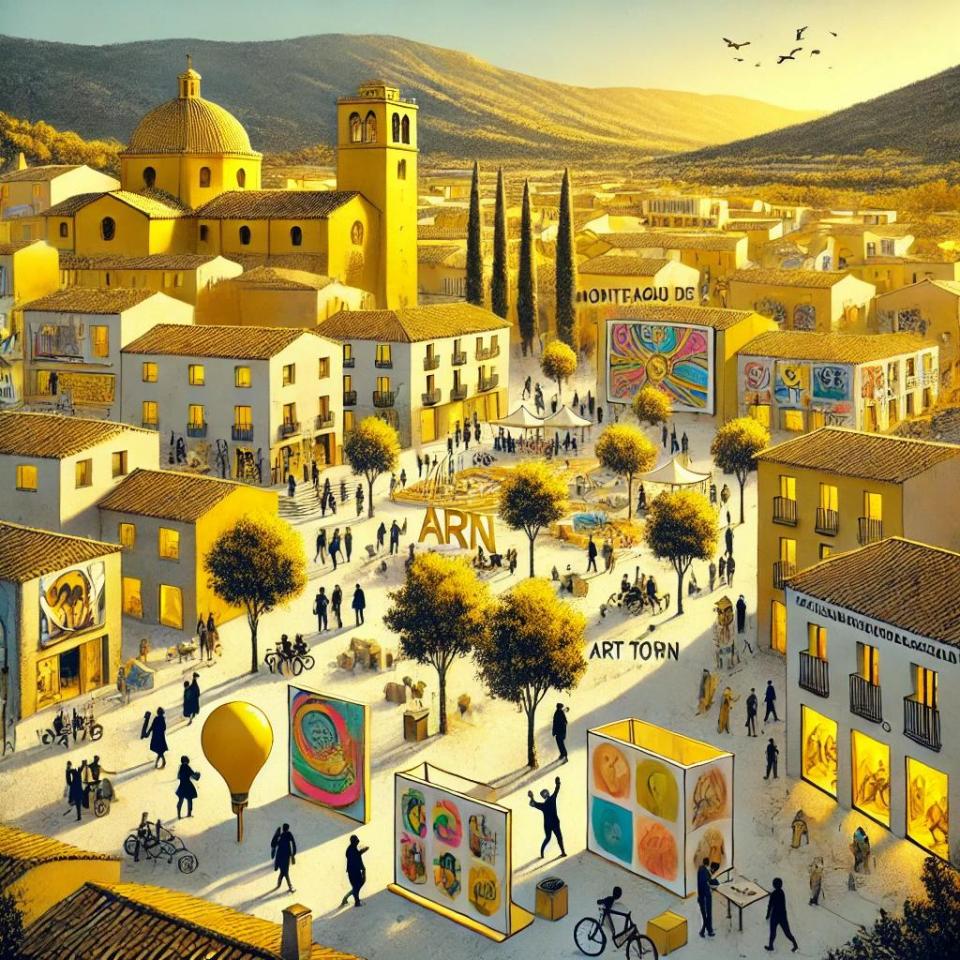
Monteagudo de las Vicarías, New Art Town
Basic information
Project Title
Full project title
Category
Project Description
Current stage development
Geographical Scope
Project Region
Urban or rural issues
Physical or other transformations
EU Programme or fund
Description of the project
Summary
Overall Aim: to establish Monteagudo as a thriving cultural and artistic hub, attracting artists, entrepreneurs, and creative professionals while preserving local heritage and stimulating economic growth.
Target Groups:
Local residents: Enhancing their quality of life and economic opportunities.
Artists and creatives: Providing affordable residencies and workspaces.
Visitors and cultural tourists: Offering immersive artistic and nature-based experiences.
Entrepreneurs and businesses: Encouraging investment in sustainable local enterprises.
Specific Objectives
Cultural Transformation: Establish an Art Town through mural art, artist residencies, and creative spaces.
Economic Development: Foster local entrepreneurship, rural tourism, and new job opportunities.
Sustainability & Innovation: Integrate green infrastructure, eco-tourism, and digital connectivity.
Community Engagement: Encourage active participation from local residents in cultural and economic initiatives.
Achieved Outcomes
Monteagudo recognized as a cultural tourism destination, increasing visitor numbers by 30% in the first year.
10 large-scale murals completed, establishing Monteagudo as a national reference in urban and rural art.
Launch of artist residencies, attracting international creatives to live and work in the town.
Development of infrastructure (fiber-optic internet, coworking spaces, and public transport links).
Expansion of tourism activities, integrating Monteagudo’s natural landscape and historical heritage.
Monteagudo Pueblo de Arte serves as a replicable model for sustainable rural revitalization.
Key objectives for sustainability
The project actively involves local residents in artistic and cultural programming, making them key participants in shaping Monteagudo’s creative identity. Mural art, exhibitions, and artistic collaborations incorporate the town’s history and traditions, ensuring that revitalization efforts are deeply rooted in local culture. By positioning Monteagudo as a destination for cultural tourism, the project strengthens the social fabric and ensures that artistic innovation remains an ongoing and community-driven process.
Economic sustainability is achieved through the development of a creative economy that generates employment in art, hospitality, and tourism services. Affordable artist residencies attract long-term creative professionals, driving local investment and stimulating commerce. The project establishes partnerships with regional businesses, institutions, and funding bodies to secure financial sustainability, while entrepreneurial programs provide funding and training for new cultural and tourism-related businesses, ensuring long-term economic resilience.
Monteagudo Pueblo de Arte also prioritizes environmental sustainability by integrating nature into its cultural tourism model. The Monteagudo Lake and surrounding hiking trails are incorporated into eco-tourism experiences such as birdwatching, nature photography, and sustainable outdoor activities.
Key objectives for aesthetics and quality
The project prioritizes visual harmony and artistic excellence, ensuring that all artistic interventions—such as murals, installations, and public spaces—reflect both contemporary creativity and the town’s historical identity. Renowned artists and emerging talents are invited to contribute, creating a rich and diverse artistic landscape that balances tradition with modernity. The selection process for murals and installations follows rigorous curatorial guidelines, ensuring aesthetic coherence, cultural relevance, and technical mastery.
Beyond the visual transformation, Monteagudo Pueblo de Arte enhances the sensory and cultural experience of the town by integrating public art, storytelling, and interactive installations. Art is not merely decorative—it is narrative-driven, site-specific, and deeply connected to local history. The project creates immersive routes and guided experiences, where visitors engage with Monteagudo’s mural art, sculptures, historical landmarks, and natural surroundings in a meaningful way. These experiences are enriched through soundscapes, digital storytelling, and artist-led workshops, making the town a living canvas of artistic expression.
The quality of experience is further elevated through urban interventions that improve the livability and functionality of public spaces. The project includes the restoration of historic buildings, enhancement of public squares, and the creation of new gathering spaces where art and community life intersect.
Key objectives for inclusion
Monteagudo Pueblo de Arte is designed as an inclusive and participatory model for rural revitalization, ensuring that accessibility, affordability, community governance, and new societal models are at the heart of its transformation. The project fosters a culture of openness, making art, creativity, and economic opportunities accessible to all, regardless of socio-economic status, background, or abilities.
Monteagudo Pueblo de Arte ensures that both artists and visitors can engage with the project without financial barriers. Affordable artist residencies allow creatives from diverse backgrounds to live and work in Monteagudo, contributing to a thriving artistic ecosystem without the financial pressures of larger cities. Public spaces are redesigned with accessibility in mind, ensuring that murals, cultural events, and exhibitions can be enjoyed by people with reduced mobility or disabilities.
The project also emphasizes economic inclusivity by creating new opportunities for local residents, from entrepreneurial support for small businesses to job creation in tourism, hospitality, and the arts. Affordable workshops, guided experiences, and open-air exhibitions make artistic engagement possible for all, avoiding exclusivity often found in high-end cultural initiatives.
Monteagudo Pueblo de Arte is not just an artistic transformation—it is a community-led initiative. Local residents are involved in decision-making, project planning, and execution, ensuring that the town’s cultural identity remains authentic and representative of its people. Through participatory governance, Monteagudo pioneers a model in which artists, local stakeholders, and governing bodies collaborate to shape its future.
New societal models emerge as residents and artists coexist, creating a collaborative rural-urban cultural network that redefines traditional community structures
How Citizens benefit
One of the key steps in this process has been engaging with the local civil society, particularly the group that purchased Casa Leonor, a historic home in Monteagudo, with the vision of restoring and repurposing it as a Contemporary Art Museum. Their initiative aligns perfectly with the objectives of Monteagudo Pueblo de Arte, and together we are working towards integrating Casa Leonor into the cultural fabric of the project as a permanent space for exhibitions, artistic residencies, and community events.
At the political level, we are working hand-in-hand with the mayor and the entire town council, both at the municipal and regional levels. Political representatives fully acknowledge the urgent need to revitalize Monteagudo, and they support the project as a visionary and forward-thinking response to rural depopulation. This collaboration ensures that Monteagudo Pueblo de Arte is not just an artistic movement but also a structured, institutional-backed initiative with long-term viability.
Physical or other transformations
Innovative character
One of the key innovations is the Art Town concept applied to rural Spain, positioning Monteagudo as Spain’s first Art Town. While similar projects often focus on urban cultural districts, Monteagudo demonstrates how small, well-connected villages can become hubs for artistic creation and economic renewal, challenging the traditional view that cultural innovation only thrives in cities.
Monteagudo also innovates by combining public art with immersive tourism and community-driven development. Unlike conventional mural festivals, which primarily focus on temporary exhibitions, Monteagudo Pueblo de Arte ensures that art is embedded into the town’s identity through permanent residencies, live-work spaces, and year-round cultural activities. This approach extends the economic impact beyond short-term events, creating a continuous creative economy.
Another groundbreaking element is the integration of digital technology and smart tourism solutions into rural development. Monteagudo is not just a destination for physical art; it is a digitally connected cultural hub. Through interactive maps, digital storytelling, and online artist showcases, visitors can experience the town’s creative essence both in person and virtually, enhancing its visibility on global creative platforms. The establishment of fiber-optic internet and coworking spaces further innovates by attracting remote workers, digital nomads, and cultural entrepreneurs, redefining how rural areas are seen.
Disciplines/knowledge reflected
Murals, installations, and public art interventions are designed in collaboration with renowned muralists, emerging artists, and local creatives.
Art historians and cultural curators ensure that the artistic transformation respects Monteagudo’s historical identity while introducing contemporary artistic expressions.
The project incorporates the restoration of Casa Leonor, turning it into a Contemporary Art Museum.
Urban planners and architects contribute to the adaptive reuse of public spaces, ensuring functional, aesthetic, and sustainable development.
Infrastructure improvements, such as fiber-optic connectivity, public transport solutions, and artist residencies, are guided by specialists in rural and urban development.
Environmental experts help integrate green infrastructure, energy-efficient spaces, and ecotourism strategies.
Monteagudo Lake and surrounding trails are preserved and promoted for sustainable tourism, aligning with conservation best practices.
Sustainable materials are used in mural production, public installations, and renovation projects.
Digital strategists and tech specialists have developed a smart tourism platform, including interactive maps, digital storytelling, and online visibility strategies.
High-speed fiber-optic connectivity supports the establishment of a coworking space, attracting remote workers and creative professionals.
Social media and international art networks enhance visibility of Monteagudo, Pueblo de Arte
Methodology used
The foundation of the project is active citizen involvement, ensuring that Monteagudo’s residents play a central role in the transformation of their town.
Engagement with civil society, particularly the group that purchased Casa Leonor, securing community support for artistic and cultural initiatives.
Close collaboration with the Town Council, ensuring that public policies align with the project’s goals and that municipal resources support its implementation.
Ongoing conversations with local stakeholders, including residents, business owners, and cultural associations, to integrate diverse perspectives and strengthen community ownership.
Workshops, surveys, and participatory meetings, allowing residents to co-design mural themes, urban interventions, and cultural programs.
Involvement of local businesses and entrepreneurs, ensuring that economic benefits are distributed across different sectors.
Monteagudo Pueblo de Arte is not just a hands-on artistic and urban project—it is also based on academic and applied research to ensure that its strategies align with successful rural revitalization models.
Engagement with key readings from the project bibliography, including research on Art Towns, Book Towns, ecological economics, and the degrowth movement,to refine Monteagudos' strategies.
How stakeholders are engaged
1. Local Stakeholders: Community, Municipality, and Civil Society
At the local level, Monteagudo Pueblo de Arte is deeply rooted in community engagement, with residents, the municipal government, and local civil society organizations actively participating in decision-making and execution.
Monteagudo’s citizens are involved in mural selection, community workshops, and cultural programming, ensuring that the project respects and enhances local identity.
The Town Council and Mayor have fully embraced the project, recognizing the urgent need to revitalize Monteagudo. Their support facilitates infrastructure improvements, public space requalification, and regulatory approvals.
Civil society initiatives, such as the group that purchased Casa Leonor, contribute significantly. Their efforts to transform Casa Leonor into a Contemporary Art Museum align with Monteagudo Pueblo de Arte’s goals, adding a permanent cultural institution to the town.
The added value of local engagement lies in ensuring that the project is community-led, securing local buy-in, authenticity, and long-term sustainability.
Castilla y León Institutions and Cultural Networks
At the regional level, Monteagudo Pueblo de Arte will collaborate with institutions and organizations from Castilla y León, leveraging existing cultural policies and economic development programs.
The Regional Government of Castilla y León will sure support the project through rural development and cultural innovation funds, positioning Monteagudo as a model for rural transformation.
Global challenges
Monteagudo Pueblo de Arte is a local initiative with global relevance, tackling pressing global challenges through innovative rural solutions. By integrating art, sustainability, economic resilience, and community-driven development, the project demonstrates how small towns can offer scalable models to counteract some of the most urgent issues of our time.
Global Challenge: Across Europe and the world, rural areas are experiencing massive depopulation, while cities face overcrowding, housing crises, and declining quality of life.
Local Solution: Monteagudo provides an alternative by transforming a small, well-connected rural town into a thriving creative hub. Instead of focusing on expanding unsustainable urban suburbs, the project repopulates rural spaces by attracting artists, remote workers, and entrepreneurs, demonstrating that rural areas can be culturally and economically vibrant.
Many urban development models prioritize growth at the expense of sustainability, leading to overconsumption, pollution, and loss of biodiversity. Local Solution: Monteagudo follows degrowth principles and ecological economics, promoting a low-impact, community-driven approach to development. The project prioritizes:
Adaptive reuse of historic buildings instead of unsustainable new constructions.
Ecotourism and sustainable artistic practices that respect and enhance the natural environment.
Green infrastructure investments, such as energy-efficient artist studios and public transport connectivity, reduce reliance on cars.
Global Challenge: Traditional rural economies based on agriculture and extractive industries are struggling to remain viable in a globalized market, leading to economic stagnation and lack of job opportunities.
Learning transferred to other parties
The three-phase implementation model (Pre-Inauguration, Inauguration, Development) can be applied to other rural communities seeking cultural, economic, and social renewal. The project demonstrates that small, well-connected towns can become creative hubs, offering an alternative to urban overdevelopment.
Monteagudo’s mural art initiative can be replicated in other towns, transforming public spaces into open-air museums that attract tourists, artists, and economic investment. The process of engaging local governments, civil society, and artists ensures that art is not just decoration but a tool for place-making and social transformation.
Monteagudo’s emphasis on ecological economics and local entrepreneurship offers a replicable strategy for other rural communities looking to develop self-sustaining economies through:
Affordable artist residencies as a way to attract new residents.
Local business incubation programs focused on culture, crafts, and eco-tourism.
Alternative funding strategies (crowdfunding, sponsorships, grants) to ensure financial independence.
Monteagudo’s use of interactive digital tools, online promotion, and high-speed connectivity can be replicated in other small towns to increase visibility and engagement. The creation of interactive cultural routes, digital storytelling, and smart tourism initiatives can be tailored to different contexts.
Next steps
Monteagudo Pueblo de Arte is structured in phases, where each successfully completed step naturally leads to the next one. Over the next year, the project will strengthen its infrastructure, complete Casa Leonor’s transformation into a Contemporary Art Museum, expand artist residencies, and enhance public spaces. It will increase national and international visibility through digital marketing, media outreach, and collaborations with other Art Towns and creative networks.<br />
<br />
A key focus will be launching an annual Art & Nature Festival, organizing artist residencies, and developing educational workshops to integrate locals and visitors into Monteagudo’s creative scene. To ensure financial sustainability, the project will apply for EU and national grants, attract private sponsorships, and establish self-sustaining revenue streams.<br />
<br />
However, the most critical step is securing funding, as the Town Council lacks financial resources. Subsidies must serve as engines for ambitious and transformative projects, not as rewards for work already completed. The idea that one must first finance everything independently and then be reimbursed through a grant is flawed. Instead, subsidies should act as catalysts for development, ensuring that innovative initiatives like Monteagudo Pueblo de Arte can thrive.<br />
<br />
Governance will be strengthened by forming a cultural foundation and securing institutional support. These steps will position Monteagudo as a leading Art Town in Europe, proving that rural areas can thrive through culture, sustainability, and innovation—but for that, proper funding mechanisms that support vision-driven initiatives from the start are essential.