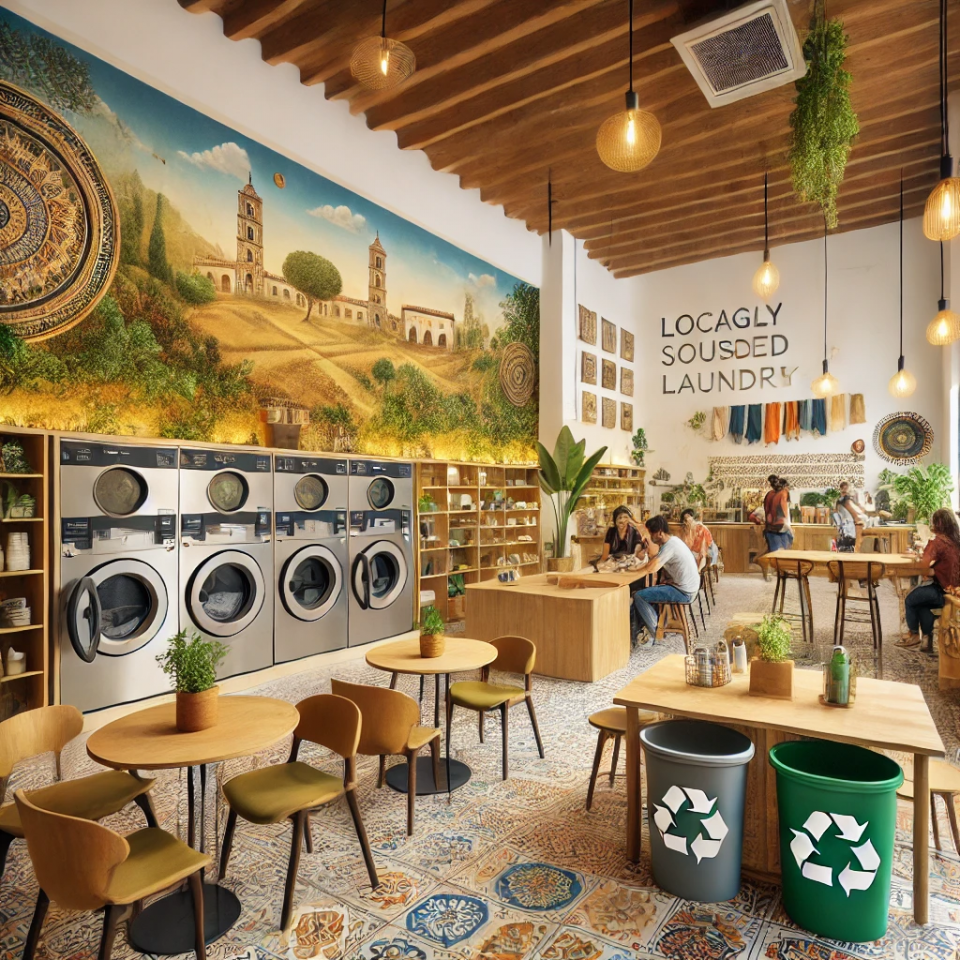
Colada Café
Basic information
Project Title
Full project title
Category
Project Description
Current stage development
Geographical Scope
Project Region
Urban or rural issues
Physical or other transformations
EU Programme or fund
Description of the project
Summary
By integrating circular economy principles, La Colada Café reduces textile and water waste while promoting sustainable consumption. The laundry area uses high-efficiency machines and a water-recycling system to minimize environmental impact. Textile donation and repair services further support sustainability and local solidarity.
The project addresses key challenges, including urban isolation and environmental degradation, by creating a space where residents can connect, learn, and collaborate. The inclusive design ensures access for people with disabilities and vulnerable groups. It fosters long-term community resilience through social activities and replicable sustainability solutions, making it adaptable to other locations facing similar challenges.
Key objectives for sustainability
Water and Energy Efficiency:
The laundry area features high-efficiency washing machines (A++ or higher) and a water-recycling system that reduces water usage by up to 30%. Solar panels, when feasible, further enhance energy efficiency, minimizing reliance on external power sources.
Circular Economy Practices:
The café promotes a zero-waste policy by offering reusable cups and utensils, eco-friendly detergents, and a clothing donation and repair program. Leftover textiles are recycled into new products, fostering a sustainable lifecycle and reducing landfill waste.
Locally Sourced and Sustainable Products:
The café serves coffee, tea, and snacks sourced from local producers, reducing the carbon footprint of food transportation while supporting small businesses and the local economy.
Community Engagement in Sustainability:
Workshops on sustainable living, textile reuse, and eco-friendly home solutions engage the community in sustainability efforts. These initiatives ensure that participants develop practical, long-term habits that extend beyond the café.
Exemplary Character:
La Colada Café is exemplary in its holistic approach to sustainability, addressing both environmental and social needs. It demonstrates that essential services like laundry can be transformed into sustainable, community-centered activities. Its scalable, affordable model ensures replicability across diverse urban and rural contexts, making it a beacon of innovation for cities aiming to reduce their ecological footprint while enhancing community cohesion.
Key objectives for aesthetics and quality
Warm and Welcoming Design:
The space is designed with natural, recycled materials to create a cozy, eco-friendly ambiance. Wooden furniture, greenery, and co-designed murals reflect the local heritage, offering a calm, inviting environment. By integrating comfortable seating, soft lighting, and open spaces, the design promotes relaxation and interaction.
Community-Centric Layout:
The layout is functional yet inviting, with dedicated spaces for laundry, coffee, and community gatherings. This encourages natural interactions while providing privacy where needed. The modular design allows flexibility for various activities like workshops, cultural events, or pop-up markets.
Cultural Identity Through Art and Collaboration:
Murals and decorative elements are co-created by local artists and residents, representing the neighborhood’s cultural history and diversity. Rotating exhibitions of local artwork, along with live music and storytelling events, reinforce the sense of belonging.
Enhanced User Experience:
Simple, intuitive signage and digital interfaces make the space accessible to all, while universal design principles ensure that individuals with disabilities can navigate and enjoy the café. The blend of functional services and cultural experiences turns a basic chore into a socially and emotionally fulfilling experience.
Key objectives for inclusion
Accessibility for All:
The café follows universal design principles, making it fully accessible to people with disabilities. Features include step-free entrances, wide doorways, and accessible seating areas. Laundry machines are positioned at heights suitable for wheelchair users, and digital kiosks feature options for voice control and braille interfaces.
Affordable Services:
Laundry and café services are designed to be economically accessible, with flexible pricing options. Affordable membership plans offer benefits like discounted laundry cycles and free or reduced-price coffee. Additionally, a “laundry and coffee pending” system allows customers to pre-pay services for those in need.
Community Involvement in Governance:
The café operates as a community-driven space where local stakeholders, including residents and small businesses, participate in decision-making. Through regular meetings and feedback channels, users influence the programming of workshops, events, and improvements to services.
Intergenerational and Cultural Inclusion:
Workshops, clothing swaps, and repair events bring together individuals from diverse cultural and age groups, fostering mutual learning and interaction. Seniors share traditional repair skills, while youth participate in sustainability-focused workshops, creating a bridge between generations.
How Citizens benefit
Participatory Process:
From its inception, the project involves local residents, small businesses, and civil society organizations in key decisions, including layout design, services offered, and community events. Initial focus groups and workshops gathered ideas on making the space inclusive and functional, resulting in design decisions that reflect the community’s needs and aspirations, such as incorporating flexible event spaces and cultural elements.
Multi-level Interaction:
The project benefits from strong collaboration between local government, NGOs, and private partners. The municipality provides support through grants or affordable rental spaces, while local businesses supply sustainable products (e.g., coffee, snacks) and participate in events. NGOs focused on social inclusion contribute by organizing workshops and outreach programs to support vulnerable groups.
Transdisciplinary Collaboration:
Experts in architecture, design, sustainability, and social work collaborate to create an environment that is both functional and meaningful. Designers worked with accessibility experts to ensure universal design principles were met, while environmental specialists helped implement water-saving systems and sustainable practices. Community members bring cultural value by co-creating murals and participating in event programming.
Physical or other transformations
Innovative character
Blending Laundry Services with Community and Culture:
Traditional laundromats are often isolated, transactional spaces. La Colada Café innovates by integrating a laundry service with a cozy café and a platform for cultural and educational events, turning it into a social hub rather than a passive waiting area.
Circular Economy Approach to Laundry:
Mainstream laundromats typically focus solely on providing cleaning services. In contrast, La Colada Café incorporates textile reuse and recycling programs, clothes-swapping events, and workshops on repair and sustainable fashion. This circular model reduces waste while educating users about eco-conscious consumption, making sustainability an integral part of the experience.
Water and Energy Efficiency:
While many laundromats rely on high-energy, water-intensive equipment, La Colada Café uses high-efficiency washing machines and a water-recycling system that minimizes resource consumption. This innovation is paired with the potential use of solar panels, further enhancing its sustainable footprint.
Affordable and Inclusive Access:
Traditional cafés and laundromats rarely address affordability and accessibility issues. La Colada Café provides flexible pricing through membership plans and offers free or discounted services through community support programs. Its inclusive design—ranging from wheelchair-accessible facilities to multilingual and braille signage—ensures that it serves everyone, especially vulnerable groups.
Disciplines/knowledge reflected
Architecture and Interior Design:
Architects and designers played a central role in creating an accessible, aesthetically pleasing space by applying universal design principles. They worked closely with local artists to co-design interior elements, including murals and furniture made from recycled materials.
Environmental and Sustainability Experts:
Sustainability specialists contributed to the implementation of eco-friendly systems, including water-saving technologies, energy-efficient laundry machines, and textile recycling initiatives. Their collaboration ensured that every aspect of the project, from laundry operations to waste management, aligned with circular economy principles.
Social and Community Development:
NGOs and social workers provided expertise in community engagement, organizing participatory workshops and ensuring that vulnerable groups (e.g., people with disabilities, low-income residents) were involved in decision-making and could access affordable services. Their involvement helped design targeted programs such as free laundry services for those in need and intergenerational workshops.
Cultural and Artistic Fields:
Local artists and cultural organizations collaborated on incorporating community-driven art into the café’s design and programming. The result is a space that not only serves practical needs but also fosters creative expression and a sense of identity.
Business and Operational Management:
Entrepreneurs and local business experts guided the financial planning, ensuring the café’s long-term economic viability. They designed flexible business models, including memberships and partnerships with local suppliers, to sustain the project’s affordable services.
Methodology used
Community Engagement from the Start:
The project began with focus groups and participatory workshops involving local residents, small businesses, and NGOs to identify key needs, preferences, and potential challenges. This input shaped the café’s design, services, and cultural programming, ensuring they reflected the community’s vision.
Participatory Co-Design:
The physical layout and aesthetic design of the space were developed through co-creation sessions, where community members and local artists contributed to mural designs and décor. This collaborative design fosters a sense of ownership and belonging while creating a culturally relevant, visually appealing environment.
Environmental Integration through Circular Design:
The project adopted a circular economy framework from its inception, ensuring minimal environmental impact. Key measures include:
Water-saving laundry technologies
Energy-efficient appliances
Textile donation, repair, and recycling programs
Use of local, sustainable materials in construction and furnishings
Collaborative Governance:
An inclusive management model involves representatives from civil society, local businesses, and users in decision-making. Regular feedback sessions ensure that services and activities evolve to meet the community’s changing needs.
Iterative Improvement:
The project uses an adaptive approach, continuously evaluating performance through user feedback and environmental monitoring (e.g., tracking water and energy savings). This allows for real-time improvements and adjustments, ensuring long-term success.
How stakeholders are engaged
Local Level:
Residents and local businesses played a key role in the design and implementation process through participatory workshops and focus groups. They provided valuable input on space design, affordable services, and community programming.
Local government supported the project through grants, reduced rental rates, and assistance with permits, ensuring feasibility and compliance with local regulations.
NGOs and community organizations contributed by organizing workshops, textile recycling programs, and events targeting vulnerable groups.
Added value: Local engagement ensured that the café reflected the needs and identity of the community, fostering strong user loyalty and participation.
Regional Level:
Regional sustainability agencies provided expertise on circular economy practices, helping implement water-saving laundry systems and recycling programs.
Regional cultural organizations partnered to integrate local art, design, and culture into the café’s interior and activities.
Added value: Regional involvement allowed the project to scale its sustainability and cultural elements beyond the immediate neighborhood.
National Level:
Government funding initiatives and national sustainability programs offered additional financial support, particularly for water and energy efficiency measures.
National labor programs helped recruit and train staff from diverse backgrounds, including vulnerable groups.
Added value: National stakeholders ensured access to financial and technical resources while promoting social inclusion.
European Level:
European organizations provided guidance on aligning the project with EU sustainability and inclusion standards.
Global challenges
Global Challenge: Climate Change and Resource Scarcity
Local Solution: The café addresses environmental degradation by integrating water-saving laundry machines and energy-efficient systems, reducing water and energy consumption. The use of solar panels (when feasible) minimizes dependence on fossil fuels, contributing to climate change mitigation. The circular approach to textiles—promoting repair, reuse, and recycling—reduces waste and the demand for new resources.
Global Challenge: Textile Waste and Overconsumption
Local Solution: The café combats fast fashion and textile waste by offering clothing repair workshops, swap events, and textile recycling programs. These initiatives extend the lifespan of garments and minimize the environmental impact of the fashion industry. The project educates the community on sustainable consumption, fostering long-term behavioral change.
Global Challenge: Social Inequality and Urban Isolation
Local Solution: By creating an inclusive, welcoming space with affordable services and community-driven events, the café addresses social exclusion and urban isolation. Flexible pricing options and support programs for vulnerable groups ensure that everyone can access its services. The café’s participatory design model brings together diverse populations, fostering intergenerational and intercultural connections.
Global Challenge: Lack of Sustainable Urban Models
Local Solution: The café serves as a replicable model for sustainable urban development, combining essential services with community engagement.
Learning transferred to other parties
Flexible and Scalable Design:
The project’s modular design can be easily adjusted based on the size of the available space and community needs. It can function as a small café-laundry in rural areas or as a larger community hub in cities. The use of locally sourced materials and co-designed interiors ensures that each iteration reflects its location’s cultural identity.
Circular Economy Framework:
Core sustainability practices—such as water-saving laundry machines, textile recycling, and repair workshops—can be implemented in any location with minimal adaptation. The process of integrating a circular model is simple and replicable, providing environmental benefits wherever applied.
Participatory and Inclusive Methodology:
The community-centered approach, which includes participatory workshops and collaborative governance, can be replicated in other contexts to ensure local engagement and relevance. This ensures that the project meets the specific needs of different beneficiary groups, from vulnerable populations to students and seniors.
Affordable Business Model:
The project’s flexible, cost-effective financial structure—including membership plans, pay-per-use options, and support systems for vulnerable users—can be tailored to different economic contexts. Partnerships with local governments and businesses further enhance its feasibility.
Technology Integration:
The use of simple, digital reservation and payment systems can be easily deployed in other locations, improving user convenience while keeping costs low.
Knowledge Sharing and Training Programs:
Workshops and training on circular practices, sustainability, and textile reuse can be exported as part of a broader education strategy
Next steps
La Colada Café has a clear roadmap for implementation, ensuring that the concept will be developed, promoted, and operationalized efficiently within the year following the application. The project’s commitment is reflected in its step-by-step plan, designed to involve stakeholders, secure funding, and activate community engagement.<br />
<br />
Step 1: Finalizing Partnerships (Months 1-2)<br />
Establish formal agreements with local government, NGOs, and private partners to secure funding, space, and operational resources.<br />
Confirm partnerships with local producers for sustainable food and beverage sourcing, as well as with technical providers for laundry and energy-efficient equipment.<br />
Step 2: Securing Space and Equipment (Months 2-4)<br />
Identify and secure a suitable location, preferably under public-private collaboration to reduce initial costs.<br />
Acquire water-saving washing machines, energy-efficient appliances, and digital management systems (for reservations and payments).<br />
Step 3: Community Co-Design Workshops (Months 3-5)<br />
Engage community members through workshops to co-design the café’s layout, interior decoration (murals, furniture), and initial programming of workshops and events.<br />
Ensure feedback loops are established for continuous input during development and after launch.<br />
Step 4: Sustainable Construction and Setup (Months 4-8)<br />
Begin construction and interior setup using local, recycled materials.<br />
Install laundry machines, water-recycling systems, solar panels (if feasible), and basic café infrastructure.<br />
Step 5: Pre-Launch Promotion and Pilot Events (Months 8-10)<br />
Conduct promotional campaigns via social media, local networks, and community events to raise awareness.<br />
Hold pre-launch pilot events, such as small workshops or pop-up cafés, to test operations and gather feedback.<br />
Step 6: Official Launch and Monitoring (Months 10-12)<br />
Launch the café with a community opening event.<br />