NERA
Basic information
Project Title
Full project title
Category
Project Description
Current stage development
Geographical Scope
Project Region
Urban or rural issues
Physical or other transformations
EU Programme or fund
Description of the project
Summary
Europe faces significant renovation challenges, with a large share of its building stock being energy-inefficient and reliant on carbon-intensive materials. Yet, with demolition being the predominant approach, the renovation rate remains at just 1%—far from what is needed to meet climate targets. NERA offers 3D-printed bio-based panels that are lightweight, high-performance, and customizable, enhancing thermal efficiency and reducing embodied carbon.
At its core, NERA challenges mainstream construction practices by treating waste as a valuable resource and applying a scalable methodology that optimizes bio-based materials for replicability across different contexts. The project fosters cross-disciplinary collaboration, engaging material scientists, architects, construction industry partners, and citizens, ensuring both technical feasibility and social impact.
Beyond sustainability, NERA enhances the social dimension of construction. Through co-creation methodologies and customization, it cultivates a sense of belonging and ownership, allowing communities to actively shape their spaces. The project also addresses energy poverty, making buildings more resilient, cost-effective, and inclusive by improving thermal comfort and energy efficiency.
By focusing on social, environmental, and long-term sustainability, NERA aims to represent a shift toward a circular industrial ecosystem, rethinking how materials, processes, and communities contribute to a more equitable and climate-resilient future.
Key objectives for sustainability
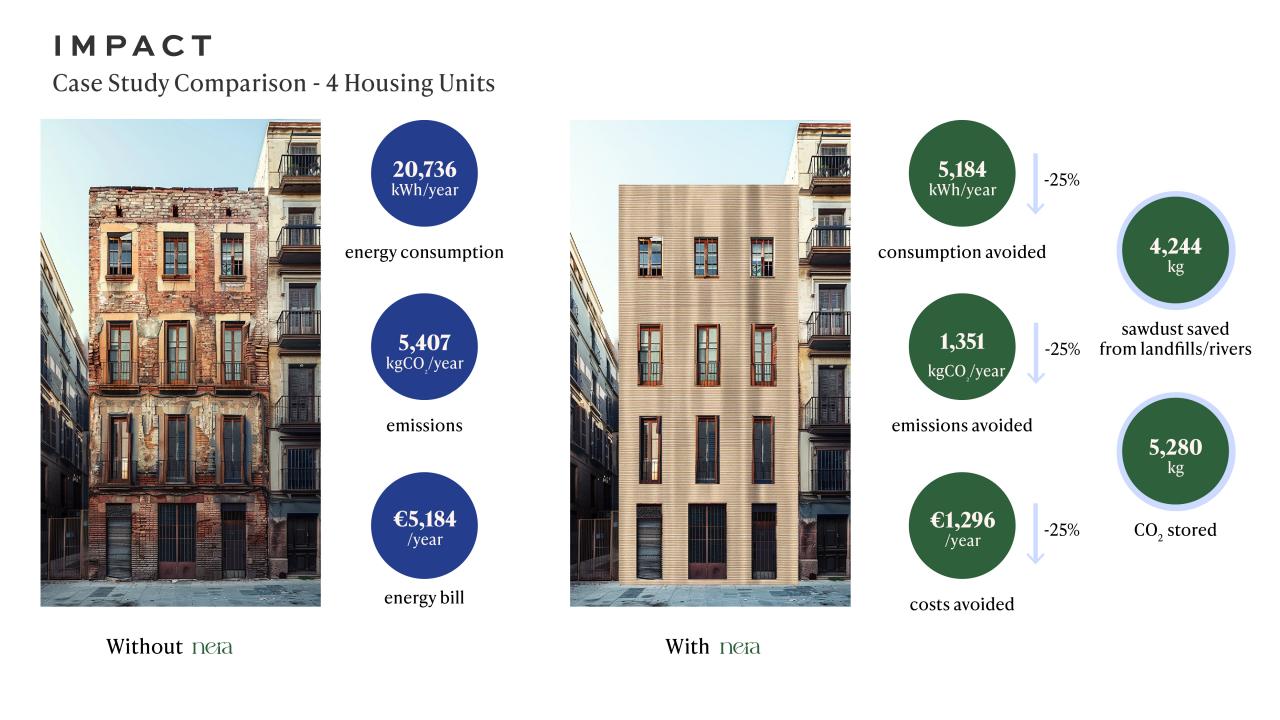
The project achieves that vision through 3D-printed façade panels made from sawdust waste, sequestering carbon that would otherwise be released into the atmosphere. Beyond carbon storage, these panels serve as high-performance insulation, significantly improving energy efficiency in buildings and reducing overall heating and cooling demands. By converting an abundant and ever growing industrial byproduct into a durable construction material, the initiative demonstrates waste-to-resource principles, eliminating landfill accumulation and redefining upcycling in architecture. The strategic repurposing of sawdust also addresses a critical environmental challenge—deforestation—by reducing dependence on virgin timber and preserving natural forests. Additionally, the advanced thermal properties of the material could help mitigate the Urban Heat Island effect, fostering cooler, more climate-resilient urban spaces. By integrating these strategies, the objective of NERA is to exemplify material efficiency and circular construction for the next generation of sustainable cities.
Key objectives for aesthetics and quality
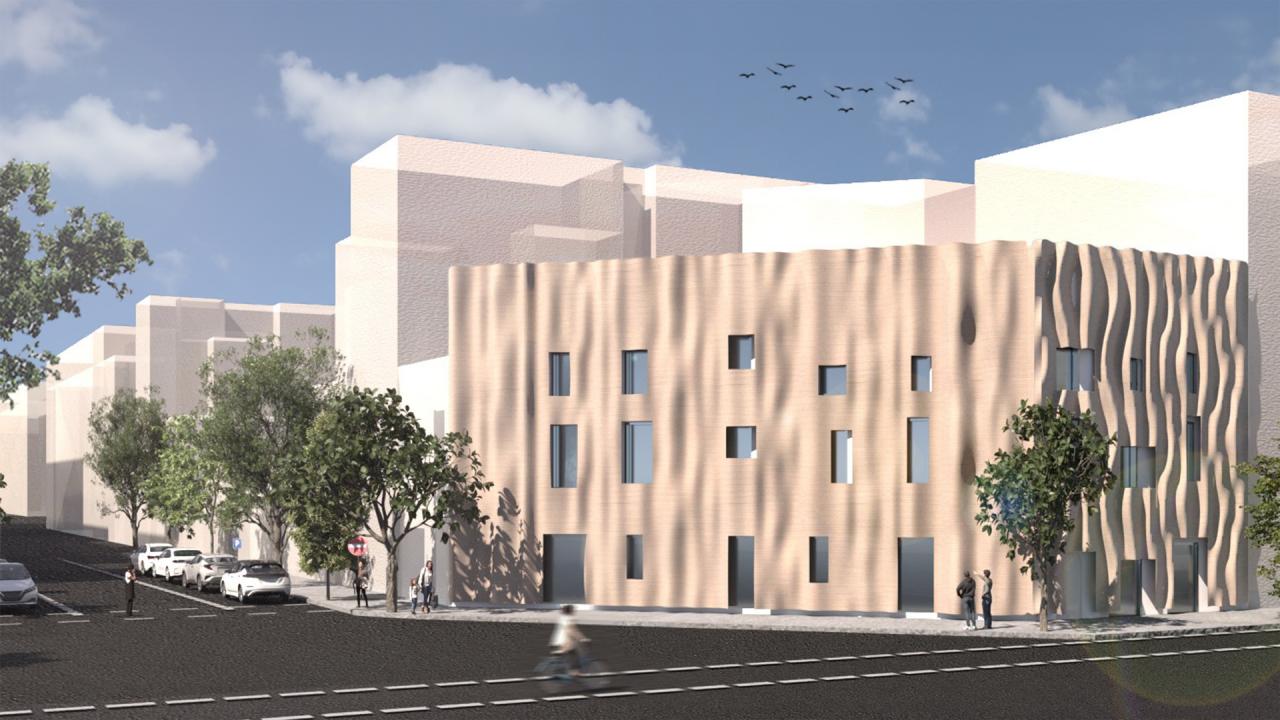
NERA challenges this industry norm by introducing freedom of form, texture, and customization through 3D printing and material innovation. Unlike rigid elements, the adaptability of the material and digital fabrication process allows for intricate geometries, organic/nature inspired shapes, and site-specific designs that reflect cultural and environmental contexts. This flexibility elevates architecture beyond functionality, transforming façades into expressive, place-responsive elements that contribute to the visual and emotional character of buildings.
Beyond aesthetics, material performance plays a crucial role in the sensory experience of space. Thermal properties directly impact comfort and the way people feel within an environment. The insulating capabilities of these panels reduce temperature fluctuations, mitigating excessive heat loss in winter and heat gain in summer. This regulation enhances indoor thermal comfort, reducing reliance on heating and cooling while creating healthier, more pleasant living and working conditions.
By redefining façades as both aesthetic and performance-driven elements, the project introduces a new paradigm in material use—one that prioritizes customization, human experience, and environmental consciousness in equal measure. This approach nurtures a deeper connection between people and the spaces they inhabit, contributing to a built environment that is not only sustainable but also emotionally and culturally enriching.
Key objectives for inclusion
The objective of NERA is to address these inequalities by leveraging an innovative approach that prioritizes accessibility, inclusivity, and co-creation. The use of 3D-printed façade panels made from sawdust waste presents a more resource-efficient alternative to conventional construction material. By improving insulation and decreasing thermal fluctuations, these panels lower energy demands for heating and cooling, directly contributing to more equitable living conditions and reducing long-term financial strain on occupants.
Inclusivity is embedded in the design process itself. Digital fabrication allows for high levels of customization, enabling residents, designers, and communities to participate in the creation of façade elements tailored to their needs, aesthetics, and cultural identities. This co-creative approach fosters a sense of belonging, giving individuals greater agency over their built environment while strengthening local engagement and ownership.
NERA also aims to challenge traditional models of architectural exclusivity and provides a methodology to make sustainable buildings more inclusive both economically and socially.
How Citizens benefit
Although civil society groups have not been heavily involved in the project thus far, they can still play a critical role in supporting long-term success. Civil society members such as NGOs, Fab Labs, sustainability advocacy groups, and local associations, which can help amplify citizen voices, make them feel heard/understood, raise awareness, and help include diverse perspectives.
By involving civil society, the project can operate from a more collaborative approach, ensuring that the solutions implemented are truly reflecting the needs and aspirations of citizens. This could potentially take the form of community consultations, collaborative design workshops, or advocacy for policies that align with the project's goals.
Physical or other transformations
Innovative character
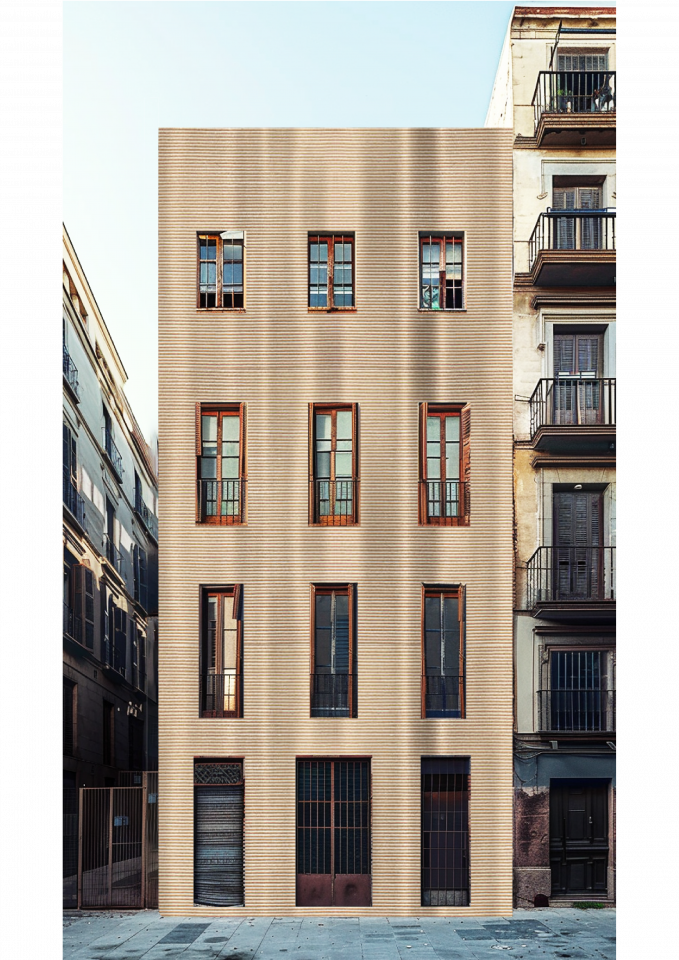
This project introduces an innovative approach by redefining sawdust as a high-value material rather than waste. Due to its key properties—carbon storage, insulation, and lightweight composition—it is an ideal candidate for sustainable construction. A core aspect of this innovation lies in tapping into material intelligence—understanding and leveraging the natural performance of bio-based materials. Rather than treating sawdust as an inert filler, the project optimizes its composition and structure to enhance insulation and durability, transforming it into a catalyst for energy-efficient buildings. The panels significantly improve thermal performance, improving indoor thermal comfort and lowering carbon emissions throughout a building’s lifespan. Due to their performance and lightweight nature, they render promising for renovating or retrofitting buildings.
Furthermore, the integration of 3D printing technology enhances design freedom and resource efficiency. Unlike conventional methods that generate excessive material waste, additive manufacturing allows for precise control over material deposition, with minimal waste and maximum efficiency. Customization is another key feature of this approach—designers and architects can tailor panel geometries to meet aesthetic and functional needs, creating a sense of ownership and engagement in the design process.
Disciplines/knowledge reflected
The core of the project relies on advanced material research to transform sawdust waste into a durable, high-performance building material. This involves understanding the chemical composition of wood-based residues, optimizing binder formulations, and ensuring structural integrity while maintaining environmental safety and scalability. The selection of non-toxic and bio-based binders further enhances sustainability by avoiding harmful synthetic resins.
The fabrication methodology of the panels is enabled by robotic 3D printing technology, allowing for maximum customization and minimum waste in the process. This automation also improves precision and scalability, making the process adaptable for different applications.
The development of a custom extrusion system plays a crucial role in enabling the printability of the material mix. This involves integrating electronics, to regulate material flow, extrusion speed, and consistency.
To ensure performance, extensive physical and digital testing are also conducted, focusing on thermal performance analyses. By understanding how the material behaves under different conditions, design parameters can be refined to meet energy efficiency requirements.
Computational tools are employed to refine panel geometries, enhance structural efficiency, and optimize environmental performance.
The interaction between these disciplines aims to foster a holistic approach, where insights from all fields guide design and implementation, creating a constant feedback loop between diverse stakeholders and experts.
Methodology used
These methodologies mentioned are the three verticals that proved to be mandatory for scaling up the bio-based composites. Besides the mentioned ones, empowering stakeholders plays a crucial role, involving architects, municipalities, and local communities in co-creation processes to refine the design and increase adoption potential while strengthening the sense of ownership. Finally, deployment strategies are implemented in order to foster partnerships for widespread integration into real-world construction projects. Through this methodology, NERA establishes a replicable framework for sustainable material innovation and application.
How stakeholders are engaged
While engagement at the regional and national levels has not yet been fully developed, the plan is to establish strategic partnerships with municipalities, policymakers, and sustainability organizations to align the project with national decarbonization and circular economy strategies. Future collaborations will focus on securing funding opportunities, creating regulatory pathways for bio-based materials in construction, and scaling up manufacturing capacity to serve larger communities. At the European level, the project aligns with EU directives promoting bio-based innovation and circularity in the built environment, and engagement with European research networks and funding bodies will be pursued to strengthen knowledge-sharing and cross-border implementation.
The involvement of these diverse stakeholders has been instrumental in refining the project’s methodology, ensuring that material performance, design, and industry applicability are considered from multiple perspectives. Their contributions enhance the project’s environmental and economic feasibility and long-term impact, in order to set the foundation for wider adoption and replication across different contexts.
Global challenges
Globally, the built environment is responsible for roughly 39% of energy-related carbon emissions, with a significant portion arising from the extraction and processing of raw materials (Norman Miller, 2021). Each year, approximately 100 billion tonnes of raw materials are extracted for the buildings and construction sector, contributing to environmental degradation and resource depletion (World Green Building Council, 2021).
Despite the pressing need for sustainable practices, recycling rates remain low. This underlines the necessity for innovative solutions that promote material reuse and reduce dependence on new resource extraction.
Project NERA addresses these global challenges by implementing 3D-printed façade panels made from sawdust waste and activating local stakeholders to enhance energy efficiency of existing buildings, thereby reducing overall energy consumption and associated emissions. This approach not only diverts waste from landfills but also lessens the demand for virgin materials, deforestation, contributing to a circular economy, through recycling, reusing and keeping materials in circulation. Through these measures, our project exemplifies how targeted, local interventions can effectively tackle broader environmental issues.
Learning transferred to other parties
Next steps
1) Organize a series of hands-on, community-focused, knowledge sharing workshops that introduces community members to 3D printing with bio-based materials. This could include interactive activities such as designing small structures (e.g., urban garden sheds) and teaching them about material selection/processing, design, 3D printing and impact assessment.<br />
By involving citizens in these creative processes, the project will empower them to be co-creators, for them to have a sense of ownership and connection to their built environment. This approach helps integrate sustainability directly into the community while reinforcing the social aspect of innovation.<br />
<br />
<br />
2) Host knowledge exchange events, such as seminars and public talks, to disseminate insights from the project and lessons learned. This could include events with experts in sustainable architecture, carbon reduction, and eco-friendly materials, as well as showcasing successful pilot projects.<br />
Through these public events, citizens and local organizations can learn about sustainable construction, enhancing public understanding of climate issues. The project will thus connect citizens with different experts to create a network that advocates environmental sustainability. <br />
<br />
<br />
3) Implement collaborative focus groups between architects, urban planners, engineers, social scientists, fabrication experts and citizens. This could be structured as a series of brainstorming sessions where various stakeholders explore solutions for urban challenges, focusing on sustainability, energy efficiency, and social inclusivity.<br />
By bringing together different disciplines, NERA will address the multifaceted nature of urban development and climate resilience. Involving citizens directly in these interdisciplinary exchanges will foster a deeper understanding of how their community can evolve sustainably, encouraging a holistic approach to circular economy.