Harmonia Workspaces
Basic information
Project Title
Full project title
Category
Project Description
Current stage development
Geographical Scope
Project Region
Urban or rural issues
Physical or other transformations
EU Programme or fund
Description of the project
Summary
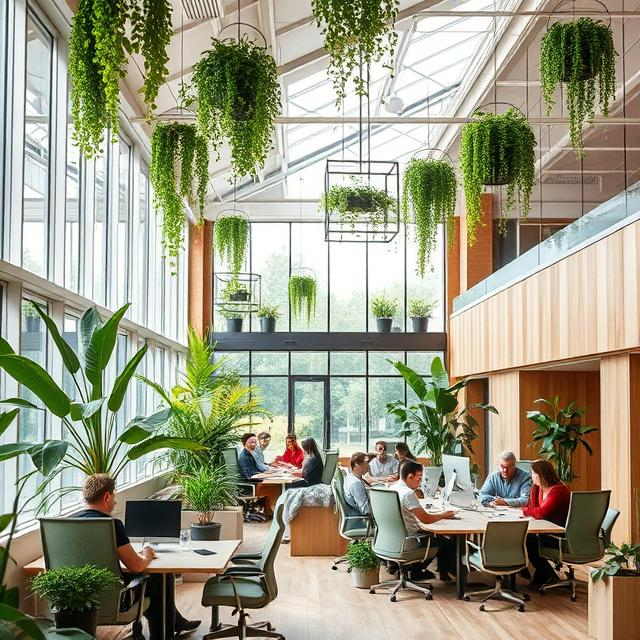
Aesthetic quality is embedded in the workspace design, ensuring a balance between functionality, comfort, and adaptability. The layout supports privacy, collaboration, and creative flow, enhancing both individual productivity and community engagement. By prioritizing high-quality materials, natural light, and flexible spatial design, the workspaces foster a sense of belonging and professional well-being.
The project addresses social and economic challenges by providing accessible, flexible, and community-driven workspaces. It supports freelancers, remote workers, and start-ups through affordable access models and participatory design, allowing users to shape their own environments. By enhancing local professional networks and fostering interdisciplinary collaboration, the project strengthens social cohesion and urban resilience.
Harmonia Workspaces also tackles urban inefficiencies by revitalizing vacant or underused buildings into dynamic professional hubs. This reduces the need for new construction, lowers commuting-related carbon emissions, and enhances urban sustainability. By decentralizing work environments, the project promotes a more balanced, connected, and resilient cityscape, ensuring long-term benefits for both individuals and communities.
Key objectives for sustainability
Aesthetic quality is embedded in the workspace design, ensuring a balance between functionality, comfort, and adaptability. The layout supports privacy, collaboration, and creative flow, enhancing both individual productivity and community engagement. By prioritizing high-quality materials, natural light, and flexible spatial design, the workspaces foster a sense of belonging and professional well-being.
The project addresses social and economic challenges by providing accessible, flexible, and community-driven workspaces. It supports freelancers, remote workers, and start-ups through affordable access models and participatory design, allowing users to shape their own environments. By enhancing local professional networks and fostering interdisciplinary collaboration, the project strengthens social cohesion and urban resilience.
The project addresses social and economic challenges by providing flexible, community-driven workspaces. It supports freelancers, remote workers, and start-ups through affordable access and participatory design, enabling users to shape their environments. By strengthening local networks and collaboration, it enhances social cohesion and urban resilience.
Harmonia Workspaces revitalizes vacant buildings into professional hubs, reducing new construction and commuting-related emissions. By decentralizing workspaces, it creates a more balanced, connected, and sustainable cityscape, delivering lasting benefits to individuals and comm
Key objectives for aesthetics and quality
The project addresses social and economic challenges by providing accessible, flexible, and community-driven workspaces. It supports freelancers, remote workers, and start-ups through affordable access models and participatory design, allowing users to shape their own environments. By enhancing local professional networks and fostering interdisciplinary collaboration, the project strengthens social cohesion and urban resilience.
Harmonia Workspaces also tackles urban inefficiencies by revitalizing vacant or underused buildings into dynamic professional hubs. This reduces the need for new construction, lowers commuting-related carbon emissions, and enhances urban sustainability. By decentralizing work environments, the project promotes a more balanced, connected, and resilient cityscape, ensuring long-term benefits for both individuals and communities.
Harmonia Workspaces exemplifies a new model for inclusive, socially responsible work environments, demonstrating that affordable, accessible, and community-driven workspaces can strengthen professional diversity, improve economic participation, and foster long-term social cohesion. By bridging social and economic divides, it sets a precedent for how work environments can serve as catalysts for broader societal transformation.
Key objectives for inclusion
The workspace design follows universal design principles, ensuring physical accessibility and adaptability for users with different needs. Open, modular spaces accommodate various work styles and personal preferences, while intuitive layouts enhance ease of use and navigation. By providing barrier-free, inclusive environments, the project enables a broader range of individuals to participate in professional networks and knowledge-sharing.
Community participation is embedded in the governance model, allowing users to co-create and influence workspace development. Participatory planning workshops and collaborative decision-making processes ensure that the evolving needs of the community shape the space. This dynamic approach empowers individuals, strengthens professional relationships, and fosters a sense of ownership among users.
Harmonia Workspaces exemplifies a new model for inclusive, socially responsible work environments, demonstrating that affordable, accessible, and community-driven workspaces can strengthen professional diversity, improve economic participation, and foster long-term social cohesion. By bridging social and economic divides, it sets a precedent for how work environments can serve as catalysts for broader societal transformation.
How Citizens benefit
Collaboration with local economic development organizations, sustainability groups, and cultural institutions has further enhanced the workspace’s societal impact. These partnerships have integrated affordable pricing models, community-driven events, and knowledge-sharing programs, ensuring that the space serves not only professionals but also the broader civil society. By embedding the workspace into the local economy and cultural fabric, the project supports cross-sector engagement and long-term community resilience.
The involvement of citizens has shaped how the workspace operates and evolves. User feedback has influenced pricing, governance, and programming, ensuring financial viability while maintaining accessibility. The governance model remains flexible, allowing continuous adjustments based on community needs. This keeps the project dynamic and responsive rather than a static commercial space.
Harmonia Workspaces serves as a model for participatory workspace development, where citizens are active co-creators, not just beneficiaries. Their engagement keeps the space relevant, inclusive, and aligned with evolving urban work needs while reinforcing local economic and social networks. This approach strengthens sustainability and ensures the project grows in harmony with its community.
Physical or other transformations
Innovative character
The project differs from conventional office developments by repurposing underutilized urban spaces, avoiding the environmental impact of new construction. Sustainability is embedded through circular economy materials, energy-efficient infrastructure, and locally sourced components, minimizing resource waste. Workspaces integrate low-energy lighting, natural ventilation, and biophilic design, creating a low-carbon, regenerative work environment that enhances both ecological and human well-being.
Unlike standardized coworking chains, Harmonia Workspaces is community-driven, allowing users to actively shape the space through co-creation and participatory governance. The workspace design adapts to evolving professional needs, balancing collaborative and quiet zones, natural design elements, and networking opportunities. This fosters a workspace that supports productivity, creativity, and social interaction, rather than just providing office desks.
Harmonia’s scalability is based on local adaptation, not replication. Each location is tailored to regional economic, cultural, and sustainability needs, ensuring financial self-sufficiency and deeper local integration. Expansion is achieved through partnerships with cities, impact investors, and innovation hubs, making Harmonia Workspaces a sustainable, adaptable, and high-impact alternative to traditional coworking models.
Disciplines/knowledge reflected
Material choices follow circular economy principles, minimizing waste and emissions through locally sourced, recycled, and regenerative materials. Sustainability experts and local suppliers work together to optimize the supply chain, while impact measurement frameworks track environmental performance, ensuring a scalable, low-carbon workspace model.
Economic strategists and social scientists design tiered pricing models, where local users pay reduced rates while external companies fund premium services, ensuring cross-subsidization for financial sustainability. Researchers track local business growth, job creation, and long-term economic impact, reinforcing the project’s value beyond real estate.
By integrating business models with impact measurement, Harmonia Workspaces is a scalable and adaptable solution for sustainable urban workspaces. Its multi-disciplinary approach positions it as a model for cities balancing financial viability with inclusive and sustainable economic growth.
Methodology used
The process begins with feasibility analysis and site selection, focusing on underutilized urban spaces instead of new construction, minimizing environmental impact and infrastructure waste. This approach follows circular economy principles, incorporating life cycle assessments (LCA), material sustainability evaluations, and financial modeling to ensure each workspace is cost-effective, low-carbon, and locally adaptable.
Harmonia Workspaces is co-created with users, including freelancers, entrepreneurs, and local businesses, through design-thinking workshops, pilot programs, and continuous feedback loops. This ensures that spatial layouts, governance structures, and service offerings evolve dynamically based on real-world needs. The iterative testing model allows for rapid adaptation, ensuring that the workspace remains relevant and functionally optimized over time.
Technology is used as a supportive tool, not a controlling force. AI and smart infrastructure enhance space optimization, climate control, and occupancy tracking, improving efficiency without over-digitization. Harmonia applies the 80/20 principle to technology adoption, integrating only high-impact automation while prioritizing human interaction and organic collaboration. The project remains scalable yet locally adaptable, expanding through strategic partnerships with cities, investors, and innovation hubs, ensuring each location reflects regional economic, cultural, and sustainability priorities while maintaining its core values of sustainability, inclusivity, and financial resilience.
How stakeholders are engaged
At the regional level, economic development agencies and innovation hubs provide funding and workspace development expertise. Universities and research institutions offer insights into sustainable urban planning, workspace psychology, and digital infrastructure, ensuring the project remains innovative. Cultural and creative industries enhance the workspace’s aesthetic and experiential quality, making it a center for interdisciplinary exchange and collaboration.
At the national level, public and private investment bodies support the project’s financial sustainability through grants, subsidies, and impact investments. Workforce development organizations integrate training, upskilling, and networking initiatives within the workspace. Policy-makers and government institutions ensure alignment with national sustainability and innovation agendas, positioning Harmonia Workspaces as a model for smart cities and urban regeneration.
On the European scale, partnerships with EU-funded programs like Horizon Europe and New European Bauhaus provide expertise, funding, and a platform for international knowledge exchange. Cross-border collaborations with sustainability-focused organizations refine environmental and social impact measurement frameworks, ensuring the project meets top standards in sustainable design and community-driven b
Global challenges
One major challenge is the isolation and workspace accessibility issues of remote workers and freelancers. Many lack affordable, collaborative work environments, impacting productivity and innovation. Harmonia’s community-driven coworking model fosters structured networking, skill-sharing, and professional collaboration, creating a flexible yet socially connected workspace that prevents professional isolation.
Harmonia also reduces urban space inefficiency and the environmental impact of commercial real estate. Many cities face high office vacancy rates and continued new construction, leading to excessive energy use and land waste. Harmonia repurposes underutilized buildings, implements energy-efficient solutions, and integrates smart space optimization, cutting carbon footprints and supporting the circular economy.
Lastly, Harmonia meets the growing demand for well-being-focused work environments. Many modern workspaces prioritize efficiency over user experience, contributing to stress and disengagement. Harmonia integrates biophilic design, flexible work setups, and wellness features, fostering healthier, more inclusive, and community-driven workplaces, making it a future-proof model for evolving work environments.
Learning transferred to other parties
The adaptive reuse methodology makes the model particularly transferable. Many cities face underutilized spaces, and Harmonia offers a cost-effective, sustainable solution for urban revitalization. The model is also suited for rural innovation hubs, where repurposed infrastructure provides shared, accessible workspaces for local entrepreneurs and remote workers, supporting regional economic development.
The community-driven coworking model ensures adaptability across industries. Through participatory governance, flexible layouts, and local business partnerships, Harmonia empowers users as co-creators rather than passive tenants. This approach suits creative industries, tech hubs, and social enterprises, fostering collaboration and networking while accommodating both startups and established businesses.
Technology enhances scalability and efficiency, with AI-powered space optimization, smart climate control, and hybrid work integration making the model adaptable to various digital and economic infrastructures. The 80/20 approach ensures technology enhances usability without over-digitization, making it viable for both advanced urban centers and emerging markets. Additionally, sustainability tracking and impact assessments align the model with global ESG (Environmental, Social, and Governance) standards, ensuring it meets investor and municipal development goals.
Next steps
Harmonia Workspaces has a clear roadmap for implementation, focusing on a phased approach to testing, refining, and scaling the model. The first step is launching a pilot project in Central Finland, starting in Jyväskylä and exploring other potential cities and rural locations. These areas provide a strong mix of urban and regional demand, with a growing number of remote workers, digital nomads, and small teams seeking flexible and community-driven workspaces.<br />
<br />
In the first 12 months, the project will focus on securing an underutilized commercial or public space for adaptive reuse. Community workshops will be conducted to involve local professionals in shaping the space, ensuring that the model meets real user needs. The workspace will integrate smart infrastructure, sustainable design, and flexible pricing models to create an accessible, low-carbon, and adaptable coworking environment. A beta phase will allow early users to test the space, providing insights for further improvements.<br />
<br />
Following the pilot, the next phase (1–3 years) will focus on scaling the concept across multiple locations in Finland, securing public-private partnerships and investment to support growth. Partnerships with municipalities, sustainability-focused organizations, and local businesses will enhance economic and environmental impact. The model will also be refined based on data-driven workspace usage analytics, ensuring that technology enhances efficiency without over-digitization.<br />
<br />
In the long term (3+ years), Harmonia Workspaces aims to become a replicable model for sustainable, community-driven coworking. The project will engage policy makers and urban planners to integrate its approach into city regeneration efforts and national workspace strategies. Additionally, an open-source toolkit will be developed to help other cities and regions adopt the Harmonia model, enabling a scalable, impact-driven approach to modern work environments.