Tenda Merah
Basic information
Project Title
Full project title
Category
Project Description
Current stage development
Geographical Scope
Project Region
Zutphen
, Netherlands
Urban or rural issues
Physical or other transformations
EU Programme or fund
Description of the project
Summary
Examining menstruation in historical and religious contexts reveals a complex web of perspectives. In ancient societies—like the Maya—menstruation was seen as a sacred, communal experience, reinforcing bonds between women and nature. In contrast, religious influences and modern western structures often suppress or medicalize menstruation, treating it as an inconvenience rather than a guide for life. This suppression reflects a broader pattern in patriarchal and capitalist structures, where traditionally female domains are marginalized—economically, culturally, and intellectually.
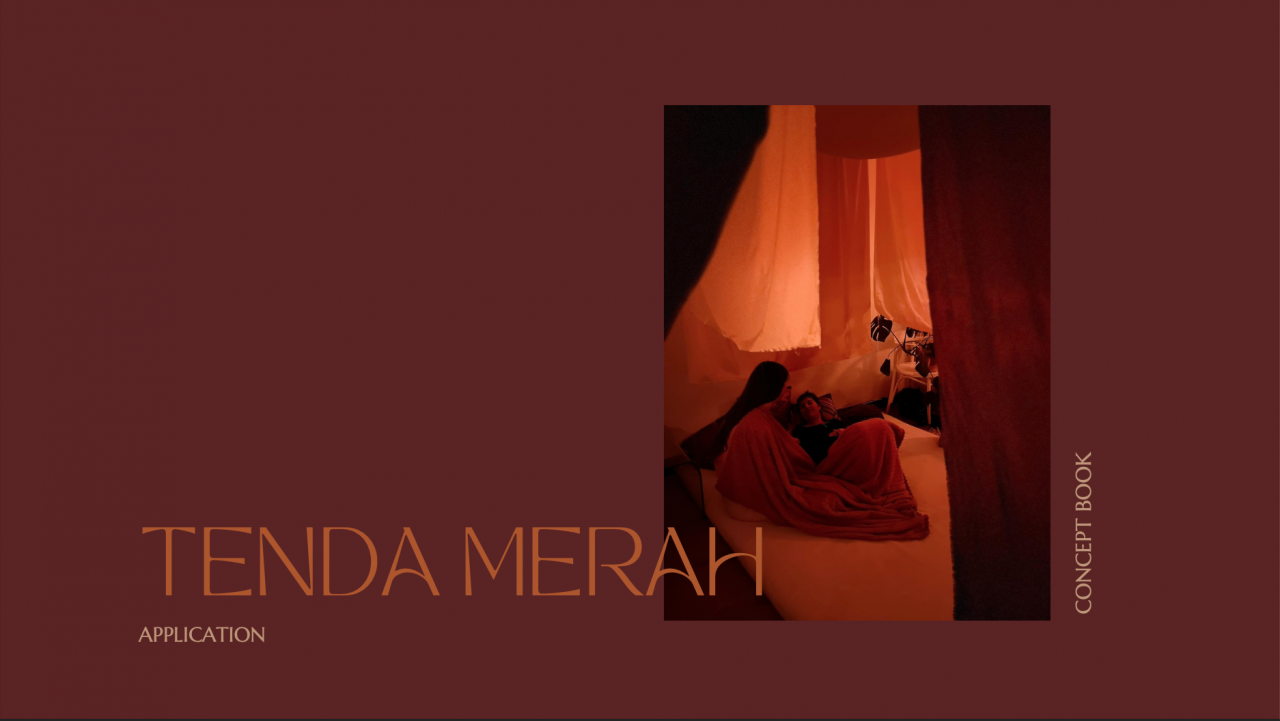
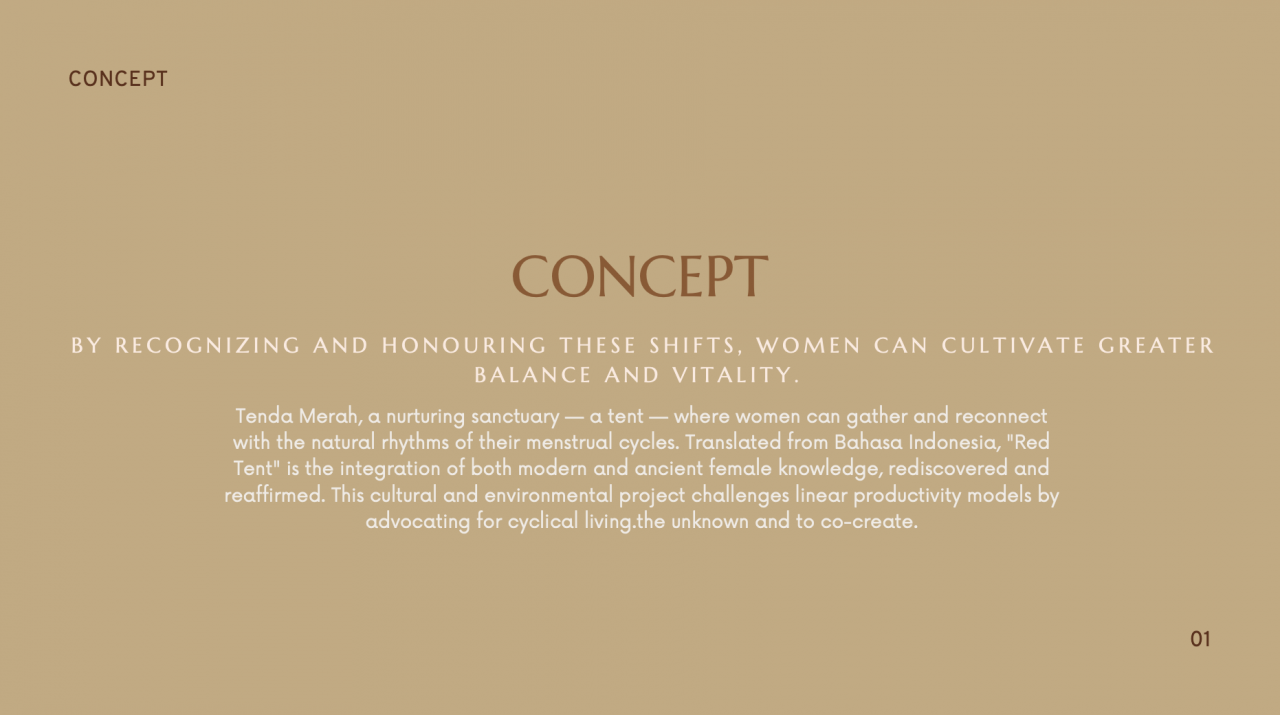
Tenda Merah revives these traditions, offering a space for storytelling, rituals, and shared wisdom. Each phase of the cycle calls for different needs—rest, renewal, energy, and reflection. By honoring these rhythms, women can cultivate greater vitality and resilience.
Rooted in the values of the New European Bauhaus, Tenda Merah integrates aesthetics, sustainability, and inclusivity. In the fast-paced urban landscape of the Netherlands, where communal spaces are disappearing, it offers a tangible, shared environment for women to gather and create meaningful connections. While still in its early stages, Tenda Merah is growing through small, intimate events with the long-term vision of evolving into a sustainable space for women’s health, cultural preservation, and community-building.
Key objectives for sustainability
Ecologically, Tenda Merah engages with local ecosystems, treating the land as an active partner rather than a resource to extract from. By working with natural cycles, we integrate regenerative practices by having zero waste and by considering the full life cycle of the objects and materials we use. We also recognize that materials hold their own histories and transformations, encouraging a deeper awareness of our relationship with the material world.
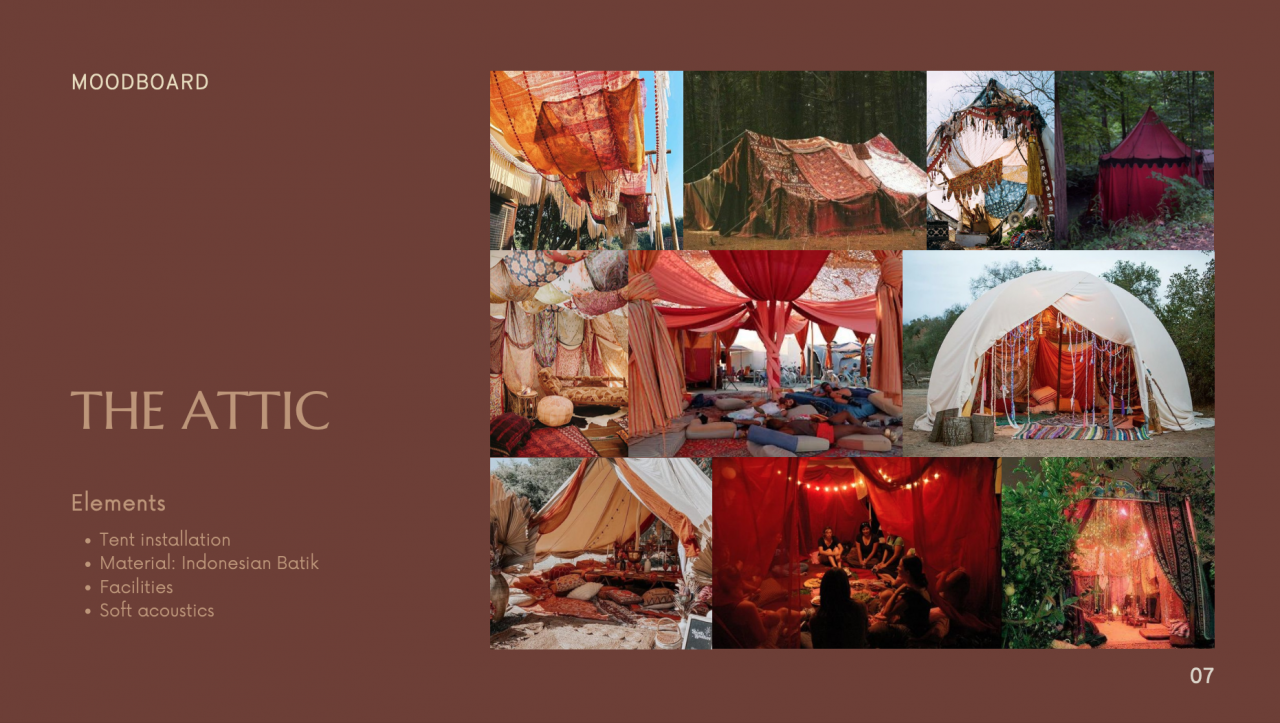
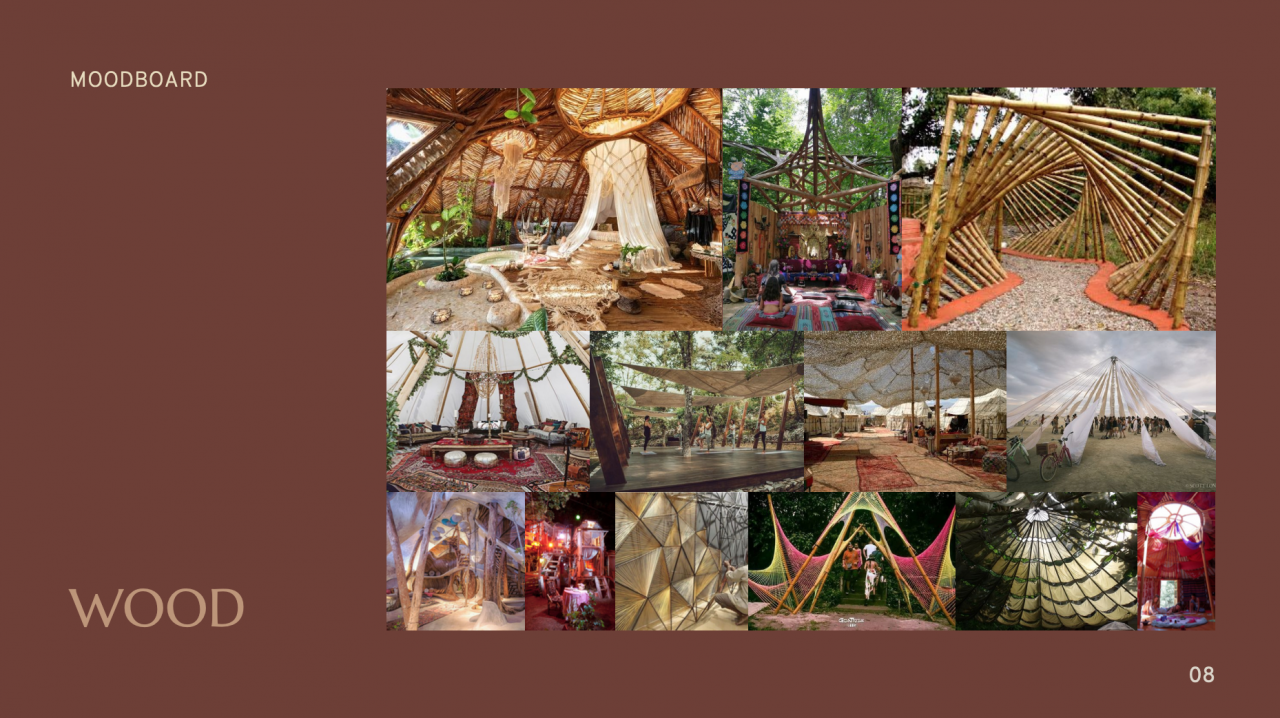
The project embraces a mobile, adaptable structure inspired by ancient nomadic ways of living, minimizing reliance on permanent infrastructure and reducing environmental impact. By reusing fabrics, repurposing materials, and integrating circular design principles, we ensure that nothing is discarded unnecessarily. This lowers our ecological footprint while allowing Tenda Merah to move across different landscapes, fostering connections between communities while leaving minimal traces behind.
Prioritizing handpicked materials that are locally sourced, we carefully choose the fibers of our tent. This project supports community-centered practices while preserving traditional textile techniques and fostering a deeper connection to cultural heritage. Natural fibers like linen, cotton, and hemp, along with plant-based dyes, ensure that each fabric carries a story while remaining sustainable.
By integrating these practices, Tenda Merah offers a sustainable model that balances environmental, cultural, and social aspects. It provides a concrete example of how design can foster community and sustainability in a modern context while honoring the wisdom of the past.
Key objectives for aesthetics and quality
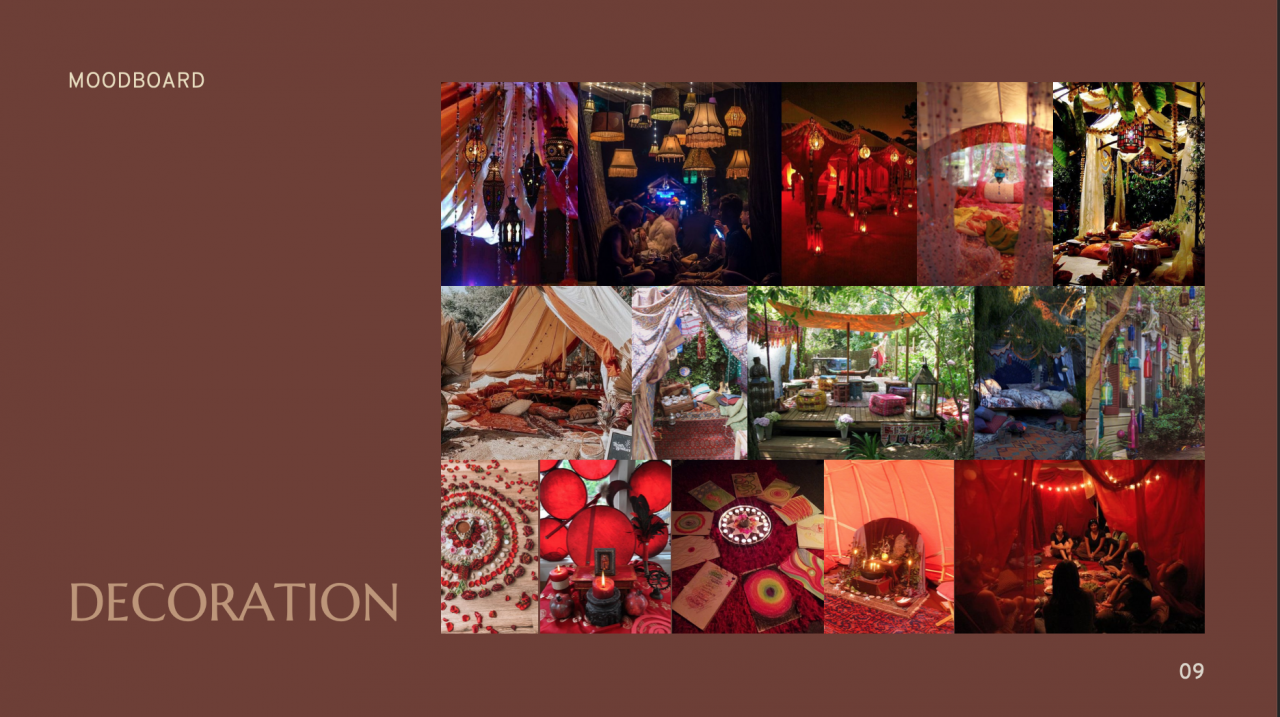
The interior will also feature art pieces and decorations from local artists, as well as reading table with educational books, essays and other resources relating to menstruation, cyclical living etc. This ensures that information sharing is integrated into the aesthetic and sensory experience of the space.
Beyond its design, Tenda Merah revives rituals of gathering and storytelling, offering a setting for deep listening, shared wisdom, and personal reflection. In a time when many urban spaces prioritize commerce over connection, this project creates an intimate alternative where women can feel seen, supported, and empowered.
By integrating thoughtful design with cultural significance, Tenda Merah exemplifies how aesthetics can contribute to experience of a ceremony. It demonstrates that design is not only about visual appeal but also about creating spaces that cultivate connection, presence, and shared experiences.
Key objectives for inclusion
The space welcomes writers, researchers, and professionals who embody cyclical ways of living to share their knowledge with younger generations, offering insights on integrating these principles into daily life. Through dialogue and storytelling, knowledge can be exchanged in both practical and transformative ways.
Tenda Merah ensures accessibility on both physical and emotional levels. Its flowing structure, soft textiles and natural materials create a soothing atmosphere. Books, art, and storytelling elements present knowledge in multiple formats, so that learning can be accessible to diverse backgrounds.
Tenda Merah also addresses the decline of communal, non-commercial spaces, particularly in urban environments where traditional gathering places like churches have faded. By offering an alternative rooted in shared experiences and a deep respect for nature, it counters the isolating effects of individualism.
With inclusivity at its core, Tenda Merah fosters belonging, cultural exchange, and shared knowledge, serving as a living model for meaningful and regenerative community spaces.
How Citizens benefit
As the project continues to grow, women are actively encouraged to contribute ideas, rituals, and practices that enrich the collective experience. Additionally, we will also continue the dialogue with men. By prioritizing a bottom-up approach, the project ensures that it remains an authentic and evolving sanctuary—one that is by the community, for the community.
Physical or other transformations
Innovative character
Reclaiming these ways is also an act of resistance. The European witch hunts (15th–18th centuries) violently suppressed female knowledge systems, targeting midwives, herbalists, and those practicing nature-aligned traditions. This erasure wasn’t just religious persecution—it severed people from the land, cyclical time, and collective care. The loss of communal healing and embodied wisdom left a void that modern individualism and scientific rationalism have never truly filled.
Today, wellness is often fragmented, commercialized, and medicalized, treating the body in isolation rather than as part of an interconnected whole. Tenda Merah offers an alternative: a living space where knowledge is preserved and exchanged through lived experience, not just textbooks or institutions. We integrate scientific research, Ayurveda, Traditional Chinese Medicine, and ancestral storytelling, empowering women to reclaim sovereignty over their bodies and make informed decisions.
Unlike conventional wellness models, which often exclude non-Western and intuitive knowledge, Tenda Merah fosters a holistic, community-centered approach. Through storytelling, dialogue, and shared rituals, we counter isolation and nurture a sense of belonging, agency, and connection. By honoring what was lost and creating space for it to thrive, Tenda Merah isn’t just about looking back—it’s about building something vital for today and the future.
Disciplines/knowledge reflected
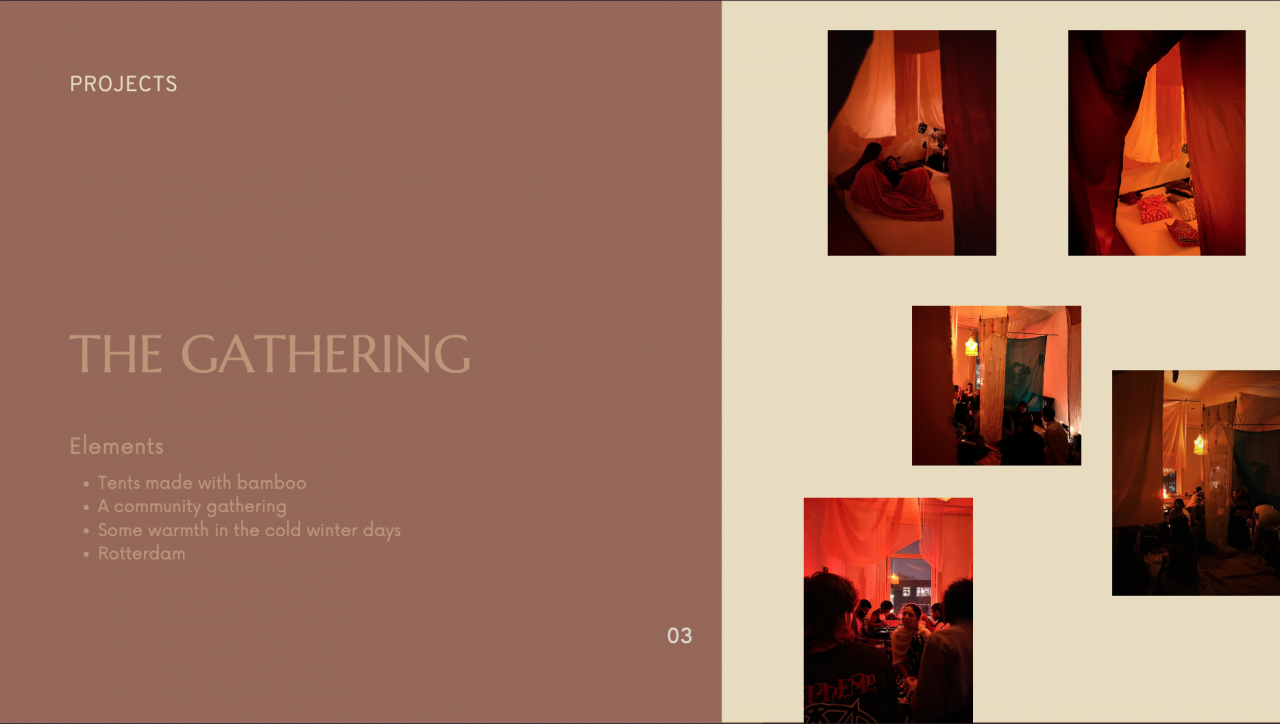
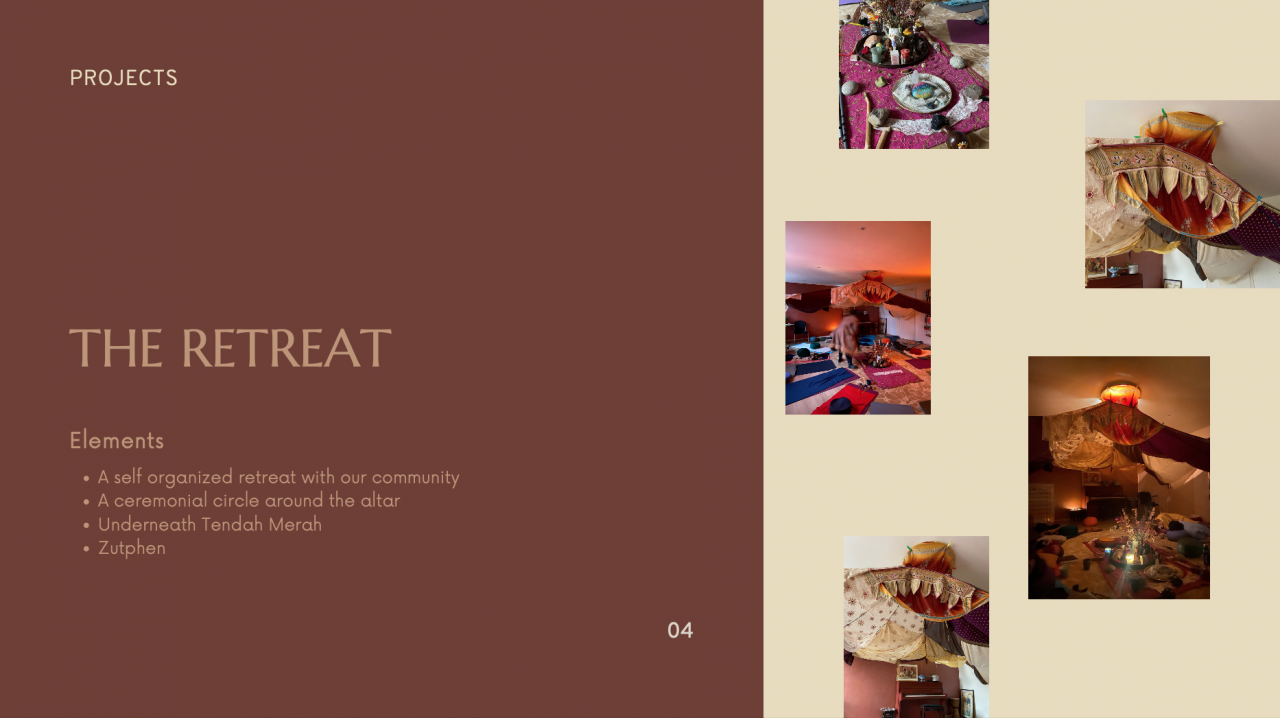
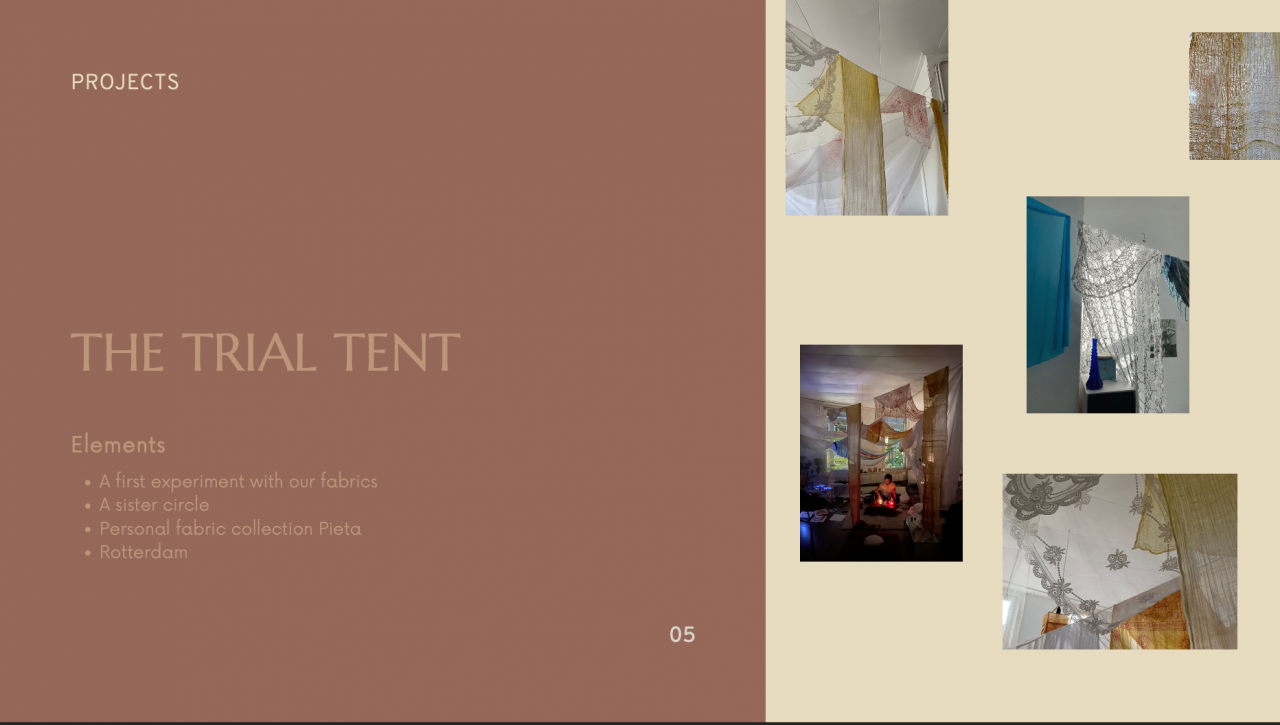
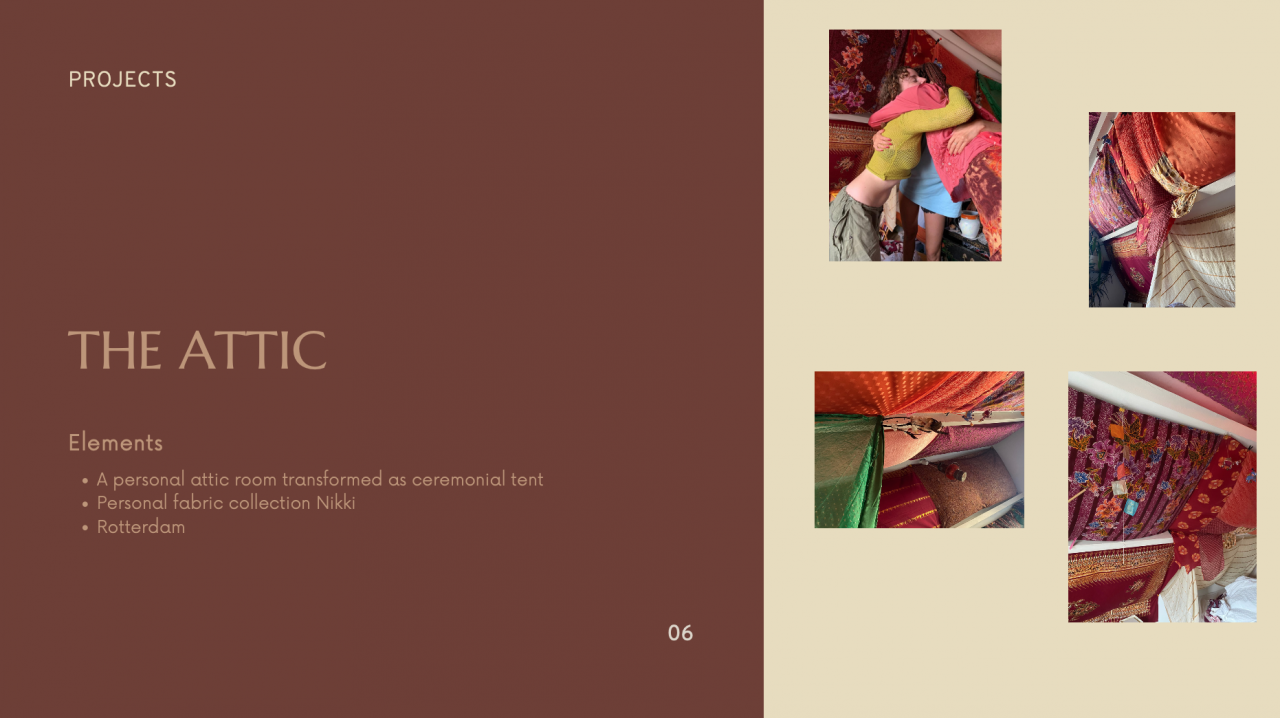
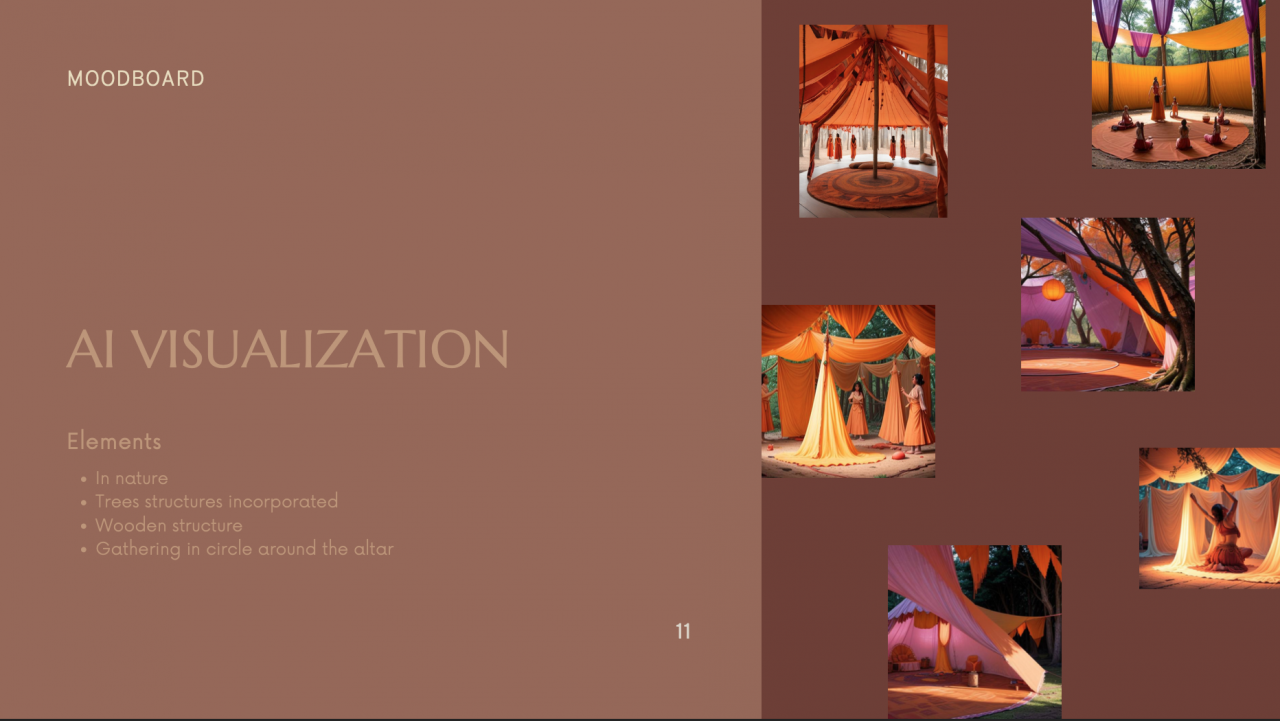
One key concept is the integration of symbols that connect to time and natural cycles. A sundial or a representation of the four wind directions on the floor reinforces a sense of rhythm and connection to nature. The fabrics used—ikat and batik—carry deep traditions. In Indonesia, weaving is strictly a women’s craft, part of the feminine domain. Cloths are considered living entities with their own spirit. The weaving process follows the lunar cycle, with priests performing rituals before a new piece is created. These fabrics don’t just decorate the space; they are part of its energy, carrying ancestral wisdom and storytelling. Another design choice is linking the tent to tree branches, symbolizing the connection between our inner cycles and nature’s rhythms.
This multidisciplinary approach makes Tenda Merah more than a physical structure—it is a space that breathes, shaped by cultural traditions, artistic vision, and natural rhythms. Moving forward, we aim to collaborate with an architect to develop symbolic spatial elements—tent shapes reflecting the womb, spirals, or mandalas—further exploring themes of womanhood and cyclical life. Researching alternative natural materials could also expand sustainability, reinforcing Tenda Merah as a living, evolving entity that bridges tradition, intuition, and innovation.
Methodology used
We began and will continue with deep research into both historical and contemporary perspectives on menstruation, feminine wisdom, and cyclical living. This includes academic studies, traditional healing practices, and lived experiences. This project will include diverse knowledge streams, from scientific research to Ayurveda and Traditional Chinese Medicine, ensuring a holistic approach. Blending these research based practices, we bridge ancestral wisdom with modern insights, making them accessible and relevant today.
Collaboration is key, with Nikki and Pieta blending their Indische heritage and expertise to create a well-rounded space. Nikki, as art director, draws from her fine arts background to shape the visual elements, honouring intergenerational healing. Pieta, as curator, ensures everything—from textiles to rituals—flows together, weaving stories into a cohesive whole. As the project grows, we are looking to work closely with herbalists, researchers, and artists to co-create content, ceremonies, and discussions. Engaging with both medical professionals and holistic practitioners allows us to explore different healing modalities. This project will continue to seek input from all types of women who participate, valuing shared experiences as an essential source of knowledge. Considering this open approach, Tenda Merah becomes a living and evolving project that values inclusivity.
How stakeholders are engaged
From the start, it’s been clear that there’s a deep need for spaces where conversations about womanhood, natural cycles, and shared wisdom can unfold freely. These discussions have reinforced how important it is to create a space that is open, adaptable, and shaped by those who step into it. Women’s feedback has helped tailor the project to what feels right, while local artists have brought in creative energy, adding to the experience in ways that words alone can’t.
Right now, the focus is on building a strong foundation, especially among younger women (19–35), while also weaving in the knowledge and presence of older generations. The project is still growing, and while we haven’t yet connected with larger networks beyond the local level, there’s huge potential. We’re looking at ways to collaborate with other collectives, NGO’s and communities that share the similar vision—one that values empowerment, cultural traditions, and sustainability.
Global challenges
City life has a way of pulling people away from nature, making it easy to lose touch with its cycles and rhythms. Tenda Merah helps bring that connection back, inviting people to slow down and move in sync with the natural world. But this disconnect isn’t just about modern life—it’s tied to a deeper history of suppression. For centuries, traditional healers, midwives, and knowledge keepers—many of them women—were silenced through witch hunts and societal erasure. By reclaiming these traditions, Tenda Merah creates a space where their wisdom can live on, be shared, and continue to grow.
Looking ahead, we recognize that menstruation is a sensitive and culturally complex topic, especially in contexts influenced by religion. If we were to expand to other regions, like bringing Tenda Merah to Indonesia, we will continue to approach with deep care and respect. Our goal is to keep creating spaces where these conversations can happen in ways that feel safe, open, and culturally grounded, ensuring that Tenda Merah remains both adaptable and true to its core values.
Learning transferred to other parties
At its core, Tenda Merah is built on principles of inclusivity, empowerment, and cultural exchange. While currently centering on women (including queer and trans women) and those with wombs, we are looking at ways in which we can eventually include men into the conversation. This expansion would be done with care, ensuring that the essence of the space—one of safety, deep listening, and connection—remains intact.
Beyond its physical setup, Tenda Merah’s approach blends intuition, research, and lived experience. It is not a static blueprint but a practice, a methodology that can be adapted to different cultural or social contexts. By staying rooted in shared values—sustainability, empowerment, and the honoring of cycles—Tenda Merah can take new forms in new places while continuing to cultivate meaningful connections and knowledge-sharing wherever it goes. We are open to new collaborations and curious to see where this project can go.
Next steps
In the first year following this application, Tenda Merah will focus on expanding its research, strengthening its physical presence, and fostering community engagement. The initial phase will involve in-depth exploration of cyclical living and menstrual awareness, gathering resources such as books, podcasts, and expert interviews to create an accessible knowledge base. It’s a layered and complex topic, but we’re motivated to shape it into something tangible. We also plan to develop a booklet that offers practical guidance for aligning with natural rhythms.<br />
Simultaneously, we will begin sourcing natural fabrics and collaborating with an architect to refine the design of our mobile sanctuary. These steps will ensure that Tenda Merah is both sustainable and adaptable to different environments. Our outreach strategy includes applying to festivals and cultural gatherings to create immersive experiences where cyclical wisdom is shared through storytelling, rituals, and workshops.<br />
Beyond large-scale activations, we will host smaller, intimate gatherings, including youth-focused events on nutrition, hormones, and contraception, as well as intergenerational storytelling circles. These initiatives will allow Tenda Merah to evolve organically, shaped by the needs of the community.<br />
The long-term vision includes securing a permanent space in Rotterdam and Portugal, connecting with local communities engaged in cyclical living. By reclaiming suppressed traditions and fostering deep conversations, Tenda Merah will create a lasting impact on both direct participants and the broader cultural landscape.