Nocturnal Refuge
Basic information
Project Title
Full project title
Category
Project Description
Current stage development
Geographical Scope
Project Region
Urban or rural issues
Physical or other transformations
EU Programme or fund
Description of the project
Summary
It serves night workers (hotel, hospital, transport, and security staff), artists, students, and residents with sleep disorders. It also provides a secure space for those who have suffered assaults and offers essential goods during nighttime hours. Services include rest areas, psychological support, sleep therapy, and wellness activities like yoga or tai chi.
The goal is to improve the quality of life for nighttime workers, enhance safety, and promote a sustainable, efficient use of urban spaces by incorporating recycled materials and innovative technology.
The project’s design will be completed by June, and the proposal will be presented to institutions like the Barcelona City Council, particularly the city's night mayor, to secure its implementation.
Key objectives for sustainability
Key objectives for aesthetics and quality
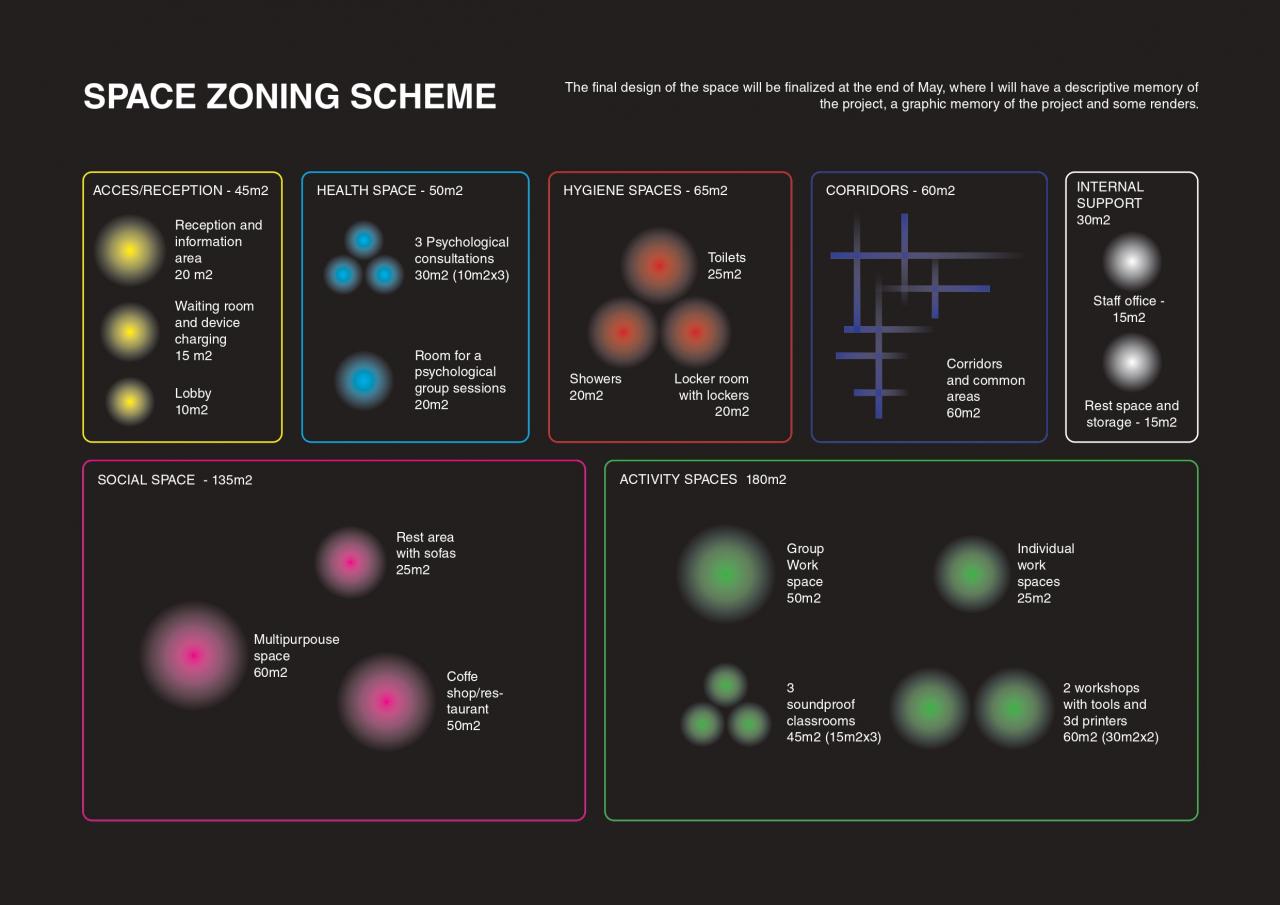
The space has been organized into areas tailored to the needs of users, such as work and study spaces, socializing and dining zones, and areas for practicing yoga and tai chi workshops that promote relaxation. It also includes a "Lila Point" for addressing issues of misogynistic and homophobic violence, a sleep clinic for treating sleep disorders, and psychological consultations for addressing addictions related to nightlife, such as alcoholism or drug addiction.
Additionally, the project includes a space dedicated to the sale of essential products, such as medications and supermarket items, to facilitate access to basic resources for all citizens.
This design proposal aims to be exemplary in creating a functional, welcoming, and diversified environment that meets the physical, emotional, and social needs of users, improving quality of life while providing essential services for the community.
Key objectives for inclusion
The center addresses different needs: people with addictions will have access to psychological consultations and support, those with sleep disorders can attend a sleep clinic, and students and night workers will find spaces to work and relax. Additionally, the general public can access essential services like a pharmacy and supermarket.
Design solutions include adapting spaces for reduced mobility, creating quiet zones for rest or study, and ensuring accessibility to services. Economic accessibility is also ensured with a pricing model for all income levels, excluding no one.
This project aims to be exemplary by creating a functional, welcoming environment that addresses the needs of users, from people with sleep disorders to night workers and citizens in general. It promotes a more equitable, inclusive society where everyone has access to resources for their well-being.
How Citizens benefit
Additionally, I collaborated with local organizations and municipal services to better understand the specific needs, such as those of people with sleep disorders or addiction. This allowed for the design of more tailored spaces and services, like the sleep clinic and consultations for addiction treatment.
The general public was also involved through surveys and meetings, where input was gathered on accessibility and the overall utility of the project. This ensured that the center is inclusive and accessible to all Barcelona citizens, regardless of age, gender, or socio-economic status.
Collaboration with civil society had a direct impact on the center’s design, such as the inclusion of rest areas, spaces for socialization, and practical services like a pharmacy and supermarket. This ensures the center is not only functional but also reflects the values of the community, fostering a strong sense of engagement among citizens.
Physical or other transformations
Innovative character
Disciplines/knowledge reflected
Methodology used
2. RESEARCHING INFORMATION
3. PROJECT BRIEFING
4. IMPLEMENTATION OF THE INTERIOR DESIGN PROJECT
How stakeholders are engaged
Municipal collaboration will include Punts Liles to support victims of gender-based violence and the network of civic centers as a reference for operations adapted to nighttime needs. At the regional level, the Government of Catalonia will contribute through the Department of Health, particularly in managing the sleep clinic and psychological consultations. Partnerships with suppliers like Mercabarna will ensure the availability of essential goods.
Private companies will also be involved, especially in technology and infrastructure. Potential collaborations with virtual reality companies will enhance psychological treatments, while supermarkets and pharmacies will ensure access to basic necessities throughout the night.
These stakeholders will help ensure the project’s feasibility, provide specialized health and social services, and create a collaborative network between institutions and businesses. The Municipal Night Center will become a functional, inclusive, and accessible space tailored to Barcelona’s nighttime needs.
Global challenges
Learning transferred to other parties
Next steps
The steps foreseen for the development, promotion, and implementation of the Municipal Night Center concept in the coming year focus on several key areas. Firstly, it will be crucial to complete the detailed design phase of the center, adjusting the architecture and interior design to meet the specific needs of users, such as creating spaces for rest, work, therapy, and socialization adapted to nighttime hours. This design phase is expected to be completed by this upcoming June. Once the design is finalized, funding and institutional support will be sought for the project's execution, aiming to present it to municipal authorities and potential sponsors, including submitting the proposal to institutions such as the Barcelona City Council, with particular focus on the night mayor of the city. At the same time, an awareness and promotion campaign will be launched to highlight the benefits of this type of center, especially for individuals with sleep disorders, night workers, and other vulnerable groups. This will include creating informational materials and initiating digital communication through social media and specialized websites.<br />
<br />
Finally, during the second year after the application, the project’s implementation will begin, including the construction of the physical space and the integration of support technologies such as chronobiological lighting, security systems, and virtual reality spaces for treating disorders. At the same time, staff training will be conducted to ensure that all personnel are prepared to meet the specific needs of users. As the project progresses, continuous monitoring will be carried out to assess its effectiveness and make adjustments as needed.